Waiting Room Deserted Village, Achill Island Notes for an exhibit Madam Butterfly at Beaumaris Doorways Role reversal |
Category: Dispossession
-
-
. The Brightest Jewel
The perfume of rosemary for remembrance.
Little botanic flower baptised in Glas Naíon,
the stream of the infants.
I see the pink flower of your hand
reaching up to your blind mouth.
I breathe your name so you will live.
The stream of the infants.
Cymbidium Minuets, the flowers that you loved
grow in a house of orchids near a dark still pool
quiet by the stream of the infants.
The Brightest Jewel is © Chris Murray and was first published in V4, Issue #4 of The WomenArts Quarterly Journal. (2014)
The Brightest Jewel
La Haïe Fleurie time capsule of reminiscence
a hedge with jasmine crescent around graveyard
the stream of the infants
honeysuckle, jasmine scented glove
as if to swathe you in soft deerskin
and keep you from hard life as death
the stream of the infants
Anemone Nemorosa expressing a whiteness
aspect of you outerbodily covert coveted, ferned
quiet by the stream of the infants
This responsorial is © Aad de Gids
.
Note: ‘The Brightest Jewel’ refers to the National Botanic Gardens in Glasnevin, Dublin. ‘Glasnevin’ is roughly translated from the Irish ‘Glas Naíon’ meaning ‘The Stream of the Infants’. The National Botanic Gardens share the both River Tolka and a perimeter wall with Glasnevin Cemetery, wherein a plot known as ‘The Angels Plot’, a possible resting place for my infant brother, although there are no records. See this article on Cilíní.
..
-
Eamon Ceannt Park; a cycle
I.
Ingress.
Her boot leathers are wet, grass-greened.
Things have gone aground at the grove,
only the fairy-ring stands in her circle
of spectral gowns—her parasols all caught up in a breeze of light.
Wood clattery heels sound
against the stones at the gate,
against a cluster of coppered leaves;their outsoundings, a filigree.
II.
Inscription.
The park is scattered as after a storm.
The destruction is knave-wrought
A crescent moon is inscribed into the soil
by the small grove,
a willow weeps by its exit,and the sky is close as goose down.
Geese screel and beat overhead,
someone has sprayed yellow paint on his memorial stone.III.
There is a man in the stone.
The dew is playing fire at her feet,
wetting her legs.A legion of rooks guard his stone.
IV.
Stasis.
The route through the groves is frozen today;
even the treetops are caught in ash.There is no mistaking this scene for a balletic stasis,
it is stick-strewn.A cold sun rises above the minarets
at park’s edge,
the sound of bells emanates from behind somewhere .She is glad to leave,
glad to kick the ice from her feet against the stones.V.
The Queen’s Rook.
And what if she entered that garden wearing her last veil?
The others being ripped by fierce wind and claw.The willows lash her face
driving her into ecstatic groves.The only thing seeming alive in this desolate place
is the Queen’s Rook.He stalks above her veiled head,
his call drowning in his throat.She heard a name.
VI.
Egress.
She looks back to the stone
From thence to the furrowed hill,
It is of ordinary green.
A rook is atop the gate.She no longer sees the far away
lit by careening crows.The path is different by day.
Coda
It is dark beneath the tree.
And,
The rising sun has not yet caught
the edge of the stone.And,
A clutter of dry debris, a black feather
is housed there.And,
She would sing him if only he let her.
And,
“Intreat me not to leave thee
Nor to return from following after thee
For whither thou goes I will go ..”she leaves.
Eamon Ceannt Park; a cycle by Christine Murray was first published at Bone Orchard Poetry Ezine and collected then in Cycles (Lapwing Press, 2013)

-
It Was For This
That Queen Maeve prepared for battle
by angrily shaving her armpits with a razor
improvised from north Fermanagh shale.
For this W.B. Yeats took all that
experimental Viagra, and waited for
the consequences to grow. For this
Archbishop McQuaid
rolled naked through fields of Lavender.
For this Maude Gonne let slip
from her womb a future
Minister for External Affairs,
while loudly denying
the Holocaust in Irish.
For this Oliver J. Flanagan warned us:
“where the bees are there is the honey,
and where the Jews are there is the money”
For this latter day Druids moved
to Ballyvaughan or west Cork,
and began accepting payment by PayPal.
For this Fiachra of the fashionable whiskers
took his herbal tincture and sat
letting silence surround him
for the twenty four hours
his homeopath recommended. For this
genuine girls all over Ireland
are waiting for your call
after you stop shouting
at the terrible news. For this
you paid the phone bill though it left
your bank account burnt
as a cottage visited once too often
by the black and tans. For this
on wild Atlantic nights –
the lines down and the cattle crying
in the fields, you keep trying
to get through – though you’re pretty sure
some of those girls aren’t genuinely
girls. For this Eoin O’Duffy
put all his bulls in the one field
and dreamed of one day
holding in this hand
Heinrich Himmler’s mickey. For this
Sean O’Casey broke the window
to let the winter in
and wrote letters backing
the Hitler-Stalin pact. For this
Dr Maureen Gaffney of Trinity College
went on the radio every Saturday
to express concern about poverty,
and people phoned in to agree.
For this the people of Roscommon drank
from their toilets, and threw up
thankful prayers to the monks
at Glenstal Abbey. For this
you voted to keep the black babies out
a sensible policy for a cleaner
Glenamaddy, Hacketstown, Portlaoise…
For this the bus driver didn’t stop just now
when he saw you waving.
All that history
so you can stumble up the steps,
sweat gushing from your armpits, late
for that crucial interview; or arrive
at the hospital ten minutes after
they’ve switched off the respirator
and folded the sheet white
over your father’s face.
It was all for this.
© KEVIN HIGGINS
Kevin Higgins is co-organiser of Over The Edge literary events in Galway City. He has published four collections of poems: Kevin’s most recent collection of poetry, The Ghost In The Lobby, was launched at this year’s Cúirt Festival by Mick Wallace TD. His poems also features in the anthology Identity Parade – New British and Irish Poets (Bloodaxe, 2010) and one of his poems is included in the anthology The Hundred Years’ War: modern war poems (Ed Neil Astley, Bloodaxe May 2014). His poetry was recently the subject of a paper titled ‘The Case of Kevin Higgins: Or The Present State of Irish Poetic Satire’ given by David Wheatley at a symposium on satire at the University of Aberdeen; David Wheatley’s paper can be read in full here http://georgiasam.blogspot.ie/2014/05/the-case-of-kevin-higgins-or-present.html . Mentioning The War, a collection of his essays and reviews, was published by Salmon in April, 2012. Kevin’s blog is http://mentioningthewar.blogspot.ie/ . and has been described by Dave Lordan as “one of the funniest around” who has also called Kevin “Ireland’s sharpest satirist.” .
- Kevin Higgins will be taking part in the Lingo Festival this coming Saturday.
-
My letter to the Editor regarding how we treat heritage in Ireland, published July 30 2014.
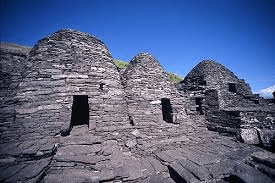
Sir, – It is now more than 10 years since Martin Cullen TD abolished Dúchas, the Heritage Service. Our national and built monuments are not adequately protected. When I questioned the OPW decision to allow filming on Skellig Michael, a general response was “it’s about jobs”. In the deep recession of the ’80s the OPW partnered with private agencies and owners to train young people in heritage protection and craft skills (stonework, wood-carving and preservation). These were jobs and skills geared toward protecting and conserving our heritage.
In the 10 years since the abolition of Dúchas, 39 sites in Tara were demolished to facilitate the M3 toll road. There are robberies of stunning stonework and the job of Dúchas has been divided between the Department of the Environment and the OPW.
Heritage is not adequately protected. We are not training the young in conservation techniques and we have no statutory agency for protecting our natural and built heritage. There are jobs in protecting our fragile heritage infrastructure in the long-term: people require skills training.
The Hollywood machine is a temporary thing. Where is the long view on jobs, on awareness and on stewardship in Ireland?
It is the job of the Minister to propose a far-sighted agenda for the work of the divided heritage agency, and yet I have seen no comment or response to the OPW decision on Skellig from her office. We are used to disgraceful decisions affecting our environment in Ireland. Why should we be surprised now? – Yours, etc,
CHRISTINE MURRAY,
-
#1
now’s dark is a clever
adjustment of the iris
to the notlight,
now’s dark is an anguish
of silhouette hidden in
tree’s whispering reed
now’s dark is a white
chair beneath a tree
moon-illumined and
somehow wrongly set
there..#2
now’s dark is a heap of mottled
silver black
ashen in its not-ight, it could be a
pile of ash,
it’s the silver of silica dotted with
miniscule impurities, sunless.#3
now’s dark the pearl,
mother-of-pearl interior
imagined in its streaks
of opalescent, it doesn’t
reflect anything on its surfaces
beneath the black skin of its
bone button, or chain, its
dullness is an indictment
of light’s absence, its cycles.
Poems from ‘Now’s Dark’ by C. Murray be read at Bone Orchard Poetry and are © C. Murray
-
“restlessly, driven by leaves.” after a line by Rilke Leaf-sound/sea-sound/bird-sound/ shoved places of air – pockets of autumn/natural languages. * The scuffed water/the swinging fruits/the ruffled gulls - wind with its throat open. * The soaring cold barks at windows like a kept-out dog whines through the small spaces/slows the old. * And in cold’s quiet undertow blood is not quite wide enough/blood clotted on pavements rowanberry red. * My ear to the stone hard/hard a murmur is coming/ a tremble of locked-up hooves. * Jackdaws and magpies land on the treetops. The branches flap/they wave. An old man looks up in his flat cap/ his mouth a shut wound. * Kolya, ghost-white traipsing the ochre-cluttered gardens and Milo, a shadow/ his guts thrust up to his chest. * Autumn/ the days loop-gusts tight to the bone loose to the sky/the lifted holes.“restlessly, driven by leaves” from A Wound’s Sound by Gillian Prew. Published Oneiros Books, 2014
A WOUND’S SOUND
Gillian Prew
The ambient howl-sound pervades everything. The gutted beasts are everywhere – billions raised and slaughtered for food globally each year. ‘A Wound’s Sound’ is an attempt to distill and voice their pain and their silence.Oneiros Books Poetry Catalogue
.
-

Sewage babies
Put on our Sunday best for Mass.
Let on we haven’t heard
about dead babies in Tuam.
Eight hundred infants,
bunkered in human filth.
Bones tossed like old coins,
dump of dead currency.
To those who defend
servants of God and state:
‘They did the best
with what they had.’
What have we?
Garrison church.
Proud, complicit government.
Blessed well of
indifference.Missing
Hour by hour you lie hidden under forest light
as it rises and falls dimly through the trees.
Year by year you slip a few more degrees
into the earth while you wait and yet
your ending clings, like the lingering sound of an old tune.
Each season breeds cool abeyance –
wood sorrel drifts ivory white
while chard green ivy creeps.
Dog roses run wild. They root in your place,
parade their disdain but your bones
remain constant and strong – poised
silent cymbals in the theatre’s gloam –
they wait for the musician to stand,
take them in his arms and ring
out a crash of sound that cries
I’m here, I’m here!
Sewage Babies and Missing are © Deborah Watkins
Deborah Watkins is a painter and a writer who also worked for many years making decorative ceramics. She grew up in Dublin and studied craft design at the National College of Art and Design. Deborah moved to Connemara in 1991 where she now lives with her three young daughters and her husband Gavin Lavelle, who is also an artist. They run the family business together in Clifden – The Lavelle Art Gallery which showcases painting and sculpture by local and nationally renowned artists.
Deborah began to paint more or less full time in 2008. She writes a blog about her painting processes and the natural landscape in Connemara, which reached the final of the 2012 Irish Blog Awards. Deborah began writing poetry in 2013 and she attends a poetry workshop run by Galway poet and essayist Kevin Higgins. Two of her poems have been published in Skylight 47, the Galway poetry newspaper, one in the forthcoming Summer issue. Deborah is also a feature writer in her local newspaper the Connemara Journal.