I wear you wrong; my reasons inside-out and love like perfume for others to admire.
At night you draw feathers on my Skin. And your kisses teach me new vowels,
but we are in bathwater. Slowly adjusting to the cold, soaked in Inertia, eyes squeezed, knowing– spiraling down
Song of Grendal’s Mother
They gave me no name but ‘mother’. Those Goldbricks in their golden hall; I was not the Virgin Mary of their wet dreams– but real– One who took an eye for an eye. Agloewif.
Repeal that oldest fairytale, old as the gold you play with. I only took what I deserved and ran– But there’s something of Monster in Man.
I
I am now. My blood is words bilingual, and blighted stories. My name is mine but borrowed, my home is Troubled wet soil on dry days, and cow shit springs. But cut me open and you will find nothing there.
Family, Mine
Every family is a sealed can.
Father– open wounds, drooping wit, salt.
Sister– fire breathing sister.
Mother– angel of cowardice and fruit trees I pinch you.
But we are a can of good beans despite it all.
Untitled
After You Died You became Enormous. A stone in every step, garlic on the breath. Suddenly from every spot bloomed a memory, and you lived a hundred times over in every head of cinnamon curls I saw from behind.
Sometimes I followed your bouncing curls down the street, standing back, willing the head not to turn and show the face of someone else so you would die again
Someday
Some day I’ll have my own house
With a shelf of poetry books by the toilet and short stories for those long, difficult stays
with vibrant colours painted on the walls every wall a different colour like Lego
With a deep couch that swallows bums and snoozing cat meditating on a warm fire
With an old phone waiting to sing it’s wire in tangled ringlets coiled like angel’s hair
With oriental spices and a box of perfumed teas of every fruit and flower and porridge
With a kettle always brooding on the blistering hob while friends take seats and I ask do you like macaroons?
With an old dusted piano out of tune, but crooning still rubbed down with old underwear draped with a doily
With space to move mountains in idle passing thoughts with sun waking room through velvet curtains in the morning.
There will be space for two heads on the cushions on my bed and my rusting red bell will wait there for your touch
Niamh Twomey is a student of English Literature and French in University College Cork. Winner of Hotpress Magazine’s ‘Write Here Write Now‘ competition in 2016, she has since published works in journals such as ‘Quarryman’, ‘Quill & Parchment’, amongst others.
In May

You are everywhere.
Arthur Bells’ yellow bloom
fragrant and fleeting,
whitethorn buds abound.

Mint makes it’s way to our door,
ready for picking.
Swallows sing a sweet song
as they soar.

On my route
I detour,
lured by a lilac in bloom.
This month, of the mothers.


Our Village in the Fifties

Vibrant.
Most houses endowed
with broods of children.
We run around freely
unhindered by snatchers and traffic.

Play out in the fields
rich with daisies and daffodils.
Scale over walls to orchards
their branches bowed low
with ripe rosy apples,

maimed by migration
it succumbs to stillness and silence.
Neighbours reach out.
Sheepdogs wait.
Footballs deflate.


Live Bulbs

After red and yellow weather alerts
when floods and storms subside.
Broken tree twigs around  you
garden soil stripped aside.

Your emerald shoots
remain sturdy and serene.
With enough resilience, robustness
to turn a blue moon green.
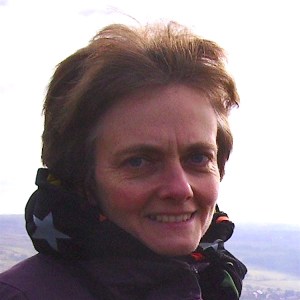
Katherine Noone’s first poetry collection Keeping Watch was published by Lapwing Press (2017). Her poems have appeared in Orbis, Crannog, Boyne Berries, Linnets Wings, Her Heart Anthology, Skylight 47, Proost Poetry, Vallum digital edition, A New Ulster and Ropes Journal.
ShortlistedVallum Poetry Award (Montreal) 2012. Poem for Patience 2015, 2016 and 2017l.
It was you, wasn’t it? Sent me a box of genitalia? Not two but twenty-four ripe ovaries with six enormous stamens each engorged with pollen thrusting purple-veined through curvy lips and downy inner folds around a fleshy pistil glistening with a film of moisture round the swollen tip all bursting from a flushed, moist, hirsute declivity and smelling… as if freshly showered? Thank you for the flowers. I won’t read too much into it.
Code
Dovebber, Jaduary ad Barch the datiodal afflictiod bakes its rouds. Wad grib afterdood you sedse a cledched fist roud your epiglottis. Baligd greblid, it hags id there squeezig ad squeezig. Or baybe you swallowed a dailbrush?
Do, you thindk, do – bore like Hober Sibsod by the biddit. I cad still breathe. You turd the heatig up to baxibub, buscles achig udtil dext bordig you fide you’ve betaborphosed idto a woolly babboth –
eyes streabig, dose ruddig, gradba recobbeddig vitabid C or baduka huddy. Feed a code, she dags but you cad odely taste Barbite ad TCP – there’s a cebedt bixer codvedtiod id your siduses ad dow your ears have god fuddy,
rushig ad gurglig like a Badhattad sewer. Your braid turded to bush you draba queed it, sdortig ad sdeezig od the screed which idforbs you you are cobbod. You have dasopharydgitis, rhidopharydgitis, acute coryza or a code:
ad idfectiod which affects pribarily the dose…the bost frequedt disease id hubads, the average adult codtracts two to three addually. These idfectiods have beed with hubadity sidce adtiquity. There is do cure. You are biserable as sid. You are hubad.
Code – first published in Magma 66, Winter 2016, Eds. John Canfield and Ella Frears (www.magmapoetry.com)
Crabtree to Gascoigne, 1641
So, our dear Horrocks is gone. Twenty-two. I must repeat what I find so hard to accept: that such a bright star should be lost to us so young. After all we shared, I shall never now shake his hand.
That November Sunday he, the better astronomer, noted his observations there and then. I was too overcome to touch a pen. I shall make amends.
Tonight though, at my window, the cosmos he proved vaster and more ordered than we thought seems emptier – a mere expanse.
My lenses mist.
Would he have planned to visit had he felt unwell, or been ill for long? No. He was in health, for all we knew.
Which, in the end, was what? Something of the spheres, their transit centuries hence. But of tomorrow – of accidents round corners, stalking maladies, guests with knives – nothing. Nothing about our inner storms or numbered days. More of the heavenly bodies than of ours.
Thus I am plagued by fears: that to fathom the skies without first grasping our own profound cosmologies is perverse. That to see – not as prophets but mathematicians, the year, the day, the hour – so far ahead, is to spy on God.
These fears I want his reason to reject.
But since my telescope cannot bring him closer, it leaves me cold. I have no heart for work. No instrument, good Sir, to measure loss.
Jeremiah Horrocks [1619-1641], of Toxteth, first recorded the transit of Venus and predicted future transits, including 8th June 2004. ‘The Keats of English astronomy’ died the day before he was to meet his mentee William Crabtree [1610-1644] of Salford. Their friend William Gascoigne [1612-1644], of Leeds, invented the micrometer.
Crabtree to Gascoigne, 1641 – from Eleven Wonders (Graft Poetry 2011, Ed. Nicholas Bielby www.graftpoetry.co.uk)
Unattributed samplerBankfield Regimental Museum, Halifax
In memory of ELIZABETH HITCHEN, Who died November 26, this battle was begun
in 1841. The house was quiet and you must learn to be, Grandmamma whispered,
measuring the lines. Your little sister’s gone Aged 13 months to be with God.
I was just five but could already read THEY WILL BE MISST A VACANT PLACE
AT TABLE AND AT TIME OF PRAYER. What shall we put up there I asked,in the big space?
Lord knows, my love – God will decide she said, then smiled. Me, probably.
AT HOME AT CHURCH MORN NOON AND NIGHT she printed carefully MISST ALL THE TIME
AND EVERY WHERE. With the next letter, G – she stopped. When you’re a big girl, you can do the rest.
Next day she showed me cross-stitch and I sewed IN MEMORY until my eyes hurt.
Eight years slipped by AND ALSO ASSENETH WHO DIED when I was thirteen FEB 8 1849.
That night I satin-stitched an urn, an altar, half a rose. AGED 19 MONTHS. The cloth was grey by then
with childish sweat, pinpricks of blood and also tears AND ALSO
HANNAH two years on THE GRANDMOTHER OF THE ABOVE. I found the last lines of the verse
she had left off and marked them up, but couldn’t frame – until I’d lived as long again – to add
‘on’ to the G ON BUT NOT LOST OH THIS WE KNOW
– my nephew feverish, I had to end this tale. Thread by thread I drew our family back
AND ALSO EMILY MY NIECE WHO DIED AGED 4 YEARS AND 4 MONTHS AND ALSO JOHN their Father
WHO DIED 1865 AGED 28 AND ALSO AZUBAH WHO DIED AGED 18 YEARS and all so young.
WE KNOW WE TRUST I persevered THE BOUNDLESS LOVE stitching my fingers numb
oF GOD HE DOETH ill John’s son was ill, fighting for breath aged 4. If I could break the spell
I told myself and stitch one living name – my own – with some date soon perhaps all would be WELL
HIS WILL BE DONE WE SAY AND KISS his eyes his hands his fingernails God will decide
my needle vain to stop his CHASTENING ROD claiming one more AND ALSO for this field of crosses
MICHAEL HITCHEN WHO DIED JUNE 5 1872 AGED 4 and AND 10 MONTHS.
'Valentine', 'Unattributed Sampler', 'When I was six', 'Waltz' - from Without a Dog
(Graft Poetry 2008, Ed. Nicholas Bielby www.graftpoetry.co.uk)
Image courtesy of Angela Clare, Collections and Exhibitions Officer at Calderdale Museums Service, Bankfield Museum, Halifax
Waltz
Married fifty years today, Ted and Edie take the floor not needing onlookers, but pleased for those who want to watch their Anniversary Waltz. They bring their language from another world of sweethearts, long engagements and apprenticeships in which they practised drawing and respecting boundaries, making choices at every turn yet making believe there was no other way. If asked, they’d say theirs was no mystery, just years of graft, of grasping drifts and judging distances, steering a course through fractured families, neighbours, nations – weaving meaning into remnant spaces – station platforms, backyards, beaches – patterning the long and short sides of their years until they learned to keep in step, beating time, being alive together. Now warmed by applause they cross the boards and, holding and yet not quite being held, teach us the grace of gentle intimacy. They wear the clothes they walked here in, but in the light confetti of the mirrorball the years fall from them and they twirl their wedding finery, still points at the centre of a dancing world.
When I was six
Lotus shoes (early 1900s), The Tolson Museum they broke my ankles and bound my feet. They said it wouldn’t hurt when they put me to sleep but when I woke it did and when I tried to stand I fell and gashed my face and lay and screamed and a nurse and my maid Suyin came running and said don’t cry, with your tiny feet you’ll be the envy of Szechuan. Dressing my face, nurse said I’d be lucky not to have a scar – but when they unwound the bandages and saw my feet, blue-black as a typhoon, the shape and smell of rotting vegetables, I said o you want that then , is that what you want and they looked away, busying themselves as I lay, listening to their feet.
You will be beautiful my father said, as if it were an order and I said was I not that already had I not been a perfect baby then and he said you know that isn’t what I mean and me this is the twentieth century not the tenth and him the more you argue the more you prove my case. What case, I said, what case? I looked at mother who was silent. Later she said why didn’t I paint or practise holding my fan, looking ladylike… that I should be grateful for a life of ease, only having to bow and look serene. But she did not look at me then, or when, married at fifteen, I told her the day they broke my feet still seemed like yesterday.
You’re lucky, says Suyin, brazen now, you can sit around all day and think how beautiful you’ll be – you are…. as she walks away. You are not meant to walk but glide they say, but I can only shuffle. My husband grunts he married a lady not a labourer and anyway he likes me better lying down. Opium helps, but sometimes I wake myself screaming you said it wouldn’t hurt when you put me to sleep and to my father, truly deaf now, what case, what case and to my mother ladylike and to my husband off somewhere and Suyin, in her own oblivion. Tears run into my ears, along a faint scar.
Julia Deakin is a UK-based poet with three full-length collections, each praised by nationally renowned poets. ‘Crafted, tender poems, written with passion and purpose,’ said Simon Armitage of Without a Dog (Graft, 2008). Anne Stevenson enjoyed its ‘mature wit and wisdom’.‘Real linguistic inventiveness’ said Ian McMillan. ‘Bold, irreverent and wickedly funny,’ said Alison Brackenbury of her Poetry Business Competition winner The Half-Mile-High-Club.
Eleven Wonders (Graft 2012) Michael Symmons Roberts judged ‘powerful, assured, elegant. Her formal skill and inventiveness make this a rich and eclectic collection. Those who, like me, have admired her individual poems in the past, will be struck by their cumulative strength and range.’
A compelling reader, she has featured twice on Poetry Please and won numerous prizes. Her fourth collection, Sleepless (Valley Press) will be published in October 2018.
A candied calligraphy of colours, I said that I would change the sheets later. And I said also that I could handle it but I could not, and will I fry for that? I may, but only if you return.
The stink of sheep hangs on me like wisdom. You leave in a blur and your bag is heavy with spices, I hope I do not let you back again. It depends on my resolve, and on whether the seasons let me float.
I’ll take myself running for the friction of denial, cross my legs under the tables of the library. I’ll spin yarns and wear black and eat fruit in the evenings, till I’m taller and more thoughtful than I have been before.
And I’ll try harder, too. Kindness is like witchcraft, it must be brewed and stirred, mulled over in secret with the herb scent of the night. If it threatens to drown you, you must set yourself on fire.
Do you think of me? Or am I a stop-gap to you? I marveled at you on the phone when you were talking like a man, Not laughing or stroking like you laugh and stroke at me. Talking figures like your car was a woman, You said fuck it we will fix the white van instead For by the time the summer comes you will be traveling.
I changed my sheets and they were smeared sprinkled with both blood and mould. But washed away now, and quietly, while you are asleep and going south.
Warren
God’s the opposite of sentient, God’s gotta lot on their plate right now You hate phone calls but you rang rang rang rang rang rang Kinda like the knock knock don’t stop of the old stories about Jesus and the hearts.
I sit in a pub like the underground volts of mole town with glistening mirrors and brown And think: and think: and think : What if I AM us What if we ARE me
Amen. That boy gets bloody sleepy-eyed and ties you down with internet rope to have the best time, you can still be held by the every-man compass of inner direction and salt.
Lake licking I’d be down for some front door seconds
I love overhand and crying boys and absolute disgraces and civil war tales make me puke because we are you and I am us and they are watching Jesus Christ and the cherubim all interconnected with stones and pencils and lust
Frown Upon Me
When winter falls out I cheer up Semi-automatic pistol you grip and It’s like Put that down honey I’m Just in league with the bears you know Don’t be afraid Just because I am socialist without understanding politics Just because I say this is how I FEEL out loud loud And you don’t do anything out loud loud You say: I am bad at words You won’t kiss me goodbye in the street You’re a removable boy access unacceptable When the moon looms When your blood is flat When you are sober ~ Biggest mood: you not letting go of my hand drunk
Mangoes are a night food
I unfurl a peach strip of self denial, curling tendrils like the mannerisms that wind me in a high spiral, each time I sleep I see extensions of my worst trade-offs and subtle lingering traces of worn out faces and fading tastes.
I see the way your limbs are positioned, they are unsure of holding company with the air (and really baby I feel that) yellow soft flesh without a skin and a concrete world he sings that you stand in hallways thinking about the positioning of your feet, and the happiness of our lives was only coming.
I do indeed know the strangest of manifestations, I do certainly keep company with the eeriest of loves. Boys can surely contract themselves into small spaces, the gaps in my brain are of the overly hospitable young.
I held onto him in our old bed and tightly traced the profile graced with the ability that I gave him his eyes were closed to look more firmly at the wall he knew my heart was at his back he may have held my hand but he did not. I let love drop from my ears my eyes my tear ducts (Love Is forever I think) I held him and said, I wish you well I wish you well I wish you you hurt me so much I wish you well I wish you well I wish you everything you can get nobly I love you Even as I fall for a better boy I love you He took my love in mime Stayed curled-up, inaccessible and pure In the dream my sister woke me with her heart at my back She never touched me I never touched him I think that real love is forever Mango is a night food.
No Chill Kids
I’m sweeping cold callers collect thoughts and manic and deathly are you grossed out by sad? I’m the icky girl no chill just spooky abandon to the rhythmic pulse gymnastics of feeling floods like crying toilets drunk maybe we’ll get cool again I’ll put weed on the balcony I need a lamp to grow me a glo-up baked half streaming live rot
Well I take photos of lights to hold them in my wet hand cracks Before After Told her there were two of me that’s a lie there are a million and one me things Shakespeare was a matching addict holy hell that quill quick quick good god give me some Adderall but I’d only focus on the wrong thing
Drunk dial Low capped smile I’d get off at the next stop but he’s gonna miss it while mentally I put myself down the stairs bang bang The street slush don’t stop us Every fucking night I get shot at in my dreams I’m not joking Last night it was my grandfather There’s fingers and there’s whingers but I barely kiss gingers Someone threaded their headphones through their jumper strings What a strange little hullabaloo I could do better if I were you Because I’m a neat-freak never-speak who clean eats I’ll go far
Mad girls and sad girls might be onto something I’m crying holla holla wake up at the stars looking down on this shit attack Honestly get me out asap I’ll sail space smooth and I won’t look back But my bones are hollow they don’t ever crack
I see faces places and wastes but I am the one standing on a hill and Pencey Prep is real as all hell that is, not very, dubiously transient and flickering like the flame of a secret place that never cleans itself so sleep me now
Finnuala Simpson is a twenty-year-old english and history student based in West Cork. In her free time she likes to write, cook, and walk as close to the sea as she can get.
A Woman is About to Break'Leave yr streams for to come hether/make haste say have noe delay
here that's above the weather/A flower of May is prung today'
Gaps in the hedge beside the silent river and
round the corner Tawstock's Tudor gatehouse birth-
frames the canal to another world; left behind
plane and mower thrum, rook kerfuffle, traffic buzz.
In the field Friesians swoon summer's late afternoon heat.
The church is gravely cold,
sun's cross-beams refract
stained light from glass,
splash monuments, stream
a river of blood along nave's inscribed stone-slabs,
until, at the vanishing point,
it seeps from floor into crypt beneath.
A woman is about to break out of her marble abstraction,
begin to breath again; in this version,
merry new bride,
she steps from her carriage; bells
tintintabulate across Taw's happy valley,
hum-tones loop with Maypole's rainbow braids
cascading chiming confetti over her white dress brocade.
Pearl rising, falling, at her neck.
Imagine; Dramas; Masques; reputation
wedged sometightplace between Shakespeare, Webster, Milton.
Shut in the strict enclosure of the entrenched canon, a
woman is about to break free; in this version, they say,
the abuser, her husband, determined
vicissitudes of her lettered fate; thus,
body, papers, rescued from the repository,
still gasping for the light of day
only after scholars,
carving space for contemporary daughters, decided to uncover,
then decipher, cross-dressings, followers of Comus,
with after-lives of Shakespeare's girls -
Bianca. Viola. Sylvia. Julia.
If, that is, they had a voice.
Note: Rachel Fane, Countess of Bath, 1613-1680, spent her childhood at Apethorpe Hall, in Northumberland, where she wrote sophisticated pastoral masques, including May Masque at Apethorpe. When she was 25, Fane married Sir Henry Bourchier, 5th Earl of Bath, and moved to Tawstock, in Devon. Nine months after Bourchier’s death, in 1654, Fane married Lionel Cranfield, but the marriage didn’t last; in 1661 Rachel was granted legal separation on the grounds of cruelty and desertion. Ironically, it may be due to acrimony apropos the divorce proceedings that Fane’s writings survived; kept by Cranfield, her papers were later discovered in the ownership of a descendant. A white marble statue in Tawstock church commemorates the Countess, who retained her title after her second marriage, and after death was returned to Devon for interment. Quotation, from May Masque at Apethorpe.
Footloose, Fancy Free


for Sylvia Plath

They think I'm beneath the cold slab
high in the footloose winds
under York's barren moors.

When they despoil the grave
do they not know -
but for spring-tails, brittle-bones, worms -
how empty it is inside?

Do they not realise
how many air-miles a waft of breeze will
carry the dormant seed -

be it daisy, dandelion,
grass green with life in gravestone crevice,
or willow-herb at the edge of the field?

But, I'm none of these.
Look instead in the pallid face
of the paper-white narcissi.

Every little seed hooks
to every other little seed,
criss-crossing our country's patternings
and boundaries - fields, lakes,
motorways, woodlands and mountains.

Admittedly, it took a while
to get to this, my final destination -
still black-faced sheep, occasional
trailers on the lane.

From above, on garden's east,
we are sheltered by the wise tree
tasting darkest history and her

brood of otherworldly wings.
She's our and their mother.
Like children, we look up to her.

She stretches her limbs to the tips of her twigs
straining to pick up hidden writing
rising from her roots across the woodwideweb.

A clutch of doves from the east
settling in their nest post-flight
discarded us in the sphere of seeded grass,
that was a few years
after setting its mud-caked prints
in the snow the fox hooked us up in its paw -
we were expelled on a southern heath.
That was almost ten years
after the shrew regurgitated us on a motorway verge
with the beetle she'd devoured in the pile of autumn leaves
two decades or more after a gust of ghost-wind dispersed
its disclosing fruits.

They'd matured inside the capsule's green fuse
from stems of flowers sprung up
on grave's earth during the years following
that first winter's blackest season.
On Whitehorse HillGodgifu.
Eadgifu.
Aelfgifu.
Aelfthryth.
Reel the names a-
way aural sliding into slip-shod
Anglo Saxon history, away,
like iconic eastern dolls
they recede, expanding into distant pasts
the way a-
way, they remind us of
the blue-grey layers of Dartmoor's mists and tors.
The last of these - later,
Queen of our Lands,
Aelfthryth,
weaving her own fairy-tale -
left
following the before-day, a
way day beside her mother's recent grave
at the abbey on moor's western edge,
stole away for a lange day
and another
from the place of her birth,
pursuing yole-ways to seek new tracks -
criss-crossing paths to the north,
lych-ways on the tracks of the forking droves.
Up past the cleave, over Bellestamwhere are the Nine Maidens
she took up with Tola,
daege, on the summerlands at the gentle green coll -
churned milk plashing to pail -
at dusk, sleek cows slumbering,
they eat meatonastick,
sleep in the hut
raised from earth
under stars on a green-rush and black-
sedge floor.
Sun up, up and
   a-way
early
Aelfhryth leaves the cows on butter-hill's
  dew-covered down
wanders along drift-lanes
gathering seedsofgorse
beside purple-heather and green-
  light fern,             crosses	     the steps by Cullever


up as far as the Winter Tor,
		  she climbs     overthestone by the brook
			         & over the ford of the Taw
			         to the stile beside the gorge


    as far as
Steeperton          then 	   over the clapper & beyond
   upthetop
to Whitehorse Hill
near where her mitochondrial mothers came
from the highest, wildest moorland tors.

Knowing her true destiny
is far  a-way
from here,
she's come to bid farewell
to her ancestor,
foremother,
on the White Hill,
she who went to ground a
thousand years or more,
the stories they tell
round these moor parts,
a legend passed on by word of mouth
down the daughters' line -
    the procession,
                wailing in the wind.

Hands opening high to sky
they brought her here
fall of the year when ferns
waved like arms of fear,
laying their Bronze Princess
gently on the pyre to rest
   decked
in her bedazzled dress
amber bead bling fixed at the nape of neck.

After fire's embers died a-
  way,
wailing,
they swaddled her ash
within the pelt of bear
bound up with
a knotted woven sash

then, on agnysse min, laid her
beside the basket,
nested inside it, a cow-hair band,
the rings, still glistening tin,
two spindle-wood studs once hung from her ears.
At the time of setting sun,
they settled her in the cist.
When sun's down,
Aelfhryth
turns west,
leaves 				by way of the peat pass
				at Taw and East Dart source
				as far as the great lime tree
				over Black Ridge Way

blue graze of sea in the distance
      granite-clitters
          spilling down
            over the descending
                 fringe of moor


  she	                             skirts the bog
	                             by the right side of the stream
                                     at the bondstone
marking the two Great Hills,

                        crosses	         stepping-stones by the Lyd
climbs over  Nodden,
                        finds               the Chi-Rho stone
                                            & the ancient L stone,
					    by Bridestowe boundary,


then, fairy-tale settling with her again,
before the next day
of the fresh path of her new life a-
way in faraway lands, reaching the Green vale
Aelflryth looks down to where is the Way of the Dead
and her own home, from on the High Down above the Olde town.
Note:
Ælfthryth (c. 945 – 1000 or 1001, (also Alfrida, Elfrida or Elfthryth), who was probably born at Lydford castle, just below Dartmoor, in Devon, became an English queen, the second or third wife of King Edgar of England, mother of King Ethelred the Unready and a powerful political figure in her own right. Godgifu, daughter of Etheldred the Unready, was Aelgifu’s granddaughter; Eadgifu was daughter of Edward the Elder, King of Wessex. Aelfgifu was a popular name; she might be Aelfgifu an Anglo-Saxon saint, whose relics are in Exeter Cathedral of Normandy, or Emma of Normandy, wife of Ethelred the Unready and daughter in law of Aelfthryth. Bellestam in The Domesday Book is Belstone. The ‘Bronze Princess’ is named after the important recent archaeological find of a prehistoric cremation burial within a cist at Whitehorse Hill, on northern Dartmoor.
Lange (Anglo-Saxon/Old English), ‘long’; on agnysse min,’ sorrow’/’anguish’; daege, dairy-maid.
 Anchoress

Closed  within   a    breath
        her sin             a countryside   hollow of  moss    her fingers close round
                          the  Book of Hours              held open on her lap
    margins
    full of flowers                                 prayers and swirls
she plays its music in the keep of her mind
 the leaves crisp   her heart in this cell cold   colder than the blackest medieval night
                   where owls                     and moon
           and those who wander in grey outside in the sanctuary of     garden
green  arches             holly oak beech take you                with her to the centre
 the heart that never stops to the garden that closes round around her heart and
yours and takes us to that beat at its very centre       where the roses and the
sacred arts and the  woman looking out at the winter that has gone with the
whitest snow turns to her new manuscript begins to script the notes
                          black upon its stave l’amour
                                    l’amour de moi
L’Amour de Moi, usually translated as My Lady’s Garden, a C15 French Chanson.
At JacobStowe
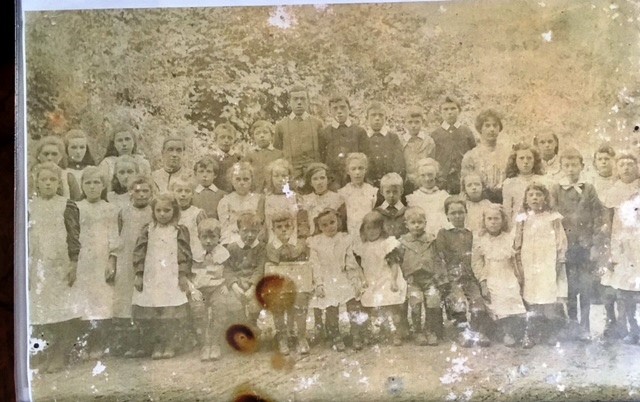
I could take you with this poem and this photo back one hundred and more years to 1898, when Annie, just 16, maternal Grandmother, pupil-teacher in the village – the one second from back on the right – had to tell Will Stone the young delectable rector (who she thought hot) the bad news – Bessie her eldest suavest sister would not be at the altar after all, was jilting him,
or, we might travel westwards on the road to others where once
holy sites the sacred well lies in  hollows near damp grasses in the
hedge next the wildflower patch where children own hidden designs
whose colors hide the deep space of beyond.
   But I won't.

instead, I'll gather these flimsy lines up with her other belongings -
  collections of trochees, prosody & half rhymes,
  her intricate imagery & end-stopped lines

and  after locking the photo back in its darkness between the pages of
lost years in the family book
we'll remain here within the origamic folds of the church where
the crypt of the ancient found apse
limns its semi circular curve
	and outside
keening lavender steals in with its rooted essence under the fence from
a nearby garden
Julie Sampson’s poetry is widely published, most recently, or forthcoming, in Shearsman, Molly Bloom, Allegro, Dawntreader, Ink Sweat & Tears, The Journal, Noon, Poetry Space, Algebra of Owls, The Lake and Amethyst Review. Her work has been shortlisted or placed in several competitions, including erbacce, Wells Festival of Literature Poetry Competition and The Page is Printed. Her poetry collection Tessitura was published in 2014 (Shearsman Press) and a non-fiction manuscript was short-listed for The Impress Prize, in 2015.
. sewing after so long i wonder if there exists a song a glass of water warmed in the sun for each age she’s ever been all the taps here run scalding following the dregs of wine flowing from hot water factories tell me about her lover stagnant on the periphery who lived three towns away making it harder to soak she would travel hours to him the wilting orchids every other weekend softening on the windowsill found sanctuary with his family reaching up into the day young and in love delicate and deliberate i’d like to know how she felt like grandmother’s thin fingers on the birthday that I learned to hate shaking but capable the night i faked to get away
Jess Mc Kinney is a queer feminist poet, essayist and English Studies graduate of UCD. Originally from Inishowen, Co. Donegal, she is now living and working in Dublin city, Ireland. Her writing is informed by themes such as sexuality, memory, nature, relationships, gender, mental health and independence. Often visually inspired, she seeks to marry pictorial elements alongside written word. Her work has been previously published in A New Ulster, Impossible Archetype, HeadStuff, In Place, Hunt & Gather, Three fates, and several other local zines.
‘Prime’ by Peggie Gallagher
It is midwinter. Your hands are chilled. I lift you, gather your first whimpers onto my pillow, knowing as much by instinct as touch of skin.
We lie here amazed at the dark, aware of the house sleeping around us, the quiet patterns of breath. Outside, the snow lies thick.
In this landscape of wild skies and running tides, and mornings lit with rapture, I think I must have been falling most of my life to land here temple to temple in this pre-dawn calm, this kinship
of breath with breath your hands cupped in my palms.
Peggie Gallagher’s collection, Tilth was published by Arlen House in 2013. Her work has been published in numerous journals including Poetry Ireland, Force 10, THE SHOp, Cyphers, Southword, Atlanta Review, and Envoi. In 2011 she was shortlisted for the Gregory O’Donoghue International Poetry Competition. In 2012 she won the Listowel Writers’ Week Poetry Collection. In 2018 she is the only Irish poet on the Strokestown International poetry competition shortlist. Peggie Gallagher’s work was facilitated by Paul O’Connor.
Author image: Southword / Arlen House
‘Linen’ by Finnuala Simpson
A candied calligraphy of colours, I said That I would change the sheets later. And I said also that I could handle it but I could not, and will I fry for that? I may, but only if you return.
The stink of sheep hangs on me like wisdom. You leave in a blur and your bag is heavy with spices, I hope I do not let you back again. It depends on my resolve, and on whether the seasons let me float.
I’ll take myself running for the friction of denial, Cross my legs under the tables of the library. I’ll spin yarns and wear black and eat fruit in the evenings, Till I’m taller and more thoughtful than I have been before.
And I’ll try harder, too. Kindness is like witchcraft, it must be brewed and stirred, Mulled over in secret with the herb scent of the night. If it threatens to drown you, you must set yourself on fire.
Do you think of me? Or am I a stop-gap to you? I marveled at you on the phone when you were talking like a man, Not laughing or stroking like you laugh and stroke at me. Talking figures like your car was a woman, You said fuck it we will fix the white van instead For by the time the summer comes you will be traveling.
I changed my sheets and they were smeared Sprinkled with both blood and mould. But washed away now, and quietly, while you are asleep and going south.
Finnuala Simpson is a twenty year old English and history student based in West Cork. In her free time she likes to write, cook, and walk as close to the sea as she can get.
‘June’ by Geraldine Plunkett Dillon
I fill my heart with stores of memories, Lest I should ever leave these loved shores; Of lime trees humming with slow drones of bees, And honey dripping sweet from sycamores.
Of how a fir tree set upon a hill, Lifts up its seven branches to the stars; Of the grey summer heats when all is still, And even grasshoppers cease their little wars.
Of how a chestnut drops its great green sleeve, Down to the grass that nestles in the sod; Of how a blackbird in a bush at eve, Sings to me suddenly the praise of God.
The text of Magnificat and images associated with Geraldine Plunkett’s Dillon’s historical and cultural work were kindly sent to me by her great-granddaughter Isolde Carmody and I am very grateful for them. I am delighted to add Geraldine to my indices at Poethead. I hope that this page will increase interest in her work. Excerpts from the Preface to the 2nd edition of All In The Blood, memoirs of Geraldine Plunkett Dillon, edited by Honor Ó Brolcháin,“My greatest regret throughout the process has been how little credit she gives herself, for example she does not mention a paper she gave in the Royal Irish Academy in 1916 or her contribution to the article on dyes in Encyclopedia Britannica or her volume of poetry, Magnificat, or contributing to the Book of St Ultan, or being a founder member of Taibhdhearc na Gaillimhe (the masks of Tragedy and Comedy she made for the Gate theatre are now on a wall in the Taibhdhearc) and the Galway Art Club, where she exhibited for years, or making costumes for Micheál Mac Liammóir in 1928, or being responsible for Oisín Kelly deciding to become a sculptor – he was one of very many who said that she enabled them to do the right thing for their own fulfillment. When she wrote it was in order to provide a history of her times and an insight into what made her family so strange. Like many of her generation she did not write much about her own feelings and her humourous and optimistic nature does not really come through in her writing. I would like to have been able to put that in but could not in all faith do so. “ It is also worth noting that Joe (Joseph Plunkett) named her as literary executor, and she edited his Collected Poems in 1916
‘At the door’ by Eva Griffin
Now, watch as I hang in the air tempting as a sunset and just as long. Storms are not inclined to wait; better to spill my secret wilderness as I leave this love, sucking light out of your blue.
Eva Griffin is a poet living in Dublin and a UCD graduate. Her work has been published or is forthcoming in Tales From the Forest, All the Sins, ImageOut Write, Three Fates, The Ogham Stone, HeadStuff, and New Binary Press
‘Cooking Chicken’ by Alice Kinsella
Pink is the colour of life of new babies’ wet heads and open screaming mouths.
Pink is the rose hip of a woman at the heart of what’s between her hips and the tip of my tongue between bud lips.
There’s the hint of pink on daisies when they open their petals to say hello to the birth of a new day.
But pink is also the colour of death as the knife slides between the flesh and separates it into food.
Pink is a suggestion of sickness when I pierce the skin, dissect the sinews, glimpse the tint of it and turn it to the heat to kill the pink and the possibility.
It’s the quiver of the comb atop feathers, and the neck as it’s sliced from the body by the executioner’s axe.
It’s the colour of cunt and the hint in the sky when the cock crows.
Alice Kinsella was born in Dublin and raised in the west of Ireland. She holds a BA(hons) in English Literature and Philosophy from Trinity College Dublin. Her poetry has been widely published at home and abroad, most recently in Banshee Lit, Boyne Berries, The Lonely Crowd and The Irish Times. Her work has been listed for competitions such as Over the Edge New Writer of the Year Competition 2016, Jonathan Swift Awards 2016, and Cinnamon Press Pamphlet Competition 2017. She was SICCDA Liberties Festival writer in residence for 2017 and received a John Hewitt bursary in the same year. Her debut book of poems, Flower Press was published in 2018 by The Onslaught Press.
I did, I did. And, afterwards wind whips, rain falls. I cannot see beyond waterfalls sheeting down from miserable eyes, sluicing nose, cheeks, chin and feel etched trails of aged laughter lines, awash with running snot. I slap my face, to blot out inner pain. Fingerprints mark shame, sting of secret sin secreted on my skin, stigmata aflame. Lust chose me, I chose you. I did, I did. You must not.
Haunted
I didn’t see young Icarus fall from the sky that day, I didn’t see the rays of sun melt his wings away. And I didn’t see his strong white bones stripped of flesh by gannets. Nor did I hear his last faint cry, nor did I see the fret shroud down, nor did I ask the reason why he ever tried to fly so high. But I did dream a resting place, but I did dream a mountain stream, but I did dream a place to lie, but I did dream he waxed again, but I did dream he kissed my face, but I did dream he melted me. And I remember words he sang and I remember smelling young and I remember tasting sweat and I remember sharing breath and I remember touching down as I remember how he drowned.
She
after Mark Doty Ineradicable Music She gestated words for years. I lack a birthing bed, she said and to find one was her heart’s desire, a place to labour hard. She who’s stirring. Could she trance herself to write? And even as she dreams and wavers, whispering poetic lines, the newborn secrets of her heart, she knows her voice comes lyrical and stronger if she dares to speak aloud. And though years were wasted, to have kept silent and denied she longed to scribe her verse would have been so much worse. Had she been cursed to muteness or deaf to those inspired beats that leave her spellbound, craving more creation, she would die.
sci-fi nightmare
suns dawned in rivers stars stippled mudbanks waterfalls drenched skies red grass called hither worms crawled up my flanks skulls flew empty by mountains dove down cliffs wide eyes swallowed air ears waxed to silence my feet would not shift scree slopes stopped to stare bones talked chalk nonsense colours crazed to black monsters talked secrets my clothes were all wrong thoughts began to crack devils took my debts to hell I was flung
Was That Me?

Sometimes, I feel I live on
                                        in remainder time.
There have been so many lives, all mine;
                                                                different days with different casts
                                                                                                                   of actors on the stage.
Looking back,
                     confusion often reigned.
My days,
             like beads of wood or glass or precious stones,
                                                                                  adorned my costumes,
held me moment-tight
                                  until things changed again, again and then again.
And yet,
            each bead mundane or bright
                                                         is threaded on a single string.
With each new play, new role, new time,
how did I dress my body?
                               How did I learn my lines?


                                           All my lives are mine and mine.
                                                    But who or what am I?
Ceinwen E. Cariad Haydon lives in Newcastle upon Tyne, UK, and writes short stories and poetry. She has been published in web magazines and print anthologies. These include Fiction on the Web, Literally Stories, Alliterati, Stepaway, Poets Speak (whilst they still can), Three Drops from the Cauldron, Snakeskin, Obsessed with Pipework, The Linnet’s Wing, Blue Nib, Picaroon, Amaryllis, Algebra of Owls, Write to be Counted, The Lake, Ink, Sweat and Tears, Riggwelter, Poetry Shed, Southbank Poetry, Smeuse Bandit Fiction and Atrium and with work coming up in Marauder, Prole and The Curlew.
The crisp dew of words, that sing in spring Jubilant is their ring.
The soft gentle breeze of words which appease, please Leave tickles of tease.
The blazing heat of words which incite, ignite, Defiant in their fight.
The strong gale of words that wail, prevail, Woeful is their tale.
The cold depth of words which pound, astound, Deadening in their sound.
Acceptance
Throat itches and scratches, raspiness of an otherworldly quality. Lips miming the words, their echoes silent.
From deep within, the surges pulsating, desperately attempting to blast into the atmosphere. A concerted effort, both messenger and vessel willing, wishing, wanting the ripples to meet the surface.
Flows and ebbs of lapping dialogue, sparkling glistening leaps of innocent, complicit laughter, lulls of serenity and quiet contemplation all in a blink of the mind’s eye.
Each page turning as if courtesy of a fast-forward button. Slipping, falling, fading, thugs of resistance futile.
The stark realisation, this is coldness, this is acceptance.
Your resting place
The glistening Shannon, a magnificent twinkling curtain rolled out smoothly, a veil is drawn over the valley below.
Rosary in unison to the grating of the clay back and forth the swings, gathering rhythm only momentarily disrupted by the exchange of hands. A new crew lies in wait to take up the chorus.
The many gatherers scattered witnesses to the careful descent into your resting place
A quilt of roses adorns you, Each petal precious and sweet Keep warm my love.
Celtic Bride
Tumbling tresses of auburn, slender, lithe and graceful frame Bambi eyes – a depth of beauty instantly recognisable.
Beaming, effortless smile finely crafted hands which have penned many a touching message, prepared many a loving meal, reached for many a tender embrace, and now act as protectrice to your very own High King of Ireland.
Youth marked by boundless energy, instant engagement, rebellious spirit, insatiable curiosity. Inquisitive student, keen linguist, intrepid traveller, Cuisinière de résistance – tasting and delighting in the delectable delicacies of this glorious multicultural world.
Erudite, quizzical mindful of the lessons of our elders, firm and steadfast in convictions, hopeful, driven to forge a better Ireland for those to come. Attuned to the voices of many, considerate and considered in rhetoric the consummate politician a fusion of past, present and future.
Life ignites, infuses, thrills, courageous in pursuits standing strong, upright and resolute climbing every mountain with an indomitable spirit, there is something about this maiden.
As your wedding day approaches, your chieftain awaits on the mountain top – Cnoc na Teamhrach This particular climb sees you ascend assuredly, with each step to the summit, you are brought home.
Proud to call you friend
Memories, childhood jewels, treasures in the recesses of my mind, the pounding of tennis balls on the tarmac during the hot Summer days. Both as equally eager to smash it with a formidable forehand, the dual recorders in sync (well most of the time), we were after all the instrumental saving grace of each year’s Nativity play! The dreaded own goal You poised for a glorious save, I, oblivious to your cries dealt the fatal blow I tested your patience that day, you the model of decorum never let it show.
Teenage years brought a keen interest in historical pursuits. Con Air showings back to back, fabulous Super Mac extravaganzas, Infinite ripples of laughter and giggles a reflection bringing comfort and company when I needed it most.
Never mind Tipperary it’s a longer way to Letterkenny, such was the legal route but boy was it worth the journey Success, Freedom, Fun not forgetting Cupid awaited, you never once looked back.
Eyes blue and gentle, the small contented smile you’ve navigated the peaks and troughs, I can see you’re happy with your lot. This is your moment, bask in the joy, feel the excitement. I’m privileged to witness the triumph, but most undoubtedly proud to call you friend.
Strength is in our past
Do not mourn me my love I am near you still, notice me in the Autumn leaves strewn magnificently lining the roadside in your honour.
Each leaf that falls memories we shared weightless, wistful gliding to their peaceful slumber.
My time has arrived so has theirs gracefully, elegantly, swirls of multicolour our befitting final dance, a waltz.
The day will come when the leaves will fade. growing dim flickering sweetly prepare yourself arm yourself Strength is in our past.
Magnetic
Snug, at ease camaraderie complimenting the fireside warmth a fitting forum for festive cheer.
Random responses friendly jibes carefree banter giggles galore Verses of old time classics and one hit wonders giving way to ripples of merriment savouring the delight.
A shadowing possibility this occasion might be our last Reminding ourselves to make it count holding it tight as a precious jewel – delicate, fragile, magnetic.
Sorry
‘Sorry’ a murmur, a mutter, falling indifferently, clumsily, irreverently from parted lips. Sometimes a habit, a courtesy, an afterthought, always a marker of our hard-won freedom.
Seemingly innocuous word, a nod to our ancestors, ingrained in our bruised dialect, woven through the beaten tapestry of our history, stirring the ghosts, the troubled sod, foremost in our legacy.
‘Sorry’ for suffering eight hundred years of oppression, ‘Sorry’ for having our native tongue ripped out, ‘Sorry’ for building another nation with our blood, wood, sweat and tears, ‘Sorry’ for being denied the right to toil on our own soil.
Let us not lament further sacrifice.
OUR ETERNAL LOVE
A soft gentle milken hand caressed our hair, A sweet embrace pulled us close for comfort, A listening ear let us know we mattered, A wise word offered in times of distress, Warmth so innate it had the touch of the divine. A curious question to highlight your sense of devilment, A wry smile which knew what we were up to, A generosity which knew no bounds. You offered your heart openly to share among us all, We lapped it up as we did every delicious meal. A style merchant as well as a speed merchant, A domestic goddess as well as a hostess extraordinaire, The aroma of fresh brown bread married with a brew of tea Danced through the air and set the scene, You balanced it all while raising a family of ten. You were our sun, moon and stars, You made sense of the world when we had lost our way, You were our safe haven, Our place of shelter and warmth when the journey got weary. You took pride in us, you took delight in us. You gave us everything, And all you asked in return was our happiness. We yearn to have you near to us again, To remind you one last time how dearly we love you, Express our gratitude and inadequacy at your selflessness. Queen of our hearts, No time to say goodbye. A ray of heaven on earth, the apple of our eye, A presence so soothing, babes fell asleep in your arms. We knew this day would come – the eclipse loomed, Our hearts would know this heaviness. Our stomachs wrought with anguish. We know you are among the chorus of angels, We need you still to keep a watchful eye, Let us know you can hear us. May God cradle you in his arms just as you cradled us, May you have peace and joy and comfort in your heavenly home, We carry forward your presence in our hearts, And know you will continue to guide us in this life, Until we meet again Our Eternal Love.
The inners of the ash tree twirl fibres up Cú Chulainn’s stick Splintering out like a cut open stomach in centre-forward line The bas is hugged by black steel rods no match in a clash of the ash Which sees your elbow crack it like an egg in one quick blow As you wave your calloused hand to catch the leather bound wine cork It hooks in the L of your fingers and bends thumb like an Allen key You are laid out in black and yellow still like a fragile bee in October I bring you two halves of one ash root, the third one this season They drill screws into ivory phalange as if it was a notice board And your floppy hand is strapped in a headlock waiting for me to sign
Forbidden Fruit
Eden’s apples were the sweetest, full of wet juicy flesh That pools between teeth and bottom lip in each bite. Was it worth it Eve, to break that red fibrous skin And all the rules around it for one little taste? And Persephone, that pomegranate wasn’t yours to touch But it hung on that branch waving at your wagging tongue Just six simple seeds sat softly in your mouth Each one exchanged for a month on plush throne. A golden apple of discord at the feet of a few can start a war, Just ask Aphrodite whose fairest beauty brought down Troy Or innocent Snow White who took only one measly bite To be sent into a slumber among seven little men. Yet I can walk into any supermarket aisled with super sixes I’ll eat apples and pomegranate in little plastic tubs as I walk. No one is waiting to banish me for my cheek in having a taste. My only concern being; do I have pips in my teeth?
Green
Green is abandonment, the overgrown, the unattended The ivy asphyxiating pebble-dashed walls Green men moonwalking at night, the green of isolation The green of bilateral fields waving us home, our gemstone analgesic The unbiased green of maternity wards and the present tense Malignant weeds, the green of fresh nodes The margins of the seasons – nature’s etchings in doorframes The green of greenhouses, sweating incubated cabbages Green of poaceae, green of inspiration in poésie The green of the real life – the rhizopus in the bread bin Surging bile in the peritoneum tidal waves invisible The alopecia of trees sighing in change Green is the central line of our world body electric The green of amitriptyline; healing is just outside Doc(tor) leaves the age old cure The green of the first aid kit, the tea and the tree at my back door.
Coordinates.
I am your own personal gift shop map Spread across your torso palm flat I rest in the divot your white piano bones Leave for my head, caught like a surfer In this accordion wave of oxygen I have imprinted my scent into your skin Pomegranate noir lingers on the pillow My hair fanned last night as we talked And the coconut oil conditioner Tickled your cheeks and tastes like last night I can take you all over this world if you let me I’ll paint you sunsets stretched like Drumsticks Spilling from sticky smiles at the seaside We can collect corks from cheap red wine And just once share the heart of your sliotar My tongue can feed you spices you can’t pronounce And speak un petit peu de Français between European kisses My hands can knead Italian bread dripping in oil And show you how to treat dough like piano keys Until the kettle clicks and the duck down falls to your feet
Anatomy of a sonnet
“Count back slowly from ten with me” In measured iambic phalanges The pulse rushes in steady practitioner’s hands Where the pen sits like a scalpel – ready The page turns. It’s new tissue sheet across a bed where once lay a dying man His vacant grey eyes catch mine then We smile in solitude at the things we must beat I am the form’s medulla oblongata His is replaced by apparatus Our breath synchronises on the page I pull on the sounds of the machine like strata This hand is trained to do no harm His signs on the dotted line Do Not Resuscitate
The Fold
My darling, I didn’t know it was when you rattled off a list you could expand of all the things we get wrong that we were damned. I think about this crumbling quite often. In a bed with one half now unwrinkled, or at the iron when its holes etch my shirts because I forced my hand. I wonder what armoury it takes to withstand a blow to the once sewn together heart. What en- chantment protects lovers who can’t be still hand in hand after years? How do we avoid the threat of a wobble when we change or address or voicemail to house us two. When did we beguile each other? That love was under our remit. When was it you knew you were safer outside our nest?
Alison Driscoll is a writer from Cork and is currently undertaking an MA Creative Writing in UCC. Her work has been previously published in Quarryman literary journal. She has been longlisted for the Fish Poetry Prize and the Over The Edge New Writer of The Year Award.
A bolthole, a room half elsewhere adrift in distant grandeur, where breath condenses between damask drapes and the wing of a mahogany table. Where an ear might catch the scratch of a pen, a girl trawling the depths of an inkwell pouring words, slippery as a river of fish spilling loose of their net, slapping their wet tails on the brocade. What to do with such riches — feed them to her mother’s wedding gifts, pile them into fluted dessert dishes, fling their blue-black panic into the belly of the lamp ravening on the sideboard, the soft spill of innards silvering her fingers cracking their verbs and consonants the way her mother cracks the necks of chickens.
The Three Card Trick Man
After a line by Tom Duddy The reason I come here is not the horses, though bookie shops abound and a litter of crushed slips. It is always sunny and work is over for the weekend and the girl in the red dress has just stepped out – not exactly a carnival atmosphere, more a thoroughfare of anticipation, the mood buoyant, a painter’s delight, the air still holding the day’s warmth. There he is just off a side-street, part of a circle hunched around a makeshift table. The scrubbed nape, an odour of soap and aftershave. The picture steadies, the table is swept, and the look when he turns to her pales the red of her dress. Impossible to say what passes between them – a wager of innocent measure, the small treacheries of love and its necessities. Here I will leave them with everything still to play for.
Prime
It is midwinter. Your hands are chilled. I lift you, gather your first whimpers onto my pillow, knowing as much by instinct as touch of skin. We lie here amazed at the dark, aware of the house sleeping around us, the quiet patterns of breath. Outside, the snow lies thick. In this landscape of wild skies and running tides, and mornings lit with rapture, I think I must have been falling most of my life to land here temple to temple in this pre-dawn calm, this kinship of breath with breath your hands cupped in my palms.
Peggie Gallagher’s collection, Tilth was published by Arlen House in 2013. Her work has been published in numerous journals including Poetry Ireland, Force 10, THE SHOp, Cyphers, Southword, Atlanta Review, and Envoi. In 2011 she was shortlisted for the Gregory O’Donoghue International Poetry Competition. In 2012 she won the Listowel Writers’ Week Poetry Collection. In 2018 she is the only Irish poet on the Strokestown International poetry competition shortlist. Peggie Gallagher’s work was facilitated by Paul O’Connor.
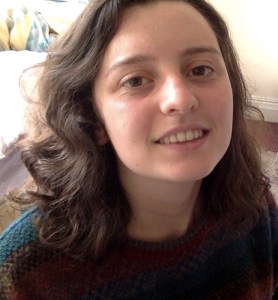 Niamh Twomey is a student of English Literature and French in University College Cork. Winner of Hotpress Magazine’s ‘Write Here Write Now‘ competition in 2016, she has since published works in journals such as ‘Quarryman’, ‘Quill & Parchment’, amongst others.
 Katherine Noone’s first poetry collection Keeping Watch was published by Lapwing Press (2017). Her poems have appeared in Orbis, Crannog, Boyne Berries, Linnets Wings, Her Heart Anthology, Skylight 47, Proost Poetry, Vallum digital edition, A New Ulster and Ropes Journal.


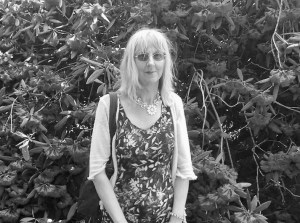 poetry is widely published, most recently, or forthcoming, in Shearsman, Molly Bloom, Allegro, Dawntreader, Ink Sweat & Tears, The Journal, Noon, Poetry Space, Algebra of Owls, The Lake and Amethyst Review. Her work has been shortlisted or placed in several competitions, including erbacce, Wells Festival of Literature Poetry Competition and The Page is Printed. Her poetry collection Tessitura was published in 2014 (Shearsman Press) and a non-fiction manuscript was short-listed for The Impress Prize, in 2015.
 Jess Mc Kinney is a queer feminist poet, essayist and English Studies graduate of UCD. Originally from Inishowen, Co. Donegal, she is now living and working in Dublin city, Ireland. Her writing is informed by themes such as sexuality, memory, nature, relationships, gender, mental health and independence. Often visually inspired, she seeks to marry pictorial elements alongside written word. Her work has been previously published in A New Ulster, Impossible Archetype, HeadStuff, In Place, Hunt & Gather, Three fates, and several other local zines.
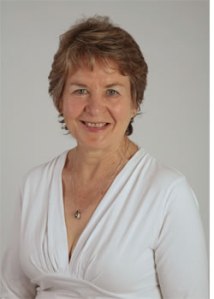 Peggie Gallagher’s collection, Tilth was published by Arlen House in 2013. Her work has been published in numerous journals including Poetry Ireland, Force 10, THE SHOp, Cyphers, Southword, Atlanta Review, and Envoi. In 2011 she was shortlisted for the Gregory O’Donoghue International Poetry Competition. In 2012 she won the Listowel Writers’ Week Poetry Collection. In 2018 she is the only Irish poet on the Strokestown International poetry competition shortlist. Peggie Gallagher’s work was facilitated by Paul O’Connor.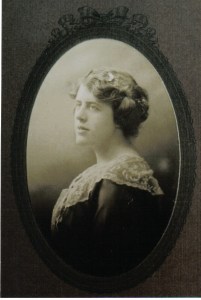
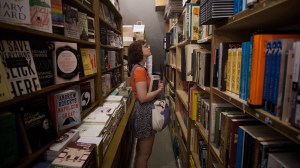 Eva Griffin is a poet living in Dublin and a UCD graduate. Her work has been published or is forthcoming in Tales From the Forest, All the Sins, ImageOut Write, Three Fates, The Ogham Stone, HeadStuff, and New Binary Press
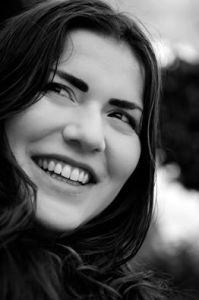 Alice Kinsella was born in Dublin and raised in the west of Ireland. She holds a BA(hons) in English Literature and Philosophy from Trinity College Dublin. Her poetry has been widely published at home and abroad, most recently in Banshee Lit, Boyne Berries, The Lonely Crowd and The Irish Times. Her work has been listed for competitions such as Over the Edge New Writer of the Year Competition 2016, Jonathan Swift Awards 2016, and Cinnamon Press Pamphlet Competition 2017. She was SICCDA Liberties Festival writer in residence for 2017 and received a John Hewitt bursary in the same year. Her debut book of poems, Flower Press was published in 2018 by The Onslaught Press.
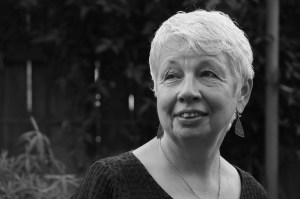 Ceinwen E. Cariad Haydon lives in Newcastle upon Tyne, UK, and writes short stories and poetry. She has been published in web magazines and print anthologies. These include Fiction on the Web, Literally Stories, Alliterati, Stepaway, Poets Speak (whilst they still can), Three Drops from the Cauldron, Snakeskin, Obsessed with Pipework, The Linnet’s Wing, Blue Nib, Picaroon, Amaryllis, Algebra of Owls, Write to be Counted, The Lake, Ink, Sweat and Tears, Riggwelter, Poetry Shed, Southbank Poetry, Smeuse Bandit Fiction and Atrium and with work coming up in Marauder, Prole and The Curlew.
 Alison Driscoll is a writer from Cork and is currently undertaking an MA Creative Writing in UCC. Her work has been previously published in Quarryman literary journal. She has been longlisted for the Fish Poetry Prize and the Over The Edge New Writer of The Year Award.
 Chris Murray