Perfect Storm

I look at my palm
It’s full of scars, crosses and half-lines
        Neither money nor the life line is full
        Index finger bends a lot
Which means I’m not rigid enough

Fingers of my feet are not feminine
A desirable bride would have
Different set of feet.

These are my favourite though
    They ran through the paddy fields
    Bent over the pond and picked lotus
    Danced in the rain
To collect rhythm
That would later become baskets
Of rose and gardenia,
I now share with monsoon

I hold them in the palm of my hands
Doors of the seashore-huts open
Children run out

They come running towards me,
The water and salt
The wooden boat
And the grey bundle of clouds

They come running towards a perfect storm

The storm that will destroy the lines of nothingness
From every little palm
Lighthouse

I saw you beside the ocean,
counting steps
Found you inside the lighthouse,
Seasoning waves

Watched you through the storm,
floating off the shore

In my silent cry
I became the moonlight mirror
And touched you—pining for more
Obituary

It’s easy to write an obituary
Of someone you left unheard
On a footbridge

The story of an unfinished tree
Brewed with pain of freshly broken leaves
Untold

Drops of rain on your shoes and tie
Half dried by an oblivious bite
Of a half-eaten moon
Unseen

It’s easy to write off somebody
With an obituary
A death that happened
By some careless notes of time
Summer A well is built beside a temple Between straw houses Footsteps are born and erased Like daughters And wild flowers Moon-shaped souls Serene, yet dry Walk behind their shadows Along the fishermen’s cry It was I The girl who was burnt for dowry today It was I The girl foetus inside her body which was burnt too It was I The new-born girl who was abandoned in a trash bag It was I They were nobody’s daughter The girl who was not paid her daily wage It was I The girl who was paid less than her husband It was I The girl who was not allowed to join a job As her husband’s boss It was I They were nobody’s sister The girl who was raped by colleagues It was I The girl who was molested by an auto driver It was I The girl who was pushed to bed by a filmmaker It was I They were nobody’s lover The girl who wasn’t privileged by her right to education It was I The girl who never got the privacy of a healthy sanitation It was I The girl who went from one kitchen to the other It was I They were nobody’s pride The girl who couldn’t practise her right to marry It was I The girl who couldn’t practise her right to separate It was I The girl who suffered a fruitless marriage It was I They were nobody’s wife The girl who was sold by one It was I The girl who was bought by thousands It was I The girl who made herself a sex-slave It was I They were nobody’s friend The girl who sold her womb It was I The girl who sold her baby It was I The girl who made her baby an orphan It was I They were nobody’s shelter The girl who was tortured in custody It was I The girl who was beaten by a homemaker It was I The girl who danced in a strip club It was I They were nobody’s armour The girl who gulped her tears It was I The girl who couldn’t shed one It was I The girl who got a slap on her tears It was I They were nobody’s precious The girl who slept on a footpath It was I The girl who slept in old-age home It was I The girl who was kept hungry by her son It was I They were nobody’s world Still, the girl who refuses to lose It is I The girl who refuses to drown or burn It is I The girl who fights back to victory It is I The girl who wants to float and fly It is I The girl who is the lover of a gnome It is I The girl who forgets the obscure junctions It is I The girl who pushes the darkness back into oblivion It is I It is me who takes your hand and walks with you We make a destiny through the late night dew. It was I and other poems are © Dolonchampa Chakraborty |

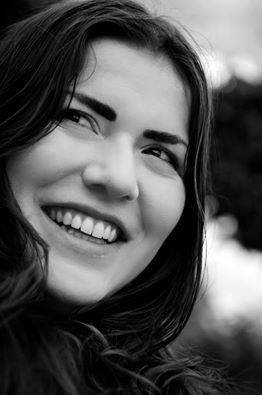
Dolonchampa Chakraborty graduated in Calcutta and now studies Human Resources in Cornell University, Ithaca. She writes poetry in Bengali and has published two books of poetry. She is a freelance translator and editor working for United Nations, Doctors Without Borders and several other organisations. Her poems have been published in prestigious Indian Literature, a bi-monthly journal by the Sahitya Akademi of India among others. She has been a panelist in the Samanvay Lit Fest. For two years, she has edited The Nilgiri Wagon, a literary journal that focuses on translating literature of Indian and other languages into English. She is passionate about languages. Currently, she is learning Kashmiri and leading a translation project of Syrian Poetry into Bengali.
|
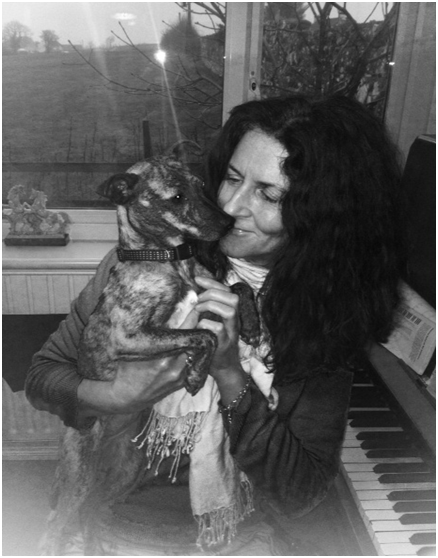
 Marian Kilcoyne is an Irish writer based on the west coast of Ireland. She has, in the past, been a teacher at senior level, worked professionally in education and management for an Aids Organization, and reviewed fiction and non-fiction for the Sunday Business Post, Ireland. She attended the Seamus Heaney Centre summer school at Queens University Belfast in 2013. She has been published or is forthcoming at Prelude (US), The Louisville Review (US), Poetry Salzburg Review (Austria), Crannog (IRL), Ofi Press (Mexico), Frogmore Papers (UK), Cyphers( IRL), Apalachee Review (US), Foliate Oak Literary Magazine (US,) New Contrast (Cape Town), Quiddity (US), Right Hand Pointing (US), Grey Sparrow Journal (US), Off The Coast (US), The Galway Review (IRL), The Liner (US), Into The Void (IRL), Roanoke Literary Journal (US), The Rockhurst Review (US), Banshee Literature (IRL), The Catamaran Literary Reader (US), The Worcester Review (US), The Stonecoast review (US), The Main St Rag, (US), Brushfire Literature & Arts Journal, (US), and others. She was short listed for the 2017 Dermot Healy International prize for poetry.


 Afric McGlinchey is a multi-award winning West Cork poet, freelance book editor, reviewer and workshop facilitator. She has published two collections, The lucky star of hidden things (Salmon, 2012) and Ghost of the Fisher Cat (Salmon, 2016), the former of which was also translated into Italian by Lorenzo Mari and published by L’Arcolaio. McGlinchey’s work has been widely anthologized and translated, and recent poems have been published in The Stinging Fly, Otra Iglesia Es Imposible, The Same, New Contrast, Numéro Cinq, Poetry Ireland Review, Incroci, The Rochford Street Journal and Prelude. In 2016 McGlinchey was commissioned to write a poem for the Breast Check Clinic in Cork and also for the Irish Composers Collective, whose interpretations were performed at the Architectural Archive in Dublin. Her work has been broadcast on RTE’s Poetry Programme, Arena, Live FM and on The Poetry Jukebox in Belfast. McGlinchey has been awarded an Arts Council bursary to research her next project, a prose-poetry auto-fictional account of a peripatetic upbringing.


 Chris Murray