The Leaking Breast
Premature mother’s milk escapes my swollen breast
Unapologetically heralding the other inside.
‘You’ll never be lonely again’ the inane
distortion of the truth of never
Occupying aloneness.
Your body holds but a temporary occupier
Once released your mind will be prostrate before them
Forever.
Simultaneous ecstasy and anguish.
You will crave
The control of the cocooning womb –
Even now breached by the disruption of the leaking breast.
Washing my mother’s hair after an operation.
Bent over the under the showerhead,
Submissive as the child I was
I feel a strange feeling, knowing I too will wash the
Hair of my child growing inside me.
I occupy the position now of the in-between carer.
I lovingly smooth away suds
Under the steaming water
And wish she knew
How much in that moment that I cared.
I badger her restless nature in a vain, cyclical attempt to protect.
There is a comfort in this moment
Of vulnerability
For us both.
I will protect as she protected,
I will mind, as she has always minded,
And we will love intrinsically forever bonded, bound spiritually.
The Abortion Referendum – May 25th 2018.
She will bow to the patriarchal figurehead of the Church
and it’s grotesquely skewed morality and
Vote No.
Bitter words have passed between my mother and I –
Yet she is adamant.
‘Do you believe then that abortion should be illegal everywhere?’
‘What about all the women who will still want or need abortions if the vote does not pass?’
Silence. A superior, taciturn morality. Divorced from the reality of the human condition
And the female body.
My unborn inside me forbids me travel,
Medically,
I am ironically excluded, my adopted home holding my
Pregnant body hostage
As my maternal home does to thousands of pregnant bodies
I crave the little girl inside me.
For her future autonomy
I crave for her grandmother to recognise the nuances of female life,
Female choice, female autonomy.
But I crave in vain and look instead to my undecided father
To vote for his two absent daughters
His two granddaughters
His wife.
For the Pleasure of the Male Gaze
Have you ever seen a rose so riotous in bloom
that the inner petals outdo the outer
for the pure please of life, for reaching the sun first? –
Why should the gardener cut off the inner petals,
Harm the rose,
For the pleasure of the male gaze?
Who would look at the open fruit and then attempt to sew it up?
Who would mute and paint the vibrant colours of the butterfly
To fit with ill-fitting, fleeting trends of fancy –
Where else in this wonderful world of natural beauty
do we so utterly, subconsciously, unquestioningly exist purely for the pleasure of the male
gaze?
Our bodies no more than parenthesis encircling the vehicle for male desire.
Our minds continuously redrawn to mirror a society from which we are continuously
disempowered.
Go forth, bloom.
Chip
You called out to me in the semi-darkness on the naked street
On my way to the station
And I turned in the usual way to see if you were sneering at me,
half hoping for the friend who would return your call.
There was no one else there.
You chip away at my sense of freedom with your emboldened, unwelcome presence
Intruding into my psyche;
One of the lads.
Striking that you probably could barely make out my form
Detail still smothered by weakening night
Other you sensed instinctively and that yearning to assert ignited.
Interesting no one there to witness or applaud, habit.
My sense of caution heightened, exactly as you wanted
The power of my early morning commute marginally diminished
By wariness
Chip away with stares
Chip away with an unwanted brush against us
Chip away with sending pictures to your friends
Chip away with shouting ‘compliments’ at us
Chip away with beeping your horn while we are running
Chip away by asserting dominance in the home
Chip away by doing less in the home
Chip away by paying us less
Chip away by using pregnancy as subtle way to hold us back in our careers
Chip away by idealising unrealistic body types
Be sure not to recognise yourself here,
be sure to demonise me,
Be sure not to admit to the greatest oppression of our age,
Easier to label me, than see what we see.
Untitled
We force meaning on sadness and madness
to make it
bearable
We assign reason to the deep cracks in our souls
Building paper bridges over chasms on which to travel with fragile dreams.
To give the pulsing wound a rudimentary suture
And watch it scar ruefully
But happiness needs no storyline
It sits like a perfect, unexpected, dewy morning mist on a field
Being
Shrouding
Crystallising what it touches
Soon to vanish with the rising sun –
Sequence: “Motherhood” and other poems are © Laura Daly
|
|
 Laura Daly is a poet, writer and teacher born and raised in Dublin, now living in Amsterdam with her husband and daughter. She holds a BA in English Literature, an MA in Gender and Writing and a Postgraduate Diploma in Education from University College Dublin. She also received her MEd in Leadership and Management in Education from Trinity College Dublin. Her passion is feminism and exploring and making visible the female experience through her writing. She is working towards her first collection of poetry as well as a feminist non-fiction book for teenage girls titled Welcome to the Desert of the Real.
 Eva O’Connor is a writer and performer from Ogonnelloe, Co. Clare She has written for stage, screen and radio. Her plays in include My Name is Saoirse, Overshadowed, Maz and Bricks, and MUSTARD (winner of Fringe First Award 2019). Her short story Midnight Sandwich was aired on BBC Radio 4.
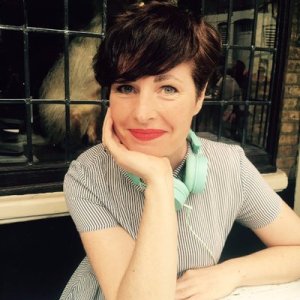 Aine McAllister is a poet from the Glens of Antrim, who works as a Senior Teaching Fellow at UCL IOE. She is currently completing an MA Poetry at Queens University. Her work is published in journals and she is working towards her first collection. She is interested in exploring how poetry gives voice and using dialogue as a tool for writing and for facilitating writing.
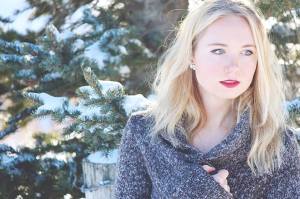 Erin Emily Ann Vance holds an MA in English and Creative Writing from the University of Calgary and studies Irish Folklore and Ethnology at University College Dublin. She is the author of five poetry chapbooks, including The Sorceress Who Left too Soon: Poems After Remedios Varo (Coven Editions) and Unsuitable (APEP Publications). Her writing has appeared in Contemporary Verse 2, EVENT Magazine, Augur Magazine, Arc Poetry Magazine, Canthius, and more. Her first novel, Advice for Taxidermists and Amateur Beekeepers will be published in Fall 2019 by Stonehouse Gothic.
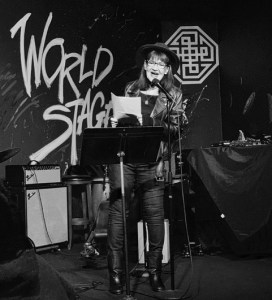 Poet and photographer Alexis Rhone Fancher has work published in over 200 literary magazines, journals, and anthologies, including Best American Poetry, Rattle, Hobart, Verse Daily, The MacGuffin, Plume, Tinderbox, Diode, Nashville Review, Rust + Moth, Nasty Women Poets, WideAwake: Poets of Los Angeles and Beyond, among others. Her photographs have been published worldwide. Her books include: How I Lost My Virginity to Michael Cohen & other heart stab poems, Enter Here, and the autobiographical, Junkie Wife. Her chapbook, State of Grace: The Joshua Elegies was released in 2015, and its companion, The Dead Kid Poems, published in May 2019. EROTIC, a volume of her new and selected erotica, will be published in 2020 by New York Quarterly. A nominee of multiple Pushcart Prize, Best Small Fictions, Best Microfiction, and Best of the Net awards, Alexis is poetry editor of Cultural Weekly.
 Ria Collins worked as Director of Nursing for many years. Now living in Galway, she has read at Clifden Arts Festival and Galway Library open mic events. She has been published in Skylight 2016, shortlisted for Over the Edge New Writer of the Year 2016 and longlisted in 2017. She was shortlisted for Poems for Patience 2017 and in 2018. She attended workshops in Galway with Kevin Higgins and Dublin Writers Centre with Mark Granier, Jessica Traynor and Adam Wyeth. Most recently she has performed a collaboration of her work with music at the Cuirt International Festival of literature 2018.
 Christine A. Brooks is a graduate of Western New England University with her B.A. in Literature and her M.F.A. from Bay Path University in Creative Nonfiction. A series of poems, The Ugly Five, are in the 2018 summer issue of Door Is A Jar Magazine and her poem, The Writer, is in the June, 2018 issue of The Cabinet of Heed Literary Magazine. Three poems, Puff, Sister and Grapes are in the 5th issue of The Mystic Blue Review. Her vignette, Finding God, is in in the December 2018 issue of Riggwelter Press, and her series of vignettes, Small Packages, was named a semifinalist at Gazing Grain Press in August 2018. Her essay, What I Learned from Being Accidentally Celibate for Five Years was recently featured in HuffPost, MSN, Yahoo and Daily Mail UK. Her book of poems, The Cigar Box Poems, is due out in late 2019.
 Clare McCotter’s haiku, tanka and haibun have been published in many parts of the world. She won The British Haiku Award 2017, The British Tanka Award 2013 and The HIS Dóchas Ireland Haiku Award 2011 and 2010. Her work has been included in the prestigious Norton anthology – Haiku in English: The First Hundred Years. Her longer poems have appeared in over thirty journals including Abridged, The Blue Nib, Crannóg, Cyphers, Envoi, The Honest Ulsterman, Iota, The Interpreter’s House, The Moth Magazine, The Stinging Fly and The Stony Thursday Book. Awarded a Ph.D from the University of Ulster, she has also published numerous peer-reviewed articles on Belfast born Beatrice Grimshaw’s travel writing and fiction. Clare was one of three writers featured in Measuring New Writers 1 (Dedalus Press). Black Horse Running, her first collection of haiku, tanka and haibun, appeared in 2012 (Alba Publishing). Revenant, her first collection of longer poems, was published in 2019 by Salmon Poetry. She has worked as a lecturer, a teacher of English, a psychiatric nurse and a full-time carer. Home is Kilrea, County Derry.
 Polly Roberts grew up in Devon. Three years studying Creative Writing at the University of East Anglia left her with an inextricable link to the landscape, compelling her to continue to write about the creatures and habitats encountered there.
 Emily Cullen teaches Creative Writing with the School of English at NUI Galway. For the past two years, she served as Programme Director of Galway’s annual Cúirt International Festival of Literature. Emily’s third collection of poetry, Conditional Perfect, will be published by
  Chris Murray