Melded into the metal door at the back of the old Alhambra, Sheltered by a short canopy that still boasts the glory of its stained green glass, Maurice tries to move his frozen arm. All feeling fails him, as he pumps the fingers of his right hand. The thumping heart rhythms in his ears boom like a bodhran beat. He is all sensation and no sensation. Thoughts dart around like the discarded wrappers that visit him briefly, before being whirled away. Beyond his own breath and the coursing of blood and the cyclonic breeze, he hears nothing. The fevered morning footfall on the Main Street is as unaware of Maurice as Maurice is of them.
The Pint
The persuasiveness of the cold, wet amber Pushes the last wisp of resolve firmly to one side, Revealing all the old desire.
Sixteen years, aging and maturing In a vinaigrette of 12 step hope and his mother’s prayers Hasn’t quenched the fire
Bad days and holy days and Saturdays All steered well, but not today Today he is too tired
Eyes off the road, off the goal, on the pint, Resting in the familiar flow, the gentle tide That is going to lift him higher.
Suitcase
“Suit yourself” His face, a pale, damp mask of resignation, turns to nod towards the door. “You whore….And take your damn dog with you! Aye, and all your traps… your blasted cuckoo clock and lamps, And all the stuff that drives me quare!”
Riled again, he strides the stairs, two steps at a time And pitches all his grasp can hold, regardless. “Bitch” he mutters as they tumble down; a scarf, a quilt, a dressing gown…
“Take them all” He sighs; his anger finally spent. He feels the silence creeping all around him. Sleep will fill the hollow soon, then dawn will wake the memory of her leaving, Taking one small case, nine years ago.
Autopilot Porridge
Putting the funk in function, you stumble around the room Odd socks on hardened feet, turned out to meet the world; hopefully. Hopeful of forgiveness? Or maybe just fatigue… A deep tiredness that will overlook your transgressions from the night before. Wretchedness that will acknowledge wretchedness, like some second cousin; similar but different. Hopeful that our 35-year dance will allow you to make your porridge in peace… and move on.
Can a dropped ice cream be a joyful sight? A slight of thought, akin to road kill: a dead badger is still a badger that was once alive.
Can a spark of juvenile pride (the curl tightly looped to touch the forehead of the whipped pile) be saved from extinction
once it lies, semi-freddo on the pavement? Losing shape and form and purpose – a small death or not one at all.
(Published by Banshee)
Notions of Sex
I have conversations in my head with my ex about how I don’t even want sex anymore that I could have it if I wanted it/ that men still look at me/ I see them looking at me it’s not a competition/ I say/ but if it was I would be winning/ I feel my body born anew without touch/ I can’t even imagine being touched/ my skin is ashy with resistance/ my hair is falling out/ I’m hungry all the time but I have no appetite/ I think about the trees I’m planting/ even though I am leaving soon/ will anyone water them?/ I admire the dirt under my fingernails/the rose thorn scratches up my knees even my sweat smells different/ ferrous/ as if I am rusting/ I find old nails in the soil unbent/ I hammer them into the dry stone wall / and tie the pear tree to the wallit/ it needs support though it is too young for fruit/ I leave orange peels on the window sill and / feel embarrassed by my nipples as I drink my coffee/ I think at this point I should talk about masturbation/ but I don’t feel like it/ there is a rotten mattress abandoned on my street/ I look to see if anything is hidden in the springs/ there is nothing/ across the wall is the river/ a shag swims past/ later it will dry its wings on a rock/ the tide comes in and goes out faster than I can look out the window/ I miss the turn/ in the woods I feel the trees around me like bodies/ I have read that there is a chemical peace from trees/ I imagine we are sardines together/ me and the firs/ upright/ refusing to lie down on the needly soft ground/ there is a greenhouse on the path/ the glass is all broken/ the pleasure of smashing windows comes back to me/ on building sites as a child/ one after another/ the softness/ the trajectory followed through/ we hold up a hose to a pile of sand/ pretend it’s a penis and piss holes like in snow/ a man in shorts waves to me from his bike/ compliments my dog/ no one catcalls anymore/ I was followed once/ in a small town/ I was about twelve/ it got dark but I got away/ you don’t forget the feeling of someone watching you round a corner/ is it better not to be watched at all?/ there are new blinds on the windows/ now the locals know whether I’m in or not/ I’m told you’re not a local until you get a set of binoculars/my eyesight has returned/ I forgot my glasses one day and never used them again/ I rub myself with oils/ take tablets to reduce my heat/ my face burns with irritation/ people think I’m angry/ they’re only half wrong/ but I’ve learned to smile in a better way/ let it rise to my eyes/ bare my teeth/ I reel away from hugs/ I don’t want to hold hands/ I sit on the steps in the garden/ sunny stones warm me/ I lie down. (Published by Hotel)
Old Lives
Perhaps if things hadn’t turned out The way they did, and I hadn’t left Eight years before, jumping in beside Daddy in the car, placing the flower My boyfriend had given me on the dashboard Perhaps if the waves had been more violent on The Irish Sea that crossing, if perhaps I had taken that as a sign and turned back Commandeering the wheel Pushing the captain aside Get out Of my way and sailed back to Scotland Taken up a job in an allotment Worked things out with the Greek Then ditched him later for a tall Scottish Fella called something like Reuben or Robin who played in a folk band Perhaps I would have been happier
Perhaps I wouldn’t have gotten that stomach ulcer And Daddy wouldn’t have confused His cancer for a matching ulcer They’d just cut it out in time and We could have gone to the Venice Biennale That year, like we talked about Me laughing at his conservative tastes How he figured craft was of utmost importance Not this conceptual drivel Cast a cold eye On life, On Death Horsemen pass by! He’d chant as we walked along canals Missing the dog at home That would not jump in a river And stove its head in the next summer Perhaps we would all finally learn How to get along at Christmas To sit down and eat in peace without Someone breaking a glass or shouting About the unfairness of it all And I’d go back to Glasgow to my empty flat Get my cat back from the catsitter Open the window and Drink a glass of cheap French brandy To bring in the New Year. (Published by Hotel)
Incredible Things Do Happen
A tiny person at Edith Piaf’s grave turned to my parents and told them I am her sister. Her bones were birdy, twisted and brittle, like those left on the number 171, stripped of flesh, in a small cardboard box. Her body doubled in on itself forehead reaching closer to the concrete of the tomb, her stick the only thing contriving to separate the two. Perhaps it was a lie. Whoever this woman was, she’s in the Repertoire now, joining the Kennedys playing baseball in their garden in Cape Cod, an immigration inspector who flipped my mother’s passport photo off with her long acrylic nails and the young man who presented my aunt with a huge bunch of flowers in Neary’s, apropos of nothing. (Published by Butcher’s Dog)
“Let’s get together soon,” without setting a date is the tactic we always use to keep others on the line without actually giving of our time. You’ve made it clear you don’t have time for me, so why would I tell you my secret when everything would have to change? I’m torn. I’ll be a burden either way. I’m stuck trying to decide which is more humane. Do I inject grief now into your too busy timeframe? Or wait and risk you maybe cursing my name because I didn’t give you the chance to say goodbye? I tried to tell you in my wordy way but forgot you never read what I write, so wouldn’t know I was going away. The words are just too hard to say. So sure, let’s get together soon. Someday.
Bubbles
Swamp bubbles lurched from the mud below belching the stench of repressed memories I hadn’t let go. Forgotten trauma attacked in waves, pain and self-loathing vomited in saving grace.
Wiping my mouth with the back of my fist, I staggered to my feet, this memory I would no longer resist. Screaming my rage across the sky, the swamp fell silent, still full of dark stains left to die.
Umbrella
We didn’t have an umbrella but, laughing, you grabbed my hand. Those Irish blue eyes were dancing as you pulled me along, dodging cars and cold November raindrops.
Inside a turf fire was burning. Hot whiskey in hand, we leaned in to hear over pub noise. And despite the late hour, we yearned to linger.
But we left once we were dry, laughter subdued as confusion took hold. The fire had warmed more than intended. Were we becoming more than friends? The opportunity to find out washed away with the last of the rain. We didn’t have an umbrella.
Too Small
No one hears my screams as I claw, bound and trapped, by barbed wire skin two sizes too small. I bleed and can’t catch my breath. Why did I put it back on at all?
Blind
My heart is surely going blind. I used to know every fleck of gold In your hazel eyes, Even if mine were closed. I can’t see your eyes anymore. I panic when I stumble and bump into the pieces of the old me I no longer recognize; the ones I never put away. The ones that now make me trip and fall.
My heart has gone deaf. I used to hear the sound of your voice Even if you were far away. Like a buoy ringing out on a foggy sea, calling me home. Now I can’t hear you at all. In silence, I wreck upon the rocks and frown.
So I stare at photos, holding them close to my dying eyes, And watch you get blurry and fade.
Christine Murray lives in Dublin with her two children Tadhg and Anna. Her poetry has been widely published, both in print and online, in chapbooks, anthologies, and journals. She founded and edits Poethead; A Poetry Site that is dedicated to platforming work by women poets, their translators, and editors. She is an active member of Fired! Irish Women Poets and the Canon which seeks to celebrate and draw awareness to the rich cultural heritage of Irish women poets through awareness-raising and reading. She currently curates the Fired! archive at RASCAL (Research And Special Collections Available Locally- Queen’s University, Belfast). Christine Murray’s latest poetry collection “Gold Friend” is forthcoming in Autumn 2020 with Turas Press, Dublin.
They have come to ask of me, Many answers they sought.
They did not look at my breasts, Or between my legs.
It was my eyes, And inside my head they probed.
They put out their hands And broke open my skull; They looked in to see What thoughts I hid Between the folds of my brain, The slime, the blood, the people.
They wanted to know what it was from them I was going to take, Which were the hands I held, What were the forests that I walked, The words I nursed, Like hot iron branded in my soul; They look to see What crowds were being formed, That thought of the little raped girl, The boy who wrote poems And was jailed, Of the pregnant woman With the stillborn child in her lap.
And when they put back the pieces together They looked to see If I was one of them. That was what they wanted After all; To know if I was one of them.
Or if I was the one That stood outside their door, With my fingers raised In questions.
YELL
Gujarath. You sting me still.
When they come out in the night Their torn wombs hanging with dead children Their shaven head branded with “OM” Their vaginas split open Their breasts bitten broken. When he* walks around me His calls unanswered, thrice, When they torment him more As he refuses to laud their country, His fingers chopped, Then his hands and feet Dragged by the fork Thrown into fire.
He lifts his hands to me. They lift their hands to me.
I can see it coming The saffron gods in their chariots. I have to tell you then, Before it is too late, To think. To think.
Histories of lies that you live with, Mounds of forgetfulness you sleep on, The world you think secure, Lying under your booted foot;
I have to tell you. It is your blood. It is your blood.
Hang your heads in shame. Carry the skulls from the farmers. Walk with them they killed, Walk with the landless, Walk with them with bewildered eyes, Who hide in dark corners.
Your children look at you For answers. (*Ehsan Jaffri)
NO COUNTRY TO OWN
What will people do, Who have no city to call their own? Whose houses are four corners they turned, When life took them.
What will such people do, Who long to grow roots, But who stumble when they see faces, Trying to recollect Each face from a dead memory Memory that was not born, naturally.
What would such people do, Who want to know what it is To dwell under the same sky, The same sunrises and sunsets, A meal on the wooden table At times in the sun, And the evenings A circle around the tea cup.
What would they not do to swing their hands, In the alleys ways Knowing for sure The next corner they must turn?
STRANGER LOVES
You are another country I ventured into. Blank windows That did not latch, But opened into Strange skies, unknown stars. Yet when you smiled The ocean was another day; And I stepped blind Dumb, dusted, worn. The water crept into me Lifting into you, waved And I drowned.
Drowned.
When I rise, The sky in my eye Is the blue You left behind.
Lady Jesus
The doors are closed. Even the windows. No eyes blink. I walk around the house once. Twice. Then again. I touch the walls to see If they have broken. A little hole, tiny, Hiding from my eye Through which I can look Into the darkness inside. But nothing. The home has become a house. She has died, rotting on the cot, She who smiled at me like a wild gypsy, And told me to hide love letters under the green leaves. Without her the jackfruit tree is bald. The fisherman does not look in. Here again, I wait for the wind Under a sky To carry some smell That I missed Which would pour Water down my spine Closing the hole they drilled, On my hand My feet My breast.
SISTER WOMEN
Sister, That mountain country you speak of, Those women The ones whose breasts Were free, Unrounded, Hanging , lean, fleshy. The ones whose feet were kept apart carelessly, Who flung their hands In wild abandon. I see them sitting before you, Cold tea between us. There was no revolution, you said No bloodshed No foreign flags. None. I saw them Dangling their feet, Sitting on the rocky hill, Looking into the blue sky. And I saw their ankles, Chainless, soft, pink And soles, the soles of their feet Where rough roads Met Violently fusing desires. I saw them, Sister, I saw them laughing aloud I saw the toothless gums And the toothed ones The wide-open mouths The ringing echoing far away. I saw them hold hands; And your eyes, sister, Your eyes, That spoke of this dream To be born at home.
Muslim, Rohingya, Three years
Sometimes there is a little bit of me sticking out like red meat. The flies swarm around it. I know there is rot spreading a little from the edges. It started the moment I saw the little girl floating in the water. A Rohingya, she floats from Myanmar to my doorstep, When we are getting ready with the flower carpets. Her face is bloated. Her eyes closed.
On her red dress, the butterflies are still alive, flitting on the half-opened flowers.
She does not seem surprised. Where are the others who walked with her? The mother whose hand she left the moment the water took her in? The sister she laughed with a moment ago? The father she looked from afar? The brother who carried her around? The friends under the tree with whom she played before they came to kill? I cannot see them. The water is cold where she floated bit by bit into my eyes. Was she a Muslim? Was she Budha’s enemy? I do not know. The moment I saw her face I felt the rot spreading, And now I am almost dead. It is not the water. I know. It is not the Buddha. I know. I saw him close his eyes in prayers, like she had closed hers in death.
Arathy Asok’s debut collection Lady Jesus and Other Poems is described by the Journal of Commonwealth Literature as “Resistance poetry with a sharp edge” (2019, Vol. 54(4) ). She is a bilingual writer and was featured poet at The Blue Nib Magazine (Issue 37, Ireland). Her poems have appeared in national and international journals, in print and online (in Samyukta, Poetry Chain, anti-heroin chic, Poets in Nigeria, Blue Nib magazine, Door is Ajar, Womaword Press and Culture Cult). They are included in an Anthology called Native Petals, Nocturne and Iliyali (USA). Her short stories in Malayalam have appeared in Madhyamam Weekly and English short stories in Rupture (Pakistan), Credo Espire (USA) and have been translated to her mother tongue and published in Indian Express Malayalam Online.
‘Secrets of a cartographer’s wife’ by Katrina Dybzynska
The cartographer’s wife never told him about her contributions to his maps. A few tiny islands hidden in the middle of an archipelago in the name of symmetry. Some borderline moved to resemble a face shape. The territory of England shortened slightly, in personal revenge.
One time, she renamed an insignificant river in Bangladesh after her lover. She felt pity for the cartographer that he was more furious about the affair than about her intervention in the world order. She knew that romances were ephemeral, while naming things was changing them forever.
Katrina Dybzynska poet, shortlisted for Red Line Poetry Prize 2019. Author of „Dzień, w którym decydujesz się wyjechać” (The Day When You Decide To Leave), Grand Prix of Rozewicz Open Contest 2017. Laureate of national competitions in Poland. She has been publishing short stories, concept book, science fiction, reportage, and poetry, but feels most attracted to genre hybrids. Polish Non-Fiction Institute graduate. Activist. Currently a member of Extinction Rebellion Ireland.
‘Correnti’ by Viviana Fiorentino
Ora è questo un manto di alghe e sale sotto il vento atlantico o è corrente marina del fondo della mia vita e della tua vita ora è sogno o perla luccicante.
‘Currents’ (English trans. by Maria McManus)
This is a shawl of salt and seaweed against the Atlantic wind the ocean currents on the sea bed of my life, your life a dream, a burnished pearl.
Viviana Fiorentino was born in Italy. After obtaining a PhD, she travelled across Europe, from Switzerland to Germany, England and finally to Belfast where she teaches Italian Literature. Since 2018 she has taken part to literature festivals in Italy and in Ireland. She was involved in the poetry project ‘LabeLLit’. She has been awarded or mentioned in various Italian poetry prizes (i.e. Arcipelago Itaca Edizioni & Bologna in Lettere Dislivelli). Her poems appear on Litblogs, international magazines (Brumaria, Works #9’, 2018) and in the Arcipelago Itaca Anthology of Italian contemporary poets. In 2019 she published her poetry collection In giardino (‘In the garden’) for Controluna Press and her first novel Tra mostri ci si ama (lit. trasl. ‘Monsters love each other’) for Transeuropa Press.
Maria McManus lives in Belfast. She is the author of Available Light (Arlen House, 2018), We are Bone (2013), The Cello Suites (2009) and Reading the Dog (2006) (Lagan Press), she has collaborated extensively with others to put literature into public spaces. She is the artistic director and curator of Poetry Jukebox and an active organiser and founder member of Fired! Irish Poets.
‘Genetics’ by Roberta Beary
Your eyes are big and round like your father’s
but while his are the color of the Irish Sea
yours are the color of the muddy fields
on my father’s land
fit only for the peasants who worked them.
abortion day
a shadow flutters
the fish tank
Publication credit: Rattle #47, Spring 2015 (ed. Timothy Green)
Roberta Beary identifies as gender-expansive and writes to connect with the disenfranchised, to let them know they are not alone. She is the author of Deflection (Accents, 2015), nothing left to say (King’s Road Press, 2009) and The Unworn Necklace (Snapshot Press, 2007, 5th ed. 2017) which was a finalist in the Poetry Society of America annual book awards. Beary is the editor of the haiku anthologies Wishbone Moon (Jacar Press, 2018), fresh paint (Red Moon Press, 2014), 7 (Jacar Press, 2013), dandelion clocks (HSA, 2008) and fish in love (HSA, 2006). Her work appears in Rattle, KYSO Flash, Cultural Weekly, 100 Word Story, and Haiku In English The First Hundred Years (Norton, 2013). Beary’s work has been nominated for Best of the Net and multiple Pushcart Prizes. She lives in County Mayo, Ireland where she edits haibun for the journal Modern Haiku.
‘Dying Lover’ by Anora Mansour
Trace my lips In low whispers As I once wept psalms over my dying lover.
Threaten that man You will murder for me – For my heart is a cadence of silence.
I can only love you if you creep through this life dangling dangerously as a ravenous red kite.
When we both become one lonesome night. And rub up to love up as a fight.
Oh, how I might love you, bitter citron basket on my lap Slumberly trusting me as a child. I would open my thighs to you – a snap trap.
Anora Mansour is a graduate of the University of Oxford. She lives between Oxford and Dublin. She has been published in a collection of Jazz Poems, various online sites, and has her own published collection of poetry and blog. She is African-American and Irish.
‘Clutch’ by JLM Morton
for h.l.
in the nest of my fist, a fledgling scooped up from the lane
her soft unfinished beak her shining eye a buoy ringing in the green cathedral of trees
a single yellow feather wisps across my knuckle there is a twitch of elephant digits
and I think about keeping her
raising her as my own feeding her worms
but I let her go
chirring for the ones I could not save.
JLM Morton lives in Gloucestershire, England, snatching as much time as she can to write between caring for a young family, renovating a house and staring up the barrel of a demanding day job. Her first set of poems was recently published by Yew Tree Press for the Stroud Poets Series and she is currently working on a collection.
Though the civility of civilisation frightens me, I visit somewhere populated. A graveyard made squirrel territory. One squirrel for every gravestone. They mount lichen-covered peaks and keep lookout. They claim the trees, the abandoned church. Nobody will make them leave.
That night, I dreamt the answer to the universe. It was blue, inside a conch shell. Spiraling in and out of crystal moments. Eggshell blue. In and out of images of the hospital bed, and these dreams.
Polly Roberts grew up in Devon. Three years studying Creative Writing at the University of East Anglia left her with an inextricable link to the landscape, compelling her to continue to write about the creatures and habitats encountered there.
Observations of both the non-human and human world continued whilst living on a houseboat on the River Avon near Bristol while completing her MA in Creative Writing at Bath Spa University.
Polly has run creative writing workshops for refugees, detainees, and young people and curated two exhibitions in response to her writing, both displayed at the Norwich Arts Centre.
In 2018, the British Council awarded Polly a Writers by Nature scholarship, during which she wrote this debut poetry collection, Grieving with the Animals. ( 2019, Dempsey and Windle)
‘Beochaoineadh Máthar Maoise’ by Ellen Nic Thomás
A dhílleachta linbh gan ainm, gan athair, Do chraiceann ar aondath le humha an nathair, A lúbann timpeall do thaobhán uiríseal, Mar bhata ceannródaí is sníomhanna sisil.
Is trua liom ciseán do dhóchas a fhíochán, Do dhán a chaitheamh i bpoll an duibheagáin, D’eiseadh a chruthú ar bhunús baill séire, ‘Nois tá tú chomh cotúil leis an gCailleach Bhéarra.
A iníon, a mhiceo, a ógfhlaith bocht, A leanbh truaillithe, maith dom mo locht, Imigh anois leat, ná bí do mo chrá, Le smaointe ciúinchiontacha ó mhaidin go lá.
Ellen Nic Thomás is a bilingual poet from Dublin. She graduated from Trinity College with a BA in English and Irish. Her work has been published by headstuff.org, Tales From the Forest and The Attic.
'On watching a lemon sail the sea' by Maggie Harris

1
and I’m singing ‘You are my sunshine’ thinking
of my childhood across the sea of incubation
go Honey go
you self-contained cargo ship you
with your sealed citrus juices and pitted panacea of seeds
braving the collision of tankers and illicit submarines

                 they called me scurvy.       the lemonade
                 my mother made was iced and sprinkled with
                                           Demerara
 (of course)

and I’m wondering, did they grow you there, o lemon     mine
you
for your juices
a lemon plantation, not to be confused with
a plantain plantation even a banana just don’t mention sugar
stack you in the gloom like hereto mentioned bananas
green and curtailed in their growing  or even
those force-ripe mangoes with girls’ names
nobody knows here and who leave their sweetness behind
bare-assed on the beaches
come
to the marketplace
comatose.

I do not remember lemons, but limes.


       M
    I         E
L                S.

Piled high in their abundance. Limes.
Acid green pyramids on market pavements
holding their secrets beneath their reptilian skins.

And there is my aunt, her arms thin as bamboo
gathering the fallen from the yard, sweeping
their dried leaves into the remembrance of herself
whilst the black maid slips slivers of lemon into a split
-bellied fish whose eyes glaze up at the sun.

‘Gauguin, you can come in now; remember Martinique ...?
hue the native in all her harnessed beauty
the slack –jawed fish, browning blood
the textured landscape in shades of  pawpaw and indigo.’

But, liming is what my lemon is doing now,
(in the West Indian sense), hey ho
over the waves at Aberporth, there he blows.


2
I set you free
to take to the sea again
on a high tide, with breakers rushing the beach
like warriors.
They pummel the sand, scythe
a four foot chasm into the mouth
of a lonely river
beat the rocks’ submerged heads
batter the cliffs again
                                        and again
                                                     and again.
The sea, beyond its charge, was waiting -
a winter morning sea, a Twelfth Night sea
tumultuous and moody

                                       waiting.

A strange gift, you
a large, perfect lemon
fresh and sharp as the sun-bright
wind-cut winter’s day. But I
unsure of your heritage
refused you.


3
Dear Voyager,
I cupped you
in my palm
desire urging my possession
how easy it would be – a lemon drizzle cake
a Martini iced, an accompaniment
to plaice or sole – and here I am playing with words
the resonance of belonging, of immortality –
but the devil played tricks with my mind
an injection of poison perhaps, a needle prick
into your  pristine, nobbled skin – but we are running ahead here
thinking of cargo – you may simply have fallen from a Tesco
carrier bag whose owner, fearing a lonesome home-coming
went walking on these very sands contemplating - life.

But there you were anyway, settled on the sand like a crab
then comfortable in the palm of my hand.


4
Finders are not necessarily keepers. Some
will do well to remember that. Vixens
circling misunderstood husbands in bars. Frag
ments from the fallen.
Oh but, how strong is the desire
to hold close, keep tight
smother your darling, your little nut-baby
in soft gloves, hard love, the kind that makes
you want to bite, bite! Rip flesh and bone. Swallow.
                     I could have accepted
your sacrifice
that gift of yourself, thank the universe
for its benevolence.
But the universe is not benevolent.
Stars are exploding missiles in a panther-black night.
Saturn doesn’t give two fucks. It’s chaos
out there.
But I guess you didn’t have time
for star-gazing in your ocean-going lumbering
over the hey-ho waves. And if I had sunk my vampiric teeth
into the you of you, you would be no more
than a bitter taste, a withering lump of citrus
on my kitchen table. Far better to remember you
the obsidian walnut weight of you
and these questions you have gifted me
and that last sight of you
rolling away on the tide.
Maggie Harris is a Guyanese writer living in the UK. She has twice won The Guyana Prize for Literature and was Regional Winner of the Commonwealth Short Story prize 2014, with ‘Sending for Chantal’. She has worked for Kent Arts and Libraries, Kent University and Southampton University as International Teaching Fellow.
the black mountains rise up cities cloud-urban citadels not the crow clang-tapping a tin post not the screel and soar of the gull can prevent it tails of berries strew the ground littered already with wasp-hasps wet leaves rain washed the trees out my body in its wet and dry calls yours it does not yearn for you I can snap your image from my mind at the crossing where
life is my soul doing just as theirs in their everyday I watch them carry their validities like groceries the realities of their lives across streams of traffic observing the marvel of their feet carrying weight my feet-of-clay are in their wintering standing her observing reds deep dark greens I wish you away and move into them into their flow bit by bit the mountains have dissolved behind houses as magic
cities surely do crows worry the long wet grass and the gull has soared to the sea red berries impinge when I crack their blood -bags into the ground their juices red underfoot I pick the threads snip them at their roots tidying this box of sharp things scissors and needles neat and sweet the box smells of vanilla freesia and some other thing I put the scissors away it smells of cedar
Read Issue 20 of OneHere. The artwork is “Rip” by Steven DaLuz
Chris Murray lives in Dublin. She founded and curates Poethead dedicated to platforming work by women poets, their translators and editors. She is an active member of Fired! Irish Women Poets and the Canon which seeks to celebrate and draw awareness to the rich cultural heritage of Irish women poets through readings. Her latest book is ‘bind’ (Turas Press, 2018)
Jane Clarke’s first collection, The River, was published by BloodaxeBooks in 2015 to public and critical acclaim. Her second book-length collection, When the Tree Fallswas published by Bloodaxe in September 2019 and her illustrated book of poems, All the Way Home, was published by Smith/Doorstop in April 2019.
The River was shortlisted for the Royal Society of Literature’s Ondaatje Prize, given for a distinguished work of fiction, non-fiction or poetry evoking the spirit of a place. In 2016 Jane won the Hennessy Literary Award for Emerging Poetry and the inaugural Listowel Writers’ Week Poem of the Year Award. She was awarded an Arts Council of Ireland Literary Bursary in 2017.
Jane holds a BA in English & Philosophy from Trinity College, Dublin, an MPhil in Writing from the University of South Wales, and has a background in psychoanalytic psychotherapy. She grew up on a farm in Roscommon and now lives with her partner in Glenmalure, Co. Wicklow, where she combines writing with her work as a creative writing tutor and group facilitator www.janeclarkepoetry.ie
Up – up and away in my little studio under the sky drawn back alone – to write
That loneliness is the room for concentration bears the space for inspiration strikes the key of motivation to create origination with insane illumination and a wild determination, the poetic flow in motion — oh that cosmic emanation for the sake of word-elation
Yet, it requires segregation and at times I miss emotion wishing for some conversation and a mutual revelation. So I leave my elevation seeking true communication and some closer stimulation —far beyond my meditation of obsessive rhyme-creation
And when that space inside of emphatic animation and ecstatic evocation with the strange amalgamation of expansion and sensation, that poetic incantation that orgasmic culmination fills me up to saturation, then I get the urgent notion to fulfill my true vocation
And again I draw back to my lonesome destination up – up and away in my little studio under the sky
— to write
Under the Silvermoon
And how often am I looking up with longing gaze to your window high above under the silvermoon where your sweet body lies already in the warm duvets when inside me with desire now the night awakes
In many hours when the moonlight travels through the dark and the muse of poems binds me in a writing trance my tender feeler-cells are all consumed in longing for the touch from your gentle hands
And my senses wander further down along your flanks until with yearning quiver – when my night is done I quietly can nestle to your supple curves at last and disappear in bliss to sleep under the silvermoon
— And my desire is waiting for another night.
Unterm Silbermond
Und wie oft sehe ich mit sehnsuchtsvollem Blick hinauf zu Deinem Fenster unterm Silbermond, wo schon Dein süßer Körper warm in Kissen ruht, wenn voll Verlangen erst in mir die Nacht erwacht.
Zu mancher Stunde, wenn das Mondlicht durch das Dunkel zieht und mich die Dichtermuse in den Schreibwahn bannt, verzehren meine zarten Fühlerzellen sich vor Sehnsucht nach Berührung Deiner sanften Hand
Und meine Sinne wandern weiter Deine Flanken lang bis mit ersehntem Beben ich – wenn meine Nacht getan, mich leis an Deine weichen Kurven schmiegen kann und selig unterm Silbermond in Schlaf entschwinde –
— Und mein Verlangen wartet auf die nächste Nacht.
Curlew
You tell me of the call of the curlew Its curling cry haunting through the bogland How it weaved through the mornings of your childhood How it echoed through the darkness of your nights
The curlew’s call has fallen silent over the years gone by The mottled messenger stolen as the numbers of birds migrating the wetlands drained now and laid dry have from hundreds plunged sheer into near extinction
The curlew’s trilling song the melody of coastlines harmony of the island has gone quiet with the winds The seeker of the sand leaves behind a land void of music luring the boy in the evening sun
You mourn the echoless silence in the mornings of your prime No slender legs stalking the plains or stoking mud with curving bill No curlew calling evermore the empty coastline still Nothing more than a memory left behind at the end of dusk
Metal
After we invented the wheel we learned how to melt the metals from the rock, and the gold-rush began, as we dug and drained all the gleaming precious treasures from the veins of the Earth, forging jewels, coins and wealth, hoarding them like magpies.
Red hot, like liquid fire flowing, a crimson burning river glowing, molten copper, iron, silver slither smoothly through the grooves, pouring into casting cauldrons, shooting into foundry molds, smouldering, steaming – zosh the streaming gold is cast to form.
We made tools from the new metals and axes for slaughtering trees and arrowheads for felling animals. We made ploughs to sow the seeds and blades to cut the deeds and steal the riches from the land and rightful owners, and we cast our wildest dreams into reality.
Then we made dooming cannonballs to cast on human enemies and iron bars to capture freedom. Our bullets pierce through history, reeling round the golden throne, our babel titans slice the skies and we’ve made drills to bore the very bedrock of our waters.
Now hard and cold our steel-towns gleam in the sunlight like blue ice. The shimmery promise of gold holds the core to precious pride. But the price of power was high and now the golden calf is sold! And our hearts like bloody swords from wealth and greed are growing cold
Beyond compare we hoard and kill like magpies – merciless as steel. And the glowing stream of gold from liquid fire freezes cold and our hearts become the stone that once we dug out of the ground from the gleaming veins of Earth – blinded by the promise from Her core.
We are Receivers
Staring into the night eyes fixed hard on the bridge in the dim light until the mind cannot understand the image any longer
Repeating a word – repeat repeat so often that to the ear it loses its meaning becoming a mantra of higher consciousness
Chanting the Om until we rise from lightless night benighted mind filling until aglow with the potential that is the eternal light
Seeing the Ocean of love and the breath halts the heart spreads its wings and the tongue knows no words
We are receivers of a brighter light than our eye can ever see nor our mind can ever conceive But our hearts can feel
Quiet I stand in the stillness of the Divine the brightness of love the silence of awe
Rosalin Blue is a cultural scientist, translator, and poet who began performing in 1995 in Hildesheim, Germany. Linked to the literary scene in Ireland since 2000, her poetic home is O Bhéal in Cork. She has performed in Cork City and County, Limerick, Galway, and Dublin, and at festivals like the Electric Picnic and the LINGO Spoken Word Festival. Blue’s poems have been published in Southword and the Five Words Volumes in Cork, Revival Poetry,Stanzas in Limerick, and in Crannóg Magazine, Galway. She has been included in two Cork Anthologies, On the Banks (2016) and A Journey Called Home (2018). Her poetry collection In the Consciousness of Earth was published by Lapwing, Belfast in 2012, and her translation of love-poetry by the German Expressionist August Stramm You. Lovepoems & Posthumous Love Poems came out in 2015. Find her on Youtube and facebook.
Today she is learning to walk again. One month after a minor fall, my mother heaves and plants
each foot in turn, toes dragging the hardwood floor. Her eyes are fixed ahead as far as they can go
beyond her new walking frame, which she grips and shoves, elbows unbent, as if it were some brash sergeant
who she must keep at arms-length, and who has ordered this stop-start frog-march down the hall.
When the shuffle and thud ends, I come, find her standing, arms elbow-deep in the hot-press. She turns, says, with a little edge,
“you’re watching me like a hawk today”, as if I’d thwarted plans to plumb the depths of the town watercourse and to make for the open sea.
And this was before, by one month, her death – a week when time seems now to have been advancing and receding at once,
a week of fierce, contained ardour for her life, or for whatever parts of that life – just then a pile of laundered night-attire – were still hers to rearrange.
My mother is learning freedom again. Today freedom means to stand unravelling a ribbon that loops the neck of a nightdress.
See how calmly she pulls it towards her, worries its knot between thumb and forefinger, plays it through her hands, till the slip and fall of its unmoored end.
In the Fitting Room with Mary Hick
We’d say, ‘It’s Mary Hick,’ to put a stop to trying-on; a name to jinx a certain look – a skirt in chequered folds, or gathered sleeves with lace around the cuff,
a something dowdy we could always spot if not explain – a fatal glimpse of what we feared was dull or old and not supposed to manifest in us.
Later on, I learned that other women knew her as well or knew her by a different name: Wee Maggie, Minnie Banger, Martha-Anne,
tools in a cruel arsenal of terms we trained upon ourselves to self-police (mousy-haired) and grade (mutton-dressed-as-lamb).
Now in that no-man’s-land of comfy flats and shapeless layers, Mary Hick remains the mirrored form of frowzy that I never wish to own.
And here’s to the everyman who gives a damn for chic or anti-chic in leisurewear, for mates who caution round his fitting-room of risks in patterns, safety in monochrome,
for homely cousins they invoke to chasten with: Fred Flump, Cracked Alf, or little Jimmy Hick.
Grafted: Referendum 2018
The cherry-blossom burst in two that year, clashing with itself in the verge before the town. Half its branches grew light-green leaves and flowers – not blowsy pink, but artless and wan – that betrayed its foundational family secret. Behind it, amongst the thistles, a dog-rose flushed puce (whether with glee or regret) that its neighbour’s subterfuge had been exposed. And visitors observed how closely houses rub shoulders here, how paint blisters on closed front doors; how the grim intimate makes public property, and how all our wishes and constraints come grafted on the same lopped limbs.
Mince Customer
Pinned to the door was a diagram of a heifer with sections straight-lined
across her side: sirloin jigsawed between rib and rump, shank slotting
into round. And the people who came in, we sorted them by the cuts they bought:
Mince customers wanted cosseting, all the work done for them; A fillet woman wanted only lean,
leaving all the fat and gristle on our hands; But a brisket man
was a prince, who’d take his lean where he could get it between the bone and thews.
Inside too a series of lines ran through the house like skewers. As a child you couldn’t see them,
but bit by bit you’d puzzle out the no-nonsense pattern they laid down, plot yourself a course in which
your silverside was out with your flank protected your tenderloin concealed
or else you’d feel the chill from the refrigeration unit as sure as any mince customer.
Published in Collection: Ann Leahy. The Woman who Lived her Life Backwards. (Arlen, 2008)
A Good Rogeting
I keep to myself on one side of a bed. Its other half is occupied by books meant to match my moods, catch the thread of all my thoughts, from hard-angled works of reference, to magazines, loose-leaf pads. A collection of love-lorn verse hugs an impenetrable masterpiece while Judith Hearne’s eclipsed by glamour ads.
When I bring a new one back over dinner with a glass of wine I imagine removing its paper bag running my fingers down its spine how I’ll fan the pages to inhale its pristine smell, then make it my own: easing back the sleeve and going down on the biographical detail.
Sometimes that’s the best bit on evenings when I’m not in form to get stuck in or to commit not even to paper. One volume alone then seems able to interject: Chambers Twentieth Century Dictionary – something new with every read and no long-term effects.
I can fall asleep over a phrase whose meaning remains a stranger and wake in the morning with Roget’s Thesaurus poking me urgently in the back.
Published in Collection: Ann Leahy. The Woman who Lived her life Backwards. (Arlen, 2008) .
Ann Leahy’s first collection, The Woman who Lived her Life Backwards (Arlen House, 2008), won the Patrick Kavanagh Award. Individual poems have twice been commended in the British National Poetry Competition and have also won or been placed in many competitions. Most recently, a new poem came second in the Yeovil Literary Prize, 2019, another was a prize-winner in the Troubadour International Prize, 2018. Poems have been widely published in Irish and British journals (including The North, Poetry Ireland Review, Stand, AGENDA, Orbis, New Welsh Review, Cyphers) and have been included in several anthologies. She used to work as a lawyer and now works as a policy analyst and researcher. She recently returned to writing poetry after taken a break from it while completing a PhD on ageing and disability. She grew up in Borrisoleigh, Co. Tipperary, and lives in Dublin.



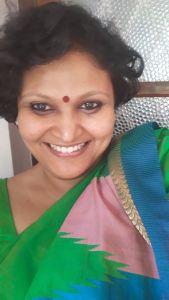 Arathy Asok’s debut collection Lady Jesus and Other Poems is described by the Journal of Commonwealth Literature as “Resistance poetry with a sharp edge” (2019, Vol. 54(4) ). She is a bilingual writer and was featured poet at The Blue Nib Magazine (Issue 37, Ireland). Her poems have appeared in national and international journals, in print and online (in Samyukta, Poetry Chain, anti-heroin chic, Poets in Nigeria, Blue Nib magazine, Door is Ajar, Womaword Press and Culture Cult). They are included in an Anthology called Native Petals, Nocturne and Iliyali (USA). Her short stories in Malayalam have appeared in Madhyamam Weekly and English short stories in Rupture (Pakistan), Credo Espire (USA) and have been translated to her mother tongue and published in Indian Express Malayalam Online.


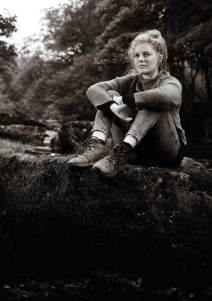
 Jane Clarke’s first collection,
 Rosalin Blue is a cultural scientist, translator, and poet who began performing in 1995 in Hildesheim, Germany. Linked to the literary scene in Ireland since 2000, her poetic home is O Bhéal in Cork. She has performed in Cork City and County, Limerick, Galway, and Dublin, and at festivals like the Electric Picnic and the LINGO Spoken Word Festival. Blue’s poems have been published in Southword and the Five Words Volumes in Cork, Revival Poetry, Stanzas in Limerick, and in Crannóg Magazine, Galway. She has been included in two Cork Anthologies, On the Banks (2016) and A Journey Called Home (2018). Her poetry collection In the Consciousness of Earth was published by Lapwing, Belfast in 2012, and her translation of love-poetry by the German Expressionist August Stramm You. Lovepoems & Posthumous Love Poems came out in 2015. Find her on Youtube and facebook.
 Ann Leahy’s first collection, The Woman who Lived her Life Backwards (Arlen House, 2008), won the Patrick Kavanagh Award. Individual poems have twice been commended in the British National Poetry Competition and have also won or been placed in many competitions. Most recently, a new poem came second in the Yeovil Literary Prize, 2019, another was a prize-winner in the Troubadour International Prize, 2018. Poems have been widely published in Irish and British journals (including The North, Poetry Ireland Review, Stand, AGENDA, Orbis, New Welsh Review, Cyphers) and have been included in several anthologies. She used to work as a lawyer and now works as a policy analyst and researcher. She recently returned to writing poetry after taken a break from it while completing a PhD on ageing and disability. She grew up in Borrisoleigh, Co. Tipperary, and lives in Dublin.
 Chris Murray