Category: Alphabets
-
” The woman singeth at her spinning- wheel
A pleasant chant, ballad or barcarolle;
She thinketh of her song, upon the whole,
Far more than of her flax; and yet the reel
is full, and artfully her fingers feel
With quick adjustment, provident control.
The lines, too subtly twisted to unroll,
Out to a perfect thread. I hence appeal
To the dear Christian Church, that we may do
Our Father’s business in these temple’s Mirk,
Thus swift and steadfast ; thus, intent and strong:
While, thus, apart from toil, our souls pursue
Some high, calm, spheric tune, and prove our work
The better for the sweetness of our song.”This is a good evening, it rains (it pours) but political change is in the air and I am glad for that.. cos sometimes it seems that Women’s Work is ignored (and it is often hard work.)
The above is by Elizabeth Barrett Browning, one of my favourite writers.
-

Max Ernst This image is one of 19 Max Ernst images that grace René Crevel‘s Bayblon, the book is published by Quartet Encounters (1988) and originally published in French as Babylone (1927). The Quartet Encounters translation is provided by Kay Boyle. I am taking the book away with me on a train today because it is a while since I read it and I remember it as lit.
The most persistent symbol therein being that of the Grandmother applying a clyster to a rose and the child’s wonder at such an exercise.
Each chapter is illustrated by the Ernst prints which are food for the eyes. Other collaborations mentioned on Poethead include : Alice Maher and Eilis Ní Dhuibhne , Leonard Baskin and T. Hughes.
In terms of illustration and writing, the work of RB Kitaj throughout The First Diasporist Manifesto perfectly illustrates how the artist combines a strong visual ability and a need to communicate in words their experience of creating symbol that we fully recognise. Many of these above named collaborations are based in dialogue that attempts to make sense of the appalling political situation in Europe in the period between two World Wars.
Dadaism and Surrealism were attempts by persons of great personal integrity to resist the mass-movement of totalitarianism.
Crevel died by his own hand as he witnessed the spiralling violence that people must react to and resist even today. His words are printed at the back of the book and are pertinent to anyone who refuses to accept that there is no thread of fascism apparent in modern politics,
“The Mind turned outward for a change and reason folded under. A long time ago I wrote something about Reason creating so many mindless divisions, such as Mind, body, spirit/flesh, real/unreal, sane/insane, dream/action that Mind was obliged to declare war on reason. Then I asked myself, Well, if consciousness is the thesis and unconsciousness the antithesis, when does the synthesis come about?” :
“I think it comes about in a fusion that is absolute love. That love is different from the everyday article because it implies total honesty, while conventional morality and customs declarations are alike in that both make people cheat.”
The excellent translation by Kay Boyle and illustrations by Ernst make this a beautiful volume to read.
For info on Dadaism and Surrealism , use google. How and ever many natural surrealists declined the honour of joining the varied groups of clever types including Frida Kahlo but don’t let that put ye off reading about Art and image. Another Surrealist book that I’d recommend is The Story of the Eye by Georges Bataille, though I have not time to go into the imagery at the moment.
Angela Carter has written on that particular one in Expletives Deleted.
-
i.
Your tongue has spent the night
In its dim sack as the shape of your foot
In its cave. Not the rudiment
Of half a vanquished sound,
The excommunicated shadow of a name,
Has rumpled the sheets of your mouth.
ii.
So Latin sleeps, they say, in Russian speech,
So one river inserted into another
Becomes a leaping, glistening, splashed
And scattered alphabet
Jutting out from the voice,
Till what began as a dog’s bark
Ends with bronze, what began
With honey ends with ice;
As if an aeroplane in full flight
Launched a second plane,
The sky is stabbed by their exits
And the mistaken meaning of each.
This Poem comes from the 1995 Gallery Edition of On Ballycastle Beach by Medbh Mc Guckian.
Medbh and other women poets delighted us all reading at the Unitarian Church on St Stephen’s Green In Dublin in April. Tess Gallagher will be reading there next Thursday and I am hoping to include some links and a piece by Tess in the next few days. I enjoyed her very sympathetic translations of The Sky Behind the Forest by Liliana Ursu.
.
-
I am glad I went onto the Nomadics Site [blogroll- P Joris blog] because in many ways it has been something that resonates with some of my own themes. I had put down a folder (in exasperation) four years ago based in the conditions of exile and loss.
When I went into read the ethnopoetics site and it touched off a whole reconnection with the original (largely unpunctuated) poems of a few years ago. One of them I have been re-working this morning : Goldfriend , which is
based in some lines from The Wanderer (Anglo-Saxon) , in which the exile from both the Lord’s Hall and his comrades is keenly felt . I could not rid myself of the image of the longed for friend as a Goldfriend and wrote it for inclusion into a MSS which I had shelved. (as usual retaining and re-working some of the images i.e; weeding and shelving being the busy work of a minimalist who really does not want to publish).So I re-wrote Goldfriend and may even get round to typing it in the next days. I am out of ribbon and there is only one little shop in Dublin that supplies the correction tape and ribbon (for the poems).
This Morning I was going to publish Mary’s Song from Winter Trees by Sylvia Plath. The image work is tremendous and Winter Trees is oft neglected in the Plath conversation. This morning then, has passed in the re-writing of an old piece that had found it’s way into a reject pile but would not quite lie still. Indeed, the mss of which it is a part has a few old songs in there that I had neglected for some time.
-
New Territory
Several things announced the fact to us:
The captain’s Spanish tears
Falling like doubloons in the headstrong light,
And then of course the fuss-
The crew Jostling and interspersing cheers
With wagers. overnight
as we went down to our cabins , nursing the last
Of the grog , talking as usual of conquest,
Land hove into sight.Frail compasses and trenchant constellations
Brought us as far as this,
And now air and water, fire and earth
stand at their given stations
Out there, and are ready to replace
This single desperate width
Of ocean. Why do we hesitate? Water and air
And fire and earth and therefore life are here,
And therefore death.Out of the dark man comes to life and into it
He goes and loves and dies,
(His element being the dark and not the light of day)
So the ambitious wit
Of poets and exploring ships have been his eyes-
Riding the dark for joy-
And so Isaiah of the sacred text text is eagle-eyed because
By peering down the unlit centuries
He glimpsed the holy boy.- New Territory is Copyright Eavan Boland
-
“T’ither nicht A wuz in mae bed wunnerin
what A cud write fur the Ullans, an then it
cum tae mae. A cud write aboot mae ma’s
mixin’ spoon. A wuz that axicted it was
fower in the mornin’ afore A went tae sleep
efter thurnin ower in mae heid what A shud
say and the wye A shuid say it.When A was a waen , sawenty yeir ago , there
were a lot of fowk that trevelled roon the
country goin frae dure tae dure; wans wur
jist beggars, askin fur a slice of breed, or
lake big Mery, for a gopin of oatmale which
she kerried in a poke tied roon hir waist;
ithers ye micht ca pedlars , and yin of these
wuz P.Q.He cum frae Striban, about five miles awa,
an unner his airm he had a wee wudden box
fu o needles and pins, an spools of threed an
the lake.wan day Paddy cum jist as mae ma wuz
reddin up efter bakin, an she still had in hir
han the oul spoon that had been used tae mix
the dough fur a lifetime. Seein Paddy eye the
spoon mae ma said:‘Och Paddy, A wish yea cud get mae a guid
big spoon: this wan’s worn tae a skiver.”Ok, this is an excerpt until I can type up the rest later on
Margaret Rowe and the Ulster-Scots Society.
-
Where We Find the Words That We Use.
It’s Monday Morning and the first day of the new school term. Many Mothers are bringing their daughters to their schools, wherein they will learn to use computers and libraries. Where they learn the joy of self and have to deal with issues of bullying and learn to make friends. Once upon a time it was not ok to educate daughters, indeed some of our most incredible women writers learned their words from the books left about by the tutors of their brothers, or in one case I am aware of from the labels of co-op medicine bottles. Little girls have a complete and all embracing thirst for knowledge as much as their brothers indeed, and the next basic step on accquiring that knowledge is to use it- all the better if it is communicate and teach to others.
And yet, in so many societies women are abused, murdered , imprisoned and bullied for using the very words that they have found and discovered in the little school yards, or amongst the beetles and ladybirds of a busy place where others are playing round them.
Lift the Ban
(I always think bans and censorships come from fear and denial, and those who bully their daughters are Utopians involved it seems in the betterment of societies with a bewildering ethnic cleansing of the individual female voice at root). I wonder what kind of Utopias can be constructed without the voices of women in the hospitals, working the land and singing old songs into their daughter’s ears?
For many of us , the first experience of language, song and complex linguistics come from listening to our mothers , that complexity is an inheritance that is developed in education . A lot of young women writers currently on the threatened and banned lists have small children who absorb with that intelligence unique to small kids the atmosphere of repression that pervades Utopian societies. Those failures will eventually emerge either creatively or violently.
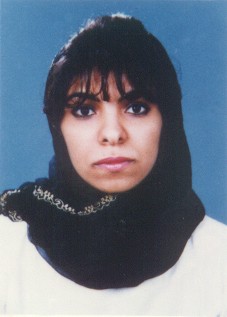
Wajeha Al Huwaider

 Chris Murray