The Fairies’ Lullaby. The Adulteress SongLittle white bug Little black bug from : The adulteress song that is sung in Alba de Tormes |
 First Published in GB by Marion Boyars Publishers Limited 1980. translations by Christopher Maurer. |
The Fairies’ Lullaby. The Adulteress SongLittle white bug Little black bug from : The adulteress song that is sung in Alba de Tormes |
|
First Published in GB by Marion Boyars Publishers Limited 1980. translations by Christopher Maurer. |
|
In the hush of my father’s house,
before dusk rustles over the horizon,
I take off the dress my mother made
-it’s as ruby red as St Michael’s cloak-
and with a stitch of linen, bind my breasts.
By the greasy light of a candle,
I shear my hair to the style of a boy,
in the looking glass I see my girlhood
swallowed up in a tunic and pants,
I lace them tightly to safeguard myself.
My soldiers call me ‘Pucelle’, maiden,
they cleave the suit of armour to my body,
and know when following my banner
over ramparts into Orléans, that
there will only ever be one like me.
When the pyre flames fly up my legs,
I do not think of the Dauphin,
or my trial as a heretical pretender,
but see my mother, head bent low,
sewing a red dress for her daughter to wear.
As Tatú, le Nuala Ní Chonchuir, Arlen House, 2007.
http://poethead.wordpress.com/2009/06/13/la-pucelle-by-ni-chonchuir/
|
A poet
must talk in riddles
if he will not risk himself
for fear
of public eye and tongue
blaspheming privacies :
a host
of leeches sucking parallels
carnivores to strip his shivering secrecies
wrapped
intricately. he should be
silent or speak out.
No one
asked for
his arbitrary offerings.
from Sarah in Passing , by Eithne Strong. Dolmen Books 1974.
http://poethead.wordpress.com/2011/03/19/strip-tease-by-eithne-strong/
|
On the morning of the fifteenth time we went through
our sleep-with-your-ex routine, I had the usual optimism
thing about mistakes is to not keep repeating the same ones
I said disregarding the government health warning
on the cigarettes I was sucking, crossing the road without
stopping speaking or looking, ignoring the red man pulsing
on the lights at the junction, I was wired direct and I said;
I know, I’ll write you the definitive user manual for me.
You said I was arrogant that we should make it up as we go,
and I said; well could I do a mind map then? With
here be dragons marked clearly in red, so we won’t flounder
like last time end up washed up dehydrated and drained
well I was, fairly wired, I said ‘in each shipwreck we’re lessened
embittered, come on, let me at least try to fix it, I can write us
a blueprint for the new improved version, and you laughed
and said well damn you for a head-wreck, go on then and do it.
So I wrote, but it came out all stilted, like a work in translation
see when I say, let me fix that or give it here and I’ll do it
it means I need you, and if I tell you for example how
I’ll re-arrange the universe to your liking it doesn’t mean
I’m superior in fact, translated it’s about the same as the last one-
‘can you not see, how I need you? And when I come out with all those
‘you-shoulds’ that drive you demented, there’s no disrespect in ‘em
verbatim they’re whispering I’d be desolated without you
and when you call me control freak, the tendencies you’re describing
are inherently rooted in my fear of you leaving and how I’ll react.
Less-wired more hopeful I brought you my phrase book
on our very next meeting but you kissed my cheek and said
let me stop you a minute and then those awful words that never
signify good outcomes, listen I’ve been thinking… I know
we’ve got this weird cyclical attraction thing going and I’m sorry
for my part in it but really I can’t see it working, the problem
for me is how you just don’t need anything and my phrase book
had nothing listed under that heading.
© Sarah Clancy
Thanks to Sarah Clancy for the poem, Phrase Books Never Equip you for the Answers , which is taken from Thanks for Nothing Hippies . Published Salmon Poetry 2012.
|
For Grace
On the last day of term
you brought home a present,
placed it under the tree,
a light, chest-shaped mystery
wrapped in potato stamped paper
intricate with angels and stars.
Christmas morning
you watched as we opened it,
cautious not to tear the covering.
Inside, a margarine tub, empty.
Do you like it? eyes huge.
It’s beautiful.
What is it, sweetheart?
A box full of love, you said.
You should know, O my darling girl,
it’s on the dresser still
and from time to time, we open it.”
© Kate Dempsey, all rights reserved.
|
Taim ag caoineadh anois chomh fada
agus is chumhin liom
ce gur dócha go raibh me óg trath-
seans fiú amháin gp mbinn ag súgradh.
Ni cuimhin liom an t-am sin
ná an ghruaim a chinn an ghairm seo dom.
Ni cuimhin liom ach oiread
éinne den dream
atá caointe agam-
ní dhearna mé taighde ar a saol
ná nior léigh mé cur síos orthu
i gcolún na marbh.
Ach is maith is eol dom
gach uair a sheas mé
taobh le huaigh bhealschoilte,
gur chomóir me gach saol
go huile is go hiomlán,
gur laoidh mé éachtaí
na nua-mharbh
is gur eachtaigh mé
lorg a sinsear.
Tigím anois
go bhfuil na caointe seo
tar éis dul in bhfedhim orm.
Dá mbeadh jab eile agam
ba bhreá liom bheith im scealaí-
sui le hais na tine is scéalta a insint.
D’éistfeá liom- tharraingeodh
d’Eddifon asam iad
á n-alpadh sa treo is go slanofaí mé.
Faoi Chabáistí is Ríonacha, Published by Clo Iar-Chonnachta, indreabhán, 2001.
‘She is every woman
who struggles for survival
in a world of prisons
of one form or another.
Her stories, etched on the
landscapes of the universe.
She is the mouth
of the Blackwater,
the secrets of the Alder,
the writing on the caves
and the shedder of light.
She is the blueprints
of the past,
the wishes of the unborn,
the spirit of the crops
and the heat of the sun
bursting on buds.
Shes the midges on the lough,
the guardian of the wells,
the bones of the earth
and the ties that bind
by spirit and blood.
Shes the songs sung so often
renewed on the lips of the young.
Her tongue fiery can cut like an axe
or sooth like a lullaby.
She is goddess of the people,
the fire on the hills.
Shes the shadow on the stones
glinting on river beds.
The breath of a new morning,
and a beacon in the night.
She is every woman.
She is Aine,
fire of the gaels.’
Fire of the Gaels is © Aine Mac Aodha, all rights reserved. The poem was first published in Argotistonline
 Aine Mac Aodha lives in Omagh. Her work has been published internationally as well as locally, and in the UK. She is a Founder member of The Busheaneys Writers Group and The Derry Playhouse Writers. Her work has appeared in Luciole Press, The Glasgow Review, Irish Haiku, Pirene’s Fountain and Argotist online to name a few. She begins much of her writing at her Residencies at The Tyrone Guthrie Centre in Monaghan and is greatful to her time spent there. Aine Mac Aodha lives in Omagh. Her work has been published internationally as well as locally, and in the UK. She is a Founder member of The Busheaneys Writers Group and The Derry Playhouse Writers. Her work has appeared in Luciole Press, The Glasgow Review, Irish Haiku, Pirene’s Fountain and Argotist online to name a few. She begins much of her writing at her Residencies at The Tyrone Guthrie Centre in Monaghan and is greatful to her time spent there.Her poetry is plainly written, she is inspired by the Irish landscape and by poets Seamus Heaney, John Montague, Rumi, Basho and many of the modern poets today. Related links |
I hope that those artists and developers who are interested in broadening out the discussion on a proposed new copyright regime in Ireland visit and contribute to this site, http://copyrightreform.ie/ Legislators should be aware that reform begins at the level of innovation, and not through the offices of intermediaries whose aims appear to be grounded in the short-term.
| Copyright Reform In Ireland . “This site is intended to give the public a chance to comment on, and hopefully improve, the text of a proposed submission to the Copyright Review Commission. For information on the working group that produced this text see Who We Are. It works like this: Look to the left of this page. See the Table Of Contents? Go to the bit of the document that looks like it interests you. Now, each paragraph can be commented on individually. Just click on the little blue speech bubble to add your own comment. You will be able to see all the comments on the right hand side of every page, beside the text. In addition, we will be making the full text available as both a pdf and in an editable format under the Irish Creative Commons Attribution licence. If you agree with some parts of this submission, but not others, please feel free to download this text, make the changes to the parts you think should be different, and send it to the Copyright Review Committee at copyrightreview@djei.ie. |
I am adding the link here because it is imperative that people who wish to protect and to disseminate original works online know the facts about the breadth of current discussions.
I have noted in meetings and in casual discussion that quite a few people are not even fully aware of the headings of the discussions which will have wide-ranging implications in Ireland’s creative community.
There are just days left for artists and individuals to have their say about how they transmit their work. I am very interested in the fact that the most contentious issue has been in the arena of fair-use and that media discussions, with notable exceptions, have been limited to government press-releases, sound bytes and usage of buzz-words like , criminalisation, blocking and banning !
It would appear that politicians do not trust the artistic encounter, and that the intermediary believes that they know what is best for everyone. The fact that creative practices do not occur at intermediary level has wholly escaped our political and business communities. Companies who are willing to deprive the artistic community of tools including those of free-speech, to corner a market are depriving a community of innovation. I am pretty sure Ireland should not be beholden to vested interests when it comes to intellectual property no matter how prettily business people may ask.
A list of those who have submitted on the issue of copyright reform in Ireland is available here , http://www.djei.ie/science/ipr/crc.htm and I am re-posting my submission on Arts and the Public Domain; arts practice as culturally necessary here, http://poethead.wordpress.com/2012/05/18/my-submission-to-the-the-copyright-review-committee-2012/
There is a new moon
and the heavy clouds are calm,
the wind has dropped,
yet there is still a tap-tapping
on your window.
Does it bother you?
That shiver, as if something’s breath
has grazed, raised the hairs on your neck.
Why do you rise and draw the curtains
tight across the chink?
Look out –
the shadows steal towards you.
What is it startles next door’s dog,
its barking, sudden to start, sudden to cease?
Not the cat,
she’s hissing beneath your bed.
Who- or what – is watching ?
Believe what you will,
that crunch of gravel,
that scuffle at your sill
is not a fox or swooping owl.
Did you lock the back door ? Are you sure ?
The crows are roosting in high branches,
it is not they who claw through your bins
for numbers, dates, addresses,
leaving scattered shreds,
knocking that broken pot
you find in the morning.
.
© Kate Dempsey , all rights reserved.
from Some Poems, Published 2011. Some Poems ,a Moth Little Edition.

Image , Portrait of Maud Cook by Thomas Eakins, 1895
I stopped at the gate of a rich city.
I had everything the gods required;
I was ready; the burdens
of preparation had been long.
And the moment was the right moment,
the moment assigned to me.
Why were you afraid ?
The moment was the right moment;
response must be ready.
On my lips,
the words trembled that were
the right words. Trembled-
And I knew that if I failed to answer
quickly enough, I would be turned away.

| Durham Cathedral engraving by William Miller after J M W Turner, published in Picturesque Views in England and Wales. From Drawings by J.M.W. Turner, engraved under the superintendence of Mr. Charles Heath with descriptive and historic illustrations by H.E. Lloyd. London: Longman, Orme, Brown, Green, and Longmans, 1838. Rawlinson 297 |
Earthly Terror, by Louise Glück , from The Making of a Sonnet, eds. Edward Hirsch and Eavan Boland
I have come, alas, to the great circle of shadow,
to the short day and to the whitening hills,
when the colour is all lost from the grass,
though my desire will not lose its green,
so rooted is it in this hardest stone,
that speaks and feels as though it were a woman.
And likewise this heaven-born woman
stays frozen, like the snow in shadow,
and is unmoved, or moved like a stone,
by the sweet season that warms all the hills,
and makes them alter from pure white to green,
so as to clothe them with the flowers and grass.
When her head wears a crown of grass
she draws the mind from any other woman,
because she blends her gold hair with the green
so well that Amor lingers in their shadow,
he who fastens me in these low hills,
more certainly than lime fastens stone.
Her beauty has more virtue than rare stone.
The wound she gives cannot be healed with grass,
since I have travelled, through the plains and hills,
to find my release from such a woman,
yet from her light had never a shadow
thrown on me, by hill, wall, or leaves’ green.
I have seen her walk all dressed in green,
so formed she would have sparked love in a stone,
that love I bear for her very shadow,
so that I wished her, in those fields of grass,
as much in love as ever yet was woman,
closed around by all the highest hills.
The rivers will flow upwards to the hills
before this wood, that is so soft and green,
takes fire, as might ever lovely woman,
for me, who would choose to sleep on stone,
all my life, and go eating grass,
only to gaze at where her clothes cast shadow.
Whenever the hills cast blackest shadow,
with her sweet green, the lovely woman
hides it, as a man hides stone in grass.
.
Sestina by Dante Alighieri
The image at the base of this post is from the Wikipedia Site discussion on the Sestina form . I am adding here a Poets.org discussion on the form used by both poets in the above post . I wanted to focus on content , which is after all what poetry is about (that and adaptions/metamorphosis/shape-shifting and code !).
September rain falls on the house.
In the failing light, the old grandmother
sits in the kitchen with the child
beside the Little Marvel Stove,
reading the jokes from the almanac,
laughing and talking to hide her tears.
She thinks that her equinoctial tears
and the rain that beats on the roof of the house
were both foretold by the almanac,
but only known to a grandmother.
The iron kettle sings on the stove.
She cuts some bread and says to the child,
It’s time for tea now; but the child
is watching the teakettle’s small hard tears
dance like mad on the hot black stove,
the way the rain must dance on the house.
Tidying up, the old grandmother
hangs up the clever almanac
on its string. Birdlike, the almanac
hovers half open above the child,
hovers above the old grandmother
and her teacup full of dark brown tears.
She shivers and says she thinks the house
feels chilly, and puts more wood in the stove.
It was to be, says the Marvel Stove.
I know what I know, says the almanac.
With crayons the child draws a rigid house
and a winding pathway. Then the child
puts in a man with buttons like tears
and shows it proudly to the grandmother.
But secretly, while the grandmother
busies herself about the stove,
the little moons fall down like tears
from between the pages of the almanac
into the flower bed the child
has carefully placed in the front of the house.
Time to plant tears, says the almanac.
The grandmother sings to the marvelous stove
and the child draws another inscrutable house.
Sestina by Elizabeth Bishop
Listen to the poem here , Sestina . Sestina by Elizabeth Bishop is published in Questions of Travel, which is discussed here in Modern American Poetry
The following tables are from Poets.org and Wikipedia showing the Sestina form in its essence,
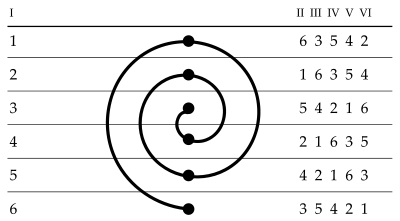
Herein follows an incomplete list of book-links related to Dorothy L. Sayers’ translation of The Divine Comedy by Dante Alighieri.
Readers of the poethead blog will note that I dedicate Saturday mornings to the work of women writers, editors and translators. The translation of The Divine Comedy undertaken by Dorothy L. Sayers was completed in part by Barbara Reynolds.
Dorothy L. Sayers considered her translation of The Commedia to be her most important work, and yet only one copy of the book was available through the Dublin Library Service last week. The Guardian Newspaper devoted just a single line to the fact that this work of translation was undertaken by Sayers. In the same instance both The Guardian and the Dublin library service suffer a surfeit of Sayers’ genre or detective stories.
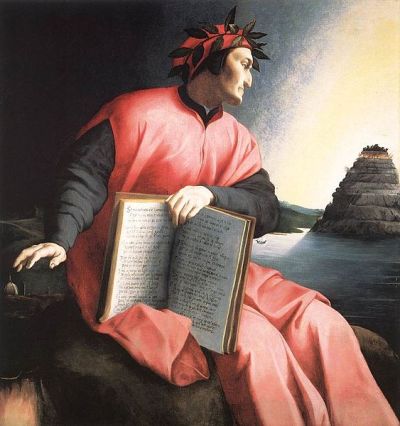
Dorothy L. Sayers produced a classic translation of Dante’s Hell and Purgatorio which is still read. The problem with media and literary journals not citing Sayers or Glasscoe, appears to be based in an institutionalised sexism which is a contributory factor in the invisibility of women editors. Evidently, The Guardian Newspaper and the Dublin library service give more attention to Sayers’ genre works than they do to her translation and other works.
It does not seem to pose great difficulty for male editors and writers to consistently cite what they feel are the definitive texts when the writer happens to be a dude. I believe that women editors and writers must begin to cite the works of women when quoting classical works of literature. If nothing else it may help those women journalists who seem incapable of taking women’s literature seriously.
Note : Recent attacks on Dante’s Commedia delineated in this article show a lack of critical discernment and appreciation by those who would chose what anyone may read.

A conversation among trees
I cannot hear what they are saying, that young girl and the tree,
their whispers are intimate, ceaseless.
I am sunk into a conifer hedge, tamped into a wall,
threaded into the blue ivy.
This is a warm chaplet against the rain,
I would lie here if it wasn’t for the sky—
the sky will not skew to my vision,
body conspires with green-leaf to thrust me forward
I am become aware that it is time for this to cease,
a mead of daisies whiten on the windward side
of a grove. Trees,
daisies, are blown white beneath a silver beech.
Those hues balance
for once —
And,
and If I step at once from the shelter of this close bower,
will I hold?
© C. Murray

The image Chaplet is by Alice Maher and is used for this poem courtesy of Alice Maher and the Green on Red Gallery, Dublin, Ireland. Chaplet © C Murray |
|
1. ‘Lo! I will tell of the best of dreams, A few weeks ago my attention was called to an annotated electronic edition of the Dream of the Rood , created by Mary Rambaran-Olm. I thought to link this edition on Poethead to compliment some of my earlier posts about women editors and writers. There are an amount of works on the blog dedicated to the poetry of the mystic-writer, these posts deal specifically with the woman’s mystic voice rather than approaches to contemporary editing by women. The sole exception to the above is based in a few scattered posts that allude to Marion Glasscoe’s magnificent editing of Julian Of Norwich’s A Revelation of Divine love. Glasscoe’s Julian is in my opinion a seminal text, and I have retained my copy since I studied it in UCD some years ago. There are many modern versions of Julian’s Revelation which attempt to bring her luminous writing toward a contemporary audience, however, mostly the texts that I have read go nowhere near the Glasscoe for clarity of expression. I have referenced ideas and images from the Glasscoe in a couple of Poethead posts , which I am adding here and here. To my mind a masterpiece is a work of art that has the ability to generate interest and to inspire derivatives in the visual and musical arts. The work that has gone into the creation of the electronic edition of The Dream of the Rood allows for a contemporary audience to access it’s unique quality of expression. Here, in Mary Rambaran-Olm’s pages are her transcriptions, translations and notes from the original manuscript. The translation pages run along the left-hand column of the Rood home page and are subdivided to allow for easier reading. There are also extensive images of the Vercelli Book (Folios 104v-106r). It’s an online treasure-trove. The poem is available on the right-hand of the home-page under the heading of Translation and Original Poem. I did question whether I should write a post about Julian of Norwich and the Dream of the Rood for this Saturday, and I hope my regular readers enjoy the piece. I believe that poets are inspired across a variety of modes of expression and that the contemporary modes of dissemination can ameliorate access to masterpieces such as the two above-mentioned triumphs of editing by both Glasscoe and Rambaran-Olm. Dreaming and vision-poems have an agelessness about them that defies time. I am wary of some translations which I have discussed before now, but there is an endurance in this writing which has influenced many a writer. One quick search for Julian’s writing uncovers a vast array of related works. It is really up to the reader in how they wish to access the works mentioned above, but I’d feel somehow that I’d have let down my readers if I did not acknowledge the trojan work by these two women editors in their creation of accessible translations for modern readers. Note. It’s rather alarming that a dreaming poem such as Dante’s The Divine Comedy has been subject to an attempt at evisceration and censorship at this moment. If there is a loss anywhere in this issue it is in the Gherush92 campaign. I have said online and elsewhere this past week that this campaign is about getting into newspapers in the most risible fashion, rather than about any offense caused by a poem that continues to inspire a great deal of visual and literary art.
|


 Sarah Clancy


 Chris Murray