There is a guilt attached to needing, You were trusting and deceived. Coins that were used to cover eyes, lie broken, And trampled upon.
Uncovered scars lie dripping And untended to. Five men travel across the deserts for you. You breathe in life, And I took it.
Children beside a fire see something in the future, A smile upon lips that was never passed. There was a contract I never signed or intended to.
What can we say if sorry isn’t sorry enough? Glass, and water dripping on the coffee cups. Unread letters in shoe boxes.
Do you think there was ever a music in silence? Tunes that hit upon our ears as we danced, Unassuming and undressed In the tiled kitchen.
I never did. Not really. I wanted to Desperately. To fall into something that wasn’t my own Striking distance from a championship.
The words fall from our lips and out the window. I left. I think I always intended to.
Unwanted villains sneaking into the wanted mundane. Coffee and two sugars Black only on one side. What can we say if sorry isn’t sorry enough?
A.
Never be, Never be sorry or fearful. The faint sounds of birds and school children outside your window. As I press my body against the glass. You behind.
I am crumbs, The sun that hits the back of your neck Lie in me. Bathe in me. You are the presumed safety net.
The walker never sees, Just trusts. And in the moments of falling, Prays to a deaf god.
But on you, was a need hope. A safety bridge, A maturity. Love is thing with imposed memories.
You are a heartbeat. A thing I wish I could drive from my chest. I thing I wish I didn’t need But live without.
Smiles happen without Impulse. Bare And happy
The pause will resume and she will wake I did I was And cannot be
M.
Crumpled flags are upheaved from the ground. Mud and grit, Red fog fills the air as footsteps are retraced.
Young children holding near gold awards. Broken ankles and legs From running without the knowledge of how.
The stands have forgotten our names now. There are new uniforms.
New teams.
The blues and the pinks fade. And distance noises are muffled under the shroud of years, With faded scars and scratches.
We have Did Win I remember.
From the growing pains and memories lost An untouched wrist Kisses faded on necks Sprouting from our backs.
The clouds burst And maybe we will find each other beneath one.
M.
Heavy. And Moving.
The first sprinklings of green, With it The faintest Feeling of something being unearthed.
There was something there years ago, A life of something longing, Trailing behind a mouth that never moved And words that were never rasped
How do we portray the thing we having being fearing. A fearlust of sprinklings from a fractured podium. How do we list the pain that is buried beneath the skin Coming out in small intervals Barely voiced but shaking in the body
I was stronger before Hidden behind snapshots of sensitivity There is a faithfulness in an unknown truth.
I give you a flower, As if the cliché of the manner will be renewed For only us. Smiling with the innocence of a child running from their mother.
Possession presents a conundrum, Withering in hands unsure of the level of comfort. Fragile And shattered glass.
A glistening bead of sweat rolling down the nose of a rearing horse. A guard, Broken down for a moment of stillness Only to be rebuilt more so.
The bedframe creaks and moves under The heaviness of a light-hearted laugh. I draw a map on your skin.
Noting the moles and freckles like consolations To find home by. The nape of your neck a sort of memory Or creation of such.
What do you say to the person that saved your life? As old flowers decay on the mantle piece Dusts of pollen linger like fingerprints.
Reaching for a taut rope, Based purely on an unspoken promise Love bursts on our lips, A question unasked.
I will follow you.
S.
The segments of memories are strewn on a plush carpet Pink and oranges Bursting behind a low section of glass.
I give you a lie. It’s all I can offer without plunging from my chest I am Lost In the cemented memory of a child reaching for a hand that wasn’t there.
What do you think is the lifespan of heartbreak?
A crumbling brick A grandfather clock unticking in the hall. I fix myself in an image. Adjust the lipstick to a smile that was there before You remember that song, don’t you.
Clodagh Mooney Duggan is an emerging poet. She originally trained as an actor, graduating from The Gaiety School of Acting in 2013. Since then, she has begun writing for the stage and is currently writing Made from Paper, which will premiere in Dublin 2020 in The Scene and Heard Festival. The Women Who Loved Me & The Women Who Couldn’t will be her first published collection.
A woman gets the news, drops to the chair, floor – further, the quick in her bleeds out. She is liquid now, leaching away, this hour, this day, day-on-day. At the back of her eyes a face ebbs and flows: his lop-sided smile makes room for her touch, the tilt of his head calling drinks at the bar, wide arms swinging his kit, their young child, onto working-man shoulders.
Can God breathe underwater?
Each year a sacrifice: the man in blue overalls, flower-blue eyes, who loved his wife at first sight; the ready-laugh man collecting glasses in the pub in off times; the dancer bending into sound like a squall; the dare-devil larking about first night back, caught up in the dizziness of breathing; the ones who tread water, the ones who don’t know what hit them, the ones dragged down in sight of shore. All lost.
They slipped from sight like water through our hands; our hands are empty of them, our mouths are empty of them, our chests are hollow, our eyes are expanses to search.
Fishermen search. Mates, fathers, brothers, in-laws, cousins, make late night calculations where the body might wash up, rake inlets and coves along this torn coastline, fishboxes are body blows, spars are pins in their eyes. On stormy days they are too big for their own kitchens, too restless for the hearth, gaze ever on horizon, for a break in the weather to renew the search.
What else is there?
Bringing in the Washing
Rain whips window like flex, we break mid-sentence, head out. At the side the washing line takes off in wild geese formation, the prop tethers and leads the V.
Hands snatch at shirt flaps grown strong against grey sea, shape shifters we pin by one cuff: blue cliff, chough’s wing, white strand, creased headland, tattered island.
We fold them fast into us, tuck away, the bundle swells under elbow, rain-spotted. And in before they’re soaked, pile all on the chair while we finish our tea. I take my leave of you -as usual, arms full.
Harbour’s Mouth
There are people here so much part of the place that they are named after headlands. They have the look of the raw-boned earth about them, hair the colour of dillisk, eyes taking on the changing shades of the sea.
The rich morning sun draws us out. We check the storm’s leavings: pebbles salt the boreen, bladder wrack drapes the harbour wall, gobs of sea-spume float in the air. The Lough is still choppy, made into peaks by the wind’s flat blade.
Neighbours untie shed doors, clamber into tractors, hammer fence posts. The fisherman has been up for hours, meets me at the pier, a coiled rope in hand. We talk of the weather, face away from each other, watching the harbour’s mouth.
Between sheer sides of rock, a glass dam is piled with boiling layers of saltwater. Lines of blue and white snap and curl, lash some high invisible wall, threatening to shatter whatever power holds them back. He tells how once
a great wave came thundering, crested over this broken ring of hills. Came in the night − 1966 it was − they all heard the roar of it. He points to a spot up the hill, a field away, the place where a boat was hurled that time, hefted by the force of the Atlantic.
Current
The gulf stream makes a micro-climate here, nurtures palm trees and New Zealand ferns.
The current is born in the isthmus of Mexico, awash with the energy of two great Oceans
almost meeting. It leaves us with a deep-rooted thrill, like the quick intake at the glimpse of a lover,
flip in the gut as hands nearly touch, breath exchanged between mouths.
Meeting William Blake in the Library 1980
Unfinished. I hold the weight of paper, the lightest sketch, a man in a crown, clown’s hat, hair streaming.
Wonder came first. The tip of the brush found its place, dropped wild yellow to leap from the head over pencil strokes,
onto page after page on this serviceable desk, to skim along roads, cover the sleeping child, charge the muscles of man, stars and moon.
A grain of colour rubs off on my hand, passes over time into bloodstream, works its way up slowly to my soul.
Annette Skade is from Manchester and has lived on the Beara peninsula, West Cork, Ireland for many years. She is currently in her final year of a PhD on the work of Canadian poet Anne Carson at Dublin City University. Her poetry collection Thimblerig was published following her receipt of the Cork Review Literary Manuscript prize in 2012. She has been published in various magazines in Ireland, the U.K., the U.S. and Australia and has won and been placed in several international poetry competitions.
‘Secrets of a cartographer’s wife’ by Katrina Dybzynska
The cartographer’s wife never told him about her contributions to his maps. A few tiny islands hidden in the middle of an archipelago in the name of symmetry. Some borderline moved to resemble a face shape. The territory of England shortened slightly, in personal revenge.
One time, she renamed an insignificant river in Bangladesh after her lover. She felt pity for the cartographer that he was more furious about the affair than about her intervention in the world order. She knew that romances were ephemeral, while naming things was changing them forever.
Katrina Dybzynska poet, shortlisted for Red Line Poetry Prize 2019. Author of „Dzień, w którym decydujesz się wyjechać” (The Day When You Decide To Leave), Grand Prix of Rozewicz Open Contest 2017. Laureate of national competitions in Poland. She has been publishing short stories, concept book, science fiction, reportage, and poetry, but feels most attracted to genre hybrids. Polish Non-Fiction Institute graduate. Activist. Currently a member of Extinction Rebellion Ireland.
‘Correnti’ by Viviana Fiorentino
Ora è questo un manto di alghe e sale sotto il vento atlantico o è corrente marina del fondo della mia vita e della tua vita ora è sogno o perla luccicante.
‘Currents’ (English trans. by Maria McManus)
This is a shawl of salt and seaweed against the Atlantic wind the ocean currents on the sea bed of my life, your life a dream, a burnished pearl.
Viviana Fiorentino was born in Italy. After obtaining a PhD, she travelled across Europe, from Switzerland to Germany, England and finally to Belfast where she teaches Italian Literature. Since 2018 she has taken part to literature festivals in Italy and in Ireland. She was involved in the poetry project ‘LabeLLit’. She has been awarded or mentioned in various Italian poetry prizes (i.e. Arcipelago Itaca Edizioni & Bologna in Lettere Dislivelli). Her poems appear on Litblogs, international magazines (Brumaria, Works #9’, 2018) and in the Arcipelago Itaca Anthology of Italian contemporary poets. In 2019 she published her poetry collection In giardino (‘In the garden’) for Controluna Press and her first novel Tra mostri ci si ama (lit. trasl. ‘Monsters love each other’) for Transeuropa Press.
Maria McManus lives in Belfast. She is the author of Available Light (Arlen House, 2018), We are Bone (2013), The Cello Suites (2009) and Reading the Dog (2006) (Lagan Press), she has collaborated extensively with others to put literature into public spaces. She is the artistic director and curator of Poetry Jukebox and an active organiser and founder member of Fired! Irish Poets.
‘Genetics’ by Roberta Beary
Your eyes are big and round like your father’s
but while his are the color of the Irish Sea
yours are the color of the muddy fields
on my father’s land
fit only for the peasants who worked them.
abortion day
a shadow flutters
the fish tank
Publication credit: Rattle #47, Spring 2015 (ed. Timothy Green)
Roberta Beary identifies as gender-expansive and writes to connect with the disenfranchised, to let them know they are not alone. She is the author of Deflection (Accents, 2015), nothing left to say (King’s Road Press, 2009) and The Unworn Necklace (Snapshot Press, 2007, 5th ed. 2017) which was a finalist in the Poetry Society of America annual book awards. Beary is the editor of the haiku anthologies Wishbone Moon (Jacar Press, 2018), fresh paint (Red Moon Press, 2014), 7 (Jacar Press, 2013), dandelion clocks (HSA, 2008) and fish in love (HSA, 2006). Her work appears in Rattle, KYSO Flash, Cultural Weekly, 100 Word Story, and Haiku In English The First Hundred Years (Norton, 2013). Beary’s work has been nominated for Best of the Net and multiple Pushcart Prizes. She lives in County Mayo, Ireland where she edits haibun for the journal Modern Haiku.
‘Dying Lover’ by Anora Mansour
Trace my lips In low whispers As I once wept psalms over my dying lover.
Threaten that man You will murder for me – For my heart is a cadence of silence.
I can only love you if you creep through this life dangling dangerously as a ravenous red kite.
When we both become one lonesome night. And rub up to love up as a fight.
Oh, how I might love you, bitter citron basket on my lap Slumberly trusting me as a child. I would open my thighs to you – a snap trap.
Anora Mansour is a graduate of the University of Oxford. She lives between Oxford and Dublin. She has been published in a collection of Jazz Poems, various online sites, and has her own published collection of poetry and blog. She is African-American and Irish.
‘Clutch’ by JLM Morton
for h.l.
in the nest of my fist, a fledgling scooped up from the lane
her soft unfinished beak her shining eye a buoy ringing in the green cathedral of trees
a single yellow feather wisps across my knuckle there is a twitch of elephant digits
and I think about keeping her
raising her as my own feeding her worms
but I let her go
chirring for the ones I could not save.
JLM Morton lives in Gloucestershire, England, snatching as much time as she can to write between caring for a young family, renovating a house and staring up the barrel of a demanding day job. Her first set of poems was recently published by Yew Tree Press for the Stroud Poets Series and she is currently working on a collection.
Though the civility of civilisation frightens me, I visit somewhere populated. A graveyard made squirrel territory. One squirrel for every gravestone. They mount lichen-covered peaks and keep lookout. They claim the trees, the abandoned church. Nobody will make them leave.
That night, I dreamt the answer to the universe. It was blue, inside a conch shell. Spiraling in and out of crystal moments. Eggshell blue. In and out of images of the hospital bed, and these dreams.
Polly Roberts grew up in Devon. Three years studying Creative Writing at the University of East Anglia left her with an inextricable link to the landscape, compelling her to continue to write about the creatures and habitats encountered there.
Observations of both the non-human and human world continued whilst living on a houseboat on the River Avon near Bristol while completing her MA in Creative Writing at Bath Spa University.
Polly has run creative writing workshops for refugees, detainees, and young people and curated two exhibitions in response to her writing, both displayed at the Norwich Arts Centre.
In 2018, the British Council awarded Polly a Writers by Nature scholarship, during which she wrote this debut poetry collection, Grieving with the Animals. ( 2019, Dempsey and Windle)
‘Beochaoineadh Máthar Maoise’ by Ellen Nic Thomás
A dhílleachta linbh gan ainm, gan athair, Do chraiceann ar aondath le humha an nathair, A lúbann timpeall do thaobhán uiríseal, Mar bhata ceannródaí is sníomhanna sisil.
Is trua liom ciseán do dhóchas a fhíochán, Do dhán a chaitheamh i bpoll an duibheagáin, D’eiseadh a chruthú ar bhunús baill séire, ‘Nois tá tú chomh cotúil leis an gCailleach Bhéarra.
A iníon, a mhiceo, a ógfhlaith bocht, A leanbh truaillithe, maith dom mo locht, Imigh anois leat, ná bí do mo chrá, Le smaointe ciúinchiontacha ó mhaidin go lá.
Ellen Nic Thomás is a bilingual poet from Dublin. She graduated from Trinity College with a BA in English and Irish. Her work has been published by headstuff.org, Tales From the Forest and The Attic.
'On watching a lemon sail the sea' by Maggie Harris

1
and I’m singing ‘You are my sunshine’ thinking
of my childhood across the sea of incubation
go Honey go
you self-contained cargo ship you
with your sealed citrus juices and pitted panacea of seeds
braving the collision of tankers and illicit submarines

                 they called me scurvy.       the lemonade
                 my mother made was iced and sprinkled with
                                           Demerara
 (of course)

and I’m wondering, did they grow you there, o lemon     mine
you
for your juices
a lemon plantation, not to be confused with
a plantain plantation even a banana just don’t mention sugar
stack you in the gloom like hereto mentioned bananas
green and curtailed in their growing  or even
those force-ripe mangoes with girls’ names
nobody knows here and who leave their sweetness behind
bare-assed on the beaches
come
to the marketplace
comatose.

I do not remember lemons, but limes.


       M
    I         E
L                S.

Piled high in their abundance. Limes.
Acid green pyramids on market pavements
holding their secrets beneath their reptilian skins.

And there is my aunt, her arms thin as bamboo
gathering the fallen from the yard, sweeping
their dried leaves into the remembrance of herself
whilst the black maid slips slivers of lemon into a split
-bellied fish whose eyes glaze up at the sun.

‘Gauguin, you can come in now; remember Martinique ...?
hue the native in all her harnessed beauty
the slack –jawed fish, browning blood
the textured landscape in shades of  pawpaw and indigo.’

But, liming is what my lemon is doing now,
(in the West Indian sense), hey ho
over the waves at Aberporth, there he blows.


2
I set you free
to take to the sea again
on a high tide, with breakers rushing the beach
like warriors.
They pummel the sand, scythe
a four foot chasm into the mouth
of a lonely river
beat the rocks’ submerged heads
batter the cliffs again
                                        and again
                                                     and again.
The sea, beyond its charge, was waiting -
a winter morning sea, a Twelfth Night sea
tumultuous and moody

                                       waiting.

A strange gift, you
a large, perfect lemon
fresh and sharp as the sun-bright
wind-cut winter’s day. But I
unsure of your heritage
refused you.


3
Dear Voyager,
I cupped you
in my palm
desire urging my possession
how easy it would be – a lemon drizzle cake
a Martini iced, an accompaniment
to plaice or sole – and here I am playing with words
the resonance of belonging, of immortality –
but the devil played tricks with my mind
an injection of poison perhaps, a needle prick
into your  pristine, nobbled skin – but we are running ahead here
thinking of cargo – you may simply have fallen from a Tesco
carrier bag whose owner, fearing a lonesome home-coming
went walking on these very sands contemplating - life.

But there you were anyway, settled on the sand like a crab
then comfortable in the palm of my hand.


4
Finders are not necessarily keepers. Some
will do well to remember that. Vixens
circling misunderstood husbands in bars. Frag
ments from the fallen.
Oh but, how strong is the desire
to hold close, keep tight
smother your darling, your little nut-baby
in soft gloves, hard love, the kind that makes
you want to bite, bite! Rip flesh and bone. Swallow.
                     I could have accepted
your sacrifice
that gift of yourself, thank the universe
for its benevolence.
But the universe is not benevolent.
Stars are exploding missiles in a panther-black night.
Saturn doesn’t give two fucks. It’s chaos
out there.
But I guess you didn’t have time
for star-gazing in your ocean-going lumbering
over the hey-ho waves. And if I had sunk my vampiric teeth
into the you of you, you would be no more
than a bitter taste, a withering lump of citrus
on my kitchen table. Far better to remember you
the obsidian walnut weight of you
and these questions you have gifted me
and that last sight of you
rolling away on the tide.
Maggie Harris is a Guyanese writer living in the UK. She has twice won The Guyana Prize for Literature and was Regional Winner of the Commonwealth Short Story prize 2014, with ‘Sending for Chantal’. She has worked for Kent Arts and Libraries, Kent University and Southampton University as International Teaching Fellow.
The cartographer’s wife never told him about her contributions to his maps. A few tiny islands hidden in the middle of an archipelago in the name of symmetry. Some borderline moved to resemble a face shape. The territory of England shortened slightly, in personal revenge.
One time, she renamed an insignificant river in Bangladesh after her lover. She felt pity for the cartographer that he was more furious about the affair than about her intervention in the world order. She knew that romances were ephemeral, while naming things was changing them forever.
Reincarnation of tired beings
In my next life I want to become a German couple in their retirement, in a fitted camper. Him, steering confidently through the round -abouts and telling the same jokes for the last 30 years.
Her, reading paper maps and navigating the playlist, suggesting a small parallel road as they will believe themselves adventurous, trying local dishes, carrying beer from home.
I used to think that I aimed to be a hacker, but in fact, I strove to be a virus – a threat beyond miscommunication, ever-transforming, so closest to survival.
Or, I would settle on the life of a solar panel, reduced to basic energies, dutifully absorbing light, left in the middle of the desert, shining hope for the future.
Development
Our child would have uneven teeth and a birthmark on the right hip. The rest would be a fight for domination: eyes that change
color, like mine, when I am happy, or yours so black that it is impossible to distinguish them from pupils? Yours curly or mine straight?
Maybe, it would love spicy food after me, or have a pepper-allergy like its father. I wonder if it could still choose its food.
Would it inherit your pure as seagull’s laughter or the one with a hidden question mark like mine? Would there still be seagulls for reference? Most importantly: would it have lots of reasons to laugh?
Hopefully, it would get skin after you as it is more resistant to heat. But you disagree as my skin color is more resistant to humans.
You think that it would see connections and that we would teach it to protect nature. Before I leave, I respond that by then there might not be much left to protect.
Love Emergence
How do you know that you are in love? My little sister asked our grandmother, because she remembers to respects elders even if their idea of a “date” is to watch the same soap opera for the past 30 years, still arguing about that 6754th episode where Ridge nearly cheats on Brooke. – If you have grandkids with him, probably it is love, grandma replied, which I did not find particularly helpful for a 17 y.o.
How do you know that you are in love? My sister demanded from our mother because l had taught her to always look for a second opinion. I also told her to choose her experts carefully and our mother, three divorces and each child with a different father, might not be the perfect pick for the subject. – Does he make you laugh, my mum asked. Because that is the only way to go through hardships. Yet, I do not believe in the existence of the Joke that would save my parents’ marriage.
How do you know that you are in love? My sister, that I never called half-sister as there is nothing half, nor genetic. About love came to me finally. She is clever saving the best for last. And all I was able to advise her was to talk to him about climate break-down. If he makes you feel safe even when he says he is scared, Not in the “everything will be alright” meaningless way, but in seeing more connections than one heart could ever love, if he makes you feel at home, even when the home is on fire, this must be it.
The tipping point
Two human pregnancies, or one of an elephant, white rhino, orca or a killer whale.
The time that takes for bamboo to grow 498 meters, or for your hair to be 22.5 centimeters longer.
The period needed to write The Jungle Book, or to cross the Sahara by camel, and return.
If it was a baby, by then it would learn to refer to itself by name, echo what people say, and – what is comforting – understand 10 times more than it can put into words.
18 months. Can we transform the whole world of interwoven links in a time it takes to decompose a cigarette?
Katrina Dybzynska poet, shortlisted for Red Line Poetry Prize 2019. Author of „Dzień, w którym decydujesz się wyjechać” (The Day When You Decide To Leave), Grand Prix of Rozewicz Open Contest 2017. Laureate of national competitions in Poland. She has been publishing short stories, concept book, science fiction, reportage, and poetry, but feels most attracted to genre hybrids. Polish Non-Fiction Institute graduate. Activist. Currently a member of Extinction Rebellion Ireland.
Reasons

Here silver fingered strings
trembling with two Russian rings.
Recalling it all.

The reasons why we reared
   yardbirds long disappeared
   yet a cotton crop always reappears.

If sleep is a dotted dress
 then we wear this zero life.
And we are also a false bird’s chirp.

And never more deadly when
we are chanting in time
 To that choral venomous rhyme.

With those we gazed through gauze on the pew
 Those we once believed loved us too
incarnated us with gathered snowdrops anew.


BY ANORA MANSOUR
Copyright 2020
Dying Lover
Trace my lips In low whispers As I once wept psalms over my dying lover.
Threaten that man You will murder for me – For my heart is a cadence of silence.
I can only love you if you creep through this life dangling dangerously as a ravenous red kite.
When we both become one lonesome night. And rub up to love up as a fight.
Oh, how I might love you, bitter citron basket on my lap Slumberly trusting me as a child. I would open my thighs to you – a snap trap.
Perhaps then you could open the universe for me.
BY ANORA MANSOUR Copyright 2020
Anora Mansour is a graduate of the University of Oxford. She lives between Oxford and Dublin. She has been published in a collection of Jazz Poems, various online sites, and has her own published collection of poetry and blog. She is African-American and Irish.
They don’t do it anymore, breathe into the mouth to save.
We had learnt it reluctantly, lined up beside a recumbent dummy,
waiting to take our turn to kneel at that mouth. The simplest things disturb –
at night when the fluoros shut off and the cover is pulled, the tiles swabbed – there it lies open,
not even a ventriloquist’s dummy is so exposed.
Ointment
You always thought crazy was a defection of the will, you’d been in that place holding on for months, and you managed (to stay on this side), so you made up your mind that people choose crazy, but that was just one time in your life you thought was the worst, didn’t know the worst comes like waves and you are Mickey Mouse and you are the brimming bucket the mop the stone floor the castle with its interior arches, and the wizard. And your sore arms get sore then relax (by your sides) and sore then relax and sore then relax. And sore you are rubbed with Wintergreen with eyes with understanding until you aren’t.
Halocline
And I wonder at those two distinct levels: fresh water meeting salt water in the cave.
The dark of dreaming and the further deeper dark. Your shape under the duvet; a book
falling at some point from your hand. Did you feel a click like an elevator coming to its stop, and
there the floor, there the opening, there the greater dark that some keep believing is light? I am stuck here
in this moment. The duvet and the dream. Sleep then something else. I want to know if you
struggled? If I could look close would I detect a twitch of muscle? I am stuck here feeling the clicks.
The elevator. Trying to translate in language the last seconds of your heart.
They say we made it up
and I ask Why separate ourselves from the herd? Why divide?
Paint ourselves outcast white and wait to be picked off.
Why would we make ourselves the wolf with one blue eye to unnerve
enough to snarl and lash? Hiss out into the dark of the forest.
Tyrannosaur
I suppose I used to have the youthful dream of many mourners. Of a packed house. Now this numb state feels like the way I was when I slipped into teenage depression and my mother said: You’d move, move… move… You’d move fast if a great big tyrannosaur came barging through.
And I often think of those children in Jurassic Park when you and I are eating. The children with jelly in their mouths and ice cream, smiling with full mouths across the dinner table; chewing and smiling. The jelly wobbling on the spoon as the velociraptor is spied at the murky edge of the room. And the jelly wobbles and wobbles and the children know.
Wes Lee was born and raised in Lancashire and now lives in New Zealand. Her poetry has been published in magazines such as The Stinging Fly, New Writing Scotland, Poetry London, The London Magazine, The Stony Thursday Book, Banshee, among others. She has won a number of awards for her writing, including, The BNZ Katherine Mansfield Literary Award; The Short Fiction Prize (University of Plymouth Press);The Over the Edge New Writer of the Year, in Galway. Most recently she was selected by Eileen Myles as a finalist for the Sarah Broom Poetry Prize 2018, and awarded the Poetry New Zealand Prize 2019. Her latest collection By the Lapels was launched in 2019 by Steele Roberts Aotearoa, in Wellington. Her previous collections include a pamphlet Body, Remember launched in 2017 by Eyewear Publishing in London as part of The Lorgnette Series; Shooting Gallery (Steele Roberts Aotearoa, 2016). And a chapbook of short fiction Cowboy Genes (Grist Books, University of Huddersfield Press, 2014).
Jane Clarke’s first collection, The River, was published by BloodaxeBooks in 2015 to public and critical acclaim. Her second book-length collection, When the Tree Fallswas published by Bloodaxe in September 2019 and her illustrated book of poems, All the Way Home, was published by Smith/Doorstop in April 2019.
The River was shortlisted for the Royal Society of Literature’s Ondaatje Prize, given for a distinguished work of fiction, non-fiction or poetry evoking the spirit of a place. In 2016 Jane won the Hennessy Literary Award for Emerging Poetry and the inaugural Listowel Writers’ Week Poem of the Year Award. She was awarded an Arts Council of Ireland Literary Bursary in 2017.
Jane holds a BA in English & Philosophy from Trinity College, Dublin, an MPhil in Writing from the University of South Wales, and has a background in psychoanalytic psychotherapy. She grew up on a farm in Roscommon and now lives with her partner in Glenmalure, Co. Wicklow, where she combines writing with her work as a creative writing tutor and group facilitator www.janeclarkepoetry.ie
Up – up and away in my little studio under the sky drawn back alone – to write
That loneliness is the room for concentration bears the space for inspiration strikes the key of motivation to create origination with insane illumination and a wild determination, the poetic flow in motion — oh that cosmic emanation for the sake of word-elation
Yet, it requires segregation and at times I miss emotion wishing for some conversation and a mutual revelation. So I leave my elevation seeking true communication and some closer stimulation —far beyond my meditation of obsessive rhyme-creation
And when that space inside of emphatic animation and ecstatic evocation with the strange amalgamation of expansion and sensation, that poetic incantation that orgasmic culmination fills me up to saturation, then I get the urgent notion to fulfill my true vocation
And again I draw back to my lonesome destination up – up and away in my little studio under the sky
— to write
Under the Silvermoon
And how often am I looking up with longing gaze to your window high above under the silvermoon where your sweet body lies already in the warm duvets when inside me with desire now the night awakes
In many hours when the moonlight travels through the dark and the muse of poems binds me in a writing trance my tender feeler-cells are all consumed in longing for the touch from your gentle hands
And my senses wander further down along your flanks until with yearning quiver – when my night is done I quietly can nestle to your supple curves at last and disappear in bliss to sleep under the silvermoon
— And my desire is waiting for another night.
Unterm Silbermond
Und wie oft sehe ich mit sehnsuchtsvollem Blick hinauf zu Deinem Fenster unterm Silbermond, wo schon Dein süßer Körper warm in Kissen ruht, wenn voll Verlangen erst in mir die Nacht erwacht.
Zu mancher Stunde, wenn das Mondlicht durch das Dunkel zieht und mich die Dichtermuse in den Schreibwahn bannt, verzehren meine zarten Fühlerzellen sich vor Sehnsucht nach Berührung Deiner sanften Hand
Und meine Sinne wandern weiter Deine Flanken lang bis mit ersehntem Beben ich – wenn meine Nacht getan, mich leis an Deine weichen Kurven schmiegen kann und selig unterm Silbermond in Schlaf entschwinde –
— Und mein Verlangen wartet auf die nächste Nacht.
Curlew
You tell me of the call of the curlew Its curling cry haunting through the bogland How it weaved through the mornings of your childhood How it echoed through the darkness of your nights
The curlew’s call has fallen silent over the years gone by The mottled messenger stolen as the numbers of birds migrating the wetlands drained now and laid dry have from hundreds plunged sheer into near extinction
The curlew’s trilling song the melody of coastlines harmony of the island has gone quiet with the winds The seeker of the sand leaves behind a land void of music luring the boy in the evening sun
You mourn the echoless silence in the mornings of your prime No slender legs stalking the plains or stoking mud with curving bill No curlew calling evermore the empty coastline still Nothing more than a memory left behind at the end of dusk
Metal
After we invented the wheel we learned how to melt the metals from the rock, and the gold-rush began, as we dug and drained all the gleaming precious treasures from the veins of the Earth, forging jewels, coins and wealth, hoarding them like magpies.
Red hot, like liquid fire flowing, a crimson burning river glowing, molten copper, iron, silver slither smoothly through the grooves, pouring into casting cauldrons, shooting into foundry molds, smouldering, steaming – zosh the streaming gold is cast to form.
We made tools from the new metals and axes for slaughtering trees and arrowheads for felling animals. We made ploughs to sow the seeds and blades to cut the deeds and steal the riches from the land and rightful owners, and we cast our wildest dreams into reality.
Then we made dooming cannonballs to cast on human enemies and iron bars to capture freedom. Our bullets pierce through history, reeling round the golden throne, our babel titans slice the skies and we’ve made drills to bore the very bedrock of our waters.
Now hard and cold our steel-towns gleam in the sunlight like blue ice. The shimmery promise of gold holds the core to precious pride. But the price of power was high and now the golden calf is sold! And our hearts like bloody swords from wealth and greed are growing cold
Beyond compare we hoard and kill like magpies – merciless as steel. And the glowing stream of gold from liquid fire freezes cold and our hearts become the stone that once we dug out of the ground from the gleaming veins of Earth – blinded by the promise from Her core.
We are Receivers
Staring into the night eyes fixed hard on the bridge in the dim light until the mind cannot understand the image any longer
Repeating a word – repeat repeat so often that to the ear it loses its meaning becoming a mantra of higher consciousness
Chanting the Om until we rise from lightless night benighted mind filling until aglow with the potential that is the eternal light
Seeing the Ocean of love and the breath halts the heart spreads its wings and the tongue knows no words
We are receivers of a brighter light than our eye can ever see nor our mind can ever conceive But our hearts can feel
Quiet I stand in the stillness of the Divine the brightness of love the silence of awe
Rosalin Blue is a cultural scientist, translator, and poet who began performing in 1995 in Hildesheim, Germany. Linked to the literary scene in Ireland since 2000, her poetic home is O Bhéal in Cork. She has performed in Cork City and County, Limerick, Galway, and Dublin, and at festivals like the Electric Picnic and the LINGO Spoken Word Festival. Blue’s poems have been published in Southword and the Five Words Volumes in Cork, Revival Poetry,Stanzas in Limerick, and in Crannóg Magazine, Galway. She has been included in two Cork Anthologies, On the Banks (2016) and A Journey Called Home (2018). Her poetry collection In the Consciousness of Earth was published by Lapwing, Belfast in 2012, and her translation of love-poetry by the German Expressionist August Stramm You. Lovepoems & Posthumous Love Poems came out in 2015. Find her on Youtube and facebook.
To die not having known the frenzy of making love with a woman is to live without ever jumping over the bar of your crib.
How could you not want to watch a woman fling her underwear on your bedroom floor present you with soft skin
for your nails and teeth to score like blades on dough. How could you not want to feel your edges
slip into her hollows, like a spoon folding flour into cake batter. How could you not want to hear her whimper,
crescendo to a jungle roar while your fingers move inside her. How could you not want a denouement to your play,
when secret stories leak onto ivory sheets then tease tongues and start the sequel. How could you not want to drag a woman to bed
at seven on a Saturday evening rise at two on Sunday afternoon, sleep-deprived and smelling like a marathon runner,
race outside to tackle weedy flower beds gleeful that soil will not rest in your clipped fingernails.
First published in Animal Heart Press, 2019, Editor Amanda McLeod
Being in love at fifty
plucks me from death row, Hands expunge the curdled cream & bitter fruit from my body. Medley of skin & bones sink into a bowl of Eton Mess.
Being in love at fifty makes me wonder if Eros will crumble like Wensleydale cheese or taste like Blue Stilton, after a year or two, or if it can be transformed into the perfect soufflé.
Being in love at fifty makes me cry, my daughter’s image of me, creases, feels like she’s lost Santa all over again has to make room for someone else to sit beside her in my heart.
Being in love at fifty makes me grin, my shopping bag contains a birthday card & polyester shirt for my daughter to give to her father. Lying on top, a cerise lace bra for my lover.
First published in New Irish Writing in The Irish Times, 2018, Editor Ciaran Carty
My Menopausal Womb
Hairdresser empties tubes into a black bowl, stirs a mixture of what looks like day-old blood. 366, he calls the dye.
He pastes my greying hair, doesn’t take long to cover. Thirty minutes of flicking through Image, Hello and Good Housekeeping and I’m scarlet again.
Gynecologist puts my feet in steel stirrups tells me to spread my legs covers his hands with latex gloves grabs a speculum tells me to cough and inserts.
When he withdraws I know what he has to say before he opens his mouth. And I wish there was a colour like 366 that would turn my shrunken womb, scarlet again.
First published in Spontaneity, 2019, Editor Ruth McKee
The Day My Vagina Spoke To Me
After Martina Evans
Don’t you dare, write a poem about this conversation, said my vagina to me, as I toweled myself dry.
You’ve enough written about sex, vulvas, and unsatisfying penises. Get over it. Write something different, use the Irish Sea, Croagh Patrick or Clew Bay as your muse. Everybody loves poems about landscapes.
I’m sick and tired of seeing my personal details all over the web. Who wants to read about a menopausal vagina or any other type of vagina? Nothing glamourous about what’s happening to me. If you paid a bit more attention you’d see that.
You should be out looking for a man instead of spending so much time writing. Delving into the unconscious, you say. Load. Of. Bull. It’s delving into me you should be doing.
That vibrator of yours is crying out to be used. Though it’s the real thing I want. The buzz from that yoke, used to give me a terrible headache, the few times you did use it.
That gay phase didn’t work out very well either, did it? Still, that doesn’t mean you have to close up shop. It’s a bit of fresh air I need. Can you not smell the must? There’s mould starting to grow down here.
Anne Walsh Donnelly lives in the west of Ireland. Her work has appeared in many publications including New Irish Writing in The Irish Times. She was nominated for the Hennessy Literary Award for emerging poetry and selected for Poetry Ireland Introductions in 2019. She is the author of the poetry chapbook, The Woman With An Owl Tattoo, published by Fly On The Wall Poetry Press and the short story collection, Demise of the Undertaker’s Wife, published by The Blue Nib.
To find out more about Anne and to order her books go to her website: annewalshdonnelly.com
Her passion was historical biscuit tins or so he’d tell visitors who marvelled at the growing stacks of embossed lids that glinting with landscapes, landmarks locations she hadn’t seen, he thought it best if the world came to her. He liked her to display these gifts he brought back from places he visited with work, that was what he called her.
He’d produce a new one the morning after his return assuming her quietness over breakfast had been due to the non-presentation of a tin, she accepted them but never the treats that she bagged in black where they grew crumbly and green and sweated in the confines of their own wrappings.
No tins came for some months work no longer needed him so he dozed his days away in front of the box until he breathed his last, the remote control limp in his hand. She scattered the tins around the living room and took a hammer to the shiny lids that remembered everywhere she had never been until they didn’t shine anymore.
The Bittersweet – Poetry Ireland Review, editor Eavan Boland
Skinny Jeans
His quiff came undone in the night to fall about an acned face that contorts in an afternoon yawn. He shifts his body about the bed to untwist the studded belt that pockmarked him as he slept, the impressions red against his gothic skin. The seams of his skinny jeans draw lines up and down his tall boy legs, revealed as he inches them off with pink-heeled persistence before they’re dumped on the floor in a dark, denimous pile. The day looks in on him through not-quite-drawn curtains, the gap, the width of an ice-lolly stick, the day, bright as July.
Skinny Jeans – The Stony Thursday Book, editor Paddy Bushe
A Life Unanswered
Dust smothered hat boxes stacked, empty, blue and white Switzers stripes dulled by years. Flapper dressers and bridge club receipts idle in drawers lined with the Letters page from a 1920’s Irish Times, fragments of lily of the valley talcum powder tangible.
I have your eyes but I don’t see what you saw history witnessed, decades endured, did they roar, were they hungry, did they swing, did scarcity wage a local war to leave you wanting, did world events impact, always make contact?
Did you mind leaving Achill to settle in Westport, urbanity on your new doorstep, did faith and prayers of two Roman-collared sons ease untimely widowhood? Clacking rosary beads, murmuring novenas your mantra.
Was my mother an appreciated ally righting the balance, nurturing anima or did she steal your mantle as lady of the house, did you mind or was your arched-eyebrow sternness an act of survival in a male domain?
November evening your pen ran dry and expired batteries silenced your radio yet you needed no replacements, you knew that night that you would also go.
A Life Unanswered – Abridged, editor Maria Campbell
Lapsing
He files his thumb nail on a match box softened by pockets, the swatch almost worn by forty strikes. A neighbour walks by, he nods to the al fresco attendees who religiously avoid a pew, preferring to stand the hour. A speaker nailed to the buttressed porch bugles across the hedges crackling its master’s voice. It spouts prayers for the faithful who respond en mass in a monotone breathless recitation, pausing on cue by rote. He drops the smoothed box and squashes it into the green joins his hands and breathes deep the flinted air. He rests his head on the pebbledash his weekly penance meted out in pointy pastels. A couple arrive too late to creak open the door, they angle for wall space budging him from his idling spot, the flock thickens in the noonday sun.
Lasping – The Weary Blues, editor Emily Cullen
Room 41
Bath-freshness beckons but she chooses to accept the week-old grime and the specks of kamikaze talc that land on her lashes as she powders her oily hair, the ash-brown lank.
She doesn’t care, there’ll be no neighbours calling like the news-hungry vultures they pretend not to be, no postman delivering a daily chat, nobody knows how committed she is to being alone.
A large orange pill wrestles its way down, eased by tepid water from a polystyrene cup and condescending words from a woman in white who locks the door as she leaves.
Susan Kelly is from Westport, Co Mayo. Her work has appeared in Cyphers, Poetry Ireland Review, The Stony Thursday Book, Crannóg, Revival, Abridged, The London Magazine, Boyne Berries, The Weary Blues, Burning Bush 2, wordlegs.com and was short-listed for the Writing Spirit Award 2010. She was a featured reader at Over the Edge in Galway 2011, shortlisted for the New Writer of the Year 2013 and longlisted for the 2014 WOW award.
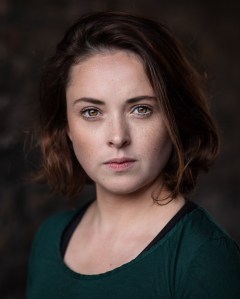
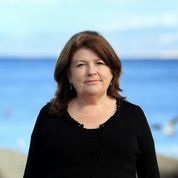 Annette Skade is from Manchester and has lived on the Beara peninsula, West Cork, Ireland for many years. She is currently in her final year of a PhD on the work of Canadian poet Anne Carson at Dublin City University. Her poetry collection Thimblerig was published following her receipt of the Cork Review Literary Manuscript prize in 2012. She has been published in various magazines in Ireland, the U.K., the U.S. and Australia and has won and been placed in several international poetry competitions.


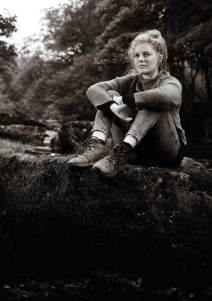
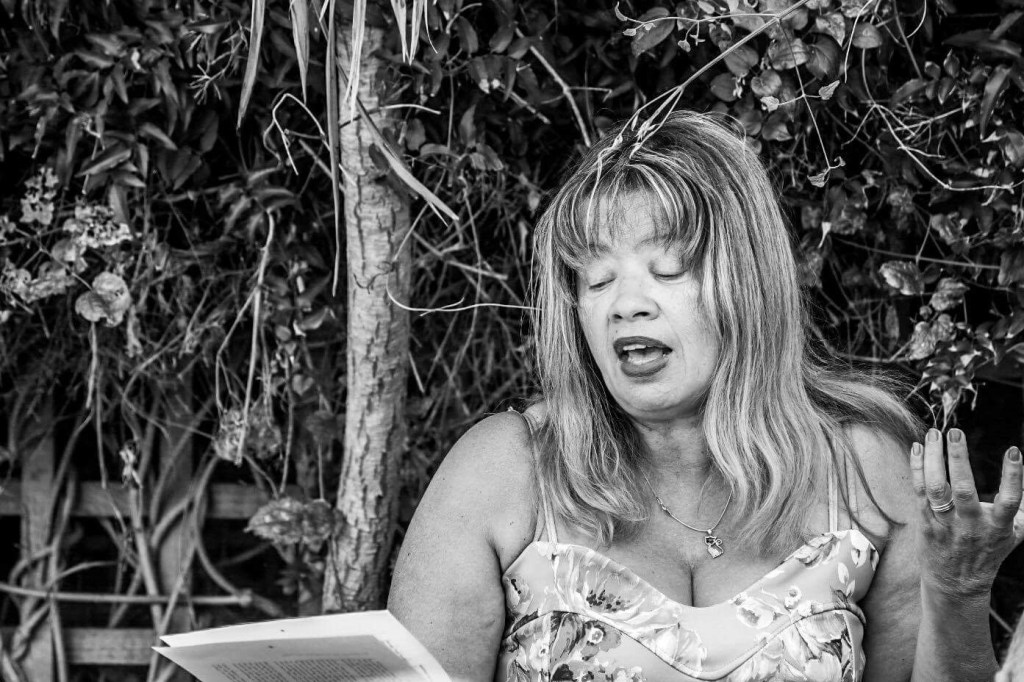
 Katrina Dybzynska poet, shortlisted for Red Line Poetry Prize 2019. Author of „Dzień, w którym decydujesz się wyjechać” (The Day When You Decide To Leave), Grand Prix of Rozewicz Open Contest 2017. Laureate of national competitions in Poland. She has been publishing short stories, concept book, science fiction, reportage, and poetry, but feels most attracted to genre hybrids. Polish Non-Fiction Institute graduate. Activist. Currently a member of Extinction Rebellion Ireland.
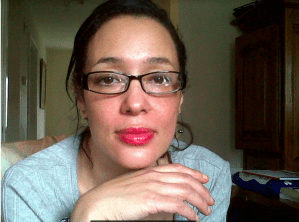 Anora Mansour is a graduate of the University of Oxford. She lives between Oxford and Dublin. She has been published in a collection of Jazz Poems, various online sites, and has her own published collection of poetry and blog. She is African-American and Irish.
 Wes Lee was born and raised in Lancashire and now lives in New Zealand. Her poetry has been published in magazines such as The Stinging Fly, New Writing Scotland, Poetry London, The London Magazine, The Stony Thursday Book, Banshee, among others. She has won a number of awards for her writing, including, The BNZ Katherine Mansfield Literary Award; The Short Fiction Prize (University of Plymouth Press); The Over the Edge New Writer of the Year, in Galway. Most recently she was selected by Eileen Myles as a finalist for the Sarah Broom Poetry Prize 2018, and awarded the Poetry New Zealand Prize 2019. Her latest collection By the Lapels was launched in 2019 by Steele Roberts Aotearoa, in Wellington. Her previous collections include a pamphlet Body, Remember launched in 2017 by Eyewear Publishing in London as part of The Lorgnette Series; Shooting Gallery (Steele Roberts Aotearoa, 2016). And a chapbook of short fiction Cowboy Genes (Grist Books, University of Huddersfield Press, 2014).
 Jane Clarke’s first collection,
 Rosalin Blue is a cultural scientist, translator, and poet who began performing in 1995 in Hildesheim, Germany. Linked to the literary scene in Ireland since 2000, her poetic home is O Bhéal in Cork. She has performed in Cork City and County, Limerick, Galway, and Dublin, and at festivals like the Electric Picnic and the LINGO Spoken Word Festival. Blue’s poems have been published in Southword and the Five Words Volumes in Cork, Revival Poetry, Stanzas in Limerick, and in Crannóg Magazine, Galway. She has been included in two Cork Anthologies, On the Banks (2016) and A Journey Called Home (2018). Her poetry collection In the Consciousness of Earth was published by Lapwing, Belfast in 2012, and her translation of love-poetry by the German Expressionist August Stramm You. Lovepoems & Posthumous Love Poems came out in 2015. Find her on Youtube and facebook.
 Anne Walsh Donnelly lives in the west of Ireland. Her work has appeared in many publications including New Irish Writing in The Irish Times. She was nominated for the Hennessy Literary Award for emerging poetry and selected for Poetry Ireland Introductions in 2019. She is the author of the poetry chapbook, The Woman With An Owl Tattoo, published by Fly On The Wall Poetry Press and the short story collection, Demise of the Undertaker’s Wife, published by The Blue Nib.
 Susan Kelly is from Westport, Co Mayo. Her work has appeared in Cyphers, Poetry Ireland Review, The Stony Thursday Book, Crannóg, Revival, Abridged, The London Magazine, Boyne Berries, The Weary Blues, Burning Bush 2, wordlegs.com and was short-listed for the Writing Spirit Award 2010. She was a featured reader at Over the Edge in Galway 2011, shortlisted for the New Writer of the Year 2013 and longlisted for the 2014 WOW award.
 Chris Murray