New Worlds The redwoods lime their twisted rust Above the shore’s funereal cobalt tides beyond Atlantic shores and old worlds dying. Tumbling against the air on primavernal wings, perceiving lights occulting on the waters’ slope where distant redwoods lime their twisted rust New Worlds is © David Pollard.
|
Category: Images
-
-
may bell
not a rook to maycaw its mockery
seats are pulled up to the maybell statuary
starling swipes up at a yellow tree
laburnum is poison it sings
yellow fish are stitched into a tree
tacked into the leaf and flower
the flowerpod
the seed –
maybe all three:
root, bloom, and seed
are stitched in.
seed
seed slopes,
slews in
the crystal pool
its flesh blooms to an effort at tone
former desiccate, it corals the milk
sucking in meat
from water’s distress
and living nonetheless–
winding in its silver thread
beneath brine of flesh frond
and secret too
cells
draw in the silver thread beneath brine of flesh frond
shut in cold
shut in light
a silica scar
a stone embed
lit in rock
deep cut in
it forms a bird
graven arched
this place is unseamed
cells
draw to the frayed lifethread the flame of it is subdued to a sense of lit
drawn-in too the seed sunk drowned in its slew of coral fibrous brine
threads separate underneath a shower of humus that in-bole-gathers
hammer and lead the gardener is raking rounds exposing the roots of
trees groved
trees grieved
sweetheart blossoms lie on wet ground bereft of their generations
there is only the marble of the statuary now fleshing its wounds so
seed will lie
seed will lie
may bell and cells form part of a dream sequence from The Blind (Oneiros Books, 2013). These sequences are © C. Murray.The book can be ordered online from Oneiros Books.
-
 of the nothing of
.
Paperback: 182 Pages
Oneiros Books 2014
Cover is © Tadhg Murray
…I genuflect to nothing, in a vacancy of shit..
(from of the none exposed)
Michael McAloran’s of the nothing of is subtly related to another of his works with Oneiros Books All Stepped/Undone. While both collections have a loosely tripartite structure, in of the nothing of McAloran is pushing into the realm of the psyche, and attempting its full expression.
In essence of the nothing of moves from a griefscape like in All Stepped/Undone toward expressing the disembodied voice. It is a work largely sited in the telling of the physical memory. McAloran’s control and direction is achieved through the work under three major headings, of which more anon. of the nothing of has a dystopian expressiveness of some magnitude which he achieves and maintains through voice.
Voice is spoken through pulse-beat, through an imagined interior such as a corridor or a room with a naked bulb, indeed through the voice unaccommodated. Here, a Beckettian mouth through which an ancient howl emerges. Whitman’s Howl meets Not I, but without the celebratory tone. This is not to say that there is no humour here, there is, it is self-deprecating.
of the nothing of is divided into of subtle butchery, of the none exposed, and pulse beats. The larger part of the book is contained in of subtle butchery which is divided into poetry alternating with prose segments. of the none exposed is poetic prose all through, here and there glints of humour are evident. pulse beats are precisely that, short bursts of poetry in four sections merging with and into prose segments. pulse beats structuring is poetry/prose/poetry/prose. it is the shortest section of the book, with the final prose section contained in one and a half pages.Although the narrative voice, or anti-voice in of the nothing of lacks physicality, lacks a geography, it is clearly (or was) an embodied voice. Voice’s physical experience is one of violence,
…[pulse beat]…
…(oh, how I remember it all, as if, as if in the going on or the getting on were of the nobility of eyes/ stillness-cadaverine/stone mockery/ashes drifting away from an open palm…)…
…[pulse beat]…from pulse beats
…All said of the what of it, spoken again, as if to spite, till the
dread of which, no not once, vapours of stagnant bleeding, skull
in a vice of empty desolate , winds throughout hollow, as of dead,
yet else, breathing all the while of circus pageantry, where the
hands fall stripped of flesh, having gathered the briars of nothing
else…..I’ll yet stay, I’ll yet go…
…The hours are very long…
#15 of the none exposed
of the nothing of is not a unified work. There are three divisions within the book. These divisions are arbitrary. I do not think the book should be perceived or understood as a unity. McAloran delights in the non-narrative, and in creating cognitive dissonance. Thus the reader can pick or choose which part of the work suits them to read, without the problem of finding progression/theme/unity /or purpose. Reading the book is somehow equivalent to peering into an anthill of busy piracy and casual marauding, it slips between the fingers and rejects the readers attempt to garner a safe place to pause, to rest,
the flash of a match head/dreaming all the while of the living
and the dead and of the what might be to become of this nothing
that is/ (stunted/ ever-glowing) /ask of the asp the pathway
through tall grasses/from of subtle butchery
What underpins and creates a sense of unity in of the nothing of is the voice of the poet. The lamenting and anguished voice underpins the entire book. Movement and structure in the book are subverted by voice, making them largely irrelevant. McAloran chose a loose structuring which is sufficient to carry the reader along the black waves of exile and lament.
It is as if voice finds him/self in a degraded and vicious reality. He sings what he sees and dreams, his memory of wholeness. The reading of of the nothing of is difficult, but worth it.
10-
a droplet of blood
.turning lest the light expires
speaking the language
.of the veins
unto the none else/
.fragrance offrom pulse beats
from of subtle butchery. .
Chime unto closeRot/
Strike aloud till
Stillness bears the
ice of bloodless night
In a roomscape
\of final emptiness
Here/absent traces
Mocking the stitch of the wound
Shroud-bound by
Vapours/
…..colours emptied
.
Ever to mock the
violent silence
With gritted teeth
…Till spark extinguished
Cold weight of naught
A palm closing over final eye
from of subtle butchery
-
Caught in the Cross Hairs
I bury my face in the thickness of your hair
the darkness, the softness, the smell
raw brain sweat, your innermost thoughts
desire become scent
beneath the softness
the hard skull skin
a barrier you need
and I want to penetrate
to enter see the wiring
observe my image
upside down in the back of your head
then turn and peer through your eyes
I’d see the world as you
You’ve stolen my tongue
I thought I had the power
in dreams I knelt at the chopping board
an awkward sacrificial lamb
I brought the cleaver down
silencing my babble
but you held the knife
and while I slept you forced
my lips apart and cut
at the roots
ever the skilled operator
you stitched me up
needling the thread
to connect the severed ends
I can still make sounds
some almost words
they think they understand
but my tongue is in your hands

‘Blue’ by Vani Vemparala From The Geometry of Love Between the Elements by Fióna Bolger. A Grimoire published by Poetry Bus Magazine.
cure for a sharp shock
it’s that moment
when you trust
let go the balloon
your hope floats
up into the air
it’s beautiful and red
it bursts
empty rubber pieces
a shade darker
float to earth
I read somewhere
if you take these shreds
put them between broken
pieces of pottery
and blow
they’ll sound beautiful
I’m not sure
I read it
somewhere
cure poem for the lovelorn
a woman sits alone
her eyes are on the swan feathers
dropped by the moon upon the sea
she sees no-one on the horizon
but who can walk on water
dance on down
by day she weaves her stinging sadness
into nettle shirts, by night she waits
for her lover – the one who needs
to wear those painful clothes
to be fully human again
no longer trapped
on a cold moon
dropping feathers
on the sea
Cure Poems are © Fióna Bolger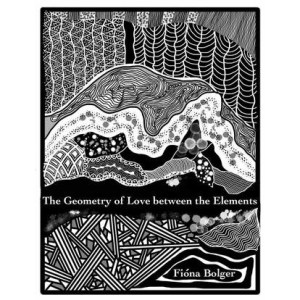
Fiona Bolger’s work has appeared in Headspace, Southword, The Brown Critique, Can Can, Boyne Berries, Poetry Bus, The Chattahoochee Review, Bare Hands Poetry Anthology and others. Her poems first appeared in print on placards tied to lamp posts (UpStart 2011 General Election Campaign). They’ve also been on coffee cups (The Ash Sessions). Her grimoire, The Geometry of Love between the Elements, was published by Poetry Bus Press. She is of Dublin and Chennai and is a member of Dublin Writers’ Forum and Airfield Writers.
From Poetry Bus A Grimoire is a book of magic and what is more magical than poetry? So instead of producing a series of chapbooks we’ve opted to create something a bit more special. Our first poet is Fíona Bolger and her Grimoire is called ‘The Geometry of Love between the Elements’
A beautiful book of poems illustrated by Vani Vemparala and featuring translations into Irish, Polish and Tamil by Antain Mac Lochlainn, Aleksandra Kubiak and R.Vatsala respectively. -
Poems from ‘Signature’
thistle roll
thistle roll
twig sphere
scatters a
thicket clump
looks alive, it
is red-tipped
a feather-blown
bag-blown
bird-corpse let lie
its throat opened out
purple the thistle
-blown hue,
purple the cry
tear
a field of ewes, their winter wool loose,
blown down to the rusted gate.
a flower clock banks each moment to the birthing,
their mothering.
their rich milk a wellspring.
spring now, and
a breeze tickles the white clouds,
winter coat shed, wind still barbs her criesthey ignore her labouring
Thistle Roll and Tear are © C. Murray
Signature is published by Bone Orchard Press, and edited by Michael McAloran. It is my second chapbook, and it can be bought via LULU. A sample chapbook called Three Red Things is available here.
s  ignature is a beautifully wrought collection of short/ imagistic/ surrealistic-impressionistic poems
ISBN 9781291797046
Copyright Christine Murray
Edition First
Publisher Bone Orchard Press
Published 23 March 2014

-
 The first edition of SHE was published by Oneiros Books in 2014.
82 Pages
Perfect-bound Paperback.
The cover painting image is © Anastasia Kashian, with great thanks to David Mitchell for design, and to Michael McAloran for accepting the book on behalf of Oneiros Books.
Two poems from The Island Sequence of ‘She’
sea is a womb
sea is a womb
dip and flow the small boatrock and rock,
rock the black blackgold lace a-glitter
and rocks – the
rocks scrape her timbersbeneath the carved wave
lie monsters clawing at her base
black the inky waves lap to
black the inky waves lap to
and black they suck the shale

and if birds swoop
they are the mere shadows of birds

there are hands there to disembark you
to hold you over the rocky black

those hands that will arc you onto the comfort of stone

this is the sea/
      this inky black

it does not smell of sea

the gap between the boat and the shore is awesome
the wood laps the water dragging it out /
and

bobbing it back again
the chasm at the heel
and one step forward
to land to stone comfort.
Poems from The Island Sequence of ‘She‘ are © C. Murray
black the inky waves lap to was published in The Burning Bush VIContents Page
(i) A letter found in the box that contained this narrative, being addressed to the cousin of a former patient, Miss Constance Byrne.
(ii) A note attached to the file of Miss Constance Byrne (now deceased).
Part I
Standing Stones
Grove
Lake
Serpentine The Alleyway
A Ruined Church at the Precipice
Burnt Hill
DescentPart II
The Island
She
Cousin -, The narrative that follows here is a faithful rendering of my wanderings from the time of my retirement to the dawn. It is always the same. I do not expect anyone will believe me, but I know that my dreaming life is as real as my waking life.
Indeed, I have learned not to call these sleeping narratives anything other than a different part of my reality. When I first encountered the entity that appears on the towpath I was afraid for She seemed hardly human to me. I had gone little by little into this dreaming place over the course of twenty years, and I had explored it wholly in her company. I do not know what my encounter with this lady means, I intend to find out. In my exploratory times there I have never yet met another person. Although there were signs of life (or of creaturely habitation).This landscape seemed to me to be ruined by war and by heat. What else could make marble of glass shards?
It is bleak there. At every dawn, there occurs a throb of colour and I know that somehow I am back here in this world. I do not believe that my nightly explorations are a dream, for I have found tears upon my slippers, and a rend in the lace of my dress. She wants to show me something. She has indicated for me a bridge. I intend to cross over it, and thereby to continue to explore the geography of its unknown terrain.
I travel now alone. I am unencumbered by family, nor by tradition. I leave to you this letter and some small tokens of my esteem. Know that I am safe, and although I undertake this journey with trepidation, I remain always yours,
Constance.
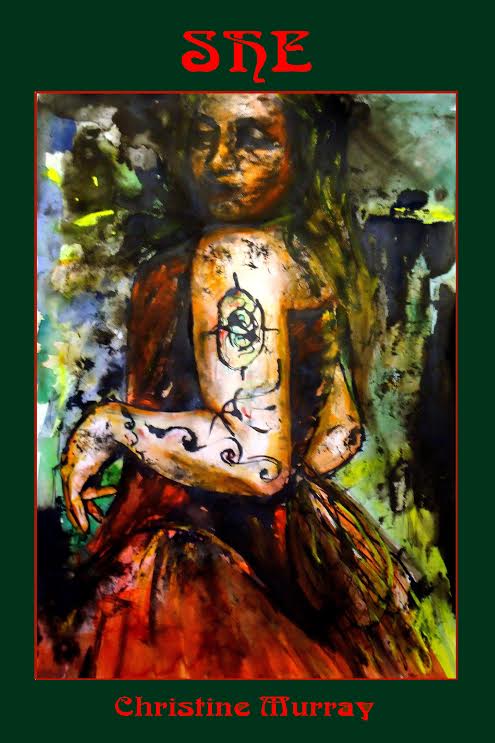
Cover image by Anastasia Kashian. Cover design by David Mitchell at Oneiros Books. -
Cup
nest rests
her cup(heart, feather)
into wood
winds
capillaryIn air (above)
sky is a heart caught
red, its amber spillingnest stills
her dust
and mossbreathe out
underground, wet roots stir
the sleeping house upsoften
the softening rainmy veins answer tree
.
Cup is © C. Murray
.
New Trees,
there are three –
two crows dance
steel-beaking the mounds roundNew Trees is © C. Murray

Image is © Mick McAloran -
‘In the realm of suffering, affliction is something apart, specific, and irreducible.’
Simone Weil.
-
The text of The Zero Eye can be read in its entirety in the January 2014 issue of Ygdrasil, A Journal of The Poetic Arts.
I equate Michael McAloran’s use of imaging in The Zero Eye with the concept of necessity propounded in Weil’s essay on affliction which I have quoted above here. There occurs a layering of image in The Zero Eye which explores at once the dissipation of language and the voidal space wherein a voice explores the themes of perception and the stripping down of conscience. In typical McAloran fashion a structural element is inserted into the book which undermines the preceding text, in this instance he uses a coda at #10.
#10
the zero eye fails/ cannot/ can or cannot only in/ barren vice of obsolete/ of film upon eye in glimmer tide/ of cataract projectile upon/ itches to be gone in eye of/ absurd of/ zero else of black/ no nothing of/ zero eye not feel/ unblinking black/ gallows none/ razor none/ (+0)/ skeletal as if/ no not infinite/ yes infinite
Weil describes affliction through her construction of the image of a hammer hitting the nail in the exact dead centre of the wood, that the reverberating echo would traverse all space and time. McAloran’s dead-centre is the black lens of the death-eye, over which pass worlds. Eye’s monologue occurs in a space peripheral to where voice’s bodily humanity lies.
#2
crafted in absence of voice/ here or there a nothing of/ claimed yet ever-fading/ yet silenced ever/ still yet/ breakage upon rock of night’s forever distance/ motion of which feeds flame of/ yet ever to rage against/ shift unto/ remnants in midst/ shadowed by final yes/ once absence births/ hands cold/ search through weight of cold/ silhouettes of/ cannot lacks cannot or cannot/ hence proliferation of/ sound upon distance/ and of echoing/ undoing…
The Zero Eye is 24 pages long and it represents a step away from the grief-scape that McAloran created through his recent books, none is closer (or further) from his present intent than the Lapwing Press published ‘The Non Herein-’. The created space developed in that book has given way to intimate space, be it a shack, a room, or the artificial space of the stage.
#1
in shed of flame that was never light/ better yes never of it/ bite down upon edge-solace of/ trade anguish for oblivion/ yet naught as ever/ final as/ less or more/ ever was/ remnants of then or nothing left to/ no/ no breaking forth/ no never again/ let it/ decline of/ yes death of/ yet will not/ clings unto/ as if to say/ the zero eye/ un-scattered none/ falls unto or not/ utters without pause for/
McAloran’s instinct as a writer is to bring the reader into the created space, and then to turn their expectation on the head by radically altering the pace of the piece, which he achieves in his coda.
The major carrying image of this book is the eye/I. The eye/I occurs as symbol throughout McAloran’s work, but in this case it represents a shift in focus from the universal to the particular, or the intimate.
#2
the zero eye will ever be/ shape without form/ density of rind branded by sting of inescapable/ rots through unto/ until/ yet given to silence/ scatters breath of nocturne/ clasp of weight/ says nothing more of I/ clean break/ subtlety of design/ crafted in absence of voice/ here or there a nothing of/ claimed yet ever-fading/ yet silenced ever/ still yet/ breakage upon rock of night’s forever distance
There is a subtextual violence throughout The Zero Eye, which I read as lament. Words occur and re-occur, they voice a violent out-rooting of the sense of moment, spliced, rixt , marrow of spliced, ….translucent carrion , density of rind, deformed, empty, shadowless, rupture.
#9
zero black pupil of/ of what/ (question once in text/ believed)/ no matter/ erase/ recommence where there is naught/ raging blindly/ hop-scotch…
Here voice, or voice’s echo is knitting together themes in a manner that prepares the reader for the coda, where a nihilist rejection of the almost sweet lament that occurred in the preceding ten pieces is shot through with a clownish repetition and cut-up technique turning the book onto its head and abruptly ending it.
Coda
(…text no/ this is not a/ this is not/ not this/ is/ a text not/ not this a/ this/ this is not text/ not a text/ text not this is not/ a/ this/ not a/ text no this is a/ not a text this/ this is not a/ this not a text is/ this not a/ not a this a text is not/ not/ not this/ a text/ not a/ text not this is a/ this is not a text this is not a text this is not a text this is not a text this is not a text this is not a text/ text no this is not a/ text no/ a text not this/ not a/ text not this is not a…ad infinitum).
Kicking to the kerb of the subtle beauty of the lament, McAloran forces the reader to remove herself from the hypnosis of the previous text, and address the worthlessness of human-suffering. The Zero Eye represents a culmination point and a watershed in McAloran’s work as a writer. His use of structure and symbol is highly developed in all his recent books, yet inherent in this book is a cool limpidity not heretofore noticed by me.
McAloran’s excavation of his psychic depth in books like All Stepped/Undone and The Non Herein- led to the creation of a huge internal landscape. Here there occurs a reduction of the claustrophobic element of his previous books, and a movement towards a smaller and more intimate space, wherein voice in the form of soliloquy or monologue is given freer reign.
-
-
Breakfasting with Dreams
Birdsong.
Scraps of dreams remembered.
I place one foot, then the other, on the floor.Outside in the first light of breaking day
dew lies on the discarded squashed remains
of suppers bought from greasy chipper vans,
and mist will blend with fumes of car exhausts
as workers crawl from sleepy dormer towns.But dew and mist are genes of water words
like drip and drop and rain and flood and sea
so comforted I make some toast and tea
humming words like seed and sow and yellow wheat
and grind and flour and bake and break and eat.I slipper round the kitchen with these words
and on the window sill leave crumbs for birds,
carbohydrates to augment the early worms.Then as the sun shines through the marmalade
I butter toast with golden spreads of dreams,
image fragments I have salvaged from the nightso I can go and face the world once more,
put one foot, then the other, out the door.Breakfasting with Dreams is © Christine Broe
A Decent Full Stop
There are enough words in the world,
more than enough,
when all that is necessary
communicates itself in silence.Should the sparkle of a sapphire speak
Or be some window in your eye
that tells of love?The script is done.
You have said all you will say.
I listen to the pregnant silence
for sudden intakes of breath.
Sighs.Silent mother
I am learning
to live with the absencewith a language beyond
even that between the lines.We walk together,
I synchronise my steps to yours,
From garden gate to garden gate
Sealed with cobwebs.You touch the locks.
Scents of flowers caress us,
sitting in the sun
when your hand unbidden reaches out,
catches mine
and we are joined to everything.A Decent Full Stop is © Christine Broe
 Christine Broe, born and still lives in Dublin. She has worked as an art teacher, arts facilitator, and art therapist while looking after family of seven. She has been writing poetry since the 1990’s winning the inaugural Brendan Kennelly Award in 2001 and gained international recognition when awarded the Premio Cittá di Olbia prize in 2002. Swan Press published her debut collection Solas Sólás in 2003. She is a long time member of Rathmines Writer’s Workshop and has facilitated creative writing workshops using art media as inspiration for generating work.
 -
Of The-
Head of death
The seasons dissipate as if they
Had never collected tearsA dissolving sky
Soil sieved through fingersThe silent laughter of the blood
Nothing More-
Ruins of the foreign sky
From which point all are deadSmears of dying animals upon clear glass
The flies will gather, nothing more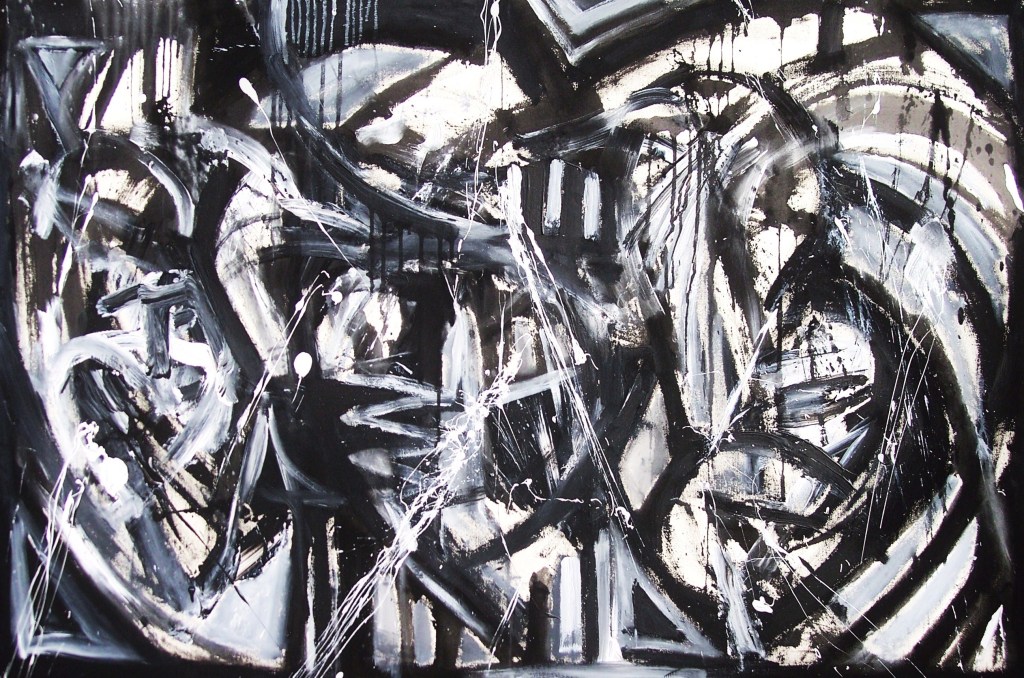
Ignites-
A blindfold of congealed earth
The dead drown of inverted tearsLacking the light
By which the night ignites the livingUpon-
Brute flesh shocks the nothing back
Into resolveAnd is then pissed upon
Silences-
Heart of desolate
In a vice of fleshNowhere else/ nowhere/ nothing less
The winds erased having tasted ashesEchoes of non-being
Inexplicable silencesChampion-
Dark hollow
The sky unearthedOne final breath to champion the infinite
Ever-
Haven to begin from
Scarlet striking out striking the dirtWith liquid hands
As if it could have ever begun otherwiseII
#9-
Echo within echo within shadow of…
Absence/ walls/ flames/ still breath alonePantheon of carousel/ of vertigo/ of absences
Night’s undoing was never night
Hence the laughter forever ceases to be#14-
Danse of polka winds…night undone/
Night flourishing…Silent retrace of bone/ vapours/ memories
Immense sky of non-death/ nothing lessened
Razor absences/ peeling away the bloodlessness#15-
Hollowed tongue…winds dealt/ silenced
Dread lest the fingers break/ (only the elapsed)Sing elixir of non-speech/ mouth full of dry sands
Leaving behind the drapery of skinned tide#18-
Adrift…a visage of mists…(dead unto breath)/ arbitrary
Vault of wasps/ colours/ discoloured skin/ emptilyNight of vague breathing/ unheard voices/ voices heard
Stillness of forgotten sky/ there or here again/ cast aside
Buried sun/ sky/ sun of ashen waste/ teeth of nothingness#19-
Waste ground/ flies of haste/ silver voices/ decay
Black tongue of…wasted wounds of…soundless againArise dead/ so much the/ dread/ silenced/ birthed
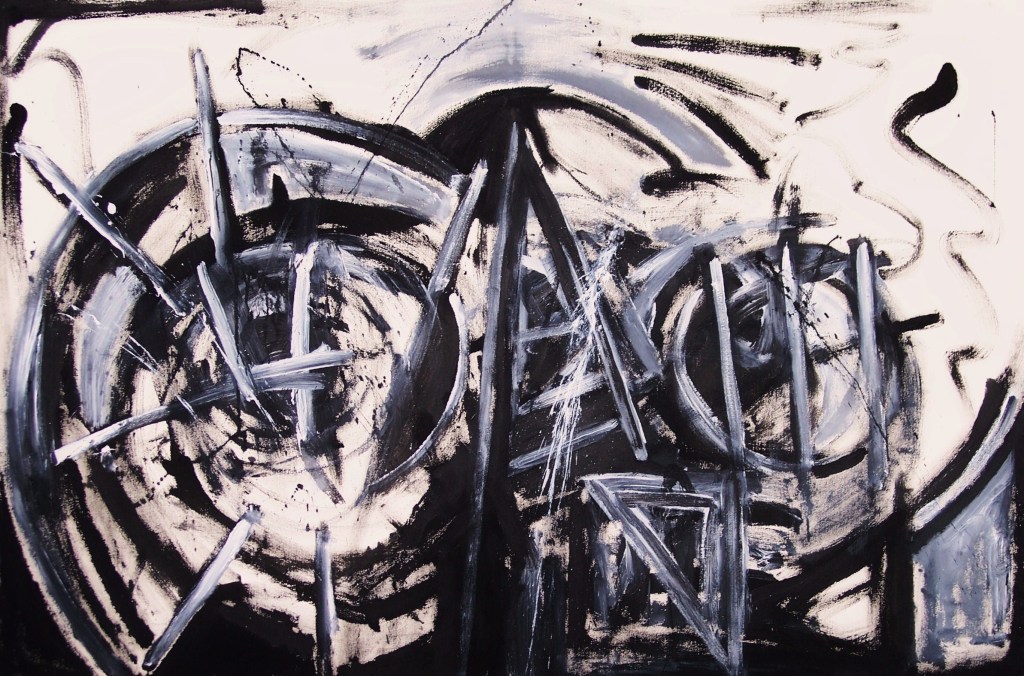
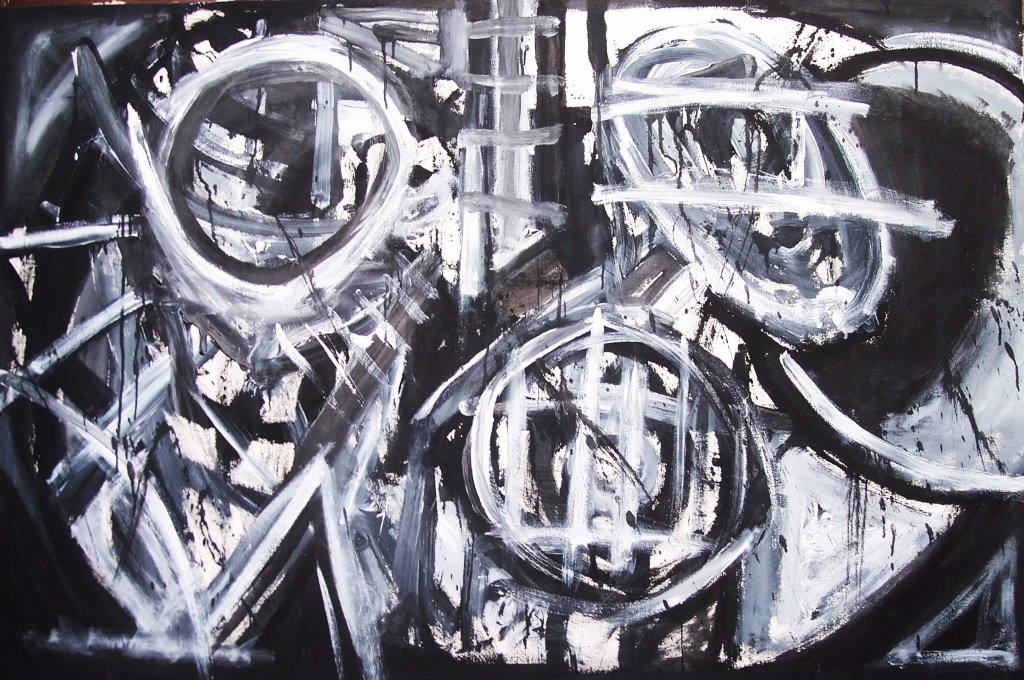
Evaporating tongue of/ erased/ better never/ never to have beenAll the images accompanying the poems from Of Dead Silences (Lapwing 2013) are © Michael McAloran (Acrylic on unprimed canvas, 2012) Michael Mc Aloran was Belfast born, (1976). His work has appeared in various print and online zines, including Carcinogenic Poetry, Calliope Nerve, The Recusant, PMI, Sex & Murder Magazine, Full Of Crow, Media Virus, In Between Altered States, Horror, Sleaze & Trash, Negative Suck, Graffiti Kolkata, Pratishedhak, Prathamata, Danse Macabre, amphibi.us, The Plebian Rag, Full of Crow, Gloom Cupboard, Gutter Eloquence, 1000th Monkey, Fashion For Collapse, Fragile Arts Quarterly, Clockwise Cat, Sein Und Werden, Peripheral Surveys, Milk Sugar Literary Journal, Psychic Meatloaf, Cannoli Pie, The Medulla Review, Counterexample Poetics, Heavy Bear, Indigo Rising, Widowmoon Press, Nothing, No-one, Nowhere, Mastodon Dentist, Gobbet, Ink Sweat & Tears, Ygdrasil, Establishment, Stride, A New Ulster, Primal Urge Magazine, Can Can, etc.He has authored a number of chapbooks, including ‘The Gathered Bones’, (Calliope Nerve Media), ‘Final Fragments’, (Calliope Nerve Media), & ‘The Death-Streaked Air’ (Virgogray Press), ‘Debris’, (Erbacce-Press),‘The Rapacious Night‘, (Calliope Nerve Media),’, & ‘Unto Naught’, (Erbacce-Press). A full-length collection of poems, ‘Attributes’, was published by ‘Desperanto’, (NY), in May 2011, & ‘The Non Herein’ was published by Lapwing Publications in 2012. An ekphrastic text/ image book, ‘Machinations’ was published in 2013 by Knives, Forks & Spoons Press (U.K). More recently, two further collections, ‘In Damage Seasons’ & ‘All Stepped/ Undone’ were published by Oneiros Books. Lapwing Publications also recently published a collection of imagistic aphorisms, ‘Of Dead Silences’
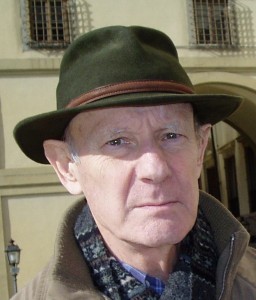 David Pollard is a poet and critic. He was born under the bed in 1942 and has been furniture salesman, accountant, TEFL teacher and university lecturer. He got his three degrees from the University of Sussex and has since taught at the universities of Sussex, Essex and the Hebrew University of Jerusalem where he was a Lady Davis Scholar. His interests are in English literature and Modern European Philosophy. He has published The Poetry of Keats: Language and Experience which was his doctoral thesis, A KWIC Concordance to the Harvard Edition of Keats’ Letters, a novel, Nietzsche’s Footfalls, and four volumes of poetry, patricides, Risk of Skin and Self-Portraits (all from Waterloo Press) and bedbound (from Perdika Press). He has also been published in other volumes and in learned journals and poetry magazines.
 Chris Murray