1. Everything 2. Sky 3. Pull 4. Crash 5. Dizzy |
|
|
1. Everything 2. Sky 3. Pull 4. Crash 5. Dizzy |
|
|
| They and I, O how far we have fallen! Just to burn here.
You can now order bind viaTuras Press |
 bind cover photograph is © Christian Caller, original artwork Bound / Boundless © Salma Ahmad Caller |
from theIrish Times I am a poet without a landscape, a woman poet without a narrative heritage. I began tracing the huge startling landscape of US and European women’s poetry while in college. I could not find its equivalent here in Ireland. bind reflects the facts of absence and fragmentation in my poetry landscape, and the absence of women poets in our cultural narrative. bind is a book-length poem loosely divided into chapters. These chapters act as boundaries within the action of the poem and provide gateways to differing aspects of the processes inherent in bind. The title of the book takes its name from the triple hyphenation that occurs… |
View original post 309 more words
| They and I, O how far we have fallen! Just to burn here.
You can now order bind via Turas Press |

bind cover photograph is © Christian Caller, original artwork Bound / Boundless © Salma Ahmad Caller |
|
from the Irish Times I am a poet without a landscape, a woman poet without a narrative heritage. I began tracing the huge startling landscape of US and European women’s poetry while in college. I could not find its equivalent here in Ireland. bind reflects the facts of absence and fragmentation in my poetry landscape, and the absence of women poets in our cultural narrative. bind is a book-length poem loosely divided into chapters. These chapters act as boundaries within the action of the poem and provide gateways to differing aspects of the processes inherent in bind. The title of the book takes its name from the triple hyphenation that occurs irregularly within the first chapter. bind explores movement, objects, and colours that occur in a no-place or a stasis, the fragmented landscape,
(from bind – Chapter One) read more here bind (Turas Press, 2018) was launched in Dublin on October the 8th 2018. I include here, with thanks, some details from artist Salma Caller’s response to the text. This is a note of thanks and appreciation to those people who have supported the book from the outset. Liz McSkeane, at Turas Press has written an introduction here She has taken me through the process beautifully, including a visit to the type-setter, discussions on the visual art aspect of the book, and at all times she has kept me up to speed with the process. Turas is a new press, I urge poets to explore the possibility of publishing there. Eavan Boland very kindly read the text and provided an endorsement for me. I have published the coda to the book and a short poem wing above. The book is not consciously oblique, it charts a progression through a territory that defies description. It might even be said that the book is very simple, although I have tested that theory!
Acknowledgments are due to the editors of Persian Sugar In Indian Tea, York Literary Review, Levure Litteraire #12, The Honest Ulsterman, The Penny Dreadful Journal and Compose Journal, who have all published excerpts from “bind”
|
Wing

mercury pool shatters
and,
a-black-wing

the challenge
of           wing.

bird skims black
ice bird skiffs
the tree pool

bone-blood

the
actual bird,
the image of a bird

the real thing of it,
grasps onto a branch.

             the iron of its grasp
|
 |
Before she was mine
she drank red wine and spirits
With class, in Egypt and Paris
An educated forties woman
From Wales, aquiline nose, my brother’s eyes
Stylish in scarves, tight belt, full skirts,
Intelligent. Conversation, politics.
A woman of intellect. Studious, serious
She pursued kingdoms of change
But with each revolution comes sex
And she became history. Mine
Look, here I come.
Cuckoo, cuckoo
Before I arrived, my mother was beautiful.
I have just read a poem:
‘Mother’ By Alvy Carragher
over and over:
“You said it was love at first sight”
Mother, I don’t recall you saying that
On this couch where I now lie
where, as a child, I snuggled into your woven threads
of bosom and breath
The words, ‘I love you’? No
I would remember
Though I heard the scream
you held at arm’s length
Its tentacles tangled in our threaded embrace.
I come home from time to time
Motionless, I stand, glide down
Steel de-escalates underfoot
My eyes swivel, theatre bound
Air loses fresh, swoops up my nose
At the bottom, I step South,
Into tunnel, crowned blue and white
Ridged platform, yellow line
A rubbery wind shoots the breeze
My instincts bristle, on the rise
I guess the space where carriage will stop
Tube swoops in
My choice is good. Doors
Wheeze, release heaving crowd
cheek by jowel, shoulder, hip
I stand back, then
Squeeze and shove, shift as one
Teeter, grab a well sprung coil
We shunt and start
a broad church in communal lurch
a rhythm of common
I count the stations
Watch eyes doze, upright
Bodies twitch to ear plugged notes
Approaching, I crab, slide and twist
Mind the Gap
Turn right
Keep Left
Queue to tread and escalate
Inhale the light, sirens, petrol
Surface
flash an oyster, stride away
reassured of my DNA.
for Martin and Breda
The lake swarms, teeters the edge of evening shore
Low, the garden sky seethes, yellow and grey. Still,
We sit outside, nibble blue and white cheese
Pickle our lips with nasturtium seeds
Bite into blood red tomatoes, hand-picked from the vine
A yellow cucumber dressed in mustard and wine
Toast each other with homemade liquor
Beetroot and raspberry mixed with apple and pear
I settle on orange and elder flower
A course of wild pike smokes in black rising swirls
Cooked in a fresh branch of a fallen birch
Served with home-grown potatoes served with garlic
We chat of poetry and autumn spices.
in response to Seamus Heaney’s ‘Post Script’
At risk of turning this into an ad for Ireland
You may want to travel to County Cavan
For there the wind is always up
With fierce intent, blowing spores of bloodied rock
Drenched in storm and moonlight
The place is a palimpsest of history
Legend layered on leaps of myth
Grey, slate skies reigned by crows and ravens
Caws of silence on black scrawny wings
No ocean glitters, there is no flaggy shore
But there are giants, Lugh and Lag
Who jumped a gorge in the name of love
And left a chasm, a land of relicts
tossed with glacial erratics
a carbuncle of a fossil. Rooted and ancient
You will feel rather than see Cuilche loom
A cannon of earth spraying bullets of cloud
It shoulders the head of the North, tempers the South
From where craggy rivulets of pale faces stare
scattered amongst the raggy sheep
seeking refuge behind old crannogs
Piles of stones
The flesh of the land is weak, porous
lime mixed with water
Its heathery purple blood floods lakes that rise
Where ghosts ascend in morning mists
Stride, muttering, into dark pine forests
The limestone rock provides not a glint of warmth
Trees grasp and clutch at bare knuckled earth
Expose neolithic tombs, funereal monuments
They too catch the heart off guard and blow it open.
The Road Taken

It was dark as we crossed the cattle grid, pulled up the Barrack
Hill, down the other side,
around the mini roundabout, drove the N3 out of Cavan, Virginia,
Kells, Navan, Dublin

Spiralling the short-term parking, coming to a stop at the top,
and flying. Then travellating
to the station. The train stopped at Manchester Piccadilly, a
fret of ornate iron and glass

Suspended; industrial, opaque, white bulbs hang in the gloom of
winter gloam. Groaning
with Northern Asia, Derbyshire, an English winter

   Red stone     red brick  red stone	  red brick	  red stone

Rows of town, city suburbs: Hawkeswood, Stockport, Hazelcroft and
the Price is Right.
We disappear into banks of soil and tunnel. Black electric light
blasts into heaving peaks of green, velvet brown

Soft to touch, sloping down. In the sky, a lisp of blue in leaden
grey, a flash of Hope, followed by a thrumming cab,
to a Sheffield HOME of blue uniforms, snug around a bosom
of pinned identity.

My mother in law’s tiny marbled legs attached to a nappy, a bib
and tucker. A baby mother.
A soft face slack with grace, a momentary greed of interest,
forgotten in seconds…
                    then repeated.

Over again. Again. Soon, she tires of not remembering. I go on.
Travelling on a train, to London.
The carriage lights are dim. There are clicks of zips.
Creaks of bags. Whispers of coats taken off

folded. Murmur of pale blue light. Rain squeezes drops down
the window pane. I snuggle down in the interim for the linger of
journey, the in-between. Chesterfield, Derby, Leicester,
St Pancras.

I walk the marble floor that lays the way to Paris, passing
cocktail bars, sumptuous shops, silver, gold, chains,
and jewels, glamorous hair, bags and suits, leather,
barrels of wine

Down
	down
		down
                     to
                         the
                             Northern
                                      line

I wade through a tube of Londoners: a commuter, a son, a daughter,
an old man, a student, a worker, a patient, a brother, a sister,
an aunt, an uncle, a cousin, an only child, a father

to you, mother: old woman, bright beads for eyes, swaddled in
pads and yellow rage, hunched,
slumped, lost for words, waiting. I take off my coat, sit down.
You are my destination.

The Road Taken and other poems © Kate Ennals
|
|
|
Granny WomanThe men leave us be; at times the granny woman. She knows of green-smelling whiskey, for the poultice. She eases young ones can feed. Now and then never know much about that. of the granny woman, when she
*Until the middle of the 20th century, it was typical for rural communities in the southern Appalachian region of the USA to include “granny women”. One role of these women was to act as midwives, using knowledge of folk remedies to assist in childbirth, and significantly but less extensively, with terminations and contraception. My great-grandmother was one of them, and granny magic/granny witchcraft is still practised today. *This poem was first published in the anthology The Chronicles of Eve (Paper Swans Press, 2016)
Meeting Tink in a bar in Heaven(for Tara) When I sleep, she still exists. Her face peach-bright My friend is a tattooed hologram who hugs and how she’s sorry I can’t be a bridesmaid I won’t tell her when she left he changed his mind. And she says she can’t wait for my wedding, She’s bringing her favourite lover, a leather-and-tartan this one makes her feel more alive than ever. I’ve been here all this time, she says, as music and tells me how I’d love her new friends *This poem was first published at Clear Poetry, and in Kate’s pamphlet You’ve never seen a doomsday like it (Indigo Dreams, 2017)
Following the River Exe on a Wednesday afternoonMy son fixates on sailboats. out to open sea, so we breathe under his nose; I hold his hand by industry, churned with purpose. The boy tilts his head, *This poem was first published at Clear Poetry, and in Kate’s pamphlet The Density of Salt (Indigo Dreams, 2016).
The names of things unseenfor Ethan You discover new spots on our adventures: You pack your bag, almost overflowing: Your friends teach you bits of an ancient tongue: *This poem was first published at And Other Poems, and in Kate’s pamphlet The names of things unseen (one-sixth of Caboodle published by Prolebooks, 2015).
DonkeyskinShe and I did our best with what we had, She and I understood emptying bins She and I hid our black eyeliner, tubes She and I married a second-rate prince She and I crouch beneath long shadows *This poem was first published in Dying Dahlia Review, and in Kate’s pamphlet Losing interest in the sound of petrichor (The Black Light Engine Room Press, 2018)
Shornfor Gráinne Ní Mháille The gossips claim there’s power but she wants to swing a sword ‘You’ll meet your death, girl,’ her father in the wheel, in the rigging, and break in her, our saving grace. drags it across the plaited red gold rocks as she drops dead scarlet rope She will become our Queen. *This poem was first published in The Copperfield Review, and in Kate’s pamphlet Deadly, Delicate (Picaroon Poetry, 2016). |
|
Related Links |
Big Brother Is Watching. Meredith, New Hampshire
A Proper PoemToday I wrote
A proper letter On proper paper With a proper pen. I put it in A proper package With a proper book To go along. I drove to the Proper post office And obeyed every Proper posting Along the way. I pulled into the Proper post office With a Properly pleased smile On my proud face. I promptly got out of My proper car, Walked up to the Proper post office And it was Positively closed.
|
|
|
Rain and relatives, relatives and rain.
In Glendalough’s monastic town
a jackdaw baby thrusts his downy head
out of a round tower putlock and raises
an ungodly yellow beak to squawk
at gawking tourists snapping cellphones,
the spines of their umbrellas dripping
on the ancient bullaun stones
where monks once mixed their potions
and the holywell was rich in lithium
which turned out to be a great cure
for the occasional pilgrim who, like me,
suffered from the watery weather
or a sodden slough of Celtic despond.
Angela Patten © The Cumberland Review 2015
Gaeilge, Inse Geimhleach, meaning “Island of the Hostages”
The land is a sponge sodden
with salt water and rain,
the mossed path a tangle
of Herb Robert and buttercup.
Giant leaves of gunnera
and the green spears of rushes
stand guard around the pond.
Laburnum hangs its head
like a girl drying her yellow hair.
Water gushes under culverts
over rocks, tap-tapping on the roof
of the sunroom like a timid visitor.
Through rain-streaked windows
I can see our hosts raise their heads
to look upward as the tempo
intensifies to an irascible hammering;
almost hear the ebb and flow
of their soft voices
from where I stand hidden
under a canopy of dripping roses
and dangling fuschia blossoms.
A clattering sound as three
runaway sheep hoof it down the lane
like boys going over the wall
to mitch from school.
Tomorrow they will have to return,
tails between their legs.
But for now they are part
of a thrilling spectacle as they trundle
three abreast into the green gap
between the high ditches.
The other sheep graze the wet grass,
their plaintive bawling
from the nearby field
like the call-and-response
of a gospel choir
singing the praises of
another doomed rebellion.
Angela Patten © Saint Katherine Review 2018
In Norse mythology the twin ravens,
Thought and Memory, flew about
the world, collecting news for Odin
who had given them the gift of speech.
Did they work together as a team—
one forward-thinking, looking out
for bloody rumor, thin whisper,
foul-smelling allegation, while the other
mouthed words and phrases,
recited names, reiterated everything?
Did they return together, grigged
with gossip for the dinner table?
Or did Thought sometimes muddle
Memory with unanswerable questions—
Can Memory be trusted?
Does Thought delude itself?
Do we only live as long as Memory
wraps us in its wings?
Odin feared they might not return,
knowing their taste for decomposing flesh,
what that vertiginous perspective
might reveal—a new god with a dove
that whispers in his ear, some new
dark truth delivered from the air.
Angela Patten © Sequestrum Journal of Literature and the Arts 2017
“It is said that crows, like other corvids, recognize themselves in mirrors
and this is thought to show intelligence.” (Scientific American)
The last light of a winter’s day—
thousands of winged forms
flap past my windows—pins
pulled by a powerful magnet.
The sky is black with crows
crying in cracked voices of their plans
to steal what is left of the light,
to gather their feathered shapes
into a solid-color jigsaw puzzle
of land and lake and sky
that will click into place
only when the last bird
flies into its jagged aperture
and darkness falls.
Like the crows, my father
showed up night after night
to take his place in an ancient ritual.
To play his fiddle, not by standing out
but by fitting in with the other men,
those dark-suited bus-drivers and conductors
who brought to the session
all their quirks and oddities—
Mr. Ward with his head thrown back,
the accordion at rest on his round belly—
Mr. Keogh with his albino eyes,
long fingers sawing the fiddle—
and young Tony in short trousers
tootling away on the tin whistle.
Now my father too is part of that
collective darkness, the puzzle
that the crows remake each night.
That dawn, like a wayward child,
scatters joyfully each morning.
Angela Patten © Sequestrum Journal of Literature and the Arts 2017
She only cooked them once a year
on Shrove Tuesday so we didn’t dwell
on the looming Lenten fast
as we raced home after school
to see her lift down the big black frying-pan
and heat it over the blue gas burner
until the fat spat and sizzled.
She’d hoist the milk jug full of batter,
pour a creamy stream into the pan,
tilting and tipping it to a seamless circle.
We hovered famished at her elbow
as the humps and craters formed—
brown sienna over khaki, burnt
umber over buttermilk. It was all
in the timing. One flick of her gifted wrist
and she’d landed it like a fish
on your plate. You rolled it with sugar,
a squeeze of lemon, scarfed it down.
Then it was back to the end of the queue
until your turn returned again.
No rest for her aching shoulders
until we were all contented sinners,
licking our lips, as full as eggs.
Angela Patten © LiveEncounters 2017
After surgery the stitch-marks
look like bird-feet walking up my arm.
But what strange bird has left
its bone-white prints
embedded in my wrist like needle-tracks?
Perhaps it was the raven,
that faux-sorrowful funeral director,
walking beak-forward, gloved hands
folded behind his back, who walks the
twin trajectories of a railway line
that leads to a long-defunct station
where I might meet myself returning
from the beach with two scabbed knees,
embossed inoculations against disease,
the weals of ancient injuries like medals
from the battlefields of childhood,
and my mother’s crowsfeet
inching toward my eyes.
Angela Patten © Cultural Center of Cape Cod 2016 Poetry Prize
Glendalough Sonnet and other poems © Angela Patten
|
|
Valentine Code Do, you thindk, do – bore eyes streabig, dose ruddig, rushig ad gurglig like a Badhattad ad idfectiod which affects pribarily Code – first published in Magma 66, Winter 2016, Eds. John Canfield and Ella Frears (www.magmapoetry.com)
Crabtree to Gascoigne, 1641 That November Sunday he, the better astronomer, Tonight though, at my window, the cosmos My lenses mist. Would he have planned to visit had he felt unwell, Which, in the end, was what? Something of the spheres, Thus I am plagued by fears: that to fathom the skies These fears I want his reason to reject. But since my telescope cannot bring him closer, Jeremiah Horrocks [1619-1641], of Toxteth, first recorded the transit of Venus and predicted future transits, including 8th June 2004. ‘The Keats of English astronomy’ died the day before he was to meet his mentee William Crabtree [1610-1644] of Salford. Their friend William Gascoigne [1612-1644], of Leeds, invented the micrometer. Crabtree to Gascoigne, 1641 – from Eleven Wonders (Graft Poetry 2011, Ed. Nicholas Bielby www.graftpoetry.co.uk) |
Unattributed sampler
                        Bankfield Regimental Museum, Halifax

In memory of ELIZABETH HITCHEN, Who died November 26, this battle was begun
in 1841. The house was quiet and you must learn to be, Grandmamma whispered,
measuring the lines. Your little sister’s gone Aged 13 months to be with God.

I was just five but could already read THEY WILL BE MISST A VACANT PLACE
AT TABLE AND AT TIME OF PRAYER. What shall we put up there I asked,in the big space?
Lord knows, my love – God will decide  she said, then smiled. Me, probably.

AT HOME AT CHURCH MORN NOON AND NIGHT she printed carefully MISST ALL THE TIME
AND EVERY WHERE. With the next letter, G – she stopped. When you’re a big girl, you can do the rest.
Next day she showed me cross-stitch and I sewed IN MEMORY until my eyes hurt.

Eight years slipped by AND ALSO ASSENETH WHO DIED when I was thirteen FEB 8 1849.
That night I satin-stitched an urn, an altar, half a rose. AGED 19 MONTHS.    The cloth was grey by then
with childish sweat, pinpricks of blood and also tears AND ALSO

HANNAH two years on THE GRANDMOTHER OF THE ABOVE. I found the last lines of the verse
she had left off and marked them up, but couldn’t frame – until I’d lived as long again – to add
‘on’ to the G ON BUT NOT LOST OH THIS WE KNOW

– my nephew feverish, I had to end this tale. Thread by thread I drew our family back
AND ALSO EMILY MY NIECE WHO DIED AGED 4 YEARS AND 4 MONTHS AND ALSO JOHN their Father
WHO DIED 1865 AGED 28 AND ALSO AZUBAH WHO DIED AGED 18 YEARS and all so young.

WE KNOW WE TRUST I persevered THE BOUNDLESS LOVE stitching my fingers numb
oF GOD HE DOETH ill John’s son was ill, fighting for breath aged 4. If I could break the spell
I told myself and stitch one living name – my own – with some date soon perhaps all would be WELL

HIS WILL BE DONE WE SAY AND KISS his eyes his hands his fingernails God will decide
my needle vain to stop his CHASTENING ROD claiming one more AND ALSO for this field of crosses

MICHAEL HITCHEN WHO DIED JUNE 5 1872 AGED 4  and  AND 10 MONTHS.
'Valentine', 'Unattributed Sampler', 'When I was six', 'Waltz' - from Without a Dog
(Graft Poetry 2008, Ed. Nicholas Bielby www.graftpoetry.co.uk)
|
|
|
Waltz
When I was six You will be beautiful my father said, as if You’re lucky, says Suyin, brazen now, When I was Six and other poems are © Julia Deakin |
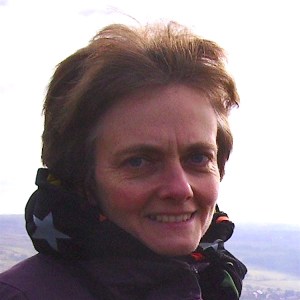 Julia Deakin is a UK-based poet with three full-length collections, each praised by nationally renowned poets. ‘Crafted, tender poems, written with passion and purpose,’ said Simon Armitage of Without a Dog (Graft, 2008). Anne Stevenson enjoyed its ‘mature wit and wisdom’. ‘Real linguistic inventiveness’ said Ian McMillan. ‘Bold, irreverent and wickedly funny,’ said Alison Brackenbury of her Poetry Business Competition winner The Half-Mile-High-Club. Eleven Wonders (Graft 2012) Michael Symmons Roberts judged ‘powerful, assured, elegant. Her formal skill and inventiveness make this a rich and eclectic collection. Those who, like me, have admired her individual poems in the past, will be struck by their cumulative strength and range.’ A compelling reader, she has featured twice on Poetry Please and won numerous prizes. Her fourth collection, Sleepless (Valley Press) will be published in October 2018.
|
burnt offeringsswilling cinders and my mother in a box too small lately everything tastes of ash (First published in apt literary journal on 3 July 2017, with sincere thanks to Editor-in-Chief, Clarissa Halston.)
where the lost things gowe sat upon a golden bow (First published in where the lost things go (Salmon Poetry 2017), with eternal gratitude to Jessie Lendennie, Publisher and tireless campaigner for women poets.)
Between ebb and flowMist rolls off moss-green hills Past the little stone churchyard From all they have ever known Come for my mother And I cry a little at Between heaven and earth (First published in where the lost things go (Salmon Poetry 2017), with eternal gratitude to Jessie Lendennie, Publisher and tireless campaigner for women poets.)
Metaphoric riseA brief history of incidents surrounding the emergence of POTUS#45 i. rousting hot wind howls through a hollow log ii. ravening on a sunlit lawn iii. a new religion branches bowed with bloated fruit iv. aftermath a squat lizard basks v. in the bay beacon dimmed and tablet fractured vi. paradox lost a fiery sunrise (First published in The Irish Times newspaper on 20 January 2017, with sincere thanks to Martin Doyle, Books Editor. Subsequently published in where the lost things go (Salmon Poetry, 2017), with eternal gratitude to Jessie Lendennie, Publisher and tireless campaigner for women poets.)
In memoriam II: The draper“The town is dead My mother’s words, not mine That’s why they came Long before we had Bestower of colloquial wisdom Who had got the Civil Service job “Would you ever think of coming home?” Igniting a spitfire Until the sunshine and the hustle I never thought to ask her I don’t miss that question now I miss my mother (First published in The Irish Times newspaper on 31 January 2016, with heartfelt thanks to Ciara Kenny, Editor, Irish Abroad. Subsequently published in where the lost things go (Salmon Poetry 2017), with eternal gratitude to Jessie Lendennie, Publisher and tireless campaigner for women poets.) burnt offerings and other poems are © Anne Casey |
|
|
| Vintage ghosts of joy and sadness a saccharine statement the highest expression of the autopoetic force the incarnation and withdrawal of a God declaration of hither swarms accretion of the torrential becoming instances emancipated from all anxieties and frustrations in the anagogic phase made dizzy by the hybris a regular pulsating metre of recurrence
This is not a method |
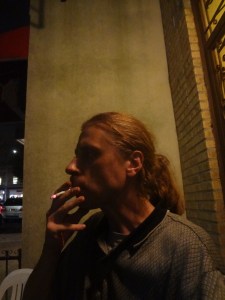 Rus Khomutoff is a neo surrealist poet in Brooklyn, NY. My poetry has been featured in Erbacce, Fifth Day journal and Burning House Press. In 2017 he published an ebook called Immaculate Days. Rus Khomutoff is a neo surrealist poet in Brooklyn, NY. My poetry has been featured in Erbacce, Fifth Day journal and Burning House Press. In 2017 he published an ebook called Immaculate Days. |

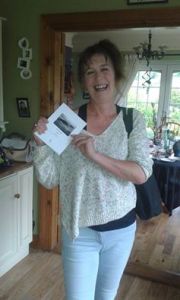 Kate Ennals is a poet and writer and has published material in a range of literary and online journals (Crannog, Skylight 47, Honest Ulsterman, Anomaly, The International Lakeview Journal, Boyne Berries, North West Words, The Blue Nib, Dodging the Rain plus many more). Her first collection of poetry At The Edge was published in 2015. Her second collection comes in 2018. In 2017, she won the Westport Arts Festival Poetry Competition. She has lived in Ireland for 25 years and currently runs poetry and writing workshops in County Cavan, and organises At The Edge, Cavan, a literary reading evening, funded by the Cavan Arts Office.
 Kate Garrett is a writer and editor. She is the founding/managing editor of Three Drops from a Cauldron, Picaroon Poetry, Lonesome October Lit, and the charity webzine and anthology Bonnie’s Crew. Her own poetry has been widely published, nominated for a Pushcart Prize and longlisted for a Saboteur Award, and she is the author of several pamphlets: most recently You’ve never seen a doomsday like it (Indigo Dreams, 2017) and Losing interest in the sound of petrichor (The Black Light Engine Room, 2018). Kate was born in southern Ohio, but moved to the UK in 1999, where she still lives in Sheffield with her husband, five children, and a sleepy cat.
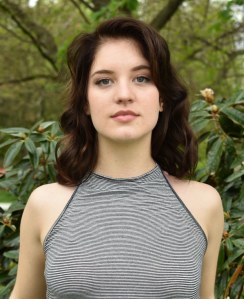 Abigail Dufresne is a twenty-one year old poet, actress, and costume designer from Rhode Island with training in acting, design, movement, and devised theatre from Shakespeare and Company, The Stella Adler Studio of Acting, and The University of Rhode Island. At this point in her career Abigail finds herself drawn mostly to devised theatre and Shakespeare for the opportunities these provide to engage with both poetry and acting within the same medium. She looks forward to exploring how these disciplines can also live within other forms of art.
 Angela Patten is author of three poetry collections, In Praise of Usefulness (Wind Ridge Books), Reliquaries and Still Listening, both from Salmon Poetry, Ireland, and a prose memoir, High Tea at a Low Table (Wind Ridge Books). She was winner of the 2016 National Poetry Prize from the Cape Cod Cultural Center and her work has appeared in a variety of literary journals. Born and raised in Dublin, Ireland, she now lives in Burlington, Vermont, where she is a Senior Lecturer in the University of Vermont English Department.
 Anne Casey’s poetry has appeared internationally in newspapers, magazines, journals, books, broadcasts, podcasts, recordings and a major art exhibition. Salmon Poetry published her debut collection, where the lost things go in 2017. She won the Glen Phillips Novice Writer Award in 2017 and has been shortlisted for prizes including Cuirt International Poetry Prize, Eyewear Books Poetry Prize and Bedford International Writing Competition, among others. Originally from west Clare, now living in Sydney, Anne is Co-Editor of
  Chris Murray