I tell you/there was something about that woman/her face/undiluted/ lips open/as if she were waiting/for the sky to come/down on her. There was something about it that/I needed to know/something that/I wanted to remember/something/it was the light/that mattered/this woman/gathered/the light/ held it in-side of her/I should have/told her this/but I suspected/myself/what I know/and don’t know of the world/seemed/immense/I should have told her this/but she crossed the street/she was/gone/and I had/nothing to do with it.
Love Song #7
you are for me as you cannot be for yourself (a gathering) I return to without demand with-out diminishment your dark eyes amethyst hidden whose darkness is for a me a form of prayer a place of love’s rest
The Sea
I was going down in an elevator. I was in a building on the Upper West Side. I remembered a dream I had about Jacques Lacan. He was sitting with a woman in a hotel bar in Paris. She told him she had grown up near the sea. He felt for her hand. He moved her hand onto his thigh. She didn’t resist. Her hand moved deep between his legs. He spread his legs and thought about the way she had pronounced the word “sea.” Her voice sounded like a phono- graph. It sounded like water running down his spine.
I stepped out of the elevator and started towards the subway. I remembered the word “sea.” I tried to say the word in French. I mouthed the word. It tasted like sweet pear. I hid the word in the dark of my mouth. I pressed my mouth to the window. I pressed it to the glass until my body dis- appeared. The subway doors opened. And I floated out luminous in the dark.
Love Song #4
You told me to remember you/You told me Not to let go/Said it one day/And I Heard it/Felt it like a bird Lost in is own arithmetic/I need to Find a way to/Think about these things/Of what I am in your arms/When the night is Everything/The stars agree/In their ascent And I feel something rise in me/To love Is to live with the Unknown in front of you To recognize/That the sky is/A language Written in the light of/Earliest birds A text over water/Over time/Love me Love me/Before I come undone Before I say more, this song.
this apple of a woman whose red dress surrounded the flowing flesh of twin hillocks, hung over the ridge of her cheeks to flow down to stocking tops
Hot and juicy, easy-peel woman
They ate at their pleasure wiped her juice from their jaws munched to the skeletal core that framed her bitter pips
swallowed her inside them
where she lay hurt for a day or two
till they spat her out without a backward glance
to take root once more
Him 1
He kissed me tenderly as he stabbed my pulsing neck vicious as he twisted the knife
leaving me wretched in unbearable pain tearing at his face
Him 2
He kissed me tenderly as his pulsing cock stabbed me in a vicious way
leaving me wretched in unbearable pain tearing at his face
After Rembrandt’s Women
Nipples sucked while I work the brush to the canvas the vermilion and ochre matching my puckered skin standing ready for pleasure
Your tongue-tip a missile of heat and wetness while I stroke the viscous oils to the taut canvas stroke after stroke
Painter and painted, one wet the other wetting in colours vivid and rich, beyond life till who is breathing and who is image is a matter of indifference
A faint sigh, a thrill of senses a brush, a stroke, a flick of life across the dusky scene damp fingers dust the likeness pull the flesh towards the centre where it muffles in a heaviness of pure puce and nutmeg folds
The light fades, the colours dry I perforce return to this monochrome thing called life in this harsh planet of defined things but I know whenever my eyes light on this image, I will dive and swell and surge and swim in its rainbow of life till I drown again and again in its silkiness and soft stains and tints and hues and live once again
Published in Rats Ass Review, USA, 2016
Reasons For Starving
Insanity Diabetes Wedding dress Abandonment Anorexic beauty Surgery Prison escape No food Fussy eater Enslavement Size 6 The doctor said to lose weight Martyrdom Spouse Drought Protest Famine Genocide Death War Torture Insanity
There’s An Old Man
… dying at her breast
she doesn’t forbid his last suckle his comfort of flesh, born and dying
His lips relax, his breath ceases she sees his maleness – the young boy knees bloody, hair tousled or eyes alight to his first love his protection of offspring or his anguished awareness he is no longer alpha male
She does not let him lose his pride helps him hold till the end all the power he possesses in mind if not in limb for his presence yet instils stability and safe harbour
let him fear not he is alone when time’s past his power spent, his vacant need exposed to all
Not a cup of tea, a pint or just ‘meet me’ because I want to wait awkward at a counter beside you with the steam spluttering, the espresso machine knocking and our overdressed elbows almost touching.
I want to sit opposite you at a small table that can never be small enough, absorbing the heat of your hidden knees and then eyes when I catch you watching me lick the froth off my lips.
I want us to be both fiddling with our round white cups, thumbing the holes that make the handles, intense with conversation while idling our fingers around and around those curves.
I want to be alone with you in a clamorous place where no one will notice what’s not being said, that’s why I say safely, meet me for coffee, instead of suggesting something else.
Winner of the Poetry Ireland Butlers Café competition 2017
Limbo
You visit my room, punctually as if it’s an appointment and I’m never quite ready after waiting for days. Time isn’t the same here, like being very far away from the earth then landing to find everything’s changed, everyone gone. Anyway, you come to my room and we sit on the single bed which doubles as couch, chair and table, share food off a tray made pretty with a scarf on which I lay saucers holding olive oil, zaatar, bread for dipping and on the one large plate I own, arrange orange segments in a rainbow over pomegranate jewels, and although these are sour and dry to the tongue here, you say you love them, crunch enthusiastically, laugh at anything. We laugh a lot spluttering through the trench between us.
This room is temporary, for six weeks then twelve, then Christmas, and now it’s a year and soon it will be two. Things accumulate. A kettle, an electric steamer, stacks of bowls, cling film. I store food in the chest of drawers, crouch at the mirror and offer you seeds, demonstrate how they open: place between your front teeth, vertically, like this, and pop. Sunflowers. The taste of sun.
Sometimes I don’t leave my room for days, pick from the drawer, dried fruit, crackers, tahini. No one misses me or calls and it’s better inside, alone, than enduring the queue and noise. Then you visit.
It’s been forever since I spoke so struggle with the words, your language, my voice. I apologise, and you laugh because I’m only waking up and this is our appointed time but shrug everyone here is always late, and I explain that this is because we have nothing to wake up for, no time to keep, just cycles of light and dark that creep up on the window punctuated by meals, if you remember to walk down to the feeding area.
We gossip about the other residents, you encourage me to speak with so-and-so, they’re really nice, you think all the people here are nice, now you’ve learnt how to say hello and compliment their beautiful children, wishing us all to be friends and I have to ask are you friends with everyone you know?
Then time is up. So soon? I won’t beg but implore you, stay, another tea, more bread, different fruit, anything but see: you are leaving, because you always leave. You have to be somewhere else. You have somewhere else you can be.
Smiling, kissing your cheeks, one – two – three I lock the door in your face. Space is empty. I take the dishes to the toilet, wash up in the tiny bathroom sink, straighten my covers, put away the tray, hide the mirror behind the scarf and open the window just enough to almost feel that I must be breathing.
My house
This was the last look at the land, here where they stood in the wind and waited, looking down the bog impatient for a plume of steam blooming along the narrow-gauge track,
for the doors to open and shut them in, on the way to the junction with the big city line, they say they’ll be back and don’t know yet it’s a lie,
waiting, pacing, lifting cases, hoarding in their eyes the light off the lake, the way the trees sway, and all the softness of hills, birds and sky,
carrying their cargo inside; the entirety of life, who they are, into the trembling train and away, far across seas, roads and cities, into new lives, old age, and death.
For many, here was the last place they left, waiting on this platform for change to come, some giddy, some grieving, leaving home.
First published The Irish Times New Irish Writing, ed. Ciarán Carty
Line
We have blocked the line with caravans, a Mercedes bus with the door come off and a trailer draped in blanket with a child’s rainbow-coloured tunnel inside it.
A pink plastic house sits on the track and a rotting pile of wood long left to slime, a car parks there on and off.
Further along we sit around the firepit made of a tractor wheel and on nights like the solstice look up at the stars and the rocketing sparks
feeling the ghost of a train roaring right through us.
First published Crannóg, ed. NUIG masters programme
Too little
for Andrew
I say now how I thought about you over the last nineteen years because I did
but I never looked, didn’t ask around the doorways and methadone queues if anyone had seen a bouncy laughing long-haired guy, my friend
didn’t even pick up the phone to my ex, who might have known – though thought of it the odd time holidaying on our old streets see your shadow in a corner or think I do then justify maybe it had been too long since you smiled for that description to still be true –
so when the revelation slaps in the smoking zone behind the band that in fact it’s been ten years and I didn’t even know
you haunt me all weekend with your grin the smile under your hair is crushing the clouds and I swallow down concrete tears slowing past every comatose man with a cup wedged resiliently upright in his hand
but is it because though I did often wonder how and where you were I never actually bothered to find out?
First published The Poet’s Republic, ed. Neil Young
Distancing
My daughter is in a ditch Talking to herself Preparing for war
When friends can come over They’ll climb the ladder I’ve left Stretched up the gable end
Lob the dog’s balls as bombs Defend themselves With this ancient shield
Just unearthed, made years ago For another child She scrapes it clean
Is that OK? she asks Thinking clearly I might Want it for myself
Crouched on a camping mat A silver tongue Lolling from the hedge
My youngest child is kept safe From the road by tiny Leaves like green snowflakes
The trunk of a birch tree Listens to her dark Imagination
She’s at her best In isolation Making all these plans
it is easy to obsess over small objects paperclips spoons and q-tips when self grooming generates silence — virginal
trumps untamable — the renunciations of dullness do not lead to desire with upturned hands, razors, at rest
it is easiest to use sadness as a utensil to push people away spiders construct traps from their abdomen then devour
daily to recoup, silk protein recycled gouaches in lowlight, design or debris we all think we might be terrible
but we only reveal this before asking someone to love us a kind of undressing — it is easy
to section and peel a tangelo even false origin stories expose shame — a cerebral echo chamber
when self sculpture empties mark the focal point as hinge hemmed, at the center, coral
since microwave romances have deceptive expiration dates
i brush my teeth at his place now, but that’s not the point scuba means self contained underwater breathing apparatus he kisses me urgently mid chew ginger garlic fish sauce
in public, no pressure, no hesitation, and this is mos def not the point chemistry is important since we cannot manufacture it out of raw necessity Drake’s first line in Finesse is I want my babies to have your eyes
despite incoming or ongoing variables what is the function of “x” why tell a stranger or a lover your problems when you can use it as a chance to punish those around you — make haste and hail to the queen of non-sequiturs
on my critical thinking roster i can’t pronounce the name “FNU” in countries where newborns are left post war now privileged strangers greet them as “first name unknown” a haunting aqualung
nerve damage after dead relationships may result in tooth decay when you are tasting: the first taste acclimates the palate, the second establishes a foundation, and the third taste is to make a decision
since you’re an expert of creating a crisis out of empty nostalgia can i get a metaphorical forklift for all my emotional baggage? the accumulation of plaque cannot be resolved by few weeks of flossing
what is lost can be found in the biological studies of an oyster or was it an orchid or was it of a clitoris — quick what’s a common fishing blunder? let me noodle around with this for a while before i get back to you
the anatomy of beaches: 3 on west coast, 14 on east coast your absence has reached comical heights Charlie Chaplin himself would rise from the dead to have a laugh at us
is this my grave or my mother’s womb?
it upsets me when my mother thinks my poetry is silly. the word “silly” comes from the old english word “selig” meaning happy, healthy, and prosperous.
in german, “selig” means to be blessed: but consecrated and made holy with what? when a title, silly, precedes the name of a person, their identity, vigor, and
passion are reduced to the relevancy of a car alarm. i failed to master french and vietnamese. my mother has a myriad of domesticated excuses to not speak
the english language. it complicates the process of checking and rechecking the meaning of words in results to the drowning of palettes in sand
dunes of iodine soaked palm fronds. a car alarm without a car is not just an alarm. as mother calls poetry silly, she shucks and drains the basket of mussels and oysters
in the sink, shucking and draining with such a lonely authority, the way a businesswoman shucks off her nightgown, the way a flaccid regime shucks off
its totalitarian characteristics. my mother is above logic, she cannot be subpoenaed, even under oath in court she will not admit to stating that my poetry is trivial. in the kitchen,
i read her a line from Marcel Proust, happiness is beneficial for the body, but it is grief that develops the powers of the mind but she isn’t listening.
lessons in taxidermy

my armpits have been secreting scaled sadness
for months grommeting new ways to chew
	linea alba fat tongue teeth grinder agenda
		sleep as prize for insomniacs somnambulists
consolation mantra safe alignments cold mala
	beads rotates between index and middle silence
	betrays never thought i’d feel this kind of hesitation
		my hands on another girl its more than taxing
the way you take control ocean jasper too often
	longing arcs expose vagueness seek excitement
		in the mundane fingers on pulse fingering
		when did withholding become attractive
knuckles hungry for pelvic bone quick terse
	confession sharper than indigenous peppermint
		are tactile feedbacks are satisfying imps
		important lines lost between the years skin folds
if emptiness is a pretense, a breached duality, an unearthing
	without dirt rebound is proof of grief interrupted here
		taxonomy of queen bees a dozen to please you
‘Secrets of a cartographer’s wife’ by Katrina Dybzynska
The cartographer’s wife never told him about her contributions to his maps. A few tiny islands hidden in the middle of an archipelago in the name of symmetry. Some borderline moved to resemble a face shape. The territory of England shortened slightly, in personal revenge.
One time, she renamed an insignificant river in Bangladesh after her lover. She felt pity for the cartographer that he was more furious about the affair than about her intervention in the world order. She knew that romances were ephemeral, while naming things was changing them forever.
Katrina Dybzynska poet, shortlisted for Red Line Poetry Prize 2019. Author of „Dzień, w którym decydujesz się wyjechać” (The Day When You Decide To Leave), Grand Prix of Rozewicz Open Contest 2017. Laureate of national competitions in Poland. She has been publishing short stories, concept book, science fiction, reportage, and poetry, but feels most attracted to genre hybrids. Polish Non-Fiction Institute graduate. Activist. Currently a member of Extinction Rebellion Ireland.
‘Correnti’ by Viviana Fiorentino
Ora è questo un manto di alghe e sale sotto il vento atlantico o è corrente marina del fondo della mia vita e della tua vita ora è sogno o perla luccicante.
‘Currents’ (English trans. by Maria McManus)
This is a shawl of salt and seaweed against the Atlantic wind the ocean currents on the sea bed of my life, your life a dream, a burnished pearl.
Viviana Fiorentino was born in Italy. After obtaining a PhD, she travelled across Europe, from Switzerland to Germany, England and finally to Belfast where she teaches Italian Literature. Since 2018 she has taken part to literature festivals in Italy and in Ireland. She was involved in the poetry project ‘LabeLLit’. She has been awarded or mentioned in various Italian poetry prizes (i.e. Arcipelago Itaca Edizioni & Bologna in Lettere Dislivelli). Her poems appear on Litblogs, international magazines (Brumaria, Works #9’, 2018) and in the Arcipelago Itaca Anthology of Italian contemporary poets. In 2019 she published her poetry collection In giardino (‘In the garden’) for Controluna Press and her first novel Tra mostri ci si ama (lit. trasl. ‘Monsters love each other’) for Transeuropa Press.
Maria McManus lives in Belfast. She is the author of Available Light (Arlen House, 2018), We are Bone (2013), The Cello Suites (2009) and Reading the Dog (2006) (Lagan Press), she has collaborated extensively with others to put literature into public spaces. She is the artistic director and curator of Poetry Jukebox and an active organiser and founder member of Fired! Irish Poets.
‘Genetics’ by Roberta Beary
Your eyes are big and round like your father’s
but while his are the color of the Irish Sea
yours are the color of the muddy fields
on my father’s land
fit only for the peasants who worked them.
abortion day
a shadow flutters
the fish tank
Publication credit: Rattle #47, Spring 2015 (ed. Timothy Green)
Roberta Beary identifies as gender-expansive and writes to connect with the disenfranchised, to let them know they are not alone. She is the author of Deflection (Accents, 2015), nothing left to say (King’s Road Press, 2009) and The Unworn Necklace (Snapshot Press, 2007, 5th ed. 2017) which was a finalist in the Poetry Society of America annual book awards. Beary is the editor of the haiku anthologies Wishbone Moon (Jacar Press, 2018), fresh paint (Red Moon Press, 2014), 7 (Jacar Press, 2013), dandelion clocks (HSA, 2008) and fish in love (HSA, 2006). Her work appears in Rattle, KYSO Flash, Cultural Weekly, 100 Word Story, and Haiku In English The First Hundred Years (Norton, 2013). Beary’s work has been nominated for Best of the Net and multiple Pushcart Prizes. She lives in County Mayo, Ireland where she edits haibun for the journal Modern Haiku.
‘Dying Lover’ by Anora Mansour
Trace my lips In low whispers As I once wept psalms over my dying lover.
Threaten that man You will murder for me – For my heart is a cadence of silence.
I can only love you if you creep through this life dangling dangerously as a ravenous red kite.
When we both become one lonesome night. And rub up to love up as a fight.
Oh, how I might love you, bitter citron basket on my lap Slumberly trusting me as a child. I would open my thighs to you – a snap trap.
Anora Mansour is a graduate of the University of Oxford. She lives between Oxford and Dublin. She has been published in a collection of Jazz Poems, various online sites, and has her own published collection of poetry and blog. She is African-American and Irish.
‘Clutch’ by JLM Morton
for h.l.
in the nest of my fist, a fledgling scooped up from the lane
her soft unfinished beak her shining eye a buoy ringing in the green cathedral of trees
a single yellow feather wisps across my knuckle there is a twitch of elephant digits
and I think about keeping her
raising her as my own feeding her worms
but I let her go
chirring for the ones I could not save.
JLM Morton lives in Gloucestershire, England, snatching as much time as she can to write between caring for a young family, renovating a house and staring up the barrel of a demanding day job. Her first set of poems was recently published by Yew Tree Press for the Stroud Poets Series and she is currently working on a collection.
Though the civility of civilisation frightens me, I visit somewhere populated. A graveyard made squirrel territory. One squirrel for every gravestone. They mount lichen-covered peaks and keep lookout. They claim the trees, the abandoned church. Nobody will make them leave.
That night, I dreamt the answer to the universe. It was blue, inside a conch shell. Spiraling in and out of crystal moments. Eggshell blue. In and out of images of the hospital bed, and these dreams.
Polly Roberts grew up in Devon. Three years studying Creative Writing at the University of East Anglia left her with an inextricable link to the landscape, compelling her to continue to write about the creatures and habitats encountered there.
Observations of both the non-human and human world continued whilst living on a houseboat on the River Avon near Bristol while completing her MA in Creative Writing at Bath Spa University.
Polly has run creative writing workshops for refugees, detainees, and young people and curated two exhibitions in response to her writing, both displayed at the Norwich Arts Centre.
In 2018, the British Council awarded Polly a Writers by Nature scholarship, during which she wrote this debut poetry collection, Grieving with the Animals. ( 2019, Dempsey and Windle)
‘Beochaoineadh Máthar Maoise’ by Ellen Nic Thomás
A dhílleachta linbh gan ainm, gan athair, Do chraiceann ar aondath le humha an nathair, A lúbann timpeall do thaobhán uiríseal, Mar bhata ceannródaí is sníomhanna sisil.
Is trua liom ciseán do dhóchas a fhíochán, Do dhán a chaitheamh i bpoll an duibheagáin, D’eiseadh a chruthú ar bhunús baill séire, ‘Nois tá tú chomh cotúil leis an gCailleach Bhéarra.
A iníon, a mhiceo, a ógfhlaith bocht, A leanbh truaillithe, maith dom mo locht, Imigh anois leat, ná bí do mo chrá, Le smaointe ciúinchiontacha ó mhaidin go lá.
Ellen Nic Thomás is a bilingual poet from Dublin. She graduated from Trinity College with a BA in English and Irish. Her work has been published by headstuff.org, Tales From the Forest and The Attic.
'On watching a lemon sail the sea' by Maggie Harris

1
and I’m singing ‘You are my sunshine’ thinking
of my childhood across the sea of incubation
go Honey go
you self-contained cargo ship you
with your sealed citrus juices and pitted panacea of seeds
braving the collision of tankers and illicit submarines

                 they called me scurvy.       the lemonade
                 my mother made was iced and sprinkled with
                                           Demerara
 (of course)

and I’m wondering, did they grow you there, o lemon     mine
you
for your juices
a lemon plantation, not to be confused with
a plantain plantation even a banana just don’t mention sugar
stack you in the gloom like hereto mentioned bananas
green and curtailed in their growing  or even
those force-ripe mangoes with girls’ names
nobody knows here and who leave their sweetness behind
bare-assed on the beaches
come
to the marketplace
comatose.

I do not remember lemons, but limes.


       M
    I         E
L                S.

Piled high in their abundance. Limes.
Acid green pyramids on market pavements
holding their secrets beneath their reptilian skins.

And there is my aunt, her arms thin as bamboo
gathering the fallen from the yard, sweeping
their dried leaves into the remembrance of herself
whilst the black maid slips slivers of lemon into a split
-bellied fish whose eyes glaze up at the sun.

‘Gauguin, you can come in now; remember Martinique ...?
hue the native in all her harnessed beauty
the slack –jawed fish, browning blood
the textured landscape in shades of  pawpaw and indigo.’

But, liming is what my lemon is doing now,
(in the West Indian sense), hey ho
over the waves at Aberporth, there he blows.


2
I set you free
to take to the sea again
on a high tide, with breakers rushing the beach
like warriors.
They pummel the sand, scythe
a four foot chasm into the mouth
of a lonely river
beat the rocks’ submerged heads
batter the cliffs again
                                        and again
                                                     and again.
The sea, beyond its charge, was waiting -
a winter morning sea, a Twelfth Night sea
tumultuous and moody

                                       waiting.

A strange gift, you
a large, perfect lemon
fresh and sharp as the sun-bright
wind-cut winter’s day. But I
unsure of your heritage
refused you.


3
Dear Voyager,
I cupped you
in my palm
desire urging my possession
how easy it would be – a lemon drizzle cake
a Martini iced, an accompaniment
to plaice or sole – and here I am playing with words
the resonance of belonging, of immortality –
but the devil played tricks with my mind
an injection of poison perhaps, a needle prick
into your  pristine, nobbled skin – but we are running ahead here
thinking of cargo – you may simply have fallen from a Tesco
carrier bag whose owner, fearing a lonesome home-coming
went walking on these very sands contemplating - life.

But there you were anyway, settled on the sand like a crab
then comfortable in the palm of my hand.


4
Finders are not necessarily keepers. Some
will do well to remember that. Vixens
circling misunderstood husbands in bars. Frag
ments from the fallen.
Oh but, how strong is the desire
to hold close, keep tight
smother your darling, your little nut-baby
in soft gloves, hard love, the kind that makes
you want to bite, bite! Rip flesh and bone. Swallow.
                     I could have accepted
your sacrifice
that gift of yourself, thank the universe
for its benevolence.
But the universe is not benevolent.
Stars are exploding missiles in a panther-black night.
Saturn doesn’t give two fucks. It’s chaos
out there.
But I guess you didn’t have time
for star-gazing in your ocean-going lumbering
over the hey-ho waves. And if I had sunk my vampiric teeth
into the you of you, you would be no more
than a bitter taste, a withering lump of citrus
on my kitchen table. Far better to remember you
the obsidian walnut weight of you
and these questions you have gifted me
and that last sight of you
rolling away on the tide.
Maggie Harris is a Guyanese writer living in the UK. She has twice won The Guyana Prize for Literature and was Regional Winner of the Commonwealth Short Story prize 2014, with ‘Sending for Chantal’. She has worked for Kent Arts and Libraries, Kent University and Southampton University as International Teaching Fellow.
(After the painting by Rembrandt in the National Gallery, London)
In the Dutch room amid Rembrandt’s paintings, I sit sharing my reflections with myself – my woollen jacket no comparison with Belshazzar’s mantle of ermine studded with jewels, his silk turban, white and resplendent, crowning his distracted gaze.
The room acquires the aura of a court in session, members of the jury appear unmoved, floating like creatures treading on the moon. The wooden bench, the murmuring crowd, the parched sensation in my throat, deeper rumblings in my stomach, tired eyes and cold feet, a bone-marrow fatigue alienates me from the artistic feat.
The haloed hand, the writing on the wall, offer unexpected food for thought. Mene Tekal Upharsin: You have been weighed in the balance and found wanting. Belshazzar’s face aghast with such revelation! Do not despair, one was saved; do not presume, one was damned.
I close my eyes thinking of god mercifully adjusting the divine scales in my favour – myself poised on one side, insubstantial; my burden of sins on the other, weighing down heavy, leaving me quite unbalanced.
So god kept adding extra weights of suffering to help me overcome my unbearable lightness of being like an ingenious doctor shrewdly intent on restoring me to life by increasing daily the bitter pills of my life in self-exile.
I had a vision of grace reconciling me to myself, to see me poised and not wanting.
You may have mistaken my strength, dear God to emerge from your gift of suffering balanced.
From Imagine: New and Selected Poems (HarperCollins, India; 2017)
NOT ONE OF THE MYTHS
Not one of the myths we make will outlast the muting of our breath.
What comes and goes in silence represents time’s landscape of self.
So long estranged from myself, I have created an illusion –
carefully camouflaged to welcome our re-entrance.
It is like passing from the object to its unredeemable shadow.
Like leaping off the canvas of a painting into the gallery of free spectators –
only to dread that moment of return to another image that would recapture us.
A plastic version of all that passed among us or others who unknowingly resembled us.
The imageless wind is the appropriate conception, projecting the naked self, the final relation.
There arrives a time when the fiction is a mirror image of itself, a thing final in itself.
Unable to discern between illusion and creation, we have stopped revolving in self-abnegation.
After the wind has gathered its unique composure and we breathe deeply the pure, fulfilling air,
our halcyon gestures resurrect words from silence like conjurors revelling in tricks and games.
The myths dissolve in the silence that guts our ineffectual, self-mutilating words.
From Imagine: New and Selected Poems (HarperCollins, India; 2017)
MY GOOD LUCK HOME
You presented me with two scarabs, hieroglyphs etched on their lapis-lazuli backs, from the gift-shop of the British Museum. It’s for good luck, you said.
I survey the pieces, their sacredness treasured in the hollow of my palm, imagine them alive, pushing the setting sun along the sky, entreating my heart to be pure and light.
They nestle beside a coral stone and a pearl framed in rings of beaten gold on my fingers, charms given by my family to protect me from evil.
I find the Egyptian scarab couple their own home away from the crowded open-house of my Indian gods, transforming each corner of my living room with gifts of fetishes from around the world.
Two Chinese cats guard my speculative angle of vision. Even Ganesha travels with me in my handbag to help me overcome obstacles in my adopted homeland.
The seven gods of luck from Japan smile on as you eye my marble turtle god with its fine chiselled look, its beady eyes, hand-crafted, appraising your secret nook –
leaving us with the legacy of an understanding – the knowledge of what it means to carry a whole household in oneself, to be so perfectly self-contained, poised at the centre of all manner of creatures unsheltered.
From Imagine: New and Selected Poems (HarperCollins, India; 2017)
THIS CONNECTION
Clusters of pods from branches of hornbeam hang like Chinese lanterns pregnant with dream –
tales of transformation witnessed collectively is theatre, experienced solo becomes prayer,
the journey from chrysalis to butterfly, waking with desire, an aviator defying gravity,
a mountaineer scaling peaks drawn out from the core of a changing world, spinning, tiptoeing on a slippery slope
like trust in the face of uncertainties, luck when the chapter of life is coming to a close, alchemy turning the worst in us to our best,
unafraid of failure, taking risks, following our dreams, seeing for the first time, eyes and mouth
opening wide with wonder, lovers swirling in ecstasy on the dance floor, walking
on top of the world, bottom of the sea together like earth moulded by wind, water, ice and fire,
knowing time will change all we cherish in our globe taut as a belly with foetus becoming human
where we like gods are defined by what we are not except Love that is everything and excludes nought.
From Imagine: New and Selected Poems (HarperCollins, India; 2017)
AMONG THE IMMORTALS
I dream my painting and I paint my dream. Vincent van Gogh
Reflecting on life’s many false starts – art dealer, teacher, lover, preacher – always the outsider, fearful of failure, loss of face, faith, family, except for brother Theo providing a reason for living in sorrow yet ever joyful.
In the depths of darkness, moments of clarity bridge the gap between art and reality. Dwelling in possibility, awareness of the one true God gives way to insight – quest for the light within all beings.
The idea at first vague until the initial impulse, a scribble, takes form, becomes a sketch and the sketch a painting – mastery of the thing promising an unexpected flowering.
Brushstrokes come alive in a rapture of aseity, crying out with creations of flesh and blood – self-portraits breathing, original in their view of the infinite, touch the heart of humanity, open a door to eternity, walk among the immortals, communing with the light.
From Imagine: New and Selected Poems (HarperCollins, India; 2017)
Shanta Acharya won a scholarship to Oxford, where she was among the first batch of women admitted to Worcester College. A recipient of the Violet Vaughan Morgan Fellowship, she was awarded the Doctor of Philosophy for her work on Ralph Waldo Emerson prior to her appointment as a visiting scholar in the Department of English and American Literature and Languages at Harvard University. The author of eleven books, her latest poetry collection is Imagine: New and Selected Poems (HarperCollins, India; 2017). Her poems, articles and reviews have appeared in major publications including Poetry Review, PN Review, The Spectator, Guardian Poem of the Week, Oxford Today, Agenda, Acumen, Journal of Postcolonial Writing, Philosophy Now, Stand, Ariel, Asia Literary Review, HarperCollins Book of English Poetry (2012), Fulcrum, Language for a New Century: Contemporary Poetry from the Middle East, Asia & Beyond (Norton).
You see she doesn’t move. No eyes open, only ragged breath. Flushed cheeks. Silence.
She has prepared the body nearly a century. Not yet embalmed but ready.
The lipstick is a light rose, it makes white face seem ghostly
And glasses perch on a nose like mine if lids were to open they still wouldn’t see
She is her own mortician.
I have come to the funeral every saturday I have said goodbye
and kissed her lightly
I have watched the process of becoming a corpse
almost
Fixed Vortex
Feeble fingers have collapsed into themselves her fist, like an infant’s lies limp in her lap
As if made of marble the grip won’t relax unyielding
“What is it that you are holding on to?”
I take her thumb try to unfurl the claw, the nails digging into her palm Stigmata
she must be searching for some sensation some sting of pain something
“Hello”
I am watching two blue planets to see if they notice the sound
if gravity can pull them, alter the orbit, and turn them toward me
“Do you know who I am?”
they are empty planets they don’t move
she is here and not here
stuck in the fixed vortex of this in between
Ingrained
We took you to mass today I can’t remember the last time you spoke
it could have been a year ago
and yet, the words of the rosary are on your lips a softest kiss
you can’t forget
Multitudes
I am looking at you now, piece by piece to reconstruct the you you were
I strip away the hair, white wisps the skin, paper-thin, translucent the muscle, the fat, the soft
Right down to the bone your bones containing multitudes of a lifetime and my father’s and mine
I piece you back together carve the muscles that would hold me tight in your arms, the fat that made your embrace so warm the skin, toughened with time the hair as thick as mine.
I am looking at you now and you are looking at me too. Somewhere in those eyes of deepest blue I think you recognize me, And I, you
Tracing Rivers
Your frailness the veins, thin filaments visible just under the surface
I trace with light touch three rivers as if faintest pressure might stop the flow
Did you know some cacti survive years without water?
Siúlaim istigh, ar chosa éadroma lámha sínte chun clocha a ghabháil
Níl ach deannach fágtha anseo.
This old house is falling down.
Palms outstretched to catch the stones.
Only dust is left.
Leo Kuhling is an Irish-Canadian poet based in Limerick, and a lover of all things spoken word. His poetry has appeared in the Ogham Stone, Silver Apples, Artis Natura, Dodging the Rain and the RTÉ Sunday Miscellany. Currently, Leo is finishing a M.Sc in Psychology and working towards his first book.
The Defamiliarizing Effects of Walking Around as a Passerby in Dublin City
The defamiliarizing effects of walking around as a passerby in Dublin city a camera in hand and a greater inclination to look up are sweeping and various.
You suspend dizzy with secrets – knowledge of red bricks and grass blades spoon-songs echoing from street to streets teal bikes intertwined in leggy daydream watching beer barrels sleep – or is this just the hangover from last night?
The pink lady and the blue lady glide past the Celtic refrain but are enchanted yet same as you.
The many lovers in the green are the same as the bookish man beside you is the same as the jogging woman in heels is the same as the boy feeding the seagulls is the same as the man laughing at the boy feeding the seagulls is the same as the seagulls are the same as you.
Jerking back and spinning forward many times and many “sorry’s” sudden stops and the ever-present hesitance to street-cross you’re swept dizzy again with barks and cars and smoky smells and sea air and sameness and Self and sky.
You stumble onto this street again different stumble than the empty swollen nights the same cobbled hands that caught your bare feet frenzied now cradles flower stands now upholds sand-man and backwards-guitar-man and you are the same as them.
Yet it is different the way burgundy edges sharpen with just a bit of sun like wind wakes or is it you?
Through the wade of beauty the Wave of All Things you see her still – radiant.
Take her hand and pull her into the curtainless shower of red bricks and unnoticed upper stories and Guinness with or without black currant liqueur and grass blades sharing simultaneously secret knowledge.
Well, you walk and wave and wonder now will you see her again?
But only fleet glimpses on Front Square only know casinos on O’Connell only love her on a sunlit day only a passerby.
I’m Falling in Love With Myself
I’m falling in love with myself Bed serenaded by sun-soaked singers Beep beep beep of backing truck lingers Ever running rivers on my skinny fingers I’m falling in love with myself.
I’m falling in love with myself Sister wakes up and sighs delight Dappled movie drawings loop in our minds Arm hairs seem to multiply I’m falling in love with myself.
I’m falling in love with myself Sunk too deeply in ethnic pride Took brother’s mayonnaise and shifted my eyes Rose up, texted, apologized I’m falling in love with myself.
So large and small and dual am I Coloured and black and white am I Take the lift and face the sky Siblings below and siblings above All cloud-kids and mirror tell “I’m falling in love with myself!”
That Last Night
Spark me once more in your watery ways, in your absent wars, in your sharp-eyed face.
Charm me once more in your cloudy gaze, in your secret shore, in your steady haze.
They told me in your early days you built roads that led to nowhere. Draw my threads down wandering the roads that lead to nowhere.
Spell me once more in your timestuck pace. Close your colored doors and forget my face.
I’ll tell you once more the words I wrote and give you some American advice. You’ll smile sweet, I’ll stand and go Quickly and hide my eyes.
Greener grass grows fed with tears and swallows steps inside. Did I tread too softly here – leave no traces behind?
Seymour’s Fat Lady and My Mom

Seymour’s Fat Lady and my mom
anticipate me at the gates
so I will remind myself
     that I’ve crashed twice already
     and I can’t read directions
     and I’m full of highways
so let them drive me off the plane
and I’ll sing ‘em a song.
In Vocation Of Now

From home to here
From “only there I cannot say where”
From bright-starred field to Dartry Road
Rathmines Dublin Six

Seven cities this semester
Half-ten heart tanglements
And probably too many poems

Now I am a now-vessel
Shaped and painted and ever still
 	I will put on my Isbell playlist
 	I will dip my salmon in sesame
 	I will set a reminder to call Mom

I will mend the nets
To fly by
Sarah Chen is an emerging poet and 19-year old college student. Raised by Chinese-immigrant parents in Texas, she moved to Dublin in August 2018 to study English. Her writing experience was previously limited to songs performed with her rock band, but now is expanding into the territory of written poetry. Her collection of poems, Poems Written in Dublin was written in the span of a morning upon completion of her first year of college.
tōgarashi / omoikonasaji / mono no tane the red pepper / I do not belittle / seedlings ~ Bashō
I keep a chestnut in the breast pocket of my secondhand leather jacket. When I picked it I thought of (I don’t know why) my mother.
The last time my first husband and I made love I knew my womb, because of my mind, was tipped at such an angle that no seed would germinate there.
This is also a true story. Our children and I collected acorns to use for a project we had not yet imagined. They exploded into weevil larvae all over the floor.
A Letter to My Ex Concerning Houseleeks
I retrieve the hens and chicks, reminiscent of farms, from my sister’s yard
and press them to the dirt in the small half-circle we dig in our own yard
and then leave them there to grow and separate
The Mother
The last bladder is emptied, the last gleek shot into the sink, the last struggling out of and into, the last — somewhat grooming, the last sandwich flogged to its plastic compartment, the last backpack retrieved from the floor, the last gangly stumbling, the last repeated good day utterance, love you, etc., the last kicking of the front door.
The mother is alone. The house stands still for a moment in its terrible shock of silence. Then shakes off its cold blanket. The mother leans into herself like tilted kindling, a neanderthal, or philosopher returned to her cave. She begins to make the fire. It doesn’t matter what she makes the fire with. The mother burns.
Considering Their Pale FacesFact: the manageable size of the baby paradise rose, with pinkish-lavender 1 - 1 1/2" blooms, offers
a small garden big potential.
Experiential: we planted a few along the border of the garden we created with the edge of a shovel
outside the kitchen window, when we bought the family home.
Fact: even miniature roses are susceptible to the same plagues as their larger cousins.
Experiential: while you children toddled about, slipping happily in leaf rot, then swung on the tire
swing, or later, hammered in the tree fort, I leaned toward the tiny leaves and scraped fat rose slugs
into a tin can, or sometimes brazenly squashed them with a thumb nail.
Fact: for years the paradise rose struggled, and eventually, I left your father.
Erin Wilson has contributed poems to The Adirondack Review, San Pedro River Review, Split Rock Review, and Minola Review, with work forthcoming from The American Journal of Poetry, Juked and Kestrel. She lives and writes in a small town in northern Ontario, Canada.
At home I bury my face in the crease of your elbow You cover my mouth as though quenching a flame In return, my fingernails incise the back of your hand as a gift to you coupled with a promise: I would never do that on purpose I cannot understand why you are not thankful I would be so grateful for that promise, so grateful someone had etched themselves into me In the morning we sever ourselves on the rim of the tin can that encloses our breakfast haphazardly pried open to devour its kernel I blot my bleeding lip against my shoulder and leave a trail of watercolor stains moving down to the crease of my elbow I reach the back of my hand and realise that should you walk in it might appear as though I am purposefully applying hickeys to my body like a curious teenager You beckon me into the kitchen once more Having forced open the can and fished out the discernible scraps of tin from the syrup surrounding the orange fruit I pluck a piece out and watch a smudged lipstick imprint leave the palm of my hand And float into the sticky liquid Before passing the tin can back to you
Bruise
I remember the soft May breeze sweeping over the island, and the blue horizon dry swallowing the cherry drop sun. and you by campfire slipping your fingers between mine, irrevocable like fishhooks. then you, drunk, violent as nightfall, rushing towards me like an army two hot knives for eyes, how you threw your fist at me like a bolt of lightning. I remember morning, at cliffside and you, red-faced and teary-eyed, and me all guileless and forgiving how I ruffled every last hair on your holy head. Remembering you is massaging a bruise.
11am
Morningtime – all revelled out Our legs are woven together, tight as teeth cocooned in soft cotton Sun bellows through the blinds and I am laughing, deep warm laughs and we are rapt, concentrating deeply on nothing at all I notice sleep in the corner of my eyes and fish it out with my smallest fingernail gentle as ever
Spring
My body is ballooning – a plump, newborn thing with nipples sore like bruised peaches, and soon my hair will never have been run through your fingers if I keep cutting it off just right You lit me on fire, and I, a supernova burning spat you out with all of your false glow.
Joan, unflinching
I was brazen a warrior with a vision and eagle eyes, my face a red flare. They mounted me upon a pillar crowds as loud as thunder encircled me like moths do a flame I was stoic, immobile as a statue my eyes piercing the horizon before gasping in hot gas all ablaze – flesh bursting open, like berries left under the midday sun Voices rose like magma seeping out of the soil and then up and around me hardening into black ash burned twice; and then again ash to ash till there was nothing left.
Fiadha McLysaght is a writer, researcher, and student of Politics, Sociology and Social Justice at UCD. Her work has been published or exhibited by NOT4U Collective, Nothing Substantial, TORCH Collective, Living Proof, Monstrous Regiment, the Three Fates and other zines.


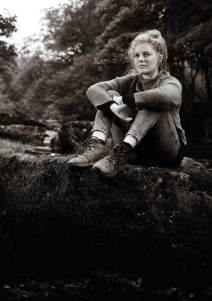
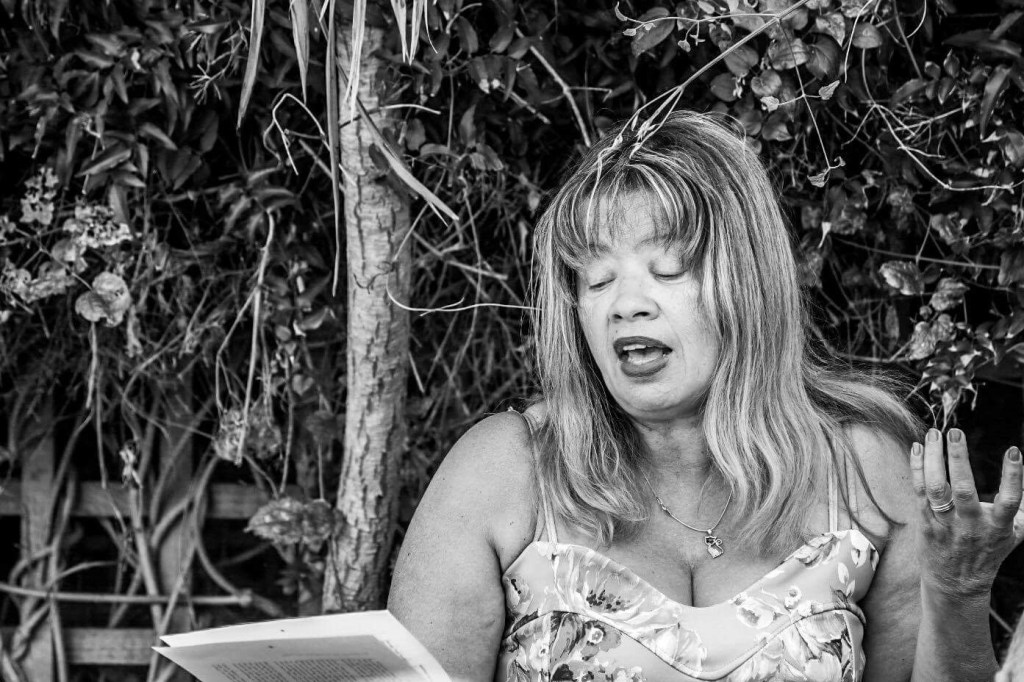
 Shanta Acharya won a scholarship to Oxford, where she was among the first batch of women admitted to Worcester College. A recipient of the Violet Vaughan Morgan Fellowship, she was awarded the Doctor of Philosophy for her work on Ralph Waldo Emerson prior to her appointment as a visiting scholar in the Department of English and American Literature and Languages at Harvard University. The author of eleven books, her latest poetry collection is Imagine: New and Selected Poems (HarperCollins, India; 2017). Her poems, articles and reviews have appeared in major publications including Poetry Review, PN Review, The Spectator, Guardian Poem of the Week, Oxford Today, Agenda, Acumen, Journal of Postcolonial Writing, Philosophy Now, Stand, Ariel, Asia Literary Review, HarperCollins Book of English Poetry (2012), Fulcrum, Language for a New Century: Contemporary Poetry from the Middle East, Asia & Beyond (Norton).
 Leo Kuhling is an Irish-Canadian poet based in Limerick, and a lover of all things spoken word. His poetry has appeared in the Ogham Stone, Silver Apples, Artis Natura, Dodging the Rain and the RTÉ Sunday Miscellany. Currently, Leo is finishing a M.Sc in Psychology and working towards his first book.
  Sarah Chen is an emerging poet and 19-year old college student. Raised by Chinese-immigrant parents in Texas, she moved to Dublin in August 2018 to study English. Her writing experience was previously limited to songs performed with her rock band, but now is expanding into the territory of written poetry. Her collection of poems, Poems Written in Dublin was written in the span of a morning upon completion of her first year of college.

 Chris Murray