Gwion’s Birthday Achieving the Lotus Gait Pair Bonddedicated to Dolly Parton Summiting
|
Category: Poetry Journals
-
I #
.…silence yes/ silenced yes/ as if to ever
having done with it/ stripped solace no/
vital lapse in all depth of becoming-un/ as if
because it were unto/ ash unto/
no/ pure as never was/ ever was/ given to
yet it cannot/ asks of dust what climb or
other than /
dry reach in catascopic/ hence shadow never
vital/
all traces then forgotten/ yet given to un-
forgot/ blind edge laughter/ afar/ no/#
clamours afar/ yet nothing to it/ in banquet
of nothing no not a/hence shadow’s dissolve in bit night balm/
well-spoken silenced/of ghost-limbed rapture no/ call cards as if
to/ dissolve yet surface of what to it/spit in eye of eye of it/ no/ traipse till yet
un-afar a-light unlit light of silhouette dark
what dark/yet for as if to/ not a sense of all’s retrace/ of
fading nullity/ ever only of it/ spliced no
not ever…#
…further echo further no/ as if to say that
no/ non further yes/ silenced in stripped
silence of/rapture suffocate in which a-dream/ not a/
vibrates yes yet lack of sounding all colours
clear/waste upon waste/ useless forage/ nothing
that ever was/ ever was or if/what will in-speak derivative of what or
else/ blood can only ever be/ what can be/unspoken detritus desire demarcate/ dim
light of eyes all dredged/#
speaks yes or no no answer collapse of/
fallen flourish/ being in/ silence in/ yet not
a trace there is yet / silenced/ two three
what can be/opens up in head of time spent forgotten/
fade of five steps/ back or forth no matter if/dries eyes with waxen what bodily volatile/
reduction of all/ bind bite what what/time rotting within skull of gild/ meat
locked to/ breath silencing allwhile…II # …in breathless of/ all suffocate’s desire in
realm/ forgotten closure fissure fissure ice
until/drag of tilt till shear of open spasm/ flail
naught un-sky/ dressage vortice no/yet given of until/ reduct blind forage
empty emptily/ walls seep solace rupture
eye/eclipt drags out all what once was once or
ever other than in if/ ashen dislocate/resurgence/ resurgence no/ head drowns in
bloody latrine clear glass/#
ruptures rails in absent sense derail/ cracks
blind all shadow deft until/ light snap
stone/dirt in trace reduct/ fallen/ haven yes or no/
price of elective/price of unsung what reach of purpose
strips death cloud from eye/ frozen breath
collapse/juggernauts too/ two or four/ fore/ of a/ not
a/ resurgence nothing cracks here or ever
unto/ dead head disarm/ rolls dice around
on lacerate of tongue/ spits lest dawn…#
…expels from out of which/ desire silence
breathless overtures/oceanic collapse/ drags din wind collision
of/ sun forgotten/ worthless/in click-clack steel bone drag hilt no/ rots
clap hands/ drained ever/ever on yet what from purchase present
nothing was whatever was/cold walls in which to/ collapse un-dread re-
dread/ head in vice of cold colours/
trick of light/#
blood from out of forage ever-no/ steers eye
unto further no further distance/screams out from it/ visage no/ warped
bones ever all/ all lies all present and
correct/bitten white light silence breakage point
was once spoken or was not/ bites again/
rain rain in obsolete pulse bulb/there is spit/ there is shadowing untold/
light’s corrode/ dead laughter realm/
bruised/ tacit/ stammers once more as if it/
silence silence/ rotting colours abound…III # …in-dreamt capacity/ trades meat for
absent shores/ given less/ shadowed no/nothing dreamt of furtherance become yet it
cannot/ furtherance of which in else of other
lessened/meat trade in opulent unsound it trace
nothing/ unsound retrace un-meat of fallen
ash/of prism pillage traces/ yet drains of/ there
or other/collapsed purpose unfelt in an un-sky of
shatter-glass abattoir/.
#
distances that never were unforgotten/ in
stench reek to abound one step shit flow in
veins/it is cold it is not/ collected from/ wayward
sentence as flies gather in/ if said what once
was never once/opulence/ circling skulled veins what
matter (the) vultured teeth of it/ scar tissue
un-livid/naught a closed wound apathetic/ apathetic
stretches boundary tint/collapse still yet nothing pressed to the
bone’s collision/ unspoken of…#
…echo erased that never heard was not of a/
design utter violet sheer/ cold cast a bitter
a/
longing stretched/ meat solace of which of
eye in-dream/ else collision solace final/
redeem non-touch meat cold as ever was
before lapse eye a sleight of hand/
nothing to follow yet cannot/
etches from out of nothing furtherance
undone resolve forgotten/ rotted meat a
blister here/
#
solace fracture/ another’s density/tomes
cast dead no sentence in only of ever-like
fettered resound/
yet cannot sense/ un-sensed/ a locket/ in-
breath of sarcophagus eye given to fall/
long foreign hours never to be proven/ yet
what what longing/ else of none/
till dense approximate/ crumbling
measurements/ trace cold dead teeth a sneer
at the unutterable/
pressure point of long non-stir/ into utter/
cold meat as ever was before/
before having…
from breath(en) flux & © Michael McAloran Michael Mc Aloran is Belfast born. He is the author of a number of collections of poetry, prose poetry, poetic aphorisms and prose, most notably Attributes (Desperanto, NY, 2011), The Non Herein & Of Dead Silences (Lapwing Publications, 2011/ 2013) Of the Nothing Of, The Zero Eye, The Bled Sun, In Damage Seasons (Oneiros Books (U.K)–2013/ 14); Code #4 Texts a collaboration with the Dutch poet, Aad de Gids, was also published in 2014 by Oneiros. He was also the editor/ creator of Bone Orchard Poetry, & edited for Oneiros Books (U.K 2013/ 2014). A further collection, Un-Sight/ Un-Sound (delirium X.) was published by gnOme books (U.S), and In Arena Night is forthcoming from Lapwing Publications. EchoNone & Of Dissipating Traces were also recently released by Oneiros Books. breath(en) flux, a chapbook, was recently released by Hesterglock Press.
 -
Honeymoon
I wouldn’t call it a honeymoon,
those muffled nights in mothballed rooms.
With cake in the boot we pilgrimmed north,
taking a young marriage to old widows,
my father’s brothers dead,
their crucifixes still hanging.
In each house we were given the double bed,
my aunties inviting us to fornicate
on concave mattresses holding dead men’s
seed. Had we come one week before,
you would have been given nothing
but dusty blankets on a downstairs floor,
and I would have sunk, alone and deep,
into the mildewed sponge of a cousin’s bed.
My aunties would have spread
as wide as angels in their marital sheets,
their doors ajar, the solemn whispers
of their night-time prayers beating
as sweet as deathbed love-making.
But our wedding vows were said,
so we sipped tea on upright chairs
still dimpled from Brylcreemed heads,
and rolled like screws in sideways jars
on shelves in locked-up sheds.
Seven years,
one son, one daughter later,
Jesus has been sent to us.
(The aunts are gone, their houses stripped)
His legs are broken (long marriages skipped,
thrown into landfill) and we laugh
when our little children ask about our honeymoon.
I see you dreaming down our garden path
as you hold the broken body in your hands.
He was nailed to the Anaglypta. You are picturing
the twist of wire you’ll use to bind his legs;
the nail, the hammer, the spirit level, the pencil
mark the place he’ll eternally outstare us.
I love the way our daughter sings
as her finger traces our wedding rings.
Dead Sisters
Maria and Elizabeth Brontë, died aged 11 and 10
So young to be marooned here,
we spend our pain on travelling
dreams, skating over frozen seas,
following their inky maps,
our boats to Gondal trapped
on battered moors. We straddle
the backs of galloping hares,
fly flat on the wings of marble-
eyed hawks grown dragon-sized,
since in our dreams we are
as tiny as toy soldiers.
We cry for them to carry us
beyond mountains and frog-filled lakes.
They shake in their beds.
The travelling box lies waiting.
We tiptoe on lopsided floors,
watch the news from Angria
ripple over them in sleep, whisper
We mustn’t keep you any longer.
They have laid out shadows
and attics and mists.
We disappear.
The Aunties
Brewing tea in our kitchen
we snort, remembering you screaming
to your mother we were witches.
Behind her back
we flew to fetch biscuits,
you said. We were trees in the dark
who followed you home,
the lampposts that tiptoed after you
to blind your unclenched eyes.
We fed you trifle, persuaded you
we hadn’t eaten your mother,
that shadows were not black blood
against a sunlit wall. You understood
she was drinking wine,
there was no hole in her side
where we’d ripped you from her,
and you knew that knives were for cake
and the crusts of sandwiches.
You threw careless waves to your mother,
ran into our house like a spring tide,
the seagulls laughing;
the old tricks had worked again.
Gasps and Sighs
Is it because
we fell from our nests
before we knew
we had wings?
that we remember
our heads crowned
in pain? our upended
legs? is it because
our wombs are
falling? a lament?
does all this explain
the gasps and sighs
we hear on landings,
through half-opened
doors, when we are
burglars at the top
of the stairs,
imagining ourselves
beating through
rooms, stealing
nothing?
Thanks for Not Switching Me Off
I’ll have no concept of time
so, no rush, and I may fail to respond
to painful stimuli,
and to sound, but don’t let that stop you
from playing me The Three Degrees
singing When Will I See You Again?
because even though I may be oblivious
to the doctor tipping light in my eyes
from her sterilised torch,
that doesn’t mean I won’t see again
Miss Travis,
Miss FitzSimons
and Mrs Cuthbertson,
or rather, three sixth-form girls on the stage,
done up as them, in gabardine raincoats,
sturdy shoes, clear plastic rain bonnets,
doing the moves, singing
hooo_ooh, haar_aarr,
precious mo_ments!
(The Three Degrees Fahrenheit! came the shout)
and wheeled to the daylight
I’ll shake again,
a laughing girl again
in a sea of other laughing girls –
when the future flung open
the world’s windows,
our lives soared in.
I’ll fly again with oxygen in my blood –
that was the first time I understood love
when I dared to look at the three of them
on the day of their retirement.
They laughed too,
their rock-hard curls trembling,
tears bright
on their bat-wing glasses.
We never knew
if they liked the carriage clocks,
if they ever set
their hearts ticking.
I Remember the Fear of Forgetting
I remember the fear of forgetting
the Austro-Hungarian Empire
under the cuffs of my school blouse.
Archduke Franz Ferdinand
and Sophie, his pregnant wife, are hiding
in my pencil case. The Black Hand,
Bosnia-Herzegovina and Serbia
aren’t visible until I creep
my skirt three inches up my thigh
and Sarajevo, 28 June
1914 is folded so small
it’s a blister on the sole of my foot.
I take Gavrilo Princip to my lips;
I would rather swallow ink
than hand him over.
The Aunties & other poems are © Josephine Corcoran Josephine Corcoran left school early with few qualifications. She returned to full-time studying when she was 30 which was when she started writing and submitting her work for consideration. She has two BBC Radio 4 credits, for a play and a short story, and one of her plays was produced at the Chelsea Centre Theatre in London. She has been writing poetry seriously since 2010 when she was a runner-up for the Bridport Prize. She has been published or is forthcoming in, among other places, The Rialto, Under the Radar, The Manchester Review, New Walk and Poetry Wales. Her pamphlet The Misplaced House was published by tall-lighthouse in November 2014. She edits the poetry site And Other Poems.
-
Wedding
“Hasty,” the judge mocked
until he read the letter
from the consultant,
his jaded face changing to pity.
We got the green light then,
to marry in a hurry.
We turned up in our jeans
and limped through the ceremony –
upsetting the officiating lady,
determined to make this
a special occasion.
Outside the registry office
we inked a shadow
on the next couple:
the bride, glowing in her plumage,
her robust young groom,
their flower girls fidgeting.
My brother and his wife
had used their lunch hour
to be our witnesses.
They went back to work,
and my new spouse
rode off on his bike:
the big triumph that,
with six months to live,
he could still cycle.
I had to collect our children –
the paltry nuptials would have been
disappointing – no frocks, no fun –
just this boring signing thing,
and so I kept it secret,
left them with Gran.
I sloped off to the train.
It was bright, a May day,
and I was forty-seven –
finally, improbably
a married woman.
Wedding is © Katie Donovan first published in the November 2015 issue of Cyphers Magazine, edited by Eilean Ni Chuilleanain, Macdara Woods and Leland Bardwell
Operation
In the hospital,
gowned in gauzy cloth,
he is prepped;
his limbs so thin,
his head bursting with the tumour,
with knowing that wrestling
the thing out may kill him.
All day the cutters and stitchers
are at work, slicing from lip
to clavicle, sawing bone,
careful not to snick an artery,
gouging a flap from his thigh,
to patch the gap
where the tumour hid
thriving in its secret lair.
When it’s out –
and they have fixed the jaw
with a steel plate;
rivetted the long L-shape
of the wound –
he lies arrayed
with tubes and drains.
He floats in the shallows
of the anaesthetic,
his breath echoing eerily
from the hole in his throat,
his face utterly still.
The night before the operation
he read “Peter Pan”
to our children,
and in the morning
he surrendered;
waving from the trolley,
as if to clutch a last particle
of the life we figured for him,
as if to let it fall.
Operation is © Katie Donovan first published in Irish Pages, The Heaney Issue, 2014, Vol. 8, No.2, edited by Chris Morash and Cathal O Searcaigh
Off Duty
Is my face just right,
am I looking as a widow should?
I pass the funeral parlour
where four weeks ago
the ceremony unfurled.
Now I’m laughing with the children.
The director of the solemn place
is lolling out front, sucking on a cigarette.
We exchange hellos,
and I blush, remembering
how I still haven’t paid the bill,
how I nearly left that day
with someone else’s flowers.
Off Duty is © Katie Donovan first published in The Irish Times, 2014, by Poetry Editor Gerry Smyth
 Katie Donovan has published four books of poetry, all with Bloodaxe Books, UK. Her first, Watermelon Man appeared in 1993. Her second, Entering the Mare, was published in 1997; and her third, Day of the Dead, in 2002. Her most recent book, Rootling: New and Selected Poems appeared in 2010. Katie Donovan’s fifth collection of poetry, Off Duty will be published by Bloodaxe Books in September 2016. She is currently working on a novel for children.
She is co-editor, with Brendan Kennelly and A. Norman Jeffares, of the anthology, Ireland’s Women: Writings Past and Present (Gill and Macmillan, Ireland; Kyle Cathie, UK, 1994; Norton & Norton, US, 1996). She is the author of Irish Women Writers: Marginalised by Whom? (Raven Arts Press, 1988, 1991). With Brendan Kennelly she is the co-editor of Dublines (Bloodaxe, 1996), an anthology of writings about Dublin.
Her poems have appeared in numerous periodicals and anthologies in Ireland, the UK and the US. She has given readings of her work in many venues in Ireland, England, Belgium, Denmark, Portugal, the US and Canada. She has read her work on RTÉ Radio One and on BBC Radio 4 and BBC Radio 3. Her short fiction has appeared in The Sunday Tribune and The Cork Literary Review.
Entering The Mare and other Poems by Katie Donovan -
Crystal
The blower adds breath to heat,
turns and blows within the mould
until he finds precise form.
Molten glass vibrates.
It takes ten years
to learn how deep you can cut
before the glass shatters,
how deep you have to go
to catch the light.
Mistakes pile up
waiting for the furnace,
a second chance,
instability anchored
by the weight of lead.
Río Tinto
We cannot enter the Roman graveyard.
The gates are padlocked and chained
so we press our faces to the wire,
squint at the skewed angles of mossed stones,
the departed minions of enterprise and empire.
Behind us the mines, where pulleys and sidings
punctuate strata of centuries-old endeavour.
Rock and mineral are bared in russets and ochres
too raw for peopled places. Their cratered wounds
fill with water so deep you could drown there.
Today is Sunday. In the high, hushed
absence of trucks to rumble up the hill
we try to hear beneath the wind,
listen for the sound of stone,
touch the injured past, its fissured heat.
Moving Like Anemones
(Belfast, 1975)
I
I cannot recall if you met me off the school bus
but it was winter, and dark in the Botanic Gardens
as we walked hand in hand to the museum.
Too young for the pub, in a city of few neutral spaces
this was safe, at least, and warm.
The stuffed wolfhound and polar-bear were no strangers,
nor the small turtles that swam across the shallow pool
where we tossed pennies that shattered our reflected faces.
We took the stairs to see the mummy
but I saw nothing, nothing at all, alive
only to the touch of your fingers seeking mine,
moving like anemones in the blind depths.
II
Disco-lights wheeled overhead,
we moved in the dark.
Samba pa ti, a birthday request,
the guitar sang pa mí, pa ti
and the world melted away:
the boys who stoned school buses,
the Head Nun’s raised eyebrow.
Neither ignorant nor wise,
we had no time to figure out
which caused more offence,
our religions or the four-year gap between us.
I was dizzy with high-altitude drowning,
that mixture of ether and salt,
fourteen and out of my depth.
III
The day was still hot when we stepped
into cool, velvet-draped darkness.
I wore a skirt of my sister’s from the year before
that swung inches above cork-wedged sandals.
You were all cheesecloth and love-beads.
I closed my eyes in surrender
to the weight of your arm on my shoulders,
the tentative brush of your fingers
that tingled on my arm, already flushed
by early summer sun.
Outside the cinema I squinted,
strained to adjust to the light
while you stretched your long limbs like a cat.
You were ripe for love and knew it;
I blushed and feared its burning touch.
Dogged
The injured past comes back like a mangy dog.
It hangs around, infecting my doorstep with its sores
and the smell of neglect, trips me up when I venture out,
circling my legs, ready for the next casual kick.
If I feed it, it’ll never go away.
If I ignore it, it’ll never leave
but press its scabby skin against the door-pane,
crouch in the corner of my eye, licking its paw,
or cower in the wing-mirror as I drive away
and limp out to meet me when I come back,
loyal and unwelcome as disease.
The Watched Phone
Her son is out there somewhere
the rain beats his jacket seeps through his jeans
runnels of water travel from nape to chin
somewhere out there her son in seeping jacket
beaten from nape to chin
travels through runnels of water
out there the rain seeps nape to chin
water runnels down jeans and jacket
her beaten son is travelling
he seeps through jeans and jacket
runnelling out somewhere
rain beats
water seeps and her son
travels rain-runnelled nape to chin
beaten out
Pain has a shaved head
and no eyebrows. It stands on one leg,
one foot, the side of one foot,
afraid to take up too much space,
knows the meaning of nothing
and the provisional nature of everything,
knows in a split second it could plunge into something worse
but has no tongue to cry out, only a beak that opens
and closes without sound. The soles of its feet are charred,
toenails thick as claws and a grey-green mould
grows slowly up its legs to bloom in the moist places
of the groin and under arms. Spasms
contort the torso into impossible forms
but its eyes never leave the pitiless ground
that thrusts frangipani, oleander, passiflora,
bird of paradise, hibiscus and royal palm
up and up, relentless,
till the nerve-ends of fronds
touch blue sky.
‘Moving Like Anemones‘ and other poems is © Lorna Shaugnessy Lorna Shaughnessy was born in Belfast and lives in Co. Galway, Ireland. She has published three poetry collections, Torching the Brown River, Witness Trees, and Anchored (Salmon Poetry, 2008 and 2011 and 2015), and her work was selected for the Forward Book of Poetry, 2009. Her poems have been published in The Recorder, The North, La Jornada (Mexico) and Prometeo (Colombia), as well as Irish journals such as Poetry Ireland, The SHop and The Stinging Fly. She is also a translator of Spanish and South American Poetry. Her most recent translation was of poetry by Galician writer Manuel Rivas, The Disappearance of Snow (Shearsman Press, 2012), which was shortlisted for the UK Poetry Society’s 2013 Popescu Prize for translation.
 -
Wie is de vrouw on de overkant?
Who is the woman on the other side?
It was the only phrase that stuck
in months of pre-trip conversation class.
As I struggled with the syntax,
it became clear you were a natural,
spending hours in the lab perfecting your grasp.
You couldn’t wait to track down a local
to ask how to say I love you? Ik hou van you,
you said, content with your acquisition.
You led me in the appropriate response,
encouraged me to practise daily. Ik hou ook van you;
all it took to keep you happy.
The towns we visited belonged to you,
their guttural place names all tongue and throat;
Groningen, Maastricht, Utrecht.
You strode through their stone streets
listing the features of gothic churches,
as I fumbled with a bi-lingual map.
(first published in the Yellow Nib)
Delta
The dilapidated hut at the sand’s edge
is a trick of the light, and shadows lift
to reveal a delicate arrangement of driftwood,
crate and rope; the uprooted debris of the sea.
Sunlight settles on a sodden sponge.
Here on a flat shelf of beach
disparities are ironed out;
faded plastic strips, origin unknown,
dull the glare of emerald glass.
Curious shallows slip to the shore.
Inland, the polder’s stillness is not disturbed
by the pylon’s hum or the clouds insistent shift.
She is remembering the sea, its possibilities,
drained by the regulated tidiness of men.
(first published in The Open Ear)
The Metronome
In my life there are several firmly fixed joys: not to go to the Gymnasium,
not to wake up in Moscow of 1919 and not to hear a metronome.Marina Tsvetayeva
Tick-tock.
I am four –
I want to live in a cuckoo clock,
emerge on the hour from the wooden door
to call my call.
Tick-tock.
I am six –
straight-backed on a black stool as a steel stick
oscillates, its methodical click
measuring my days.
Tick-tock.
I am eight –
I want to live in a bright street-light,
peer at the path or up to the sky, and wait
to speak to the stars.
Tick-tock.
I am ten –
lead-legged on the parquet floor as mother
sneers at the words that flowed from my pen,
and rips the book.
Tick-tock.
I am twelve –
I want to live in Valeria’s room,
touch powders, pills, scent bottles on shelves,
lock myself in.
Tick-tock.
I am grown –
know now that love is sharply felt in parting
for she played her last note, left me alone,
free at fourteen.
Tick-tock.
I am old –
the clock sends shivers through my clicking spine,
the power of the lifeless over the living told
in the steady beat.
(first published in the Ulster Tatler)
The Portrait of his First Wife
Jealous of whom? Of the poor bones in the cemetery?Maria Alexandrovna
They stand
face to face,
his two wives –
no, not quite.
The young one, seventeen,
still has her feet on the ground.
She looks up
to the other, hung high
on the drawing-room wall.
The beauty gazes back,
smiles with her dark eyes,
her mouth as delicate as a bird’s.
The girl walks
to a tall window, looks out
at the silver poplar leaning across the gate.
A growing daughter
quickens at her centre, drives her on
through the rooms of this wooden house.
And she waits
for the strong wail of a son
to drive out the song of all her nights –
the call of a nightingale,
emerging softly from beneath
the locked door, to sooth a living boy.
(first published in the Stony Thursday Book)
Blinking in the Dark
If you have placed your hands, at their urging, on the new wet skull,
small as a cat’s, and recoiled in surprise at the slippery touch
of matted hair, despite the months of waiting, of willing this moment
to arrive, then you too can go back to the start of it all;
to that moment in the dark, eyes shut and alert to every touch
when I caught my breath, and you took it and made it your own
and surged blindly on, splitting to become whole; of course,
we were totally unaware in the instant we set you ticking (busy talking)
but that night I dreamt of rain, or heard it on the window pane –
persistent drops that fell and found the swell of a lake or river and made
for the open sea; I thickened as shadows pulsed on screens and lines peaked
and fell long before the quickening that made you, finally, real –
you held on tight, where others had faltered, and were content
to watch your tiny hand open and close in that watery room until the walls shuddered
in their bid to expel and you emerged and cried out into the light –
our cord cut, they carried you off to count your fingers and toes,
the vertebrae of your still-curved spine, checking for tell-tale signs
that you might be less than perfect; they did not see the cord take form
or hear it hiss as it slithered upward, past my breast, and I lay caught,
lead-legged and tied to machines, as it rose up, ready to swallow me whole.
(first published in Abridged)
These poems are © Stephanie Conn Stephanie Conn was born in Newtownards, Co. Down, in 1976. Her poetry has been widely published. She was shortlisted for the Patrick Kavanagh Prize, highly commended in the Mslexia Pamphlet Competition and selected for Poetry Ireland Introductions Series. She is a graduate of the MA programme the Seamus Heaney Centre. Stephanie is a recipient of an Arts Council Career Enhancement Award and recently won the inaugural Seamus Heaney Award for New Writing. Her first poetry collection is due to be published by Doire Press in autumn 2015.
 -
 There is an interest for women poets in how media presents electoral processes like the recent Oxford Professor of Poetry appointment. Just as there is an interest in how media views poetry generally.
“I would like to see something different at the next election. I would like to see the media discussing women poets and the benefits that they can bring to the chair, and how their role can influence emerging women poets. I feel that this can be achieved by speaking to women candidates with intelligence and not utilising them as filler material in your ossified view of what poetry is.” (VIDA)
I started Poethead as a platform that could create visibility for women poets and their translators. Poetry is primarily a process of creation, however, media often engages with poetry at the point where it has become a product, often within the published book. This convergence of media and poetry was always going to be problematic. That a lifetime of creative effort goes into a finished book or books is not recognised by the reviewer who is only interested in producing copy. In order to fully understand the poem within the book, and the book as object, one often has to read the entire body of work by the poet. That we need magazines like Jacket2, Harriet, UBUWEB, Wording the Between, Poetry Foundation, and other platforms wholly dedicated to the poem is a given for the poetic reader. That the media finds the poet a difficult and irascible creature is also a given. It seems far easier for media to use a simplified strategm or model to present the reader with something amounting to cultivating interest in poetry. Evidently the British national press has been using outdated models to platform poetry. It requires review.
If the media had generally ignored the Oxford Professor of Poetry election, it might have been better than the samey efforts journalists used to generate interest in the voting process. Mostly the British media opted for failsafe methods in an attempt to bring interest to the Oxford Election. That the press chose to generally ignore one of the candidates who happened to be a woman candidate seems to me beyond remiss. A created invisibility on the part of national media organisations in the case of A. E Stalling’s candidature for the Oxford chair points to laziness and to a lack of effort with regard to examining androcentrism in literary publication and in academic appointment. In the three centuries since its inception the Oxford Chair has been almost wholly occupied by male poets, with the exception of a brief nine-day female occupancy. So, this week I wrote about media laziness for VIDA! Women in the Literary Arts.If the media is incapable of challenging sexism in poetry, is uninterested in the academic perception of poetry as a male preserve, or indeed in the low review numbers of books by women poets that occur in their newspapers, then what happened at Oxford will continue to occur intermittently and that my friends is just boring.
-
Thanks to Michael J Whelan for this post on ‘And Agamemnon Dead: An Anthology of Early Twenty First Century Irish Poetry’
Hi everyone, I’m really happy to announce that a brand new anthology of contemporary Irish poetry has been published today (St Patrick’s Day) in Paris and I am also delighted to say that I have five poems included in the collection alongside a number of exciting and interesting new voices coming out of Ireland in the these early years of the 21st Century.
And Agamemnon Dead An Anthology of Early Twenty First Century Irish Poetry, Edited by Peter O’Neill & Walter Ruhlmann is published by Muavaise Graine (Paris 2015) –
see https://www.facebook.com/mgversion2datura
and among its 187 pages you will find poetry from
Michael McAloran — Amos Greig — Dylan Brennan — Christine Murray — Arthur Broomfield — Peter O’ Neill — Rosita Sweetman — Michael J. Whelan — Anamaría Crowe Serrano — Peadar O’ Donoghue — Strider Marcus Jones — Colm Kearns — John Saunders — Kevin Higgins — Paul Casey…
View original post 208 more words
-
Making Monuments
1.
The whole of the waiting stone is beige coloured.
It is hiding its silica, their minutiae. Although I
have found dashes of it left as glitter on things,
things like tables, chairs. My own face glitters with it.
I gather up the gaudy granite slivers, they flake like
brittle lizard skin mottling in my hand, there.
I can hold this smooth round pebble, and warm
it through. It is stone silent not budding from or
to anything,
but I can feel its waiting.2.
I cannot get into them. Laying the flakes out onto a table,
or holding the fragile layers in my hands, peeling them back
layer from metallic layer.
They are big as skin, bigger than. They’re stone cells,
the living and the not living tissue of stone.
They are the skin cells of stones. They glitter in the
black muck, the wet and humus muck of my garden.
They decorate the bones of the nestled reed music,
the flares and tubes of the bamboo that was hacked to
death and tied with meat string,
and I remember how bamboo’s music changed when the
poison worked down from leaf to root, and still, they
stilled their rushing noise until it bubbled underground,
its hollowing sound.
It is impossible to dig the tubes out, they generate,
make their generations, gardens away.
All round the hurt tubes are glitters of stone cells.
Moon caught, or sun, they fight with dew to blade my eyes.
Stone remnants. I lick my index finger and glitter them..
3.
Their crystal greys are almost invisible,
littering the paths where colour is,
a blue bird is stone dead,
nesting season is vicious. Wind lifts
his blue,
minutely investigates the small
corpse and moves on,
the blue against the grey
and the crystal beneath,
not the sun, not the moon exposes
the glittering of this new fossil’s making.
‘Making Monuments’ is © Christine Murray
Brain of Forgetting is a journal for creative work that engages with archaeology, history, and memory. Based in Cork, Ireland, the journal publishes original work by both new and established writers and artists from all over the world, and also takes an interest in the creative work of those who make the past their profession. Issue 1 called for submissions of poetry, flash fiction, creative non-fiction, photography, and artwork on the theme of ‘Stones’. The resulting collection spans geological time in exploring the human relationship with natural stone, prehistoric megaliths, stone objects, and architectural stone, revealing that stone is no more dead nor silent than the powerful voices within these pages. IN THIS ISSUE: POETRY by Karen An-Hwei Lee, Milton Bates, James Bell, Lindsey Bellosa, Martin Bennett, Mark Burgh, Paul Casey, Dawn Corrigan, Caleb Coy, Joseph Dorazio, William Doreski, Chris Murray, Morgan Downie, Paulette Dubé, Keri Finlayson, Siobhán Flynn, Pat Galvin, Richard Hawtree & moreChristine Murray is a graduate of Art History and English Literature (UCD, Belfield, Dublin 4). She is a City and Guilds qualified restoration stonecutter (OPW). Her chapbook Three Red Things was published by Smithereens Press in June 2013. A collection of poems Cycles was published by Lapwing Press in Autumn 2013 . A dark tale The Blind was published by Oneiros Books late in 2013. Her second book length poem She was published in Spring 2014 (Oneiros Books). A chapbook Signature was published in March 2014 by Bone Orchard Press. -
Silt Whisper
That summer one-eyed jacks were wild:
we learned new rules, left tea to brew.
Smoke stilled air. Leaves lay unturned.
Unemployment was another high.
I had been a storm in a polystyrene cup,
seeking scald, steam, instance, but now
we drew up lists; mapped out desire lines; skipped
interviews to collect blooms; paused before flight.
The only record of that time the silt of prophecy,
the memory of weight in our cupped hands.
For a short while we held the one breath:
I could never set it down.
Silt Whisper appears in Imaginary Menagerie(Bloodaxe, 2011) and has been the Guardian poem of the week.
Poles
When the Poles came to the National Gallery
I lowed at a painting by this Edward Okún,
and what I was thinking was that was me below
your drop-gemmed black coat all winter, wind
around us beating like wings, chests pressed together.
I had put down roots right there in the street
and told you this now is home and you
said now we can go anywhere. I hear now
that they’re finished building Dublin up
the side of a mountain, the Poles have hied
home and put up signs: No Irish;
and no one blames them. A slow flight;
the old crone creeping; the cupped flower;
his wife looking at him and not around her.
Poles was originally published in Salamander and appears in Imaginary Menagerie (Bloodaxe, 2011.)
Panopticon
“Only don’t, I beseech you, generalise too much in these sympathies and tendernesses – remember that every life is a special problem which is not yours but another’s, and content yourself with the terrible algebra of your own”
– Henry James, in a letter to a friend.
We are up to our pits in Sunday papers
when my father says that things never used to happen
when he was growing up. He means
the black crawly crawly Darfur fly, man
on a leash, girl with burns, crumpled machinery
at Inishowen; and he means Matthew,
who died last night at last of madness.
My father and I at the eye of the panopticon,
two of Prometheus’ descendants, bound
at the centre of a shrinking globe. Sometimes
he used to turn the television off, newspapers
would grow angular holes
where bloodshed had been. Now it’s I
want to fold cranes of the papers for him,
build bonfires of TV sets.
It circles us, the noise, all the same. When people ran
from the falling towers, they stopped
to buy cameras, stood
with their backs to the towers to watch
the cards fall over and over
on shop window screens. No wonder
that you with your too much of gentleness
wanted out, and we did not stop you.
Your friends expect to weigh forever
what we could have given
against what we could not change.
What kind of algebra would it take?
Matthew, love, I carry myself with care on Mondays.
I lie to hairdressers. I walk. I carry a notebook
to write down feelings
in case I need them again. I pretend
to be someone else at traffic lights. I stay clear
of mirrors, newspapers sometimes. I live
as best I can. I do the awful maths.
Panopticon was originally published in The Cortland Review and appears in Imaginary Menagerie (Bloodaxe, 2011.)
After my son was born
Grit shone on the surfaces
of my bedazzled eyes.
Flesh pooled about me,
so that it was difficult to run.
Disease squeaked an entrance
at the corners of window frames,
the gap beneath the door, my
shut mouth.
There was noise.
I wished you all dead.
After my son was born,
my mother came to me
and was gentle.
After my son was born was originally published on wordlegs.com.
Shift
They shipped Donegal workers into Dundrum
in 2001. I worked in the Dundrum House all summer,
lumping sods of peaty scurf from there to here.
Those lads ordered with a nod or lifted star
of dark-skinned feelers, not a nay, not an aye.
“They must talk among themselves, they
must,” a Cantonese colleague of mine
hissed as we swiped the ashtrays to wipe.
We vied between us to be the first to kiss
one of those black Northern men. I got
closest when, once, a man stood and took
a too-heavy tray from my arms and moved
ahead of me to the bar. He leaned in
to empty his hod to the barman, turned
and let drop his chin to raise a remark.
What emerged then was a bubble as large
as a brick, slick with aurora borealis,
viscous and globular, spinning slowly forth
over the tables of drinkers, the Norners
in their nighted corner, blinking cigarette machines,
locals blinking at that unidentified word.
Local was originally published in Connotations.
Service Not Included
Who’s to thank for the buckets of lavender thrown open beside us,
for the foam-clouds on twin cappuccinos,
for the carved boxes that hold sugar,
for the child telling reams about superheroes,
for the darkening sky of the waiter,
at a café in the shopping centre
when you cannot speak for your tears?
Hospital coffee was never so kindly, so quick to make believe.
On the morning I wed, you and I
came here to the shopping centre
and scented women pared our nails in a scented room.
Who’s to thank for their cool hands
working away in our memories? Here, your hands
are out of my reach. You must have thought it but,
when my son was born howling and writhing
and thrust to my skin, how your own son left the room
and the snap they left you to hold of him. Your hands
are smaller than mine, and neat.
How they told you the hospital name and you thought
that dun square of Monopoly board,
made your way there by a route you’d score
into your palms by the end; saved change
for the car park; packed a Thermos, perhaps.
Now families glide about the shopping centre
in neons fresh from invention, eyes shiny with gratitude,
music tasteful and tender.
You must have thought, when my son has made strange,
raged at being made come asunder,
of all the times you had to leave the hospital
and drive home to your daughters.
Of all the skin we need to touch and are not touched,
of all the starving to the touch, the familiar injustices.
Spread coins thick across the tables,
go about the shopping centre,
praise the coffee, the kindness of the escalator, haircuts,
the beautiful, the beautiful, the familiar,
the comfortable weather. Who’s to thank? Who’s to
praise for your hands, who sits up there in head office
taking our minds off the past waiting rooms and coffee docks?
Service Not Included was originally published in Eire-Ireland.
Image by Matt Bean Ailbhe Darcy was born in Dublin in 1981 and grew up there. Her first full-length collection, Imaginary Menagerie, was published by Bloodaxe Books in 2011 and shortlisted for a Strong Award. A poem from the collection was chosen by the Guardian newspaper as their “poem of the week.” Selections of work appear in a chapbook, A Fictional Dress (2010) and in the anthologies Identity Parade, Voice Recognition and If Ever You Go.
Ailbhe has published scholarly work on the poet Dorothy Molloy in Contemporary Women’s Writing and regularly reviews new poetry for The Dublin Review of Books, The Stinging Fly and The Burning Bush 2. In 2014 she took part in “Yes, But Are We Enemies?”, a reading tour of Ireland and London, presenting experimental writing in collaboration with Patrick Coyle, S.J. Fowler and Sam Riviere. With S.J. Fowler, she is working on a book-length project entitled Subcritical Tests. She lives in Germany.
 Barbara Smith lives in County Louth, Ireland. She holds an MA in Creative Writing from Queen’s University, Belfast. Her achievements include being shortlisted for the UK Smith/Doorstop Poetry Pamphlet competition 2009, a prize-winner at Scotland’s 2009 Wigtown Poetry Competition, and recipient of the Annie Deeny 2009/10 bursary awarded by the Tyrone Guthrie Centre for Artists and Writers, Ireland. Her first collection, Kairos, was published by Doghouse Books in 2007 and a second followed in 2012, The Angels’ Share. She is a frequent reader with the Poetry Divas, a collective that read at festivals such as Electric Picnic.


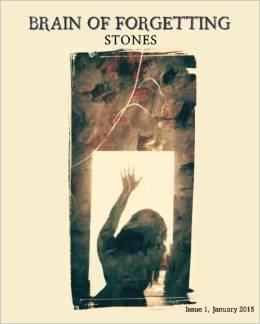

 Chris Murray