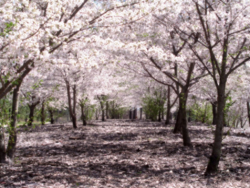
Plump nipple-blossoms more like,
neatly sewn onto her blue bodice.
Virgin surprise, one wink and
they’re blown confetti on wet ground.
© C Murray
Plump nipple-blossoms more like,
neatly sewn onto her blue bodice.
Virgin surprise, one wink and
they’re blown confetti on wet ground.
© C Murray

There is a brief Wiki on the Painter in the blogroll. I Just wanted to publish one
of her paintings this evening. The weather being appalling and no poems in my
head.
Information on Salomon can be got through the Jewish Historical Museum also.
There is nothing to be afraid of,
it is only the wind
changing to the east, it is only
your father the thunder
your mother the rain
In this country of water
with its beige moon damp as a mushroom,
its drowned stumps and long birds
that swim, where the moss grows
on all sides of the trees
and your shadow is not your shadow
but your reflection,
your true parents disappear
when the curtain covers your door.
We are the others,
the ones from under the lake
who stand silently beside your bed
with our heads of darkness.
We have come to cover you
with red wool,
with our tears and distant whispers.
You rock in the rain’s arms
the chilly ark of your sleep,
while we wait, your night
father and mother
with our cold hands and dead flashlight,
knowing we are only
the wavering shadows thrown
by one candle, in this echo
you will hear twenty years later.
Dreamboats, excerpted from Margaret Atwood’s Penelopiad is also on the blog. I like Atwood, especially her short prose and poetry.

There is to be a celebration of Poetry and Song on the Hill of Tara on the 24th of August 2008. It will mark the beginning of Heritage Week. I am putting a link onto the blogroll beneath the Ardsallagh Petition which links into the advertisement to the celebrations.
The image attached to this note is one of the emptied graves at Lismullin.
Descent From Croagh Patrick
Remember the placing of each and every stone
remember the bone white light of each one
beneath the bones of your feet
remember the queer light they cast for your dream.
He knocks the stones together to get out the green
Remember with your feet as you descend that
there’s gold in the mountain and that the stones
skim circular on the bed of the stream-
he knocks the stones together to get out the green.
Remember the placing of each and every stone
remember the bone white light of each one
beneath the bones of your feet
remember the queer light they cast for your dream.
© C Murray
[This is extracted from a three part descent from the Reek, (Croagh Patrick), The Descent was a way of initiation for women. The Inanna Legend being based in Sumerian Harvest Mythology)

The Vowels:
Ailm – ‘A’
Onn– ash-tree, ‘O’
úr-earth , ‘U’
Eadhadh-‘E’
Iodhadh– ‘i’
éabhadh-‘ea’
ór-gold-, ‘oi’
Uileann-elbow ‘Ui’
ifín-pine, ‘ia’
Eamhancoll, ‘ea’.
They relate to Ogham markings, I wanted to publish a photo of a flower I only know as ‘flame’, which grows wild on roadsides and all over Achill island and in areas of the North-west but did not know the correct name for it.
My favourite word image from ogham is a ‘r’, Ruis for ‘redness’ I published a teeny picture of the markings beneath the post: Focail Le Peigí Rose which is somewhere on the blog.

If all the sea were ink
and all the rocks were chalk,
if every bird’s wing were a pen
and the sky a single sheet,
Put a pen in the hand of every man
of the seed of Eve and Adam
and still they’d leave unwitnessed
two thirds of woman’s wickedness.
Le Seán Ó Tuama
(in the case of the louder misogynist, I think a large chubby crayon would be more suited to the task !)
La Red and Network (18):
The International PEN newsletters on women’s writing and freedom are just now published, with reports from the PEN Centres, the issue of violence against women and reports from the centres; including the ACP, the Americas, Europe and United Nations Reports, also included a review of Our Voice.
.
La Red /Network are the Spanish/English Newsletters of the IPWWC The French language Version will be arriving shortly. IPWWC are The International PEN Women Writers Committee.
“Nach aoibhinn do na héininí a éiríos go hard
‘s bhíos ag ceiliúr lena chéile ar an chraobh amháin,
ní mar sin dom féin is dom chéad míle grá
is fada óna cheile bhíos ár n-éirí gach lá.
Is báine í ná an lile, is deise í ná an sceimh,
is binne í na an veidhlín , ‘s soilsí ná an ghréin;
is fearr ná sin uile a huaislaeacht s a méin,
‘s a Dhé na flaitheasaibh, fuascail dom phein’
I know how the poet feels, how and ever, the translation bit is provided by Seán ó Tuama/Thomas Kinsella,
from An Duanaire (1600-1900), (Published by Foras na Gaeilge).
I am inserting the trans this evening, but a useful thing to do is to try and get the music of the poem (if you have familiarity with gaeilge or related language) and the sense comes soon enough.
The fáda [ó,á,é,í,ú] lengthens the vowel and softens it so o=ó(h), a (ay) = á(h) etcetera. It reminds me a bit of Hebraic pronunciation of vowels with the nikkudum/dagesh system of emphasis but I am not a linguist.
 Chris Murray