• chris murray
  • journals – bibliography – publication notes
  • downloadable items – essays – media
  • copyright
  • Home

Chris Murray

  • Sequence: “Motherhood” and other poems by Laura Daly

    November 3rd, 2019

    The Leaking Breast

    Premature mother’s milk escapes my swollen breast
    Unapologetically heralding the other inside.

    ‘You’ll never be lonely again’ the inane
    distortion of the truth of never
    Occupying aloneness.

    Your body holds but a temporary occupier
    Once released your mind will be prostrate before them
    Forever.
    Simultaneous ecstasy and anguish.

    You will crave
    The control of the cocooning womb –
    Even now breached by the disruption of the leaking breast.


    Washing my mother’s hair after an operation.

    Bent over the under the showerhead,
    Submissive as the child I was
    I feel a strange feeling, knowing I too will wash the
    Hair of my child growing inside me.
    I occupy the position now of the in-between carer.

    I lovingly smooth away suds
    Under the steaming water
    And wish she knew
    How much in that moment that I cared.
    I badger her restless nature in a vain, cyclical attempt to protect.
    There is a comfort in this moment
    Of vulnerability
    For us both.

    I will protect as she protected,
    I will mind, as she has always minded,
    And we will love intrinsically forever bonded, bound spiritually.


    The Abortion Referendum – May 25th 2018.

    She will bow to the patriarchal figurehead of the Church
    and it’s grotesquely skewed morality and
    Vote No.
    Bitter words have passed between my mother and I –
    Yet she is adamant.

    ‘Do you believe then that abortion should be illegal everywhere?’
    ‘What about all the women who will still want or need abortions if the vote does not pass?’

    Silence. A superior, taciturn morality. Divorced from the reality of the human condition
    And the female body.

    My unborn inside me forbids me travel,
    Medically,
    I am ironically excluded, my adopted home holding my
    Pregnant body hostage
    As my maternal home does to thousands of pregnant bodies

    I crave the little girl inside me.
    For her future autonomy
    I crave for her grandmother to recognise the nuances of female life,
    Female choice, female autonomy.

    But I crave in vain and look instead to my undecided father
    To vote for his two absent daughters
    His two granddaughters
    His wife.


    For the Pleasure of the Male Gaze

    Have you ever seen a rose so riotous in bloom
    that the inner petals outdo the outer
    for the pure please of life, for reaching the sun first? –

    Why should the gardener cut off the inner petals,
    Harm the rose,
    For the pleasure of the male gaze?

    Who would look at the open fruit and then attempt to sew it up?
    Who would mute and paint the vibrant colours of the butterfly
    To fit with ill-fitting, fleeting trends of fancy –

    Where else in this wonderful world of natural beauty
    do we so utterly, subconsciously, unquestioningly exist purely for the pleasure of the male
    gaze?

    Our bodies no more than parenthesis encircling the vehicle for male desire.
    Our minds continuously redrawn to mirror a society from which we are continuously
    disempowered.

    Go forth, bloom.


    Chip

    You called out to me in the semi-darkness on the naked street
    On my way to the station
    And I turned in the usual way to see if you were sneering at me,
    half hoping for the friend who would return your call.
    There was no one else there.

    You chip away at my sense of freedom with your emboldened, unwelcome presence
    Intruding into my psyche;
    One of the lads.

    Striking that you probably could barely make out my form
    Detail still smothered by weakening night
    Other you sensed instinctively and that yearning to assert ignited.
    Interesting no one there to witness or applaud, habit.

    My sense of caution heightened, exactly as you wanted
    The power of my early morning commute marginally diminished
    By wariness

    Chip away with stares
    Chip away with an unwanted brush against us
    Chip away with sending pictures to your friends
    Chip away with shouting ‘compliments’ at us
    Chip away with beeping your horn while we are running
    Chip away by asserting dominance in the home
    Chip away by doing less in the home
    Chip away by paying us less
    Chip away by using pregnancy as subtle way to hold us back in our careers
    Chip away by idealising unrealistic body types

    Be sure not to recognise yourself here,
    be sure to demonise me,
    Be sure not to admit to the greatest oppression of our age,
    Easier to label me, than see what we see.


    Untitled

    We force meaning on sadness and madness
    to make it
    bearable

    We assign reason to the deep cracks in our souls
    Building paper bridges over chasms on which to travel with fragile dreams.

    To give the pulsing wound a rudimentary suture
    And watch it scar ruefully

    But happiness needs no storyline
    It sits like a perfect, unexpected, dewy morning mist on a field
    Being
    Shrouding
    Crystallising what it touches

    Soon to vanish with the rising sun –


    Sequence: “Motherhood” and other poems are © Laura Daly

    Laura Daly is a poet, writer and teacher born and raised in Dublin, now living in Amsterdam with her husband and daughter. She holds a BA in English Literature, an MA in Gender and Writing and a Postgraduate Diploma in Education from University College Dublin. She also received her MEd in Leadership and Management in Education from Trinity College Dublin. Her passion is feminism and exploring and making visible the female experience through her writing. She is working towards her first collection of poetry as well as a feminist non-fiction book for teenage girls titled Welcome to the Desert of the Real.

  • “Edinburgh Castle” and other poems by Eva O’Connor

    October 27th, 2019

    I.

    Edinburgh Castle

    I proposition you
    I splat my soul onto cobble stones
    While you have a fag
    You smell the same
    Of sweat
    and the burnt dust from shite parcans expertly rigged

    You smell the same
    But everything is different
    Your edges are rougher ,
    You are thinner now
    Your eyes sparkle less than I remember

    I know you broke your collar bone
    I snatch glances
    But there are no protruding bones

    Your hands are red raw
    They tell-tale betray you
    your skin’s not good
    I want to undress you
    To heal you with kisses

    You study the cobbles
    perhaps you can see the vague outline of my soul
    Like the coastline of a small country
    bathed in the blue light of the castle

    I proposition you
    I tell you plainly
    That there are others
    But it is you.
    That a year on
    The cigarette burn you left on the white of my inside arm
    Simply
    will not fade

    I want to hear you laugh
    I want you to split me open with your smile
    I could dance for you, I think
    But not on these cobbles stones
    Not in these shoes
    Suddenly I am tired

    as I speak I remind myself
    Words are my weapons
    My allies
    I will bend and buckle them
    Til you relent and hold me

    But once they are borne into air
    They do no float as I have planned

    You inhale and meet my eye
    You squint at me like I have slighted you
    I think about how my vomit would look
    A light layer of floating bits
    Like packet soup
    Spilled atop my soul
    there on the cobbles

    You drop my gaze again
    Like I am a game that bores you now
    You say something about keeping your hands in your pocket.

    You finish your cigarette
    and toss the butt between two cobbles
    I watch it glow a terrific orange before it dies
    A tiny amber star
    Beside the blackness of my soul


    II.

    I left beers in the fridge.
    Two bottles of overpriced Beck’s from a stuffy corner shop, the one with the basket leathery apples by the till.

    I hoped when you sipped from the hard green glass, you’d think of me and smile.

    I left a pair of hoops on your bedside table, cheap ones from Penny’s, gold come greenish bronze.

    I hoped you’d mistake them for expensive, a family heirloom,
    And post them back with a note and your initial.
    Or keep them in a secret drawer til next time.

    I left a purple charger with an Eva sticker on the plug.
    I hoped you’d find it, wind it up and wonder about me.
    Marvel at my Hansel and Gretel trail on your home and in your heart.

    I left a tiny piece of my soul I think. Triangular and glistening like a shard of glass.
    It slipped down the gap between the wall and the luxury mattress I was using you for.


    III.

    I walk past your house
    On Brick Lane
    And tears spring up
    Behind my eyes

    You are long gone
    But I’m sure I glimpse you
    In the window
    In those tracksuits bottoms I bought for you (soft and jaded and green) and a t-shirt with a loose neck.
    I can nearly taste the Sunday sweat of you
    Salty and warm
    Crippled with come down

    I remember that time I sat on your doorstep
    crumpled and crying
    an inflatable toy pierced with sadness,
    i called your name through the letterbox,
    Til i was hoarse,
    Til the lad from tattoo shop on the corner offered me a green tea

    Your street is thick with market now
    Packed with the same over priced vintage junk
    And white trainered tourists

    We used to watch them from your sitting room
    Of a Sunday
    You
    Smoking on the window sill
    Crippled with come down.
    Me draped across you
    Smug in the haven of your half love


    IV.

    I hear you work in channel 4 now
    the drama department.
    congratulations.

    One day i will sit opposite you
    And sell you my ideas

    I will pitch so hard
    I will floor you with my composure
    my unwavering conviction
    my staggering original idea

    My proposal to you
    Is this

    Be kinder
    To future loves


    V.

    I had a dream your mum kissed me on the cheek
    And whispered in my ear
    You cannot save a drowning person
    if they already belong to the ocean floor.

    And the warmth of her face
    Was like a sea of calm
    Against mine
    Her skin
    The same crepe paper feel
    As yours


    Edinburgh Castle and other poems are © Eva O’Connor

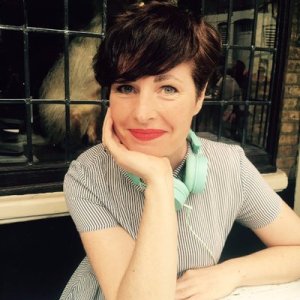
    Eva O’Connor is a writer and performer from Ogonnelloe, Co. Clare She has written for stage, screen and radio. Her plays in include My Name is Saoirse, Overshadowed, Maz and Bricks, and MUSTARD (winner of Fringe First Award 2019). Her short story Midnight Sandwich was aired on BBC Radio 4.
  • “Alone on the Blackstock Road” and other poems by Aine McAllister

    October 23rd, 2019

    Alone on The Blackstock Road

    I buy a yellow armchair
    and a stone grey bookcase, carry books
    from the attic in Ireland, choose titles
    I think speak something of me.

    I sit at the table and watch
    buses stop outside and strangers look,
    my hackles rise, I lift a shoulder
    and twist my back to them.

    I turn to write another
    note to self and you: Finally
    you came; distant as a far moon,
    you didn’t look at my books.

    But, close in the dark I opened
    the book about words. You lit the page
    with a candle’s light and I read
    how to be ‘Alone’.


    Aqui me pinté yo

    I live alone above a Japanese take away,
    the hallway smells like last night’s dinner.

    I put flowers on the bookshelf,
    beside the silhouette of a woman

    pulling up her stockings. I stick
    a self-portrait of Frida Kahlo to the fridge,

    with a list of small domestic items
    I need to make a house a home.

    In my bedroom bits of clothing spill
    from suitcases I’d like to give away.


    Rain on Rathlin Island

    The rain that salves,
    that smoothes the fibres
    of a frayed heart,

    the rain that draws you into warmth
    like the harbour
    of your grandmother’s arms

    or her bed at midday in childhood;
    blanket cocoon.
    That was the rain that day. Kind rain.

    *

    We walked to the other side of the Island
    past yellow iris, rushes and the lough
    to a family of mottled seals,

    at the inlet at Ushet.
    I planted my feet on the rocks
    stood legs apart and gave myself back

    my name, called it into the rain bringer.
    I sent my name
    where the Atlantic swirls up in the Irish Sea.


    Murlough Bay

    Rue lighthouse on Rathlin casts gold light;
    a thurible swings the Sea of Moyle.

    Western Isles of Scotland rise;
    peaks in incense smoke.

    Stones are lichen marked;
    mushroom, terracotta, olive green.

    Nettles spring, heathers crop, harebells drop,
    thistles brighten violet to white,

    they wisp their creamy beards to breeze,
    to bird song, to a man’s voice from rocks above.

    Sycamore’s arms reach,
    gather honeysuckle in.

    A six spotted burnet rests lace wings;
    black, red, on stem green.

    Bees move in blackberry flowers,
    open, pink in bloom.

    A daddy-longlegs floats,
    trampolines the ferny verge.

    The old mine in the mountain opens low;
    dank – heavy drops fall slow.

    The black lump rises fast – gut to throat,
    a skim of coal is hard pressed in soft palm.

    The long slow beat of a sea bird
    brings blue expanse to basalt cliffs.

    Purple waters rock and sway,
    back again to Murlough Bay.


    The Moon

    for Christos

    I thought the moon was a man,
    slow hurtling
    into the distance of a different universe.

    I thought I was the earth,
    the tide, the wolf;
    the woman he turned his face from.

    I thought the earth was dark, barren,
    the tide, a witless,
    loyal fool.

    In my mind’s eye
    I saw the wolf, dull-eyed and bent,
    no light to cast her shadow into.

    But you taught me the moon.
    The moon, the moon, look at the moon,
    it is a waxing crescent.

    She is orange in the sky tonight,
    low and full over Red Bay
    and the world is pregnant with her promise.


    “Alone on the Blackstock Road” and other poems are © Aine McAllister


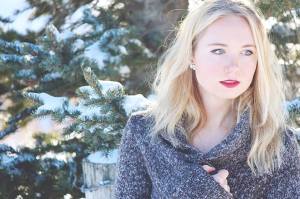
    Aine McAllister is a poet from the Glens of Antrim, who works as a Senior Teaching Fellow at UCL IOE. She is currently completing an MA Poetry at Queens University. Her work is published in journals and she is working towards her first collection. She is interested in exploring how poetry gives voice and using dialogue as a tool for writing and for facilitating writing.
  • “Needlepoint” and other poems by Erin Vance

    October 18th, 2019
    
    Hiraeth 
    
    In the turpentine afternoon
    I wanted to beat my wings— hollow
    
    so       hollow.
      
    And in the rectal evening 
I wanted to be a hummingbird.
    A hum   
        m      
         ing
            bird.
    
    In the frost-swept night 
    I wished you a Lamb.
    
    Soft like cotton balls and languid 
                                  with musk.
    
    Turn me into a violent fresco,
     Lamb,
    and touch me like hot bricks
    
    in the wet dawn.
    
    I wanted to be a leaf lodged in amber.
                   — — An insulin needle.
      
    And at the musk-soaked August’s end

    I wanted to be hollow
                        t r a n s l u c e n        t
    a hum
        mingbird 
    
    with — — insulin — — needle— — 
                    legs
    lodged in amber.
    
    My hollow wings snap
                       ping 
    In your lamb’s mouth,
                      turn me into a violet fresco,           Lamb,

                          
                        touch me like 
                           hot 
                         bricks.


    Confession

    After Elsie Wright and Frances Griffiths, photographers of The Cottingley Fairies

    When Frances followed the little thing
    into the shallow beck
    I stayed back, watching her stockings
    sag in the water, flapping at her ankles
    like bloated second skins.

    Frances batted her eyelashes
    and the imp trusted her.
    Confession: I wished to catch it
    and place it in a box
    like a little pet in a spider-silk dress,
    pull it out at parties to flutter and tease
    and spit.

    When Frances giggled as its wings
    tickled her rosebud cheek—
    I confess; I wanted to hold
    its gossamer body in my palm,
    knowing that I could practically crush it
    with my breath.

    The waters of the beck leaked into my shoe
    the cold water like tiny, elfin teeth
    biting my toes. A gasp and— oh!
    the thing is dead.
    caught under Frances’ fat palm;
    she slipped on a patch of moss like an oil slick.

    The photos may be fake, but the fairies—
    They were real.

    Weren’t they, Frances?


    Sister, Speak

    I wonder where you are
    where our home is
    now that the skeletons of our earliness
    belong to the birds

    I wonder if the ground where we placed you
    is infected with your dreaming

    I sit in your closet
    empty now, but the ghosts of your
    dresses hang around me
    like rainbows dripping lifeless from the gallows

    I used to lay in your bed
    wanted to feel everything you’d touched
    for our skin cells to feed the same microorganisms

    I’d lay in the dirt and imagine I was you
    but when ants started up my neck I couldn’t help
    but twitch awake and run back inside


    Mirrors

    Mother, can I have the velvet box of milk teeth
    that you keep in your nightstand?
    Every night I dream my teeth are falling out.
    I think they miss me.

    Mother, what is the combination to my middle school locker?
    I rescued a bird fourteen years ago
    and hid it with my gym clothes
    I think it’s getting hungry.

    Mother, can you braid my hair one last time before I cut it off?
    Will you keep a lock of it for a day
    when I am not picking up my phone
    and you have bad news?

    Mother, will you help me down?
    This tree is much taller than I expected and this branch
    is much thinner and I am much older
    than I’d planned.

    Mother, will you remind me
    to wash between my toes and to take my glasses off
    before I fall asleep
    even when you don’t remember
    who I am?


    Needlepoint

    When we were young,
    Still slippery and mosslike,
    Our father embroidered sparrows
    Onto the backs of our necks
    He held the whiskey bottle in his free hand
    And like a mean waterfall the
    Blue threads cut through our skin.

    For our tenth birthday
    Our father bought us stallions,
    And after an afternoon of riding,
    He added to the hieroglyphs on our necks;
    Pomegranates that made our throats
    Look like bloody gaps with yellow teeth.

    We were fourteen when we stopped dreaming
    One morning we woke up together
    Our minds empty, our hands steady,
    And we clutched the bone-handles of our
    Hairbrushes, counting to one hundred
    In each others’ hair
    Careful not to pull a single stitch.

    We worked like machinery and every five years
    Father took the needle and we took turns sitting
    At the oak table while he stitched
    His memories into our skins.


    Hatching

    For Stacey Walyuchow

    When I was six years old,
    I played Odette in a Kindergarten production
    of swan lake.

    My movements were decidedly more
    like that of a magpie
    and my understudy was called in

    after I broke my ankle tripping
    over a gold watch.
    I cried and watched the birds outside my room.

    They played and threw acorns
    danced and drew shapes in the dirt
    I opened the window and called to them

    in my best outside voice.
    One by one they jumped onto the sill
    and teetered on the threshold

    of my world and theirs, their heads
    cocked their eyes shifting their feet
    twitching until they jumped hopped skipped

    into my bed.


     Needlepoint and other poems © Erin Vance


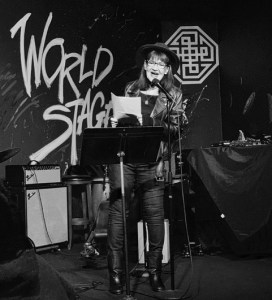
    Erin Emily Ann Vance holds an MA in English and Creative Writing from the University of Calgary and studies Irish Folklore and Ethnology at University College Dublin. She is the author of five poetry chapbooks, including The Sorceress Who Left too Soon: Poems After Remedios Varo (Coven Editions) and Unsuitable (APEP Publications). Her writing has appeared in Contemporary Verse 2, EVENT Magazine, Augur Magazine, Arc Poetry Magazine, Canthius, and more. Her first novel, Advice for Taxidermists and Amateur Beekeepers will be published in Fall 2019 by Stonehouse Gothic.
    Learn more at erinvance.ca.

    Erin’s social profiles

    website www.erinvance.ca 
    @erinemilyann

  • “Poem for Kate in Chemo” and other poems by Alexis Rhone Fancher

    October 17th, 2019

    CRUEL CHOICES

    When my husband’s two grown daughters are in town, the three of them go to the movies, or play pool. Share dinner every night. Stay out late. I haven’t seen my stepdaughters since my son’s funeral in 2007. When people ask, I say nice things about the girls, as if we had a relationship. When people ask if I have children I change the subject. Or I lie and say no. Or sometimes I put them on the spot and tell them, yes, but he died. They look aghast and want to know what happened. Then I have to tell them about the cancer. Sometimes, when the older daughter, his favorite, is in town, and she and my husband are out together night after night, I wonder what it would be like if that was me, and my boy, if life was fair, and, rather than my husband having two children and I, none, we each had one living child. His choice which one to keep. Lately when people ask, I want to lie and say yes, my son is a basketball coach; he married a beautiful Iranian model with kind eyes, and they live in London with their twin girls who visit every summer; the same twins his girlfriend aborted with my blessing when my son was eighteen, deemed too young for fatherhood, and everyone said there would be all the time in the world.

    First published in ASKEW, 2016, Nominated for the Pushcart Prize, 2016 Winner of the Pangolin Prize, 2018 Nominated again for the Pushcart Prize, 2018


    THE GOD FOR BROKEN PEOPLE

    There is a god for broken people – Roxane Gay

    This is the god for the second rate, the one who waylays you at the party, plies you with bourbon, fucks you in the kitchen, makes you walk home in the rain. This god shines in the runoff. This god hustles the night. This god mines the maimed, culls emotional cripples off the top like cream. This god is a shape-shifter, a dumpster diver, the god who loiters at the corner of Dolorosa & Despair. This god drinks alone. The god for broken people trolls the city for discards, marries the exploited with the lost. This god sweeps up the miscreants, gusts their darkness into night. This is the god of no hope. No money. This god has your back when you backslide. This god bets on you to fail, hides in your broken places. This god is willing to wait. When you’re ready to surrender, remember: this is your last, best chance. This god will not stick by you, won’t give you false hope. This god will kill you. Or save you. Choose.

    Published in The San Pedro River Review, 2018


    Poem For Kate In Chemo

    Above where your right breast used to be
    the oncologist implanted a port to make things easier.
    “It takes forever,” you say. “An hour’s drive, each
    way, an entire day used up, laying
    there.”

    But first, the tourniquet, tied to your upper arm,
    the cheery nurse, tapping for a working vein,
    your thick blood at last flooding into one syringe
    after another. Then the weigh-in, each time
    less. “Bone and skin now,” you say.

    If your numbers are good, you head
    to the chemo room, rows of cushy
    recliners, supplicants tethered to plastic bags
    held high by IV poles, a forest of metal trees.

    You unbutton your blouse, offer up the convenient
    port to a flush of saline – like ocean, you tell me,
    like waves.

    Next, the chemicals, those shimmering droplets
    riding the plastic tube into your chest,

    a kind red blanket, thrown
    over your legs.

    I tear the best New Yorker short stories
    from the magazine and mail them
    to you in Port Townsend.
    Something to pass the time. Something non-
    medical to discuss when we chat each week.

    We both know you’re dying, though
    your husband still has faith, and you cling to
    his hope, coming back week after week because
    it makes his life bearable.

    When the chemo bags are empty,
    and the stories read, you leave the pages behind
    for a needful stranger.
    In 2000, when you lost your breast,
    your husband insisted you have
    chemo then, too.
    “It makes me feel more dead than alive,”
    you confessed to me after the first week.

    Appointment days, you’d leave the house,
    drive to the woods, walk the trails
    instead of treatment, those
    huge redwood trees shading your path.

    Each evening you’d return to your
    husband’s innocent embrace.

    You made me promise not to tell.
    And I never did, until now.

    For Kate O’Donnell, (1949-2014)

    First published in the Nashville Review, 2016


    when your mother convinces you to take in your homeless younger sister

    She will date your boyfriend.
    She’ll do it better than you ever did.
    She’ll have nothing but time.
    He’ll start showing up when you leave,
    train her to make him the perfect BLT,
    (crusts off, avocado on the side),
    encourage his cheating heart,
    suck his dick so good he’ll think
    he’s died and gone to Jesus.

    Your sister will borrow your clothes,
    and look better in them than you ever did.
    Someone will see her with your boyfriend
    at the Grove, agonize for days
    before deciding not to tell you.
    Meanwhile he’ll buy her that fedora you
    admired in Nordstrom’s window, the last one
    in your size.

    When you complain, your mother
    will tell you it’s about time you learned to share.

    While you’re at work, your sister will tend your garden,
    weed the daisies, coax your gardenias into bloom.
    No matter how many times you remind her,
    she will one day forget to lock the gate;
    your cat and your lawn chairs will disappear.

    Your mother will say it serves you right.

    Your sister will move into your boyfriend’s
    big house in Laurel Canyon. He will ignore her,
    and she will make a half-hearted suicide attempt;
    you’ll rescue her once again.

    Your mother will wash her hands of the pair of you,
    then get cancer and die.

    Smell the white gardenias in the yard.
    Cherish their heady perfume. Float them in a crystal bowl.
    Forgive your sister as she has forgiven you.

    First published in RAGAZINE, 2015


    When I Buried My Son I Became Someone Else
    
    When I buried my son    I became someone else
    the motherhood part     written out of my script;
    
    I should have felt lighter.
    			    An alternate narrative ran alongside
    			    the dead kid one where he wasn’t dead.
    
    It remains the preferable scenario. 
    			
    I buried my son and now 
    I don’t know who walks 
    on eggshells                 the living or the dead, and sometimes  
    			     I think the dead one is me, especially
                                 when I look 
    in the mirror.
    		           I am coming to terms with mortality:mine/his. 
    			   I’ve dumbed down my dreams.
    
    If you look hard enough,    you’ll see the skewed trajectory, 
    the fizzle.                 the off-track, you’ll live the devastation, 
                                sip the dregs.
    When my mother died, 	    I wore a lavender dress to her funeral. 
    
    I stuffed it into  	   where it lived for thirty years. 
    the back of my closet	   When I found it again, the dress still fit.
    
    But I wouldn’t be caught dead in it.


    Published in JUNIPER Literary Journal, Feb. 2019 
    & in THE DEAD KID POEMS (KYSO Flash Press, 2019)

    Poet and photographer Alexis Rhone Fancher has work published in over 200 literary magazines, journals, and anthologies, including Best American Poetry, Rattle, Hobart, Verse Daily, The MacGuffin, Plume, Tinderbox, Diode, Nashville Review, Rust + Moth, Nasty Women Poets, WideAwake: Poets of Los Angeles and Beyond, among others. Her photographs have been published worldwide. Her books include: How I Lost My Virginity to Michael Cohen & other heart stab poems, Enter Here, and the autobiographical, Junkie Wife. Her chapbook, State of Grace: The Joshua Elegies was released in 2015, and its companion, The Dead Kid Poems, published in May 2019. EROTIC, a volume of her new and selected erotica, will be published in 2020 by New York Quarterly. A nominee of multiple Pushcart Prize, Best Small Fictions, Best Microfiction, and Best of the Net awards, Alexis is poetry editor of Cultural Weekly.
  • A Poetry Memorial for Daphne Caruana Galizia (PEN)

    October 16th, 2019

    Invocation

    i.m Daphne Caruana Galizia

    It was not love that planted the bomb,
    it was not infatuation that led to my pursuit.
    It was not love that forever changed me,
    taking me away from them, my children.

    It was a different kind of annihilation–
    Daphne of legend, naiad, nymph of blessed
    places, garnered for Apollo a laurel-wreath
    when she fled his pursuit.

    i.m Daphne Caruana Galizia, make me a place,
    wreath me in laurels for the words I gave to you,
    in rosemary for remembrance.

    Make a grove of laurels for me, cooling trees.
    Put them somewhere that is beyond his taking,
    beyond his touch.

    A shaded place for remembering, bring flowers there.

    © C. Murray

    I would like to thank Sahar Halaimzai for including my poem, which can be read here or with all the other poems on the PEN International Poetry Memorial Wall dedicated to Daphne Caruana Galizia.  


    From the PEN International website

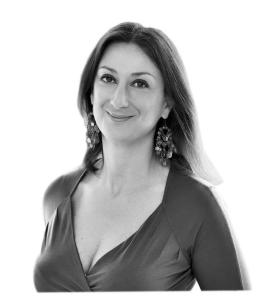
    A memorial for Daphne Caruana Galizia in Valetta has been repeatedly destroyed by the authorities. In response, PEN International has devised a poetry memorial as a tribute to her courage and her dedication to freedom of expression.

     Today marks two years since the brutal assassination of Malta’s best-known investigative journalist and anti-corruption campaigner, Daphne Caruana Galizia. Although three men have now been formally charged with her murder, a date for their trial has yet to be set while those who ordered her killing remain at large.

    Irish Times

     Today is the second anniversary of the shocking murder of Maltese journalist and anti-corruption campaigner Daphne Caruana Galizia. That afternoon, she posted a blog stating that the situation in Malta was desperate and drove away from her home. Within minutes, a bomb that had been planted under her car exploded, killing her. She had been under threat for a considerable time because of her work exposing corruption in Maltese society and politics.

     Two years later, three men have been charged with her murder but no trial date has been set, nor have the people who instigated the crime been identified. Authorities in Malta have only recently announced that they will set up an inquiry. However, Caruana Galizia’s family and many international free-expression campaign groups continue to call for a completely independent and impartial inquiry, as they have done since the day of her assassination. (read here)


  • “Dive of the Kingfisher” and other poems by Ria Collins

    October 13th, 2019

    Dance of the Samurai

    I danced in my Communion dress
    barefoot dervish
    mother read aloud from Illustrated Poetry,
    I found my plastic sword.
     
    I dreamt I was a samurai
    lived at the foot of Mt.Fuji,
    wore armour and mask
    raven hair in a top-knot.
     
    Princess Tsuru, daughter of Ochi Clan.
    I practiced the Five Rings Of The Sword,
    meditated and studied
    the way of the warrior.
     
    Father transformed an old camogie stick
    to a majestic Naginata sword.
    Grandmother gave me a gold silk skirt,
    jacket of azure velvet
    with extended shoulder wings.
    I wrapped black calico around my waist
    and placed my sword in the Obi.
     
    At school, I carved a mask of such ferocity
    teacher placed it in a bag,
    told me to carry it home.
     
    Now, in the evenings, I put on my wedding dress,
    let folds fall over hidden scars,
    I lengthen the woven rope
    feed it slowly towards him, and wait.
     
    My mask slips down. I prepare for war.


    Dive of the Kingfisher

    I am tired of being a woman
    suckled and torn from childbirth and men,
    hands wrinkled from years submerged,
    I clasp at dreams that trickle through the plughole.
    Forgotten, uncoffined. I must wait.

    I am tired of grinding cumin,
    coriander, mustard, and cardamom
    while I taste only emptiness.
    Children loved and well-fed have left,
    I move from person to person.

    I shoulder the clouds of my mother,
    blackened January,
    rain falls inward, time contracts,
    chalk bones, weightless, skinless,
    unseen madness in colourless veins.

    A sparrow of small movements
    I move around crumbs, claws light
    ready to dance through the sky.
    I should be a bird
    a thing of beauty.

    Perhaps a kingfisher,
    with azure underbelly
    cloaked with emerald wings,
    a brilliant blue flash
    across the Universe.


    Elegy to some Mysterious Form

    From Katy in Dublin to Ruby in Liverpool 

    Misshapen walnut
    nestled hard against my palm,
    as I searched for your soul
    in pitted holes.

    I looked for a connection
    to your core,
    all I saw was
    mismatched joints, a jellied eel
    of jumbled vertebrae.

    I held your flaccid nothingness,
    soft against the dampness of exertion,
    translucent beads like tears
    dropping from my skin.

    Should we wrap you tenderly
    in love and lace,
    or allow you to be sluiced
    In some unknown place?
    I do not regret
    housing your short journey.
    please try to understand.

    When they informed me
    of incompatibility,
    my body spilled,
    the severed cord
    my decision.

    Now the jagged space
    blurs without sides
    where you should be,
    you haunt my melodies
    with your legacy.

    I see you in some mysterious form,
    tall and proud, watching us.
    exotic plumes, unruffled,
    having waged a war
    of constitutional law,
    about our rights
    but what of yours?

    You left us here to wonder.


    No Survivors

    Translucent shadings, surfacing gut thrusts
    which threatened to choke
    their broken promises.
    It had to stop.

    Lost in make-believe, she was cold,
    hardened as ice-cubes,
    used up tulips returning to the soil,
    or curled magazines yellowed with time.

    He never faltered, dull ink-coloured
    the crushed bloom of her dreams,
    no milk or honey to soothe
    saltwater dabbed on the ache.

    Friends safely distanced, children cowered,
    insulted in his world of men,
    his dammed silt anger –
    she, his punch-bag.

    She fought for a job, trialed escape –
    sick-days, unhealed wounds
    bones protruding through the stretched skin,
    always in denial of one-way dialogue.

    Sun glinted on flint through glass,
    she grabbed her chance, danced around a shadow,
    left hand raised in defence as he sniggered
    the air bent blue.

    In her cell, stone wrapped retreat,
    memory dimmed, she stares through the edge
    a closed loss, broken children in care.
    – no survivors.

    No glory, just burn of pain
    but she loves him still.
    Long before the beginning
    there was going to be an end.


    To Rothko

    I would like a lover like you
    concise, with depths of colour,
    a definite touch
    to reach the heart in me,
    brush me with strokes,
    urge me outside myself
    until my breath gasps.

    You would show me
    how form subsides then soars
    from cobalt to violet
    crimson to gold
    a tightrope between worlds,
    absorb all fear and thought
    in a perfectly formed frame.

    Feet firmly planted on wood, unshaken
    like a tai-chi stance,
    “as above so below”.
    A white line spills across canvas,
    in the centre, stillness.


    The Stanhopea and the Mexican Boys

    In the shade of a tropical garden
    under a sherbet sky,
    the Stanhopea orchid stretches
    purple daubed petals
    emitting its scent,
    vanilla and chocolate peppermint.

    Hundreds of orchid bees
    lured from twenty feet
    by two blood maroon eye spots
    beneath the belly of the sepals
    suck the essence for propagation
    in the sweet seduction to follow.

    Twenty yards away
    in parched streets,
    young boys caught, waving guns,
    drawn to crimson sorrow,
    fall with a kiss of gunshot
    while the Barons watch.

    The Stanhopea ripens,
    in one short burst.
    Like the Barons the bees will leave
    when the petals fall.

    “Dive of the Kingfisher” and other poems © Ria Collins


    Ria Collins worked as Director of Nursing for many years. Now living in Galway, she has read at Clifden Arts Festival and Galway Library open mic events. She has been published in Skylight 2016, shortlisted for Over the Edge New Writer of the Year 2016 and longlisted in 2017. She was shortlisted for Poems for Patience 2017 and in 2018. She attended workshops in Galway with Kevin Higgins and Dublin Writers Centre with Mark Granier, Jessica Traynor and Adam Wyeth. Most recently she has performed a collaboration of her work with music at the Cuirt International Festival of literature 2018.

  • “This Connection” and other poems by Shanta Acharya

    October 13th, 2019

    BELSHAZZAR’S FEAST

    (After the painting by Rembrandt in the National Gallery, London)

    In the Dutch room amid Rembrandt’s paintings,
    I sit sharing my reflections with myself –
    my woollen jacket no comparison with Belshazzar’s
    mantle of ermine studded with jewels,
    his silk turban, white and resplendent,
    crowning his distracted gaze.

    The room acquires the aura of a court in session,
    members of the jury appear unmoved,
    floating like creatures treading on the moon.
    The wooden bench, the murmuring crowd,
    the parched sensation in my throat,
    deeper rumblings in my stomach,
    tired eyes and cold feet, a bone-marrow fatigue
    alienates me from the artistic feat.

    The haloed hand, the writing on the wall,
    offer unexpected food for thought.
    Mene Tekal Upharsin: You have been
    weighed in the balance and found wanting.
    Belshazzar’s face aghast with such revelation!
    Do not despair, one was saved; do not presume, one was damned.

    I close my eyes thinking of god mercifully
    adjusting the divine scales in my favour –
    myself poised on one side, insubstantial;
    my burden of sins on the other, weighing down
    heavy, leaving me quite unbalanced.

    So god kept adding extra weights of suffering
    to help me overcome my unbearable lightness of being
    like an ingenious doctor shrewdly intent
    on restoring me to life by increasing daily
    the bitter pills of my life in self-exile.

    I had a vision of grace reconciling me
    to myself, to see me poised and not wanting.

    You may have mistaken my strength, dear God
    to emerge from your gift of suffering balanced.


    From Imagine: New and Selected Poems (HarperCollins, India; 2017)


    NOT ONE OF THE MYTHS

    Not one of the myths we make
    will outlast the muting of our breath.

    What comes and goes in silence
    represents time’s landscape of self.

    So long estranged from myself,
    I have created an illusion –

    carefully camouflaged
    to welcome our re-entrance.

    It is like passing from the object
    to its unredeemable shadow.

    Like leaping off the canvas of a painting
    into the gallery of free spectators –

    only to dread that moment of return
    to another image that would recapture us.

    A plastic version of all that passed among us
    or others who unknowingly resembled us.

    The imageless wind is the appropriate conception,
    projecting the naked self, the final relation.

    There arrives a time when the fiction is a mirror
    image of itself, a thing final in itself.

    Unable to discern between illusion and creation,
    we have stopped revolving in self-abnegation.

    After the wind has gathered its unique composure
    and we breathe deeply the pure, fulfilling air,

    our halcyon gestures resurrect words from silence
    like conjurors revelling in tricks and games.

    The myths dissolve in the silence that guts
    our ineffectual, self-mutilating words.


    From Imagine: New and Selected Poems (HarperCollins, India; 2017)


    MY GOOD LUCK HOME

    You presented me with two scarabs,
    hieroglyphs etched on their lapis-lazuli backs,
    from the gift-shop of the British Museum.
    It’s for good luck, you said.

    I survey the pieces, their sacredness
    treasured in the hollow of my palm,
    imagine them alive, pushing the setting sun
    along the sky, entreating my heart to be pure and light.

    They nestle beside a coral stone and a pearl
    framed in rings of beaten gold on my fingers,
    charms given by my family to protect me from evil.

    I find the Egyptian scarab couple their own home
    away from the crowded open-house of my Indian gods,
    transforming each corner of my living room
    with gifts of fetishes from around the world.

    Two Chinese cats guard my speculative angle of vision.
    Even Ganesha travels with me in my handbag
    to help me overcome obstacles in my adopted homeland.

    The seven gods of luck from Japan smile on
    as you eye my marble turtle god with its fine chiselled look,
    its beady eyes, hand-crafted, appraising your secret nook –

    leaving us with the legacy of an understanding –
    the knowledge of what it means
    to carry a whole household in oneself,
    to be so perfectly self-contained, poised
    at the centre of all manner of creatures unsheltered.


    From Imagine: New and Selected Poems (HarperCollins, India; 2017)


    THIS CONNECTION

    Clusters of pods from branches of hornbeam
    hang like Chinese lanterns pregnant with dream –

    tales of transformation witnessed collectively
    is theatre, experienced solo becomes prayer,

    the journey from chrysalis to butterfly,
    waking with desire, an aviator defying gravity,

    a mountaineer scaling peaks drawn
    out from the core of a changing world,
    spinning, tiptoeing on a slippery slope

    like trust in the face of uncertainties,
    luck when the chapter of life is coming to a close,
    alchemy turning the worst in us to our best,

    unafraid of failure, taking risks, following our dreams,
    seeing for the first time, eyes and mouth

    opening wide with wonder, lovers swirling
    in ecstasy on the dance floor, walking

    on top of the world, bottom of the sea together
    like earth moulded by wind, water, ice and fire,

    knowing time will change all we cherish in our globe
    taut as a belly with foetus becoming human

    where we like gods are defined by what we are not
    except Love that is everything and excludes nought.


    From Imagine: New and Selected Poems (HarperCollins, India; 2017)


    AMONG THE IMMORTALS

    I dream my painting and I paint my dream.
    Vincent van Gogh

    Reflecting on life’s many false starts –
    art dealer, teacher, lover, preacher – always the outsider,
    fearful of failure, loss of face, faith, family,
    except for brother Theo providing a reason for living
    in sorrow yet ever joyful.

                                                          In the depths of darkness,
    moments of clarity bridge the gap between art and reality.
    Dwelling in possibility, awareness of the one true God
    gives way to insight – quest for the light within all beings.

    The idea at first vague until the initial impulse,
    a scribble, takes form, becomes a sketch
    and the sketch a painting – mastery of the thing
    promising an unexpected flowering.

    Brushstrokes come alive in a rapture of aseity,
    crying out with creations of flesh and blood –
    self-portraits breathing, original in their view of the infinite,
    touch the heart of humanity, open a door to eternity,
    walk among the immortals, communing with the light.


    From Imagine: New and Selected Poems (HarperCollins, India; 2017)


    “This Connection” and other poems © Shanta Acharya

    Shanta Acharya - (c) Dr Sanjay Acharya.jpgShanta Acharya won a scholarship to Oxford, where she was among the first batch of women admitted to Worcester College. A recipient of the Violet Vaughan Morgan Fellowship, she was awarded the Doctor of Philosophy for her work on Ralph Waldo Emerson prior to her appointment as a visiting scholar in the Department of English and American Literature and Languages at Harvard University. The author of eleven books, her latest poetry collection is Imagine: New and Selected Poems (HarperCollins, India; 2017). Her poems, articles and reviews have appeared in major publications including Poetry Review, PN Review, The Spectator, Guardian Poem of the Week, Oxford Today, Agenda, Acumen, Journal of Postcolonial Writing, Philosophy Now, Stand, Ariel, Asia Literary Review, HarperCollins Book of English Poetry (2012), Fulcrum, Language for a New Century: Contemporary Poetry from the Middle East, Asia & Beyond (Norton).

    www.shantaacharya.com


  • Research Pioneers 1: John Wilson Foster

    October 9th, 2019

    Dr Deirdre Flynn's avatarIrish Women's Writing (1880-1920) Network

    Research Pioneers in Irish Women’s Writing: An Interview Series

    Introduction

    Since the 1990s, scholarship on Irish women’s writing has made some significant strides in recovering forgotten authors and texts. Thanks to pioneering work by researchers such as John Wilson Foster, Patricia Coughlan, Heidi Hansson, Margaret Kelleher and James H. Murphy, we have begun to see developments that conceptualise and offer new frameworks for researching and understanding Irish women’s writing of the period between 1880 and 1920. 


    View original post 1,863 more words

  • “Fireflies” and other poems by Christine A. Brooks

    October 6th, 2019
    
    house of beauty
    
    just three houses down 
    from my 
    pale green house
    a magnificent dark red house
    sat 
    regally
    on a throne of both beauty &
    possibility
    on a street that never quite
    fit in
    with the rest of the city
    
    it was a dead end, 
    in a time & place undefined by class 
    middle, less than that,
    but 
    all otherwise, the same
    —more or less
    
    except #44
    
    it was the only house on the street
    with a fence around the front
    
    how rich they must be, I thought
    to be able to have a fence
    in the front
    
    a small white sign with
    black writing hung & 
    swung from a black post
    behind that fence
    with scrolled letters
    
    Willie Mae’s
    House of Beauty
    
    my mother would send me
    if I was lucky, with 2 quarters
    to buy us each a candy bar
    that Willie Mae
    would stock on a small shelf
    in her makeshift waiting room
    in her basement
    
    I would look at myself in her big
    mirror that sat in front of her 2
    chairs,
    that spun around
    
    soaking in the smells of hair products, so different than my
    own & listen to the women
    talk about their lives
    that somehow existed
    outside
    the House of Beauty
    
    their hair so curly & beautiful
    made my own
    brown, flat hair feel lifeless
    and 
    vanilla
    
    she would explain to me why
    she could not make mine, look
    like theirs,
    but still,
    every time I walked down her
    backstairs
    quarters in hand
    I dreamed that she could make
    my hair kinky & shiny
    while I talked & twirled 
    
    because
    in the House of Beauty
    anything was possible
    
    or so I wanted to believe.


    nothingness
    
    I was drunk when they came
    for me,
    to keep me safe from myself,
    he said 
    but that was a goddam
    lie & everyone knew it
    
    broken knuckles, bruised 
    beaten, wrapped tightly but
    the silicone pink bracelet twisted
    and rubbed under my cast
    
    pushed, taunted & reminded
    that I was no one
    no one that could fight
    no one that could win
    and
    no one that mattered much
    to anyone 
    
    neighbors peeked out, 
    porch lights flicked on
    I could see them 
    from my place, 
    face down on the hood of the
    dirty police car
    click click
    went the handcuffs
    
    it was summer not so long ago
    really, but a lifetime for
    her and many
    but that didn’t matter either
    
    nothing did 
    or ever would again
    not in any way that mattered
    anymore


    Newbury Street
    
    
    my Papa smoked a pipe &
     watched hockey with the sound
    off, in another
    room
    from where I played    quietly
    with my Lincoln Logs
    
    Nana, who was supposed to die
    long before I came around,
    had the doctors been right about
    her throat cancer
    
    sat in the corner, surrounded by various
    clocks 
    that ticked on
    
    knitting & clucking trying to keep her
    mouth moist somehow since her body
    stopped making saliva 
    
    she made gawumpki’s
    he gave butterfly kisses &
    
    we lived with them one
    summer, so very long
    ago 
    
    most days I had a bellyache
    
    nervous, she’s just nervous
    my mother would say
    
        dismissing my pain, probably
    to dismiss her own
    
    it didn’t matter though &
    eventually we moved, but my
    bellyache stayed 


    A Date with the Lord   
      
    the morning I met the 
    Lord was exactly as I 
    imagined
    it would
    be. 
     
    the air,
        both, briny & candied
    plump with salt from the
    Irish Sea & 
    sweet from the
    River Liffey
    tickled as I inhaled
    but that did not stop me from
    breathing in
        life.
     
     
    some, even most,
    — maybe,
    would not find it
    pleasant or pleasing, but
    for me it was
    perfection,
    on an early summer Dublin morning,
    before businesses opened, but not before business
    happened, 
     
        with horse drawn carriages & guitar players
    & those offering blessings of good fortune,
    wishing me well,
    after several donations. 
     
    I paid the price,
       I owed
    maybe even, a little more than that
    which pleased us both
      —equally. 
     
    God bless you said more than money could buy
       maybe
    I’m hungry, she said, although
    she looked neither the kind
     of person to offer a blessing that had the chance of
    sticking, or someone whose dinner plate was
    empty often
     
    but, I had seen her before,
    believed her then, that blessing 
    so, I dropped another heavy coin into her
       cup, clanging
    & shuffled along Dawson Street
    because,
         it mattered not
     
    I had a date with the Lord after-all & had no time to
     wonder
    if the woman I never thought I would see again
    —but did
    could grant the wish offered up to
    Eire.
     
    finally, I had come upon the Mansion House
    more than what
    it seemed, initially
    set back without the warmth
    & cool of thick mossy blades
    of emerald patchwork
     
    still though, warm enough
    welcoming enough, although no
    mat said so, and the giant
    brass, doorbell that rang to the
    unknown, still, did
    not dissuade me from my
    date with the Lord. 
     
    I had an appointment
        after all. 
     
    my clothes, comfortable but
    not my finest, reminded 
    me, without knowledge or
    preconceived notions that
       I was,
    home
    in a place that accepted me
    as is. 
     
    and in that moment,
    those moments, 
    as we sipped tea
    & the outside came to life 
    I was
         —happy.


    Fireflies
    
    I recall them, 
    as beacons of hope & faith 
     from my childhood
    
    buzzing and banging,
    gently
     against the glass walls of my
    Nana’s mason jar
    lighting the way, selflessly
     just for a moment, a heartbeat 
     tick between the tock
    contained. 
    
    I unscrew the lid,
     set them free, and 
    watch
    them blink into the hush
    of the late summer’s night. 
    
    I recall them,
    these memories 
    
      not as the embers
    they were - hovering, clanking
     against the mental box I
     put them in, 
     As they feverishly try to burn
      down 
      my construction paper 
    childhood. 
     
    
    I recall them, as 
     — fireflies
    
    
    "Fireflies" and other poems are © Christine A. Brooks

    Christine A. Brooks is a graduate of Western New England University with her B.A. in Literature and her M.F.A. from Bay Path University in Creative Nonfiction. A series of poems, The Ugly Five, are in the 2018 summer issue of Door Is A Jar Magazine and her poem, The Writer, is in the June, 2018 issue of The Cabinet of Heed Literary Magazine. Three poems, Puff, Sister and Grapes are in the 5th issue of The Mystic Blue Review. Her vignette, Finding God, is in in the December 2018 issue of Riggwelter Press, and her series of vignettes, Small Packages, was named a semifinalist at Gazing Grain Press in August 2018. Her essay, What I Learned from Being Accidentally Celibate for Five Years was recently featured in HuffPost, MSN, Yahoo and Daily Mail UK. Her book of poems, The Cigar Box Poems, is due out in late 2019.


    Christine A. Brooks links

    • http://www.twitter.com/@OMG_its_CBrooks
    • www.christinebrookswriter.com
←Previous Page
1 … 10 11 12 13 14 … 106
Next Page→
 

Loading Comments...
 

    • Subscribe Subscribed
      • Chris Murray
      • Already have a WordPress.com account? Log in now.
      • Chris Murray
      • Subscribe Subscribed
      • Sign up
      • Log in
      • Report this content
      • View site in Reader
      • Manage subscriptions
      • Collapse this bar