Voices from Auschwitz
I
Suitcases “Brown leather, nothing but the best,” he said,
his family lived well. This sturdy case
had been to Biarritz and back again.
Its partner travelled with his son and wife,
to Switzerland, stuffed full of jewels and clothes.
They made it, just. My master stayed too long.
That extra day of business was his last.
Leather is heavy. Porters carried me
on holidays, but on this final trip
my master staggered to his journey’s end.
His soft hands blistered with the weight of me.
You get no service on the road to Hell.
Another case, a dark grey cardboard one,
with worn old shirts and yellowing underwear.
His overcoat was pawned. I held the rest.
The men who carried us, Heinrich and Ernst,
who never would have mixed in outside life,
struck up a friendship in their final days,
picked lice together by the barbed wire fence.
Death’s a great leveller that knows no class.
A few weeks “Arbeit” frees a man from wealth.
The millionaire and tramp both look alike
when spat upon and herded to their graves.
II
Song of the Shoes
My shoes were kid, the finest from the shop.
My father made them for me with his love.
“Liebchen!” he called me as he put them on.
I was too young to button them myself.
I ran to him in them. My staggering steps
left little wear upon the leather soles.
I felt the world beneath my feet at last.
I ran a little, then he picked me up.
I never really learnt to walk alone,
my mother’s, father’s, then, the soldiers’ arms
carried me onward, bore me to my end.
They took my shoes. I dreamt of other ones.
My father had been saving coloured scraps,
bright, sizzling red to case my tiny feet
and match the roses on my mother’s dress.
The ones I left were white, my first and last,
made from the kid he used for wedding shoes.
They lie promiscuously in the heap
with tough brown boots once worn by laughing boys.
A million visitors walk by them now.
III
Two Tons of Hair
Yes, every age is represented here:
soft silky children’s hair, like thistledown,
a matron’s plait as heavy as her hips,
grey locks, at least old Eva had some time
to live, to love, to make her own mistakes.
She even had begun to look ahead,
enjoyed the thought of finding peace in death,
but not this sort, one that was dignified,
a gentle sleep, reposing in her bed,
from which she’d wake no more, she’d dreamed of that.
Her children round to say their last goodbyes.
Her daughter to inherit her fox fur,
her rings, the locket and the photographs.
Her son, just married, would need furniture.
the bed and sideboard, dining table, chairs…
The choice was taken from her with her clothes.
Nothing to hold and nothing to bequeath.
What dignity was left? In her last weeks
she faded to a dried-out Dürer witch,
with flapping dugs, where once she’d suckled babes.
I grew on Anna’s head. Dark shiny coils,
rolled tightly back and pinned beneath her hat.
I was her pride and joy. She ceased to hope
the day they hacked me off. “It will grow back!”
poor dying Eva said. But she was wrong
Time had run out as well for her and me.
The hair that lies here never had a chance
to grow and flourish on a dead girl’s skull.
Anna is ash, her friends, buried or burned.
Next to me lies another woman’s hair,
A horsetail hank. Her coarse peroxide blonde
did not deceive the officers who searched.
A hasty dyeing led to hasty death.
IV
I Can See Clearly Now
(Or Through a Glass Darkly)
Hopelessly tangled in the heap of frames
these cheap wire spectacles belonged to Hans.
There’ll be no four-eyes jokes where he’s gone now.
No cruel boys to break the glass in them.
His shop is closed, the window panes were smashed.
The stock was looted by the self-same boys,
the clever automata that he made,
a trapeze artist turning on a swing,
a bear with cymbals and a skating girl.
Yes, all his “children” in the cold outside.
The wooden drummer still performs a roll
as he is carried out. A dancing mouse
dies in the gutter with a clockwork whirr.
Yes, much of it is crushed in the boys’ haste.
Some toys are kept and later they are sold.
They pass through several hands. The price goes up.
The stamped initial H becomes a mark
That dealers treat with something like respect,
although the real provenance is lost.
Collectors snap them up. They’re far too good
to find their way, these days, into kids’ hands.
Several Museums of Childhood bid for them.
Their wood and tin outlive the human span.
Poor Hans, sometimes it pays not to see much.
The fields of mud, the fences of barbed wire,
the crematorium was just a blur.
Par-blindness spared him much that sighted men
would pay a little fortune not to see.
Myopic Hans goes stumbling to the light.
Anna who turned him down is with him now.
Beauty and ugliness met the same end.
V
Last rites
Survival is the only game at last.
While still alive, these living skeletons
must struggle to keep down their scraps of food,
retain the spark of life. Hold their last warmth
embracing strangers is their only hope
as icy winds track through the long hut walls.
Survive to tell the world. Hold on somehow.
Plan for some future life and not give up,
Hold to the shreds of what had meant so much.
“Curse God and die!” Job’s wife once said to him.
Curse God and live! Some of them took that path,
Defiant atheism worked for some.
“A kindly God would never let us die…”
While others clung to rituals they’d known,
circumcised babies with a shard of glass
or sang the Shabat songs in the latrines.
No wrongs, no rights, only survival counts.
The world must find these witnesses alive.
True history is made of memories.
Voices from Auschwitz is © Fiona Pitt-Kethley
|
Fiona Pitt-Kethley has been living in Spain since 2002 with her husband, chess grandmaster and former British Champion, James Plaskett and their son, Alexander. She is the author of more than 20 books of prose or poetry published by Chatto and WIndus, Abacus, Peter Owen, Sinclair-Stevenson, Arcadia Books, Salt and smaller presses. She has published many articles in the Independent, the Guardian, the Times, the Telegraph, London Review of Books and other magazines and newspapers.
|
 ane Burn’s poems have appeared in many magazines, such as Butcher’s Dog, The Interpreter’s House, Obsessed With Pipework, The Curlew, The Fenland Reed, Strix, Under the Radar, Bare Fiction, The Rialto, Prole, Long Poem Magazine, Elsewhere, Crannog, Domestic Cherry, Iota Poetry, The Poet’s Republic, Eye Flash Poetry, Finished Creatures and the Oxford English Journal. Her poems have also been published in anthologies from The Emma Press and Seren. Her poems are regularly placed in competitions and she has been nominated for both The Pushcart and Forward Prize.
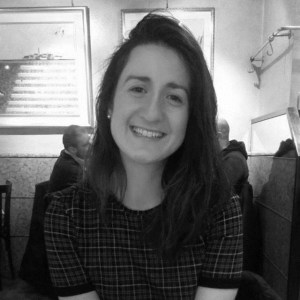 Eimear Bourke is a 27-year-old Irish lawyer who has always been interested in poetry and writing. Born in Dublin and raised in Navan, Co. Meath, she graduated from Maynooth University in 2013 with a degree in Law and English. Her writing focuses on interpersonal relationships and Irish seascapes. She is inspired by Yrsa Daley-Ward and Rita Ann Higgins.
 Trish Bennett hails from County Leitrim. She’s got the breeze of Thur (the mountain, not the God) in her blood. She crossed the border to study over twenty years ago and was charmed into staying by a Belfast biker. They have settled themselves into a small cabin near the lakeshore in Fermanagh, and try to keep the noise down in their bee-loud glade. Bennett writes about the shenanigans of her family and other creatures. Sometimes she rants. She was a finalist in seven poetry competitions in the past two years, including North West Words, The Percy French, Bailieborough, and The Bangor Literary Journal, and has won The Leitrim Guardian Literary Award for poetry twice. Bennett is a Professional Member of the Irish Writers Centre.
 ackie Gorman has been published in a number of journals including Poetry Ireland Review, The Lonely Crowd and The Honest Ulsterman. She was part of the 2017 Poetry Ireland Introductions Series and won the 2017 Listowel Writers’ Week Single Poem Award and was commended in the Irish Poem of the Year Award at the Bord Gais Energy Irish Book Awards in the same year. She recently completed a Masters in Poetry Studies at Dublin City University. Her first collection was published by the UK poetry publisher The Onslaught Press in May 2019.
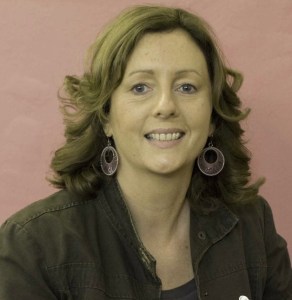 Karen O’Connor is a winner of Listowel Writers’ Week Single Poem Prize, The Allingham Poetry Award, The Jonathan Swift Creative Writing Award for Poetry and the Nora Fahy Literary Awards for Short Story. She is a poet and short story writer and her work has appeared in many magazines and anthologies. Karen’s first poetry collection, FINGERPRINTS (On Canvas) was published by Doghouse Books in 2005. Her second collection, Between The Lines, also from Doghouse Books (2011), was featured on RTE Radio 1 Arts Programme, Arena.
 JLM Morton lives in Gloucestershire, England, snatching as much time as she can to write between caring for a young family, renovating a house and staring up the barrel of a demanding day job. Her first set of poems was recently published by Yew Tree Press for the Stroud Poets Series and she is currently working on a collection.
 Aishling Alana likes to think of herself as the embodiment of organised chaos. In her short(ish) life, she has overcome progressive pain diseases, has met ex-prisoners of death row, interviewed Ted X speakers and gained a Masters in Philosophy of the Arts. She loves bouldering and the sea, and can often be found in the thinking ‘woman’ pose while learning how to code. Having been born in Ireland at the brink of an intense culture shift, her writing takes in fantastical elements of sexuality, religion and identity.
 Linda Ibbotson was born in Sheffield, England, lived in Switzerland and Germany and travelled extensively before finally settling in County Cork, S. Ireland in 1995. A poet, artist and photographer her work has been published in various international journals including Levure Litteraire, The Enchanting Verses Literary Review, Iodine, Irish Examiner, Asian Signature, Live Encounters, Fekt and California Quarterly. Linda was also invited to read at the Abroad Writers Conference, Lismore Castle, Co. Waterford, Butlers Townhouse, Dublin, and Kinsale, Ireland. One of her poems ‘A Celtic Legacy’ was performed in France at Theatre des Marronniers, Lyon, the village of Saint Pierre de Chartreuse and 59 Rivoli, Paris by Irish actor and musician Davog Rynne. Her painting Cascade has been featured as a CD cover.
 Chris Murray