• chris murray
  • journals – bibliography – publication notes
  • downloadable items – essays – media
  • copyright
  • Home

Chris Murray

  • “The House of Childhood” and other poems by Ute Carson

    April 7th, 2019

    The House of Childhood

    We return to the place
    where we first heard voices,
    smelled the air and tasted nourishment,
    where hands caressed or frightened us,
    where comfort was our cocoon
    or neglect made us shiver.
    The tears of harm are cold,
    the tears of joy warm as a lagoon.
    We carry the house of childhood within us,
    and spying through its translucent walls
    we keep life at a distance-or embrace it.


    Ode to Water

    I am a nymph,
    I inhabit the rivers, lakes and streams,
    sing to the brooks, the ocean,
    dance to life starting within.
    I rise as a mermaid
    an aquatic creature,
    drown fires,
    quell the thirst of the earth,
    mix with the air.
    The moon is my lover,
    together we balance
    the rhythm of the tides.


    Crying is a Gift

    I dislike sentimentality
    and have always thought
    that tears should be shed sparingly
    until our 8 year-old grandson complained,
    “I don’t like my friends to laugh when I cry.
    How can I be happy again if I don’t cry?”
    Tears are our release
    from joy and sorrow
    and like a stream
    they gurgle over small stones
    or gush over ravines,
    all ending in the universal maelstrom
    of lament and comfort.


    BREAKING AWAY

    Years ago at bedtime
    my grandson’s chubby arms
    squeezed my neck like a boa.
    Now that he is growing up
    my arms encircle him.
    He squirms at my affection
    and wriggles free from my embrace.
    Then as his long legs stride out
    he glances back,
    tossing me a smile back.


    OLD LOVERS

    They are folded together like a blanket,
    desire strong as ever
    though the flesh is weak.
    They sink into each other’s warmth,
    savoring the tenderness welling up
    from a life well-lived together.

    “The House of Childhood” and other poems are © Ute Carson

    A writer from youth and an M.A. graduate in comparative literature from the University of Rochester, German-born Ute Carson published her first prose piece in 1977. Colt Tailing, a 2004 novel, was a finalist for the Peter Taylor Book Award. Carson’s story The Fall won Outrider Press’s Grand Prize and appeared in its short story and poetry anthology A Walk Through My Garden, 2007. Her second novel In Transit was published in 2008. Her poems have appeared in numerous journals and magazines in the US and abroad. Carson’s poetry was featured on the televised Spoken Word Showcase 2009, 2010 and 2011, Channel Austin, Texas. A poetry collection, Just a Few Feathers was published in 2011. The poem “A Tangled Nest of Moments” placed second in the Eleventh International Poetry Competition 2012. Her chapbook Folding Washing was published in 2013 and her collection of poems My Gift to Life was nominated for the 2015 Pushcart Award Prize. Save the Last Kiss, a novella, was published in 2016. Her new poetry collection Reflections was out in 2018. She received the Ovidiu-Bektore Literary Award 2018 from the Anticus Multicultural Association in Constanta, Romania. In 2018 she was nominated a second time for the Pushcart Award Prize by the
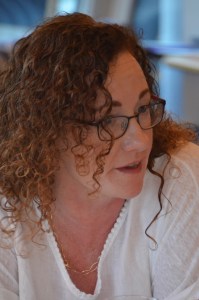
    Ute Carson resides in Austin, Texas with her husband. They have three daughters, six grandchildren, a horse and a clowder of cats.

    Visit Ute’s website at www.utecarson.com

  • “Thin Places” and other poems by Eithne Lannon

    April 7th, 2019
    Thin Places 
    
    The wild meadow weave, the strand, 
             places of late summer, autumn,
     
    a stone skimming water, suspended 
            in air, its slow motion glide punctuated 
    
    by the drop, touch, rise of a ghostly presence,
              this wary hesitation between water 
    
    and stone, mysterious as the rift between 
         music notes in air, unsettling the familiar light 
    
    which shudders again with tiny rainbow bubbles 
       holding air-drops in. And then the final slide over 
    
    gravity’s edge, into polished bottomless depths, 
            beyond the belly-aching threshold⎯
    
    dropping, ever dropping, into the quiet 
         whispering, the unspeakable tenderness.
    

    Binn Éadair

    I have waited through the long winter grey
    for the slow clean curve of spring,

    the sun a warm breath on my neck,
    its lips glossed with a damp breeze.

    Far below, the murmurings of wind and water
    weave a familiar braid of intimacy,

    the whole of the blue sky is stretched wide,
    light falls on us, a lovers’ blanket spread on sand.

    This moment is already time’s fugitive;
    sweet rain pooled in a dockweed’s leafy

    pocket, the soft unwrapping of downy buds,
    moss gathered in a hollowed bowl of earth—

    like a container that holds and pours,
    we are filled and emptied.

    To be lifted then into the loose
    hem of the breeze, cast out

    over the spooling cliff, to drop
    like a bird, free-fall into the wind.


    Earth Music

    I will lead you by the hand to the hushed hum
    of the gentle oak, an evening breeze sounding

    shivers into leaves, quiet turbulence in the air
    and the gravity of sound settling on mossed stone.

    I hear its tongue-lick in ivy the way a bat hears
    the silhouette of trees, or a whale the shape of its home,

    touching the skin like sound braille, tiny neck hairs
    startled to its presence; earth music in the trees

    and in the stony wind, atoms of light trembling in tiny
    dust particles where body-bones separate, flesh disappears.

    Between heart-pulse and light’s shadow-touch,
    I will lead you to the quiet abundance of silence,

    the wide emptying of voiceless things; earth’s pulse,
    seamless and somewhere beyond absence.


    Translation

    Early evening, the sea all silk and copper-clad,
    russet seams threading air, holding nothing
     
    but lingering light. Poised on the glazed edge
    of the estuary, a heron; stem-like and spectral, folded
     
    into the soft grey petals of his shadow. Overhead,
    dark-bellied geese fly in low wavering lines,
     
    flock to the beginning of memories they don’t recall
    from a place they reclaim without guidance—
     
    here, clouds are porous with light, lisping vowels
    and tongue-flickers lapping twilight—while westward,
     
    through the woods, a wash of starlings erupts
    from the trees, sweeping murmurations,
     
    the chorus of bodies dips and dissolves, rises
    into dust formations. Now the heron loosens
     
    unwieldy wings, lifts like vapour,
    like stillness taking flight.
     
    It’s hard not to believe in this; birdsound and birdshape,
    two seagulls wing-surfing the ragged cliff-spine,
     
    entirely consistent, faithfully articulate—
    what we don’t have words for may still exist.
     
    In the cool breath of evening, tidal swamp-sands
    swell over stones, shadows slide out of things.
     
    Motionless again, the heron
    is zen master,
     
    a hanging bell holding through the dusk
    of the estuary,
     
    the slow unravelling of this moment
    every other moment fits inside.

    Moon
    
    Take the river’s curl, the ocean’s wave, 
          the never-ending trees, the sway of a meadow,
            the roll of the sun, the scattered stepping stars.
    
    And take last month’s silver bud of moon
        now come full to the sky, her mouth is wide and open,
          white lips brimming with a soft wet light,
    
    month by month, she gives her widening
        emptiness to the earth, holds the planet in her orbit,
           washes ocean after ocean over sand: 
    
    I stretch out my arms and reach for her,
        hold hands with her rhythm, climb into her open
          wound, my blood is lapping at her perpetual pull,
    
    I sleep in the mantle of her tidal pulse, slip
       the ring of her light onto my finger. At the last hour
         of fullness, I wade inside her alluvial silt,
    
    feel desire awash in my gut. Lost inside
        her wholeness, carved into her darkening spine,
          I am swallowed into goddess light.

    Thin Places and other poems are © Eithne Lannon

    Eithne Lannon is a native of Dublin. Her poems have been included in various publications such as The North, Skylight 47, The Ogham Stone, The Lea-Green Down Anthology and Boyne Berries. On-line in Ireland, the UK, US and Canada, she has work published on Headstuff, Artis Natura, Sheila-na-Gig, Barehands and Punch Drunk Press among others.

    Her work has been listed in various competitions such as the Bray Literary Festival, the Dermot Healy competition and Galway University Hospital Poems for Patience. She was winner in 2018 of the Ballyroan Poetry Day Competition and Runner-up in Against the Grain this year. Her work was also Highly Commended in the Blue Nib Winter/Spring Chapbook 2018 and commended in the Jonathan Swift Awards.


    Eithne’s first poetry collection Earth Music was published by Turas Press in April 2019.

  • ‘Through the blossom-gate’ C. Murray

    March 27th, 2019

    Chris Murray's avatarPoethead by Chris Murray

    Through the blossom-gate,

     
    and quite before the acid leaf unfurls into its meaning—

    we are subjected to the play of light,
    working on our necessity to speak out

    into a flowering. It is not yet warm —
    already, the sun is playing at dragging up

    and displaying those unwanted words,
    elucidatory and garish in their babblement.

    It is almost necessary to cut them at their source,
    that well-spring is a tree-wounded-gash,

    the birds disagree in their illuminatory chatter,
    as they may.

    Through the blossom-gate is © Christine Murray, first published in Southword Journal (Munster Literature Centre).  Through the blossom-gate was published in my first collection of poetry, Cycles. (Lapwing Publications, Belfast)

    View original post

  • “Considering Their Pale Faces” and other poems by Erin Wilson

    March 23rd, 2019

    Seed

    tōgarashi / omoikonasaji / mono no tane
    the red pepper / I do not belittle / seedlings
    ~ Bashō

    I keep a chestnut
    in the breast pocket of my secondhand leather jacket.
    When I picked it I thought of (I don’t know why) my mother.

    The last time my first husband and I made love
    I knew my womb, because of my mind, was tipped at such an angle
    that no seed would germinate  there.

    This is also a true story.
    Our children and I collected acorns to use for a project we had not yet imagined.
    They exploded into weevil larvae all over the floor.


    A Letter to My Ex Concerning Houseleeks

    I retrieve the hens and chicks,
    reminiscent of farms,
    from my sister’s yard

    and press them to the dirt
    in the small half-circle
    we dig in our own yard

    and then leave them there
    to grow and separate


    The Mother

    The last bladder is emptied,
    the last gleek shot into the sink,
    the last struggling out of and into,
    the last — somewhat grooming,
    the last sandwich flogged to its plastic compartment,
    the last backpack retrieved from the floor,
    the last gangly stumbling,
    the last repeated good day utterance, love you, etc.,
    the last kicking of the front door.

    The mother is alone.
    The house stands still for a moment
    in its terrible shock of silence.
    Then shakes off its cold blanket.
    The mother leans into herself like tilted kindling,
    a neanderthal, or philosopher returned to her cave.
    She begins to make the fire.
    It doesn’t matter what she makes the fire with.
    The mother burns.

    Considering Their Pale Faces
    
    Fact: the manageable size of the baby paradise rose, with pinkish-lavender 1 - 1 1/2" blooms, offers
    a small garden big potential.
    
    Experiential: we planted a few along the border of the garden we created with the edge of a shovel
    outside the kitchen window, when we bought the family home.
    
    Fact: even miniature roses are susceptible to the same plagues as their larger cousins.
    
    Experiential: while you children toddled about, slipping happily in leaf rot, then swung on the tire
    swing, or later, hammered in the tree fort, I leaned toward the tiny leaves and scraped fat rose slugs
    into a tin can, or sometimes brazenly squashed them with a thumb nail.
    
    Fact: for years the paradise rose struggled, and eventually, I left your father.

    Considering Their Pale Faces and other poems are © Erin Wilson

    Erin Wilson has contributed poems to The Adirondack Review, San Pedro River Review, Split Rock Review, and Minola Review, with work forthcoming from The American Journal of Poetry, Juked and Kestrel. She lives and writes in a small town in northern Ontario, Canada.

  • “Eat Up” and other poems by Fiadha McLysaght

    March 16th, 2019

    Eat Up

    At home
    I bury my face in the crease of your elbow
    You cover my mouth as though quenching a flame
    In return, my fingernails incise the back of your hand as a gift to you
    coupled with a promise:
    I would never do that on purpose
    I cannot understand why you are not thankful
    I would be so grateful for that promise,
    so grateful someone had etched themselves into me
     
    In the morning we sever ourselves on the rim of the tin can that
    encloses our breakfast
    haphazardly pried open to devour its kernel
    I blot my bleeding lip against my shoulder
    and leave a trail of watercolor stains moving down to the crease of my elbow
    I reach the back of my hand and realise that should you walk in it might appear
    as though I am purposefully applying hickeys to my body like a curious teenager
     
    You beckon me into the kitchen once more
    Having forced open the can
    and fished out the discernible scraps of tin from the syrup
    surrounding the orange fruit
    I pluck a piece out and watch a smudged lipstick imprint
    leave the palm of my hand
    And float into the sticky liquid
    Before passing the tin can back to you


    Bruise

     
    I remember the soft May breeze
    sweeping over the island,
    and the blue horizon
    dry swallowing the cherry drop sun.
     
    and you
    by campfire
    slipping your fingers between mine,
    irrevocable like fishhooks.
     
    then you,
    drunk,
    violent as nightfall,
    rushing towards me like an army
    two hot knives for eyes,
    how you threw your fist at me like a bolt of lightning.
     
    I remember morning, at cliffside
    and you,
    red-faced and teary-eyed,
    and me all guileless and forgiving
    how I ruffled every last hair on your holy head.
     
    Remembering you is massaging a bruise.


    11am

    Morningtime – all revelled out
    Our legs are woven together, tight as teeth
    cocooned in soft cotton
     
    Sun bellows through the blinds
    and I am laughing, deep warm laughs
    and we are rapt, concentrating deeply
    on nothing at all
     
    I notice sleep in the corner of my eyes
    and fish it out with my smallest fingernail
     
    gentle as ever


    Spring

    My body is ballooning –
    a plump, newborn thing
    with nipples sore like bruised peaches,
    and soon my hair will never have been
    run through your fingers
    if I keep cutting it off just right
     
    You lit me on fire,
    and I, a supernova burning
    spat you out
    with all of your false glow.


    Joan, unflinching

    I was brazen
    a warrior with a vision
    and eagle eyes,
    my face a red flare.
     
    They mounted me
    upon a pillar
    crowds as loud as thunder
    encircled me like moths do a flame
     
    I was stoic,
    immobile as a statue
    my eyes piercing the horizon
    before gasping in
    hot gas
    all ablaze –
    flesh bursting open,
    like berries left under the midday sun
     
    Voices rose like magma
    seeping out of the soil
    and then up and around me hardening
    into black ash
    burned twice;
    and then again
    ash to ash
    till there was nothing left.
     

    Eat Up and other poems are © Fiadha McLysaght

    Publication info

    Bruise  was published in TORCH Collective’s second zine, April 2019
    Eat Up was exhibited by Living Proof in the Tara Buildings, August 2018


    Fiadha McLysaght is a writer, researcher, and student of Politics, Sociology and Social Justice at UCD. Her work has been published or exhibited by NOT4U Collective, Nothing Substantial, TORCH Collective, Living Proof, Monstrous Regiment, the Three Fates and other zines.

  • “Night Music” and other poems by Mary Shine

    March 16th, 2019
    
    
    Lines
    
    
    Walk a side line,
    stepping at a right pace,
    resisting the intoxication
    of distasteful rhetoric.
    
    Steady the mind
    for the unprecedented 
    reversal—
    
    tomorrow, 
            a deepening unknown;
    a line I never thought could be,
            has been crossed.


    Illiberal States
    
    
    clutter of voices
    volume of noise
    a myriad of words
    
    exposed — an ugly new world
    
    
    If only it could be 
    the week before all this uproar 
    snapped at my heels
    like a snarling dog
    that wants to take me down.
    
    I might have had time 
    to rearrange
    the furniture in my house.
    
    I might have set up 
    a barrier or two 
    at back and front doors.
    
    I might have put locks 
    on my windows,
    chains on the gate -
    keeping the barking brute outside.
    
    
     		I might still feel uncrushed– 
                    safe within walls of a liberal sanity.


    Colouring Our Way Forward 
    
    
    Plum comes to mind,
    a deep down bruise.
    It’s taking over my walls.
    It’s blocking ease,
    bringing a swirl of losses.
    
    I sense it — out on the streets.
    I hear it echoed across
    too many places.
    
    It’s coming with me
    as I move through the days.
    
    The trees let go of their leaves
    making possible regeneration—
          the coming again of spring
     but our bruises have festered.
    
    A bad time is coming 
    if we fall to this purple stain
    of our madness—
    fail to leave the swamp
    
    move freely again.
    
          And back to the prelude—
          then progress—
          not a plunge 
          into a reactionary crackdown.


    dear faces
    
    
    I do not dwell on them sufficiently—
    distracted, fretful, uncomprehending
    of their presence in my life.
    
    Busy, frittering away much that is dear to me.
    Each year a bagatelle of distractions
    as I fail to grasp the magic of now 
    and those dear faces,
    
    No two the same— 
    each invested with their own light and shade
    their special mood, their way of living,
    their own response to the mystery that is life.
    
    Each of us has a gallery to stand in awe before.
    They gaze back at us in the same way
    if we open our eyes to the incomparable
    beauty of those we love.


    Night Music
    
    Night music - varied as life itself,
    going back to well-known lullabies
    or to an orchestra of sound
    to carry you through your dream score.
    
    On other nights a cacophony of noise 
    or just a bellow emerges to wake 
    even the most sound of sleepers.
    
    Then there are those tragic hours
    that go to the heart of everything
    when night plays your sadness 
    on instruments of perfect harmony.
    
    Finally one long drawn out note
    on the string of a cello or violin
    and your tears well— and fall—


    Lines and other poems are © Mary Shine

    Mary Shine was born in Templemore, Co Tipperary, in 1956 but spent most of her adult life in Dublin. She has a degree in Social Science and a Master’s in Women’s Studies from UCD. Her first poems were written in 1990 and she continued with this creative process for the next decade, while also making connections with the Dublin literary scene. The Rathmines Writers group was of particular importance as it provided her with opportunities to share and publish her work. In 2001 she decided to relocate and moved to Sligo. Her writing was interrupted by the challenges of this upheaval and it was 2016 before she again began writing her poems. In 2017 she published her first collection, A Sense Of A Life. She hopes that the long silence is finally over and that her writing life will continue.
  • “affairs of the unsettled” and other poems by Olly Lenihan

    March 9th, 2019

    The Robin

     
    You show me your robin
    bright little bird
    you are gentle with him
     
    He trusts you, dear,
    eats from your hand
    not scared in the slightest
     
    Not as he should be
    not as I was
    you were not gentle with me


    G.R.C.C. (Galway Rape Crisis Centre)

     
    Through winding streets, I’d never seen before
    it didn’t feel like Galway at all
    more like a cardboard cut-out town
     
    When I arrived it was silent, empty
    a maze of corridors
    identical flowery waiting rooms
     
    A calm space, dangerous nonetheless
    I felt like if I fell asleep in one of those rooms
    they’d never find me again
     
    I believe now that ghosts roamed those halls
    shells of those they’ve hurt
    white with nausea, I was one of them
     
    Coming home, I caught snowflakes on my tongue
    pulled my stolen coat tight against the wind
    I felt so far from home. Still do–
     
    I can’t tell what I am today
    whether I’m closer to me than I’ve ever been
    or whether I’m a stranger, caught on thinning ice


    affairs of the unsettled

     
    forehead to forehead while i write poetry inside my head
    you take it upon yourself to do the thing that i most dread
     
    caught in my throat, hands formed in ice but carried on to flame
    just tell me love, how would it be if i were to do the same
     
    don’t use that word, can’t help but flinch every time i hear its ring
    but love for me has always been this blessed, holy thing
     
    i’m going mad equating things to angels tonight
    but you looked like a marble statue lying there in the light
     
    don’t want to spend my whole life trotting after you in vain
    lovelord, Moonstruck, besotted, bereft, it’s driving me insane
     
    another love, another loss, i’m used to this by now
    or at least i would be, if only i knew how.


    making do (collected haikus)

     
    oh so bittersweet
    to feel calm before a storm
    that never arrives
     
    i trip; out it spills
    so unwieldy a feeling
    rising to the top
     
    possibilities
    words unspoken, pain untold
    my ragged exhales

    your heart beats so loud
    like wild horses in my ear
    time passes so slow
     
    it’s something starcrossed
    this feeling, or is it just
    bent on disaster?
     
    just for you, i’d try
    to pull a happy ending
    from this disused brain


    Relapse

    you are walking the twenty-five minutes home with a push forward, push forward to your step, and you are furious but you don’t know why, and your lips are chapped but slippery with spit, and it’s there in your hand, in a plastic bag with handles sweaty and digging into your palm, and god above do you wish it weren’t.

    because you’re going home to an empty house and just on the end of your phone there’s a girlfriend and a best friend and someone who’s somewhere in between, but they can’t see you now, and he is thirty metres away but you cannot do that to him, not now.

    on the bottle is some kind of fucking bird or dragon, and you stare at it and wonder what it’s got against you to make you this way, and you pour it into a cartoon mug, full and slopping over the top, and you swig, and it rattles against your teeth, and you’re close to tears, and you know why.

    and now you’re swimming in this haze, and that buzzing bites into your ears, and things are not normal but it feels okay somehow, it’s all in real time and it’s a relief, it’s a relief, it’s a relief.

    it’s two hours later and you are screaming, screaming, ripping out your throat at nothing, you are ringing his doorbell and he sees, sees it’s you and does not answer, and you are lying outside prostrate on the ground waiting for him to be there because there is no one else left in this town for you.

    now you are seeping, sinking deep into the screen, a friend helps but it doesn’t help and you’ve called four times but he is nothing but a voicemail and you don’t know where he’s gone, where inside himself or inside another, and it pushes you towards the edge.

    calmer, calmer now, you sip from your bottle, the drink all gone, you turn wine into water and you pray that he will forgive you for tonight’s fuck-up—do not judge me for what i have been, good god, but sharpen your knife and cut me free.

    two thirty and here it is, you communicate with the angels, you offer yourself up to her and she accepts with grace, rocking you into your gentle sleep and sending you off with bullrush dreams, and you are free.

    you wake, and each side of your body wakes too with a jolt of pain, and you regret it all, how you fucked up yesterday’s casual calm to try and satiate the roaring in your ears, you are lying there, wishing you could forget it all and sleep forever, but it’s morning now, and you have to get up.

    affairs of the unsettled and other poems are © Olly Lenihan.

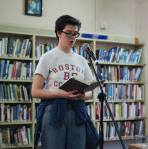
    Olly Lenihan is a twenty-year-old poet who is originally from Dingle in the south-west of Ireland. Their writing career began during a disastrous attempt at living in Galway, and they’ve been penning angst ever since. Their poetry encapsulates the dreadful clichéd romanticism of being in love in one’s early twenties, along with themes of mental illness, sexuality and loss. They are currently in their first year of IT Sligo’s Writing and Literature course, and are also working on their first novel.
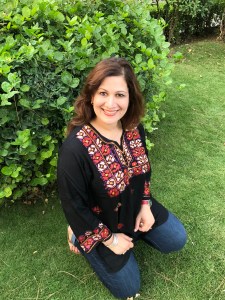
     
    They can be found on Twitter at https://twitter.com/ragsies


  • A Celebration of Women’s Poetry on International Women’s Day 2019

    March 1st, 2019
    Image: Srilata Krishnan

    Poethead has been celebrating the achievements of women writers, editors and translators for over a decade. International Women’s Day 2019 is no exception. This year I have decided to highlight the work of women poets from my international index and to introduce my readers to some new Irish poets. I am very grateful to all the poets who submit to the site, especially for their patience. I do not think we would be heading into eleven years this March 2019 without the generous support and uplift that comes from my daily correspondence.

    Thank you,

    C. Murray, March 2019

    ‘Birth Mother’ by Srilata Krishnan

     
    We are standing in front of the mirror,
    my daughter and I,
    brushing our hair and being vain
    when I think of the doctor’s question:
    “What was her birth cry like?”
    I don’t know and never will.
    She is fine, or will be, I know.
    But looking in the mirror and into her almond eyes,
    I wonder what she is like – her birth mother –
    if she too, was once, afraid of words
    and of the fluttering of pigeons,
    if she has nicely formed arches on her feet
    and whether or not her eyebrows make a bow
    for good luck,
    if she is small and slender-waisted,
    if she is anything like my daughter,
    or was.
    Strange, but I don’t wonder at all about the father.

    I tug at her pony.
    “Amma, let’s go”, she urges into a mirror
    that is slowly
    swallowing
    her birth mother.

    Our eyes meet in that eye of a little god
    and she smiles
    the sort of smile that is like mine.

    “Birth Mother” is © Srilata Krishnan


    A poet and fiction writer, Srilata Krishnan is a Professor of English at IIT Madras. Her four poetry collections include Bookmarking the Oasis, Writing Octopus, Arriving Shortly and Seablue Child. Her novel Table for Four was long listed in 2009 for the Man Asian literary prize. Srilata is the co-editor of the anthologies The Rapids of a Great River: The Penguin Book of Tamil Poetry, Short Fiction from South India (OUP) and All the Worlds Between: A Collaborative Poetry Project Between India and Ireland (Yoda), and the editor of an anthology of women’s writing from the Self-Respect movement titled The Other Half of the Coconut: Women Writing Self-Respect History (Zubaan). She is the translator of R.Vatsala’s Tamil novel Once there was a girl (Vattathul).

    ‘A Glass of Tea, a View of the Atlas’ by Shadab Zeest Hashmi

     
    You give me Fez honey on Fennel cakes
     
    in a ceramic saucer because you
    say, to eat from this bitter clay (glazed and
    caressed with geometric precision), will
    draw me into the shapeless sob of the
    future. You read invasion’s epistle even
    in the smoothness of ebony— ashes
    of ancestor acacia on your lashes—
    I raise my tea glass to level with your
    eyes, the snowy Atlas scintillates behind
    you— cream on your dish of weeping clay.

     
    Untying the knot of ker-chiefed bread in a cedar grove
     
    she would shudder, your mother, child of exiled
    Andalus, memory embossed with two kinds of
    histories— one flitting like a citron
    butterfly, the other wrapped in linen,
    knotted, turned to cinder over a cedar
    flame— tongue of the grand inquisitor
    leaping from Spain to Morocco, night-sweats,
    door-chains, the informants and their fistfuls
    of gold, the choke-hold of banned prayers.
    Tender, the bread sponges the lava of fear.

     
    Only the footed teapot’s shadow
     
    on the wall dismantles its truth, its rigid
    stance and military-medal-silver
    muted in the bounty of the skylight
    flecked with pheasant foot-stains from nightly rain.
    Its handle forms the shape of a perfect
    heart, if there is such a thing, and between
    breath of Konya and bloodbath of empire,
    furs of sable, mink and squirrel, and the
    soft grasp of a baby around the planet’s future,
    there are names for the divine in every tongue.
     

    “A Glass of Tea, a View of the Atlas” is © Shadab Zeest Hashmi


    Shadab Zeest Hashmi is the author of poetry collections Kohl, Chalk and Baker of Tarifa. Her latest work, Ghazal Cosmopolitan has been praised by poet Marilyn Hacker as “a marvelous interweaving of poetry, scholarship, literary criticism and memoir.” Winner of the San Diego Book Award for poetry, the Nazim Hikmet Prize and multiple Pushcart nominations. Zeest Hashmi’s poetry has been translated into Spanish and Urdu, and has appeared in anthologies and journals worldwide, most recently in Prairie Schooner, World Literature Today, Mudlark, Vallum, POEM, The Adirondack Review, Spillway, Wasafiri, Asymptote and McSweeney’s latest anthology In the Shape of a Human Body I am Visiting the Earth. She has taught in the MFA program at San Diego State University as a writer-in-residence and her work has been included in the Language Arts curriculum for grades 7-12 (Asian American and Pacific Islander women poets) as well as college courses in Creative Writing and the Humanities.

    ‘Colourful Language’ by Lisa Ardill

     
    your words are like flowers that come alive in a cold spring
    shooting from the ground with a gentleness
    that encumbers a hidden force

    they unearth their surroundings
    and mask others with their wondrous scent
    but sometimes
    their beauty is only soil deep

    the meaning tucked away between those pretty petals,
    which sometimes are secretly colourful little blades.
    they cause my heart to tremble and wither
    as though it were a snowdrop made of glass,
    and it will shatter.

    “Colourful Language” is © Lisa Ardill


    Lisa Ardill is a twenty-something-year-old woman with a passion for feminism, human rights, neuroscience, literature and film (roughly in that order!). She writes poems and prose to entertain herself, cheer herself up on gloomy days, and keep the spark for creative writing in my brain alight.


    ‘sunday DARTS and my phone’s dead’ by Alicia Byrne Keane

     
    sunday darts away from me
    into a corner, becomes
    an imagined dampness

    like when you can’t tell whether
    clothes on the line are still wet
    or just really cold

    I was meant to ring you tonight,
    but I’m sitting in various places.

    “sunday DARTS and my phone’s dead” is © Alicia Byrne Keane


    Alicia Byrne Keane is a spoken word artist and poet from Dublin, Ireland. She has performed at festivals such as Body & Soul, Electric Picnic, Castlepalooza and F Festival. Her poetry has been published in magazines such as Bare Hands, Headstuff, and Impossible Archetype, among others. She is a long-time performer at poetry events around Dublin such as Lemme Talk and Come Rhyme With Me, and was more recently involved in the Science Gallery’s INTIMACY exhibition. She is currently a PhD candidate at Trinity College Dublin researching translated literature and placelessness, more specifically in the case of authors who self-translate. Her work explores the absurdity that arises from losses in translation, even when interacting in one’s native language. She is interested in the effect of unexpected sincerity afforded by short, snapshot-like poems.
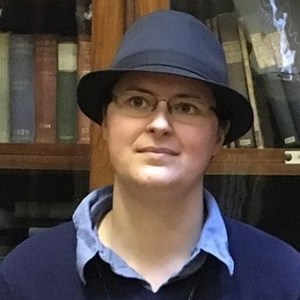
    ‘This Year’ by Rhiannon Grant

     
    we have rebuilt
    in our gathering
    an anywhere temple

    we spill ourselves
    practising our faith
    with a smile

    giving small acts
    (and large) in service
    a ready sacrifice

    we have come up
    to see our faces
    through God’s eyes

    .
    “This Year” is © Rhiannon Grant


    Rhiannon Grant lives, writes, and teaches in Birmingham, UK. Her writing engages with questions about religion, philosophy, how we understand the world, and how we communicate with one another. Most of her published work so far has been in academic journals, but she has a book on Quaker theology forthcoming and some poems recently appeared in the magazine A New Ulster.
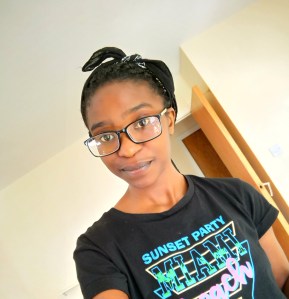
    ‘Vulnerability’ by Wasekera C. Banda

     
    Raise the fallen, walk over them.
    Fear the consequences of a kind action,
    undermine the impact of a bad deed.
    Maybe there’s more to life, maybe there isn’t.
    Fight the oppressor, break the chains.
    remain slaves?
    These haunting memories,
    these hopeless days,
    These hopeful dreams.
    Light a candle, say a prayer.
    Doubt!
    Close the door, cry in silence,
    wear a mask.
    Laugh!
    These scattered pieces-
    break me up, then make me whole.
    I have no power over my thoughts.

    “Vulnerability” is © Wasekera C. Banda


    Wasekera C. Banda is a twenty-three-year-old Psychology student at City College in Dublin, Originally from Malawi, she has lived in Ireland for three years and was the 2016 winner of the Irish Times Africa Day Writing Competition. Wasekera enjoys writing and reading poetry, she is inspired by the late Maya Angelou.
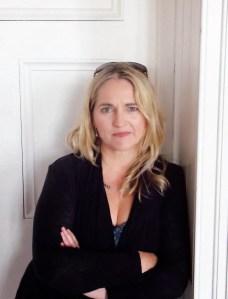
    from ‘Émigrés’ by Maria McManus

    3.

    What is going on in your heart?

    Prisoners of war live here

    Throw off your gaudy vestments,
    spring’s best and brightest fig
    and let me see you naked
    and then, more naked still —

    Put your heart
    in my hearts cavity.
    Slip it in.

    Bring your worry beads if needs be.
    It’s not too late
    to shred all documents
    of denunciation.


    5.

    Now we must
    hunt by ear and
    put our trust

    in gossiping swallows,
    the hooded crows, the herring gulls,

    the wryneck’s potent drum.


    7.

    Between silences
    take notice
    of the imago
    of your stolen self.

    Sold back
    but at what price?


    10.

    Collect wishbones,
    place them in charnel houses,
    quarter the ground
    to make sure and certain
    none are missing –
    these things bring a plan to grief.


    11.

    The song-birds are drowning,
    the sea is now a cemetery. 
         The song-birds are drowning,
         the sea is now a cemetery


    14.

    Life’s comforts
    are honeycombed
    and treacherous,

       and moths
      appear to drink your tears
      while you are sleeping

    from ‘Émigrés’ is © Maria McManus

    Maria McManus lives in Belfast. She is the author of Available Light (Arlen House, 2018), We are Bone(2013), The Cello Suites (2009) and Reading the Dog(2006) (Lagan Press), she has collaborated extensively with others to put literature into public spaces. She is artistic director and curator of Poetry Jukebox and an active organiser and founder member of  Fired! Irish Poets.

  • “Tarmac” and other poems by A.M. Cousins

    February 23rd, 2019

    REDRESS

    After Junichiro Tanizaki.

    Give us this day your problems.
    Allow us to torment ourselves
    about shadow and beauty and good taste
    and we’ll swap all that we’ve got
    for one hour in the life
    of a tortured artiste
    who wants to sit in a fancy lav
    and listen to a mosquito.

    We’d leave the shadows
    to the banshee and the pooka,
    and the nun who died young –
    she lurks and snaps bony fingers
    as your backside hangs
    through a hole in a bench.
    You tilt forward to tear
    a scrap of newspaper.

    All useless decoration stripped
    in Sunday’s Well where Little Nellie
    dances for Holy God,
    Artane boys march
    and Heaney’s henhouse child
    views the moon
    through a chink in a plank.

    Ancient Magdalenes and crones –
    sister-stitchers with blackened teeth
    and white, pinched faces glowing
    overmodest grey kimonos –
    enhance heaven’s cloth,
    embroider Limerick lace.
    Give us this day.

    (published in The Stinging Fly.)


    BLESSED

    after Padraic H. Pearse.

    I grudge them –
    more than any of you will ever know –
    my two strong sons
    and their stupid, bloody protest.

    I have cried all day and all night,
    every day and every night
    since then, ever and forever –
    no amen on my tongue –

    for Pat, our melancholic prophet,
    fainting at a drop of blood,
    but calling out for insurrection
    over an old warrior’s grave.

    He set off that morning,
    his pawn-shop sword
    threatening to catch the spokes
    and throw him off his bike.

    And Willie. Will, my baby boy –
    his big brother’s shadow –
    took the tram to town
    to throw away his life too.

    You must not grieve,
    You too will be blessed,
    Pat wrote to me
    that terrible day.

    Blessed. Ha!
    I tend the graves.
    I feel the burn of lime
    on my boys’ flesh.

    (published in The Wake of the Rising, The Stinging Fly.)


    TARMAC

    For Garda Adrian Donohoe (1971 – 2013).

    When Death was a sacrament and needed to lie down,
    on a feather bed with cool white sheets and a quilt
    made from the remnants of your great-aunts’ tea-dresses,
    there was a candle – blessed and holy –
    steadied in your hand by a neighbour;
    sacred oils and Extreme Unction;
    a litany of saints and martyrs to light, to guard, to guide you;
    and tears on a face of love.

    So,
    when smoke and badness billowed from a car-window;
    when the shotgun’s snout slid out to answer the policeman’s knock,
    Tell me that the old ones climbed the stile –
    or slipped through the bars of the gate –
    rustled their way up the hill and along the road
    in their sepia gowns and wedding-suits
    to kneel on the wet tarmac, to cradle your head, to hold your hand.
    Tell me that they looked on your face with love.

    (published in The SHop.)


    HARE

    After the nuns left
    we noticed that a hare –
    a beast of a fellow
    with strong back legs,
    proud ears
    and a thick fur coat –
    had moved in.

    Superior now, our hare
    lays waste to what is left
    of the lay-sisters herb garden,
    savages Reverend Mother’s salad bed
    and emerges fragrant from the Mistress
    of Novices’ lavender border.

    Sweet and sated,
    it bounds through the cloisters –
    not a chance of prayer
    passing its cloven lip –
    its soul long saved.

    (published in The Best New British and Irish Poets, 2017)


    BED-SIT

    For Brendan

    Once, the city stood ankle-deep in snow
    and in a single bed in Rathmines,
    we listened to the joyful news –
    sombrely announced at the scrag end
    of universal bad tidings –
    that schools had closed until further notice.

    We walked to Morton’s for butter and fruit, sugar and spice.
    My cowboy boots let in wet, your work-boots weathered all.

    Rolling pastry with a beer bottle
    we raised a blizzard of our own,
    filled sweet shortcrust with cloves and apple,
    challenged flatland’s drag of Vesta curry and cigarettes
    as molten caramel flowed,
    burned the rented oven.

    (published in Poetry Ireland.)


    Saorstat

    On one of those hot summer’s mornings
    between the Troubled Times and the Emergency,
    he found a penny outside the mart.

    Backed by the harp of Saorstat Eireann,
    a proud hen – with confident wings
    and abundant tail feathers – sheltered
    five chickens and promised better times to come
    for some, if not for all.

    He remembers considering the box on the nun’s table –
    the slot, snugly cut to fit a brown penny,
    over the picture of a hungry child –
    but his small palms still smarted
    from an encounter with the good sister’s strap.

    So, when his father matched the copper with another –
    the price of a bag of liquorice sweets –
    he forgot the nun’s black baby.

    He thinks on these things now,
    as a young woman – with liquorice braids
    and the whitest teeth he has ever seen –
    coaxes him with custard-spoonfuls
    and calls him her darling boy.

    (published in Skylight 47)


    TARMAC, for Garda Adrian Donohoe (1971 – 2013) and other poems are © A.M. Cousins

    A.M. Cousins‘ poetry has been published in The Stinging Fly, The SHoP, The Honest Ulsterman, The Irish Literary Review and The Best New British and Irish Poets 2017 (Eyewear Publishing). Her work was Highly Commended in the Patrick Kavanagh Competition 2015 and 2016, and she featured in Poetry Ireland’s Introduction Series, 2016. She also writes memoir and local history essays and is a regular reader on “Sunday Miscellany.”

  • “Birth Mother” and Other Poems by Srilata Krishnan

    February 15th, 2019

    Birth Mother

    We are standing in front of the mirror,
    my daughter and I,
    brushing our hair and being vain
    when I think of the doctor’s question:
    “What was her birth cry like?”
    I don’t know and never will.
    She is fine, or will be, I know.
    But looking in the mirror and into her almond eyes,
    I wonder what she is like – her birth mother –
    if she too, was once, afraid of words
    and of the fluttering of pigeons,
    if she has nicely formed arches on her feet
    and whether or not her eyebrows make a bow
    for good luck,
    if she is small and slender-waisted,
    if she is anything like my daughter,
    or was.
    Strange, but I don’t wonder at all about the father.

    I tug at her pony.
    “Amma, let’s go”, she urges into a mirror
    that is slowly
    swallowing
    her birth mother.

    Our eyes meet in that eye of a little god
    and she smiles
    the sort of smile that is like mine.


    What Penelope Said to Ulysses on His Return

    And so you ask what I have been doing with myself
    these past twenty years,
    whether I have missed you and how much,
    and how I have fared, all told.
    That first one year I hurt all over,
    your absence leached into my bones,
    and dimmed the sun that insisted on rising each morning.
    When they brought Telemachus to me, I turned away,
    refusing to take him in my arms.
    How could I when he looked so much like you?
    The ache in my bones,
    the dimming of the sun,
    my turning away from Telemachus –
    these are easy to conjure up,
    but not so the rest.

    Soon my fingers became birds
    I sent off
    to look for words
    I can weave into this poem
    I am writing even as we speak.
    But I am growing less and less hopeful,
    and the words I weave by day,
    I unweave by night,
    for I find they won’t do.

    Twenty years of missing you, Ulysses,
    and the words for that are still in hiding,
    an entire forest of them,
    out there somewhere,
    beyond the flight of birds.


    All the Usual Arguments

    Gloveless, she incinerates them,
    only to have them return at night,
    feel her cheek with their phantom fingers,
    wrap long umbilical cords around her waist,
    snuggle against her breasts.

    There are all the usual arguments of course.
    Someone’s got to do it.
    It’s the only work she knows.
    It puts food on the table after all.

    Never mind that its carnage she feels
    on her tongue
    when she sits down with her children
    to eat.


    This Road, This One

    You are a thousand years old now,
    older than all the photographs of yourself
    that exist in this world.
    Already you reek
    of the sickly odour of death.
    Your grandchildren can’t bear your embrace.
    The good people want you to rest in peace.
    They wish you well in your other journey.
    They claim nothing else matters in the end.
    They seem sure of it.
    There’s no reason to be difficult, they say.
    But you want this road, this one, to go on.
    You want to follow the turn,
    be surprised by it,
    bequeath one more photograph of yourself
    to ether
    that no one will know what to do with,
    write one more line
    no one will ever read.


    Birth Mother and Other Poems are © Srilata Krishnan (K.Srilata)


    A poet and fiction writer, K. Srilata (Srilata Krishnan) is a Professor of English at IIT Madras. Her poetry collections include Bookmarking the Oasis, Writing Octopus, Arriving Shortly and Seablue Child. Forthcoming, from Poetrywala, Mumbai is a collection titled The Unmistakable Presence of Absent Humans. Her novel Table for Four was long listed in 2009 for the Man Asian literary prize. Srilata is the co-editor of the anthologies The Rapids of a Great River: The Penguin Book of Tamil Poetry, Short Fiction from South India (OUP) and All the Worlds Between: A Collaborative Poetry Project Between India and Ireland (Yoda), and the editor of an anthology of women’s writing from the Self-Respect movement titled The Other Half of the Coconut: Women Writing Self-Respect History (Zubaan). She is the translator of R.Vatsala’s Tamil novel Once there was a girl (Vattathul).

←Previous Page
1 … 14 15 16 17 18 … 106
Next Page→
 

Loading Comments...
 

    • Subscribe Subscribed
      • Chris Murray
      • Already have a WordPress.com account? Log in now.
      • Chris Murray
      • Subscribe Subscribed
      • Sign up
      • Log in
      • Report this content
      • View site in Reader
      • Manage subscriptions
      • Collapse this bar