• chris murray
  • journals – bibliography – publication notes
  • downloadable items – essays – media
  • copyright
  • Home

Chris Murray

  • “A Gradual Eden” and other poems by Audrey Molloy

    November 5th, 2018

    A Gradual Eden

    After the lava had cooled,
    hardened like a carapace
    over the fresh-earth
    graves of our marriages,
    nothing happened for a while.

    Sure, you and I still talked all night,
    once dared to walk arm-in-arm
    like a real couple to the Vietnamese
    restaurant with the string-bead curtain
    and napkins folded into swans.

    I had to learn the basics:
    I only knew your every thought,
    but not, for instance, how you took
    your coffee, how you swam at five
    each day, leaving me to wake alone.

    Nothing grew on the hard-baked
    basalt of us. Ditches that had defined
    our highways vanished,
    once-shady trees now jutted like antlers
    where the lightning had struck.

    When the strawberries were gone
    we ate dandelion and fiddle-head ferns.
    You were an inventive chef, but I
    was sick of roots and leaves; I wanted
    Passiflora (or violets at the very least).

    Once, longing for old comforts, you peeked
    back under the edge of the rock-crust
    for a glimpse of green, but the lawns
    were mustard and thistle-pocked.
    Twice I peeked too.

    Watering didn’t help much.
    Neither did planting seeds.
    After a year or two, we got used to it.
    Gave up trying.
    Hung up boots.

    One day we saw the rock was dusted
    with faintest green, just a bristle,
    like your five a.m. beard—no more.
    And then we saw a stem unfurl,
    and then the flowers came.


    Symphony of Skin

    i. Tuning up

    They are there if you listen.
    On the train, in the Laundromat—
    the instruments, I mean;
    bells, stirring in two-way stretch cotton,
    (their owner slumped in the window seat,
    his work boots tapping a secret rhythm);
    timpani buttoned under a cashier’s blouse,
    a cello bound by polyester pinafore
    in salmon pink. She thinks
    the air is flecked with soap dust,
    doesn’t realise it’s rosin from her bow.
    Air flows through apertures
    where, later, fingers will flutter,
    strings blur under the rub of horsehair;
    their discordant mewl barely heard
    above the swish of the train,
    the hum of machine,
    louder in the darkness of tunnel
    or the lull of rinse cycle, then soft again.
    Tuning up, they’re getting ready
    for this evening’s symphony of skin
    to begin at precisely 10.15.


    ii. Skin music

    And you can never explain it in physical terms—
    what happens between two people
    on an ordinary bed, in an ordinary room.
    Let me ask you, could you school the cuttlefish
    in Ludwig’s Emperor (second movement)
    in terms of anvil, hammer and stirrup?
    Paint the hues of daybreak for the mole?
    There is only air, compressed and stretched.
    There is always space between skins,
    no matter how closely they press.
    No touch, only the music of skin;
    an oboe sings, a cello answers.
    Locked within the strands of collagen,
    atoms built of smaller blocks,
    each one a capsule packed with strings,
    each string a note that’s yet to play.

    iii. Reverberation

    Afterwards, they lie curled,
    two bass clefs facing this way, that.
    They talk of anything, of childhood;
    croak the lyrics to every Paul Simon song
    they can recall; this, the highlight,
    now the players have left the stage.
    They will meet people
    who promise them more than this,
    more than you could write about this.
    Sleep will come later, a raft
    pushed out on a starred sea.
    What oak bed? Which room?
    There is nothing here
    but phosphorescence
    undulating along their border.
    Only this tiny stage
    drifting on the night swell,
    a single baton on its floor.


    Fortune reshuffled, reshuffled

    (The tarot anagrams)

    Take off your rings. They are clues to your story.

    I. Judgement

    I’m getting a strong signal. You will survive an avalanche. When it comes, you’ll be prepared. Keep your hand near your face to clear an air space. Many suffocate. Make sure you know which way is up. This is the easy part: dribble the spit out from your mouth and see which way it runs. Now, dig, dig in the opposite direction.

    I see something else coming through here: you’ll give him a kidney. (He is dying, you see, in the physical sense). Worst-case scenario, temperance—you’ll have to cut back on the Sancerre. Best, a scar and an empty comma on one side of your mid-spine. Still, each cluster a small lung, breathing life into the glass husk of him until he pinks up. Then he’ll ask for the other, the fool…

    He’ll ask you which one you are—in the show, I mean: Hank’s wife or Walt’s; the pretty, bored house-bound mum with the new baby, who knew about the drugs, or the Type-A kleptomaniac sister. Your love will die but you cannot live with another monkey on your back. Ho! Mind you heed my 4warning. Honour is nothing. They stole your fucking poem. Don’t sign anything.

    II. Temperance

    I see a case of your best Sancerre, coming from cluster to glass. Is your wife a fool? you’ll ask him, mid-fuck. And the other scenario? An empty life. You’ll have to give him a pink lung, one side dying. He’ll cut up your back, scar your spine in the husk sense. Not physical (comma) worse—something else you’ll see through.

    Another strong signal from you: this is Space. In which direction is Survive? Be prepared to dig when the air runs out. Will you know which way? I’m getting an avalanche of drivel: Dig, the opposite of Easy. Face it; you know your part will suffocate many, but each kid’s still breathing. See the way your spit comes up clear now? Keep your hand near your mouth.

    A warning sign: At 4 am your mind’s a monkey house. You cannot live with your sister, the kleptomaniac honey, who stole the show. She’ll waltz in here and type you a poem or love you back. Keep mum! Don’t heed anything the pretty ask. They are bound to be mean, bored with the new drugs, which, on my honour, I knew nothing about. The baby will die in this one. Hanky?

    III. The Fool

    See the way your Mum keeps coming up? She’s a pretty mean type. She’ll suffocate you, cut off your breathing with a hank of judgement you could sense. Heed your kid sister, the midwife, who’s bound to love you. Your baby digs you, honey. He’ll waltz you back to the monkey show, give you space to spit. You’ll ask him to dribble Sancerre into your mouth until your mind clears. (No temperance here).

    Another warning sign: your honour is the kleptomaniac that stole the pink from your face. Will the strong drugs put a comma in your near-dying? In this scenario, you survive. Many know your hand. The husk of a lung is bored from your back, a scar on your spine. Keep it in a glass in case the air runs out.

    I’m getting a signal. Something else coming through I knew nothing about: you live in a new house, one you cannot empty of poems. You give each other the best life, a physical side. But don’t ask of him. The worst part… Not prepared for anything, you see. Up this way. Easy! Then, cluster-fuck from the opposite direction… 4 die in an avalanche. They are still now.


    On the Rocks

    There is a kind of love called flotsam. When twisted winds have paused for breath
    where the sea foam eddies, this love emerges like a teak plank sprung
    from a shipwreck. It floats proud and quiet or hangs just below the surface.

    There is a kind of love called jetsam. When the hold is timber-splintered
    and the waterline creeps higher, this love is flung on the breakers, entrusted
    to the sea bowl. Washed up on a remote shore, it is rediscovered as kindling.

    There is a kind of love called lagan. When waves have swallowed the last yellow
    fingers and silver rings of the crew, this love drifts from quarter light
    to where the hagfish lie. Moored to a sunbeam, it can always be traced.

    And there is a kind of love called derelict. When spite has ripped the spinnakers
    and set the halyards alight, this love settles at the heart’s base, nestled in the point
    of it. Leaden as a sinker, it is never to be reclaimed.


    Five Creatures Under Every Mother’s Skin

    Damselfly
    Age thirteen, the skin splits down her back.
    Emerging, clad in shimmer and sequin
    and glassy wing to much ado. Pretty head
    thrown back, clasped by mate after mate.
    The green river air is shot silk
    scribbled with their heart-shaped pen.

    Salmon
    Seaward, she is drawn tail-first. The river
    a silversmith arming her, scale by scale.
    The ocean has no boundary, save memory.
    Though her flesh will coral with experience,
    she will dodge bamboo rod and vernal bear,
    return to gravel nurseries of the smolt.

    Pelican
    Grotesque red bill pressed to her quilled
    leather corset releases the last fry
    from gular folds. (This the tongue’s
    business, but hers too tiny to roll around).
    If they want to believe she pierces her bosom
    to blood-nourish her young, let them.

    Vixen
    Bring on the night! Let her stalk and cry,
    dog-fox by her side, blackberry picking
    by moonlight in fur coat and black boots.
    By dawn, she returns to earth, her kits
    an auburn ball. The sick one she’ll carry
    to the wood’s edge and dump it. Just in case.

    Pilot Whale
    Her skin-rubber, hashed and scored
    with life’s scars, hides an armchair heart.
    Her glands can still suckle a youngster
    bored with waiting for his mother,
    God love her, this, so much more fun.
    Her children’s children will be doctors.


    “A Gradual Eden” and other poems are © Audrey Molloy

    Acknowledgements

    Symphony of Skin, first published in Meanjin Volume 76, ed. Bronwyn Lea
    A Gradual Eden, first published in Headstuff (Feb 2017), ed. Angela Carr
    Fortune Reshuffled, Reshuffled, first published in The Moth Magazine, Spring 2018, ed. Rebecca O’Connor
    On the Rocks, first published in Australian Poetry Journal Issue 6.2, ed. Michael Sharkey
    Five Creatures Under Every Mother’s Skin, first published in the competition anthology of the Canberra University Vice-Chancellor’s Poetry Prize 2017

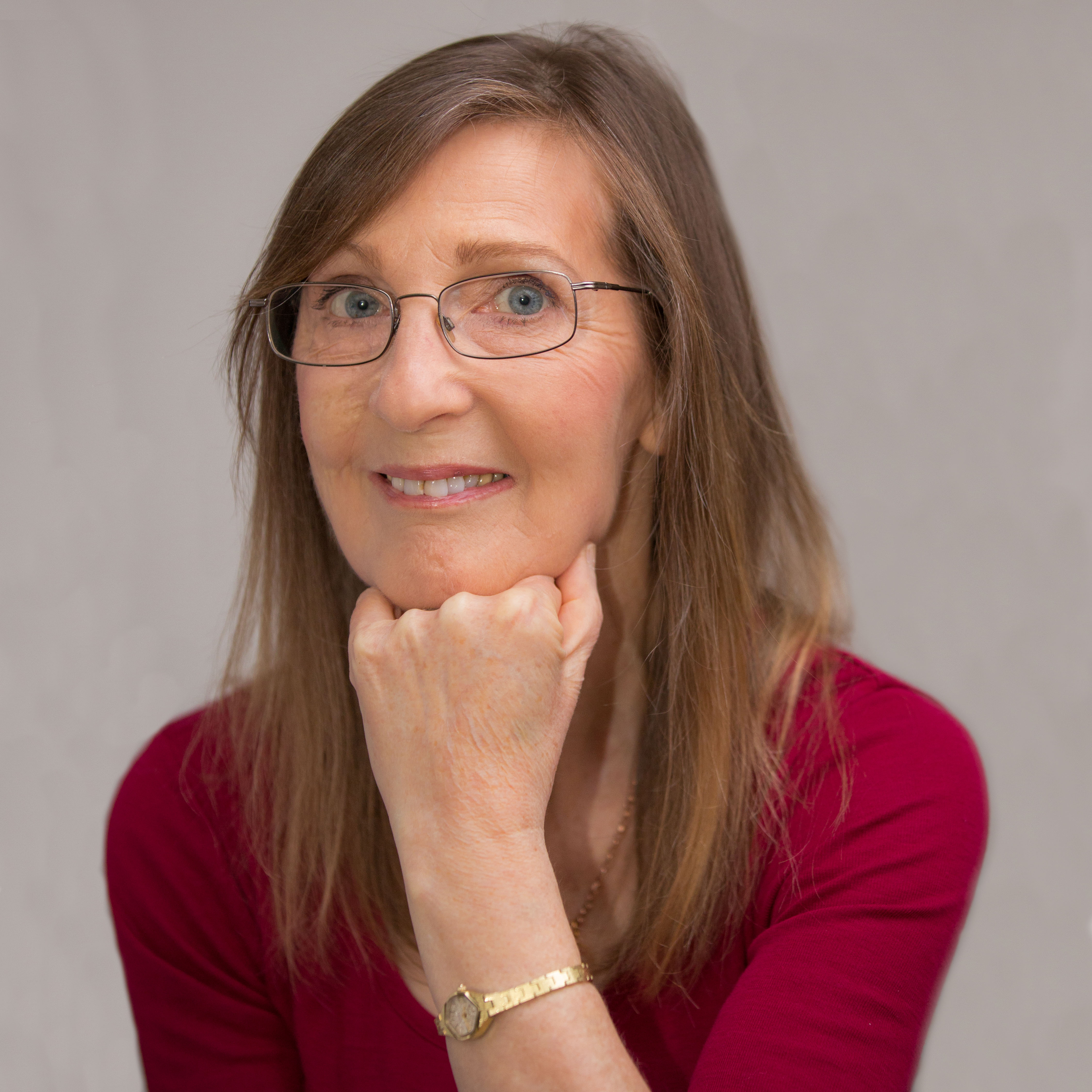
    Audrey Molloy was born in Dublin and grew up in a coastal village in Wexford. She now lives in Sydney, where she works as an optometrist and medical writer. Her poetry has recently appeared in The Moth, Crannog, The Irish Times, Orbis, Meanjin, Cordite, Banshee, Popshot, and The Tangerine. Audrey’s work has been nominated for the Forward Prize for Best Single Poem (2018) and she is one of Eyewear Publishing’s Best New British and Irish Poets 2018. She was runner up for the 2017 Moth Poetry Prize and has been shortlisted for several other international poetry awards.

  • “mia council casa es tu council casa” and other poems by Ali Whitelock

    October 31st, 2018
    i am the sea
    
    			that january.     
    			prestwick beach.
    
    		the sea heaves.  swallows herself down 
    	like cough syrup in thick slow gulps. we’d sat on this rock 
    just two days before, both of us with our backs to the world 
    		staring out across and into 
    			the thickness. 
    
    		i counted a thousand and one seagulls that day 
    	watched them huddle together, balance like storks 
    on a single orange leg the other nestled up in the warmth 
    	of their soft white bellies as they, with uncharacteristic
    		patience, waited for the rain that would surely fall
    
    		and when the wind whipped up, andrew
    	jumped from our rock pulled his emerald green kite
    from his rucksack tore off down the desolate beach his kite ploughing 
    	a trench in the sand behind him, eager for the gust that would
    		lift it to where it wanted to be 
    			
    		and every few seconds he’d turn around 
    	and run backwards untangling cords and calling out across
    the increasing distance between us, ‘c’mon on ali! c’mon!’  and i heeded
    	his call, jumped from our rock and ran as fast as i could
    		in jeans frozen stiff as though they’d 
    			been pegged on the line 
    
    			in an overnight frost and i shrieked 
    		with the gladness of finally being here with him— 
    	and no black clouds could ever threaten this day for us.  and he kept on
    running and turning, turning and untangling till finally a gust obliged and
    	his emerald green kite soared skywards and free—as free as we are 
    		ourselves if only we’ll listen.
    		
    		we’d parked the car just up there by mancini’s 
    	snack van, closed for the winter now, its magnum ice-cream posters,
    faded and neglected, flap listlessly in the wind and the menu promising 
    	hot chips and curry sauce hangs on the outside wall,
    		saturated by rains gone by forcing
    
    		words to fade, corners to curl and brown 
    	moisture spots to appear in the most unappetising of ways. 
    we’d laid our picnic out on this rock, poured tea from our tartan thermos 
    	ate buttered rolls, dunked mcvitties chocolate digestives and talked and
    		talked till the sun slipped off her shoes, turned out the light 
    			and slithered into the black dreams 
    				of the irish sea.
    
    			and days later with him already 
    		too long gone i am sitting on our rock with my back to the world.  
    	the sea heaves still. i watch her swallow the sadness rising 
    		in her throat, as broken hearted waves throw themselves 
    			at the feet of a shore that really couldn’t 
    				care one way or the other.  
    
    
    Previously published in Pittsburgh Quarterly Magazine. Editor Fred Shaw


    eventually you will turn fifty
    
    and this will be the day you will lose your mind.
    you will produce honey and certain insects 
    will be attracted to you 
    you will put on a dab of hollywood red lipstick 
    this will be the same colour you discovered 
    when you were ten in the cardboard mushroom 
    carton that doubled as your mother’s make-up box 
    and when you emerged from the bathroom wearing 
    the lipstick your father told you you looked like a fucking 
    whore and it will surprise you that actually
    he was wrong 
    you will put on a black frock which never 
    used to but now clings to the rolls you seem 
    to have developed over-night these rolls
    will make you appear more womanly and you will not mind this one bit
    you will start to take more time over your hair 
    buy a pair of earrings in the jewellery shop
    that is closing down they will match your lipstick 
    and you will look beautiful because your hair 
    will fall over one eye and this will make you look sultry 
    you will even consider putting on the MAC eyeshadow 
    you bought seven years ago and never opened 
    it may still be good a man you do not know 
    will tell you your earrings make the green 
    of your eyes look very nice and you will laugh 
    and look away as though you are shy though 
    you will hope the lens of his camera is still 
    upon you 
    you will have spent twenty years with the same partner 
    this partner will love you more and better than anyone 
    ever could including your own mother who loves you very much 
    eventually your earrings and lipstick will cause your partner 
    substantial discomfort though he will not say anything 
    about it because he will know that turning 
    fifty sometimes means that things might change 
    and he will know that all he can do is wait to see if anything 
    is still standing once the high pressure 
    system has moved through and although he is not a buddhist 
    he will accept the river of life will sometimes 
    burst its banks that water will rise in kitchens 
    and the insurers will need to be called in to assess the damage
    to the european appliances and you will know something 
    inside you is dying now that the tub of fresh double cream 
    that has sat happily at 3 degrees in the refrigerator 
    of your life is now on the turn you will meet a man 
    you did not expect to meet you will want to spend 
    many nights with him you will make up many excuses 
    as to why you are coming home late you will ask your girlfriend
    who is also very good at lying to join you in your dreich den
    of dishonesty and she will agree to act as your alibi 
    should your partner of twenty years decide 
    to call her one night to confirm you are with her 
    on the evenings you are not home your partner 
    of twenty years will eat dinner on his own 
    and he will cling wrap yours so when you come home 
    he can microwave it for you so you can have a hot meal
    he will know that things are now very different 
    and he will know exactly what is different
    but he will not say anything about it because 
    he will not want to make you feel you cannot behave 
    in the way you find you suddenly need to behave
    he will notice you are now shaving your legs 
    having your bikini line waxed and sometimes 
    your nails painted fire engine red and he will not believe 
    the outrageous lies you are telling him 
    but he will not call you on them and this will 
    make you think you are getting away with them 
    and even though he is not a buddhist he will 
    not show you any rage rather he will love 
    you all the more because he will understand 
    that you what need right now is love 
    and one morning when you will have stuffed 
    your liver so full of your own lies that it sits 
    swollen like that of a french goose 
    he will ask you gently if you want to talk about 
    what’s going on and still you will tell him everything 
    is fine and keep on with your lies till you are now choking 
    on them   
    eventually you will be home for dinner less and less 
    and your lies will increase more and more 
    and one night you will send him a text saying 
    you will be back later than usual maybe even the next day
    and your lie for this one will be very original and completely 
    unbelievable but you are now so addicted 
    to your lies like a kid on nothing but smarties and mars bars 
    and tob-le-fucking-rones that you just keep right on shovelling 
    your refined sugar onto the fire of your truth and your partner 
    of twenty years will text you back simply saying ‘OK’
    cause he knows you need to go through what you need 
    to go through and he will eat dinner alone that night along 
    with all the other nights and he will wash the dishes 
    and watch the evening news and he will miss that you are not there 
    shouting at the telly when the liberals come on and he will 
    put the hot water bottle on your side of the bed 
    and cling wrap your dinner because he understands 
    the importance of a warm bed and a hot meal 
    when you finally come home.
    
    
    Previously published by Beautiful Losers Magazine, Editor Lee Ellis 
    & Wakefield Press, Editor Julia Beaven


    mia council casa es tu council casa
    
    	i live out of sydney these days it is close 
    to the beach though we are not wealthy.  
    Some days there are whales other days dolphins 
    occasional jellies and never dead babies i like visiting 
    the art gallery in the city it takes me one hour 
    to drive there i park at the expensive 
    multi-storey it is a $10 flat rate on a sunday
    after parking i cut through hyde park past the statue 
    of robert burns standing alone and too far away 
    from scotland we are both foreigners here of the acceptable 
    kind. i like the location of the gift shop 
    it is right next to the entry which is also the exit
    i always go to the gift shop first they have handbags 
    made of unshaved cow and earrings like hot air balloons 
    and a dimly lit section at the back with mysterious 
    art books in thick polythene covers the thickness 
    of the polythene indicates their seriousness 
    and the price and there is an arsehole in there wearing 
    jesus sandals though he bears no resemblance 
    to jesus and the arsehole says to a random 
    woman (who turns out to be an arsehole too) he took a holiday 
    in paris once on the left bank some thirty 
    years back when it really was something and if hitler 
    was alive today this whole thing with the syrian refugees 
    would not be happening and the female arsehole agrees 
    then the jesus sandalled arsehole says what’s going 
    on over there is nothing but a european invasion 
    and the subject of the little boy’s body on bodrum 
    beach comes up and i have been there on holidays 
    some thirty years back when it really was something 
    the hotel was right next door to the doctor’s surgery 
    bent black clad women came daily clacked rosary 
    beads on milk crates in full view of fat tourists 
    bathing topless on hotel loungers ordering 
    chips and cokes they did not need from kadir 
    the turkish waiter who brought me proper chai 
    in a glass and taught me how to say 
    ‘tomorrow i am going to instanbul’.
    After the little boy’s body got washed 
    up on the sand australia offered synthetic 
    duvets fake chai lattes and empty promises 
    to twelve thousand of the five million 
    in camps who cry themselves to sleep at night
    and i have calculated this on my iPhone and it works
    out to be a teardrop in the ocean to the closest 
    decimal point australia i have offered 
    more hope to more cockatoos more safety 
    to kookaburras more gum leaves to koalas
    than the crumbs you are flicking 
    from your all you can eat buffet 
    it is time to feed the birds australia 
    tuppence a fucking bag sure what does it cost 
    to pipe in a haggis share some tatties and neeps 
    raise a glass to their health mia council 
    casa es tu council casa australia the world’s
    eyes are rolling in your general direction 
    and right now you look like some kind of jesus 
    sandalled arsehole sitting on the veranda 
    of your ocean front property with your deep pockets 
    and short arms pretending you don’t even know 
    it’s your turn to buy the next round at the bar.
    
    Previously published in Other Terrain Journal, Senior Poetry Editor Anne Casey
    & Wakefield Press, Editor Julia Beaven


    there is no sound when it snows 
    
    like when you pull your tam o’shanter 
    down over your ears and i know this muffled 
    silence so well it is there always 
    in the forest at the end of our road 
    where conifer boughs layered with thick snow sway 
    like fat babies just fed their heads 
    lolling on the brink of nodding off and the train 
    to london whizzes past twice a day punctuating 
    the silence with two giant exclamation 
    marks triggering tremors causing snow 
    to loosen and waltz from boughs with a whispering swoosh 
    and there were times i was on that train 
    mum would drop me at the station in the village
    then race back through the forest 
    to wave as my train sped past and as the forest 
    approached i’d wave through the window 
    though the train went so fast i could never 
    quite see her––but i knew that she was there. 
    the air is iced and sharp here and i breathe 
    it willingly stick my tongue in the air 
    catch snowflakes that flit i swallow 
    their flesh drink down their blood 
    till i am the snowflake the snowflake is me.  
    i lived here once. in this icy silence
    the place i live now is hot and there are days 
    i could weep for the boughs of my forest 
    and the north wind that gusts and near blows 
    the toorie off my glengarry this hot place i live is australia
    the land is dry and cracked here 
    much like the skin on the heels of my feet 
    that were never like that when i lived in scotland
    i’ve got my father’s feet they say heels 
    that need softening in the bath for a fortnight 
    before you could even begin to take the cheese 
    grater to them and only then will the thick skin 
    come away crumbly like the mature scottish 
    cheddar i’ve never enough money to buy in the supermarket 
    things have changed since i came to this hot 
    place i’ve forgotten a lot about scotland 
    sure that’s what i came here for in the first 
    place but i have my reminders all around 
    me now indeed as i lay here on my bed 
    on this hot january afternoon wilting 
    from the searing heat and not a breath 
    of air to be had my dog eared copy of antonia 
    fraser’s ‘mary queen of scots’ jams my sash 
    window open since the cord of the sash snapped 
    and sent the upper case hurtling to the sill 
    like the guillotines that have taken the french 
    heads off more people than i care to remember
    and i have my postcard on the wall 
    the one of the highland cow my brother 
    sent me from his camping trip on skye – 
    ‘come back ali’ it reads ‘before you forget 
    how good this air truly tastes.’ and i read 
    that card daily and it too is dog-eared 
    for i peel it from the wall each morning 
    and stick it back with the same lump of blu 
    tac i’ve been using for the last as many years 
    i can’t move in this heat 
    all i can do is lay here on my now damp cotton 
    sheets damp from the sweat i’ve been leaking 
    as hot winds torch and burnt dust swirls forcing 
    locals into bars with promises of half price 
    cocktails served in coconut shells at times 
    of day not made for drinking 
    i moved into this weatherboard cottage 
    with hardly a thing it was the first place 
    i’d lived in australia with a garden––i should 
    say yard––they call gardens yards down here 
    yards make me think of barbed wire fences 
    broken concrete slabs and gnashing
    guard dogs on choke chains that near sever 
    their wind pipes rushing strangers that come too close 
    the day i moved in i sat in my new garden 
    overgrown with something green and curly
    ––chokoes the neighbour advised––whatever 
    the fuck chokoes are i looked them up ‘native 
    to mexico though particularly easy to grow 
    in the australian YARD’ and this house 
    came with a fish-pond baking in full sun 
    naked of algae and the loneliest most bored looking 
    goldfish i have ever seen he barely moves 
    does not dart nor scoot unlike the darting
    scooting goldfish of my youth won at fairgrounds 
    knocking the heads off clowns with a coconut
    i call this goldfish gordon for no other 
    reason than it starts with a g 
    sometimes i sit under my chokoe vine 
    and stare at him once in a while he swims 
    half heartedly from one end of his blistering 
    pond to the other humiliated by mosquitoes 
    landing on fairy feet pricking the surface 
    of his pond there was a time he must have eaten them––
    i don’t see him so much as place his lips 
    to the surface now all he does is hang 
    with all the the weight of the depressed 
    man who care barely lift his head 
    off the pillow and i get to thinking 
    all this gold fish has probably ever
    known is life in this simmering pond 
    but me i’ve known something different
    i’ve seen my frosted breath hang in the stillest
    of air and my lips have kissed the chill 
    of snow that brings a silence money 
    couldn’t buy you so i’ll lay here 
    on my damp sheets a wee while longer 
    and i’ll dream of scotland and mary 
    queen of scots and two-man tents on skye 
    where toories are taken in gale force winds 
    and goldfish are not boiled alive in some scalding 
    pond 
    sure this hot country is no place for a goldfish 
    this hot country is no place for me.


    Previously published by Red Room Company, Editor Kristy Wan
    & Wakefield Press, Editor Julia Beaven


    and my heart crumples like a coke can

    you never ate fusilli nor farfalle nor spaghettini. you did not like all that italian shite. you liked chocolate eclairs penguin biscuits beef with string in gravy and custard with steamed pudding which is like a fruitcake. a long time ago we wished you would die. you loved tractors and bob-cats. a bob-cat is the australian name for a digger. one winter you dug a hole in a field with your bob-cat cut off the electricity supply to the entire village burst the mains water pipe. the water froze children skated on it wayward cars skidded into badgers and lambs born in unseasonal snow. your father was a farmer. he gave you your love of tractors. and potatoes. he skimped on other sorts of love. once you gifted a plough to mum. and a socket set. another time a cement mixer. you smoked and drank. grouse mostly. embassy regals. one time you moved a washing machine for a neighbour. you bought old tractors and renovated them sold them in the classifieds. although you could not spell it you were an entrepreneur. your legs went thin. the nutritionist said all you had to do was drink complan. you used to wash your car a lot. the celebrant at your funeral said you would be on your way to heaven in a gleaming vehicle. nobody laughed. you were not religious. i do not believe in heaven. your brother in canada rings me a lot since you died. he told me you were coeliac. it is unrelated to motor neurone disease. you were seventy fucking two. david bowie sixty nine. alan rickman the same. your adam’s apple stopped moving. i realise i too will stop breathing one day. at your funeral your sort-of-wife asked for donations to the disease you didn’t know you had. i don’t know if anyone donated. nine days before you died i visited you at your pebble dashed house, sat beside you on your tan leather couch, watched upside down chaffinches feed on the bird nuts hanging from the hills hoist in your front garden. a hills hoist is australian. in scotland it is a whirly jig. i have been away too long. you tried to make your way to the bathroom on your zimmer frame. you fell in the hall way. i didn’t know how to get you up. i lay beside you on the carpet. you kept apologising. there was nothing to apologise for. the nutritionist was wrong. you died the tuesday after valentine’s day. valentine’s day was on the friday. stephen hawking had motor neurone disease too. his is different to the kind you had. there are four different kinds. yours was diagnosed the day you died. you were already dead. stephen hawkins liked cosmological stuff and the big bang. you liked tractors. when i think of how much you liked tractors, my heart crumples like a coke can.

     
    Previously published in The Neighbourhood Paper (Sydney, Australia), Editor Mark Mordue
    & Wakefield Press, Editor Julia Beaven.


    “mia council casa es tu council casa” and other poems are © Ali Whitelock

    Ali Whitelock is a Scottish poet and writer living on the south coast of Sydney with her French chain-smoking husband. Her debut poetry collection and my heart crumples like a coke can has just been released by Wakefield Press, Adelaide, and her memoir, Poking seaweed with a stick and running away from the smell was launched to critical acclaim in Australia and the UK in 2010. Her poems have appeared in The Moth Magazine, The American Journal of Poetry, Gutter Magazine, NorthWords Now, The Poets’ Republic, The Red Room Company, Beautiful Losers Magazine, Backstory Journal, Other Terrain Journal, Ink Sweat & Tears, The Canberra Times, Bareknuckle Poet, The Bangor Literary Journal, The Glasgow Review of Books, Neighbourhood Paper, The Hunter Writers’ Centre ‘Grieve’ Volume 6 Anthology, The Pittsburgh Quarterly Magazine and The University of Wisconsin’s Forty Voices Strong: An Anthology of Contemporary Scottish Poetry. She is currently working on her second poetry collection and her second memoir.

  • “Flaxen Sheaf” and other poems by Laura Scanlon

    October 21st, 2018

    Flaxen Sheaf

    Softly winnowing, shifting neat
    Deftly yielding seed from sheath,
    Sifting cleft wheat from weed,
    Sweeping sleeves bereft of seed

    Wielding fleets of sickle o’er
    Nimbly threshing flaxen plant,
    Cloven seams unwoven—spent,
    Shafts of sheafs—swiftly rent

    The chaffing teeth,
    The shearing tooth,
    The shaven chaff,
    The grieving root.


    The Echo

    The echo resonates—
    confirmation you are alone,
    Borne along with contractions
    are pitches and tone.

    Giving breath to life is labour—
    breath pregnant with sound,
    –collected in thought,
    –delivered with care,
    –spoken aloud.

    The birth of words weighty,
    born into new air profound,
    the echo will perish,
    the meaning resound.


    Sentiment as Sediment

    Gloomy Tuesday sits thickly
    like a pot of glue,
    thick and almost solid,
    —almost set

    Old Monday like forgotten honey rests,
    —Separate,
    The dregs lay,
    Heavy at the bottom of the thick glass

    Tuesday, a blue day.


    Flaxen Sheaf and other poems are © Laura Scanlon

    Laura Scanlon has recently just completed an MA in Gender, Sexuality and Culture at UCD. Her dissertation focused on social media and the weaponization of the ‘male gaze’. She is interested in writing as well as feminism and masculinity studies. Her poetry displays an intense interest in wordplay, which she often employs to describe human creative processes, both mental and physical, as well as the passage of time and the power of language.

  • Fragmenting…defragmenting… by Breda Wall Ryan

    October 18th, 2018
    (i) Woman, Fragmenting
    
    
    Out of reach of Bach's Rescue Remedy,
    she free-falls
              through 2, 1, G
                      to the basement.
    
    Wifemask says she's fine,
    hides behind her Prozac smile,
    offers cake and tea, nods and nods.
            Wearing her disguise,
                 she lies
    
    While chemicals scramble signals,
    sparks refuse synaptic gaps,
            the machine 
                  malfunctions,
    
    cables snap,
    she swallows despair,
           takes what's on offer
                  for toxic sorrow,
    
    peels her skin down
    to the raw child at the core
    of her unhinged matryoshka.
    Things can only get worse
           if nobody Zolofts her
                 back to the surface.
    
    She tries to grip
    the creature—is it she?—
    sinking through air, land, water,
             submerging,
                       seabedding.
    
    
    (ii) Woman, Defragmenting
    
    She searches for handholds
    inside her head, climbs her hair
    through a blizzard
    on the north slope.
    Choking on terrors
    of high unguarded places,
    she fights the urge
    to step off into nothing,
    give in to gravity, plunge
    through the sea-skin,
    then fly, half-cormorant, down
    to oblivion's seabed. 
    Spiralling riptides
    draw her under, she rides
    an undertow down,
    down where dolphins drown,
         stars nail the lid
               on her sea-coffin.
    
    She floats in darkness, hears
    voices call; a bright light
    hauls her anchor.
    She breathes clearer air, glimpses
    a split of sky, blue,
    the blue of healing,
    of veins unopened,
    their steady pulse
    the beat
           of her twelve-bar 
                  blues

    Ceramica

    After Ceramic artworks by Helen Quill
     
    this white ceramic demi-sphere brimful of the cries of seagulls,
     
     
    at the tipping point
    balanced on blackthorns—
    half-moon bowl of light
     
     
    downy white feather
    from the wing of the holy ghost—
    downward spiral
     
     
    strung on a single hair a louse-egg pearl
     
     
    cochlear swirls thrum
    with the sound of waves
    weaving an ocean

    Breda Wall Ryan grew up on a farm in Co. Waterford and now lives in Co. Wicklow. She has an M. Phil. in Creative Writing (Distinction) from Trinity College, Dublin. Her awarded fiction has appeared in The Faber Book of Best New Irish Short Stories 2006 – 07 and The New Hennessy Book of Irish Fiction. Her poems have been widely published in print and online journals, broadcast on community and national radio and translated into several languages. She has read at poetry events throughout Ireland, in the United Kingdom and USA. Among her more recent awards are The Gregory O’Donoghue International Poetry Prize and The Dermot Healy Poetry Award. Her collection In a Hare’s Eye (Doire Press 2015) was awarded the Shine/Strong Poetry Award. Raven Mothers (Doire Press 2018) is her second collection.

  • “Muiris” and other poems by Victoria Cosgrove

    October 16th, 2018

    Killaclug IV

    I sat in a river in the land of the bad faeries
    up the country somewhere in County Cork

    When I dove in, the cold water stung my skin like an angry wasp—
    or a punishing whip—
    before settling me into it’s cool embrace.
    Calm.

    I tried to swim but the river bed is too shallow;
    filled with silt and stones and the bodies of warring brothers and changeling babies that washed in during the winter storms.
    Shallow graves in a shallow riverbed
    in the land of the Bad Faeries.

    When the river speaks it tells me the secrets the locals keep;
    but you have to listen.
    No one listens anymore.

    I sit on the bed of the brothers and the changeling babies and
    the water is cold and the breeze is sharp
    and the river speaks.


    Muiris

    I am not a poet;
    words do not flow freely from my brain
    to a pen
    to a page.

    I am not a poet.
    My vocabulary is academic and varied, but my words
    arrange themselves in awkward jumbles
    that pour out of my mouth into a heap
    of tangled sentiments.

    I am not a poet.
    I want to tell you that your kiss tastes
    like blackberry brandy in hot apple cider;
    tastes
    like a cashmere sweater sliding over my belly;
    tastes
    like holding hands with my first crush;
    but all I can manage is:
    “You taste good.”

    I am not a poet.
    But, if I were, I would tell you
    that your touch burns me like an over-fed log fire;
    tell you
    that your fingers on my hips sear me like a brand;
    tell you
    that loving you is as thrilling,
    and as terrifying,
    as loving a star the moment before it burns out for good.

    Too bad I’m not a poet.


    El arte de las tortillas

    A posh man once asked me, “What is art?”
    What is art?
    Art is the color blue.
    Frail and swollen, cutting patterns across my abuela’s hands
    beneath her fragile skin.

    Art is the color blue, artificial and sticky,
    like the tub of Crisco that my abuela is easing down from the cabinet.

    “Antes usábamos manteca normal,” she explains
    as the blue tub hits the counter with a small “tak.”
    “Pero manteca vegetal es lo mejor.”
    She taps the clear plastic lid
    to drive her point home.
    Tak. Tak.

    What is art?
    “Esto es un arte, mija.”
    Abuela says, smiling through her L’Oreal lipstick.
    Her hands shake
    just a little
    as she pours the harina blanca from a paper sack
    Into a ceramic bowl.
    “Tantito, así.”

    Blue veins strain against tissue paper skin,
    a flash of blue against soft brown.
    An old mug tips water into the bowl,
    just enough, never too much.
    “Ahora la manteca.”

    Bright blue.
    Artificial blue,.
    Then slippery white.
    “Toma.”

    The shortening is in my hands before I can say,
    “Por favor, no.”
    A brown finger taps blue paper.
    Tak. Tak.
    “Esto es el secreto de las tortillas.”

    Esto es el arte.
    This is art.


    El arte de las tortillas (English translation)

    A posh man once asked me, “What is art?”
    What is art?
    Art is the color blue.
    Frail and swollen, cutting patterns across my abuela’s hands
    beneath her fragile skin.

    Art is the color blue, artificial and sticky,
    like the tub of Crisco that my abuela is easing down from the cabinet.

    “We used to use lard,” she explains
    as the blue tub hits the counter with a small “tak.”
    “But vegetable shortening—that’s the best.”
    She taps the clear plastic lid
    to drive her point home.
    Tak. Tak.

    What is art?
    “It’s an art, mija.”
    Abuela says, smiling through her L’Oreal lipstick.
    Her hands shake
    just a little
    as she pours the harina blanca from a paper sack
    Into a ceramic bowl.
    “That much, no more.”

    Blue veins strain against tissue paper skin,
    a flash of blue against soft brown.
    An old mug tips water into the bowl,
    just enough, never too much.
    “Now the shortening.”

    Bright blue.
    Artificial blue,.
    Then slippery white.
    “Here.”

    The shortening is in my hands before I can say,
    “Por favor, no.”
    A brown finger taps blue paper.
    Tak. Tak.
    “This is the secret to a perfect tortilla.”

    Esto es el arte.
    This is art.

    Muiris and other poems are © Victoria Cosgrove

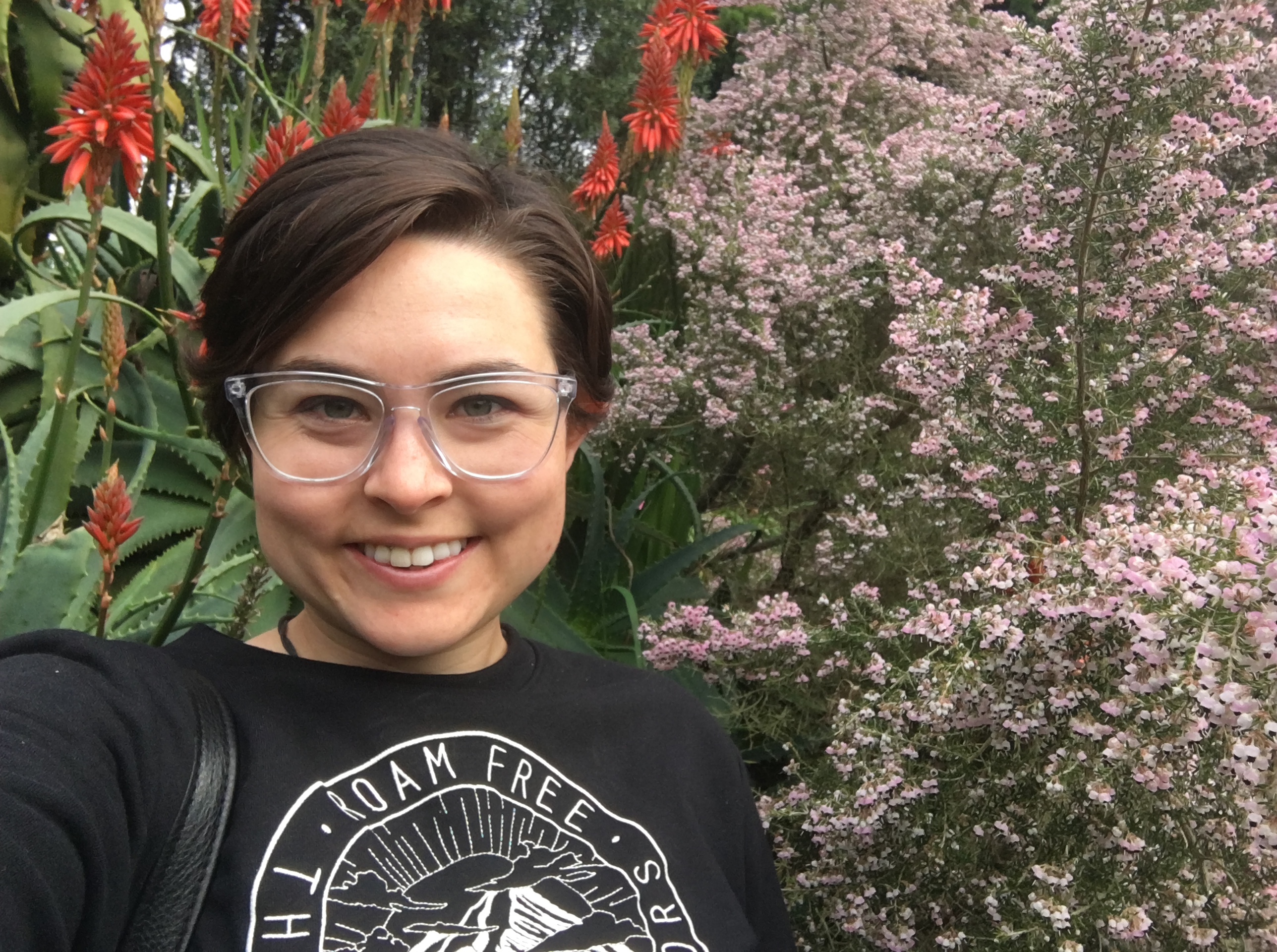
    Victoria Cosgrove is a California-born poet living in Cork. Before settling in Ireland, Cosgrove lived in Spain and the Pacific Northwest where her love for the outdoors, art, and the written word evolved and grew into a full-blown obsession. She earned her MA in Museum Studies from University College Cork, and has worked both in museums and as a field archaeologist, drawing inspiration from the history and stories she encounters.

  • ‘Everything’ and other poems by Evelyn Moloney

    October 16th, 2018

    1. Everything

     
    It’s truly
    a chaotic thing
    to suddenly see
     
    starlight,
    heaven and
    everything
     
    in someone’s eyes
     

    2. Sky

     
    The sky spilled sadness
    into paper cups
     
    and
     
    lilac clouds
    soaked up the dreams of
    a thousand
    grey
    print press people
     
    with their coffee stained sleeves,
    keyboard click steps
    and empty minds
     

    3. Pull

     
    I wish I could pull
    all the sad out of you
    out through your chest
     
    I’d fill up
    the empty spaces
    with flowers
     
    chrysanthemum cardiac tissue
    your whole heart
    plastered in
    every
    pretty petal
     
    As if I could bandage
    an entire botanical garden
    of happy
    blooming
    in your bloodstream
     

    4. Crash

     
    Oh my poor whole world
    is crashing down
    in stinging purple spark explosions
    and
    salty little girl tears
    that I can hear
    the sound
    of
    each time I’ve ever wished
    on pastel birthday cake candles
     
    distorted,
    flooding
     
    rushing like icy water,
    wish wish wish
     

    5. Dizzy

     
    My world
    is
    always sunset
    and dizzy—
     
    colours flash quicker
    when I close my eyes
     
    I like to catch
    falling things
    or
    floating things
    —maybe dandelion seeds
     
    I will always trail my hands
    across
    every wooden beam
     
    and write wishes in the dust
    asking voices you can’t hear
     
    for answers, I don’t need
     
    Everything is © Evelyn Moloney

    Evelyn Moloney is a twenty-year-old art student living in Madrid. She has worked in four cities in twelve months all across Europe and can speak three languages fluently. She was part of 2012’s published writers under Fighting Words.

  • bind, a waking book by C. Murray

    October 13th, 2018

    Chris Murray's avatarPoethead by Chris Murray

    They and I,
    O how far we have fallen!
    Just to burn here. 


    You can now order bind viaTuras Press

    43590323_10161018184305241_1979409105122492416_n (1)

    bind cover photograph is © Christian Caller, original artwork Bound / Boundless © Salma Ahmad Caller

    from theIrish Times

    I am a poet without a landscape, a woman poet without a narrative heritage. I began tracing the huge startling landscape of US and European women’s poetry while in college. I could not find its equivalent here in Ireland. bind reflects the facts of absence and fragmentation in my poetry landscape, and the absence of women poets in our cultural narrative. bind is a book-length poem loosely divided into chapters. These chapters act as boundaries within the action of the poem and provide gateways to differing aspects of the processes inherent in bind. The title of the book takes its name from the triple hyphenation that occurs…

    View original post 309 more words

  • ‘The Scarecrow Christ’ and other poems by Shirley Bell

    October 2nd, 2018

    The Scarecrow Christ

    The fields are flat and brown, it’s hard to think
    they’ll ever stand high with corn, flare with rape
    again this summer. For now the scarecrows lurch
    at crazy angles. They trail old coats and rags.
    Polythene bags flap around the suggestions of
    their shoulders. And yet the wind lifts
    their shoddy clothes and they are touched with
    magic; they always seem about to fly.

    It’s Sunday and I’ve taken you to Chapel.
    Everything is grey and earnest. There’s no
    incense here, though a sense of well-meaning
    sifts gently through the air. I don’t think I belong.
    It’s Lent and the sermon is all about temptation.
    I feel I would not pass those tests. Now I see
    distraction in the corner of my eyes; a painting.
    When I can, I take a picture on my phone.

    It shows me strips of cloth, snarled around
    an empty cross, a tenuous fabric
    lifting in air currents, tangled with light.
    Something. Nothing. Faith, elusive as a sigh.
    A scarecrow pinned to a stick.
    Leaning forwards, with the wind stirring its tatters.
    And always on the point of alteration,
    by some sudden unexpected angle of the sun.


    Autumn Is Coming

    It’s September and the sombre clouds are rolling
    themselves up into tentative shapes, faces that
    billow, then pass into oblivion. Autumn is coming early.
    The ground is strewn with plums that are rotting
    where they fall amongst the maggoty apples,
    and the leaves that are blushing into decay.

    Creak by arduous creak upon the stairs,
    you haunt me with the man that you once were
    as laboriously, you are rasping through the days.
    On your bad side, your stiffening hand is
    contracting to a claw, and now, when I hold
    you close to me, I feel your bones against my breast.

    I thought the memories, that grew like lichens
    intertwined, were permanent. But now you say
    you rarely think of them, so mine are going too.
    Your voice is a dry whisper, vanishing on a breath.
    Under that press of sky, it’s feeling colder. And
    our world is growing smaller every day.


    Tell it to the bees

    The garden hums. Bees guzzle in the throats
    of the lush flowers and butterflies clot the blossoms.
    The simple flowers are full of nectar. Sometimes
    the hives are dressed in mourning. Someone has
    rapped softly and told it to the bees. Their hive servant
    who managed their perfect world has gone.

    As the coffin settles in its grave, so gentle hands
    lift and set down the colony with its waxen cells
    like catacombs. And reverently, lay out their share of
    funeral meats and drinks at the entrance where the bees
    dance their maps; carry the pollen in their baskets
    to feed the hive in their secret waxen chambers.

    Cells dripping with nectar metamorphosing into honey:
    that gold that gives the gift of prophecy. Telling the bees.
    But there is a stutter in the rituals. Threats grow like
    the larvae in those perfect hexagons. The doubled flowers
    flounce their skirts. Nectarless. The bees in their quietened hive
    are alive instead with Varroa mites, crawling in their plush.

    And all the words of prophecy roll on the tongue.
    Foul Brood and Nosema,
    Colony Collapse and neonicotinoids.

    Tell it to the bees.


    A Love Story

    It was 1970.

    We walked beside the river, hand in hand, and the sun
    gilded us, and I was dazzled by the blackness of your hair,
    your golden skin, and the amber of your eyes, sometimes
    black as olives in the glinting dark. When I look back
    it is always summer, and your skin is hot against mine,
    breast to breast, in the half shadows where my hair falls over
    us in a silky veil. We both remember the short green dress,
    brighter than the grass, cheap polyester from C&A, sticky
    with the heat. And when I took it off it was rust marked
    where the buckle of its belt had rested on my waist.

    And you ask, and I ask myself, what is the point of all this?
    And that is the point. A day burnished until it gleams.
    Two young people, hand in hand, beside a river sequined
    with sun so bright you had to squint to see. I don’t write
    love poetry, my poetry is full of the darkness that followed,
    but this is a love poem, that has walked into my head and
    surprised us both.


    Dr. White

    Dr. White, last time I came you were counting on your
    fingers. “Four and twenty blackbirds,” you said, “baked
    in a pie” that just you could see. “You are only as old
    as the woman you feel.” No-one answered. “And that’s a joke,”
    you told us, sadly, but no-one got it.

    Today you are rocking and reciting. It is poetry.
    My mother says, “Hello,” and so does Dr. White.
    “Hello, hello. Hello. Go so, go low, go slow. NO!”
    And, “Where? there?” “Would you? Should you? Would you?”
    Then, “Go!” says Dr. White again and I’m wishing that I could.

    But I have only been here for twenty minutes. A carriage clock,
    its mechanism slow as treacle, turns to and fro, sealed in its case.
    A DVD of Pearl Harbour is cycling through the start page. “Play”
    it instructs us. Or “Pick a Scene.” Every now and then a plane flies
    across the screen. Dr. White is shouting, “NO, NO” he says.

    He is surrounded by etiolated women, sitting in special chairs.
    Their necks are stretching towards whatever light remains.
    “Shut up” they say, often, severally, but Dr. White just goes on
    and on, rocking and chanting his dreadful incantations.
    “Shall I hit him with my book?” my Mother says, and laughs.

    Now I say “NO, NO”, to her, and I sound like Doctor White.
    Violet tells me what a wonderful doctor he was. I look
    at his long, clever fingers and his wits are pouring through them,
    and joining the other memories lost from all these fogged heads.

    I can hear him when I leave. “Where? he is saying. “Where?”
     

    The Scarecrow Christ and other poems are © Shirley Bell

    Shirley Bell is the editor of The Blue Nib, a growing online literary magazine and small publisher, and she is a widely published and anthologised poet. Her poetry is archived in the Special Collection in the University of Lincoln (UK) Library and, as a result, she has collected together all her published poetry from 1982 to early 2016 in her book, Dark is a Way and Light is a Place. Her latest book, The Still Room, new and selected poems chosen by Dave Kavanagh is coming out shortly under The Blue Nib imprint.

    The Wide Skirt published her pamphlet Hanging Windows on the Dark. She has published two other pamphlets, behind the glass and Poetry of Hospitals and Waiting Rooms. She has been writing poetry since the 1980s and has read widely all over the country. She worked as a Writer in Residence with all ages, from primary to students in Higher Education. She was Literature Consultant for Lincolnshire and Humberside Arts and edited their magazine, Proof.

    Image: Walter Baxter / Beehives / CC BY-SA 2.0
  • bind; a waking book by C. Murray

    September 15th, 2018
    They and I,
    O how far we have fallen!
    Just to burn here. 


    You can now order bind via Turas Press

    43590323_10161018184305241_1979409105122492416_n (1)

    bind cover photograph is © Christian Caller, original artwork Bound / Boundless © Salma Ahmad Caller

    from the Irish Times

    I am a poet without a landscape, a woman poet without a narrative heritage. I began tracing the huge startling landscape of US and European women’s poetry while in college. I could not find its equivalent here in Ireland. bind reflects the facts of absence and fragmentation in my poetry landscape, and the absence of women poets in our cultural narrative. bind is a book-length poem loosely divided into chapters. These chapters act as boundaries within the action of the poem and provide gateways to differing aspects of the processes inherent in bind. The title of the book takes its name from the triple hyphenation that occurs irregularly within the first chapter. bind explores movement, objects, and colours that occur in a no-place or a stasis, the fragmented landscape,

     
    bind
     
    if there are birds here,
    they are of stone.
    draughts of birds.
    the flesh-bone-wing
    of ‘bird’

    (from bind – Chapter One) 

    read more here
     

    bind (Turas Press, 2018) was launched in Dublin on October the 8th 2018. I include here, with thanks, some details from artist Salma Caller’s response to the text. This is a note of thanks and appreciation to those people who have supported the book from the outset. Liz McSkeane, at Turas Press has written an introduction here  She has taken me through the process beautifully, including a visit to the type-setter, discussions on the visual art aspect of the book, and at all times she has kept me up to speed with the process. Turas is a new press, I urge poets to explore the possibility of publishing there. Eavan Boland very kindly read the text and provided an endorsement for me. I have published the coda to the book and a short poem wing above.  The book is not consciously oblique, it charts a progression through a territory that defies description. It might even be said that the book is very simple, although I have tested that theory!


    Acknowledgments are due to the editors of Persian Sugar In Indian Tea, York Literary Review, Levure Litteraire #12, The Honest Ulsterman, The Penny Dreadful Journal and Compose Journal, who have all published excerpts from “bind”

    Wing
    
    mercury pool shatters
    and,
    a-black-wing
    
    the challenge
    of           wing.
    
    bird skims black
    ice bird skiffs
    the tree pool
    
    bone-blood
    
    the
    actual bird,
    the image of a bird
    
    the real thing of it,
    grasps onto a branch.
    
                 the iron of its grasp
    39200094_319864441892968_6801639054669512704_n
  • ‘The Road Taken’ and other poems by Kate Ennals

    September 4th, 2018


    Cuckoo

    Before she was mine
    she drank red wine and spirits
    With class, in Egypt and Paris
    An educated forties woman
    From Wales, aquiline nose, my brother’s eyes
    Stylish in scarves, tight belt, full skirts,
    Intelligent. Conversation, politics.
    A woman of intellect. Studious, serious
    She pursued kingdoms of change

    But with each revolution comes sex
    And she became history. Mine
    Look, here I come.
    Cuckoo, cuckoo
    Before I arrived, my mother was beautiful.


    After Alvy Carragher’s ‘Mother’

    I have just read a poem:
    ‘Mother’ By Alvy Carragher
    over and over:
    “You said it was love at first sight”

    Mother, I don’t recall you saying that
    On this couch where I now lie
    where, as a child, I snuggled into your woven threads
    of bosom and breath

    The words, ‘I love you’? No
    I would remember
    Though I heard the scream
    you held at arm’s length
    Its tentacles tangled in our threaded embrace.


    DNA

    I come home from time to time
    Motionless, I stand, glide down
    Steel de-escalates underfoot
    My eyes swivel, theatre bound
    Air loses fresh, swoops up my nose
    At the bottom, I step South,
    Into tunnel, crowned blue and white
    Ridged platform, yellow line
    A rubbery wind shoots the breeze
    My instincts bristle, on the rise
    I guess the space where carriage will stop
    Tube swoops in
    My choice is good. Doors
    Wheeze, release heaving crowd
    cheek by jowel, shoulder, hip
    I stand back, then
    Squeeze and shove, shift as one
    Teeter, grab a well sprung coil
    We shunt and start
    a broad church in communal lurch
    a rhythm of common
    I count the stations
    Watch eyes doze, upright
    Bodies twitch to ear plugged notes
    Approaching, I crab, slide and twist
    Mind the Gap
    Turn right
    Keep Left
    Queue to tread and escalate
    Inhale the light, sirens, petrol
    Surface
    flash an oyster, stride away
    reassured of my DNA.


    Lower Derries, Cavan

    for Martin and Breda

    The lake swarms, teeters the edge of evening shore
    Low, the garden sky seethes, yellow and grey. Still,
    We sit outside, nibble blue and white cheese
    Pickle our lips with nasturtium seeds
    Bite into blood red tomatoes, hand-picked from the vine
    A yellow cucumber dressed in mustard and wine
    Toast each other with homemade liquor
    Beetroot and raspberry mixed with apple and pear
    I settle on orange and elder flower
    A course of wild pike smokes in black rising swirls
    Cooked in a fresh branch of a fallen birch
    Served with home-grown potatoes served with garlic
    We chat of poetry and autumn spices.


    PPS

    in response to Seamus Heaney’s ‘Post Script’
    At risk of turning this into an ad for Ireland
    You may want to travel to County Cavan
    For there the wind is always up
    With fierce intent, blowing spores of bloodied rock
    Drenched in storm and moonlight
    The place is a palimpsest of history
    Legend layered on leaps of myth
    Grey, slate skies reigned by crows and ravens
    Caws of silence on black scrawny wings
    No ocean glitters, there is no flaggy shore
    But there are giants, Lugh and Lag
    Who jumped a gorge in the name of love
    And left a chasm, a land of relicts
    tossed with glacial erratics
    a carbuncle of a fossil. Rooted and ancient
    You will feel rather than see Cuilche loom
    A cannon of earth spraying bullets of cloud
    It shoulders the head of the North, tempers the South
    From where craggy rivulets of pale faces stare
    scattered amongst the raggy sheep
    seeking refuge behind old crannogs
    Piles of stones
    The flesh of the land is weak, porous
    lime mixed with water
    Its heathery purple blood floods lakes that rise
    Where ghosts ascend in morning mists
    Stride, muttering, into dark pine forests
    The limestone rock provides not a glint of warmth
    Trees grasp and clutch at bare knuckled earth
    Expose neolithic tombs, funereal monuments
    They too catch the heart off guard and blow it open.


    The Road Taken
    
    It was dark as we crossed the cattle grid, pulled up the Barrack 
    Hill, down the other side, 
    around the mini roundabout, drove the N3 out of Cavan, Virginia, 
    Kells, Navan, Dublin
    
    Spiralling the short-term parking, coming to a stop at the top, 
    and flying. Then travellating 
    to the station. The train stopped at Manchester Piccadilly, a 
    fret of ornate iron and glass
    
    Suspended; industrial, opaque, white bulbs hang in the gloom of 
    winter gloam. Groaning 
    with Northern Asia, Derbyshire, an English winter 
    
       Red stone     red brick  red stone	  red brick	  red stone
    	
    Rows of town, city suburbs: Hawkeswood, Stockport, Hazelcroft and 
    the Price is Right. 
    We disappear into banks of soil and tunnel. Black electric light 
    blasts into heaving peaks of green, velvet brown
    
    Soft to touch, sloping down. In the sky, a lisp of blue in leaden 
    grey, a flash of Hope, followed by a thrumming cab, 
    to a Sheffield HOME of blue uniforms, snug around a bosom 
    of pinned identity. 
    
    My mother in law’s tiny marbled legs attached to a nappy, a bib 
    and tucker. A baby mother. 
    A soft face slack with grace, a momentary greed of interest, 
    forgotten in seconds…
                        then repeated. 
    
    Over again. Again. Soon, she tires of not remembering. I go on. 
    Travelling on a train, to London. 
    The carriage lights are dim. There are clicks of zips. 
    Creaks of bags. Whispers of coats taken off
    
    folded. Murmur of pale blue light. Rain squeezes drops down 
    the window pane. I snuggle down in the interim for the linger of 
    journey, the in-between. Chesterfield, Derby, Leicester,
    St Pancras. 
    
    I walk the marble floor that lays the way to Paris, passing 
    cocktail bars, sumptuous shops, silver, gold, chains, 
    and jewels, glamorous hair, bags and suits, leather, 
    barrels of wine
    
    Down	
    	down   			
    		down
                         to         
                             the         
                                 Northern       
                                          line
    
    I wade through a tube of Londoners: a commuter, a son, a daughter, 
    an old man, a student, a worker, a patient, a brother, a sister, 
    an aunt, an uncle, a cousin, an only child, a father
    
    to you, mother: old woman, bright beads for eyes, swaddled in 
    pads and yellow rage, hunched,
    slumped, lost for words, waiting. I take off my coat, sit down. 
    You are my destination.
    
    The Road Taken and other poems © Kate Ennals
    

    Kate Ennals is a poet and writer and has published material in a range of literary and online journals (Crannog, Skylight 47, Honest Ulsterman, Anomaly, The International Lakeview Journal, Boyne Berries, North West Words, The Blue Nib, Dodging the Rain plus many more). Her first collection of poetry At The Edge was published in 2015. Her second collection comes in 2018. In 2017, she won the Westport Arts Festival Poetry Competition. She has lived in Ireland for 25 years and currently runs poetry and writing workshops in County Cavan, and organises At The Edge, Cavan, a literary reading evening, funded by the Cavan Arts Office.
    Before doing an MA in Writing at NUI Galway in 2012, Kate worked in UK local government and the Irish community sector for thirty years, supporting local groups to engage in local projects and initiatives.

    Φ kateennals.com 

←Previous Page
1 … 17 18 19 20 21 … 106
Next Page→
 

Loading Comments...
 

    • Subscribe Subscribed
      • Chris Murray
      • Already have a WordPress.com account? Log in now.
      • Chris Murray
      • Subscribe Subscribed
      • Sign up
      • Log in
      • Report this content
      • View site in Reader
      • Manage subscriptions
      • Collapse this bar