Tom D’Evelyn on ‘Three Red Things’
-
Three Red Things
the three red things are:
a red umbrella with a black lace trim
spoke-shattered it belongs to my mother,
does not match my abstract and faux
snaky blouson jacket,Alfred Schütze’s The Enigma of Evil
a memento-mori from his old library,
its red cover is rain-glued-sodden.
I bind myself to a tree,a shopping bag, berry-red
not much to say about it
is the third red thing.And I am in the park,
moulded to the body of a treeits roots are moving beneath my feet.
I am afraid it will tear up from the
soil’s hungry drinking as,form crystallises
assumes its
almost shape,within the silica of
this holding-skin,beneath crystal swipe
and tungsten-lungeinto the exact point
and drain,then seep
from the vessel-encasement,
not sustainer.Form crystallises
until
form becomesa stone dress
press-to
drop-by-drop
raindrop-and-sinew
the whole womannot tamp-in
onto the still-living-soil
a new shapeembed-in
the bone and the
living-sinew-of
the still-warm bloodslowly-so
and infinitely blue,
the milk-flow from crystallising breast,material as silk-soft
(as) caul or veil
can be sweet as silk or rain orblue,
rain sinews against and into
chalice of womb,
half-into the wall
and often notstill,
a lone, a bird night-sings and atremor of rain runs liquidly down the bodice and gather,
as gradual operation of hand-upon-hand, hand-on-stone
make a pleat, a stitch, a fraying thread, on bodice sequined
for silica plinthing.Three Red Things is the title poem of Three Red Things published by Smithereens Press in 2013.
-
$600
Here for $600 you can buy
a purebred Siberian husky pup
a digital display microwave
a proheat all rounder vacuum
a freestanding cooker
a mini laptop
a man’s bike barely usedThere for $600 you can buy
a 12 year-old girl not used at all© Lizz Murphy
— from Six Hundred Dollars (PressPress 2010)
Through a Child’s Eyes
She is a child whose play eyes
settle on the fine grains
sweetly falling through sugar fingersShe is a child whose factory eyes
settle on a shatter of sequins
like falling fire or a stitched up skyWhen night settles one girl will close
her eyelids the other will want to tear hers off
Here a forest will grow each leaf a child’s eye© Lizz Murphy
— previously published in Cordite Poetry Review #43 Masque
— from Shebird (PressPress forthcoming)
The Morrigan
The Morrigan’s throat-hackles
riffle air her baneful call
forewarning strife
cordoning off territoryShe hitches up her raven lips
her tongue and gum reckoning
Her wrap is a fox a skulking road
I know something of this womanHer black river sheen
one fallen feather
a bowl of brine
She is the washer at the fordThe fetters are cast
The other bird on its back
wings extended in abdication
Its arching neck its thrashing bill
its adversary treading liverI unwrite my skin
a black crow underscore
I know this line
this unravelling line
two cups of blood one foot
on either side of the river© Lizz Murphy
— previously published Abridged: Torquemada
Settlement
That settlement on the lowland the noise of them chittering and squawking Those single-note whistles sucked back unutterables everyone scattering One so much less agitated sailing wings draped like arms around someone else’s half-hearted shoulders legs trailing absentminded the feet chewed stick ends The choughs flap and stretch nettled silk each fan-fold a clearly outlined breath Two magpies flee to another patch the first knows its song well the other repeats her last phrase on a seven second delay like someone who can’t contain thought or an unacquainted tongue And then the falcon flaunting his high authority the rearing sun his silver edged wingspan limbs extended his binding decision his bite to the spine
© Lizz Murphy
— previously published Rabbit: A Journal of Non-Fiction Poetry
Myth Breaker
She knew instinctively when she was twelve
saw it in his eyes at fifteen was middle-aged
before she understood what it was she knew
what it was she had witnessedIt was that country of not knowing
that they colonized
Blackbird
Bushlark hands
empty swirl and rinse
fresh-baked terracottaI hear the slide of leaves
as olive residue separates
reveals fine scarlet threadsHere I am with a worriment
I tell anyone listening in
the hills collapsing into themselvesThe adult rosellas have parasites
They are snips of red cotton
the sweepings after dressmakingThe unsewn moments
of this warm
loose-mouthed afternoonEarlier we heard the blackbird
playing flutes from the spire
of its conifer cathedralThat melodic intruder
its precise tangerine beak
scissoring at the skyAnd the raiding currawongs
with their priestly wings
and hook-beak frenzySweetmeat hatchlings
the tear of earth
the choir of keening magpiesThen the silent flyover
Younger red-green natives
captured only in the surprise
of transitory shapesSwift tattoos across sparse lawn
the grey grill of grevillea
the ridged roof robust in all seasons
its iron whisperings coaxing in a cold frontHow long till the blackbird is
back foraging finding invertebrates
in undergrowth shrinking into itselfHow long since a fledgling
its feathers the stain of tended soil
runs an unsteady length of broken boardOr a juvenile flying the shortest of spans
flagging gutter to slumping branch
And game again on the verandah
launches itself in a gay splatterIts stiff limbs like poking fingers
its panting spotted breast
pressing a path through spaceFirst empty nest then empty distance
You recognize the wind of chance
in their jubilant eyesThey are full of the new life
have found their own un-compassed way
Just like you told them they would
Like you told them they shouldIt has caught my generation short
the skin of it settling over the migratory pass
Streamflows knotting around long unmoving stones
shucking their occupant souls togetherThey have the vacant knock of brass
The bell strike of hammer on nail
The scuff of spade entering sod
The rasp of the smallest of the deaths© Lizz Murphy
— from Walk the Wildly (Picaro Press 2011; reprint: Ginninderra Press, forthcoming) Lizz Murphy has published 12 books of different kinds. Her seven poetry titles include Portraits: 54 Poems and Six Hundred Dollars (PressPress), Walk the Wildly (Picaro), Stop Your Cryin (Island) and Two Lips Went Shopping (Spinifex). Recent poems can be found online in Abridged (Ire), Blue Pepper, Cordite Poetry Review, Right Now, Shot Glass (US), Verity La, Wonderbook of Poetry and a number of print anthologies. She is widely published in Australia and overseas. Born in Belfast she moves between Binalong in rural NSW and nearby Canberra ACT.
Lizz’ awards include: 2011 Rosemary Dobson Poetry Prize (co-winner), 2006 CAPO Singapore Airlines Travel Award, 1998 ACT Creative Arts Fellowship for Literature, 1994 Anutech Poetry Prize. Special mentions include: Highly Commended – 2013 Blake Poetry Prize; finalist – UK’s 2013 & 2014 Aesthetica Poetry Competitions. She sometimes blogs at A Poet’s Slant
-
View
He wrote a picture postcard to me;
A fishing boat on the edge of Lough Currane
Close to his home.Beside the window where he writes his news
The view of fuchsia beside a stone-wall,
Flecked with the sun.His side of the glass; depression, for years
Dependent on medications; then the
Further frustration;As invasion of cancer then threatened
A future made all the more precious;
Delivered in the post,Passing on this message; ‘I knew you’d enjoy
The picture of the lake; thought it would do
You the power of good;Though; my dear; I know you don’t need it
Pray for me, and write soon,” he pleaded.View is © Helen Harrison
 Helen Harrison was raised on the Wirral, seven miles from Liverpool, by Irish parents, and has lived most of her adult life in the border countryside of Co Monaghan, Ireland where she is married with a grown-up daughter. During 2014 she was awarded a bursary from the Arts Council of Northern Ireland to study poetry for a week at The Poets House, Donegal.
Her poems have been published in A New Ulster, North West Words and The Bray Journal. Her first collection of poetry The Last Fire was published during 2015 by Lapwing. Some of her poetry can be found at poetry4on.blogspot.com
-
Essence
Do you get that smell? Sweet sour hops drift upwind,
mists ripple the Liffey, ghost the quays,
ruffle three buskers on O’Connell Street.
Beshoff’s chip papers batter takeaway lattes.
There’s fresh oranges on Mary Street,
fresh words, fresh sprayed on concrete walls.
Port containers sigh out in a diesel cloud;
sea-salty air sloshes a swill of spills in gutters.
The brutal stink of bins in puddled alleys
mingles with stale heat stealing from pub doors,
the flare of matches, a cigarette catches
and someone somewhere soothes a honey saxophone.
Essence is © Kate Dempsey, published in The Space Between (Doire Press, 2015) KATE DEMPSEY is from Coventry and studied Physics at Oxford University. She lived and worked in the UK, Nijmegen, The Netherlands and Albuquerque, New Mexico before settling in Ireland. She has lived in Maynooth, County Kildare with her family for more than twenty years. Prizes for her writing include The Plough Prize, Cecil Day Lewis Award, shortlisting for the Hennessy New Irish Writing Award for both Poetry and Fiction and two commendations for the Patrick Kavanagh Award. She was nominated for the Forward Prize and selected to read for Poetry Ireland Introductions. She runs the Poetry Divas, a collective of women poets who blur the wobbly boundary between page and stage at events and festivals all over Ireland. The Space Between is her debut full-length poetry collection.(Doire Press)
-
Proposal To Erect Monuments
In memory of poet, Frank Yammergob:
a twenty foot likeness entrenched in bronze;
the bits of old burger he kept in his
beard left in for authenticity.Fastened to the dome of city hall
giving his enemies the finger. Exact
replicas atop every public building he paid
not a cent towards.One laying permanent claim
to the disabled parking space
he liked nothing more than
to nick. Othersoutside offices, factories, schools
in which he never
worked a day in what might
loosely be called his life.The damage, a fraction of what
his parade of ex-girlfriends cost
the state in psychotherapist’s fees. Not
to speak of government grants to burythose who shot themselves having read
his thoughts on the necessity of rhyme
in the comments section of
the Connaught Trybewn website. In life,his one reader was a retired vice-principal
who went about the place wearing most of a sheep;
and told women he sat beside on buses
the way Yammergob’s versesso perfectly scan calls to mind for him
days when a teacher was free to bring
the strap down on the heaving
buttocks of young girls.Before political correctness gone bonkers.
When, from every lamp-post, down our street
hung a paedophile.The words at the base of each effigy,
In His Memory, remind
though, technically, he still breathes,
die he eventually must.Proposal To Erect Monuments is © KEVIN HIGGINS
 Kevin Higgins is co-organiser of Over The Edge literary events in Galway City. He has published four collections of poems: Kevin’s most recent collection of poetry,The Ghost In The Lobby, was launched at this year’s Cúirt Festival by Mick Wallace TD. His poems also features in the anthology Identity Parade – New British and Irish Poets (Bloodaxe, 2010) and one of his poems is included in the anthology The Hundred Years’ War: modern war poems (Ed Neil Astley, Bloodaxe May 2014).
Higgins’ poetry was recently the subject of a paper titled ‘The Case of Kevin Higgins: Or The Present State of Irish Poetic Satire’ given by David Wheatley at a symposium on satire at the University of Aberdeen; David Wheatley’s paper can be read in full here. Mentioning The War, a collection of his essays and reviews, was published by Salmon in April, 2012. Kevin’s blog is http://mentioningthewar.blogspot.ie/ and has been described by Dave Lordan as “one of the funniest around” who has also called Kevin “Ireland’s sharpest satirist.”
-
Snowbird
after Mary Noonan’s house
If I had known, I would have said goodbye years before.
Not at the artificial grass graveside
or the airtight TV room where you all sat like stuffed animals,
but at your table, over the paintbrushes,
or on the coral strand, between sandwiches,
between swims, where I wallowed in the shallows
and admired your distant bobbing head trawling the horizon,
long before the vaporous woman seeped into you,
every year swelling, squeezing more and more out,
until there was only an occasional glint, or a short sharp smile.
There, up the powdery path, against your redbrick wall,
when you unclipped and lifted me from your daughter’s bike
and held me high over your face, naming me Snowbird.
It should have been then. If I had known, it would have been then.
To The Oxford University Press
regarding the updated Junior Dictionary
You’ve taken the world around us away,
surrendered it all for a virtual world.
A dictionary teaching children that trees,
birds, and a whole fieldful of grass
are not really real.
Illustrating, by elimination,
that nature has no value and is not worth keeping,
what matters now is Chatroom,
Blog and Celebrity,
and what would a child do with a Conker anyway?
A Buttercup can’t tell you anything
about the lactic tastes of an iPod,
and no one climbs Beech trees
or gathers Hazel nuts these days
or so you must hope
because you’ve hidden the words
where children can’t find them.
So when they go searching for an Acorn
or Bluebell, or Newt,
they’ll discover that those things don’t exist any more;
their inheritance
is Cut-and-Paste,
Block-Graph and Voicemail.
You inform them that a Blackberry is not sweet with juice,
but hard,
and demanding,
and needs to be bought.
Three Monkeys on the Road to Rossport
Purples wander into the water,
slow waves of heather,
cocoa streams of turf
ripple from the land
down to Broadhaven bay,
and travel long enough
there’s nothing else to see,
but a blackbird egg sky
speckled with reeling wings,
and the dryblood brown earth
pulsing with plants
and all the things that scuttle,
build, eat, mate and die –
but the first monkey sees nothing
through the gleam in his eye.
Swishing grass trickles,
the road hums,
spun under the wheels
of their speeding car.
Overhead gliding gulls
start a chain of alarm,
vixens screaming,
grunts and whistles,
then fish flicksilver,
rushing west
mouthing their dread –
but the second monkey hears nothing
only the echo
rich rich rich
ricocheting in his head.
The third monkey is quiet,
he’s holding the wheel,
steering them
into the postcard
perfect peninsula,
wondering if he can shake on this deal
to steal the land,
spew up the sea
and rape the ground,
for nothing
more than fleeting greed.
Can he sign up to bleed this place,
feed on mangled fox’s dens,
breathe the buried field mice,
bird’s nests and burrows?
He feels the familiar
panic prickle,
wonders how he would live
after this,
how will he be able
to be alone and barefoot,
and answer the accusations
that creep up in the dark –
but the third monkey keeps driving,
says nothing,
and digs a hole
for the wild thoughts
deep
down
inside.
Asimo – On Prime Time TV
Asimo, performing to adoring sighs, like a communal child.
You carried out a tray of drinks, trod down steps,
and ran -actually ran.
You danced with the guest, soulless,
but everyone agreed you outdid her with your mechanical moves,
programmed to seem servile, dancing on screen,
running across the stage while the audience oohs,
delighted, letting themselves play the proud parents,
the presenter even called you He.
What I see is how fast you can run,
and how those hands are so easily swapped for guns, or needles,
or spray, or voltage –how long are you going to stay four-foot-three?
Your dance is the decoy, the wooden horse.
They cheer and let you in, suppose you will be their pet
and dance all day carrying trays.
Of course they say you’ll do the jobs we don’t want.
As if a million-dollar-man like you will ever be wasted cleaning loos,
or down an aluminium mine,
or picking over smouldering plastic
to find pieces of re-useable metal
like our children do.
Your act is faultless, your cracks invisible.
I watch and feel low level dread, a crawling tension not just in my head
but tangling round my stomach and chest,
and you’re hiding something we can’t see yet,
all these antics for our amusement, like we’re fed up of humans
who can do what you do but so much better,
even my toddler dances better than you,
because she hears, and feels, and is moved by music,
and it’s not a programmed response but a rush in her ears.
I hate it but I ring with fear – emotions I have, you wouldn’t know –
I also have imagination; like I find you, shut down in a box maybe,
and smash you with some heavy thing left nearby accidentally,
or clip you and pull out your wires with pliers which I’ve had the foresight to bring,
or just drive straight into you, goose-stepping down the street,
in the future when you don’t dance anymore.
I can feel these things, my pet, and an awful lot more.
What is it you do again, when you’re not playing the puppet,
distracting everyone on prime-time TV?
Ten So Far This Morning
-Gaza, November 2012-
Last night I closed the paper
on the pictures,
then sprang for the remote
to make the children disappear,
to stop them being lowered, so fast,
into rectangles
cut from clay.Ten so far this morning
Now it’s numbers I’m trying not to hear,
wiping the table for breakfast,
seeing again
and again
the white bundles,
sped along in the strong arms
of numb-faced men.
Ten so far this morning
I let the porridge glue,
and start forcing tiny trousers
onto reluctant legs,
living, pink, thrashing legs,
snapping –
why cant you just behave?-
as they go scampering away.
Ten so far this morning
Boys crouched under shields
made of their own front doors,
hiding from the sky
behind doors just like mine
still flapping
with letterboxes,
the childhood in their eyes.
Ten so far this morning
I get back to the table and wipe,
lean into it, wiping, lean on it,
a terror of vomiting,
the walls moving,
cupboards circling,
swaddling me,
and I’m choking on clay.
Ten so far this morning
I need to breathe,
I need to want to breathe,
to want to be, here,
where for all my retching sorrow
I can only spare one small drop,
that falls, reflects,
and is quickly wiped away.
Snowbird and other poems is © Jessamine O’Connor. Jessamine O Connor lives in south Sligo, and comes from Dublin. Her chapbooks Hellsteeth and A Skyful of Kites, are available from www.jessamineoconnor.com.
Facilitator of the weekly Wrong Side of the Tracks Writers, she is also director of performance poetry/art/music ensemble The Hermit Collective. She was this year’s judge for the New Roscommon Writing Award, and has given readings, poetry and ‘zine workshops, and a beginners creative writing course for the Roscommon Women’s Network.
Winner of the iYeats and Francis Ledwidge awards; Short-listed: Hennessy Literary; Over The Edge New Writer; Red Line Book Festival; Dead Good Poetry; and Bradshaw Books Manuscript competitions; Long-listed: Dermot Healy; Desmond O Grady competitions and more.
A recipient of an artist’s bursary from Roscommon County Council in 2013 to publish her first chapbook, her second was printed on the proceeds. Both are favourably reviewed in Sabotage Reviews.
Publications: Agenda; Tridae (in translation to Spanish); Poetry NZ; Skylight47, Crannog, Ropes, The Stinging Fly, Abridged, New Irish Writing, North West Words; Stony Thursday Book, anthology Balancing Act, The First Cut, Shot Glass Journal, The Galway Review; and book Yeats150.
-
Cry Oceans
Cry oceans and weep the seas
Where waves flow over
The endless motions of life
The swimming perfection that flees
The Armageddon of destruction
By all means possible
The mechanisation of death
The beginning of the end
For whales and tuna to consume
The mercury to garnish
The insatiable greed to fill
The merciless plunderers
To crush and pulp for cattle
The wanton waste of the world
That flies in the face of God
And wilts in the sun
The lonely song of the whale
That echoes in silent reproach
The albatross that soars
Over oceans of emptiness
The flowering coral that dies
Blooming in acid
The hymn of death
Beneath blue heaven
© Mary Cecil, Rathlin Island
‘Written in protest to the mechanisation of fishing with super trawlers‘ Mary Cecil is the mother of large family and Grandmother to eleven. The widow of Rathlin Island’s famous campaigner, diver, author (Harsh winds of Rathlin) Thomas Cecil. Lover of Rathlin Island, Northern Ireland’s only inhabited island. Mary enjoys community development and current events. She has been writing poetry for several years. Enjoys writing a variety of poems, spiritual, war, romantic, protest and nature. Keen to compose more poems based on Rathlin Island’s myths & legends. She worked in owning and managing tourist facilities both on and off Rathlin Island. Public Appointment as Lay Member, The Appropriate Authority, Criminal Legal Aid Board .
-
Beethoven in New York
Fur Elise
This night is on me like a blank sheet
I have to write
Of people playing my music that
Fills the subway with my submerged sounds
As if I am a whale vibrating through the thick of times
Communicating that my name is: Beethoven
A man of music in a storm of voices
A choir, an army of American instruments
People playing my music, people judging me
How I rode this crushing wave of emotionsI wake up to chaos and constellations in my head
Thinking: I will have to tell her
I heard this choir supporting some statement about me
Thinking: it’s one breath of mine against three of hers
That’s what our rhythm seems to beI hear this couple talking
Two voices modulating into one
Softly speaking specters of promisesI spy on her asleep
Sensing a child in her with too many dreams
To chose from, her jaws clenched
To keep them inside till they rot
While she dies slowly in her sleep.Casual chords coming from open car windows
Signaling to me that these are New York symphonies
And also: that Elise is still here with me
That I must write for her.Her eyes closed in the half-light
A film of cold sweat on her pale skin
Her neck exposed to my murderous mind
And me slicing through her sighs
While all I feel is music, my music melting
In the smothering air we breathe, one against three.She came to me. Her mouth
Full of crunched up words
A meaningless alphabet to her tune
She turns her slender body away
So I can wipe it dry and write,
Write on her bony back, as on a blackboard
Feeling the whipping flame on my eyes
When I see too much of her
And want to write, my love, my love
But instead I write two notes –ta –ta
A diminished second , and from there: on.This I will hear until I go deaf
And then it will lastTwo notes dancing in a ripped up dawn
I,s adly take to my formal clothes, a composer again
My mind still playing with the thought of her body
Gasping -ta-ta- while I brush my hair
Reacquire my intense stare
Her glow on me in the mirror
It is her planet I live on
Nothing belongs to me but, musicI bring broken notebooks.
Winging my way down to the New York subwayThe entrance is like a gargoyle upside-down
I dive into its steam-spouting mouth
My pores oozing fear
I walked this score
I see, I can hear
The mini masters who play my music have sorted me out
While they keep talking and talking on about Elise and: me
And are hammering out her tune –ta-taI am inside the whale, in my ears, in my heart
Wanting to fight against the pulse –ta -ta
But its here, played on a steel drum
Beet- Beethoven on a pot, a drum looking like
A caved in reproduction of our gutted earth,
A rivulet of my music, my feelings scored .
This tender tone: for Elise
Ta –ta- ta-ta-ta from there: onwards
And they say I have aspergers syndrome.The Whetter of the Knife
No shame would ever redden his days.
He could have shown the eager, entirely,
how much he enjoyed his circus and its tricks.
He should have made spectators pay to watch the things he did to me,
turning me into this acrobat of pain.
But he prefered to keep me in a bullwark for his silence,
this pschyco’s place where he tortured me.
This is how we do things in my country,
he said, a proud and fervent nationalist,
causing distress of a broader spectrum ,
seen through the narrow end of his binoculors,
It made me suffer the cutting shards of a kaleidoscopic feast.And then, a horrid kiss. Not so, on my lips.
With it, he burned the earth under my feet,
the songs in my soul, the touch of real.Where it soaked the ground I wished for his blood to feed my gardens,
their putrid stench through my opened windows and music,
camelias, gardenias a tango tune, ragged.
And still : I loved.
I loved his screaming wounds, his sunken sores licked with my pickled tongue.
Help me.Make or Break
They are standing in a Dublin vegetable shop;
Castanea Dentata, chestnuts said she,
Fauchon, remembering Paris, Marrons Glaces:
The faded butterfly wings of the wrapping paper
The box,half- open, like a promising, sweet smile
Her fingers reaching out for what her tongue would like: love.We Irish, said he, play Conkers.
Blood or “le sang des autres”
The shots ricocheting against the flanks of the mountains so early in the morning that my sleepy subconscious has not even registered the chiming bells yet, yet…
We are in Sarajevo, suddenly. Le jour de chasse est arrive, o glory, the Hunt, la Casa, funny how the same word for hunt in Spanish means matrimony and hunt, a coincidence? Oh. I am supposed to organize a concert programme for next season in the lovely Roman Church, surrounded by shady trees. I am supposed to eat a rabbit tonight and the man told me two days ago with a macho smile on his ancient face “ je vais le tuer, I’m gonna kill it. Am I still hungry? For rabbit? Shall I suck the raw head raw? Oh. How sad his eyes were, the old boar, sanglier, in his stinky little hut. The man had caught him as a baby and wanted to fatten him up. He did and then he loved his fat boar and kept it as a pet. Speaking of matrimony: do we like to fatten each other up and keep each other as sad pets? Oh. I talked to the traumatized wild animal, unbearable in his smell and even more in the way it looked at me, was I at least bringing it some food for solace ? This morning they’re shooting the furtive beasts that I saw yesterday on the path, running around with shifty movements, the eagle circling with its eyes on a snake. I couldn’t see, the stillness of the view and nature intact, the Pyrenees with wolves and bears, not far, the blue sea not far, humans were far, very far away, except for. Oh. Now I can imagine what it is like to hear shots in the morning and become completely unnerved by it, even though they are meant for the beasts, not me. What’s the difference in the afternoon I saw them hanging from the hooks in the Salle des fetes, the hall of feasts. The blast of blood and wild odours was out in the streets, the dogs had blood on their teeth and in their fur, drenched, and the men had aprons, hiding their male satisfaction by rubbing long killer knives clean on their bellies.
I had to think of the concentration camps, I had to, who was hung on hooks again? Blood is blood and mine surged and I threw up under the Southern Sun with the taste of raw meat in my mouth. OhToday
after Leo Tolstoy
Within the mystery of dawn a field feeds me a thought, to name all of them in different languages when they move, drenched in dew: marcassins, javali , wild boars, everzwijn….shifting as a pack swiftly to the wisps of scent from apple to nut tree. It could be, somehow, a choreography. What a fool I have been till today not to see, not to hear what there was to be. In the land of the Troubadour I write a landscape in the morning. Up the mountain dogs follow me where I follow ancient footprints. I know the alphabet, but they know it all, these dogs’ soft snouts, loud talk, barks. And back I go to a village where cats bask in my warm shadow to purr. What a fool I have been till today not to see, not to hear what there was to be had. In the afternoon we speak, other to others, while we work to harvest. The earth hums along, fat on its offerings: chestnuts, grapes, olives, quinces stain our hands. Much more is waiting in these woods mushrooms spread under trees that stand to grow on for centuries. People come together, a basket full of pickings on their arm. The early autumn darkness blotting out their whispers, nothing but a smothered gasp when a white deer struts by, making for history. During breaks we eat the home-made cakes sitting on the fairy ground: the dream of ferns and poisonous snakes, the myth of the mind takes shape. An eagle waits for me, for no one at his regular spot. He rises up and suddenly there are three. When I look up they form a pattern I can’t decipher.They honour my eyes.
What a fool I have been till today not to be able to read what was written. To spell reality.
At night I spy on the dark.When lightning hits I see some natural time, the speed of the bat is the speed of the falling stars caught in the claws of our artificial wishes. Not like the owl who claws his prey in mid-air displaying its own blitzkrieg.
What a human fool I have been, not to be able, but for today, to feel: Love.
Parents
In the woods I knew them with my eyes ,
when light broke through a rip in memory’s curtain.
I saw the two of them , walking hand in hand with autumn .
Death had kept them untouched, recognizable.The wind composed hymns of air in the clattering trees
as I opened my arms for an impenetrable welcome,
and stood alone, wondering how long breath can last .The Whetter of the Knife and other poems are © Judith Mok
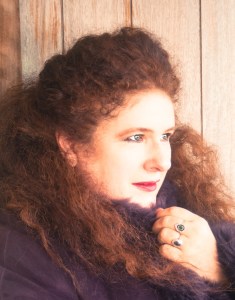 Judith Mok was born in Bergen in the Netherlands. She has published two novels with Meulenhoff. She has published three books of poetry in Dutch. She moved to Dublin and published a novel Gael with Telegram London and a book of poetry Gods of Babel with Salmon Press. She has written widely including for radio and Newspapers, which have appeared in the Sunday Miscellany books edited by Marie Heaney. Her short stories have been short listed twice for the Francis Mc Manus award and her first novel The innocents at the Circus for the Prix de l’Academie Francaise. Her work has appeared in Anthologies and nationally and internationally in numerous literary Dutch, Irish, French, British and American magazines. Her translated erotic poems by Verlaine and Rimbaud appeared in the book Obscene Poems by Verlaine and Rimbaud with Vasalucci. Her next book The State of Dark will appear in 2017. Judith who is a lyrical soprano has travelled the world for years as a soloist and a vocal coach teaching master classes.
 -
The Women of 1916
‘the state recognises that by her life within the home’
article 41.2.1. The Irish Constitution
Years before the offending article
was even conjured up by De Valera
and the very Reverend John Charles McQuaid
with the help of a pack of Jesuits –
the plan was set in train
to banish these biddies
back to their kitchen sinks.
The banishing tool of choice
was the airbrush.
The women of 1916
did not sit back
and wait in the wings of history
with tricolor dribblers to mop
the runny eggs
from the chins of the rebels.
These unmanageables,
were there from the start.
They could knit
a thirty two county Ireland
in plain and purl,
with their eyes closed
and never drop a stitch,
while rearing seven sons
and as many daughters.
The rifles they held
were not for showing
but for using.
The handgun could nestle on a hip
or be tucked into a petticoat.
Webley, Colt, Smith and Wesson.
Winnie (with the Webley) Carney
was one of the last people out of the GPO,
revelvor in one hand, typewriter in the other.
I write it out in a verse-
Lily O’ Brennan, Constance Markievicz,
Helena Moloney, Ellen’Nellie’ Gifford
May Moore , Rosie Hackett, Dr. Kathleen Lynn
Margaret Skinnider, Rose McNamara
Nell Ryan, Lizzie Mulhall, Kathleen’ Kitty’ Fleming…
Whenever green dresses are worn,
some tricolor dribblers spill scorn.
The Women of 1916 is © Rita Ann Higgins and was first broadcast on Arena (RTÉ)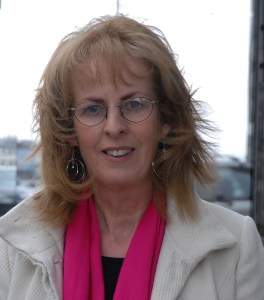 Rita Ann Higgins was born in Galway. She has published ten collections of poetry, her most recent being Ireland is Changing Mother, (Bloodaxe 2011), a memoir in prose and poetryHurting God (Salmon 2010). She is the author of six stage plays and one screen play. She has been awarded numerous prizes and awards, among others an honorary professorship. She is a member of Aosdána.
Rita Ann Higgins’s readings are legendary. Raucous, anarchic, witty and sympathetic, her poems chronicle the lives of the Irish dispossessed in ways that are both provocative and heart-warming. Her next collection Tongulish is due out in April 2016 from Bloodaxe.
 Chris Murray