• chris murray
  • journals – bibliography – publication notes
  • downloadable items – essays – media
  • copyright
  • Home

Chris Murray

  • Honour the women of Irish Theatre

    November 10th, 2015
    I very rarely add petitions on Poethead, but in the case of The Abbey Theatre’s baffling exclusion of women artists from the 1916-2016 Centenary I am willing to make an exception for a number of days. The issue of authority in the literary arts has always been problematic in Ireland. In poetry, in literature, and now in theatre it is usual for exclusions to occur. That exclusion is hurtful, demeaning and abusive is too much for me. That I saw my heroine Olwen Fouéré holding up a bit of paper calling for parity of esteem this morning has really angered me. They should be throwing roses at her feet. The idea that a skewed exclusionary narrative represents the intellectual and creative development of the idea of ‘State’ is not on. It is not acceptable. Eavan Boland referred to the absence of women artists in the canon as a ‘suppressed narrative’, there are too many fine Irish women artists for this type of exclusion to manifest at critical junctures in state celebratory events, in this instance a centenary event.
     

    Petitioning The Board of The Abbey Theatre, #WakingTheFeminists – Equality for women in Irish theatre

    Background: On Wednesday 28 October, the Abbey Theatre, Ireland’s National Theatre, launched its programme to mark the centenary of the 1916 Rising – an event that ultimately led to the founding of the Irish State. The Abbey Theatre and its members were actively involved in both the Rising itself and the debates around the founding of the Republic.
     
    1 out of the 10 plays programmed in the 2016 programme are written by a woman – 3 out of 10 are directed by women. #WakingtheFeminists is a campaign by Irish artists to demand change of the systems that allow for such chronic under-representation of the work of women artists at the Abbey Theatre, and in Irish theatre generally.

    From : Sign the Petition

    Image from Olwen Fouéré’s website.

  • “Inishturk” and other poems by Alvy Carragher

    November 7th, 2015

    Confession

    he gave me three Hail Marys,
    even though I couldn’t remember
    any sins to tell him and relied solely
    on things I’d read in Dennis the Menace,
    whispered words I’d heard my parents screaming,
    just to hear how they sounded, see his face fall
    and figure out how bad they were
     
    I sat in hard pews looking at my sister
    bent over in remorse and
    wondered if God heard me lying,
    stayed head bowed long enough
    to look like I’d said mine
     
    I slipped the Hail Marys into my back pocket
    and left my sins to sort themselves out
     
    we made our way home,
    two miles of country road,
    my sister high on forgiveness
     
    I pressed against the cold pane,
    our dog cracked against the chain,
    there was the smell of scrubbed floors,
    the mottle of memories stuck in our carpet
     
    I waited for the slump of my sister through the door,
    slower up the last hill home, I had left her there,
    the slap of my bag on my back
    and from my pocket
    the sound of Hail Mary
    screaming her own name
     
    the off-kilter crooning of my mother
    as she sang eighties music to the oven,
    it was easy then,
    lost in the ritual of coming home
     
    before the softness broke and the silence fell,
    we sat tight fists at the dinner table, waiting
    for his words, hoping they landed on someone else
     
    I want to tell my sister, even now,
    about the Hail Marys,
    how I should have said them for her


    Inishturk

    I slowed my step for you,
    as we dipped between hills,
    at the edge of the Atlantic,
    they sent us away each morning,
    no room in the cottage to hold us,
    you tripped to keep up, as we ran
    our small wild hearts out to sea
     
    at the cliff’s edge,
    our backs to the sun,
    that big American wind
    ripped the coats off our bodies,
    we dropped and rolled to keep from blowing over,
    cousins told stories of pushing battered cars in,
    to watch the sea’s snarl swallow them whole
     
    our uncle kept an eye on things,
    bent to the window of his front room,
    the shake of his sick hands
    pressed to the telescope,
    waiting for that terrible sea to rise-up
    and force out another goodbye
     
    we hid in the calm of the bay,
    scrambled over wet rocks and seaweed,
    settled to a day spent smashing barnacles,
    making bait to fish-out a hundred crabs,
    just to throw them back in again,
    until, one cracked against a currach,
    split its hard shell, and we stood still
    as the slosh of water pulled it under,
    the dull ring of death sat between us
     
    that night, playing suduko
    by the turf fire, huddled together,
    and you, too young to understand,
    watched my numbers dart across paper,
    we walked the black roads,
    the sky awake with starlight
    led us along pot-holed boreens,
    as we counted the wink of houses,
    and trusted the land beneath us


    The carpenter’s daughter

    sits in the sawdust heap, because it smells
    just like her father, all warm dust and work
     
    sweeps wheelbarrows of it out from under saws,
    the scent of steel, the blade still above her head
     
    pulls planks bigger than her across the room,
    wants to know how to fix a shelf, or sand a chair
     
    she loves most what wood can become,
    rubs the blisters on her soft hands
     
    they’ll turn calloused like his carpenter’s skin,
    a small sacrifice, to be the one, to make-
     
    a new world from that which has fallen,
    sliced from the sky to never see it again
     
    she has the gist, but not the knack,
    the gist is building with bravery
     
    to take a tree stripped of all its dignity,
    then put it back together tenderly


    It’s easier if you pick a moment

    one place in time where your eyes met,
    most likely there is red wine involved
    or mascara and bad but flattering lighting,
    there’s a dance floor with a pulse
    driving you into his arms, remember that
     
    or was there a simpler day,
    cocooned in duvets till afternoon,
    sunlight filtering your laughter
    and he made cinnamon toast
    in the sandwich maker,
    you got butter in your hair and the bed
    smelt like burnt sugar for days
     
    you probably fed each other, at least once,
    was it chocolate or grapes or
    another excuse to have your
    hands bare at the others lips,
    mouths salty with the taste of skin
     
    did you catch him, sometimes,
    shadowed in the morning,
    as he slipped into day-clothes,
    you pretended to be sleeping,
    so he could leave you a love note
    and the coffee seemed sweeter
    with his morning words
    penned across paper
     
    remember when you sat by water,
    head in his lap, just listening,
    he told you a story about lost loves
    finding their way back to each other,
    you didn’t think about the words,
    just thought that it sounded nice
     
    it’s easier if you forget the context,
    the fight before, the hours spent
    screaming over dirty dishes,
    how the bills grew up around you
     
    details will only make you forget,
    the part in the story, when he says
    he will always love her
    and you know with certainty
    that he means it

    Inishturk and other poems are © Alvy Carragher.
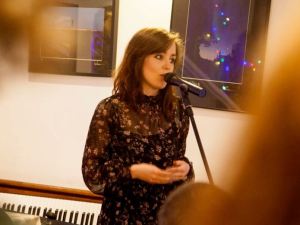
    alvyA Pushcart nominee, Alvy’s Carragher’s first collection is forthcoming with Salmon Poetry (2016). She has featured at events like Electric Picnic, Edinburgh Fringe Fest, RTE’s Arena and Cúirt International Literary Festival. She has a first class honours in her Ma of Writing from NUIG where she focused on poetry. Her work has been published in The Irish Times, The Boheymth, The Galway Review, Ofi Press Mexico, Bare Hands Poetry and many more. She is also an Award Winning Blogger at With All the Finesse of a Badger.
     
  • “blurring” and other poems by Kerrie O’ Brien

    October 24th, 2015

    Bamboo Grove, Kyoto

    everything seemed familiar
    and so we kept walking
    the light, hushed with green
    no path looked different
    we didn’t speak –
    a bright rain
    left the earth fragrant
    we found a temple
    hidden, waiting
    and paper fortunes
    only you could read
    your tears –
    gold rivers
    felt like stars
    falling on my hands


    Aftermath

    you know pride is a terrible thing
    and we’ll be a long time dead
    what does any of it matter now
    when it’s all stripped back
    it will hit you one morning
    crying making eggs crying trying to eat them
    the love won’t go away
    worse than the fear or the hate
    stubborn around you
    red ball and chain
    the days don’t make a difference
    I’ve tried to stamp it out
    like I’m constantly on fire
    when we meet now there’s a sadness
    like we’re talking from the dead
    like we’re both being unfaithful
    but also the odd beauty
    of how the love can still live
    even if we’re not in it
    we still talk
    we are always talking
    but never saying a thing
    and what are words
    they don’t matter
    they’re just the noise we make
    it’s muscle that has memory
    muscle that make me shatter and twitch because
    our bodies are used to touching
    memory and habit and want
    the body doesn’t understand it’s not allowed
    I focus on your eyes while I try to get used to it
    your hands two jump leads on the table
    I try not to touch
    I think you just want it to be ok
    I’ll put on the smile you offer, I’ll put on the mask
    I can see those eyes through it
    they tell me they’re sorry
    they tell me this is hard
    they tell me we can’t do it again
    all that love still pulsing
    but this time
    love saying no.


    Inherent

    my great-grandmother had it
    though few will talk of it
    how she lived on a hill
    closer to the heavens
    lighthouse
    where the cloud shadows
    would change the colour of the fields
    screaming yellow in July
    something sacred, godlike
    they would come for miles
    to be healed
    wide holes in their cheeks, mouths
    a lifetime smoking pipes –
    carrying too much
    elixir
    bird feather suspended
    in glass
    the scent
    would linger for days
    the sight of the wounds
    something about this
    stirs memory
    trembles within me
    the burning urge
    to cure


    Blurring

    Take off your coat.
    Let it fall from you.
    Want to watch you do that.
    I’ve been thinking of you too much.
    Now, I want to make you real.
    Do that and come here,
    Fall from yourself and don’t think.
    Stop talking.
    To name this moment
    Is to sap it of itself.
    Stop looking.
    Don’t ask love,
    It’s beyond me.
    Leave before I wake, will you?
    It’s kinder that way.
    Morning, and your searchlight eyes,
    Shining, trapping, blinding.
    Who can bear that?
    I’m sorry I talked
    To everyone but you tonight
    But I find I’m like that.
    Please accept it all, or go.
    It’s all the same to me, these days.
    Now I know I’m saying
    None of this out loud,
    But I’m hoping you’ll hear it in me
    This time,
    If you’re listening.


    Incense

    The bed is too small
    as I turn and try
    not to wake you
    your body is still unfamiliar.
    It could be anytime –
    my first time
    in your room.
    I should go.
    There’s a smell of incense
    you burn it like a priest
    hoping to purify
    you burn it like flowers
    that will cling and remind me.
    Slowly you begin to touch
    without opening your eyes
    as if your hand is awake
    and the rest of you sleeps oblivious to
    your slow touches and the morning
    making its entrance.
    I move with you
    without words
    my hands in your black hair.
    I’ll never be yours.
    Outside,
    There are no birds singing


    Core

    you need to be very still
    to hear the concert of your body
    to think about what you contain
    salt and water
    knows what it’s doing
    renewing itself
    back to earth
    it is a quiet thing
    this is where our riches are
    we are all red inside
    brimming with love
    all fluid and quiet and fire.
     
    These poems are © Kerrie O’Brien


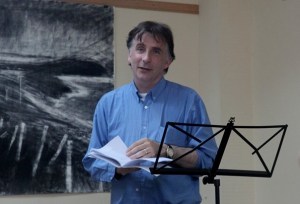
    picKerrie O’ Brien has been published in various Irish and UK literary journals. In February 2012 she was the first poet to read as part of the New Writers Series in Shakespeare & Co. Paris. Her poem Blossoms was chosen as the winning entry in the Emerging Talent category of the 2011 iYeats Poetry Competition and her work was highly commended for the Over the Edge New Writer of The Year Competition 2011 She was the winner of the RTE Arena Flash Fiction Competition 2012 and Culture Ireland sponsored her to read in Los Angeles in June 2012. She has received an Arts Council Literature Bursary for her first official collection and two of her poems have appeared in New Irish Writing in the Irish Independent. She was one of the emerging writers chosen to read at the Cork Spring Poetry Festival 2013 as well as the Poetry Ireland Introductions Series 2013, Listowel Writers’ Week 2013, Cuisle International Poetry Festival 2013 and The Bram Stoker Festival 2013.  She will have work forthcoming in The Bohemyth and The Irish Times. Her poetry chapbook Out of the Blueness was published in 2011 and she is currently working on her first official collection Illuminate.
     
    www.kerrieobrien.com

  • ‘Tread Softly’ and other poems by Michael J Whelan

    October 21st, 2015

    DELIVERANCE

    In the orphanage a child
    cowers from cursing men outside.
    She wants to climb back into
    her dead mother’s womb
    and hide inside its warm, soft,
    un-edged safety,
    where no explanation is needed
    or reason to hide under splintered
    staircases or run the gauntlet to basement
    bomb shelters, existing minute to minute
    with strangers until the dawn arrives with her
    deliverance and she refuses to be born.

    © Michael J. Whelan (Published in Cyphers, Nov 2011)

    GRAPES OF WRATH


    It happens on a Thursday, just after 2pm,
    when ancient cultures and beliefs conspire
    and vultures spiral above a peacekeepers’ camp,
    where cedars age slowly and the Litani River
    caresses the ground where Jesus turned water
    into wine, where artillery salvos rip the air
    on their long flight and bite deep, deep into
    that place of safety vaporizing its concrete
    walls and burning and blistering and tearing
    apart the mass of terrified flesh and innocent blood
    seeking refuge from the hate of man.

    A soldier climbs from the rubble limbs
    and discarded faces, his eyes caked black with tears,
    his hands at arm’s length clutching the newborn baby
    that looks like a headless doll.

    © Michael J. Whelan

    (Qana Massacre April 18th 1996)
    During ‘Operation Grapes of Wrath’ Israeli Defence Force artillery shells strike a Fijian UN compound in South Lebanon protecting 800 civilians fleeing the fighting, approx 120 died. Published in the Galway Review 2013 & The Hundred Years War – Anthology of 2Oth Century War Poems, (Bloodaxe 2014)


    BROKEN SPADE

    You lay in your frozen field, slack-jawed at how you
    came to be there, your mouth caked in last year’s mud,
    limbs twisted about your body as if in the midst of some
    remembered dance or tempered at your rotting crops,
    bent over in disgust, yielding in the half light and startled
    at the cold – they have never felt.
    This harvest, un-reaped and yet reaped upon you
    hides the stale shoe and crushed spectacles,
    the broken spade that hastily covered you in the soft
    clay you loved, now steeled hard against the sharp sky.

    I imagine the fears of your kin as they searched the high
    golden horizon that summer day.
    They might have felt the distant calamity that took you
    following the bullet casings along the beaten track,
    and I wonder if they found you,
    then I see the scars of cluster bombs and scorched
    stalks of your petrified labours and there, there in the shrapnel
    of this bitter harvest I behold your seed,
    torn apart but reaching out to the one who bore them.

    © Michael J. Whelan

    Published in And Agamemnon Dead – An Anthology of Early 21st Century Irish Poetry Edited by Walter Ruhlman & Peter O’ Neill (Paris, 2015)

    RENDEVOUS

    The sodden fields are bleak, the road
    is broken and I am tired.
    Rain shoots off my weary face,
    its cold tears count the ribs
    that cage my distant heart.
    At night I make my rifle safe,
    fling this conflict to the floor,
    it gathers round the worn-out boots
    that tread in miseries of a war.
    But I have a rendezvous,
    a memory in a future place.
    That short black dress, golden hair
    tumbling to her shoulders.
    Laying foetal, arms wrapping
    her soft body, kissing the curve of her
    neck, I breathe her in, capturing her.

    © Michael J. Whelan

    TREAD SOFTLY

    It’s raining, always is,
    that sticky hazy rain that gets down your neck,
    behind your ears and saturates your face, your hair
    as soon as you step from the vehicle
    even though the uniform is multilayered,
    your boots get soggy straight away
    and the pistol grip on the rifle resting in your arms
    slips in your fist.

    You’re not really afraid – for yourself,
    though your heart is racing approaching
    the recently finished mass grave- their hurting ground
    covered in fresh clay, flags and wreaths,
    you’ve just driven over the ancient village cemetery as you entered
    like it was a cross country speed test on rough terrain,
    the old grave markers are long gone.

    No, you’re not afraid for yourself,
    the fear comes when no adult arrives to greet you
    or check out your party as a possible threat
    save for the elderly ones corralling young children
    behind hedges and outhouses on the high ground,
    who watch you as you watch them
    barefoot and half dressed in the rain
    and you taking photographs of yourselves
    at the place of their parents.

    You – the uniforms that stormed into their hurting place
    feeling like liberators but to them resembling conquerors,
    you who come to help but instead bring memories of terror
    and usher a fear they keep from the last time
    soldiers conquered this place,
    you who tread softly then when you realize what you have done,
    when you see the muddied feet of innocence and the future in their eyes
    peering down.

    © Michael J. Whelan

    Published in Three Monkeys, online magazine, Feb 2013

    PARADOX OF THE PEACEKEEPER IN THE HOLY LAND
    I am forever walking upon the shore
    betwixt the sand and the foam.
    The high tide will erase my footprints,
    and the wind will blow away the foam,
    but the sea and the shore will remain forever

    Kahlil Gibran

    In Lebanon I sought redemption
    like the pilgrim at the crossroads of Heliopolis,
    on the Bekaa’s great range where Bedouin caravans met
    and Romans laid their bodies down in supplication to their gods,
    to Aphrodite and Jupiter, and long before this peacekeeper came
    on what seemed a fools errant, whose only armour
    was the feeble weave of a blue flag,

    before these wars for modernity and religion
    where the new city’s shadows fall like dead soldiers
    on the broken steps of Astarte’s Temple,
    where the priests of Baalbek burned incense,
    lay themselves prostrate with tribute and homage
    beseeching fertility over the land and on warriors on the eve of battle

    and the same priests parcelled out her favours to believers
    who built new columns to the sun god on her ruins,
    before all this there was blood on the stones and in the dust
    of Tyre, of Sidon and in Byblos,
    and the gods looked down from the heavens and laughed
    for they knew that man knew not of their fallibilities,
    their eyes kept the storms that belief constructed –

    the defence of Masada by Jewish zealots
    against ramparts, siege-towers and battering rams of enemies – never giving in,
    the caliphs who ordered the conquests of Bilad al-Sham,
    Helen who setting forth from Constantinople to Jerusalem
    in search of the Cross set beacons ready to burn along the way
    and Constantine, her son, converted his empire in promise to his mother

    who lit the path for Crusaders and the burial places of a thousand years
    under these skies of mumatus clouds that hang like fronds of fruit
    above the hills at dusk, who rest like relics with Saracens
    and Mamluks, the swords of east and west,
    the holy books of Abraham, Mohamed and Byzantium,
    where Gilgamesh cleaved the cedars for his ships

    and where now the free man might dig with trowels once more,
    adjure in the Temple of Baachus, revere the flake-bones of gladiators
    under the triumphal arch of Al-Minah – the hippodrome at Tyre,
    where fishermen still cast their nets on the same Phoenician shore
    in Galilee beneath the stirring sands of Jordan
    and camels sometimes carry scholars through the Quadisha Valley
    like in the old days passing slopes of red anemone, wild tulip, oleander and poppy

    and young girls might seek the damask rose in the gorges of forgotten ambushes,
    where sultans and kings slaked their pious thirsts – slew their enemies
    and exiled the youth of many futures – those pawns who lay penitent at the altars,
    who laid down in the Temple of Aphrodite like the peacekeepers lay down now,
    yes we who lay down with our wives and lovers like knights with sacred talismans
    and far away they lie down with us under the same different moons,

    they wait and pray looking up upon the many faces of the gods
    who see us only as a fleeting moment on the pages of passing civilizations,
    the rising and setting of the sun and we know the signal fires are burning,
    the funeral pyres rise up in pillars of ash in the marches between the watchtowers
    along the border wire and we know that so much metal has been fired in this cauldron
    from arrowheads and spears to icons and the corrupted jagged shards of bombs,
    shrapnelled landmines and bullets. On a rainy day we can almost smell it
    weeping through the red mud tracks of an army and we must watch our step.

    © Michael J. Whelan

    Published in A New Ulster, issue 32, May 2015

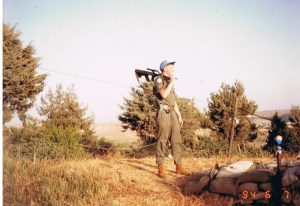
    poethead 2Michael J. Whelan is a soldier-poet, writer & historian (Curator – Irish Air Corps Aviation Museum) living in Tallaght County Dublin. He served as a peacekeeper in South Lebanon and Kosovo during the conflicts in those countries in the 1990s, which inspires much of his work. He was 2nd Place Winner in the Patrick Kavanagh Poetry Award 2011, Shortlisted in 2012 with a Special Commendation in 2013. He was 3rd Place Winner in the Jonathon Swift Creative Writing Awards 2012, shortlisted in the Doire Press and Cork Literary Manuscript Competitions and selected for the Eigse Eireann/Poetry Ireland Introductions 2012. His work has appeared in the Hennessy New Irish Writing 2013, Poetry Ireland Review, the Red Line Book Festival and many other literary magazines and newspapers. His poems were recently published in a new anthology titled The Hundred Years War published by Bloodaxe UK in May 2014.

    Michael blogs at https://michaeljwhelan.wordpress.com/

  • ‘After The Barbecue’ by Kevin Higgins

    October 20th, 2015

    After the Barbecue

     
    People like us,
    always been here
    and always will,
    until we bequeath this land
    to the bacteria.
    We were fine with
    the War of the Spanish Succession,
    only thought it not quite long enough.
    When the day gets here we’ll happily
    bless our great-grand-children as they go guffawing
    off to the next officially sanctioned
    bloodbath of the nations. But have agreed,
    by unanimous vote at tonight’s meeting,
    we must build a barricade against this.
     
    Those people’s demise –
    Thomas and Sylvia, their children Jim, aged 5;
    Christy, aged 2 and Mary, five-months-old.
    Willie Lynch and his partner Tara,
    their Kelsey aged 4, Jodie aged 9.
    And Jimmy Lynch, 39 –
    in the Carrickmines
    barbecue is a tragedy
     
    made all the worse by how
    it contented itself
    with half-measures.
    We won’t have the gypsy leftovers put
    in the field across from us,
    to mar our hard earned view
    of the surrounding countryside.
     
    We are not the Ku Klux Klan,
    in fact are profoundly jealous
    of their much better outfits
    and all the great movies
    they, without fail, get to turn up in.
    We but dream of riding horses
    sharp as theirs, as we make our stand
    in defence of what we see out the window
    when we alight of a morning
    on our genetically superior
    polished, wooden floors.
     
    These people’s Kentucky Fried
    relatives are not our issue to solve.
    We have scribbled our names
    in their book of condolences.
    but you, me, and The Evening Herald know
    we are what most of the country thinks
    when it draws its floral curtains,
    shuts its eyelids and tells itself
    truths it will never utter in polite company,
    or in front of nuns who do great work
    in the third world and other parts
    of Africa. We realise
    we’ll be vilified by people
    the majority of whom wouldn’t have them either.
     
    We just don’t want them here,
    or, if possible, anywhere else.
     
    After The Barbecue is © KEVIN HIGGINS

     Kevin Higgins is co-organiser of Over The Edge literary events in Galway City. He has published four collections of poems: Kevin’s most recent collection of poetry, The Ghost In The Lobby, was launched at this year’s Cúirt Festival by Mick Wallace TD. His poems also features in the anthology Identity Parade – New British and Irish Poets (Bloodaxe, 2010) and one of his poems is included in the anthology The Hundred Years’ War: modern war poems (Ed Neil Astley, Bloodaxe May 2014).
    Higgins’ poetry was recently the subject of a paper titled ‘The Case of Kevin Higgins: Or The Present State of Irish Poetic Satire’ given by David Wheatley at a symposium on satire at the University of Aberdeen; David Wheatley’s paper can be read in full here. Mentioning The War, a collection of his essays and reviews, was published by Salmon in April, 2012. Kevin’s blog is http://mentioningthewar.blogspot.ie/ and has been described by Dave Lordan as “one of the funniest around” who has also called Kevin “Ireland’s sharpest satirist.”

  • “The Halved Stone”; a word image

    October 15th, 2015

    The Halved Stone

    Sheared,

    It’s round hump
    Suggests a brother,

    Saw driven to ( im)perfect
    Its egg.

    An ancient sand crack
    Sounds-

    Unsound, tower cannot
    Upbuild its walls,

    It would ring wrongly,
    enough to disturb a nest.

    Word Image © Chris Murray


  • “Nadelah” and other poems by Geraldine O’Kane

    October 10th, 2015

    Hitting to Hurt

    (after ‘The Leaping Lamb’)
     
    Everybody saw us as the bull
    and the lamb, that is how I hid for so long.
     
    He was a chunk of a man; I sliced him
    to bits with my words, buried him with shame.
     
    I am sorry for using such callous language,
    I’ll try to rein myself in; let’s start again.
     
    The first time my hands rose, it felt
    like they belonged to someone else;
    afterwards I wished so hard that they did.
     
    It’s not like it happened everyday
    but the second and third time I knew
    the fists were mine and I kept on using them.
     
    He stood there as I threatened to leave him
    if he didn’t fight back or if he did I’d go anyway;
    soon I was saving all my energy and hitting to hurt.
     
    Once I drew blood and no longer saw him
    as either bull, husband or human being;
    it was then I knew I needed help.
     
    Commissioned by Artist Brian Kielt for an Exhibition in aid of StART Talking a local mental health charity.


    Nadelah

    (meaning one who has been transformed)
     
    Pre-boundaries and pre-colonisation, I was Nadelah to my Native American tribe, a sacred gift, a two spirited, third gender, in continuous state of transformation. Born raw, I existed ungendered until the ceremony of the basket and the bow, where my choice let me live revered not feared. Pre-boundaries and pre-colonisation, I transcended the masculine and feminine, to see in both directions. I was a conduit to the spirit world, I lived a life of community, unaware of my sexuality, until the white man straightened the circle I inhabited. Renamed me Berdache – but I tell you I was slave, sexual or otherwise to no one.
     
    Biligaana must show himself
    a liar or conceive –
    I am his single spectre.
     
    Berdache (Boy kept as sexual slave)
    Biligaana (Navajo for White Man)


    The Living Room

     
    My grandmother’s kitchen was a tea cosy,
    knowledge and love brewed there in equal measure.
    Everyone reached full flavour inside that room –
    with the softest unsliced bread in Ardboe
    and the sweetest bananas.
     
    The cake mixer was always whipping up something
    to go with the tin kettle permanently on the boil.
    If you were lucky you would hit on licking-time;
    buttercream from the bowl is best! Days clinked
    to a start, and ended with spoons stirring hot milk
    and bread for her cats. She smoked twenty a day
    in that room with hardly a window open and
    forever smelt of Yardley – Lily of the Valley.
    Evenings rendered the kitchen silent
    as everyone poured into the living room.


    Playtime

     
    We were playing hide and seek round our estate,
    when he grabbed my wrist.
    Much older than the other kids
    he would know all the good places, so we ran.
    He took me to the best spot,
    “scream”, he said,
    “no one will hear you.”


    Presence

     
    He used to greet her with a noose,
    Wait for her to ‘talk him down’.
     
    Until the sight had her turning on her heel,
    voice squeezing through the closing
    front door, “do it, see if I care”,
    unsure she believed.


    Doorman at ‘Invisible Illness’

     
    Falling out of sleep into feeling
    all belonging to me is dead,
    yet you are there right beside me;
    my dad calls it his black days,
    mum calls it the days her head
    is not in this world.

     
    In my teens this didn’t register
    now I know the fight too well;
    days when I am quiet,
    methodical to rise and shower,
    dress, make myself up before breakfasting
    but always a hug and a kiss –
    wishing you a beautiful day,
    before I head out to work,
    you keep the wounds from my door.


    Tree Tunnel

     
    We walked mid-road under the tunnel of trees
    huge trunks branched above us
    their leaves feathery boas floating
    from about their necks, sheltered us for a moment
    – only a moment
     
    In a split second through the arc of recess
    where the sun had warmed to our skin
    came sheeting rain; energetic beads
    with bellies full readily dropping their payload.
     
    We did not twist with arms flung wide,
    in circles with heads thrown back,
    catching rain with our open mouths.
    After twenty minutes and two car passing’s,
    we were drenched chills crept over our bodies.
     
    We stopped sought sanctuary along the verge
    you mimicking the tree trunks
    providing as much shelter as your frame would allow,
    curling in on me, latent, against your chest,
    chin resting on my porous hair,
    elemental I attuned to the call –
    of your heartrate, your skin…
     
    when a car pulled over
    sweeping us away
    from the summer downpour.
     
    ‘Nadelah’ and other poems © Geraldine O’Kane.


    9975568Geraldine O’Kane is originally from County Tyrone. She has been writing poetry since her teens, and has had numerous poems published in journals, e-zines and anthologies such as BareBack Lit, FourXFour, Illuminated Poetry Ireland, Poetry Super Highway and more. Geraldine is a regular reader at the Purely Poetry open mic nights in Belfast. She has previously been part of a local writing group at the Craic Theatre, and has performed some of her work in local theatres and at the Dungannon Borough Council Arts Festival. Her poetry is mostly inspired by observation and the human condition. She specialises in micropoetry. She held her first solo exhibition in the 2013 Belfast Book Festival, using art, dance and music to interpret micropoetry centred around the theme of relationships and decay.
     
    The Poet O’Kane


  • ‘The Talking Cure’ and other poems by Angela Carr

    October 3rd, 2015

    The Tiger’s Tail

     
    City, a howl of chemical laughter;
    menace fingers the air, seeking purchase
    in the drunken smoulder of narrow streets.
    Young girls toss ironed curtains of ebony hair —
    shared tribal head-dress. Tiger sucklings,
    knock-kneed, moon-eyed calves, they perch on the heights
    of borrowed triumph: Prada, Miu Miu, Louboutin.
    Fierce children, almost feral, wresting frenzied
    joy from the teeth of new calamity:
    night yawns deep, and they do not know it.
    Car headlamps sweep the junction, horns blare;
    ground shifting beneath them again, the girls
    totter into the bloom of darkness,
    each on milky limbs, pale and slender as a birch.
     

    Occupied

    28 October 2011
     
    White slab on the doormat, postmark,
    a familiar china blue — the forfeit
    of dignity in monthly increments —
    and I’m sick to my stomach, again;
    on TV, Occupy Wall Street,
    as though greed were a discovery,
    injustice, a shiny toy or the new black.
     
    I’ve been in my foxhole for three years now,
    dug in behind enemy lines: terraced walls,
    the polite exterior of war; wrestling
    the slick of their machinery, bare hands
    ink-bloodied in daily skirmishes with quicksand
    bureaucracy and you — with the placard,
    the ironic slogan — where the fuck were you?
     

    Junkie

     
    iPod, laptop, coffee machine (never used),
    good for fifty euro, maybe more;
    not to be sniffed at, enough to score
     
    probiotic yoghurt, three weeks of Lexapro,
    prescribed, of course. You’re nothing without your health.
    Sweating, nerves buzzed, I trip rain blacked streets,
     
    flash electrical goods at likely marks:
    people who still care about appearances.
    Don’t judge me, I wasn’t born this way.
     
    I blame my parents — the ones who weaned me
    on this crippling addiction to comfort — pushing
    Food, Money, Education as security.
     
    And when the world takes my roof, I learn to crave Roof.
    And when the world take my land, I learn to crave Land.
    And when the world takes my voice, I learn to crave Voice.
    And when the world takes my power, I learn to crave Power.
     
    My parents should have raised me a gypsy:
    shown me the road, the cut of air,
    the smell of dirt.
    I smell it now.
    It’s close.
     

    The Talking Cure

     
    The day I pull my face together,
    paint lash and liner (the ordinary mask)
    is, predictably, the day you make me cry,
    as though the smudge of black across my lids
    is just the beginning: a surface schism.
     
    You draw me like a rotten tooth:
    another battle-blooded version
    of myself — raw and tentacled, untethered —
    and, as you show me the extraction,
    hold me up and turn me over,
     
    I hang there, and sit here —
    all tear-stung, throaty bile-burn,
    oozing rust-rivered, black-eyed jangle —
    and poke the ragged opening
    with my tongue.
     

    CAT Scan

     
    A craw wind catches me and I trip
    past gatepost guardians, the turn of railings,
    into the hospital grounds. Hypodermic
    drinks darkness deep, shows it to the light;
    an apple’s skin can never know its core.
    In the sting of a burnished room,
    glass and disinfectant hold me safe and distant,
    the scratch of gown makes me smaller than I am.
    A cracked voice cuts into the hollow
    of the machine, as it spins and slices me
    like ham. Don’t worry, it says. You’re almost done.
    Inside the blink and grind, the growl of plastic –
    deep and still – I see a field in the half-light
    of summer’s dusk, grasp a long feathered grass,
    the nub of its soft head, wet like a kiss.
    Three black lines, track to another somewhere,
    pass the house and barn, their cut silhouette
    gentle: an inevitable homecoming.
    I find a face in a tree, there; black eyes,
    truffle snout, mouth agape in silver skin.
    I hold its gaze in the drizzle of darkness,
    humming to myself; the tree bends to listen.
    I hum the song again, in the quiet room,
    where they tell me, spinning tree, grass, night,
    through and through my fingers. Back out on the street
    the wind shifts; I brace for the oncoming squall.
     

    DIGITAL CAMERA
    DIGITAL CAMERA

     
    Angela T. Carr is the author of How To Lose Your Home & Save Your Life (Bradshaw Books, 2014). Her writing is widely published in literary journals and anthologies — Mslexia, Abridged, Bare Fiction, The Pickled Body, Crannóg, Boyne Berries, Wordlegs — and has been broadcast on RTE Radio One. Three times short-listed for the Patrick Kavanagh Award, her debut collection won the Cork Literary Review Poetry Manuscript Competition 2013, judged by Joseph Woods. In 2014, she was selected for the Poetry Ireland Introductions series, short-listed for the Listowel Writers’ Week Single Poem Award and the Cúirt New Writing Showcase, a finalist in the Mslexia Poetry Competition, judged by Wendy Cope, a runner up in the Over the Edge New Writer of the Year, and winner of the Allingham Poetry Prize. Angela has read at numerous literary events and festivals around the country. Born in Glasgow, she lives in Dublin.
     
    Website: A Dreaming Skin
    Twitter: @adreamingskin

     
  • Let’s Hear Irish Poets Speak; the need for more poetry audiobanks in Ireland

    September 30th, 2015
    Since this plea was published at The Bogman’s Cannon, I have been notified that one Irish University has been creating a collection of audio poetry. This was brought to my attention via comments under the original posting. Please check out the Seamus Heaney Centre Digital Archive & The Queen’s University, Belfast, Archives as well

    The Electronic Poetry Center (U.S) was founded in 1995. UBUWEB was founded by Kenneth Goldsmith in 1996, an audio archive housing avant-garde works including visual, concrete, and sound poetry, UBU also holds film files. PENNSound was founded in 2003. To date, one Irish University has made a step towards providing accessible poetry archives in Ireland. Poetry Ireland has not gone an inch toward increasing accessibility to Irish audio poetry. Why is this? Whatever way we choose to look at this situation, we can see that despite the tourist push on arts here. Ireland is one to two generations behind best practice in the area of accessibility to audio poetry. We focus on pushing a few poets (mainly to the American market) and beneath the colossus-like feet of the Yeats, the Muldoons, the Heaneys, and the presidential poets, the green shoots are strangled and lacking in sunlight. I try very hard to understand why the academic and poetic establishment has such a narrow and untrusting vision of contemporary poetry, and I cannot conclude but that it represents a ‘business’ approach to the arts. Conservative fears of being found out for this lack has promoted a culture of safety, a critique grounded in a narrowly defined ideology that has destroyed at least a generation of young writers. Some poetry audio does exist via the Seamus Heaney Centre, or maybe hidden in the pages of the Irish National Broadcaster’s site. Even then they can be found scattered about the corridors of Youtube. This thinly scraped and scrappy approach to poetry audio illuminates a lacklustre approach to the art which is just short of disrespect. 

    Poetry readers and writers are poorly served by critics who do not understand form, managers who do not understand process, and overweening established poets who feel that they must stand between the reader and the work. The reader of poetry is distrusted or is considered immature in their encounter with the poem! There is a contemporary poetry and it is thriving but it lacks good infrastructure vis experimental spaces for emergent writers and the provision of audio spaces where we (the reader) can find poets like O’Driscoll or Ní Dhomhnaill speaking of their work and their interest in the process of creation. The fact that a new generation of emergent writers must await vehicles like Poetry Ireland Introductions to find an audience hints at a paternalistic approach to poetic works that see a few dominant poets stand between the reader and the work as if it were radioactive.

    The Irish poetry audience like to go searching, hence they will go to where accessibility is respected, to UBUWEB, to PENNSound, to Jacket2, or to The Electronic Poetry Center. I suppose that the difference between these places and the half-assed Irish approach to providing good accessible infrastructure and experimental workspaces to Irish poets is that the nous necessary to set up spaces wherein poetry can grow and develop its audience is driven by the poets themselves who understand how to bring on the next generation rather than suppressing them! As an example of poorly thought out approaches to writerly encouragement, Poetry Ireland deleted its 12-year-old forum in 2013, taking with it space where poets peer-reviewed and experimented with form. There was no portability to the archives, and the remaining poets had to go in and copy everything to archive it elsewhere.

    Here are some ideas regarding accessibility and archive that might interest working poets.

    1. An audio archive need not be complex. It involves the use of mp3 uploads, there are multiple types, like Soundcloud, Audioboom, and etc. The PENNsound Index is very simple but it allows wonderful access to lectures and readings. cf.  PENNsound Authors.
    2. Podcasts can be created using OS tech like Drupal, this example was sent by Mark Conroy.
    3. Instead of sending everything to private concerns like broadcasters, would it not be better to institute an archive where uploads that originate with broadcasters can be jointly housed and be entirely and properly attributed to their source?
    4. There is a need for experimental poetry spaces, both written and audio, as there is a need for a drop-in place like Kelly’s Writer’s House for talks and readings. Maybe what we need to see as readers and writers of poetry is passion for the form by those who purport to manage it.

    There is a singular lack of cohesive thought given to platforming a generation of writers. There is a shabby merry-go-round approach to platforming the same six or seven poets as representative of Irish poetry internationally, it is embarrassing. The looming gap in how we present poetry here, especially to our disregard for women poets is wrong, really wrong. Half of the poets we push have been dead years. Recently on St. Patrick’s Day the same bunch of poets were pushed out to represent Irish writing. In my opinion, people will just stop listening as ossification sets in. The guardians of poetry do a generation of poets a disservice with their ego-trips and their lack of support to young poets, as my grandmother used to say “fur coat, no knickers”; we are all shop front, a tawdry mess. 

    • Source: Let’s Hear Irish Poets Speak; the need for a poetry audiobank in Ireland
  • ‘Knitting a Father from Nettles’ and other poems by Annette Skade

    September 26th, 2015

    Medici Girl

     
    Beauty adorns virtue, my Father says.
    To save the family, and me, from the shame
    of my disfigurement, he orders a corridor
    to stretch from here to Santa Annunziata.
    I beg forgiveness from the Holy Mother
    at a hidden chink beside the altar.
    Her perfect face is turned from me,
    I am to reflect upon her piety.
     
    My bedchamber floor maps out the world.
    Every day I pace its length and breadth,
    dip toes in oceans, trace the course of rivers,
    trample the towers of the powerful,
    reach the very edge, the land of monsters,
    half-made things, strange and magical.
    I slide down the wall, squat in this place,
    feel light from the high window on my face.
     

    The Garden of the Fugitives

     
    These castings from the space
    where flesh and bone used to be,
    the moment fixed in gypsum.
    Head tilts back, eyes roll, mouth loosens.
    The mould presses replay
    of the same death throe, sends one
    to London, another to New York.
    No grave goods, no funeral.
    Lost at sea, the remains
    must fetch up to grant a burial.
    The ones left behind scout and pray
    for anything to wash on shore,
    hope ebbing with each acrid tide.
    Years back, his body at the pier-
    still himself- he held the spark for hours.
    I wasn’t there when it left him,
    came back to find a shell.
    In less than a day his skin a husk,
    to cover what had once been radiant.
    Here is a zero, an indent in black sand,
    ablaze with presence. I pour
    handfuls of lava dust
    on this never-living kernel,
    put words on the frozen tongue,
    in place of a coin for Charon.
     

    Knitting a Father from Nettles

     
    Scrape years of dirt
    off the date, rip nettles
    from the headstone.
    Gather armfuls.
    Pay no heed
    to swollen knuckles,
    red welts at the wrist.
     
    Wrap stem after stem
    around the needle,
    fibrous strands of story,
    shreds
    of faded photos,
    in—over—
    under.
     
    Stay silent.
    Not one word
    to pass your lips.
    Echo his ghost,
    rarest of visitors,
    the slow shake of head
    at the bottom of the bed.
     
    Bind the waist
    with a knitting belt
    to pass a needle through.
    Knit one–handed;
    nursing the baby,
    stirring the pan,
    stacking the shopping.
     
    Shake out the finished thing
    to settle on the space
    around a father:
    a winding sheet
    for a dinge
    in the mattress.
    Begin again.
     
    Knitting a Father from Nettles and other poems are © Annette Skade

    thorston-merz-colourAnnette Skade is an award-winning poet and teacher, living and writing on the Beara peninsula on Ireland’s south-west coast. Her first collection Thimblerig was published following her receipt of the Cork Review Literary Manuscript prize in 2012.

    She has a degree in Ancient Greek and Philosophy from Liverpool University and she has just completed an MA in Poetry Studies from Dublin City University, where she read everything from Anne Carson to the York Mystery Plays, Elizabeth Bishop to Maurice Scully.

    Her poems have recently appeared in the SHOp poetry magazine, Abridged and the Cork Literary Review.

    • Annette Skade on Poethead
    • Bradshaw Books
    • Annette’s Website


←Previous Page
1 … 36 37 38 39 40 … 106
Next Page→
 

Loading Comments...
 

    • Subscribe Subscribed
      • Chris Murray
      • Already have a WordPress.com account? Log in now.
      • Chris Murray
      • Subscribe Subscribed
      • Sign up
      • Log in
      • Report this content
      • View site in Reader
      • Manage subscriptions
      • Collapse this bar