• chris murray
  • journals – bibliography – publication notes
  • downloadable items – essays – media
  • copyright
  • Home

Chris Murray

  • ‘Making Monuments’ by Christine Murray

    February 10th, 2015

    Making Monuments

    1.
     
    The whole of the waiting stone is beige coloured.
    It is hiding its silica, their minutiae. Although I
     
    have found dashes of it left as glitter on things,
    things like tables, chairs. My own face glitters with it.
     
    I gather up the gaudy granite slivers, they flake like
    brittle lizard skin mottling in my hand, there.
     
    I can hold this smooth round pebble, and warm
    it through. It is stone silent not budding from or
    to anything,
     
    but I can feel its waiting.

    2.
     
    I cannot get into them. Laying the flakes out onto a table,
    or holding the fragile layers in my hands, peeling them back
    layer from metallic layer.
     
    They are big as skin, bigger than. They’re stone cells,
    the living and the not living tissue of stone.
     
    They are the skin cells of stones. They glitter in the
    black muck, the wet and humus muck of my garden.
    They decorate the bones of the nestled reed music,
    the flares and tubes of the bamboo that was hacked to
    death and tied with meat string,
     
    and I remember how bamboo’s music changed when the
    poison worked down from leaf to root, and still, they
    stilled their rushing noise until it bubbled underground,
     
    its hollowing sound.
     
    It is impossible to dig the tubes out, they generate,
    make their generations, gardens away.
    All round the hurt tubes are glitters of stone cells.
     
    Moon caught, or sun, they fight with dew to blade my eyes.
    Stone remnants. I lick my index finger and glitter them.

    .
    3.
     
    Their crystal greys are almost invisible,
    littering the paths where colour is,
     
    a blue bird is stone dead,
    nesting season is vicious. Wind lifts
    his blue,
     
    minutely investigates the small
    corpse and moves on,
     
    the blue against the grey
    and the crystal beneath,
     
    not the sun, not the moon exposes
    the glittering of this new fossil’s making.
     
    ‘Making Monuments’ is © Christine Murray

    10455198_1022566231090046_6024540073007849188_n
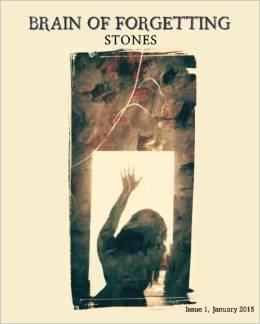
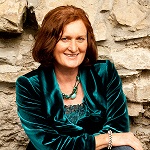
    Brain of Forgetting is a journal for creative work that engages with archaeology, history, and memory. Based in Cork, Ireland, the journal publishes original work by both new and established writers and artists from all over the world, and also takes an interest in the creative work of those who make the past their profession. Issue 1 called for submissions of poetry, flash fiction, creative non-fiction, photography, and artwork on the theme of ‘Stones’. The resulting collection spans geological time in exploring the human relationship with natural stone, prehistoric megaliths, stone objects, and architectural stone, revealing that stone is no more dead nor silent than the powerful voices within these pages. IN THIS ISSUE: POETRY by Karen An-Hwei Lee, Milton Bates, James Bell, Lindsey Bellosa, Martin Bennett, Mark Burgh, Paul Casey, Dawn Corrigan, Caleb Coy, Joseph Dorazio, William Doreski, Chris Murray, Morgan Downie, Paulette Dubé, Keri Finlayson, Siobhán Flynn, Pat Galvin, Richard Hawtree & moreChristine Murray is a graduate of Art History and English Literature (UCD, Belfield, Dublin 4). She is a City and Guilds qualified restoration stonecutter (OPW). Her chapbook Three Red Things was published by Smithereens Press in June 2013. A collection of poems Cycles was published by Lapwing Press in Autumn 2013 . A dark tale The Blind was published by Oneiros Books late in 2013. Her second book length poem She was published in Spring 2014 (Oneiros Books). A chapbook Signature was published in March 2014 by Bone Orchard Press.

    • ..Amazon Link to Brain Of Forgetting V1, ‘Stones’
  • Poems from ‘Her Father’s Daughter’ by Nessa O’Mahony

    February 6th, 2015

    Waiting Room

     
    The rules for survival:
    don’t catch an eye
    on the first day,
    look away
    if their blank grief
    grazes over you.
     
    If still here the next,
    permit a faint smile,
    a nod to a fellow traveller.
    But keep your space,
    don’t approach
    unless invited
    and only then
    with care.
     
    Avoid those
    with a story to tell,
    a need to eat you alive
    as they rave
    about hands squeezed,
    the twitch of a closed eye.
     
    You can’t spare
    a shred, a prayer;
    it’s dog eat dog here.
    The odds are too high,
    if somebody has to die,
    let the noose swing
    elsewhere.
     

    Deserted Village, Achill Island

     
    in memory of my father
     
    A gap between showers,
    blue filtering half-light,
    so we take our chances
    on the slopes of Slievemore.
     
    Those who’d called it home
    knew about impermanence,
    the reach of bog,
    the gaping sockets of roofs.
     
    Hap-hazarding lazy beds,
    slip-slides of water
    pouring down
    the side of the mountain,
    we settle for the track,
    the safety of shale and quartz.
     
    Sun wets white shards,
    crystal lures us
    as the track forks
    to where a burnt-out digger
    acts sentinel over oil slicks;
    wind chimes music:
    a plastic bottle
    trapped by bog-lethe.
     
    The quarry opens out,
    slag-heaps improbably white,
    as if someone had cleared snow
    into neat piles,
    or had scattered detergent
    like there was no need tomorrow,
    no white sheets to be spread out,
    no single rose bud to be left
    beside a hospital bed.
     

    Notes for an exhibit

     
    Spotfin Porcupine Fish, Cuba 1991,
    D.J. O’Mahony, MI31.1992
     
    It catches the eye:
    half globe, half water-mine,
    outrage suspended
    in display case 781 Vertebrata Pisces
    on the first floor landing.
     
    When threatened, it doubles in size,
    swallows air and water, bristles spines,
    sends neurotoxins till each tip sizzles
    with venom more potent than cyanide.
     
    Still netted all the same,
    (there is no armour against fate)
    transformed to artefact,
    presented in great state
    to one who’d done some service.
     
    What else need we know?
    That it spent a year
    atop a china cabinet,
    caught dust, snagged cloth?
    That it was the extra guest
    at many a family party?
    That, seeing it encased,
    a grandson made an excited phone-call?
     
    A six-inch black-type card
    acknowledges the donor
    of whom little is known;
    his dates are found elsewhere.
     

    Madam Butterfly at Beaumaris

     
    Tonight I observe the old rituals,
    run a warm bath, descend,
    soak, sponge, massage each limb,
    let the heat enter me.
    After, I’m gentle when I rub myself down,
    anoint with oil of cocoa butter,
    finger-tip smooth cream in elbow folds,
    around each breast, caress
    the waist sloping to buttock rise.
    I go to the window seat,
    kimono loose-wrapped, hair unpinned.
    All is readiness; Callas sings,
    a red buoy light flashes my intentions to the Straits.
    I wait for tomorrow
    when you said you’d come.
     

    Doorways

     
    Your first shot,
    me framed in the door
    of my grandmother’s house
    in Garbally.
     
    Our first stay,
    and it feels strange when
    I’m trusted with the key,
    with instructions
    on how to keep the fire lit.
     
    You mention
    Granny’s house
    and it sounds alien
    on your lips;
    she was dead years
    before I met you.
     
    But she always predicted
    the old sock would find
    the old shoe
     
    eventually.
     

    Role reversal

     
    after Eavan Boland
     
    There will come a time, mother,
    when the transformed spring opens up
    and the charioteer holds out a hand;
    he might have my father’s face, might not;
    his gestures might be gentle or rough
    as he eases you into a space made ready
    and shows you the pomegranate.
    And you will take the seed and eat,
    willingly perhaps, not caring
    that every bargain has its cost,
    or will your hand be stayed
    by the sun’s ray on your face?
    I will not have time to catch up,
    to forestall the nine long days,
    the nine long nights of wandering.
    And I’ll have no deal to strike;
    no backward glance, no waiting
    for the seasons to turn back to me.
     
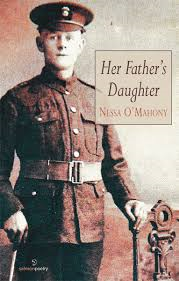
    These poems are © Nessa O’Mahony from Her Father’s Daughter  (Salmon Poetry)
     
    untitled

    NessaNessa O’Mahony was born in Dublin and lives in Rathfarnham where she works as a freelance teacher and writer. She won the National Women’s Poetry Competition in 1997 and was shortlisted for the Patrick Kavanagh Prize and Hennessy Literature Awards. She was awarded an Arts Council of Ireland literature bursary in 2004 and 2011. She has published four books of poetry – Bar Talk, appeared (1999), Trapping a Ghost (2005) and In Sight of Home (2009). Her Father’s Daughter was published by Salmon in September 2014. She completed a PhD in Creative Writing in 2006 and teaches creative writing for the Open University. She is a regular course facilitator at the Irish Writers Centre in Dublin.
  • ‘Warning Shots’ and other poems by Geraldine Mitchell

    January 31st, 2015


    Warning Shots

    When you live on the edge
    of an ocean, you cannot pretend
    you did not see it coming.
     
    The leaves are still, birds
    chatter, the sea is a sheet
    of steel. But out west
     
    where last night the sun
    left a sky illumined
    like stained glass
     
    dirt heaps up,
    someone else’s dustpan
    emptied on your doorstep
     
    and a magpie
    rattling gunfire
    at first light.
     
    First published in Cyphers and subsequently in Of Birds and Bones


    Flotilla

    ‘Heaven Scent’ Magnolia
     
    They tack in, full rig, under cover of darkness,
    dock before dawn in cement-paved ports
     
    at wharves of picket fence. The voyage
    has been long through winter’s bald estates,
     
    gusting grit and dust have shred their sails
    to votive rags, bound now to every leafless branch.
     
    Waxen petals blood-tinged white
    glow like manna at first light.
     

    First published in Abridged and subsequently in Of Birds and Bones


    Left Luggage

    This morning I woke with seawater
    in my mouth. My eyes felt rinsed,
    like after crying, my veins were
    scoured, my limbs wrung out.
    I was beached on a fogbound bed.
    Adrift. Missing the aquatics.
     
    Nothing is lost, just out of reach.
    Everything that ever was, is –
    somewhere – if only we can
    get there, find the key, remember
    the encrypted PIN, be brave enough
    to jump. Know how to swim.
     
    If only our feet have not been bound
    at birth, our wings trimmed back
    like wicks to suit our mothers, or
    cobbled to a gooey mess by fathers,
    confusing the discrete powers of
    son and sun, deluded and controlling.
     
    As long as no-one changed the locks
    along the way and didn’t tell us, or
    dropped the keys or, worse still, built
    a breeze block wall – a suicide bunker –
    performing hara-kiri on our dreams. Left
    bag and baggage rotting on the floor.
     
    This morning I was reminded
    by a taste of salt that we do not waste
    those supine hours spent sprawled
    unconscious in an oarless bed;
    that we are all at sea, our time well spent
    diving, back and back, to unpick locks, find home.
     
    First published in The Stinging Fly and subsequently in World Without Maps


    Le Jardinier Vallier

    after Cézanne
     
    There is an ease slips through the body
    after work well done. The heart
    minds its own business, leaves alone
    the slack repose of limb and bone.
     
    On summer days we’d find him there,
    still as a lizard by the orchard wall,
    hat over his eyes, his hands asleep
    on his thighs. The chair
    was never moved. C’est la chaise
    de Monsieur Vallier, we were told.
     
    As if this explained everything—
    the silence of his deer-like tread,
    his loping gait. The way he came
    and went unseen. How the garden
    sang with light and shade.
     

    First published in Small Lives (Poddle Publications) and subsequently in Of Birds and Bones


    The Suitcase of Bees

    She brought it with her everywhere,
    its silver, dimpled surface effervescent
    with the whirr of wings within. In public
    she would spread her skirt’s thick folds
    to mute the angry drone, paint a smile
    across her face, hope no-one would notice.
     
    Once inside her own four walls
    the vibrations grew so shrill
    she held her head and hummed.
    The ambulance crew was gentle
    as they led her owl-eyed through the gates,
    bees still rustling taffeta in her head.
     
    The case was silent, a ruse
    in sly collusion with the doctor
    who swore she was an expert,
    knew all there was to know
    of stings and swarms, their stridency,
    how to outface the queen.
     
    They built a wooden beehive,
    surrounded it with lemon balm, sweet basil, mint.
    And now, except for mild tinnitus, she is calm.
     
    A version first published in The Interpreter’s House; subsequently in World Without Maps

    Geraldine MitchellDublin-born Geraldine Mitchell lives on the Co. Mayo coast, overlooking Clare Island. She won the Patrick Kavanagh Award in 2008 and has since published two collections of poems, World Without Maps (Arlen House, 2011) and Of Birds and Bones (Arlen House, 2014). She is also the author of two novels for young people and the biography of Muriel Gahan, Deeds Not Words.
  • Christine Murray’s ‘Brightest Jewel’ at Poetry and Being

    January 30th, 2015
  • Mary Cecil’s Rathlin Island poems

    January 24th, 2015

    Adagio for Strings

     
    My heart that soared and climbed
    To other realms of fantasy
    That longs to find the answers
    To everything
     
    To dream those endless dreams
    To drift in waves of oceans
    Of oneness complete
    And really know
     
    In pools of beautiful thought
    Transport my soul
    Where heaven will be
    And let me be
     
    © Mary Cecil
     

    The Golden Hare

     
    Where wild flowers cling
    And heather sweetly grows
    The magic hare reclines
    With fur of glowing gold
     
    His spirit of quiet magnificence
    In lands of legends born
    Where unicorns are dreamt of
    And fairies sport in human form
     
    To catch a fleeting glimpse
    Against the burning sky
    A moment in a lifetime
    A flash of mystery goes by
     
    Where came his golden sheen
    That gift from other realms
    To add a glowing wonder
    Hidden in the ferns
     
    So swift he flees
    With graceful lops he leaps
    Transporting us to mystical lands
    To dream of when we sleep
     
    © Mary Cecil
    Rathlin Island
    .


    Written for Master Daire James Mc Faul of Rathlin Island

     
    so wild the seas that flow,
    Around his island home
    Gently slept a baby,
    Waiting to be born
     
    Dreaming in his world,
    Where perfection waits to be
    A Raghery boy is made,
    To cross the wildest sea
     
    Generations of hardy men,
    Created in his bones
    A harmony of oceans,
    With men from island homes
     
    So sleep and dream your days,
    The tides will wait for you
    To carry you ever onwards,
    Towards your faithful crew
     
    And you will lay your anchor,
    As generations before
    Where your footsteps lead you,
    Beside the beckoning shore
     
    8th December 2014
    © Mary Cecil
     

    Mystic Days

     
    I see you, a shadow in my mind,
    Like a half remembered dream,
    Drifting in the periphery
    Of my consciousness
     
    I glimpse you in the sunlight,
    Like a song floating in the air
    That cannot be captured,
    Yet so sweetly enraptures me
     
    My mind hesitates,
    To escape the illusion of you
    Your un-summoned presence,
    That embraces my heart
     
    Until again you vanish,
    Like petals in the wind
    The turbulence in your wake,
    Tearing the tranquillity of my reverie
     
    Yet stay my sweet
    In my loving longings,
    That we again can be,
    In our world together
     
    © Mary Cecil
    .

    profile for poetry picMary Cecil is the mother of large family and Grandmother to eleven. The widow of Rathlin Island’s famous campaigner, diver, author (Harsh winds of Rathlin) Thomas Cecil. Lover of Rathlin Island, Northern Ireland’s only inhabited island. Mary enjoys community development and current events. She has  been writing poetry for several years. Enjoys writing a variety of poems, spiritual, war, romantic, protest and nature. Keen to compose more poems based on Rathlin Island’s myths & legends. She worked in owning andmanaging tourist facilities both on and off Rathlin Island. Public Appointment as Lay Member, The Appropriate Authority, Criminal Legal Aid Board .
  • ‘The Brightest Jewel’ poems by Chris Murray and Aad de Gids

    January 24th, 2015
    .

    The Brightest Jewel

     
    The perfume of rosemary for remembrance.
     
    Little botanic flower baptised in Glas Naíon,
    the stream of the infants.
     
    I see the pink flower of your hand
    reaching up to your blind mouth.
    I breathe your name so you will live.
     
    The stream of the infants.
     
    Cymbidium Minuets, the flowers that you loved
    grow in a house of orchids near a dark still pool
     
    quiet by the stream of the infants.
     
    The Brightest Jewel is © Chris Murray and was first published in V4, Issue #4 of The WomenArts Quarterly Journal. (2014)


    The Brightest Jewel

     
    La Haïe Fleurie time capsule of reminiscence
    a hedge with jasmine crescent around graveyard
     
    the stream of the infants
     
    honeysuckle, jasmine scented glove
     
    as if to swathe you in soft deerskin
    and keep you from hard life as death
     
    the stream of the infants
     
    Anemone Nemorosa expressing a whiteness
    aspect of you outerbodily covert coveted, ferned
     
    quiet by the stream of the infants
     
    This responsorial is © Aad de Gids
    .
    Note: ‘
    The Brightest Jewel’ refers to the National Botanic Gardens in Glasnevin, Dublin. ‘Glasnevin’ is roughly translated from the Irish ‘Glas Naíon’ meaning ‘The Stream of the Infants’. The National Botanic Gardens share the both River Tolka and a perimeter wall with Glasnevin Cemetery, wherein a plot known as ‘The Angels Plot’, a possible resting place for my infant brother, although there are no records. See this article on Cilíní.
    .

    .

  • ‘Red Hen’ and other poems by Shirley McClure

    January 17th, 2015

    Maternity

     
    I want to have poems
    by Caesarean section
    wearing my Infallible lip gloss
     
    and counting on my designer
    obstetrician.
    I will keep my bump discreet,
     
    drink litres of San Pellegrino,
    strive to avoid striae gravidarum,
    laser them later if it comes to it.
     
    I want to live a normal life
    despite the media,
    and when it’s time,
     
    my lines will glide out raring
    to open their lungs and wail
    as true as any natural birth.
     
    Published in Clifden Anthology 35, 2013


    Red Hen

     
    We know nothing
    about hens, yet find ourselves
    in charge of half a dozen.
     
    The odd girl out –
    you call her Mrs.One – loses
    her footing in the mud.
     
    You carry her
    into the hen-house
    with piano player hands.
     
    Still there the next day,
    she has turned her blunt
    red beak to the wall.
     
    We talk to neighbours
    about red mites, infections,
    wonder if she’s egg-bound.
     
    We fill her bowl
    with cabbage-leaves,
    stroke her tight wings.
     
    Her sisters cry out,
    foul her water,
    shit on her plumage.
     
    We are told you’d get
    a new hen for the price
    of the vet. For the first time
     
    I want to crack a bird’s neck.
    Instead we hand her back,
    ailing but alive.
     
    Weeks later you find me
    in quick tears
    for the red hen;
     
    you brush the rust
    of my feathers, fill up
    my hopper with oyster shells.
     
    Published in Orbis, 2014
     

    Yoga class

     
    I skipped my yoga class
    because the man was due
    to fix the curtain rail.
     
    Upstairs, he poised in heavy boots
    on the edge of my bed,
    but not before prudently
    peeling back the elegant blue
    Brown Thomas duvet.
     
    Beneath him I stood
    at optimal angle to flaunt
    my cleavage, to hand him screws.
     
    Smoothly he inserted the rawl plug,
    then with slightly quicker breath
    he drove it deep
    into my freshly painted, trembling
    Orchid White walls.
     
    Threading the hoops unto the pole
    we lifted it together,
    our fingers touching
    as he tenderly
    completed the work.
     
    Later we did yoga together
    dreamt up new asanas
    and held them, and each other
    until light began slinking through
    my brand new curtains.
     
    From Who’s Counting?


    Text Sex

     
    Text messaging,
    the first hot Sunday in May-
    he: I hope you’re doing something
    wild. I’m
    busy with lambing.
    She: Sun-bathing
    out the back,
    does that count as wild?
    He: That depends
    on how naked you are…
     
    She pictures him delivering,
    arm-deep
    in placenta,
    imagining her nakeder, fuller,
    redder than she really is, outside
    on a blue rug holding
    a silver mobile phone.
     
    She turns over, pale still,
    unhooks her bra;
    they joke about his sad life
    chatting to sheep
    phone dating,
    dreaming of nakedness
    in Edenbrook Heights.
     
    If she were less prudent,
    She’d ask him over now,
    shower him, sponge each finger carefully,
    massage his neck and armpits
    with apricot soap;
    but it’s not like that with them,
    his wedding band has left a mark
    that no lamb’s blood can cover.
    She dresses, texts goodbye
    and phones
    the take-away.
     
    From Who’s Counting?

    ShirleyPhotoBoyle12_smallShirley McClure’s (1962-2016) Stone Dress was published by Arlen House in August 2015. Her CD Spanish Affair, with her own poems plus poetry and music from invited guests, was launched in June. All proceeds from the CD go to Arklow Cancer Support Group, where she facilitates a writers’ group. Her first poetry collection, Who’s Counting? (Bradshaw Books) won Cork Literary Review’s Manuscript Competition 2009. She won Listowel Writers’ Week Originals Poetry Competition 2014. Shirley lived in Bray, Co. Wicklow.

    • http://www.thepoetryvein.com
    • A celebration of Irish Women Poets on Bloomsday 2015
  • ‘Encounters with a Hare’ and other poems by Aoife Reilly

    January 10th, 2015

    Encounters with a Hare

    A fighter with grace and fertility
    magical helper in the unexpected
    moment of my early morning
    backyard smoke and scribbles.

    I know it means something when we meet.
    I wonder about your tunnel vision
    if you see me, seeing you,
    what you’re a sign of.

    Will it rain, what’s the right action?
    before I consult the cards you vanish
    quick as a breath
    over the stream and into the willow
    leaving my destiny up to me.

    Second coffee on the second day
    we meet again
    somehow I’m meddling in your world
    but in the split second of
    my mindless thoughts, your steady grace
    our rhythms mingle

    In the meadow sweetened hedgerow
    I could be Alice or Artemis
    and you the trickster
    reminding me I’m sometimes more,
    sometimes less than you

    Whatever the sign
    animal medicine startles me
    into stretching time and gratitude
    this everlasting game of hide and seek.


    Grianstad

    Swirls of starlings
    absail between sun and moon
    hurl themselves into a dance
    through ghosts of trees
    they go where they need to go.
    winter shrouds

    Long nights slide in
    embers empty the land
    dying woods wait for the earth to turn

    In the betwixt and between
    I am a still frame in the granite glow
    and leaves are twisted silver songs

    Stars gasp, turf smoke curls
    Crisscrossing the place where love was exhausted
    and blankets way down in the moment before light

    Ready now, I follow the starlings and birth another year.


    January Bliss

    The women bathe
    on diamond silver stone
    no want for summer dream
    or winter thought to dash
    the hope of a splintered ash
    gently nursing frozen water.

    Nothing frayed or betrayed
    my raven ally somersaulting over Burren
    between valleys, a slice of stream
    and fern cushioned wishes

    No longing
    but for the tree to find
    the whoosh through western winds
    and starling murmur,
    offering rest to each fox mother.

    All forgiven
    in the new year’s gasp.
    a splint of heaven
    and a prayer to the ground,
    reach in the cracks,
    spirit found.


    Camino

    Ghost leaved poplars flicker
    lighten my step
    their jigsaw bark seeps with story
    connective tissues and my muscles remember

    In walking I shed old stories
    I don’t even have to try
    every beat I drop in a little more
    bits fall to the road
    gold wheat horizon and blood red poppies
    bob the answers

    Old demons raise up to test me
    see if I’m willing to say goodbye
    to the furrowed brows and wrinkled thoughts
    time to sing out the sad lines

    I imagine
    what this place was like before us
    if it was always rich and strange
    would the sky still be sliced
    with swallows and pinches of light

    Evening settles into a blustery stretch of fire
    a swirl of me and fifty mountains
    the feeling of the beginning
    the deliciousness of the moment
    before the path owns you


    I Want

    That smile
    not the jaw clenching “grand”
    give me the real you
    with a freezing Atlantic dive of pleasure

    I’m not looking for that golden ticket to heaven
    I want the cake, chocolate heavy
    I want the sugar to stick to my lips
    to drag me to my senses and like swans
    we’ll fly the hell out of here to the free place
    beyond “thanks” and “good”

    Give me fresh south-westerlies,
    five knots rising slowly
    from my head to Malin head
    from the base of my spine
    to the edge
    to the circus tigress, cage less
    to the elephants bigger than the room

    I want the dirt under my nails
    to slide through slippery brown puddles
    and mossy tumbling limestone
    tripping me up til I remember myself
    I want the tightrope joy of a fall
    between docks and nettles

    Give me that imperfect circle
    the kink you can’t straighten out.

     © Aoife Reilly


    aoife reillyAoife Reilly is living in County Galway and is originally from County Laois. She is a teacher and psychotherapist. She has been attending poetry workshops with Kevin Higgins at the Galway Art Centre since September 2013 and has read at open mike of the Over The Edge Series at Galway City Library.
  • ‘Sufferance’ and other poems by Rebecca Foust

    January 6th, 2015


    Prayer for my New Daughter

     
    with lines by Audre Lorde and William Butler Yeats
     
    A soul in chrysalis, in first agonized molt,
    must choose: LADIES, or MENS.
    For some—for you—these rooms are fraught,
    an open field where lines are drawn: think of
    the White-Only signs. Or Serrano’s Piss Christ
    and Duchamp’s Fountain, pitted with acid
    and icepicks, de-faced. As for restrooms called
    “Bathrooms with Urinals,” no, his words
    will never dismantle the master’s house.
    For an hour I have walked and prayed,
    musing on icepicks, how they’re made
    to fit a blind hand; how kept so well honed.
    You are soft as sown grass and fierce as cut glass.
    You pack your new purse with lipstick, and mace.
     
    First published in North American Review, Fall 2014.
     
    [Note: written after an attack on transgender college students attempting to use a restroom with a sign that said “Bathroom with Urinals”]


    Sufferance

     
    1,123 reported killings of trans people worldwide within the last five years.—Examiner.com
     
    Transgender, as in counterfeit, as in someone appearing
    or attempting to be a member
     
    of the other gender, as in equated with transsexual
    or cross-dresser or pervert
     

    as in a term used by ugly girls as a defense mechanism
    against prettier girls
    . As in

     
    the only solution lies in psychology or religion or,
    until 1960, an icepick lobotomy
     
    done without drugs. Sufferance means passive permission
    from lack of interference
    ,

     
    as in tolerance of something intolerable, the teen set on fire
    at the back of the bus, the way the world
     
    daily scathes you, my fear for your safety a daily sufferance,
    as in endurance, as in [archaic] misery,
     
    as in Middle English or Latin equivalent of suffer, akin
    in its way to suffrage,
     
    the right to vote. As in vote for, support—child, I am trying
    to support you in this—
     
    as in Ecclesiastical, a prayer, an intercessory prayer or petition.
    Intercessory, come between.
     
    Intercede, yes—my body—between yours and theirs.
     
    First published in the Bellingham Review 2015 (Finalist, 49th Parallel Award)


    Blame

    the olive tree that dropped its great gout
    of dark fruit onto asphalt for the swerve
    and spinout etched in fresh virgin press;
    blame the natural law that made helpless
    bodies attract and collide then come to rest
    in the acacia-treed canyon. The driver sat
    behind the wheel, his side not pierced,
    not yet. Yes, he was drunk, but only
    with joy for the lovely, lithe boy
    now fused with the car, shrinkwrapped
    in leather and steel, and veiled
    in the webbed windshield; the boy
    who sang backup Gospel like a bruised angel
    and was the hope of his whole Bronx block.
    Blame the last bright note that opened
    his throat and sank into pollen and dust.
     
    First published in The Seattle Review, 2010.


    Gratitude for an Autistic Son

     
    He speaks, and when we speak, he understands.
    Not like my friend’s boy, who tap-taps the board
    behind his bed, sucking on both his hands.
     
    Who taps the wood with his forehead, in a kind
    of mandarin code. A light’s gone underground:
    no speech, but he can gesture and understand
     
    —better off than the steel-cribbed child, blind
    even to pain, left at the Home. Whose eyes are wide
    and blue. Who also began by sucking his hands,
     
    then his teeth came in. What’s left of his hands
    are mittened in gauze and bound to his side—
    our son speaks. He talks, we talk. He understands.
     
    And this is the crux: he talks; we understand
    when he hungers or thirsts, is sad or scared.
    He’s not left in his shit, we put food in his hands.
     
    He’s not wild pinned in a trap, chained
    to his own spine, gnawing the only way out.
    He speaks. He holds a pen. He understands.
    He has all of all of his fingers. On both of his hands.
     
    First published in North American Review, 2013, Second place for the James Hearst Poetry Prize


    Only

     
    O Heart, this happened, or it did not.
    In a room with green walls,
     
    my son was born. The cord was torn
    too soon, so his head
     
    was cut off to save his heart. He lived
    for a long time.
     
    For a long time there was no breath or cry.
    When finally he spoke,
     
    he spoke the wide, whorled leaves of corn.
    He spoke the crickets
     
    in clusters beneath the sheaves, he sang
    the soil in. He sang the wind
     
    in the dune and hush of ebb tide. Some say
    he died. Some say he died.
     
    First published in The Hudson Review, Summer 2013.
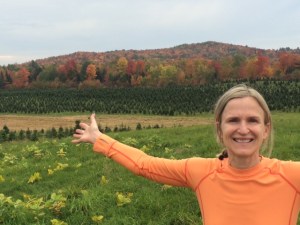
    Rebecca Foust
    Rebecca Foust’s most recent book, Paradise Drive, won the 2015 Press 53 Award for Poetry. Foust was the 2014 Dartmouth Poet in Residence and is the recipient of fellowships from the Frost Place and the MacDowell Colony. New poems are in the Hudson Review, Massachusetts Review, Mid-American Review, North American Review, Omniverse, and other journals, and an essay that won the 2014 Constance Rooke Creative Nonfiction Award is forthcoming in the Malahat Review.
     
    Rebecca Foust Website
  • ‘Eamon Ceannt Park’ by C. Murray

    December 28th, 2014

    Eamon Ceannt Park; a cycle

    I.

    Ingress.

    Her boot leathers are wet, grass-greened.

    Things have gone aground at the grove,
    only the fairy-ring stands in her circle
    of spectral gowns—

    her parasols all caught up in a breeze of light.

    Wood clattery heels sound
    against the stones at the gate,
    against a cluster of coppered leaves;

    their outsoundings, a filigree.

    II.

    Inscription.

    The park is scattered as after a storm.
    The destruction is knave-wrought
    A crescent moon is inscribed into the soil
    by the small grove,
    a willow weeps by its exit,

    and the sky is close as goose down.

    Geese screel and beat overhead,
    someone has sprayed yellow paint on his memorial stone.


    III.

    There is a man in the stone.

    The dew is playing fire at her feet,
    wetting her legs.

    A legion of rooks guard his stone.


    IV.

    Stasis.

    The route through the groves is frozen today;
    even the treetops are caught in ash.

    There is no mistaking this scene for a balletic stasis,
    it is stick-strewn.

    A cold sun rises above the minarets
    at park’s edge,
    the sound of bells emanates from behind somewhere .

    She is glad to leave,
    glad to kick the ice from her feet against the stones.


    V.

    The Queen’s Rook.

    And what if she entered that garden wearing her last veil?
    The others being ripped by fierce wind and claw.

    The willows lash her face
    driving her into ecstatic groves.

    The only thing seeming alive in this desolate place
    is the Queen’s Rook.

    He stalks above her veiled head,
    his call drowning in his throat.

    She heard a name.


    VI.

    Egress.

    She looks back to the stone
    From thence to the furrowed hill,
    It is of ordinary green.
    A rook is atop the gate.

    She no longer sees the far away
    lit by careening crows.

    The path is different by day.


    Coda

    It is dark beneath the tree.

    And,

    The rising sun has not yet caught
    the edge of the stone.

    And,

    A clutter of dry debris, a black feather
    is housed there.

    And,

    She would sing him if only he let her.

    And,

    “Intreat me not to leave thee
    Nor to return from following after thee
    For whither thou goes I will go ..”

    she leaves.

    Eamon Ceannt Park; a cycle by Christine Murray was first published at Bone Orchard Poetry Ezine and collected then in Cycles (Lapwing Press, 2013)

←Previous Page
1 … 41 42 43 44 45 … 106
Next Page→
 

Loading Comments...
 

    • Subscribe Subscribed
      • Chris Murray
      • Already have a WordPress.com account? Log in now.
      • Chris Murray
      • Subscribe Subscribed
      • Sign up
      • Log in
      • Report this content
      • View site in Reader
      • Manage subscriptions
      • Collapse this bar