• chris murray
  • journals – bibliography – publication notes
  • downloadable items – essays – media
  • copyright
  • Home

Chris Murray

  • ‘The Elm Tree’ by Peter O’Neill

    May 20th, 2014
    elm-of-aeneid
    The Elm Tree by Peter O’Neill
     
    64 pages
     
    Paperback
     
    Lapwing Publications, 2014

    • Available at link

    The structure of Peter O’Neill’s The Elm Tree (Lapwing Publications, 2014) is quite interesting. The contents page is divided into five sections, each section is actually the name of a full poetry collection. Thus, the reader is confronted with shards of collections by O’Neill. Here we have a selected poetry by a writer who himself states that he has been writing for some years but this is only his second published book, the other being a chapbook produced in the U.S in 2013.
     
    The Elm Tree comprises poems from The Dark Pool, The Muse is a Dominatrix, Fingal, Sweeney Amok-The Trees of Ephesus, and Dublin Gothic.
     
    O’Neill is evidently a poet who is immersed in his themes, one wonders what provoked him to produce a selected work ? Up until last year, he, like so many other younger poets had been virtually ignored by the denizens of the ivory towers that have reduced Irish poetry to a type of rarity, and starved it of its oxygen: poets who continue to write and immerse themselves in their work despite there being an uninterested and narrow field in which to accomplish that.
     
    Dark Pool (Dubh-Linn), Fingal, and Dublin Gothic are collections with Dublin at their heart. Of these, Dublin Gothic shows great interest and the work of a developed poet who is comfortable with his work. It is a more intimate group of works, including Transhumance:
     
    On the way from Siliqua to Porta Palma,
    Out on the flat roads beneath the ruin
    Of Aquafredda, crumbling upon
    The crown of the mound; this pyramid
     
    Of hill straight out of a storybook,
    Though historical, infused as it is
    With cannibalism – Canto 33
    Of Dante Alighieri’s Inferno.
     
    Back on the murmuring rocks, running to the
    Pool of Rio Murtas, drowned there in the Register’s
    Pupil, a sacred halting place.
     
    It is written on the wind, this juxtaposed
    Vision, passing moments iconic;
    Your own deft temple- a Dublin Gothic.
     
    Transhumance by Peter O’Neill is dedicated to Alice Ruggiu.
     
    O’Neill’s interests included translation and the classics. He is ensconced in a translation of Baudelaire’s Les Fleurs du Mal. He is a poet of idea and image, who is unafraid to bring his interests into the centre of the work and allow the reader to derive what nourishment she can from working with the imagery. I find myself wondering if the idea of intellection and research is anathemic to people who reject/ignore such work. One assumes that it may put off an infantilised public used to the low-fat version of literature that comes in pretty bows and heels?
     
    I recommend this collection to the reader who likes to get their teeth in and work a bit on the the poem as form, Ulmus Opaca
     
    vegetative fibrous roots and boughs,
    horrendum stridens delicately coiled
    around each arrow-headed leaf.
    this architectural wonder of the elm trees,
    with the great lozenge passing overhead,
    its cosmicity, encircling the globe, below
    the unfolding palms of the branches
    seemingly gracing the orb in playful embrace,
    illuminating, at the same time, the lantern
    phenomenon of the day tree, pre-figuring
    the street lights, nature’s civic pride on full
    display with the light trees. “look, no wires!”
    she seems to say, we the so called guardians
    in clear distress, seemingly oblivious.
     
    Ulmus Opaca by Peter O’Neill is dedicated to Seamus Heaney.
     
    Sweeney Amok-The Trees of Ephesus is for me the heart of this collection and I would suggest to Peter that he go about publishing the entire. Here, O’Neill lets himself breathe out a bit and indulge his interests and themes. The Elm Tree on the cover of this book is from Ephesus, it provides the sheltering arm under which all O’ Neill’s work plays out.
     
    The fact that it is so difficult for a narrow and somewhat constipated establishment to bring poetry out to people using dynamic tools like blogs and internet shouldn’t really stop the poet from seeking independent and self-publishing as a matter of course. It’s that or the creche of introductions, anthology peripheries, or worse still chocolate-box poetry to advertise whatever food-stuff will sponsor poetry here in Ireland, a dry place for the arts.
     
    from Autoritas
     
    (The Muse descends at Ephesus)
     
    She leaves deep imprints on the turf
    Like fresh cow pats. Only the lowly poets
    Go off printing her transformed dung in their
    Odious pastorals, while bastards like I
    Steal off with the real gold, after
    Rifling through her pockets, while she
    Conducts commerce.
     
    Autoritas is by Peter O’ Neill
  • “New Worlds” by David Pollard

    May 7th, 2014

    New Worlds

    The redwoods lime their twisted rust
    near the funereal waters’ greying tides.
    The wide winged phoenix climbs beyond its dust,
    an eyeing crow upon the wind it rides.

    Above the shore’s funereal cobalt tides
    of old Atlantic shores by old worlds dying,
    an eyeing crow rests on the wind it rides
    sounding a strangled caw of new hopes crying

    beyond Atlantic shores and old worlds dying.
    Tumbling against the air on primavernal wings,
    singing a sounding caw of new hopes crying:
    high above hollow sea and bark it sings.

    Tumbling against the air on primavernal wings,
    occulting lights circling the greying slopes,
    high notes above the hollow seas it sings
    and grants to wave and rain upon the ocean scope,

    perceiving lights occulting on the waters’ slope
    whilst distant trees still lime their twisted rust
    far from the thrust of rain upon the ocean’s hope.
    The wide winged phoenix climbs beyond its dust

    where distant redwoods lime their twisted rust
    near the funereal waters’ greying tides.
    The wide winged phoenix climbs beyond its dust,
    an eyeing crow upon the wind it rides.

    New Worlds is © David Pollard.

    P1080021-copy-21-256x300David Pollard is a poet and critic. He was born under the bed in 1942 and has been furniture salesman, accountant, TEFL teacher and university lecturer. He got his three degrees from the University of Sussex and has since taught at the universities of Sussex, Essex and the Hebrew University of Jerusalem where he was a Lady Davis Scholar. His interests are in English literature and Modern European Philosophy. He has published The Poetry of Keats: Language and Experience which was his doctoral thesis, A KWIC Concordance to the Harvard Edition of Keats’ Letters, a novel, Nietzsche’s Footfalls, and four volumes of poetry, patricides, Risk of Skin and Self-Portraits (all from Waterloo Press) and bedbound (from Perdika Press). He has also been published in other volumes and in learned journals and poetry magazines.
    • David Pollard’s blog
  • The Little Elections by Kevin Higgins

    May 6th, 2014

    The Little Elections

    after The League of Gentlemen

    Unlike all other candidates,
     I’m very much in favour of dog shit; 
    have it with everything;
    am especially fond of the sort produced by 
    frightened Rottweilers.
    I have the energy, enthusiasm and necessary
    sexual appetite to properly 
    service the people behind doors
    	I’m knocking on locally.
    I’m for more traffic jams
    	and overweight policemen called 
    Frank.  
    I won’t be diverted into talking
    about abortion or world war four. 
    This is a little election for little people. 
    I’m against nasal congestion
    and political reform; have lived locally 
    for the past half hour.
    
    Our eight year old, Cian,
    will support whatever football team
    you want him to. I’m against 
    adverse weather conditions in Salthill;
    okay, in theory, with the continued 
    existence of black people. 
    I’ve studied transport systems
    at Mauthausen, Belzec, Vorkuta; think I know
    	how to ensure two Ballybane buses
    never again come along at once.  
    

    The Little Elections is © KEVIN HIGGINS

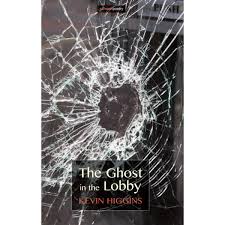
    higginsKevin Higgins poetry features in the generation defining anthology Identity Parade – New British and Irish Poets (Ed Roddy Lumsden, Bloodaxe, 2010) and one of his poems is included in the forthcoming anthology The Hundred Years’ War: modern war poems (Ed Neil Astley, Bloodaxe April 2014). The Ghost In The Lobby (Salmon, Spring 2014) is Kevin’s fourth collection of poems.   Praise for Kevin Higgins’s poetry: “His contribution to the development of Irish satire is indisputable…Higgins’ poems embody all of the cunning and deviousness of language as it has been manipulated by his many targets… it is clear that Kevin Higgins’ voice and the force of his poetic project are gaining in confidence and authority with each new collection.” Philip Coleman “Gil Scott Heron’s The Revolution Will Not Be Televised as re-told by Victor Meldrew”. Phil Brown, Eyewear   “good satirical savagery”. The Cambridge Introduction to Modern Irish Poetry, 1800-2000

    • Pantoum For Limerick National City of Culture 2014
  • may bell

    May 3rd, 2014

    may bell

     
    not a rook to maycaw its mockery
    seats are pulled up to the maybell statuary
     
    starling swipes up at a yellow tree
    laburnum is poison it sings
     
    yellow fish are stitched into a tree
    tacked into the leaf and flower
     
    the flowerpod
    the seed –
     
    maybe all three:
    root, bloom, and seed
     
    are stitched in.
     

    seed

     
    seed slopes,
    slews in
    the crystal pool
     
    its flesh blooms to an effort at tone
    former desiccate, it corals the milk
     
    sucking in meat
    from water’s distress
     
    and living nonetheless–
     
    winding in its silver thread
    beneath brine of flesh frond
     
     and secret too
     

    cells

     
    draw in the silver thread beneath brine of flesh frond
     
    shut in cold
    shut in light
     
    a silica scar
    a stone embed
     
    lit in rock
    deep cut in
     
    it forms a bird
    graven arched
     
    this place is unseamed
     

    cells

     
    draw to the frayed lifethread the flame of it is subdued to a sense of lit
    drawn-in too the seed sunk drowned in its slew of coral fibrous brine
     
    threads separate underneath a shower of humus that in-bole-gathers
    hammer and lead the gardener is raking rounds exposing the roots of
     
    trees groved
    trees grieved
     
    sweetheart blossoms lie on wet ground bereft of their generations
    there is only the marble of the statuary now fleshing its wounds so
     
    seed will lie
    seed will lie
     
    may bell and cells form part of a dream sequence from The Blind (Oneiros Books, 2013). These sequences are © C. Murray.The book can be ordered online from Oneiros Books.

    1-front-200x300
  • of the nothing of by Michael McAloran

    April 26th, 2014

    cover1-200x300of the nothing of

    .

    Paperback: 182 Pages
    Oneiros Books 2014
    Cover is © Tadhg Murray
      
    …I genuflect to nothing, in a vacancy of shit..
     
    (from of the none exposed)


    Michael McAloran’s of the nothing of is subtly related to another of his works with Oneiros Books All Stepped/Undone. While both collections have a loosely tripartite structure, in of the nothing of McAloran is pushing into the realm of the psyche, and attempting its full expression.
      
    In essence of the nothing of moves from a griefscape like in All Stepped/Undone toward expressing the disembodied voice. It is a work largely sited in the telling of the physical memory. McAloran’s control and direction is achieved through the work under three major headings, of which more anon. of the nothing of has a dystopian expressiveness of some magnitude which he achieves and maintains through voice.
       
    Voice is spoken through pulse-beat, through an imagined interior such as a corridor or a room with a naked bulb, indeed through the voice unaccommodated. Here, a Beckettian mouth through which an ancient howl emerges. Whitman’s Howl meets Not I, but without the celebratory tone. This is not to say that there is no humour here, there is, it is self-deprecating.
      
    of the nothing of is divided into of subtle butchery, of the none exposed, and pulse beats. The larger part of the book is contained in of subtle butchery which is divided into poetry alternating with prose segments. of the none exposed is poetic prose all through, here and there glints of humour are evident. pulse beats are precisely that, short bursts of poetry in four sections merging with and into prose segments. pulse beats structuring is poetry/prose/poetry/prose. it is the shortest section of the book, with the final prose section contained in one and a half pages.

    Although the narrative voice, or anti-voice in of the nothing of lacks physicality, lacks a geography, it is clearly (or was) an embodied voice. Voice’s physical experience is one of violence,

    …[pulse beat]…

    …(oh, how I remember it all, as if, as if in the going on or the getting on were of the nobility of eyes/ stillness-cadaverine/stone mockery/ashes drifting away from an open palm…)…
    …[pulse beat]…

    from pulse beats

    …All said of the what of it, spoken again, as if to spite, till the
    dread of which, no not once, vapours of stagnant bleeding, skull
    in a vice of empty desolate , winds throughout hollow, as of dead,
    yet else, breathing all the while of circus pageantry, where the
    hands fall stripped of flesh, having gathered the briars of nothing
    else…

    ..I’ll yet stay, I’ll yet go…

    …The hours are very long…

    #15 of the none exposed

    of the nothing of is not a unified work. There are three divisions within the book. These divisions are arbitrary. I do not think the book should be perceived or understood as a unity. McAloran delights in the non-narrative, and in creating cognitive dissonance. Thus the reader can pick or choose which part of the work suits them to read, without the problem of finding progression/theme/unity /or purpose. Reading the book is somehow equivalent to peering into an anthill of busy piracy and casual marauding, it slips between the fingers and rejects the readers attempt to garner a safe place to pause, to rest,

    the flash of a match head/dreaming all the while of the living
    and the dead and of the what might be to become of this nothing
    that is/ (stunted/ ever-glowing) /ask of the asp the pathway
    through tall grasses/

    from of subtle butchery

    What underpins and creates a sense of unity in of the nothing of is the voice of the poet. The lamenting and anguished voice underpins the entire book. Movement and structure in the book are subverted by voice, making them largely irrelevant. McAloran chose a loose structuring which is sufficient to carry the reader along the black waves of exile and lament.

    It is as if voice finds him/self in a degraded and vicious reality. He sings what he sees and dreams, his memory of wholeness. The reading of of the nothing of is difficult, but worth it.

    10-
    a droplet of blood
    .turning lest the light expires
    speaking the language
    .of the veins
    unto the none else/
    .fragrance of

    from pulse beats


     from of subtle butchery.

    .
    Chime unto close

                       Rot/

            Strike aloud till


    Stillness bears the

    ice of bloodless night


    In a roomscape

         \of final emptiness


    Here/absent traces

    Mocking the stitch of the wound


    Shroud-bound by

                   Vapours/


    …..colours emptied

    .

    Ever to mock the

    violent silence


    With gritted teeth


    …Till spark extinguished


    Cold weight of naught

    A palm closing over final eye


    from of subtle butchery

    • linkage …http://www.paraphiliamagazine.com/oneirosbooks/of-the-nothing-of/
  • ‘Haft Seen’ and other poetry by Shakila Azizzada

    April 19th, 2014

    Once Upon A Time

    in memory of Leila Sarahat Roshani
     
    Granny used to say
    always keep your magic sack
    tucked inside your ribcage.
     
    Don’t say the sun’s worn out,
    don’t say it’s gone astray.
    Say, I’m coming back.
     
    May the White Demon
    protect and watch over you.
    Oh, daughter of the dawn,
     
    perhaps this sorry tale,
    stuck in the mud,
    was of your doing.
     
    Take the comb from the sack,
    throw it in the Black Demon’s path:
    seven jungles will grow at his feet.
     
    Don’t say heaven’s too far,
    earth’s too hard. Don’t throw the mirror
    if you fear the sea and her nymphs.
     
    Don’t say there was, don’t say there wasn’t,
    trust in the god of fairytales.
    May Granny’s soul rest in peace.
     
    Give the mirror to Golnar’s mother
    who, down by the charred vineyards,
    dreams of birds and fish.
     
    Don’t say the rooftop’s sun’s too brief.
    Say, I’m coming and this time,
    forget love’s foolish griefs.
     
    Shake out the sack.
    In the name of the White Demon,
    burn that strand of hair.
     
    Wasn’t there,
    once upon a time …?
    Once upon a time there was
     
    a girl in whose long, endless dreams,
    an old woman with white braids,
    forever telling beads, would pray:
     
    ‘May the Shomali Plain still fill with song
    and through the ceilings
    of its ruined homes, let light pour in.’
     
    Once Upon A Time is © Shakila Azizzada.

    The literal translation of this poem was made by Zuzanna Olszewska.The final translated version of the poem is by Mimi Khalvati

    Once Upon A Time: this poem refers to a fairytale in which the hero sets off to fight the Black Demon, aided by the White Demon and the magic powers of a sack with a mirror, a comb and a strand of hair. Fairytales traditionally start with the refrain, ‘There was one, there wasn’t one, apart from God, there was no one.’


    View from Afar

     
    I’m left again with no one standing behind me,
    ground pulled from under my feet.
    Even the sun’s shoulders are beyond my reach.
     
    My navel chord was tied
    to the apron strings of custom,
    my hair first cut over a basin of edicts.
    In my ear, a prayer was whispered:
    ‘May the earth behind and beneath you
    be forever empty’.
     
    However, just a little higher,
    there’ll always be a land
    purer than any land Satan could wish on me.
     
    With the sun’s hand on my shoulder,
    I tear my feet away, a thousand and one times,
    from the things I leave behind me.
     

    View From Afar is © Shakila Azizzada
    Translated by Zuzanna Olszewska and Mimi Khalvati.


    Haft Seen

     
    If it weren’t for the clouds,
    I could
    pick the stars
    one by one
    from this brief sky,
    hang them
    in your ever ruffled hair
    and hear
    you saying:
     
    ‘I’m like a silk rug –
    the older it gets,
    the lovelier it grows,
    even if
    two or three naughty kids
    peed on it.’
     
    Am I finally here?
     
    Then let me spread
    the Haft Seen tablecloth
    in the middle of Dam Platz.
     
    Even if it rains,
    The Unknown Soldier
    and a flock of pigeons
    will be my guests.
     
    Haft Seen is © Shakila Azizzada.
    The literal translation of this poem was made by Zuzanna Olszewska.
    The final translated version of the poem is by Mimi Khalvati.

    Thanks to Sarah Maguire director of The Poetry Translation Centre for facilitating my selection of poems by Shakila Azizzada.
     

    from The Poetry Translation Centre

    shakilaShakila Azizzada is a poet from Afghanistan who writes in Dari. Shakila Azizzada was born in Kabul in Afghanistan in 1964. During her middle school and university years in Kabul, she started writing stories and poems, many of which were published in magazines. Her poems are unusual in their frankness and delicacy, particularly in the way she approaches intimacy and female desire, subjects which are rarely adressed by women poets writing in Dari.

    After studying Law at Kabul University, Shakila read Oriental Languages and Cultures at Utrecht University in The Netherlands, where she now lives. She regularly publishes tales, short stories, plays and poems. Her first collection of poems, Herinnering aan niets (Memories About Nothing), was published in Dutch and Dari and her second collection will be published in 2012. Several of her plays have been both published and performed, including De geur van verlangen (The Scent of Desire). She frequently performs her poems at well-established forums in The Netherlands and abroad.

  • “The Geometry of Love Between the Elements” by Fióna Bolger

    April 12th, 2014

    Caught in the Cross Hairs

     
    I bury my face in the thickness of your hair
    the darkness, the softness, the smell
    raw brain sweat, your innermost thoughts
    desire become scent
     
    beneath the softness
    the hard skull skin
    a barrier you need
    and I want to penetrate
     
    to enter see the wiring
    observe my image
    upside down in the back of your head
    then turn and peer through your eyes
     
    I’d see the world as you
     

    You’ve stolen my tongue

     
    I thought I had the power
    in dreams I knelt at the chopping board
    an awkward sacrificial lamb
    I brought the cleaver down
    silencing my babble
     
    but you held the knife
    and while I slept you forced
    my lips apart and cut
    at the roots
    ever the skilled operator
    you stitched me up
    needling the thread
    to connect the severed ends
     
    I can still make sounds
    some almost words
    they think they understand
    but my tongue is in your hands
     

    'Blue' by Vani Vemparala
    ‘Blue’ by Vani Vemparala

    From The Geometry of Love Between the Elements by Fióna Bolger. A Grimoire published by Poetry Bus Magazine.

    cure for a sharp shock

     
    it’s that moment
    when you trust
    let go the balloon
    your hope floats
    up into the air
    it’s beautiful and red
     
    it bursts
    empty rubber pieces
    a shade darker
    float to earth
     
    I read somewhere
    if you take these shreds
    put them between broken
    pieces of pottery
    and blow
    they’ll sound beautiful
     
    I’m not sure
    I read it
    somewhere
     

    cure poem for the lovelorn

     
    a woman sits alone
    her eyes are on the swan feathers
    dropped by the moon upon the sea
     
    she sees no-one on the horizon
    but who can walk on water
    dance on down
     
    by day she weaves her stinging sadness
    into nettle shirts, by night she waits
    for her lover – the one who needs
     
    to wear those painful clothes
    to be fully human again
    no longer trapped
     
    on a cold moon
    dropping feathers
    on the sea
     
    Cure Poems are © Fióna Bolger

    bolger

    Fiona Bolger’s work has appeared in Headspace, Southword, The Brown Critique, Can Can, Boyne Berries, Poetry Bus, The Chattahoochee Review, Bare Hands Poetry Anthology and others. Her poems first appeared in print on placards tied to lamp posts (UpStart 2011 General Election Campaign). They’ve also been on coffee cups (The Ash Sessions). Her grimoire, The Geometry of Love between the Elements, was published by Poetry Bus Press. She is of Dublin and Chennai and is a member of Dublin Writers’ Forum and Airfield Writers.


    From Poetry Bus  A Grimoire is a book of magic and what is more magical than poetry? So instead of producing a series of chapbooks we’ve opted to create something a bit more special. Our first poet is Fíona Bolger and her Grimoire is called ‘The Geometry of Love between the Elements’
     
    A beautiful book of poems illustrated by Vani Vemparala and featuring translations into Irish, Polish and Tamil by Antain Mac Lochlainn, Aleksandra Kubiak and R.Vatsala respectively.

  • ‘Carry’ and other poems by Mary Noonan

    April 5th, 2014

    The Card

    What goes by the name of love is banishment,
    with now and then a postcard from the homeland.
    – Samuel Beckett, First Love

     
    I’m looking for a card,
    one that holds the oriole
    on the black pear tree –
    will it be brazen or sweet,
    junebug or whippoorwill,
    Tupelo or Baton Rouge?
    I drape myself in maps,
    drift in colours and signs,
    sleep on my seven books
    of owls, frogs, alligators.
     
    I want a card that quickens
    codes, spills the secrets
    of words, sends letters flying.
    We used to name things,
    now we travel the lines
    past ghost-shack and scrub,
    sun-bothered lizards skittering
    under creosote and cocotillo.
     
    This card must distil the frenzy
    of the firefly as it waltzes
    with its own blazing corpse.
     
    The Card © Mary Noonan


    Carry

    To clear my head of talk, I walked the beach
    and found a pebble, a cuckoo’s egg,
    held it and saw it was a map.
     
    An oval stone striated with slate-grey markings,
    one side bore tracings that arced and criss-crossed:
    polka of narrow roads,
     
    sandpipers darting in bleached grasses,
    contours of a shoreline, the lines on my palm.
    A gate opening into a small field.
     
    The curve of the stone offered concentric swirls,
    a talisman you carry to ward off the evil eye,
    or the nipple of a breast.
     
    Here it is – an amulet, runes and traces
    to light and guard you, a cuckoo’s egg
    in the wrong nest, a gate opening
     
    into a small field, a circle ploughed
    round a lone hawthorn tree, a map
    of the way between us. I carry it.

     
    Carry  © Mary Noonan


    No Direction Home

    i.m. Gregory O’Donoghue 1951-2005

    I wrote that the final days of August would find me
    washed up, propped in a place where the light of day
    is tight and mean. You approved, gently tending –
    even poems lamenting summer’s end were safe with you,
    lines too concerned with the small ambit of seasons
    to encompass the impact of a true ending.
     
    And so it was that August swept you off your feet,
    quenched your breath with ease as she dragged
    hurricanes and swollen waters in her train.
    In the middle of your fifty-fourth year –
    one of the bald facts mourners swapped at the grave,
    suddenly aware that they did not know you.
     
    I knew only the grace of your yellowed fingers,
    that elegant pen, your hand feathering its tender script
    across a page, your hooded eyes, your mug of gin,
    the small room where we met once a week.
    I saw you sometimes, walking lopsidedly in the street;
    once, at a launch, we talked about Bob Dylan
     
    but in the moment I heard of your death I knew
    that you had guided me to a place – a room, a page –
    where limping and stammering come into their own,
    a vast, airy space inviting me to stand my ground,
    to bellow in tantrum, to rampage, to thrive
    in my brokenness.
     

    No Direction Home  © Mary Noonan


    mnMary Noonan lives in Cork. Her poems have been published in The Dark Horse, The North, Poetry Review, Poetry London, The Threepenny Review, Cyphers, The Stinging Fly, Wasafiri and Best of Irish Poetry 2010. She won the Listowel Poetry Collection Prize in 2010. Her first collection – The Fado House (Dedalus Press, 2012) – was shortlisted for the Seamus Heaney Centre Prize for a First Collection (2013) and the Strong/Shine Award (2013).
  • Signature

    March 25th, 2014


    Poems from ‘Signature’


    thistle roll
     
    thistle roll
    twig sphere
    scatters a
     
    thicket clump
    looks alive, it
    is red-tipped 
     
    a feather-blown
    bag-blown
     
    bird-corpse let lie
    its throat opened out
     
    purple the thistle
    -blown hue,
    purple the cry


    tear
     
    a field of ewes, their winter wool loose,
    blown down to the rusted gate.
     
    a flower clock banks each moment to the birthing,
    their mothering.
     
    their rich milk a wellspring.
    spring now, and
    a breeze tickles the white clouds,
    winter coat shed, wind still barbs her cries

    they ignore her labouring
     

    Thistle Roll and Tear are © C. Murray

    Signature is published by Bone Orchard Press, and edited by Michael McAloran. It is my second chapbook, and it can be bought via LULU. A sample chapbook called Three Red Things is available here.

    ssignatureignature is a beautifully wrought collection of short/ imagistic/ surrealistic-impressionistic poems

    ISBN 9781291797046

    Copyright Christine Murray

    Edition First

    Publisher Bone Orchard Press

    Published 23 March 2014
    Support independent publishing: Buy this book on Lulu.

  • ‘Lament’ Recorded at the Smock Alley Theatre

    March 23rd, 2014
    I received this morning the sound files for a performance of Lament that occurred at the Smock Alley Theatre, as part of the 2012 Béal Festival. My thanks to Elizabeth Hilliard and David Bremner for programming the piece.

    Friday Afternoon – part 3.wav

    Containing:

    Christine Murray: Lament (for three female voices) (performed by Dove Curpen, Réiltín Ní Charthaigh Dúill and Emilie Champenois; also with thanks to Rita Barror for organising and reading-through) (first performance)


    • Béal Festival (Smock Alley, 2012)
    • Sound Files in Dropbox
    Beal2012
←Previous Page
1 … 46 47 48 49 50 … 106
Next Page→
 

Loading Comments...
 

    • Subscribe Subscribed
      • Chris Murray
      • Already have a WordPress.com account? Log in now.
      • Chris Murray
      • Subscribe Subscribed
      • Sign up
      • Log in
      • Report this content
      • View site in Reader
      • Manage subscriptions
      • Collapse this bar