It’s What You Put Into It |
|
Reviewed here, The Moth Collection, Little Editions
. Verbatim” i.m Barbara Ennis Price |
It’s What You Put Into It |
|
Reviewed here, The Moth Collection, Little Editions
. Verbatim” i.m Barbara Ennis Price |
(To Gandhi)
I will walk with all walking people
And no
I will not stand still
Just to watch the passers-by
This is my Homeland
In which
I have
A palm tree
A drop in a cloud
And a grave to protect me
This is more beautiful
Than all cities of fog
And cities which
Do not recognise me
My master:
I would like to have power
Even for one day
To build the “republic of feelings.”
|
This is a reposting of Tal Al-Mallouhi’s You will remain an example, dedicated to Gandhi. Tal’s story is linked here. There is another post which I wish refer to in brief, it is called Books written , ‘The Library of Babel‘ and it is by Borges. This short fiction from Borges’ Labyrinths, describes a mythological library of great density, proportion, and uniform. The library exists ab aeterno , from the eternal. It contains everything ever written, expressed , or conceived in all languages, including , ” false catalogues and the demonstration of the fallacy of those catalogues.” The link I have included in the second short paragraph of this post looks at the design of the fictive Babel Library. I like to think of it as an almost entirely true tale , as so many books of wisdom have been destroyed or made inaccessible by people who find human thought to be an inconvenience to their wishes and plans. The narrator of the library is an old man, who intends to die there amongst the books, he recounts his searches, his attempts to translate the orthography of the library and his relation to books in the piece. A good friend in Catalunya once wrote an amazing piece on book-burning centred in the celebration of St Jordi’s Day, when people give to each other books and roses. I have not his excellent writing ability, but I do tend to believe that the books not written in this instance, will not stop her words emerging or her book from existing. Words when uttered and written cannot not be taken back and must have their effect. There is something wholly infantile about banning and brutalising a youthful poet, I think it may be because the words used to commit the brutalisation have become empty of their validity and symbolism for a great many people. The same goes for those people who wish to censor the great Walt Whitman from classrooms in CA, you do not encourage critical discernment by labelling books of genius as ‘bad’ because the singer of the poems was gay! |
This is a direct link to PEN American on Banned Books Week, 24/09/2011-01/10/2011. The list of banned or frequently challenged books may be perused here , and they include,
1.The Great Gatsby, by F. Scott Fitzgerald
2. The Catcher in the Rye, by J.D. Salinger
3. The Grapes of Wrath, by John Steinbeck
4. To Kill a Mockingbird, by Harper Lee
5. The Color Purple, by Alice Walker
6. Ulysses, by James Joyce
7. Beloved, by Toni Morrison
8. The Lord of the Flies, by William Golding
9. 1984, by George Orwell
11. Lolita, by Vladmir Nabokov
12. Of Mice and Men, by John Steinbeck
PEN American is asking writers and members to use the submishmash system to upload a 300 word piece along with a book recommendation to celebrate the week. There will be a virtual read-out at this youtube channel. Details and information of the week are available at the American PEN site.
2011 list : Check Out This Year’s Top Ten Most Banned or Challenged Books
1. And Tango Makes Three, by Peter Parnell and Justin Richardson
Reasons: homosexuality, religious viewpoint, unsuited to age group
2. The Absolutely True Diary of a Part-Time Indian, by Sherman Alexie
Reasons: offensive language, racism, religious viewpoint, sex education, sexually explicit, violence, unsuited to age group
3. Brave New World, by Aldous Huxley
Reasons: insensitivity, offensive language, racism, sexually explicit
4. Crank, by Ellen Hopkins
Reasons: drugs, offensive language, racism, sexually explicit
5. The Hunger Games (series), by Suzanne Collins
Reasons: sexaully explicit, violence, unsuited to age group
6. Lush, by Natasha Friend
Reasons: drugs, sexually explicit, offensive language, unsuited to age group
7. What My Mother Doesn’t Know, by Sonya Sones
Reasons: sexism, sexually explicit, unsuited to age group
8. Nickel and Dimed: On (Not) Getting by in America, by Barbara Ehrenreich
Reasons: drugs, inaccurate, offensive language, political viewpoint, religious viewpoint
9. Revolutionary Voices edited by Amy Sonnie
Reasons: homosexuality, sexually explicit
10. Twilight (series), by Stephenie Meyer
Reasons: sexually explicit, religious viewpoint, violence, unsuited to age
This post is about poet-bloggers, the vehicles they use, and how online journals are using web and social-media to increase the profile of poetics. The area is huge, as I found out when I began compiling this Google+ list. There are multiple groups and individuals connecting across Twitter, and Facebook also. The emphasis here will be on the individual writer, and the journals that are emergent, or already fully developed.
I thought to begin with some of the artists who have caught my eye through consistent use of online resources to bring their poetry to the public eye, these writers include, Aíne Mac Aodha, Nuala Ni Chonchúir, Ron Silliman, Charles Bernstein, Al Filreis , Mick Rooney, Pierre Joris , Elizabeth Kate Switaj and Robert Peake.
There are many more poets and writers using online and social-media, but the above in particular have a great online presence. They regularly and consistently post about poetry through PENN Sound, personal websites, journals and Facebook. Publishers such as Salt, Poetry Ireland, Poetry London ,Over the Edge , Munster Literature, Jacket2 , Women Writers Women Books , use online media in a very effective manner also. There are also The Dublin Poetry Review, The Western Writers Centre, Anon Poetry , the Arvon Foundation , The Paris Review, Poet’s Pages, Crannóg and Caper Literary Journals.
Any other poet will name a score more reviews , journals or poetry-centred blogs. These are the ones that I know and enjoy reading. Last week I added a new category called Poet-bloggers. This short piece along with its related links serves as an introduction to what is currently happening online for poets.
Related Poethead Links.
The Mona Van Duyn Poem that I am adding today is from The Making of a Sonnet, edited by Edward Hirsch and Eavan Boland. I will be adding in here a link to an online page of Van Duyn poety from Modern American Poets the Amazon Link to her collected poems and a Wikipedia page about the poet.
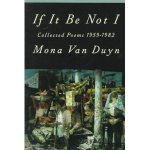
A selection of Mona van Duyn’s online poetry is available here . There follows a brief excerpt from Letter from a Father ,
Bet you’d never guess
the sparrow I’ve got here, House Sparrow you wrote,
but I have Fox Sparrows, Song Sparrows, Vesper Sparrows,
Pine Woods and Tree and Chipping and White Throat
and White Crowned Sparrows. I have six Cardinals,
three pairs, they come at early morning and night,
the males at the feeder and on the ground the females.
from Modern American Poetry , Mona Van Duyn online Poems.
Double Sonnet for Minimalists.
The spiral shell
apes creamhorns of smog,
Dalmatian, quenelle
or frosted hedgehog,
yet its obsessed
by a single thought
that its inner guest
is strictly taught.
When the self that grew
to follow is rule
is gone, and it’s through,
vacant, fanciful,
its thought will find
Fibonacci’s mind.
That fragile slug,
bloodless, unborn,
till it knows the hug
of love’s tutoring form,
whose life, upstart
in deep, is to learn
to follow the art
of turn and return,
when dead, for the dense
casts up no clue
to the infinite sequence
it submitted to.
May its bright ghost reach
the right heart’s beach.
by Mona Van Duyn
from The Making of a Sonnet, edited by Eavan Boland and Edward Hirsch. Norton.
When I lit the sparkler
long ago on the hearth,
I ran the house with it screaming with delight.
They scolded me,
but grandfather said,
‘Let her be,
let her be,
there is no use talking.
She will always light
any flame she wishes.’
by Colette Ní Ghallchóir, trans, Nuala Ní Dhomhnaill
Nuair a lás mé an dealán
Fadó ar an teallach,
Rith mé leis ar fud an tí
Go háthasach.
Bagraíodh orm,
Ach dúirt no sheanathair leo –
‘Lig di lig di,
Níl gar a bheith léi,
Lasfaidh sisi i gconaí
Na dealáin is mian léi .’
le Colette Ní Ghallchóir.
‘That is not the way
things are done
in this townland,’
she said.
‘Well , if it isn’t,’ said he,
‘then go and do it yourselves.’
And he had crossed Gleann Tornáin
before nightfall.
‘How come you never told me,’ said I
to my father, ‘that they had been separated for a while?’
‘You don’t broadcast
all news,’ he said …
‘Anyway the end of the matter
is that he died here at home.’
le Colette Ní Ghallchóir, trans. by Nuala Ní Dhomhnaill.
‘Chan sin an dóigh
A bhfuil rudaí déanta
Ar an bhaile seo,’
A duirt sí.
‘Munab é,’ arsa seisean
‘Déanaigí féin é.’
Agus thrasnaigh sé
Gleann Tornáin
Roimh thitim na hóiche.
‘Char inis tú dom,’ arsa mise
Le m’athair, ‘go raibh siad scarta tamall.’
‘Ní churieann tú an nuacht
Uilig sna páipéir,’ ar seisean…
‘Cibe scéal de,
Fuair sé bás sa bhaile.’
|
from The New Irish Poets, ed, Selina Guinness. 2004, Bloodaxe Books. Colette Ní Ghallchóir was born in the Ghleann Mór Gaelteacht in central Donegal. Her poems are published in The Field Day Anthology of Irish Writing, Volume 5, her book Idir Dha Ghleann was published by Coiscéim 2005. |
I see the blue, the green, the golden and the red,
I have forgotten all the angel said.
The flower, the leaf, the meadow and the tree,
But of the words I have no memory.
I heard the swift, the martin, and the wren,
But what was told me, past all thought is gone.
The dove, the rainbow, echo, and the wind,
But of the meaning, all is out of mind.
Only I know he spoke the word that sings its way
in my blood streaming, over rocks to sea,
A word engraved in the bone, that burns within
To apotheosis the substance of a dream,
That living I shall never hear again,
because I pass, I pass, while dreams remain.
by Kathleen Raine.
Angelus , is from The Collected Poems of Kathleen Raine / http://www.amazon.co.uk/Collected-Poems-Kathleen-Raine/dp/0903880741

|
|
FEIS TEAMHRA: A TURN AT TARA
“The fourth annual Feis Teamhra: A Turn at Tara, which features readings and performances by internationally recognized Irish writers and musicians, will be held between 3 and 5 o’clock on Sunday August 28 2011 on the Hill of Tara itself. Those taking part this year are Aidan Brennan, Peter Fallon, Laoise Kelly, Susan McKeown, Paul Murray and a surprise musical guest who just happens to be one of Ireland’s greatest singer-songwriters. The MC for the event is Paul Muldoon. Admission is free.
While the Hill of Tara has in recent years become a contested spot, symbolizing less the sacred site where ancient Ireland crowned its kings than the desecrated site where modern Ireland gave in to crass consumerism and, as it were, drowned in things, the note the organizers hope to strike is not one of confrontation but celebration. Feis Teamhra: A Turn at Tara is a celebration of the continuity of the linked traditions of Irish writing and music, traditions that have almost certainly flourished here since at least 2000 BC.
We’re delighted to welcome Paul Murray, the Dublin-based author of An Evening of Long Goodbyes (2003), which was shortlisted for the Whitbread First Novel Award, and Skippy Dies (2010), a book quite accurately described by the New York Times as “extravagantly entertaining.” The New Yorker, meanwhile, praised its “remarkable dialogue, which captures the free-associative, sex-obsessed energy of teenage conversation in all its coarse, riffing brilliance.” Skippy Dies, a book that’s reminiscent of A Portrait on Peyote, was shortlisted for the Costa Prize, the National Book Critics’ Circle Prize and the Irish Book Award.
We also extend a particular welcome to the Meath-based poet and publisher Peter Fallon, who is celebrated for the unfussy but nonetheless fusillading nature of his poems. They speak softly but carry a big stick, one cut from a local hedge. Some of Peter Fallon’s best work is to be found in News of the World: Selected and New Poems (1998) and his translations of The Georgics of Virgil (2004/2006). A member of Aosdana, Peter Fallon received the 1993 O’Shaughnessy Poetry Award from the Irish American Cultural Institute.
The musical component of Feis Teamhra: A Turn at Tara is curated by Susan McKeown, the Dublin-born, New York-based, Grammy-winning singer-songwriter. Susan McKeown released her seventh solo album, Singing in the Dark, in October 2010. In addition to her career as a solo artist, Susan McKeown’s heart-felt, heart-breaking singing has led her to work with, among others, Natalie Merchant, Linda Thompson, Pete Seeger, Mary Margaret O’Hara, Billy Bragg, Arlo Guthrie, and the Klezmatics.
Among the other musicians featured this year are Aidan Brennan and Laoise Kelly. Aidan Brennan is an inspired guitarist who has worked not only with Susan McKeown (Sweet Liberty, 2004), but Kevin Burke (Kevin Burke in Concert, 1999) and Loreena McKennitt (Book of Secrets, 1997, and Midwinter Night’s Dream, 2008). Born in Dublin, Aidan Brennan now lives in Laois.
Laoise Kelly, generally considered to be the foremost Irish harper, lives in her native Mayo. The Irish Times has described her as “a young harpist with the disposition of an iconoclast and the talent and technique of a virtuoso.” In addition to her own CD (Just Harp, 2000), Laoise Kelly has worked with Sharon Shannon, The Chieftains, Natalie MacMaster, Sinead O’Connor and Kate Bush.
The image is from the first ever Turn at Tara
I discovered your footprints in the sand and to get there sooner
I ran legs sinking at the knees, and fell from exhaustion,
and when I climbed the hill – in astonishment I was calling,
as if I’d seen you for the first time on that unforgettable evening.
You filled the entire horizon, for then you seemed enormous,
with hair in the clouds, feet on the shore.
And you saw me and reached for me –
as if you sought to embrace the universe – everything …
Listen to my heartbeat, see the tears in my eyes
and remember – no one has ever embraced me like this,
nor have I embraced anyone ever- like this.
And if at this moment my joy lowers the scales
and God wants to shorten the thread of my days,
I shall extend my arm to Him asking for supreme grace.
1927, Elisaveta Bagranya, Trans Belin Tonchev.
from Elisvatea Bagyrana , Penelope Of the Twentieth Century. Publ. Forest Books 1993.
 Kate Dempsey’s poetry is widely published in Ireland and the UK including
 Chris Murray