• chris murray
  • journals – bibliography – publication notes
  • downloadable items – essays – media
  • copyright
  • Home

Chris Murray

  • ‘If I Weren’t Afraid’ and other poems by Ella Bowler

    June 6th, 2020

    I Don’t Talk, I Let You Talk All The Time

    You sit opposite me, on a broken stool, smiling with your teeth.
    Rain drips from the ceiling, seeps into table cracks, running onto jeans.
    You speak in trauma, in childhood, in breathy laughs, in old love.
    I show my teeth.
    You take up more space than me.
    Your voice eats me, drinks me,
    you put your hand on my knee and kiss me.
    I don’t talk, I let you talk all the time.

    I stand in the kitchen, staring at the window. It has swelling eyes and tangled hair and clothes from yesterday. The colour drains from my cheeks. Washes down the sink.
    Your voice appears behind me. It’s bigger, bigger than me. Screams over dishes at the bottom of the sink.
    I show my teeth.
    You drink me with a straw, eat me raw
    fill my mouth, hands and stories.
    I don’t talk, I let you talk all the time.

    I sit on your bed in the black. The moon shines in from the window and the bright spills all over me.
    A crack runs down the middle of things; The bed, the floor, the handle of the door; you slammed it so hard it came free.
    The colour drains from my cheeks.
    How did I end up here? How did I end up here?
    I show my teeth.
    From the hall you scream, you’re a fucking child.
    I lie on my back and sleep.
    I don’t talk, I let you talk all the time.


    What Do You Dream of?

    You still dream of me, baby?
    I dream that you are holding a sheet to me, and I cannot breathe.
    So real, that when I wake I feel as though I have died, I have died.
    You still dream of me, baby?
    I dream of arms outstretched, reaching for yours, folded to your chest. In these, I lose all over again.
    You still dream of me, baby?
    I dream of every bad thing you said to me. They’re written on my eyelids & they come in screams. Your voice like a mocking angel sings me from sleep.
    But you still dream of me, baby?


    If I Weren’t Afraid

    This time, I’ll say yes.
    I’ll fall back into your arms,
    crawl beneath the bedsheets,
    they’ll still be warm.
    This time, I’ll say yes.
    I’ll sip the coffee again,
    watch our films again,
    won’t be afraid of music anymore.
    This time, I’ll say yes.
    I’ll stop the silence,
    talk for hours,
    say I love you without it being such a chore.
    This time, I’ll say yes.
    I’ll walk back into the room,
    return my hand into yours
    & grip it tightly, as if it had never left.
    This time, I’ll say yes.


    Grow

    Smear lipstick with glitter & tousle hair strands
    Show bravery when letting go of roller coaster handlebars & hot palms
    Bask in the sun’s warmth without burning
    Receive love & neglect hurting
    Lick wounds & heal scars
    Explore the intricacies of bars & the arbitrary folk that fill them on a Monday nights
    Comfort my tendons as they have tendencies to shuffle & laugh when faced with respect
    Prepare for the cease of self-discovery
    And my anguish that shall chase its fingertips
    Empathise when my skin becomes tenuous
    Crumples like newspaper
    Eyes heavy with tales that reside on finger pressed lips
    In them, remember our time
    And say that you’re glad
    You grew up with me.


    Holding up signs

    Kiss me in the living room
    lay me on your bed
    At the end you will cry.
    Walk me through the garden
    consume until you’re sick
    At the end you will cry.
    Let me take away the sorrow
    I’ll swallow it whole
    At the end you will cry.
    Write my name on the walls
    love me like a plaything
    At the end you will cry.
    Fight me, hurt me
    Spit me down the sink
    contort me into a child’s nightmare
    At the end you will cry.


    In a year

    Cut cake for
    lost jobs and mangled hearts
    for beds that sink in the middle
    spilt wine and smoking inside
    for sleeping on the bedroom floor
    grasping her arm
    because She didn’t want to be alone
    she never wants to be alone
    cheers
    to new
    hair & tattoos that profess the emotions I cannot lather on my tongue
    to sleeping cold next to her
    blow out candles
    for one, two, three
    days spent inside not talking or eating
    but relentlessly thinking about what she said
    and how she meant it
    celebrate a year gone by

    © Ella Bowler
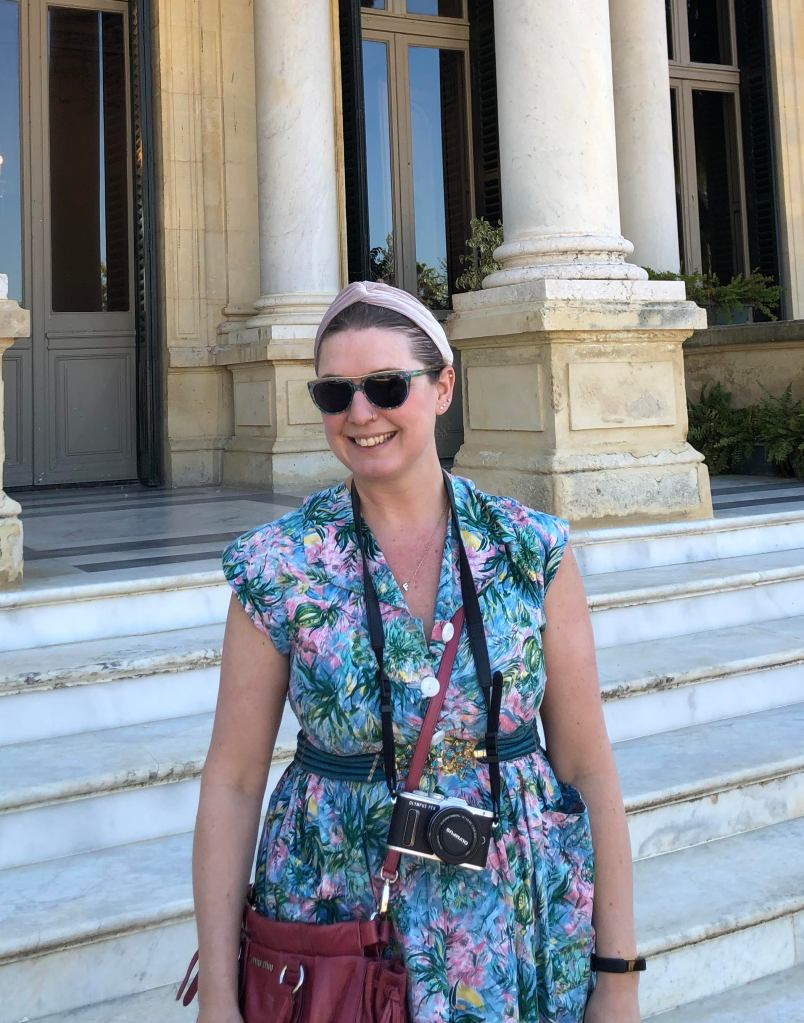

    Ella Bowler is a 19-year-old Philosophy and English student living in Dublin. She writes poetry primarily, which centres around the themes of love, loss and growth.

  • “Distancing” and other poems by Jessamine O’Connor

    May 18th, 2020


    Meet me for coffee

    Not a cup of tea, a pint or just ‘meet me’
    because I want to wait awkward at a counter beside you
    with the steam spluttering, the espresso machine knocking
    and our overdressed elbows almost touching.

    I want to sit opposite you at a small table
    that can never be small enough, absorbing the heat
    of your hidden knees and then eyes when I catch you
    watching me lick the froth off my lips.

    I want us to be both fiddling with our round white cups,
    thumbing the holes that make the handles,
    intense with conversation while idling our fingers
    around and around those curves.

    I want to be alone with you in a clamorous place
    where no one will notice what’s not being said,
    that’s why I say safely, meet me for coffee,
    instead of suggesting something else.

    Winner of the Poetry Ireland Butlers Café competition 2017


    Limbo

    You visit my room, punctually
    as if it’s an appointment
    and I’m never quite ready
    after waiting for days.
    Time isn’t the same here,
    like being very far away from the earth
    then landing
    to find everything’s changed, everyone
    gone. Anyway, you come to my room
    and we sit on the single bed
    which doubles as couch, chair and table,
    share food off a tray made pretty with a scarf
    on which I lay saucers
    holding olive oil, zaatar, bread for dipping
    and on the one large plate I own, arrange
    orange segments in a rainbow
    over pomegranate jewels, and although
    these are sour and dry to the tongue
    here, you say you love them, crunch
    enthusiastically, laugh at anything.
    We laugh a lot
    spluttering through the trench between us.

    This room is temporary, for six weeks
    then twelve, then Christmas, and now it’s a year
    and soon it will be two.
    Things accumulate. A kettle,
    an electric steamer, stacks of bowls,
    cling film. I store food in the chest of drawers,
    crouch at the mirror and offer you seeds,
    demonstrate how they open: place between
    your front teeth, vertically, like this, and pop.
    Sunflowers. The taste of sun.

    Sometimes I don’t leave my room for days,
    pick from the drawer, dried fruit, crackers, tahini.
    No one misses me or calls and it’s better inside, alone,
    than enduring the queue and noise. Then you visit.

    It’s been forever since I spoke
    so struggle with the words, your language, my voice.
    I apologise, and you laugh because I’m only waking up
    and this is our appointed time
    but shrug everyone here is always late,
    and I explain that this is because we have nothing
    to wake up for, no time to keep,
    just cycles of light and dark that creep up on the window
    punctuated by meals, if you remember
    to walk down to the feeding area.

    We gossip about the other residents, you encourage me
    to speak with so-and-so, they’re really nice,
    you think all the people here are nice, now you’ve learnt
    how to say hello
    and compliment their beautiful children,
    wishing us all to be friends
    and I have to ask
    are you friends with everyone you know?

    Then time is up.
    So soon? I won’t beg
    but implore you, stay, another tea,
    more bread, different fruit, anything
    but see: you are leaving,
    because you always leave.
    You have to be somewhere else.
    You have somewhere else you can be.

    Smiling, kissing your cheeks, one – two – three
    I lock the door in your face. Space is empty.
    I take the dishes to the toilet, wash up
    in the tiny bathroom sink, straighten my covers,
    put away the tray, hide the mirror
    behind the scarf and open the window
    just enough to almost feel
    that I must be breathing.


    My house

    This was the last look at the land,
    here where they stood in the wind
    and waited, looking down the bog
    impatient for a plume of steam
    blooming along the narrow-gauge track,

    for the doors to open and shut
    them in, on the way to the junction
    with the big city line,
    they say they’ll be back
    and don’t know yet it’s a lie,

    waiting, pacing, lifting cases,
    hoarding in their eyes
    the light off the lake,
    the way the trees sway,
    and all the softness of hills, birds and sky,

    carrying their cargo inside;
    the entirety of life, who they are,
    into the trembling train and away,
    far across seas, roads and cities,
    into new lives, old age, and death.

    For many, here was the last place they left,
    waiting on this platform
    for change to come, some giddy,
    some grieving, leaving
    home.

    First published The Irish Times New Irish Writing, ed. Ciarán Carty


    Line

    We have blocked the line with caravans, a Mercedes bus with the door come off
    and a trailer draped in blanket with a child’s rainbow-coloured tunnel inside it.

    A pink plastic house sits on the track and a rotting pile of wood long left to slime,
    a car parks there on and off.

    Further along we sit around the firepit made of a tractor wheel
    and on nights like the solstice look up at the stars and the rocketing sparks

    feeling the ghost of a train roaring right through us.

    First published Crannóg, ed. NUIG masters programme


    Too little

    for Andrew

    I say now how I thought about you
    over the last nineteen years
    because I did

    but I never looked, didn’t ask
    around the doorways and methadone queues
    if anyone had seen
    a bouncy laughing long-haired guy, my friend

    didn’t even pick up the phone
    to my ex, who might have known
    – though thought of it the odd time
    holidaying on our old streets
    see your shadow in a corner
    or think I do then justify
    maybe it had been too long
    since you smiled
    for that description to still be true –

    so when the revelation slaps
    in the smoking zone behind the band
    that in fact it’s been ten years
    and I didn’t even know

    you haunt me
    all weekend with your grin
    the smile under your hair is crushing the clouds
    and I swallow down concrete tears
    slowing past every comatose man with a cup
    wedged resiliently upright in his hand

    but is it because
    though I did often wonder
    how and where you were
    I never actually bothered
    to find out?

    First published  The Poet’s Republic, ed. Neil Young


    Distancing

    My daughter is in a ditch
    Talking to herself
    Preparing for war

    When friends can come over
    They’ll climb the ladder I’ve left
    Stretched up the gable end

    Lob the dog’s balls as bombs
    Defend themselves
    With this ancient shield

    Just unearthed, made years ago
    For another child
    She scrapes it clean

    Is that OK? she asks
    Thinking clearly I might
    Want it for myself

    Crouched on a camping mat
    A silver tongue
    Lolling from the hedge

    My youngest child is kept safe
    From the road by tiny
    Leaves like green snowflakes

    The trunk of a birch tree
    Listens to her dark
    Imagination

    She’s at her best
    In isolation
    Making all these plans

       for when

    it ends.

    The Stranger poem-film: https://www.youtube.com/watch?v=-ljdYeZzaG8


    Jessamine O’Connor moved to an old train station on the Sligo Roscommon border twenty-one years ago. Currently studying Writing & Literature at Sligo IT, she facilitates the award-winning Hermit Collective and is obsessed during the lock-in with making postcards, watching Countdown, and playing Bananagram. A winner of the Poetry Ireland Butlers Café Competition 2017, the iYeats Poetry Competition 2011, the Francis Ledwidge Award 2011, and the inaugural Chultúrlan McAdam Ó Fiaich 2020; she has been short-listed for others including the Doolin Writers Weekend, Hennessy Literary Award, Over the Edge New Writer of the Year, Cúirt, and The Red Line Book Festival poetry competitions. The Stranger, a poem-film made in collaboration with puppeteer Carmel Balfe, was shortlisted for the O’Bhéal International Poetry Film Competition 2019. She has published five chapbooks and her new collection Silver Spoon, is forthcoming with  Salmon Poetry in 2020.

    Website

  • Poems written in isolation by Mary Agnes Cullen

    May 12th, 2020
    The following sequence of poems was composed while in isolation, and are reflections on the pandemic and the enormous changes it has wrought in all our lives.

    Innocence

    Christmas was a focal point
    Creating the inevitable little excitements.
    Predictable excesses indulged in
    at the year’s end.

    It goaded us into domestic frenzy
    Relaxed our personal long term objectives
    Temporarily.
    Coaxed us to retail therapy
    By conducive shopping malls

    Our emotions surged
    On full singing churches, lit candles
    twinkling lights, shimmering city streets,
    acknowledging, at least a little,
     the source of our joy.
    Happy children and friends uplifted us,
    gifts brought and given, laden tables
    respite from care for twelve days and sated-
    Gratified maybe by our charity to others.

    How cocooned we were in our security!
    Our sense of perennial aegis
    Who would believe that the world would revert,
    regress to unimaginable chaos some twelve days later?
    Descended instantaneously upon us, among us –
    A nano-microscopic spiked alien dot
    much smaller than a grain of salt.
    So we rally organisation to minimise
    the ensuing assault
    We also hit out – appropriate blame, responsibility,
    negligences on our leaders, mentors.
    But aren’t we all human?
    And so we futilely hope to rationalise,
    Impose structure on this impasse
    Life cannot be structured or rational-
    Truth is exposed.


    Vendetta

    Well versed in electronics now
    As a global village we communicate
    The logistics of how well-planned by timely Fate
    At such a very appropriate date
    By which to have us all trained
    In alternative ways to relate
    Which do not need personal interaction
    As stunningly appropriate.


    Impact

    Quantum physics now states and proves
    that human thought can make things move.
    An empowering theory! – Is fate a self-result,
    should this sometimes evoke a sense of guilt?

    If thoughts can cause a change of state
    which seems to mean all things relate
    to causality via place and date.

    So – Did Greta Thunberg and protesting teens
    cause ultimate eco-change
    by neural means?
    Or did cohorts of youth, with tears of love
    on deaf fiscal ears
    alert God Above?

    Then again (in time-lapse) did Dean Koontzs’ book
    “The eyes of Darkness”, which he undertook
    to future predict 40 years ago,
    a now relevant Wuhan tale of woe?
    There’s much mankind doesn’t really know
    Should our trust in science make such a show?


    Pinnacle

    My young grandson sits near a high tower of plastic blocks
    Self-proud, he shouts “Look Granny, I made that!”
    then inadvertently kicks it in his excitement of turning to me.
    Devastated, he groans –
    “If only I hadn’t kicked it! Then –
    “it was too high, that last brick”.
    Hindsight.

    It being Covid times now,
    self-cocooning, I recall this and see the analogy
    to “the last straw” that breaks the camel’s back.
    My mind also revisits the “pinnacle” of civilisation our era was on…
    and I wondered if things could have advanced much further for us 7 billion
    in the direction we were taking, without catastrophic consequences?

    Electronic technology gone quite mad,
    all sorts of “make life easy” artefacts to be had.
    Worldwide travel available to all, info beamed straight to our phones,
    now the master in our homes.
    Sad to say the way we were headed
    –disconnected the homeless, dispossessed,
    millions of refugees, forlorn and stressed,
    hidden corruption to access unfair gain
    ignoring the pain
    Covid puts us on a somewhat even keel again
    without control of our worldly ways,
    we realise man has not endless days.


    Current Stagnation Vacuum

    “Two steps forward, one step back”
    was a well-worn saying, a much-used hack,
    but 20th-century progress, on an upward rocket,
    saw yesterday as history – nothing could stop it.

    Bewildered elders watched receding past,
    vanish at lightening speed – gaped aghast
    upwardly mobile life flew madly on
    ground-breaking innovation rendered recent ones gone.

    “No going back” seemed the latest phrase
    the reach now aimed at – in a haze
    Above the sight of man – but God?
    Our rockets landed with a downward thud.

    So where does it all go from here?
    Revert to former knowns I fear –
    Can we return to previous ways?
    That second idiom is a bi-sense phrase…


    Poems written in isolation © Mary Agnes Cullen


    Mary Agnes Cullen is a retired school teacher, a mother of seven children, and a piano teacher. She is currently missing her beloved piano students as a result of the social distancing measures now in place as a result of the Coronavirus pandemic but has used the time to indulge in one of her passions, composing poetry. She was reared in Scotland, but relocated to Ireland to be near her parents and rear her family, and spent many years as a teacher in Donegal. When time and mothering duties eventually permitted, she did a Masters in Creative writing, and began honing her lifelong passion for writing; both poetry and prose. This has resulted in some wonderful poetry, many revolving around themes of rural living, love, and loss, yet also veers into more philosophical contemplation of life and observations on humanity.

  • “Cipher” and other poems by Lucy Holme

    May 12th, 2020

    Plane Mirror

    Mirror, forge the image I can recognise. Give me mercury streaks
    for my vinegar’d smile.
    Show her now, same size as me. Same distance between us two.
    Virtual, not virtuous when I laugh, she laughs.
    No space spared by glass and aluminium to conceal.
    I cut her hair and dyed the root, aged her face with reckless youth
    seared skin with hot tears, smoked and smudged, double proved.
    Let sadness land to eat away at firm chin and high cheekbones.
    Had late nights furrow sockets, spill their leaden shadows.
    Lay rigid as failed love rubbed out angles, scattered tiny lines on temples.
    Relaxed as a new love brought expansion, contraction.
    Skin deep, skin tight, skin-full of experience. It shows on me.
    People struggle with the truth, age advances by the time we catch them in deceit.
    But you don’t lie, you reflect the fact while most avert their gaze.
    With each cycle, each rapid leap from winter to spring as ice thaws and sun warms.
    We do just fine, you and me.
    Keep the symmetry compose ourselves.
    Cast out fear embrace what’s real.


    Élevage

    I took the wine home post-event
    the bottle sticky nearly spent.
    Breathed in the taint of basement mould,
    of sickly damson decay.
    Brushed its neck with fingers stained a violent blue
    tannin gums astringent with the taste of you.
    Grinding greyish-purple teeth of mottled hue
    garish lips with smeary lines struck through;
    All glamour quenched by this cool morning light.
    You clocked me buffet bound
    glassy-eyed, chock-full of riddles and sham panache
    swerved clean east across the room to you
    flushed with Dutch courage,
    skittish as a bee in thrall to gummy pollen dab,
    emboldened by the potent juice.
    Now I sit in dawn’s pernicious way and rue the deft and steady finger-play
    the pop and hiss of disgorgement,
    mired like before in the folds of your acid tongue.
    Through decisions made, both bad and good
    how best to describe our painful flow?
    The racking of my crudest form, the shaping of a once fresh heart,
    an untapped vintage poured out neat.
    Strength and essence unproven yet
    hoping age will finally discern,
    the faults not to repeat.


    An abstract of us

    With the light off, I catch your avian eye.
    In the dark, you steal mere seconds to adjust
    your giant orbit flicker punctuated by a sigh. But the glare,
    I see it plain upon your face.
    Your sharp gaze could cut glass, steel firm
    despite attempts to weather your resolve.
    Where you deform by force, I am brittle, break,
    malleable as stone.

    Winter comes to coax us outside, promising relief.
    Each struck dumb as starlings soar above the trees on Hampstead Heath,
    a tidal murmuration printed on pink clouds.
    I want the perfect picture, messing with the shutter speed
    but their swarming dance becomes a smear across the screen.
    The magic dissolves.
    We can’t fake that harmony, make new patterns stick.

    I hit delete.


    Cipher

    Zero is nothing so how can it be the size of a living entity?
    Zero is empty, a void. Not like a woman.
    A woman is full to the top. She unifies, is universal.
    Zero’s a chasm, a woman a peak,
    a bottomless lake.
    How then can her body be confined, vacant?
    Be null. With a numerical value of less than one?
    A man can not be Zero. Unrestricted by designer template and form.
    Why, men still measure by girth and chest, over arm and inside leg.
    Study the small print, locate the rules. You can choose.
    You can limit, curtail. Strip back the chassis,
    an aerodynamic engine built for looks not speed.
    Gorge on tissues sup thin air adjust your figure and mind to the game.
    Strive for the magic of nothing, exist for the sum of the losses and gains.
    Whittle, shrink become quiet, still.
    No elements, substance. Not present. Zero.
    Make no impact. Become a literal frame.
    And double it if you prevail. It is the same.
    If you look at Zero, you see nothing. It will not be easy.
    A woman can not easily
    be nothing.


    Between your lungs I lie

    In the car, after the news, the preceding hour a blurry hue.
    I think of your heart, your poor scarred lungs
    hands balled to fists, a child again.
    As the engine starts Between two lungs begins
    I hear a song bird soar above and circle back.
    She brings me the image of you collapsed in my mother’s lap.
    Those whispered words, gasping for breath.
    Now my own is short, jagged, almost gone.
    But not gone like you.

    Who else has gone today?
    I could buy the Examiner but I won’t see your name.
    I’ll buy milk and bread, remember to collect the kids.
    In Centra, a boy of 18 or 19 asks, do you need a tissue ma’am?
    As I throw him Kinder eggs and all of grief’s sweet impulsive trove and cry,
    the noisy choking kind
    fumble for my wallet, for the words to say my dad died today.
    He looks at me across the till, mumbles
    I’m so sorry for your loss.

    Irish people and their death.
    Chats in the kitchen, solace in the post office queue.
    Then tomorrow a new list of names to check through.
    Send our regards, God rest his soul. At least he didn’t suffer,
    he was a grand ould age.
    I gulp the air in this land that was not yours.
    Imagine two lungs pink and membrane soft
    how your heart cleaved the space between
    hoping I was still within.

    Cipher and other poems © Lucy Holme


    Originally from Kent in the UK Lucy Holme moved to France after completing a BA in English Literature and Language from Manchester University. She then spent twelve years travelling the world working in the private yachting industry before ‘retiring’ from a life at sea to set up home with her Irish husband in Cork City in 2013. Trained as a sommelier, she was studying for a diploma in wine and spirits and working in the wine industry before deciding at the end of last summer to concentrate on her love of writing poetry. Due to the rigours of parenting three small children and an attention-seeking dog, writing is achieved mainly at night.   

  • “Justice” and other poems by Rachel Lauren Storm

    May 7th, 2020

    Justice

    I believe in transformation,
    pupa-to-winged emergence.

    I believe in the power of the
    pulsating chrysalis
    the eating of lessons and
    the uncurling of fetal winters.

    I believe in the stillness of
    calm after storm
    the redressing of old wounds
    and the snakeskin-shed of bandages.

    I believe anger is grief in new clothes,
    I believe violence her stillborn child.
    Wrapped in cloth and carried
    over our jagged terrain, cradled
    in the skeletal arms of the dead.

    I believe in the fading of scars,
    the catching of tears in the old jelly jar,
    and drinking in their medicine.

    I believe in transformation.
    And the movement beyond.

    [Justice was first published in the Spring 2020 issue of CURA Magazine]


    Death and Waking

    Thank you for the reminder.
     I suppose I needed it.
     Had almost forgotten to
     squeeze your hand upon parting.

    I won’t ever do it again.
     Or at least not when I think of it.
     I’ll finish the fight before bed.
     Make sure I’m calling my mother.

    Sure, sometimes I’ll fall into old ways,
     Patterns of habits formed in my sleep.
     Sweat rings embroidered into my pillow,
     when I was dreaming of life without death.

    But I am awake now,
     Still drying my clothes from the freezing bath,
     Picking icicles out of my hair.
     I promise to cherish it here.


    The Gendering of Cotacachi

    With each fragmented patch of earth,
    that Andean sun-god catches her step
    until she is falling against the wayra,
    toward the mud fence at the foot of
    her curves; this mountain her homeland.

    A mother, that hushed story-teller,
    whispered to wide-eyed babes,
    the aged myths of the mountain.
    Told of how the sleeping volcano appeared
    to dreaming men as woman, blonde, blue,
    and pigeon-toed; her deformities
    aberrant, but captivatingly beautiful.


    THE LAST HAIRCUT
    For Patricia Connolley Schaefer (1938 - 2016)
    
    I remember folding hair between blades,
    cut/comb 
        cut/comb
             cut/comb
    gray straw
    dried as candlewax
    
    I remember trying not to break them
    fragile strands I’d known so well
    cut/comb 
        cut/comb
             cut/comb
    dull shears
    a dangerous dance
    
    I remember touching your crown
    skin-cracked and peeling there
    cut/comb 
        cut/comb
             cut/comb
    like old newspaper clippings
    breaking between fingers
    
    I remember smelling your scent
    sweet smoke and dryer sheets
    cut/comb 
        cut/comb
             cut/comb
    trimmed pieces
    falling like leaves
    
    I remember your gratitude
    When the cut was nearly done
    cut/comb 
        cut/comb
             cut/comb
    your kiss on my cheek
    your frail embrace
    
    I remember loving you then
    Hair wrapped ‘round my finger
    cut/comb 
        cut/comb
             cut/comb
    not yet foreseeing  
    this last goodbye

    Justice and other poems © Rachel Lauren Storm


    Rachel Lauren Storm is an Irish-American poet and artist from Urbana, Illinois. She works in arts and cultural development. Her writing has appeared in Montage Literary Arts Journal, Rust and Moth, and Buzz Magazine. She’s taught creative writing in workshops and university classrooms, in the community, and to incarcerated writers.

    ΘRachel Lauren Storm

  • “Síle Na Gig” and other poems by Libby Hart

    May 7th, 2020


    Agatha

    Most paintings portray you
    as a placid woman bearing a salver,
    as if you were offering cupcakes,
    rather than the two breasts
    that were sheared from your body.

    If there is anguish, it’s half-hearted.
    If there is blood, it’s a thimbleful.
    Such feeble depictions of brutal revenge.

    Some say you were then rolled
    over broken pottery and scorching coals.
    Another version sent you to the stake.
    But does the method really matter?
    It’s enough to learn you were tortured for saying, “No”.

    They held you down for him and raped you for him.
    They tied your wrists for him and cut off your breasts for him.
    They stoked the tinder for him and burned you for him.

    All the while he kept his gaze on the small fire that you made.

    Note | Previously published in Cordite Poetry Review (ed. Curnow, N.), Issue 91, May 2019 (cordite.org.au).


    Ursa Major

    Ursus arctos horribilis

    Bear-woman,
    this is where the whirlwind stops.
    Right here, among dark incantation.
    Look around you, use those grizzly eyes,
    for soon you’ll turn polar—a bulk of light
    with clumsy paws. The blood-thud of constellation
    shall roar inside your ears.

    For now, remember the startled face,
    the swift lift from grass and the bear hug embrace.
    Remember his hands. Remember why your tail is longer.
    Your words growl as thunder.

    Note | Previously published in Wild, Pitt Street Poetry, Sydney, 2014.


    Voltage

    I met a death collector when night came seeping,
    his spooklights harried cloud.

    Each was ghostbone,
    a white-hot spindle of flash then roar.

    When he touched me, life cleft into after and before.

    Gravedigger’s grip of lightning flower
    now brands my skin for provenance.

    One-one-thousand. Two-one-thousand.
    Then crack of thunder. Then lash of storm.

    Note | Previously published in The Stony Thursday Book: A Collection of Contemporary Poetry, (ed. O’Donnell, M.), Limerick City & County Council, Limerick, 2015.


    The Chorography of Longing

    Rain.
    The rain at sea.
    The word, rapture.
    Moonrise.
    Starlit.
    Blue-smoking darkness.
    Its cargo of mysteries.
    Phantasm and sprite.

    This lonesome apartment.
    This night-long sleepwalk.
    How we wake in separate rooms.

    This haunt of hinterland.
    This homesickness.
    This thudding.
    Its roaring, rushing sound.
    The clutch of your hair.
    My hand reaching out.
    An echo of satellite song.
    Of siren speech.

    This unbroken code.
    This all-or-nothing.
    Our thoughts at half-mast.

    Of when to settle.
    Of when to quit.
    Of overworld and underworld.
    Field and fallow.
    Dog-bark.
    Bee-hum.
    Slow work.
    Each wing-made murmur.

    A host of sparrows in the bushes.
    A qualm infusing this dark hour.
    The holy well, its heft of coins.

    Misfortune instead of miracle.
    Lost instead of left.
    Weight of unspoken words.
    Of windborne memory.
    Spirit-wild.
    Soul-storm.
    Ardent holler.
    Our bodies break too readily.

    Note | ‘Blue-smoking darkness’ is taken from ‘Bavarian gentians’ by DH Lawrence.
    This poem was previously published in Underneath: The University of Canberra Vice-Chancellor’s International Poetry Prize 2015 Anthology, Axon Elements (International Poetry Studies Institute), University of Canberra, Canberra, 2015.


    Síle Na Gig

    I wish for you
    to sow this field
    of six senses and seven sins.

    I am not wanton,
    but wanting.
    I call only to you.

    Even in stone
    this body
    remembers you.

    I fidget with supple invitation.
    There’s nothing more than me
    and this world inside of me.

    Note | Previously published in This Floating World, Five Islands Press, Parkville, 2011.


    Libby Hart is an award-winning Australian poet and finalist of major literary prizes. She is the author of three collections of poetry: Wild (shortlisted for the New South Wales Premier’s Literary Awards), This Floating World (shortlisted for the Victorian Premier’s Literary Awards and The Age Book of the Year Awards), and Fresh News from the Arctic (winner of the Anne Elder Award and shortlisted for the Mary Gilmore Prize). Libby has published extensively in Australia and overseas, and her work has been adapted for the stage, composed as an opera score and broadcast on radio.

    For more details please refer to www.libbyhart.net

  • “Dear Eavan” by C. Murray

    April 28th, 2020
    Eavan Boland (1944-2020)
    
    Break the glass
    that holds morning's flame.
    Proceed from your room— 
    
    I have become so aware of my hands,
    their folding of things
     
    of too-sweet smelling fabrics
      (washing machine is crocked)
    their patting of panes, pain, 
    counter-pane,
    administering drugs or massages to
    a dying cat—
    I chose not to believe your death.
    
    Homebound,
     gardenbound,
    the pitch of kids’ voices subdued
    by the old ancient
    box-hedge. They are out-sung
    
    by sparrows and 
    wrens jaunting through, 
    skitting overhead,
    fearless.
    They are always present in
    the halls,
    
    their halls.
    
    There is a bright
    bright moon tonight.
    Blackbirds are always last to sing,
    to sound the alert
                 
     It is night,
     it is night.
    
    I lit a purple candle for you.
    It smells of berries,
    of hot-house pinks— 
                 
    
    © C. Murray
    27.04.2020


    Eavan Boland (1944-2020). We have not begun, even yet, to assess Eavan Boland’s wonderful life and her contribution to our culture. For now, I am so sorry for her family, friends, and colleagues. Thank you, Eavan Boland for your unstinting and wonderful support of women and marginalized poets. Thank you for your kind words and your friendship.

  • ‘Hinges’ and other poems by Jax NTP

    April 27th, 2020

    hinges

    it is easy to obsess over small objects
    paperclips spoons and q-tips when self
    grooming generates silence — virginal

    trumps untamable — the renunciations
    of dullness do not lead to desire
    with upturned hands, razors, at rest

    it is easiest to use sadness as a utensil
    to push people away spiders construct
    traps from their abdomen then devour

    daily to recoup, silk protein recycled
    gouaches in lowlight, design or debris
    we all think we might be terrible

    but we only reveal this before
    asking someone to love us
    a kind of undressing — it is easy

    to section and peel a tangelo
    even false origin stories expose
    shame — a cerebral echo chamber

    when self sculpture empties
    mark the focal point as hinge
    hemmed, at the center, coral


    since microwave romances have deceptive expiration dates

    i brush my teeth at his place now, but that’s not the point
    scuba means self contained underwater breathing apparatus
    he kisses me urgently mid chew ginger garlic fish sauce

    in public, no pressure, no hesitation, and this is mos def not the point
    chemistry is important since we cannot manufacture it out of raw necessity
    Drake’s first line in Finesse is I want my babies to have your eyes

    despite incoming or ongoing variables what is the function of “x” why tell
    a stranger or a lover your problems when you can use it as a chance to
    punish those around you — make haste and hail to the queen of non-sequiturs

    on my critical thinking roster i can’t pronounce the name “FNU”
    in countries where newborns are left post war now privileged
    strangers greet them as “first name unknown” a haunting aqualung

    nerve damage after dead relationships may result in tooth decay
    when you are tasting: the first taste acclimates the palate, the second
    establishes a foundation, and the third taste is to make a decision

    since you’re an expert of creating a crisis out of empty nostalgia
    can i get a metaphorical forklift for all my emotional baggage?
    the accumulation of plaque cannot be resolved by few weeks of flossing

    what is lost can be found in the biological studies of an oyster or was it an orchid
    or was it of a clitoris — quick what’s a common fishing blunder? let me noodle
    around with this for a while before i get back to you

    the anatomy of beaches: 3 on west coast, 14 on east coast
    your absence has reached comical heights Charlie Chaplin
    himself would rise from the dead to have a laugh at us


    is this my grave or my mother’s womb?

    it upsets me when my mother thinks
    my poetry is silly. the word “silly”
    comes from the old english word “selig”
    meaning happy, healthy, and prosperous.

    in german, “selig” means to be blessed:
    but consecrated and made holy with what?
    when a title, silly, precedes the name
    of a person, their identity, vigor, and

    passion are reduced to the relevancy
    of a car alarm. i failed to master french
    and vietnamese. my mother has a myriad
    of domesticated excuses to not speak

    the english language. it complicates
    the process of checking and rechecking
    the meaning of words in results
    to the drowning of palettes in sand

    dunes of iodine soaked palm fronds.
    a car alarm without a car is not just an alarm.
    as mother calls poetry silly, she shucks
    and drains the basket of mussels and oysters

    in the sink, shucking and draining
    with such a lonely authority, the way
    a businesswoman shucks off her nightgown,
    the way a flaccid regime shucks off

    its totalitarian characteristics. my mother
    is above logic, she cannot be subpoenaed,
    even under oath in court she will not admit
    to stating that my poetry is trivial. in the kitchen,

    i read her a line from Marcel Proust, happiness
    is beneficial for the body, but it is grief
    that develops the powers of the mind
    but she isn’t listening.


    lessons in taxidermy
    
    my armpits have been secreting scaled sadness
    for months grommeting new ways to chew 
    	linea alba fat tongue teeth grinder agenda
    		sleep as prize for insomniacs somnambulists
    consolation mantra safe alignments cold mala 
    	beads rotates between index and middle silence
    	betrays never thought i’d feel this kind of hesitation
    		my hands on another girl its more than taxing
    the way you take control ocean jasper too often
    	longing arcs expose vagueness seek excitement
    		in the mundane fingers on pulse fingering 
    		when did withholding become attractive
    knuckles hungry for pelvic bone quick terse
    	confession sharper than indigenous peppermint 
    		are tactile feedbacks are satisfying imps
    		important lines lost between the years skin folds 
    if emptiness is a pretense, a breached duality, an unearthing
    	without dirt rebound is proof of grief interrupted here
    		taxonomy of queen bees a dozen to please you


    🌺 Link to ”a nesting of queer epiphanies in an invisible cat’s cradle” [PDF] Jax NTP


    ‘Hinges’ and other poems © Jax NTP


    jaxNTPpoet_biopic

    Jax NTP holds a Master in Fine Arts from California State University, Long Beach. NTP teaches critical thinking, literature, and composition at Golden West College, Irvine Valley College, and Cypress College. NTP edits fiction and poetry for The Offing Magazine, Indicia Lit, and By&By Poetry. NTP’s words have been featured in various publications including Berkeley Poetry Review, Apogee Journal, Hobart Literary Magazine, San Diego Reader, The Cordite Review, and Berfrois.


  • ‘Fold’ and other poems by Kay Liston

    April 20th, 2020

    Fold

    Melded into the metal door at the back of the old Alhambra,
    Sheltered by a short canopy that still boasts the glory of its stained green glass,
    Maurice tries to move his frozen arm.
    All feeling fails him, as he pumps the fingers of his right hand.
    The thumping heart rhythms in his ears boom like a bodhran beat.
    He is all sensation and no sensation.
    Thoughts dart around like the discarded wrappers that visit him briefly, before being whirled away.
    Beyond his own breath and the coursing of blood and the cyclonic breeze, he hears nothing.
    The fevered morning footfall on the Main Street is as unaware of Maurice as Maurice is of them.


    The Pint

    The persuasiveness of the cold, wet amber
    Pushes the last wisp of resolve firmly to one side,
    Revealing all the old desire.

    Sixteen years, aging and maturing
    In a vinaigrette of 12 step hope and his mother’s prayers
    Hasn’t quenched the fire

    Bad days and holy days and Saturdays
    All steered well, but not today
    Today he is too tired

    Eyes off the road, off the goal, on the pint,
    Resting in the familiar flow, the gentle tide
    That is going to lift him higher.


    Suitcase

    “Suit yourself”
    His face, a pale, damp mask of resignation, turns to nod towards the door.
    “You whore….And take your damn dog with you!
    Aye, and all your traps…
    your blasted cuckoo clock and lamps,
    And all the stuff that drives me quare!”

    Riled again,
    he strides the stairs, two steps at a time
    And pitches all his grasp can hold, regardless.
    “Bitch” he mutters as they tumble down;
    a scarf,
    a quilt,
    a dressing gown…

    “Take them all”
    He sighs; his anger finally spent.
    He feels the silence creeping all around him.
    Sleep will fill the hollow soon, then dawn will wake the memory of her leaving,
    Taking one small case, nine years ago.


    Autopilot Porridge

    Putting the funk in function, you stumble around the room
    Odd socks on hardened feet, turned out to meet the world; hopefully.
    Hopeful of forgiveness?
    Or maybe just fatigue…
    A deep tiredness that will overlook your transgressions from the night before.
    Wretchedness that will acknowledge wretchedness, like some second cousin; similar but different.
    Hopeful that our 35-year dance will allow you to make your porridge in peace…
    and move on.

    © Kay Liston


    unnamed (1)Kay Liston is a retired youth worker and active member of a Listowel writing group. She has been writing poetry for as long as she can remember.

  • “The First Casualty of the Summer” and other poems by Emily S. Cooper

    April 19th, 2020


    The First Casualty of the Summer

    Can a dropped ice cream be a joyful sight?
    A slight of thought, akin to road kill: a dead badger
    is still a badger that was once alive.

    Can a spark of juvenile pride (the curl tightly
    looped to touch the forehead of the whipped pile)
    be saved from extinction

    once it lies, semi-freddo on the pavement?
    Losing shape and form and purpose –
    a small death or not one at all.

    (Published by Banshee)


    Notions of Sex

    I have conversations in my head with my ex about how I don’t even want sex anymore that I could have it if I wanted it/ that men still look at me/ I see them looking at me it’s not a competition/ I say/ but if it was I would be winning/ I feel my body born anew without touch/ I can’t even imagine being touched/ my skin is ashy with resistance/ my hair is falling out/ I’m hungry all the time but I have no appetite/ I think about the trees I’m planting/ even though I am leaving soon/ will anyone water them?/ I admire the dirt under my fingernails/the rose thorn scratches up my knees even my sweat smells different/ ferrous/ as if I am rusting/ I find old nails in the soil unbent/ I hammer them into the dry stone wall / and tie the pear tree to the wallit/ it needs support though it is too young for fruit/ I leave orange peels on the window sill and / feel embarrassed by my nipples as I drink my coffee/ I think at this point I should talk about masturbation/ but I don’t feel like it/ there is a rotten mattress abandoned on my street/ I look to see if anything is hidden in the springs/ there is nothing/ across the wall is the river/ a shag swims past/ later it will dry its wings on a rock/ the tide comes in and goes out faster than I can look out the window/ I miss the turn/ in the woods I feel the trees around me like bodies/ I have read that there is a chemical peace from trees/ I imagine we are sardines together/ me and the firs/ upright/ refusing to lie down on the needly soft ground/ there is a greenhouse on the path/ the glass is all broken/ the pleasure of smashing windows comes back to me/ on building sites as a child/ one after another/ the softness/ the trajectory followed through/ we hold up a hose to a pile of sand/ pretend it’s a penis and piss holes like in snow/ a man in shorts waves to me from his bike/ compliments my dog/ no one catcalls anymore/ I was followed once/ in a small town/ I was about twelve/ it got dark but I got away/ you don’t forget the feeling of someone watching you round a corner/ is it better not to be watched at all?/ there are new blinds on the windows/ now the locals know whether I’m in or not/ I’m told you’re not a local until you get a set of binoculars/my eyesight has returned/ I forgot my glasses one day and never used them again/ I rub myself with oils/ take tablets to reduce my heat/ my face burns with irritation/ people think I’m angry/ they’re only half wrong/ but I’ve learned to smile in a better way/ let it rise to my eyes/ bare my teeth/ I reel away from hugs/ I don’t want to hold hands/ I sit on the steps in the garden/ sunny stones warm me/ I lie down. 
     
    (Published by Hotel)


    Old Lives

    Perhaps if things hadn’t turned out
    The way they did, and I hadn’t left
    Eight years before, jumping in beside
    Daddy in the car, placing the flower
    My boyfriend had given me on the dashboard
    Perhaps if the waves had been more violent on
    The Irish Sea that crossing, if perhaps
    I had taken that as a sign and turned back
    Commandeering the wheel
    Pushing the captain aside Get out
    Of my way and sailed back to Scotland
    Taken up a job in an allotment
    Worked things out with the Greek
    Then ditched him later for a tall Scottish
    Fella called something like Reuben or
    Robin who played in a folk band
    Perhaps I would have been happier

    Perhaps I wouldn’t have gotten that stomach ulcer
    And Daddy wouldn’t have confused
    His cancer for a matching ulcer
    They’d just cut it out in time and
    We could have gone to the Venice Biennale
    That year, like we talked about
    Me laughing at his conservative tastes
    How he figured craft was of utmost importance
    Not this conceptual drivel
    Cast a cold eye
    On life, On Death
    Horsemen pass by!
    He’d chant as we walked along canals
    Missing the dog at home
    That would not jump in a river
    And stove its head in the next summer
    Perhaps we would all finally learn
    How to get along at Christmas
    To sit down and eat in peace without
    Someone breaking a glass or shouting
    About the unfairness of it all
    And I’d go back to Glasgow to my empty flat
    Get my cat back from the catsitter
    Open the window and
    Drink a glass of cheap French brandy
    To bring in the New Year.
     
    (Published by Hotel)


    Incredible Things Do Happen

    A tiny person at Edith Piaf’s grave
    turned to my parents
    and told them
    I am her sister.
    Her bones were birdy,
    twisted and brittle,
    like those left on the number 171,
    stripped of flesh, in a small cardboard box.
    Her body doubled in on itself
    forehead reaching closer
    to the concrete of the tomb,
    her stick the only thing contriving
    to separate the two.
    Perhaps it was a lie.
    Whoever this woman was,
    she’s in the Repertoire now,
    joining the Kennedys playing baseball
    in their garden in Cape Cod,
    an immigration inspector who flipped
    my mother’s passport photo off
    with her long acrylic nails
    and the young man who presented my aunt
    with a huge bunch of flowers in Neary’s,
    apropos of nothing.
     
    (Published by Butcher’s Dog)

    The First Casualty of the Summer and other poems © Emily S. Cooper


    Emily S. Cooper is a graduate of Goldsmiths and the Seamus Heaney Centre at Queen’s. She has been published in Stinging Fly, Banshee, the Irish Times and Hotel among others. She has been awarded residencies by the Arts Council of Northern Ireland, Greywood Arts and the Irish Writers Centre. In 2019 she took part in Poetry Ireland’s Introductions series and was a recipient of the Next Generation Award from the Arts Council of Ireland. She has been shortlisted for the Mairtin Crawford Award, North West Word Poetry Prize and was highly commended for the Patrick Kavanagh Award. She is currently writing a monograph on solitude, a collaborative collection with Jo Burns on the muses of Picasso, and her first poetry pamphlet will be published by Makina Books in 2020. She lives in Donegal and is represented by Harriet Moore at David Higham Associates.

←Previous Page
1 … 5 6 7 8 9 … 106
Next Page→
 

Loading Comments...
 

    • Subscribe Subscribed
      • Chris Murray
      • Already have a WordPress.com account? Log in now.
      • Chris Murray
      • Subscribe Subscribed
      • Sign up
      • Log in
      • Report this content
      • View site in Reader
      • Manage subscriptions
      • Collapse this bar