• chris murray
  • journals – bibliography – publication notes
  • downloadable items – essays – media
  • copyright
  • Home

Chris Murray

  • A Poem from Walkabout, by Mark Patrick Hederman.

    September 14th, 2010

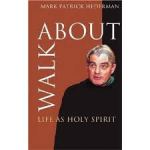
    This short post comprises an introduction to a book by Michael Patrick Hederman entitled Walkabout.

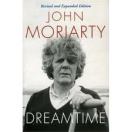
    Those who have read John Moriarty‘s Dreamtime or indeed visited Tara in the last years (wherein the bisection of the Gabhra Valley to accommodate the M3) will like this attached poem. Walkabout is a wonderful book  with themes and concepts that are attractive to me. I like the way Hederman thinks and how he writes , which is more than can be said for a certain FF Minister who seems to espouse pseudo-creationist ideas and even launches books for the most-suspect types of people.

    For readers of poems and poetry, I am adding the following poem as an introduction to a  concept. An antidote to the ridiculous situation last night in Ireland regarding the launch of a book which for all the wrong reasons comprises an alliance between pseudo-thought and pseudo-religiousity.

    The links at end are to three books which I think are related somewhat to the themes found within the poem and the thinkers who define for us an absence in myth. (and a lot of appalling garish noise). What occurs in the absence of mythos is a void and one suspects that the greatest tub-thumpers will willingly make use of it. I am for Hederman’s dignity and writing.
    Cóiced.

    The word for a ‘province’ in Irish is ‘fifth’.
    The fifth one : Meath or ‘middle’ place,
    is secret : a drawer, or priest-hole,
      Omphallos
    a sliding door oiled into space
    rock-faced , as in sheer of cliff.

    ‘We’ll find them’, callow children laughed
    on mid-term breaks
    in plastic macs.
    ‘Don’t drive. We’ll walk.’
    They held a compass : North, North-West
    and tied a thread to leave a trail.

    We found one body in a field
    metal-detected teeth through lime
    walking-shoes out on a ledge.
    One child survived. Now ninety-nine
      one plain, one purl, hand-knitted
    time of sorrow. For
    ‘Wherever you walk in Ireland
    you reach the edge.
    Cóiced , by Mark Patrick Hederman , from The Book of the Icons , Walkabout. Publ Columba Press 2005.

    Reading is not always about being literal. The obit that I wrote for John Moriarty has been filed until I go back to the Dreamtime book and examine again the Conaire and Tara pieces. It is funny how close Moriarty’s ideas of trishagion, sanctus and kedushah came  to the spirit of the Hederman book. Maybe we are all on various Walkabouts that reject the literal-minded reductio ad absurdum of  learned illiteracy amongst those of us who refuse to read the books that are so readily available to us.

     Mark Patrick Hederman ‘Walkabout’
    John Moriarty ‘Dreamtime’
     The Maps Category on Poethead

  • ‘Cicada’ by Glenda Cimino.

    September 11th, 2010

    Cicada

    For David Carson

    How beautiful the cicadas’ song
    How holy the insect voices
    Rise to heaven.

    How homely and comforting
    The steady trill of their choir
    In the dark night.

    Yet some say each cicada
    Is the restless, reborn soul
    Of a dead Poet –

    A spendthrift who did not respect
    The gift of his muse
    But squandered his inspiration.

    Till the poems died, nameless,
    While waiting to be born
    And the silence grew deafening.

    How with cicada’s wings
    He now fervently delivers
    His unuttered poems.

    He can never again be silent
    Even if no human understands
    His heart’s outpouring.

    How beautiful the cicada’s song
    How purely the insect voices
    Rise to heaven. 

    by Glenda Cimino

    Haiku

    wind in the long grass
    whispers of forgotten lovers
    under the trees.

    Glenda Cimino

    Both poems are © Glenda Cimino, with thanks, C.

  • Le Personne et le Sacré, by Simone Weil

    September 11th, 2010
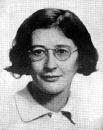
    Simone Weil Le Personne et La sacré

    Whilst awaiting this morning for a sheaf of three poems from my Saturday Woman Writer, I thought to add in an excerpt from the Notebooks of Simone Weil, whose Necessity is the most sought after poem on the Poethead blog. I will include at the end of the excerpt a link to Necessity in stand alone format (without comment). Here follows an excerpt from Le Personne Et Le Sacré :

    “Beauty is the supreme mystery in this world. It is a brilliance that attracts attention but gives it no motive to stay. Beauty is always promising and never gives anything; it creates a hunger but has in it no food for the part of the soul that tries here below to be satisfied; it has food only for the part of the soul that contemplates. It creates desire, and it makes it clearly felt  that there is nothing in it [beauty] to be desired, because one insists above all that nothing about it change. If one does not seek out measures by which to escape from the delicious torment inflicted by it, desire is little by little transformed into love and a seed of the faculty of disinterested and pure attention is created.“

    I have used this paragraph before as a static text in this blog, because it epitomizes Weil’s writing. It was the centenary of her birth in 2009 and some of those notebooks made their way into general publication. Weil is placed with Paschal in terms of her philosophical and writing output, but it incredibly difficult to locate texts in ordinary bookshops in Ireland. I have quoted from Thinking Poetically, ed Joan Dargan.

    I suppose that it is an approach to art that encapsulates the purity of the relationship between the individual and the transcendent work that I find attractive, living in a country (as one does) where people must fight to bring to Government the necessity and importance of the arts: in their funding, archiving, presentation and their preservation. There is always hope that the necessity of the arts in developing the intellect will be recognised and supported in Ireland.


    • Necessity, by Simone Weil
    • Waiting for God. Simone Weil 2008
    • National campaign for Arts Website.
  • Protected: My Tree at Night from a Different Window, by C Murray

    This content is password-protected. To view it, please enter the password below.

  • Two Book Versions of Julian of Norwich’s Revelation

    September 4th, 2010
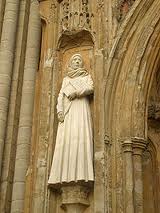
    Julian at Norwich Cathedral

    Middle English is not so Difficult…

    I thought I had found a treasure today whilst browsing in my local bookshop and coming upon a ‘modernish’ version of the Revelations (shewings of ) Julian of Norwich.  Not so!! The book is a 1987 imprint which seeks (or sought) to bring the writings of the Anchoress at Norwich Cathedral to a wider audience, whilst sacrificing the beauty of her poetry to a clunky co-option of her unique expression. I am not opposed to the book per se, but would question the use of an editor (or set thereof) rather than working from the beautiful editing of the definitive book on Julian which captures her voice in all its sublimity,

    Julian of Norwich, A Revelation of Love. University of Exeter Press, Ed Marian Glasscoe.

    I thought for a while about how I would present what is my opinion on the matter of loss in translation, and in how wide dissemination of literature can sacrifice so much in what is an attempt to frame a book and reach an audience that may be unused to the language of Julian. It is highly beneficial for the reader to attempt to read some work in the original.

     The Glasscoe version has an excellent introduction and glossary , which aids in one’s ability to work through this highly original work of a woman from the Middle Ages. The clunky and appalling book which I actually bought and will not name here had somehow managed to take the light right out of this seminal work of literature, so I am not going to name the version, editors or imprint. There are two pieces on Poethead about Julian already, both of which I will attach as link at the end of this piece. One is a discussion on the use of the word Shewings, which is how Julian of Norwich described her visions (in the language of the mid-wife), the other is an excerpt from the Glasscoe. To demonstrate the cause of the headache the book caused in me, I am excerpting two short pieces here. The first are from the UEP (Glasscoe Edition, 1976), the second is a modernist version of Julian which fills out her words to accomodate a modern audience who may not want to bothering themselves with attempting to read in the original adapted version.

    ” And when I was thirty yers old and halfe God sent me a bodely sekeness in which I lay iii days and iii nights ; and on the fourth night I tooke all my rites and wened not a levyed till day. And after this Iangorid forth ii days and ii nights. And on the iii night I wened oftentimes to passyd and so wened they that were with me. And in youngith yet, I thought great sweemeto dye; but for nothing [that] earth that me lekid to levin for .”

    Revelation 3, Julian of Norwich, A Revelation of Love. University of Exeter Press, Ed Glasscoe,


    “Then when I was 31 years old God sent me a physical illness and I lay in its grip three days and three nights. On the fourth night I received all the rites of the holy church and did not expect to see the next day. I Lingered on for two more days and nights and on the third night I was convinced that I would die and so were all those around me.”

    The example is not the best because it is not her visions but the structuring of the editing of the second version is pretty obvious. The first link attached herein gives a longer excerpt of Julian’s writing :

    • How the Visions worked on Julian, 8
    •  Julian’s Shewings and Atwood’s Suicide Angel
  • Torture of Women, by Nancy Spero, reviewed at Guernica Magazine.

    September 2nd, 2010
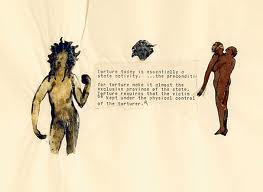
    Still from Torture of Women by Nancy Spero

    . .

    Torture of Women , Nancy Spero. Publ 2010, Siglio Press.

    The latest edition of Guernica Magazine includes a review of the Spring 2010 publication  of Torture of Women  by Nancy Spero. I am linking this review at the bottom of this small piece, along with a link to the publication notes.

    There is a Nancy Spero image on the site already, accompanying another piece. It is from the 1976 series of Torture of Women , based on the 125 ft piece by Spero. This Spring 2010 , Siglio Press published the work  in book form in a 126 page cloth bound edition which is reviewed at link by Guernica Magazine.

    “With an essay “Fourteen Meditations of Torture of Women by Nancy Spero” by Diana Nemiroff; “Symmetries,” a story by Luisa Valenzuela; and an excerpt from The Body in Pain: The Making and Unmaking of the World by Elaine Scarry. ”

    (from the Siglio Site)

    The Guernica Magazine slide show opens with references to Pinochet, a byword in torture and repression . It interests me greatly as a writer that the names of the disappeared get lost in our histories whilst the name  of the Torturer gains a notoriety and cachet which seems to point to a great attraction to fear. I wrote an obituary for a great woman writer who spent her life investigating and resisting Pinochet and was nominated for a Nobel prize. She collected testimony and wrote works of fiction and non-fiction based in the Pinochet era, her name, Patricia Verdugo is mostly ignored in Western Media ! We recognise  and rationalise the work of torturers thus giving them a validation that they ill-deserve. Thatcher notoriously invited him to tea in England.

    Women artists and writers like Frida Kahlo, Anna Politkovskaya, Patricia Verdugo and Mirjam Tuominen have grappled with the themes of torture and have attempted to redress the balance.  This volume of Spero’s artwork will continue with that work of  engagement at visual artistic levels. There seems to be little in artistic analysis and dialogue in this most pressing of feminist engagements.

    • Guernica Magazine’s Review of Spero’s ‘Torture of Women’
    • Siglio Press 2010 Introductry to the Spero Edition
    • wikipedia for Nancy Spero
    • The First five Poethead pages.
  • “Transformations” Fairytales by Anne Sexton

    August 29th, 2010
    Rosaleen and Grandma from The Company of Wolves

    Red Riding Hood

    There among the roots and trunks
    with the mushrooms pulsing inside the moss
    he planned how to eat them both,
    the grandmother an old carrot
    and the child a sly budkin
    in a red red hood.
    He bade her to look at at the bloodroot,
    the small bunchberry and the dogtooth
    and pick some for her grandmother.
    And this she did.
    Meanwhile he scampered off
    to Grandmother’s house and ate her up
    as quick as a slap.

    Excerpt from Red Riding Hood , Ann Sexton.

    The image which accompanies this short introduction to Ann Sexton’s book Transformations is from that other mistress of the dark tale/fairy tale’s pen, Angela Carter. The image is from the Neil Jordan produced movie, The Company of Wolves , which Carter scripted based in her collection of Fairy Tales and Wolf stories of transformation and Metamorphoses. The tales did not include those which sit outside of the theme of the movie and are among her classic writing, so I’d generally urge readers who like women’s novels, fiction, prose and critique to seek out Ms Carter’s opus which is available in book shops and on Amazon. High on my list of personal recommendations is The Bloody Chamber (Bluebeard), The Lady of the House of Love (Vampire) and her essays  Expletives Deleted.

    I bought Transformations on Friday morning to read on the way home from a brief holiday in my usual haunt,  The Rare and Interesting Bookshop, in Mayo, as I have given up on Newspapers doing anything but horrifying me (and not in the delightful Carteresque manner).

    Here are Briar Rose, Cinderella, wicked step-mothers, Rumpelstiltskin, The Little Peasant and the coterie of Grimm falling out of the slim but packed volume of tales of transformations and metamorphoses. The twist is in the language and schemes, as opposed to the twists and turns in Carter’s feminist and microscopic eye in her versions.

    Briar Rose

    Consider
    a girl who keeps slipping off,
    arms limp as old carrots
    into the hypnotist’s trance,
    into a spirit world
    speaking with the gift of tongues.
    She is stuck in the time machine,
    suddenly two years old sucking her thumb,
    as inward as a snail,
    learning to talk again.
    She’s on a voyage.
    She is swimming further and further back
    up like a salmon,
    struggling into her mother’s pocketbook.

    Briar Rose, by Ann Sexton.

    Do read the book, it isn’t by any means a new book , but all books are new when discovered , bought or found. And no-one can really tell how one will react to the images, content or stories therein. Always new books are something critics and interpreters forget are an adventure to the mind.

    I have included at the end here the name of a collected Carter, the title of the Sexton and a link to another Ann Sexton poem which is on Poethead.

    Angela Carter’s Burning Your Boats
    Ann Sexton, Transformations
    Angels of the Love Affair , Ann Sexton

  • Two Poems by Mirjam Touminen.

    August 22nd, 2010

    The Swallows Fly

    The swallows fly
    high
    in towards bluer sky
    low
    down beneath darkening clouds. 

    from Under the Earth Sank (1954)

    I Write

    I write it shows in the eyes of the dog
    it creeps in the paw of the cat
    it shimmers in the solitary fly’s pair of wings
    it leaps in foaling withers
    it flies in the flight of birds
    it flies
    it sinks
    in the earth down under roots
    it smiles in the infant’s eyes
    it grows in the eyes of children
    it wonders in young eyes
    it yearns in human eyes.

    from Under The Earth Sank (1954) by Mirjam Tuominen.


    Mirjam Tuominen

    I shall be reading her stories and essays this week and may even put up a few notes about her, it seems that women writers tend to sink into oblivion with remarkable rapidity. Mirjam Touminen, like Weil and Sachs were writing at the time when the Second World War was occurring. Tuominen dedicated a poem to Simone Weil which I shall link to, given the high amount of searches under Weil’s name that occur on this site. Both women were incredibly important chroniclers and writers of their era.

    Its nigh impossible to access some of Simone Weil’s essays on religion and totalitarianism. Both Tuominen and Weil’s struggles with war and with their art have been reduced to slim volumes, You really have to look them out, it is worth the travail.

    The two small Tuominen poems are taken from her Selected Writings, Publ. Bloodaxe 1994.

  • A letter to the Editor (20/08/2010)

    August 20th, 2010

    I have little success getting my poor letters published in the Irish Times, so I have decided to publish it here in toto. It comprises a response to a throwaway comment regarding the responsibility of poets during this post Mythical-Celtic Tiger era.

    Re : ‘From the Poetic to the Prosaic’ 20/08/2010

    Madam,

    This comment from the letter entitled “from the Poetic to the Prosaic” ( Friday August 20th 2010) is quite clearly woefully misguided; ” The role of poets should be respected, but the attempts of politicians to root out the rot and restore order in the State are equally worthy.”

    Whilst Poets may be accused historically of being ‘Love-Trips’; and subject to the vagaries of the Taoiseach’s speech-writer , they quite clearly have not beggared the country.

    It’s not funny that the Taoiseach would have recourse to writers to disentangle us from this mess.

    It is , however, quite hilarious that the very people who have taken the brunt of Fianna Fáil arts policy and cuts would want to extol the virtues of the mythical Celtic Tiger era, in its scenes of cultural devastation from Tara, through cutting to ‘zero’ funds to two of our three major writer’s centres ! ( 0 funds)

    Maybe Mr Cowen could ask elsewhere for the extolling of Irish Art. I suggest that he start with the Ahern Family who are getting the tax breaks and are considered to be ‘Artists’ in this benighted state.

    your’s etcetera (letter ends)

    I reckon that O Donoghue’s 2003 Arts Act is responsible for Taoisigh going where angels fear to tread myself. The Arts should be as independent as possible from the operations of the State- that does not prevent the writer/poet/satirist from commenting on Blasphemy, cultural destruction or the fact that an ex-Taoiseach and his family member are getting tax breaks under the artist’s exemption scheme.

    Since new artists have been created under this government, I think that they should be the ones singing the praises of Ireland abroad, even if one of the books was allegedly ghost-written.

    Poets’ , Service to the State ?

  • Protected: Culture Night 2010 (Dublin)

    This content is password-protected. To view it, please enter the password below.

←Previous Page
1 … 76 77 78 79 80 … 106
Next Page→
 

Loading Comments...
 

    • Subscribe Subscribed
      • Chris Murray
      • Already have a WordPress.com account? Log in now.
      • Chris Murray
      • Subscribe Subscribed
      • Sign up
      • Log in
      • Report this content
      • View site in Reader
      • Manage subscriptions
      • Collapse this bar