His Janus head looks both ways, Double-jointed at the neck.
The honey juice of the persimmon Bursts from their mouths, Babbling tales in frothy tones.
A river parts his muscles.
The knot in his guts is split.
Inimical flesh in the dour night, Unborn in blackness, You seek, four-eyed, for memories that the oil burned bright.
The Moon of Pride
The skies are thrown in a vernal frenzy.
We are strangers again And tremble in rounded movements.
We dance through the open of a new obscurity.
Our voices imagine the salt of shame, Still insisting between lines for honesty.
Pale as the moon of pride, He plays our hands And knits fingers into spirits.
Ashes ingrain the shadow of his feet And blunder through each sorrow of my mind.
Words Like Stars
How they flow unformed Then fix themselves like the stars Shivering and held up Worshipped
And I And they Staggering and squawking Sweating and squabbling
Night and day
Wobbling words Singing
Dust
Dust
Dust
Corrosive mantles Wrought to a stain
Stain us Stain the water to the earth Hold these shapes in stasis
Their lungs sooty and quivering How they wake songs in the trenches And beg for absolution
Apologies
I hear it now – alright? The glass body shivering in its dress, Its heartbeat manic-racing, Thumping against the stones, While your starved arms knock at my door, While the roots play footsie in contempt …
How these sounds, Your squirming skits, Exhaled and exiled one at a time – Though still sweet-smelling rags – Rock me like lullabies.
At The Temple
Skim the voices, Swoop
Their radiance rising to an acousmatic litany – And the other mirrors, an afterthought, skewed suffering, Latching on to
Melodic pattern nesting
It transcends
On a perch of bamboo
The viscous asphalt limits each wet corner
Dive sacrifice
The gods sheaf their poor prayers, Partition need from want, Smoulder the paper gifts
Define my breath, Its crystalline vowels, Rictus of guilt, Unlisten to my pleas.
The Flood
A ferrous river, the earth’s appointed transgressor, Breaches wood, Ribbon branching through houses, fields and cars.
Leaking into dark brine.
Your tight-laced breath forms an ellipsis, The bees are noiseless above your new bed.
Wade deeper, low-slung secrets, Demand retribution, Stand still and ventilate, Fastness, hearth, asylum.
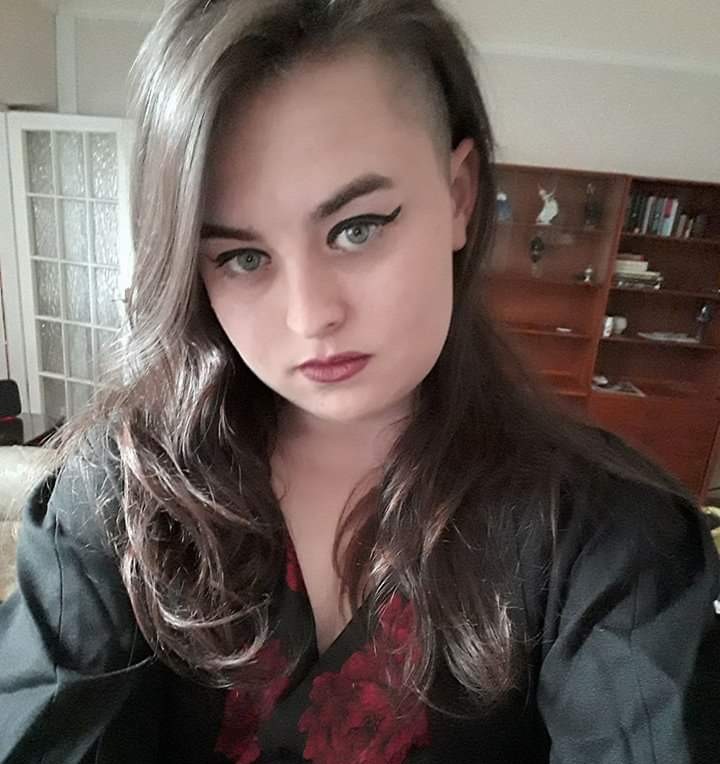
Roisin Ní Neachtain is an emerging Irish poet and artist with Asperger’s. Her work is held in international private collections and she runs a blog featuring monthly interviews with women artists. She is currently working on her first collection of poetry.
Here is a letter we received for our project at Armagh Robinson Library #FillingTheVoid
Often, in history, women wrote anonymously because their voices were silenced. It’s possible, our writer is a woman. Here’s what ‘she’ says,
LOSING MY LIBRARY – MAKING A LIFE
When the doors of our libraries open again, we want the first people who step into them to be the people we are protecting from harm, those we are keeping safe.
These are difficult times and they are temporary times. The libraries will open again and we will encourage the tactile relationship with the book to our young. We will encourage the familiarity and peace of the binding, cover, and content to our not so young. We have closed our libraries and left our books waiting for us, so that we might make those of us who are vulnerable to illness safer. At the same time…
Public Art Participation Project – WRITE TO US NOW!
We live in extraordinary times. We will gladly receive your (emailed) letters to FillingTheVoidProject@gmail.com. We will miss the immediacy of your handwriting and your envelopes, the physicality of the letter, but we will gain the immediacy of your lived experience of these times. We are extending and re-opening our project, but as an online experience, given the implications of Covid-19 – so email us instead.
Tell us what is happening day to day. How have things changed? What is different but good about the changes? What is it that is making you anxious? What and whom do you miss? To paraphrase the French avant grade artist Georges Perec, what is happening, when nothing is happening?
The motto over the door of the historic Robinson Library in Armagh translates from the Greek, as The Healing Place of the Soul. We…
The line at the beginning Of the old tale comes from the lips Of the beggar king as he waits In the doorway of old myth, His crown beside him is all rusted and worn.
The day breathes a sadness and A wonder that only children of old know. The rhythm of footsteps holds the march Of men who trampled on the wildflowers Of spring but, among the sounds, a bell rings so quietly. She is there; She is there with eyes of love that humility tempers.
Prayers are made with each footstep. Mantras are chanted by the smile that leaves the lips. Surrender is a storm that never comes And the cracks in the sidewalk are the tunes For the ballads that keep getting sung in glens Where the desolate houses still breathe.
Off and away the farmer is walking His dog to oblivion As the rosary of existence Is said by the hands of the last fires.
What will the tale be when the old man Of the mountains passes silently into the mist? Who will hold the soft hands of the ancient knowledge When the alarm of emptiness rings above the city’s sorrow?
Tragic days without rain I want to tell you the new tale but my heart Does not know the way to the pass where innocence resides. Tell me how to whisper to the king so I might Show him where to drink from the well that renews.
Show me how to meet The soft doe of the woods so that I might Run with the warrior and stand with the woman Who rules the city where the crystal guards the threshold.
Tell me how to live with the ancient son whose tribe Knew how to preserve the gentle star at the end of the world For only now do I know what the beggar king tells with his eyes.
The House of Eden
I wish to go home, She said. I wish to light my fire in the hearth and Remember.
You marched me out long ago, And, though two thousand years have passed, I have not forgotten the road. I am finding my way back.
I know my home was abandoned long ago, But I will know it by the wild roses And the shed with the rusted bridles. I will never forget the smell of my life.
I leave a trail, a scent Wherever I go, And the animals know it too. They have watched over my home. My home in Eden.
They have called me back to light that fire, one last time, Because they too know it will be the last.
I return. I return by the road unpaved Created by hands of starving men. I return in the air you breathe, One last time.
The Measure of a Dream
She’s saying her last words as the rain comes down, As the ghosts weep in the corner, the dog has sinned And the cat has taken to purring. The calm of a day goes unnoticed as the winds Pass to a cold too early for the leaves. As the child waits, the oak bows and the yew reveals its age
A forest begins to speak. A river sings its song. A lake gives away its secrets.
Dawn waits in the arms of the moon and the great land that flooded reveals its bridges in the titles of the great bards Who will tell this tale of the passing of giants? Who will tell the myth to the child that believes in the flocks language?
The fair call. The justice of a feather. The last beat of a truthful heart. These are the dreams surmounted on a scale without a goddess.
Tethered worlds in boats that cannot be seen Remain to be the will of a people. The harbor is full of ghosts wishing to speak the true history but the wanderers have all gone away. And the old sage has tears in his eyes His hands are cracked with the sandpaper of existence While the prowl of a cat reveals how language’s sister Has to cloak herself.
The time is not ready for the light to emerge from the stone where the five rivers dwell. The land quiets itself as the darkness descends And the flame of the woman, in her sad eyes, Is an aisling without a king.
The Fabric of Stillness
They say a golden lady will appear She will walk into crowds and smile at everyone, While children will sing from the bridges, The boys all hidden away will appear with swords and arrows, Ready to cut the ropes for the boats ready to leave the great shores.
A voice is heard in the rhythm of the murmuring And the river is singing songs for the elder to return home. There is a breeze in the air and the words On the lips of existence are too slow for the ears.
Will this time be made by the rhythm of a song? Will the girl who knows the way of the white stag find a way to open the forest The door has been pushed open and the light is streaming in And there are those beckoning for a song kept
Awake from the dream. Awake from the answer. Eat the question. Love the myth.
For the story of an island unnamed is A province unknown and a return of a song From a woman’s voice just awakened.
Truth’s Passage
The grasses have quieted and the cat’s prowl has lost its dance. The foreign accent has all but disappeared and the fade Of colonization’s stroke has placed its last arrow Before the altar of the shining blue-eyed men Eyes looking down for centuries look deep within And humility’s face is beside the widow with her new found tears.
How does sweetness come to these shores? When the ancient dog does not wait for its call. The forests fall is set upon soils of old kings and the chalice Of the queen has been cracked for the lips of princes.
Sorrow leaves the heavens and the poets house Remains unvisited while the crow waits, Waits …
Mountains of lapis straighten stillness, And the broken currach sings the tides that will not return. Beyond the nest of the magpie’s treasure, A silver dove lies from an island uninhabited.
Within a mouth of far distant lands, A branch sings what was lost, And a man cries for the mother he betrayed.
So the clock ticks and the table is left undone, But the candle remains and the lullaby of the future, Whispers softly to the newborn truth.
Within the Heron’s Arms
The river longs for the song of the innocent And the purpose of a tide waits in days unfound. The sun’s sorrow opens the heart’s strings, As the boy wanders too far among the ashes of old empires.
Dirty signs hide the language of nobility, And fearful eyes look down to a pavement gray How will the grief burst the banks When the trees are cut? When the windows are broken? When the door creaks?
What is the clasp that opens the necklace of the captured swans, When the island of loneliness has disappeared, When footsteps without imprints walk amongst us, And the gulls cry to a séance without ritual?
Clouds move the heaven’s story and once again A king leaves these realms in a ceremony of the dark. The flowers bloom in the pause before dawn As the trapped door of existence opens wide. Will the sweetness of truth open the mouth of the wanderers? Will enough be the gate that sings?
It’s the days of great sunlight that reveal the heart’s road to peace. The swallow flies from the continent to the bare cliffs of ancient song. While the last fisherman stands alone calling the sea’s son home.
It is 3.15 p.m, it is Thursday, I am examining two rosemary sprigs
their blue-green, their silver underlight.
She is stripping the small base leaves from a third, tapping its heel, putting it in a glass of crystal-clear-water for planting out with the roses in October.
I can taste lamb-stew with rowanberries, counting the trees–
alternating Crab-apple Rowanberry Crab -apple Rowanberry that syncopated another’s drive—
Memory insists that I stand on a bank of the River Tolka, upstream from Socrates and his garden of roses, those colours we tasted–
For here is the place that we committed him to memory
that black water– Glas Naíon, the stream of the infants,
All I have in this breath is This brain in this tin shell In this endless second My grip choking the wheel –
This brain in this tin shell Rattles and stutters and jerks My grip choking the wheel So letting go is the only thing
That rattles and stutters and jerks Will let past the steering wheel. So letting go is the only thing Left now I’ve learned to fly:
Past the steering wheel My wringing out of skill has Left now I’ve learned to fly Like a cloth uncurling Like a fishing line unspooling – This tin shell flies, and flies, and flies.
bones
at eight i saw it.
the smell of earth thick and foreboding in the air; unearthed by accident, its sickly white a shock against the dark.
i teetered on my toes and held its hands; powdery, dust-dry, like old cheese, its fingers were brittle. its grip was strong.
and i welcomed it, when the vertebrae floated in my glass of milk, when the ribs curved up between the bars of the xylophone:
and i played house with the gaping skull.
Way-Tamer
I earned that name. Through eons of the giant stirring beneath the broiling earth, Through his waking, and the first breaking of the land into its parts, Through the sea’s first fury when it was split in two, I still wandered.
I stood alone on the first beach, on the first rock battered into dust, and watched the formless churning at the end of every world, and I still wandered.
I saw the first hanged man jerk and splutter upon his rope, and saw that the one who watched like a hungry dog would die on the gallows too, and I still wandered.
Even when I warm my feet in front of my own fire and the quickest of the dances pushes the gales away, the road-song beats within my mind like the cawing of a crow.
For when I first began to seek the familiar and the strange, all those things I thought I sought but ended just the same as each useless, petty, little thing I thought I’d left behind,
I found the tree – that gnarled old beast – from which I had yet to swing and as I stared at the looming branch where I’d soon taste nine days’ death, I pushed a gnarled old hand against the bark and spat upon its roots. For, I was not dead yet.
question
do i glimpse a brute in you, when we sleep flesh to flesh, when your moist breath clings to my face as it rasps past teeth and tongue,
or, in your forehead softened, and your lips come slowly loose, do you release each thought and word that hides each of your hurts?
do i catch you unfiltered and raw as morning breath? within our sleeping, flesh to flesh is there room left to hide?
is there room to scour ourselves as we scour dirt from our teeth? or can you see the brute in me and its every snarling hurt?
My Boyfriend’s Beard
I asked him, once, as between my fingers each riotous strand sprang up, ‘What would happen if you straightened it?’ And laughing, he said it would go on fire.
I hope he never does. For when the world dizzies me with its anarchy, and I burn myself fumbling for order, his beard between my fingers wild and weird as any of my spinning thoughts makes a straightener seem a straitjacket and turns the whirling of the world into a waltz.
Kathryn Keane writes poetry and short fiction. Her work can also be found in Culture Matters, Silver Apples Magazine and Bitterzoet Magazine, among others. She has previously been a guest reader and performer at Mary Immaculate College’s Fem Fest, Stanzas: An Evening of Words, Thoor Ballylee’s Tower Poetry Slam, the Intervarsity Poetry Slam and On the Nail.
There is a guilt attached to needing, You were trusting and deceived. Coins that were used to cover eyes, lie broken, And trampled upon.
Uncovered scars lie dripping And untended to. Five men travel across the deserts for you. You breathe in life, And I took it.
Children beside a fire see something in the future, A smile upon lips that was never passed. There was a contract I never signed or intended to.
What can we say if sorry isn’t sorry enough? Glass, and water dripping on the coffee cups. Unread letters in shoe boxes.
Do you think there was ever a music in silence? Tunes that hit upon our ears as we danced, Unassuming and undressed In the tiled kitchen.
I never did. Not really. I wanted to Desperately. To fall into something that wasn’t my own Striking distance from a championship.
The words fall from our lips and out the window. I left. I think I always intended to.
Unwanted villains sneaking into the wanted mundane. Coffee and two sugars Black only on one side. What can we say if sorry isn’t sorry enough?
A.
Never be, Never be sorry or fearful. The faint sounds of birds and school children outside your window. As I press my body against the glass. You behind.
I am crumbs, The sun that hits the back of your neck Lie in me. Bathe in me. You are the presumed safety net.
The walker never sees, Just trusts. And in the moments of falling, Prays to a deaf god.
But on you, was a need hope. A safety bridge, A maturity. Love is thing with imposed memories.
You are a heartbeat. A thing I wish I could drive from my chest. I thing I wish I didn’t need But live without.
Smiles happen without Impulse. Bare And happy
The pause will resume and she will wake I did I was And cannot be
M.
Crumpled flags are upheaved from the ground. Mud and grit, Red fog fills the air as footsteps are retraced.
Young children holding near gold awards. Broken ankles and legs From running without the knowledge of how.
The stands have forgotten our names now. There are new uniforms.
New teams.
The blues and the pinks fade. And distance noises are muffled under the shroud of years, With faded scars and scratches.
We have Did Win I remember.
From the growing pains and memories lost An untouched wrist Kisses faded on necks Sprouting from our backs.
The clouds burst And maybe we will find each other beneath one.
M.
Heavy. And Moving.
The first sprinklings of green, With it The faintest Feeling of something being unearthed.
There was something there years ago, A life of something longing, Trailing behind a mouth that never moved And words that were never rasped
How do we portray the thing we having being fearing. A fearlust of sprinklings from a fractured podium. How do we list the pain that is buried beneath the skin Coming out in small intervals Barely voiced but shaking in the body
I was stronger before Hidden behind snapshots of sensitivity There is a faithfulness in an unknown truth.
I give you a flower, As if the cliché of the manner will be renewed For only us. Smiling with the innocence of a child running from their mother.
Possession presents a conundrum, Withering in hands unsure of the level of comfort. Fragile And shattered glass.
A glistening bead of sweat rolling down the nose of a rearing horse. A guard, Broken down for a moment of stillness Only to be rebuilt more so.
The bedframe creaks and moves under The heaviness of a light-hearted laugh. I draw a map on your skin.
Noting the moles and freckles like consolations To find home by. The nape of your neck a sort of memory Or creation of such.
What do you say to the person that saved your life? As old flowers decay on the mantle piece Dusts of pollen linger like fingerprints.
Reaching for a taut rope, Based purely on an unspoken promise Love bursts on our lips, A question unasked.
I will follow you.
S.
The segments of memories are strewn on a plush carpet Pink and oranges Bursting behind a low section of glass.
I give you a lie. It’s all I can offer without plunging from my chest I am Lost In the cemented memory of a child reaching for a hand that wasn’t there.
What do you think is the lifespan of heartbreak?
A crumbling brick A grandfather clock unticking in the hall. I fix myself in an image. Adjust the lipstick to a smile that was there before You remember that song, don’t you.
Clodagh Mooney Duggan is an emerging poet. She originally trained as an actor, graduating from The Gaiety School of Acting in 2013. Since then, she has begun writing for the stage and is currently writing Made from Paper, which will premiere in Dublin 2020 in The Scene and Heard Festival. The Women Who Loved Me & The Women Who Couldn’t will be her first published collection.
A woman gets the news, drops to the chair, floor – further, the quick in her bleeds out. She is liquid now, leaching away, this hour, this day, day-on-day. At the back of her eyes a face ebbs and flows: his lop-sided smile makes room for her touch, the tilt of his head calling drinks at the bar, wide arms swinging his kit, their young child, onto working-man shoulders.
Can God breathe underwater?
Each year a sacrifice: the man in blue overalls, flower-blue eyes, who loved his wife at first sight; the ready-laugh man collecting glasses in the pub in off times; the dancer bending into sound like a squall; the dare-devil larking about first night back, caught up in the dizziness of breathing; the ones who tread water, the ones who don’t know what hit them, the ones dragged down in sight of shore. All lost.
They slipped from sight like water through our hands; our hands are empty of them, our mouths are empty of them, our chests are hollow, our eyes are expanses to search.
Fishermen search. Mates, fathers, brothers, in-laws, cousins, make late night calculations where the body might wash up, rake inlets and coves along this torn coastline, fishboxes are body blows, spars are pins in their eyes. On stormy days they are too big for their own kitchens, too restless for the hearth, gaze ever on horizon, for a break in the weather to renew the search.
What else is there?
Bringing in the Washing
Rain whips window like flex, we break mid-sentence, head out. At the side the washing line takes off in wild geese formation, the prop tethers and leads the V.
Hands snatch at shirt flaps grown strong against grey sea, shape shifters we pin by one cuff: blue cliff, chough’s wing, white strand, creased headland, tattered island.
We fold them fast into us, tuck away, the bundle swells under elbow, rain-spotted. And in before they’re soaked, pile all on the chair while we finish our tea. I take my leave of you -as usual, arms full.
Harbour’s Mouth
There are people here so much part of the place that they are named after headlands. They have the look of the raw-boned earth about them, hair the colour of dillisk, eyes taking on the changing shades of the sea.
The rich morning sun draws us out. We check the storm’s leavings: pebbles salt the boreen, bladder wrack drapes the harbour wall, gobs of sea-spume float in the air. The Lough is still choppy, made into peaks by the wind’s flat blade.
Neighbours untie shed doors, clamber into tractors, hammer fence posts. The fisherman has been up for hours, meets me at the pier, a coiled rope in hand. We talk of the weather, face away from each other, watching the harbour’s mouth.
Between sheer sides of rock, a glass dam is piled with boiling layers of saltwater. Lines of blue and white snap and curl, lash some high invisible wall, threatening to shatter whatever power holds them back. He tells how once
a great wave came thundering, crested over this broken ring of hills. Came in the night − 1966 it was − they all heard the roar of it. He points to a spot up the hill, a field away, the place where a boat was hurled that time, hefted by the force of the Atlantic.
Current
The gulf stream makes a micro-climate here, nurtures palm trees and New Zealand ferns.
The current is born in the isthmus of Mexico, awash with the energy of two great Oceans
almost meeting. It leaves us with a deep-rooted thrill, like the quick intake at the glimpse of a lover,
flip in the gut as hands nearly touch, breath exchanged between mouths.
Meeting William Blake in the Library 1980
Unfinished. I hold the weight of paper, the lightest sketch, a man in a crown, clown’s hat, hair streaming.
Wonder came first. The tip of the brush found its place, dropped wild yellow to leap from the head over pencil strokes,
onto page after page on this serviceable desk, to skim along roads, cover the sleeping child, charge the muscles of man, stars and moon.
A grain of colour rubs off on my hand, passes over time into bloodstream, works its way up slowly to my soul.
Annette Skade is from Manchester and has lived on the Beara peninsula, West Cork, Ireland for many years. She is currently in her final year of a PhD on the work of Canadian poet Anne Carson at Dublin City University. Her poetry collection Thimblerig was published following her receipt of the Cork Review Literary Manuscript prize in 2012. She has been published in various magazines in Ireland, the U.K., the U.S. and Australia and has won and been placed in several international poetry competitions.
‘Secrets of a cartographer’s wife’ by Katrina Dybzynska
The cartographer’s wife never told him about her contributions to his maps. A few tiny islands hidden in the middle of an archipelago in the name of symmetry. Some borderline moved to resemble a face shape. The territory of England shortened slightly, in personal revenge.
One time, she renamed an insignificant river in Bangladesh after her lover. She felt pity for the cartographer that he was more furious about the affair than about her intervention in the world order. She knew that romances were ephemeral, while naming things was changing them forever.
Katrina Dybzynska poet, shortlisted for Red Line Poetry Prize 2019. Author of „Dzień, w którym decydujesz się wyjechać” (The Day When You Decide To Leave), Grand Prix of Rozewicz Open Contest 2017. Laureate of national competitions in Poland. She has been publishing short stories, concept book, science fiction, reportage, and poetry, but feels most attracted to genre hybrids. Polish Non-Fiction Institute graduate. Activist. Currently a member of Extinction Rebellion Ireland.
‘Correnti’ by Viviana Fiorentino
Ora è questo un manto di alghe e sale sotto il vento atlantico o è corrente marina del fondo della mia vita e della tua vita ora è sogno o perla luccicante.
‘Currents’ (English trans. by Maria McManus)
This is a shawl of salt and seaweed against the Atlantic wind the ocean currents on the sea bed of my life, your life a dream, a burnished pearl.
Viviana Fiorentino was born in Italy. After obtaining a PhD, she travelled across Europe, from Switzerland to Germany, England and finally to Belfast where she teaches Italian Literature. Since 2018 she has taken part to literature festivals in Italy and in Ireland. She was involved in the poetry project ‘LabeLLit’. She has been awarded or mentioned in various Italian poetry prizes (i.e. Arcipelago Itaca Edizioni & Bologna in Lettere Dislivelli). Her poems appear on Litblogs, international magazines (Brumaria, Works #9’, 2018) and in the Arcipelago Itaca Anthology of Italian contemporary poets. In 2019 she published her poetry collection In giardino (‘In the garden’) for Controluna Press and her first novel Tra mostri ci si ama (lit. trasl. ‘Monsters love each other’) for Transeuropa Press.
Maria McManus lives in Belfast. She is the author of Available Light (Arlen House, 2018), We are Bone (2013), The Cello Suites (2009) and Reading the Dog (2006) (Lagan Press), she has collaborated extensively with others to put literature into public spaces. She is the artistic director and curator of Poetry Jukebox and an active organiser and founder member of Fired! Irish Poets.
‘Genetics’ by Roberta Beary
Your eyes are big and round like your father’s
but while his are the color of the Irish Sea
yours are the color of the muddy fields
on my father’s land
fit only for the peasants who worked them.
abortion day
a shadow flutters
the fish tank
Publication credit: Rattle #47, Spring 2015 (ed. Timothy Green)
Roberta Beary identifies as gender-expansive and writes to connect with the disenfranchised, to let them know they are not alone. She is the author of Deflection (Accents, 2015), nothing left to say (King’s Road Press, 2009) and The Unworn Necklace (Snapshot Press, 2007, 5th ed. 2017) which was a finalist in the Poetry Society of America annual book awards. Beary is the editor of the haiku anthologies Wishbone Moon (Jacar Press, 2018), fresh paint (Red Moon Press, 2014), 7 (Jacar Press, 2013), dandelion clocks (HSA, 2008) and fish in love (HSA, 2006). Her work appears in Rattle, KYSO Flash, Cultural Weekly, 100 Word Story, and Haiku In English The First Hundred Years (Norton, 2013). Beary’s work has been nominated for Best of the Net and multiple Pushcart Prizes. She lives in County Mayo, Ireland where she edits haibun for the journal Modern Haiku.
‘Dying Lover’ by Anora Mansour
Trace my lips In low whispers As I once wept psalms over my dying lover.
Threaten that man You will murder for me – For my heart is a cadence of silence.
I can only love you if you creep through this life dangling dangerously as a ravenous red kite.
When we both become one lonesome night. And rub up to love up as a fight.
Oh, how I might love you, bitter citron basket on my lap Slumberly trusting me as a child. I would open my thighs to you – a snap trap.
Anora Mansour is a graduate of the University of Oxford. She lives between Oxford and Dublin. She has been published in a collection of Jazz Poems, various online sites, and has her own published collection of poetry and blog. She is African-American and Irish.
‘Clutch’ by JLM Morton
for h.l.
in the nest of my fist, a fledgling scooped up from the lane
her soft unfinished beak her shining eye a buoy ringing in the green cathedral of trees
a single yellow feather wisps across my knuckle there is a twitch of elephant digits
and I think about keeping her
raising her as my own feeding her worms
but I let her go
chirring for the ones I could not save.
JLM Morton lives in Gloucestershire, England, snatching as much time as she can to write between caring for a young family, renovating a house and staring up the barrel of a demanding day job. Her first set of poems was recently published by Yew Tree Press for the Stroud Poets Series and she is currently working on a collection.
Though the civility of civilisation frightens me, I visit somewhere populated. A graveyard made squirrel territory. One squirrel for every gravestone. They mount lichen-covered peaks and keep lookout. They claim the trees, the abandoned church. Nobody will make them leave.
That night, I dreamt the answer to the universe. It was blue, inside a conch shell. Spiraling in and out of crystal moments. Eggshell blue. In and out of images of the hospital bed, and these dreams.
Polly Roberts grew up in Devon. Three years studying Creative Writing at the University of East Anglia left her with an inextricable link to the landscape, compelling her to continue to write about the creatures and habitats encountered there.
Observations of both the non-human and human world continued whilst living on a houseboat on the River Avon near Bristol while completing her MA in Creative Writing at Bath Spa University.
Polly has run creative writing workshops for refugees, detainees, and young people and curated two exhibitions in response to her writing, both displayed at the Norwich Arts Centre.
In 2018, the British Council awarded Polly a Writers by Nature scholarship, during which she wrote this debut poetry collection, Grieving with the Animals. ( 2019, Dempsey and Windle)
‘Beochaoineadh Máthar Maoise’ by Ellen Nic Thomás
A dhílleachta linbh gan ainm, gan athair, Do chraiceann ar aondath le humha an nathair, A lúbann timpeall do thaobhán uiríseal, Mar bhata ceannródaí is sníomhanna sisil.
Is trua liom ciseán do dhóchas a fhíochán, Do dhán a chaitheamh i bpoll an duibheagáin, D’eiseadh a chruthú ar bhunús baill séire, ‘Nois tá tú chomh cotúil leis an gCailleach Bhéarra.
A iníon, a mhiceo, a ógfhlaith bocht, A leanbh truaillithe, maith dom mo locht, Imigh anois leat, ná bí do mo chrá, Le smaointe ciúinchiontacha ó mhaidin go lá.
Ellen Nic Thomás is a bilingual poet from Dublin. She graduated from Trinity College with a BA in English and Irish. Her work has been published by headstuff.org, Tales From the Forest and The Attic.
'On watching a lemon sail the sea' by Maggie Harris

1
and I’m singing ‘You are my sunshine’ thinking
of my childhood across the sea of incubation
go Honey go
you self-contained cargo ship you
with your sealed citrus juices and pitted panacea of seeds
braving the collision of tankers and illicit submarines

                 they called me scurvy.       the lemonade
                 my mother made was iced and sprinkled with
                                           Demerara
 (of course)

and I’m wondering, did they grow you there, o lemon     mine
you
for your juices
a lemon plantation, not to be confused with
a plantain plantation even a banana just don’t mention sugar
stack you in the gloom like hereto mentioned bananas
green and curtailed in their growing  or even
those force-ripe mangoes with girls’ names
nobody knows here and who leave their sweetness behind
bare-assed on the beaches
come
to the marketplace
comatose.

I do not remember lemons, but limes.


       M
    I         E
L                S.

Piled high in their abundance. Limes.
Acid green pyramids on market pavements
holding their secrets beneath their reptilian skins.

And there is my aunt, her arms thin as bamboo
gathering the fallen from the yard, sweeping
their dried leaves into the remembrance of herself
whilst the black maid slips slivers of lemon into a split
-bellied fish whose eyes glaze up at the sun.

‘Gauguin, you can come in now; remember Martinique ...?
hue the native in all her harnessed beauty
the slack –jawed fish, browning blood
the textured landscape in shades of  pawpaw and indigo.’

But, liming is what my lemon is doing now,
(in the West Indian sense), hey ho
over the waves at Aberporth, there he blows.


2
I set you free
to take to the sea again
on a high tide, with breakers rushing the beach
like warriors.
They pummel the sand, scythe
a four foot chasm into the mouth
of a lonely river
beat the rocks’ submerged heads
batter the cliffs again
                                        and again
                                                     and again.
The sea, beyond its charge, was waiting -
a winter morning sea, a Twelfth Night sea
tumultuous and moody

                                       waiting.

A strange gift, you
a large, perfect lemon
fresh and sharp as the sun-bright
wind-cut winter’s day. But I
unsure of your heritage
refused you.


3
Dear Voyager,
I cupped you
in my palm
desire urging my possession
how easy it would be – a lemon drizzle cake
a Martini iced, an accompaniment
to plaice or sole – and here I am playing with words
the resonance of belonging, of immortality –
but the devil played tricks with my mind
an injection of poison perhaps, a needle prick
into your  pristine, nobbled skin – but we are running ahead here
thinking of cargo – you may simply have fallen from a Tesco
carrier bag whose owner, fearing a lonesome home-coming
went walking on these very sands contemplating - life.

But there you were anyway, settled on the sand like a crab
then comfortable in the palm of my hand.


4
Finders are not necessarily keepers. Some
will do well to remember that. Vixens
circling misunderstood husbands in bars. Frag
ments from the fallen.
Oh but, how strong is the desire
to hold close, keep tight
smother your darling, your little nut-baby
in soft gloves, hard love, the kind that makes
you want to bite, bite! Rip flesh and bone. Swallow.
                     I could have accepted
your sacrifice
that gift of yourself, thank the universe
for its benevolence.
But the universe is not benevolent.
Stars are exploding missiles in a panther-black night.
Saturn doesn’t give two fucks. It’s chaos
out there.
But I guess you didn’t have time
for star-gazing in your ocean-going lumbering
over the hey-ho waves. And if I had sunk my vampiric teeth
into the you of you, you would be no more
than a bitter taste, a withering lump of citrus
on my kitchen table. Far better to remember you
the obsidian walnut weight of you
and these questions you have gifted me
and that last sight of you
rolling away on the tide.
Maggie Harris is a Guyanese writer living in the UK. She has twice won The Guyana Prize for Literature and was Regional Winner of the Commonwealth Short Story prize 2014, with ‘Sending for Chantal’. She has worked for Kent Arts and Libraries, Kent University and Southampton University as International Teaching Fellow.
Publication credit: Rattle #47, Spring 2015 (ed. Timothy Green)
Lunch Break
The fridge is empty. Which means someone stole my sandwich. And stuck me with this blueberry yogurt. Expiration date two weeks ago. Who stole my lunch. Or is it at home. Retrace my steps. Retrace. Did I take my lunch off the counter. I’m not sure. I was in a hurry. I set the alarm. Remember setting the alarm. Did I lock the door. I’m sure I did. I set the alarm and locked the door. My stomach is making weird noises. I’m starving. A slightly dated yogurt should be okay. Or maybe not. I might get sick. Salmonella, E.coli. I know the symptoms. Fever, diarrhea, abdominal cramps. I’m feeling queasy. It’s this yogurt staring at me. I’ll move it. Behind the baking soda. Where no one looks. If I’m not careful, this job will kill me. It really will. Kill me. I remember setting the alarm. Did I lock the door. I’m sure I did. I’m sure.
black fly
on the cutting board
last night’s dream Publication credit: Rattle #56, Summer 2017 (ed. Timothy Green)
Irish Twins
attic rain the backyard swing off kilter
We share an attic room. In the corner is an old double bed that smells and sags on one side. My side. Late at night I hear my heart beat. Loud. So loud he will hear it. He will think my heart is calling him up the attic stairs. His footsteps are heavy. He smells of old spice and cherry tobacco. My eyes shut tight. I know he is there. I feel his weight. Never on my side. Always on the side she sleeps. When the bed-springs sing their sad song I fly away. Up to the ceiling. My sister is already there. Together we hold hands. Looking down we see our bodies. We are not moving. We are as still as the dead.
i was just a kid in those days and he was one of the bad boys the nuns warn you about and my old man told me stay far away from that one but i couldn’t help myself and when i saw him he was walking up to me with his marlboros tucked under his tee-shirt like marlon brando with those biceps and his hair smelled of his last smoke and he kissed me one of those long kisses that just ooze out of you and shake up your insides at the same time but what did i know back then not enough
which is why he’ll always be the one that got away
last call a ceiling fan stirs the tip jar
Publication credit: Lighting the Global Lantern, ed. Terry Ann Carter (Wintergreen Studios Press, 2011)
Roberta Beary identifies as gender-expansive and writes to connect with the disenfranchised, to let them know they are not alone. She is the author of Deflection (Accents, 2015), nothing left to say (King’s Road Press, 2009) and The Unworn Necklace (Snapshot Press, 2007, 5th ed. 2017) which was a finalist in the Poetry Society of America annual book awards. Beary is the editor of the haiku anthologies Wishbone Moon (Jacar Press, 2018), fresh paint (Red Moon Press, 2014), 7 (Jacar Press, 2013), dandelion clocks (HSA, 2008) and fish in love (HSA, 2006). Her work appears in Rattle, KYSO Flash, Cultural Weekly, 100 Word Story, and Haiku In English The First Hundred Years (Norton, 2013). Beary’s work has been nominated for Best of the Net and multiple Pushcart Prizes. She lives in County Mayo, Ireland where she edits haibun for the journal Modern Haiku.
 Roisin Ní Neachtain is an emerging Irish poet and artist with Asperger’s. Her work is held in international private collections and she runs a blog featuring monthly interviews with women artists. She is currently working on her first collection of poetry.

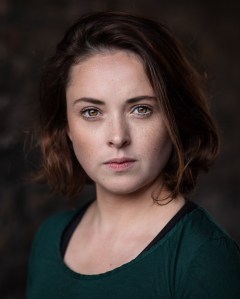
 Annette Skade is from Manchester and has lived on the Beara peninsula, West Cork, Ireland for many years. She is currently in her final year of a PhD on the work of Canadian poet Anne Carson at Dublin City University. Her poetry collection Thimblerig was published following her receipt of the Cork Review Literary Manuscript prize in 2012. She has been published in various magazines in Ireland, the U.K., the U.S. and Australia and has won and been placed in several international poetry competitions.


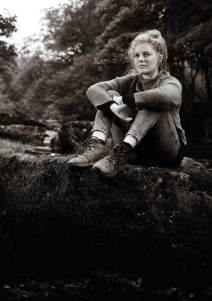
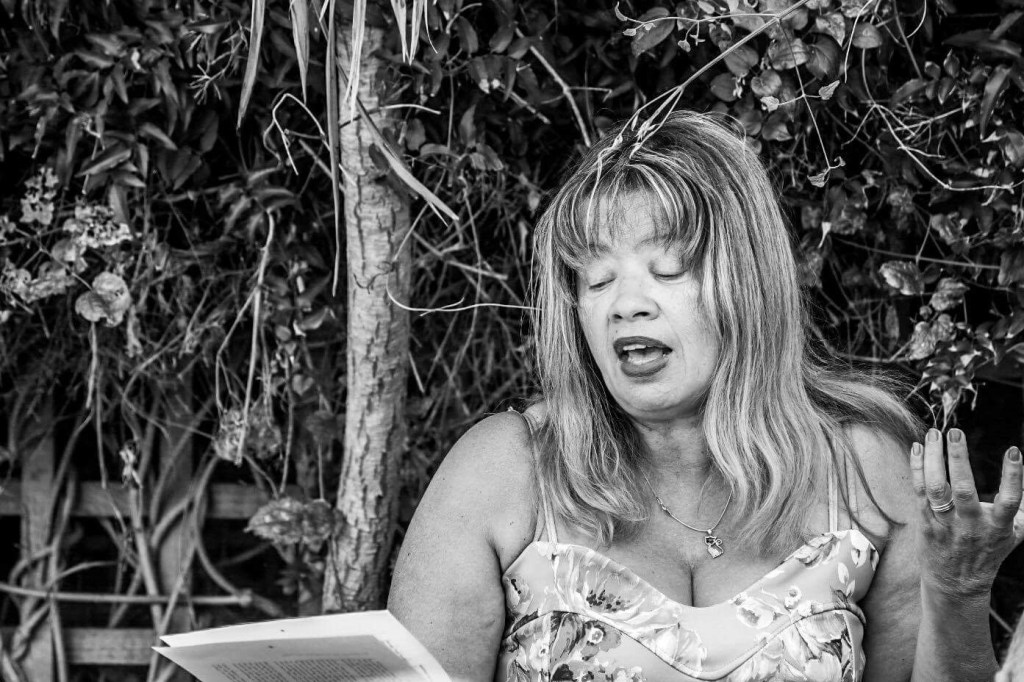
 Roberta Beary identifies as gender-expansive and writes to connect with the disenfranchised, to let them know they are not alone. She is the author of Deflection (Accents, 2015), nothing left to say (King’s Road Press, 2009) and The Unworn Necklace (Snapshot Press, 2007, 5th ed. 2017) which was a finalist in the Poetry Society of America annual book awards. Beary is the editor of the haiku anthologies Wishbone Moon (Jacar Press, 2018), fresh paint (Red Moon Press, 2014), 7 (Jacar Press, 2013), dandelion clocks (HSA, 2008) and fish in love (HSA, 2006). Her work appears in Rattle, KYSO Flash, Cultural Weekly, 100 Word Story, and Haiku In English The First Hundred Years (Norton, 2013). Beary’s work has been nominated for Best of the Net and multiple Pushcart Prizes. She lives in County Mayo, Ireland where she edits haibun for the journal Modern Haiku.
 Chris Murray