• chris murray
  • journals – bibliography – publication notes
  • downloadable items – essays – media
  • copyright
  • Home

Chris Murray

  • True that the Women Burnt a Tea-House at Kew Gardens; but it was only a little One, by Rebecca West

    September 6th, 2008

    Cicily Fairfield/Rebecca West

    ” It is true that the women burnt a tea-house at Kew Gardens; but it was only a little one. And I can understand why they attacked this place of innocuous pleasure, for I spent a little time of sleepy pleasure there one sunny day last summer. At the next table sat a dear old parson with silver hair and gold rimmed spectacles, and a pale young curate. During the three hours I was there they talked with delicate gravity and an air of profound culture about a correspondence in The Spectator about the decay of the subjunctive mood in modern English. The Burning of the tea-house was an honest attempt to overcome the difficulties felt by all reformers of getting in touch with people who are snowed under by decaying subjunctives. No doubt the parson and curate are now, in some refined Anglican manner, busy wishing suffragettes the devil..,”

    One of the women who burned the tea-house , Ms Emily Davison, died as a result of maltreatment in Prison. She was force-fed during hunger-strike leading to food flowing into her lung cavity and eventual death from septicaemia.

    The above is excerpted from The Clarion , 28th of February 1913.

    Some people believe that feminism has entered a post period, I would think it more imperative than ever to engage with issues pertinent to women who are at the lowest levels of democratic representation. The Orthodox moral views of woman that are undealt with are coupled with a facile democratic tokenism which determines health and social policies in countries of rampant technological progress. Or as I said to an American writer ;

    ‘They still got Eve wrapped round the tree only now she is toting Viagra’

  • A Saturday Woman Poet. Eavan Boland.

    September 5th, 2008

    New Territory

    Several things announced the fact to us:
    The captain’s Spanish tears
    Falling like doubloons in the headstrong light,
    And then of course the fuss-
    The crew Jostling and interspersing cheers
    With wagers. overnight
    as we went down to our cabins , nursing the last
    Of the grog , talking as usual of conquest,
    Land hove into sight.

    Frail compasses and trenchant constellations
    Brought us as far as this,
    And now air and water, fire and earth
    stand at their given stations
    Out there, and are ready to replace
    This single desperate width
    Of ocean. Why do we hesitate? Water and air
    And fire and earth and therefore life are here,
    And therefore death.

    Out of the dark man comes to life and into it
    He goes and loves and dies,
    (His element being the dark and not the light of day)
    So the ambitious wit
    Of poets and exploring ships have been his eyes-
    Riding the dark for joy-
    And so Isaiah of the sacred text text is eagle-eyed because
    By peering down the unlit centuries
    He glimpsed the holy boy.

    • New Territory is Copyright Eavan Boland
  • Protected: My Tree at Night from a Different Window. [by me]

    This content is password-protected. To view it, please enter the password below.

  • One of the Stances Perdue, by Alain Bosquet/Anatoly Bick.

    September 3rd, 2008

    Je remercie le jour parce qu’il est le jour.
    Je remercie le chrysantheme et la cerise.
    Je remercie le baiser long, le baiser court,
    et tout ce qui me vaut une terreur exquise.

    I thank the day because it is the day.
    I thank the cherry and chrysanthemum.
    I thank the kiss, whether it’s long or short,
    and each exquisite dread that strikes me dumb
    .

    from: Stances Perdue, by Alain Bosquet/Anatoly Bick. Trans, Roger Little. Published, Dedalus Press 1999.

  • A Margaret Rowe poem

    September 2nd, 2008

    “T’ither nicht A wuz in mae bed wunnerin
    what A cud write fur the Ullans, an then it
    cum tae mae. A cud write aboot mae ma’s
    mixin’ spoon. A wuz that axicted it was
    fower in the mornin’ afore A went tae sleep
    efter thurnin ower in mae heid what A shud
    say and the wye A shuid say it.

    When A was a waen , sawenty yeir ago , there
    were a lot of fowk that trevelled roon the
    country goin frae dure tae dure; wans wur
    jist beggars, askin fur a slice of breed, or
    lake big Mery, for a gopin of oatmale which
    she kerried in a poke tied roon hir waist;
    ithers ye micht ca pedlars , and yin of these
    wuz P.Q.

    He cum frae Striban, about five miles awa,
    an unner his airm he had a wee wudden box
    fu o needles and pins, an spools of threed an
    the lake.

    wan day Paddy cum jist as mae ma wuz
    reddin up efter bakin, an she still had in hir
    han the oul spoon that had been used tae mix
    the dough fur a lifetime. Seein Paddy eye the
    spoon mae ma said:

    ‘Och Paddy, A wish yea cud get mae a guid
    big spoon: this wan’s worn tae a skiver.”

    Ok, this is an excerpt until I can type up the rest later on

    Margaret Rowe and the Ulster-Scots Society.

  • Ladybirds in the Schoolyard and a Five year Ban on Wajeha.

    September 1st, 2008

    Where We Find the Words That We Use.

    It’s Monday Morning and the first day of the new school term. Many Mothers are bringing their daughters to their schools, wherein they will learn to use computers and libraries. Where they learn the joy of self and have to deal with issues of bullying and learn to make friends. Once upon a time it was not ok to educate daughters, indeed some of our most incredible women writers learned their words from the books left about by the tutors of their brothers, or in one case I am aware of from the labels of co-op medicine bottles. Little girls have a complete and all embracing thirst for knowledge as much as their brothers indeed, and the next basic step on accquiring that knowledge is to use it- all the better if it is communicate and teach to others.

    And yet, in so many societies women are abused, murdered , imprisoned and bullied for using the very words that they have found and discovered in the little school yards, or amongst the beetles and ladybirds of a busy place where others are playing round them.


    Lift the Ban

    (I always think bans and censorships come from fear and denial, and those who bully their daughters are Utopians involved it seems in the betterment of societies with a bewildering ethnic cleansing of the individual female voice at root). I wonder what kind of Utopias can be constructed without the voices of women in the hospitals, working the land and singing old songs into their daughter’s ears?

    For many of us , the first experience of language, song and complex linguistics come from listening to our mothers , that complexity is an inheritance that is developed in education . A lot of young women writers currently on the threatened and banned lists have small children who absorb with that intelligence unique to small kids the atmosphere of repression that pervades Utopian societies. Those failures will eventually emerge either creatively or violently.

    http://www.ipwwc.org

    Wajeha Al Huwaider
    Wajeha Al Huwaider
  • ‘Nymphs’ by Katharine Tynan.

    August 30th, 2008

    Nymphs

    Where are ye now, O beautiful girls of the mountain,
    Oreads all ?
    Nothing at all stirs here save the drip of the fountain;
    Answer our call
    Only the heart-glad thrush, in the vale of Thrushes;
    Stirs in the brake
    But the dew-bright ear of the hare in his couch of rushes
    Listening, awake.

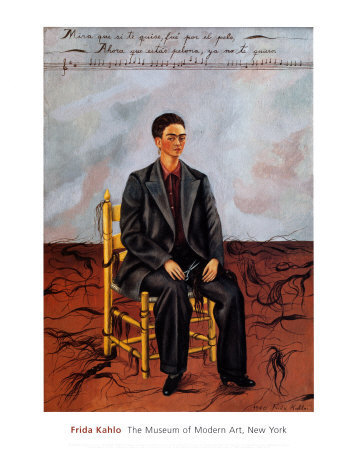
    [Kahlo’s Image : ‘Self-Portrait with Cropped Hair’]

    Frida Kahlo.
    Frida Kahlo.
  • The Wyf of Bath.

    August 28th, 2008
    The Wyf of Bath.
    The Wyf of Bath.

    It’s really been a while since I read Chaucer with any attention. But I really remember The Wyf of Bath for two reasons:

    i). Sylvia Plath loved her: and so instead of focussing on the accepted degree course I haunted the libraries and looked at women poets and their relation to metaphysics, the other reason was I that had heard

    ii).That the RSC had been disallowed perform The Canterbury Tales a couple of years ago in Spain (in a church) and had been offered another venue (also a church) for the performance.

    I downloaded the  above image sometime ago, knowing that I would be using it in some way in relation to the issue of censorship. In my mind two men really wrote women very well, but the blog is almost wholly dedicated to women’s poetic discourse.., one of the men is Chaucer whose Wyf is lovely. She doesn’t like being boxed into a feminine role and is on the trail to Canterbury to find another hubby (prompted by Venus apparently).

    …and the other writer is James Joyce , who wrote the beautiful Anna Livia Soliquoy in Finnegan’s Wake which I touched on briefly in the blog in relation to the beguine Marguerite Porete. But mostly I find us women are well able to vocalise our experience- personally I love to natter. How and ever the issue of Pornography came up and I responded, the link is on the righthand column under Westwood Censorship:

    Two things that we should utterly reject as human beings are:

    1. Materialistic philosophies that deny the issues of choice to grown-ups, especially with regard to the individuation of women. (and I do speak of Choice not corralling/imposition and violence).

    2. Any attempt to crystallise our metaphysics into systemized ideas of what makes a woman or man, because it’s hard enough to live in this world without an outer imposition or pattern of what we should adhere to.

    Grown-ups are grown-ups and censorship at any level of artistic discourse indicates a complete lack of understanding of basic humanity.

    (this reminds me of the Berlusconi episode which involved his adjustment of the ‘Time Uncovering Truth’ Painting, but I decided not to re-publish the image on the blog cos mostly people are familiar with it).

    The Silvio Berlusconi debacle , ‘Time Uncovering Truth‘ : http://poethead.wordpress.com/2008/08/07/covering-paintings-and-twiddling-with-art/


  • Feis Teamhra

    August 24th, 2008

    Today there was a ‘Turn at Tara’.  A cultural protest and celebration which included the voices of  Séamus Heaney, Paul Muldoon, Susan Mc Keown, and Laoise Kelly.

    There was guitar and harp, rhyme and reason. The event occurred in the shadow of  the Sheelagh Na Gig at the gravelly courtyard of the Tara Heritage Centre in a pool  of sunlight with young kids running about, puppies barking and falcons flying beyond the walls.

    Dr Muireann ní Bhrolocháin Mc(ed) and each artist did three pieces to denote the importance  of the centre in our dialogue, the importance of lyric and protest in the Irish engagement with  this planet that we all happen to share.

    I stood with Robert, one of the campaigners ,holding a full length image of a desecrated tomb from the Collierstown graveyard , which had been excavated , the bodies removed and put in  bags (with wee plastic tags).

    .
    Everyone who attended was asked to sign the petition for re-burials on the way out and indeed they did. It was a good day, it was nice to see our poets and musicians stand up and ask the Government to  recognise that they have offended the people.

    It was nice not to see the police nor security people who have abused and hurt those who stood against the destruction of our cultural centre. So thanks to Muireann and Paul and Susan for standing up and making it a wonderful day.

    tara abu!
    Mo ghra thú.

    Feis Teamhar
    Feis Teamhar
  • Amy Lowell (1874-1925).

    August 23rd, 2008

    Gold Leaf Screen

     
    Under the broken clouds of dawn,
    The white leopards eat the grapes
    In my Vineyard.
    And in the sunken splendour of twilight,
    The ring pheasants perch among the red fruit
    Of my pomegranate trees.
    The bright coloured varnish
    Scales off the wheels of my chariots,
    For the horses which should draw them
    Have gone northward in a gloom of spears.
    My stablemen march,
    Each with a two-edged spear upon his shoulder,
    And my orchard tenders have put on green feathered helmets
    And girt themselves with black bows.
    I stand above the terrace of three hundred rose- trees
    And gaze at my despoiled vineyards.
    Drums beat among the northern hills,
    But I hear only the rattle of the Wind on the chipped tiles
    Of my roof.
     
    A thousand little stitches in the soul of a dead man–
    Still one can enjoy these things
    Sitting over a fire of camphor wood
    In a quilted gown of purple-red silk.
     
    Gold Leaf Screen is by Amy Lowell

    Mid Nineteenth Century Embroidery of Pomegranates (Mex).
    Mid Nineteenth Century Embroidery of Pomegranates.
←Previous Page
1 … 97 98 99 100 101 … 106
Next Page→
 

Loading Comments...
 

    • Subscribe Subscribed
      • Chris Murray
      • Already have a WordPress.com account? Log in now.
      • Chris Murray
      • Subscribe Subscribed
      • Sign up
      • Log in
      • Report this content
      • View site in Reader
      • Manage subscriptions
      • Collapse this bar