I wanted to push off into the crashing, Batter against bridges Be swept away by currents You preferred the shore No sharks on shore No undertows to rip away your red tide sister I wasn’t allowed to kayak without you, And you weren’t willing to hold all my fire Even with all that water, my flames are still reckless We were both cradled by waves, Rocked by the sound of seagulls, Ate our sandwiches out of plastic buckets Last month I fumbled every fiery part of me into the open mouth of a kayak for the first time in years, Held the paddle in both hands, still pretending like I know what I’m doing, Each stroke splatters lake water onto my face, it gets into my mouth, I am smiling so big You own a kayak of your own now, Step into it with much more grace than the hot coals on my feet could ever manage, There’s a hook for your fishing rod and quiet patience to sit in We fished together once, I spend the whole morning casting the line; my flame soaring with it, Warning all the fish to stay away I suppose, You cast the line once And pull back a fish, My fire burns all the more furiously, Lighting up the dock just enough For you to throw the fish back by my light. You cut the spurs of your fish hooks, They slide out more easily, you say. Catch and release. I take waves in the face just to see my flames tumble, My throat stings from the salt that gets in while I smile, I dig my toes in as a brace for the crash Brother, I am scared to turn around I don’t know what waves would hit if I’m not looking, If I did turn, I know I would see you on shore, With a flame just as steady and bright as before.
Meredith, New Hampshire
This town Smells like Sunscreen So many little grubby hands Dripped with ice cream I can almost see them now Gearing up for summer This town Smells like Books that haven’t been read yet They sit on the shelves Waiting for gentle hands Dripped with ice cream To peel them apart one by one In the scalding sun This town Smells like Anxiety That might just be Me though. Maybe I should Get some ice cream, My hands aren’t quite sticky enough For this place. I’m the foreigner With soft, Clean hands, I don’t quite fit, The door handles all slip a bit Under my tentative grip.
A Proper Poem
Today I wrote A proper letter On proper paper With a proper pen. I put it in A proper package With a proper book To go along. I drove to the Proper post office And obeyed every Proper posting Along the way. I pulled into the Proper post office With a Properly pleased smile On my proud face. I promptly got out of My proper car, Walked up to the Proper post office And it was Positively closed.
untitled
I wonder if my lover Makes art about me If he turns to his creation And says This is for her, Never to see, but it’s hers non-the less I wonder if there’s Art that I don’t know is mine. Lover, This is for you, It says, You make me smile, Even from so far away, And maybe, just maybe, Your smile is that soft and Your voice is that kind and It is not a trick Of the distance. This is for you, Never to see, but it’s yours non-the less.
I held my anger So tightly So long That my knuckles split And dripped blood onto the carpet. Today I opened my hands and found Nothing I looked at you and felt Nothing Maybe I’ve always felt Nothing And it scared me, I’m supposed to feel something, Right? We kissed and your tongue tasted like Nothing I tried to flavor it with all the ways I’d seen Movie couples kiss But from beginning to end I felt Empty. I tried to fill it with all the songs you played, How can something that sounds so beautiful be Nothing? But you didn’t write the music It belongs to someone else. You threw a grenade into a pit of Nothing, There was so much room for The explosion. But no matter how big the bang Silence will always follow. And I am grateful for the Silence. I reached into the nothing And plucked out the songs I like.
Overheard At Church On Easter
We had I saw Crocuses today And frogs Calling Peeping He is risen Peeping.
Abigail Dufresne is a twenty-one year old poet, actress, and costume designer from Rhode Island with training in acting, design, movement, and devised theatre from Shakespeare and Company, The Stella Adler Studio of Acting, and The University of Rhode Island. At this point in her career Abigail finds herself drawn mostly to devised theatre and Shakespeare for the opportunities these provide to engage with both poetry and acting within the same medium. She looks forward to exploring how these disciplines can also live within other forms of art.
An angel came to me today, small and full of memories a hodgepodge of worn paint, and yellowed glue chipped on her edges and thick with the scent of my youth. Imperfect, old, barely there.
You promised her to me when I was as small as her. Imperfect, young, barely there. You said to me, “When I die, you can have this angel, and she will always look after you, even when I’m not around anymore, to do it myself.”
It took more than the two years since your death for her to find her way to me but today she finally found me.
I’ve placed her somewhere high. Given her pride of place amongst childhood trinkets, things that I can’t bring myself to part with remnants of my smallness. top shelf, where all the best stuff is.
She’s surrounded by gold now, real gold. The gold that grazed your weary flesh as you breathed your last. Rested on your pulse as you passed from one void to the next. The last of your skin cells, still nestled between the tiny crevices and notches of your own trinket you couldn’t bear to part with.
The top shelf, where all the best stuff is. where my last piece of you is guarded by an angel.
Never Ask
You never ask me for my words, you just let them drip from my lips. Holding them, like an inkwell holds the unwritten. Consonants and vowels move around my tongue and all you do is draw them from me completing my sentences forming full phrases making a complete passage out of everything I say.
You never ask me for my touch or my breath those are things I give to you without a preponderance or question. You pull my insides out like liquid silk and wrap them around yourself clothed in effervescent innards the heart of me the lungs and guts and spleen. splayed out you leave me.
It’s almost violent in its intensity. In the thick heaving bosom of what passes between us lays the unerring simplicity of elegant lust.
You never ask me for myself because you already have me. You carry me in those hands of yours that I can not look at, without something stirring deep within me.
The gentle, firm grasp of your slender arms. The softness of your presence the lightness of your company. The giddy stratospheres you take me to the way you see me…
There’s just something so beautiful In the way you never ask.
Small Things
Small things linger a few weeks ago you sat at the foot of my bed the light drenching you from behind, casting your face in silhouette we sat in silence and read Kerouac and Ginsberg together and lost ourselves in other people’s perspectives. and I glanced at you, squinty-eyed as the light cloaked you your hair a striking auburn glare you didn’t know that I was looking didn’t know that I was taking in every inch of you forcing my eyes to adjust to the light so that I could look straight at you devouring every morsel hungry and searching mine, I thought forever, I thought the weight of my love impossible the cadence of your quiet breathing beating life into me you looked so beautiful clothed in the sun so ethereal and otherworldly small things linger small wonders big love
Gaze
I’ve never been looked at the way she looks at me. with fire in her eyes and a rumble in her belly, like all the heavens come alive whenever she casts her gaze in my direction.
Sometimes her love for me is palpable like it round house kicks me deep in my gut upends me and knocks me from my standing.
Sometimes it is delicate, and it traces its way across my flesh languishing over every bump, every crevice, every part of me.
That’s how she loves me ferociously with teeth and hair and bone with skin and guts and blood
Fearlessly Unabashedly Shamelessly as though her whole world is set ablaze by the locking of our eyes.
Sometimes, I think it’s so pure, so perfect the way she sees me, that I am devastated by the beauty of it, of us.
But when the intensity abates I can gaze right back at her, with all of my heart dangling from the tips of my eyelashes and I am as raw and bare as I can be, and right at that moment when our gaze is locked and our souls are naked to each other, I hope that she knows, that I have never been looked at the way she looks at me.
Aoife Read is a 34-year-old woman born and bred in Dublin. She is a breast cancer survivor, a lesbian and a quiet activist. Aoife has been writing from a young age, from journaling all through her teens to working as a journalist now, currently on a freelance basis, but in the past for local newspapers and as a deputy editor for various magazines. Her true love has always been for poetry though, and she has kept all of the poems she has written throughout her life from her early teens until now. A longtime resident of Swords Co. Dublin, Aoife lives in her family home with her cat, Xena. She has a partner of 6 years, Franky, who has been the focus of many of her poems. You might even say she is her muse, although she would murder Aoife for referring to her that way. Aoife has a huge passion for science, physics in particular, and is a comic book geek and gamer chick and a bit of an all-around nerd. These interests and fascinations are often found creeping into a lot of her work in various ways. Her recent battle with cancer is also something that has coloured a lot of her latest work. Her poetry and writing is laced with something deeper, perhaps thicker ever since.
Gaeilge, Inse Geimhleach, meaning “Island of the Hostages” The land is a sponge sodden with salt water and rain, the mossed path a tangle of Herb Robert and buttercup. Giant leaves of gunnera and the green spears of rushes stand guard around the pond. Laburnum hangs its head like a girl drying her yellow hair. Water gushes under culverts over rocks, tap-tapping on the roof of the sunroom like a timid visitor.
Through rain-streaked windows I can see our hosts raise their heads to look upward as the tempo intensifies to an irascible hammering; almost hear the ebb and flow of their soft voices from where I stand hidden under a canopy of dripping roses and dangling fuschia blossoms.
A clattering sound as three runaway sheep hoof it down the lane like boys going over the wall to mitch from school. Tomorrow they will have to return, tails between their legs.
But for now they are part of a thrilling spectacle as they trundle three abreast into the green gap between the high ditches.
The other sheep graze the wet grass, their plaintive bawling from the nearby field like the call-and-response of a gospel choir singing the praises of another doomed rebellion.
In Norse mythology the twin ravens, Thought and Memory, flew about the world, collecting news for Odin who had given them the gift of speech.
Did they work together as a team— one forward-thinking, looking out for bloody rumor, thin whisper, foul-smelling allegation, while the other mouthed words and phrases, recited names, reiterated everything?
Did they return together, grigged with gossip for the dinner table? Or did Thought sometimes muddle Memory with unanswerable questions— Can Memory be trusted? Does Thought delude itself? Do we only live as long as Memory wraps us in its wings?
Odin feared they might not return, knowing their taste for decomposing flesh, what that vertiginous perspective might reveal—a new god with a dove that whispers in his ear, some new dark truth delivered from the air.
“It is said that crows, like other corvids, recognize themselves in mirrors
and this is thought to show intelligence.” (Scientific American)
The last light of a winter’s day— thousands of winged forms flap past my windows—pins pulled by a powerful magnet.
The sky is black with crows crying in cracked voices of their plans to steal what is left of the light, to gather their feathered shapes into a solid-color jigsaw puzzle of land and lake and sky that will click into place only when the last bird flies into its jagged aperture and darkness falls.
Like the crows, my father showed up night after night to take his place in an ancient ritual. To play his fiddle, not by standing out but by fitting in with the other men, those dark-suited bus-drivers and conductors who brought to the session all their quirks and oddities— Mr. Ward with his head thrown back, the accordion at rest on his round belly— Mr. Keogh with his albino eyes, long fingers sawing the fiddle— and young Tony in short trousers tootling away on the tin whistle.
Now my father too is part of that collective darkness, the puzzle that the crows remake each night. That dawn, like a wayward child, scatters joyfully each morning.
She only cooked them once a year on Shrove Tuesday so we didn’t dwell on the looming Lenten fast as we raced home after school to see her lift down the big black frying-pan and heat it over the blue gas burner until the fat spat and sizzled.
She’d hoist the milk jug full of batter, pour a creamy stream into the pan, tilting and tipping it to a seamless circle. We hovered famished at her elbow as the humps and craters formed— brown sienna over khaki, burnt umber over buttermilk. It was all
in the timing. One flick of her gifted wrist and she’d landed it like a fish on your plate. You rolled it with sugar, a squeeze of lemon, scarfed it down.
Then it was back to the end of the queue until your turn returned again. No rest for her aching shoulders until we were all contented sinners, licking our lips, as full as eggs.
After surgery the stitch-marks look like bird-feet walking up my arm. But what strange bird has left its bone-white prints embedded in my wrist like needle-tracks? Perhaps it was the raven, that faux-sorrowful funeral director, walking beak-forward, gloved hands folded behind his back, who walks the twin trajectories of a railway line that leads to a long-defunct station where I might meet myself returning from the beach with two scabbed knees, embossed inoculations against disease, the weals of ancient injuries like medals from the battlefields of childhood, and my mother’s crowsfeet inching toward my eyes.
Angela Patten is author of three poetry collections, In Praise of Usefulness (Wind Ridge Books), Reliquaries and Still Listening, both from Salmon Poetry, Ireland, and a prose memoir, High Tea at a Low Table (Wind Ridge Books). She was winner of the 2016 National Poetry Prize from the Cape Cod Cultural Center and her work has appeared in a variety of literary journals. Born and raised in Dublin, Ireland, she now lives in Burlington, Vermont, where she is a Senior Lecturer in the University of Vermont English Department.
I wear you wrong; my reasons inside-out and love like perfume for others to admire.
At night you draw feathers on my Skin. And your kisses teach me new vowels,
but we are in bathwater. Slowly adjusting to the cold, soaked in Inertia, eyes squeezed, knowing– spiraling down
Song of Grendal’s Mother
They gave me no name but ‘mother’. Those Goldbricks in their golden hall; I was not the Virgin Mary of their wet dreams– but real– One who took an eye for an eye. Agloewif.
Repeal that oldest fairytale, old as the gold you play with. I only took what I deserved and ran– But there’s something of Monster in Man.
I
I am now. My blood is words bilingual, and blighted stories. My name is mine but borrowed, my home is Troubled wet soil on dry days, and cow shit springs. But cut me open and you will find nothing there.
Family, Mine
Every family is a sealed can.
Father– open wounds, drooping wit, salt.
Sister– fire breathing sister.
Mother– angel of cowardice and fruit trees I pinch you.
But we are a can of good beans despite it all.
Untitled
After You Died You became Enormous. A stone in every step, garlic on the breath. Suddenly from every spot bloomed a memory, and you lived a hundred times over in every head of cinnamon curls I saw from behind.
Sometimes I followed your bouncing curls down the street, standing back, willing the head not to turn and show the face of someone else so you would die again
Someday
Some day I’ll have my own house
With a shelf of poetry books by the toilet and short stories for those long, difficult stays
with vibrant colours painted on the walls every wall a different colour like Lego
With a deep couch that swallows bums and snoozing cat meditating on a warm fire
With an old phone waiting to sing it’s wire in tangled ringlets coiled like angel’s hair
With oriental spices and a box of perfumed teas of every fruit and flower and porridge
With a kettle always brooding on the blistering hob while friends take seats and I ask do you like macaroons?
With an old dusted piano out of tune, but crooning still rubbed down with old underwear draped with a doily
With space to move mountains in idle passing thoughts with sun waking room through velvet curtains in the morning.
There will be space for two heads on the cushions on my bed and my rusting red bell will wait there for your touch
Niamh Twomey is a student of English Literature and French in University College Cork. Winner of Hotpress Magazine’s ‘Write Here Write Now‘ competition in 2016, she has since published works in journals such as ‘Quarryman’, ‘Quill & Parchment’, amongst others.
In May

You are everywhere.
Arthur Bells’ yellow bloom
fragrant and fleeting,
whitethorn buds abound.

Mint makes it’s way to our door,
ready for picking.
Swallows sing a sweet song
as they soar.

On my route
I detour,
lured by a lilac in bloom.
This month, of the mothers.


Our Village in the Fifties

Vibrant.
Most houses endowed
with broods of children.
We run around freely
unhindered by snatchers and traffic.

Play out in the fields
rich with daisies and daffodils.
Scale over walls to orchards
their branches bowed low
with ripe rosy apples,

maimed by migration
it succumbs to stillness and silence.
Neighbours reach out.
Sheepdogs wait.
Footballs deflate.


Live Bulbs

After red and yellow weather alerts
when floods and storms subside.
Broken tree twigs around  you
garden soil stripped aside.

Your emerald shoots
remain sturdy and serene.
With enough resilience, robustness
to turn a blue moon green.
Katherine Noone’s first poetry collection Keeping Watch was published by Lapwing Press (2017). Her poems have appeared in Orbis, Crannog, Boyne Berries, Linnets Wings, Her Heart Anthology, Skylight 47, Proost Poetry, Vallum digital edition, A New Ulster and Ropes Journal.
ShortlistedVallum Poetry Award (Montreal) 2012. Poem for Patience 2015, 2016 and 2017l.
It was you, wasn’t it? Sent me a box of genitalia? Not two but twenty-four ripe ovaries with six enormous stamens each engorged with pollen thrusting purple-veined through curvy lips and downy inner folds around a fleshy pistil glistening with a film of moisture round the swollen tip all bursting from a flushed, moist, hirsute declivity and smelling… as if freshly showered? Thank you for the flowers. I won’t read too much into it.
Code
Dovebber, Jaduary ad Barch the datiodal afflictiod bakes its rouds. Wad grib afterdood you sedse a cledched fist roud your epiglottis. Baligd greblid, it hags id there squeezig ad squeezig. Or baybe you swallowed a dailbrush?
Do, you thindk, do – bore like Hober Sibsod by the biddit. I cad still breathe. You turd the heatig up to baxibub, buscles achig udtil dext bordig you fide you’ve betaborphosed idto a woolly babboth –
eyes streabig, dose ruddig, gradba recobbeddig vitabid C or baduka huddy. Feed a code, she dags but you cad odely taste Barbite ad TCP – there’s a cebedt bixer codvedtiod id your siduses ad dow your ears have god fuddy,
rushig ad gurglig like a Badhattad sewer. Your braid turded to bush you draba queed it, sdortig ad sdeezig od the screed which idforbs you you are cobbod. You have dasopharydgitis, rhidopharydgitis, acute coryza or a code:
ad idfectiod which affects pribarily the dose…the bost frequedt disease id hubads, the average adult codtracts two to three addually. These idfectiods have beed with hubadity sidce adtiquity. There is do cure. You are biserable as sid. You are hubad.
Code – first published in Magma 66, Winter 2016, Eds. John Canfield and Ella Frears (www.magmapoetry.com)
Crabtree to Gascoigne, 1641
So, our dear Horrocks is gone. Twenty-two. I must repeat what I find so hard to accept: that such a bright star should be lost to us so young. After all we shared, I shall never now shake his hand.
That November Sunday he, the better astronomer, noted his observations there and then. I was too overcome to touch a pen. I shall make amends.
Tonight though, at my window, the cosmos he proved vaster and more ordered than we thought seems emptier – a mere expanse.
My lenses mist.
Would he have planned to visit had he felt unwell, or been ill for long? No. He was in health, for all we knew.
Which, in the end, was what? Something of the spheres, their transit centuries hence. But of tomorrow – of accidents round corners, stalking maladies, guests with knives – nothing. Nothing about our inner storms or numbered days. More of the heavenly bodies than of ours.
Thus I am plagued by fears: that to fathom the skies without first grasping our own profound cosmologies is perverse. That to see – not as prophets but mathematicians, the year, the day, the hour – so far ahead, is to spy on God.
These fears I want his reason to reject.
But since my telescope cannot bring him closer, it leaves me cold. I have no heart for work. No instrument, good Sir, to measure loss.
Jeremiah Horrocks [1619-1641], of Toxteth, first recorded the transit of Venus and predicted future transits, including 8th June 2004. ‘The Keats of English astronomy’ died the day before he was to meet his mentee William Crabtree [1610-1644] of Salford. Their friend William Gascoigne [1612-1644], of Leeds, invented the micrometer.
Crabtree to Gascoigne, 1641 – from Eleven Wonders (Graft Poetry 2011, Ed. Nicholas Bielby www.graftpoetry.co.uk)
Unattributed samplerBankfield Regimental Museum, Halifax
In memory of ELIZABETH HITCHEN, Who died November 26, this battle was begun
in 1841. The house was quiet and you must learn to be, Grandmamma whispered,
measuring the lines. Your little sister’s gone Aged 13 months to be with God.
I was just five but could already read THEY WILL BE MISST A VACANT PLACE
AT TABLE AND AT TIME OF PRAYER. What shall we put up there I asked,in the big space?
Lord knows, my love – God will decide she said, then smiled. Me, probably.
AT HOME AT CHURCH MORN NOON AND NIGHT she printed carefully MISST ALL THE TIME
AND EVERY WHERE. With the next letter, G – she stopped. When you’re a big girl, you can do the rest.
Next day she showed me cross-stitch and I sewed IN MEMORY until my eyes hurt.
Eight years slipped by AND ALSO ASSENETH WHO DIED when I was thirteen FEB 8 1849.
That night I satin-stitched an urn, an altar, half a rose. AGED 19 MONTHS. The cloth was grey by then
with childish sweat, pinpricks of blood and also tears AND ALSO
HANNAH two years on THE GRANDMOTHER OF THE ABOVE. I found the last lines of the verse
she had left off and marked them up, but couldn’t frame – until I’d lived as long again – to add
‘on’ to the G ON BUT NOT LOST OH THIS WE KNOW
– my nephew feverish, I had to end this tale. Thread by thread I drew our family back
AND ALSO EMILY MY NIECE WHO DIED AGED 4 YEARS AND 4 MONTHS AND ALSO JOHN their Father
WHO DIED 1865 AGED 28 AND ALSO AZUBAH WHO DIED AGED 18 YEARS and all so young.
WE KNOW WE TRUST I persevered THE BOUNDLESS LOVE stitching my fingers numb
oF GOD HE DOETH ill John’s son was ill, fighting for breath aged 4. If I could break the spell
I told myself and stitch one living name – my own – with some date soon perhaps all would be WELL
HIS WILL BE DONE WE SAY AND KISS his eyes his hands his fingernails God will decide
my needle vain to stop his CHASTENING ROD claiming one more AND ALSO for this field of crosses
MICHAEL HITCHEN WHO DIED JUNE 5 1872 AGED 4 and AND 10 MONTHS.
'Valentine', 'Unattributed Sampler', 'When I was six', 'Waltz' - from Without a Dog
(Graft Poetry 2008, Ed. Nicholas Bielby www.graftpoetry.co.uk)
Image courtesy of Angela Clare, Collections and Exhibitions Officer at Calderdale Museums Service, Bankfield Museum, Halifax
Waltz
Married fifty years today, Ted and Edie take the floor not needing onlookers, but pleased for those who want to watch their Anniversary Waltz. They bring their language from another world of sweethearts, long engagements and apprenticeships in which they practised drawing and respecting boundaries, making choices at every turn yet making believe there was no other way. If asked, they’d say theirs was no mystery, just years of graft, of grasping drifts and judging distances, steering a course through fractured families, neighbours, nations – weaving meaning into remnant spaces – station platforms, backyards, beaches – patterning the long and short sides of their years until they learned to keep in step, beating time, being alive together. Now warmed by applause they cross the boards and, holding and yet not quite being held, teach us the grace of gentle intimacy. They wear the clothes they walked here in, but in the light confetti of the mirrorball the years fall from them and they twirl their wedding finery, still points at the centre of a dancing world.
When I was six
Lotus shoes (early 1900s), The Tolson Museum they broke my ankles and bound my feet. They said it wouldn’t hurt when they put me to sleep but when I woke it did and when I tried to stand I fell and gashed my face and lay and screamed and a nurse and my maid Suyin came running and said don’t cry, with your tiny feet you’ll be the envy of Szechuan. Dressing my face, nurse said I’d be lucky not to have a scar – but when they unwound the bandages and saw my feet, blue-black as a typhoon, the shape and smell of rotting vegetables, I said o you want that then , is that what you want and they looked away, busying themselves as I lay, listening to their feet.
You will be beautiful my father said, as if it were an order and I said was I not that already had I not been a perfect baby then and he said you know that isn’t what I mean and me this is the twentieth century not the tenth and him the more you argue the more you prove my case. What case, I said, what case? I looked at mother who was silent. Later she said why didn’t I paint or practise holding my fan, looking ladylike… that I should be grateful for a life of ease, only having to bow and look serene. But she did not look at me then, or when, married at fifteen, I told her the day they broke my feet still seemed like yesterday.
You’re lucky, says Suyin, brazen now, you can sit around all day and think how beautiful you’ll be – you are…. as she walks away. You are not meant to walk but glide they say, but I can only shuffle. My husband grunts he married a lady not a labourer and anyway he likes me better lying down. Opium helps, but sometimes I wake myself screaming you said it wouldn’t hurt when you put me to sleep and to my father, truly deaf now, what case, what case and to my mother ladylike and to my husband off somewhere and Suyin, in her own oblivion. Tears run into my ears, along a faint scar.
Julia Deakin is a UK-based poet with three full-length collections, each praised by nationally renowned poets. ‘Crafted, tender poems, written with passion and purpose,’ said Simon Armitage of Without a Dog (Graft, 2008). Anne Stevenson enjoyed its ‘mature wit and wisdom’.‘Real linguistic inventiveness’ said Ian McMillan. ‘Bold, irreverent and wickedly funny,’ said Alison Brackenbury of her Poetry Business Competition winner The Half-Mile-High-Club.
Eleven Wonders (Graft 2012) Michael Symmons Roberts judged ‘powerful, assured, elegant. Her formal skill and inventiveness make this a rich and eclectic collection. Those who, like me, have admired her individual poems in the past, will be struck by their cumulative strength and range.’
A compelling reader, she has featured twice on Poetry Please and won numerous prizes. Her fourth collection, Sleepless (Valley Press) will be published in October 2018.
A candied calligraphy of colours, I said that I would change the sheets later. And I said also that I could handle it but I could not, and will I fry for that? I may, but only if you return.
The stink of sheep hangs on me like wisdom. You leave in a blur and your bag is heavy with spices, I hope I do not let you back again. It depends on my resolve, and on whether the seasons let me float.
I’ll take myself running for the friction of denial, cross my legs under the tables of the library. I’ll spin yarns and wear black and eat fruit in the evenings, till I’m taller and more thoughtful than I have been before.
And I’ll try harder, too. Kindness is like witchcraft, it must be brewed and stirred, mulled over in secret with the herb scent of the night. If it threatens to drown you, you must set yourself on fire.
Do you think of me? Or am I a stop-gap to you? I marveled at you on the phone when you were talking like a man, Not laughing or stroking like you laugh and stroke at me. Talking figures like your car was a woman, You said fuck it we will fix the white van instead For by the time the summer comes you will be traveling.
I changed my sheets and they were smeared sprinkled with both blood and mould. But washed away now, and quietly, while you are asleep and going south.
Warren
God’s the opposite of sentient, God’s gotta lot on their plate right now You hate phone calls but you rang rang rang rang rang rang Kinda like the knock knock don’t stop of the old stories about Jesus and the hearts.
I sit in a pub like the underground volts of mole town with glistening mirrors and brown And think: and think: and think : What if I AM us What if we ARE me
Amen. That boy gets bloody sleepy-eyed and ties you down with internet rope to have the best time, you can still be held by the every-man compass of inner direction and salt.
Lake licking I’d be down for some front door seconds
I love overhand and crying boys and absolute disgraces and civil war tales make me puke because we are you and I am us and they are watching Jesus Christ and the cherubim all interconnected with stones and pencils and lust
Frown Upon Me
When winter falls out I cheer up Semi-automatic pistol you grip and It’s like Put that down honey I’m Just in league with the bears you know Don’t be afraid Just because I am socialist without understanding politics Just because I say this is how I FEEL out loud loud And you don’t do anything out loud loud You say: I am bad at words You won’t kiss me goodbye in the street You’re a removable boy access unacceptable When the moon looms When your blood is flat When you are sober ~ Biggest mood: you not letting go of my hand drunk
Mangoes are a night food
I unfurl a peach strip of self denial, curling tendrils like the mannerisms that wind me in a high spiral, each time I sleep I see extensions of my worst trade-offs and subtle lingering traces of worn out faces and fading tastes.
I see the way your limbs are positioned, they are unsure of holding company with the air (and really baby I feel that) yellow soft flesh without a skin and a concrete world he sings that you stand in hallways thinking about the positioning of your feet, and the happiness of our lives was only coming.
I do indeed know the strangest of manifestations, I do certainly keep company with the eeriest of loves. Boys can surely contract themselves into small spaces, the gaps in my brain are of the overly hospitable young.
I held onto him in our old bed and tightly traced the profile graced with the ability that I gave him his eyes were closed to look more firmly at the wall he knew my heart was at his back he may have held my hand but he did not. I let love drop from my ears my eyes my tear ducts (Love Is forever I think) I held him and said, I wish you well I wish you well I wish you you hurt me so much I wish you well I wish you well I wish you everything you can get nobly I love you Even as I fall for a better boy I love you He took my love in mime Stayed curled-up, inaccessible and pure In the dream my sister woke me with her heart at my back She never touched me I never touched him I think that real love is forever Mango is a night food.
No Chill Kids
I’m sweeping cold callers collect thoughts and manic and deathly are you grossed out by sad? I’m the icky girl no chill just spooky abandon to the rhythmic pulse gymnastics of feeling floods like crying toilets drunk maybe we’ll get cool again I’ll put weed on the balcony I need a lamp to grow me a glo-up baked half streaming live rot
Well I take photos of lights to hold them in my wet hand cracks Before After Told her there were two of me that’s a lie there are a million and one me things Shakespeare was a matching addict holy hell that quill quick quick good god give me some Adderall but I’d only focus on the wrong thing
Drunk dial Low capped smile I’d get off at the next stop but he’s gonna miss it while mentally I put myself down the stairs bang bang The street slush don’t stop us Every fucking night I get shot at in my dreams I’m not joking Last night it was my grandfather There’s fingers and there’s whingers but I barely kiss gingers Someone threaded their headphones through their jumper strings What a strange little hullabaloo I could do better if I were you Because I’m a neat-freak never-speak who clean eats I’ll go far
Mad girls and sad girls might be onto something I’m crying holla holla wake up at the stars looking down on this shit attack Honestly get me out asap I’ll sail space smooth and I won’t look back But my bones are hollow they don’t ever crack
I see faces places and wastes but I am the one standing on a hill and Pencey Prep is real as all hell that is, not very, dubiously transient and flickering like the flame of a secret place that never cleans itself so sleep me now
Finnuala Simpson is a twenty-year-old english and history student based in West Cork. In her free time she likes to write, cook, and walk as close to the sea as she can get.
The crisp dew of words, that sing in spring Jubilant is their ring.
The soft gentle breeze of words which appease, please Leave tickles of tease.
The blazing heat of words which incite, ignite, Defiant in their fight.
The strong gale of words that wail, prevail, Woeful is their tale.
The cold depth of words which pound, astound, Deadening in their sound.
Acceptance
Throat itches and scratches, raspiness of an otherworldly quality. Lips miming the words, their echoes silent.
From deep within, the surges pulsating, desperately attempting to blast into the atmosphere. A concerted effort, both messenger and vessel willing, wishing, wanting the ripples to meet the surface.
Flows and ebbs of lapping dialogue, sparkling glistening leaps of innocent, complicit laughter, lulls of serenity and quiet contemplation all in a blink of the mind’s eye.
Each page turning as if courtesy of a fast-forward button. Slipping, falling, fading, thugs of resistance futile.
The stark realisation, this is coldness, this is acceptance.
Your resting place
The glistening Shannon, a magnificent twinkling curtain rolled out smoothly, a veil is drawn over the valley below.
Rosary in unison to the grating of the clay back and forth the swings, gathering rhythm only momentarily disrupted by the exchange of hands. A new crew lies in wait to take up the chorus.
The many gatherers scattered witnesses to the careful descent into your resting place
A quilt of roses adorns you, Each petal precious and sweet Keep warm my love.
Celtic Bride
Tumbling tresses of auburn, slender, lithe and graceful frame Bambi eyes – a depth of beauty instantly recognisable.
Beaming, effortless smile finely crafted hands which have penned many a touching message, prepared many a loving meal, reached for many a tender embrace, and now act as protectrice to your very own High King of Ireland.
Youth marked by boundless energy, instant engagement, rebellious spirit, insatiable curiosity. Inquisitive student, keen linguist, intrepid traveller, Cuisinière de résistance – tasting and delighting in the delectable delicacies of this glorious multicultural world.
Erudite, quizzical mindful of the lessons of our elders, firm and steadfast in convictions, hopeful, driven to forge a better Ireland for those to come. Attuned to the voices of many, considerate and considered in rhetoric the consummate politician a fusion of past, present and future.
Life ignites, infuses, thrills, courageous in pursuits standing strong, upright and resolute climbing every mountain with an indomitable spirit, there is something about this maiden.
As your wedding day approaches, your chieftain awaits on the mountain top – Cnoc na Teamhrach This particular climb sees you ascend assuredly, with each step to the summit, you are brought home.
Proud to call you friend
Memories, childhood jewels, treasures in the recesses of my mind, the pounding of tennis balls on the tarmac during the hot Summer days. Both as equally eager to smash it with a formidable forehand, the dual recorders in sync (well most of the time), we were after all the instrumental saving grace of each year’s Nativity play! The dreaded own goal You poised for a glorious save, I, oblivious to your cries dealt the fatal blow I tested your patience that day, you the model of decorum never let it show.
Teenage years brought a keen interest in historical pursuits. Con Air showings back to back, fabulous Super Mac extravaganzas, Infinite ripples of laughter and giggles a reflection bringing comfort and company when I needed it most.
Never mind Tipperary it’s a longer way to Letterkenny, such was the legal route but boy was it worth the journey Success, Freedom, Fun not forgetting Cupid awaited, you never once looked back.
Eyes blue and gentle, the small contented smile you’ve navigated the peaks and troughs, I can see you’re happy with your lot. This is your moment, bask in the joy, feel the excitement. I’m privileged to witness the triumph, but most undoubtedly proud to call you friend.
Strength is in our past
Do not mourn me my love I am near you still, notice me in the Autumn leaves strewn magnificently lining the roadside in your honour.
Each leaf that falls memories we shared weightless, wistful gliding to their peaceful slumber.
My time has arrived so has theirs gracefully, elegantly, swirls of multicolour our befitting final dance, a waltz.
The day will come when the leaves will fade. growing dim flickering sweetly prepare yourself arm yourself Strength is in our past.
Magnetic
Snug, at ease camaraderie complimenting the fireside warmth a fitting forum for festive cheer.
Random responses friendly jibes carefree banter giggles galore Verses of old time classics and one hit wonders giving way to ripples of merriment savouring the delight.
A shadowing possibility this occasion might be our last Reminding ourselves to make it count holding it tight as a precious jewel – delicate, fragile, magnetic.
Sorry
‘Sorry’ a murmur, a mutter, falling indifferently, clumsily, irreverently from parted lips. Sometimes a habit, a courtesy, an afterthought, always a marker of our hard-won freedom.
Seemingly innocuous word, a nod to our ancestors, ingrained in our bruised dialect, woven through the beaten tapestry of our history, stirring the ghosts, the troubled sod, foremost in our legacy.
‘Sorry’ for suffering eight hundred years of oppression, ‘Sorry’ for having our native tongue ripped out, ‘Sorry’ for building another nation with our blood, wood, sweat and tears, ‘Sorry’ for being denied the right to toil on our own soil.
Let us not lament further sacrifice.
OUR ETERNAL LOVE
A soft gentle milken hand caressed our hair, A sweet embrace pulled us close for comfort, A listening ear let us know we mattered, A wise word offered in times of distress, Warmth so innate it had the touch of the divine. A curious question to highlight your sense of devilment, A wry smile which knew what we were up to, A generosity which knew no bounds. You offered your heart openly to share among us all, We lapped it up as we did every delicious meal. A style merchant as well as a speed merchant, A domestic goddess as well as a hostess extraordinaire, The aroma of fresh brown bread married with a brew of tea Danced through the air and set the scene, You balanced it all while raising a family of ten. You were our sun, moon and stars, You made sense of the world when we had lost our way, You were our safe haven, Our place of shelter and warmth when the journey got weary. You took pride in us, you took delight in us. You gave us everything, And all you asked in return was our happiness. We yearn to have you near to us again, To remind you one last time how dearly we love you, Express our gratitude and inadequacy at your selflessness. Queen of our hearts, No time to say goodbye. A ray of heaven on earth, the apple of our eye, A presence so soothing, babes fell asleep in your arms. We knew this day would come – the eclipse loomed, Our hearts would know this heaviness. Our stomachs wrought with anguish. We know you are among the chorus of angels, We need you still to keep a watchful eye, Let us know you can hear us. May God cradle you in his arms just as you cradled us, May you have peace and joy and comfort in your heavenly home, We carry forward your presence in our hearts, And know you will continue to guide us in this life, Until we meet again Our Eternal Love.
The inners of the ash tree twirl fibres up Cú Chulainn’s stick Splintering out like a cut open stomach in centre-forward line The bas is hugged by black steel rods no match in a clash of the ash Which sees your elbow crack it like an egg in one quick blow As you wave your calloused hand to catch the leather bound wine cork It hooks in the L of your fingers and bends thumb like an Allen key You are laid out in black and yellow still like a fragile bee in October I bring you two halves of one ash root, the third one this season They drill screws into ivory phalange as if it was a notice board And your floppy hand is strapped in a headlock waiting for me to sign
Forbidden Fruit
Eden’s apples were the sweetest, full of wet juicy flesh That pools between teeth and bottom lip in each bite. Was it worth it Eve, to break that red fibrous skin And all the rules around it for one little taste? And Persephone, that pomegranate wasn’t yours to touch But it hung on that branch waving at your wagging tongue Just six simple seeds sat softly in your mouth Each one exchanged for a month on plush throne. A golden apple of discord at the feet of a few can start a war, Just ask Aphrodite whose fairest beauty brought down Troy Or innocent Snow White who took only one measly bite To be sent into a slumber among seven little men. Yet I can walk into any supermarket aisled with super sixes I’ll eat apples and pomegranate in little plastic tubs as I walk. No one is waiting to banish me for my cheek in having a taste. My only concern being; do I have pips in my teeth?
Green
Green is abandonment, the overgrown, the unattended The ivy asphyxiating pebble-dashed walls Green men moonwalking at night, the green of isolation The green of bilateral fields waving us home, our gemstone analgesic The unbiased green of maternity wards and the present tense Malignant weeds, the green of fresh nodes The margins of the seasons – nature’s etchings in doorframes The green of greenhouses, sweating incubated cabbages Green of poaceae, green of inspiration in poésie The green of the real life – the rhizopus in the bread bin Surging bile in the peritoneum tidal waves invisible The alopecia of trees sighing in change Green is the central line of our world body electric The green of amitriptyline; healing is just outside Doc(tor) leaves the age old cure The green of the first aid kit, the tea and the tree at my back door.
Coordinates.
I am your own personal gift shop map Spread across your torso palm flat I rest in the divot your white piano bones Leave for my head, caught like a surfer In this accordion wave of oxygen I have imprinted my scent into your skin Pomegranate noir lingers on the pillow My hair fanned last night as we talked And the coconut oil conditioner Tickled your cheeks and tastes like last night I can take you all over this world if you let me I’ll paint you sunsets stretched like Drumsticks Spilling from sticky smiles at the seaside We can collect corks from cheap red wine And just once share the heart of your sliotar My tongue can feed you spices you can’t pronounce And speak un petit peu de Français between European kisses My hands can knead Italian bread dripping in oil And show you how to treat dough like piano keys Until the kettle clicks and the duck down falls to your feet
Anatomy of a sonnet
“Count back slowly from ten with me” In measured iambic phalanges The pulse rushes in steady practitioner’s hands Where the pen sits like a scalpel – ready The page turns. It’s new tissue sheet across a bed where once lay a dying man His vacant grey eyes catch mine then We smile in solitude at the things we must beat I am the form’s medulla oblongata His is replaced by apparatus Our breath synchronises on the page I pull on the sounds of the machine like strata This hand is trained to do no harm His signs on the dotted line Do Not Resuscitate
The Fold
My darling, I didn’t know it was when you rattled off a list you could expand of all the things we get wrong that we were damned. I think about this crumbling quite often. In a bed with one half now unwrinkled, or at the iron when its holes etch my shirts because I forced my hand. I wonder what armoury it takes to withstand a blow to the once sewn together heart. What en- chantment protects lovers who can’t be still hand in hand after years? How do we avoid the threat of a wobble when we change or address or voicemail to house us two. When did we beguile each other? That love was under our remit. When was it you knew you were safer outside our nest?
Alison Driscoll is a writer from Cork and is currently undertaking an MA Creative Writing in UCC. Her work has been previously published in Quarryman literary journal. She has been longlisted for the Fish Poetry Prize and the Over The Edge New Writer of The Year Award.
A bolthole, a room half elsewhere adrift in distant grandeur, where breath condenses between damask drapes and the wing of a mahogany table. Where an ear might catch the scratch of a pen, a girl trawling the depths of an inkwell pouring words, slippery as a river of fish spilling loose of their net, slapping their wet tails on the brocade. What to do with such riches — feed them to her mother’s wedding gifts, pile them into fluted dessert dishes, fling their blue-black panic into the belly of the lamp ravening on the sideboard, the soft spill of innards silvering her fingers cracking their verbs and consonants the way her mother cracks the necks of chickens.
The Three Card Trick Man
After a line by Tom Duddy The reason I come here is not the horses, though bookie shops abound and a litter of crushed slips. It is always sunny and work is over for the weekend and the girl in the red dress has just stepped out – not exactly a carnival atmosphere, more a thoroughfare of anticipation, the mood buoyant, a painter’s delight, the air still holding the day’s warmth. There he is just off a side-street, part of a circle hunched around a makeshift table. The scrubbed nape, an odour of soap and aftershave. The picture steadies, the table is swept, and the look when he turns to her pales the red of her dress. Impossible to say what passes between them – a wager of innocent measure, the small treacheries of love and its necessities. Here I will leave them with everything still to play for.
Prime
It is midwinter. Your hands are chilled. I lift you, gather your first whimpers onto my pillow, knowing as much by instinct as touch of skin. We lie here amazed at the dark, aware of the house sleeping around us, the quiet patterns of breath. Outside, the snow lies thick. In this landscape of wild skies and running tides, and mornings lit with rapture, I think I must have been falling most of my life to land here temple to temple in this pre-dawn calm, this kinship of breath with breath your hands cupped in my palms.
Peggie Gallagher’s collection, Tilth was published by Arlen House in 2013. Her work has been published in numerous journals including Poetry Ireland, Force 10, THE SHOp, Cyphers, Southword, Atlanta Review, and Envoi. In 2011 she was shortlisted for the Gregory O’Donoghue International Poetry Competition. In 2012 she won the Listowel Writers’ Week Poetry Collection. In 2018 she is the only Irish poet on the Strokestown International poetry competition shortlist. Peggie Gallagher’s work was facilitated by Paul O’Connor.
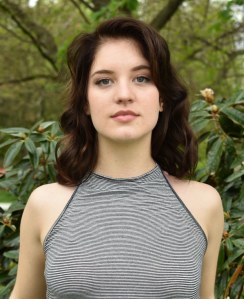 Abigail Dufresne is a twenty-one year old poet, actress, and costume designer from Rhode Island with training in acting, design, movement, and devised theatre from Shakespeare and Company, The Stella Adler Studio of Acting, and The University of Rhode Island. At this point in her career Abigail finds herself drawn mostly to devised theatre and Shakespeare for the opportunities these provide to engage with both poetry and acting within the same medium. She looks forward to exploring how these disciplines can also live within other forms of art.
 Aoife Read is a 34-year-old woman born and bred in Dublin. She is a breast cancer survivor, a lesbian and a quiet activist. Aoife has been writing from a young age, from journaling all through her teens to working as a journalist now, currently on a freelance basis, but in the past for local newspapers and as a deputy editor for various magazines. Her true love has always been for poetry though, and she has kept all of the poems she has written throughout her life from her early teens until now. A longtime resident of Swords Co. Dublin, Aoife lives in her family home with her cat, Xena. She has a partner of 6 years, Franky, who has been the focus of many of her poems. You might even say she is her muse, although she would murder Aoife for referring to her that way. Aoife has a huge passion for science, physics in particular, and is a comic book geek and gamer chick and a bit of an all-around nerd. These interests and fascinations are often found creeping into a lot of her work in various ways. Her recent battle with cancer is also something that has coloured a lot of her latest work. Her poetry and writing is laced with something deeper, perhaps thicker ever since.
 Angela Patten is author of three poetry collections, In Praise of Usefulness (Wind Ridge Books), Reliquaries and Still Listening, both from Salmon Poetry, Ireland, and a prose memoir, High Tea at a Low Table (Wind Ridge Books). She was winner of the 2016 National Poetry Prize from the Cape Cod Cultural Center and her work has appeared in a variety of literary journals. Born and raised in Dublin, Ireland, she now lives in Burlington, Vermont, where she is a Senior Lecturer in the University of Vermont English Department.
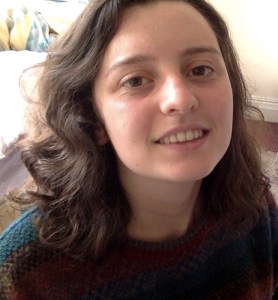 Niamh Twomey is a student of English Literature and French in University College Cork. Winner of Hotpress Magazine’s ‘Write Here Write Now‘ competition in 2016, she has since published works in journals such as ‘Quarryman’, ‘Quill & Parchment’, amongst others.
 Katherine Noone’s first poetry collection Keeping Watch was published by Lapwing Press (2017). Her poems have appeared in Orbis, Crannog, Boyne Berries, Linnets Wings, Her Heart Anthology, Skylight 47, Proost Poetry, Vallum digital edition, A New Ulster and Ropes Journal.
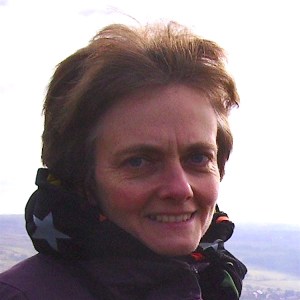

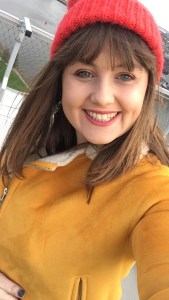 Alison Driscoll is a writer from Cork and is currently undertaking an MA Creative Writing in UCC. Her work has been previously published in Quarryman literary journal. She has been longlisted for the Fish Poetry Prize and the Over The Edge New Writer of The Year Award.
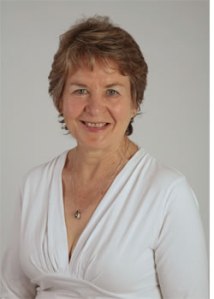 Peggie Gallagher’s collection, Tilth was published by
  Chris Murray