CRUEL CHOICES
When my husband’s two grown daughters are in town, the three of them go to the movies, or play pool. Share dinner every night. Stay out late. I haven’t seen my stepdaughters since my son’s funeral in 2007. When people ask, I say nice things about the girls, as if we had a relationship. When people ask if I have children I change the subject. Or I lie and say no. Or sometimes I put them on the spot and tell them, yes, but he died. They look aghast and want to know what happened. Then I have to tell them about the cancer. Sometimes, when the older daughter, his favorite, is in town, and she and my husband are out together night after night, I wonder what it would be like if that was me, and my boy, if life was fair, and, rather than my husband having two children and I, none, we each had one living child. His choice which one to keep. Lately when people ask, I want to lie and say yes, my son is a basketball coach; he married a beautiful Iranian model with kind eyes, and they live in London with their twin girls who visit every summer; the same twins his girlfriend aborted with my blessing when my son was eighteen, deemed too young for fatherhood, and everyone said there would be all the time in the world.
First published in ASKEW, 2016, Nominated for the Pushcart Prize, 2016 Winner of the Pangolin Prize, 2018 Nominated again for the Pushcart Prize, 2018
THE GOD FOR BROKEN PEOPLE
There is a god for broken people – Roxane Gay
This is the god for the second rate, the one who waylays you at the party, plies you with bourbon, fucks you in the kitchen, makes you walk home in the rain. This god shines in the runoff. This god hustles the night. This god mines the maimed, culls emotional cripples off the top like cream. This god is a shape-shifter, a dumpster diver, the god who loiters at the corner of Dolorosa & Despair. This god drinks alone. The god for broken people trolls the city for discards, marries the exploited with the lost. This god sweeps up the miscreants, gusts their darkness into night. This is the god of no hope. No money. This god has your back when you backslide. This god bets on you to fail, hides in your broken places. This god is willing to wait. When you’re ready to surrender, remember: this is your last, best chance. This god will not stick by you, won’t give you false hope. This god will kill you. Or save you. Choose.
Published in The San Pedro River Review, 2018
Poem For Kate In Chemo
Above where your right breast used to be
the oncologist implanted a port to make things easier.
“It takes forever,” you say. “An hour’s drive, each
way, an entire day used up, laying
there.”
But first, the tourniquet, tied to your upper arm,
the cheery nurse, tapping for a working vein,
your thick blood at last flooding into one syringe
after another. Then the weigh-in, each time
less. “Bone and skin now,” you say.
If your numbers are good, you head
to the chemo room, rows of cushy
recliners, supplicants tethered to plastic bags
held high by IV poles, a forest of metal trees.
You unbutton your blouse, offer up the convenient
port to a flush of saline – like ocean, you tell me,
like waves.
Next, the chemicals, those shimmering droplets
riding the plastic tube into your chest,
a kind red blanket, thrown
over your legs.
I tear the best New Yorker short stories
from the magazine and mail them
to you in Port Townsend.
Something to pass the time. Something non-
medical to discuss when we chat each week.
We both know you’re dying, though
your husband still has faith, and you cling to
his hope, coming back week after week because
it makes his life bearable.
When the chemo bags are empty,
and the stories read, you leave the pages behind
for a needful stranger.
In 2000, when you lost your breast,
your husband insisted you have
chemo then, too.
“It makes me feel more dead than alive,”
you confessed to me after the first week.
Appointment days, you’d leave the house,
drive to the woods, walk the trails
instead of treatment, those
huge redwood trees shading your path.
Each evening you’d return to your
husband’s innocent embrace.
You made me promise not to tell.
And I never did, until now.
For Kate O’Donnell, (1949-2014)
First published in the Nashville Review, 2016
when your mother convinces you to take in your homeless younger sister
She will date your boyfriend.
She’ll do it better than you ever did.
She’ll have nothing but time.
He’ll start showing up when you leave,
train her to make him the perfect BLT,
(crusts off, avocado on the side),
encourage his cheating heart,
suck his dick so good he’ll think
he’s died and gone to Jesus.
Your sister will borrow your clothes,
and look better in them than you ever did.
Someone will see her with your boyfriend
at the Grove, agonize for days
before deciding not to tell you.
Meanwhile he’ll buy her that fedora you
admired in Nordstrom’s window, the last one
in your size.
When you complain, your mother
will tell you it’s about time you learned to share.
While you’re at work, your sister will tend your garden,
weed the daisies, coax your gardenias into bloom.
No matter how many times you remind her,
she will one day forget to lock the gate;
your cat and your lawn chairs will disappear.
Your mother will say it serves you right.
Your sister will move into your boyfriend’s
big house in Laurel Canyon. He will ignore her,
and she will make a half-hearted suicide attempt;
you’ll rescue her once again.
Your mother will wash her hands of the pair of you,
then get cancer and die.
Smell the white gardenias in the yard.
Cherish their heady perfume. Float them in a crystal bowl.
Forgive your sister as she has forgiven you.
First published in RAGAZINE, 2015
When I Buried My Son I Became Someone Else

When I buried my son    I became someone else
the motherhood part     written out of my script;

I should have felt lighter.
			    An alternate narrative ran alongside
			    the dead kid one where he wasn’t dead.

It remains the preferable scenario.

I buried my son and now
I don’t know who walks
on eggshells                 the living or the dead, and sometimes
			     I think the dead one is me, especially
                             when I look
in the mirror.
		           I am coming to terms with mortality:mine/his.
			   I’ve dumbed down my dreams.

If you look hard enough,    you’ll see the skewed trajectory,
the fizzle.                 the off-track, you’ll live the devastation,
                            sip the dregs.
When my mother died, 	    I wore a lavender dress to her funeral.

I stuffed it into  	   where it lived for thirty years.
the back of my closet	   When I found it again, the dress still fit.

But I wouldn’t be caught dead in it.


Published in JUNIPER Literary Journal, Feb. 2019
& in THE DEAD KID POEMS (KYSO Flash Press, 2019)
|
|
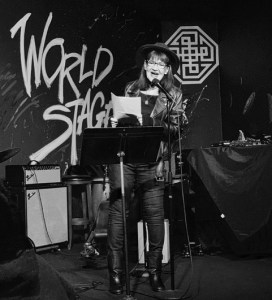 Poet and photographer Alexis Rhone Fancher has work published in over 200 literary magazines, journals, and anthologies, including Best American Poetry, Rattle, Hobart, Verse Daily, The MacGuffin, Plume, Tinderbox, Diode, Nashville Review, Rust + Moth, Nasty Women Poets, WideAwake: Poets of Los Angeles and Beyond, among others. Her photographs have been published worldwide. Her books include: How I Lost My Virginity to Michael Cohen & other heart stab poems, Enter Here, and the autobiographical, Junkie Wife. Her chapbook, State of Grace: The Joshua Elegies was released in 2015, and its companion, The Dead Kid Poems, published in May 2019. EROTIC, a volume of her new and selected erotica, will be published in 2020 by New York Quarterly. A nominee of multiple Pushcart Prize, Best Small Fictions, Best Microfiction, and Best of the Net awards, Alexis is poetry editor of Cultural Weekly.
 Ria Collins worked as Director of Nursing for many years. Now living in Galway, she has read at Clifden Arts Festival and Galway Library open mic events. She has been published in Skylight 2016, shortlisted for Over the Edge New Writer of the Year 2016 and longlisted in 2017. She was shortlisted for Poems for Patience 2017 and in 2018. She attended workshops in Galway with Kevin Higgins and Dublin Writers Centre with Mark Granier, Jessica Traynor and Adam Wyeth. Most recently she has performed a collaboration of her work with music at the Cuirt International Festival of literature 2018.
 Shanta Acharya won a scholarship to Oxford, where she was among the first batch of women admitted to Worcester College. A recipient of the Violet Vaughan Morgan Fellowship, she was awarded the Doctor of Philosophy for her work on Ralph Waldo Emerson prior to her appointment as a visiting scholar in the Department of English and American Literature and Languages at Harvard University. The author of eleven books, her latest poetry collection is Imagine: New and Selected Poems (HarperCollins, India; 2017). Her poems, articles and reviews have appeared in major publications including Poetry Review, PN Review, The Spectator, Guardian Poem of the Week, Oxford Today, Agenda, Acumen, Journal of Postcolonial Writing, Philosophy Now, Stand, Ariel, Asia Literary Review, HarperCollins Book of English Poetry (2012), Fulcrum, Language for a New Century: Contemporary Poetry from the Middle East, Asia & Beyond (Norton).
 Christine A. Brooks is a graduate of Western New England University with her B.A. in Literature and her M.F.A. from Bay Path University in Creative Nonfiction. A series of poems, The Ugly Five, are in the 2018 summer issue of Door Is A Jar Magazine and her poem, The Writer, is in the June, 2018 issue of The Cabinet of Heed Literary Magazine. Three poems, Puff, Sister and Grapes are in the 5th issue of The Mystic Blue Review. Her vignette, Finding God, is in in the December 2018 issue of Riggwelter Press, and her series of vignettes, Small Packages, was named a semifinalist at Gazing Grain Press in August 2018. Her essay, What I Learned from Being Accidentally Celibate for Five Years was recently featured in HuffPost, MSN, Yahoo and Daily Mail UK. Her book of poems, The Cigar Box Poems, is due out in late 2019.
 Melvina King is a poet originally from Philadelphia, PA but currently studying at the graduate level in Dublin, Ireland. Due to wanting a change in life, and a breath of fresh air she decided to move to Europe to experience living elsewhere. Writing poetry is something that she’s enjoyed since childhood. Back in Philadelphia, she frequents the open mic circuit. Poetry has allowed her to communicate her thoughts, educate others and let go of her feelings. She writes about her experiences as a black woman in this world, being from a West African immigrant family, her interactions with men/people, travelling and from how she sees the world. The themes that are explored her work include oppression, love, race, Pan-Africanism, self-esteem, sexual assault and identity.
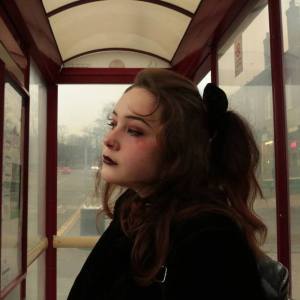 Maria Karapish is an Irish-Ukranian poet and artist, her main project includes the In My Orbit zine that contains her original poetry and illustrations. Her poetry focuses on themes of mental illness and how that affects everyday life and relationships along with pieces that stew over those many ‘what if’s? that refuse to leave your brain.
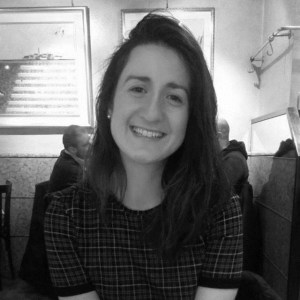 Eimear Bourke is a 27-year-old Irish lawyer who has always been interested in poetry and writing. Born in Dublin and raised in Navan, Co. Meath, she graduated from Maynooth University in 2013 with a degree in Law and English. Her writing focuses on interpersonal relationships and Irish seascapes. She is inspired by Yrsa Daley-Ward and Rita Ann Higgins.
 Trish Bennett hails from County Leitrim. She’s got the breeze of Thur (the mountain, not the God) in her blood. She crossed the border to study over twenty years ago and was charmed into staying by a Belfast biker. They have settled themselves into a small cabin near the lakeshore in Fermanagh, and try to keep the noise down in their bee-loud glade. Bennett writes about the shenanigans of her family and other creatures. Sometimes she rants. She was a finalist in seven poetry competitions in the past two years, including North West Words, The Percy French, Bailieborough, and The Bangor Literary Journal, and has won The Leitrim Guardian Literary Award for poetry twice. Bennett is a Professional Member of the Irish Writers Centre.
 ackie Gorman has been published in a number of journals including Poetry Ireland Review, The Lonely Crowd and The Honest Ulsterman. She was part of the 2017 Poetry Ireland Introductions Series and won the 2017 Listowel Writers’ Week Single Poem Award and was commended in the Irish Poem of the Year Award at the Bord Gais Energy Irish Book Awards in the same year. She recently completed a Masters in Poetry Studies at Dublin City University. Her first collection was published by the UK poetry publisher The Onslaught Press in May 2019.
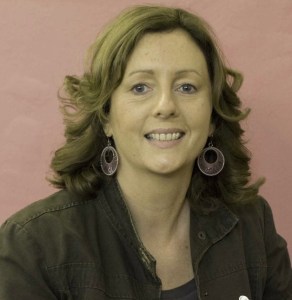 Karen O’Connor is a winner of Listowel Writers’ Week Single Poem Prize, The Allingham Poetry Award, The Jonathan Swift Creative Writing Award for Poetry and the Nora Fahy Literary Awards for Short Story. She is a poet and short story writer and her work has appeared in many magazines and anthologies. Karen’s first poetry collection, FINGERPRINTS (On Canvas) was published by Doghouse Books in 2005. Her second collection, Between The Lines, also from Doghouse Books (2011), was featured on RTE Radio 1 Arts Programme, Arena.
 Chris Murray