It was with great sadness that I learned of the death of Dr. Muireann Ní Bhrolcháin, Senior Lecturer of Early Irish (Sean-Ghaeilge), at the Centre for Irish Cultural Heritage at Maynooth University. Obituaries and remembrances are too formal a way to encapsulate the energies of the person who has passed away. What we may say about her on paper; on her authorship, her survivors, and her activities, pale in comparison to the ball of energy that she was. Muireann had a huge and warmly generous physical presence despite her tiny size. She was quite literally a ball of energy.
I first met Muireann at the Four Courts, as one did during the environmental campaigns that dominated the Celtic Tiger era. Protestors would be in and out of courts fighting on issues related to the complete destruction of any and all heritage laws by the Fianna Fáil Party who came up with new planning bills even as they tore down and scrapped institutions that were charged with the preservation of our natural and built heritage. News media would jostle to get near the government ministers who thought up new and ingenious ways to fast-track planning laws and ramming their tastelessness into property bubbles, bad housing, Dublin satellites, and the ephemera of trash that can only be described as garbage politics. People like Muireann were almost criminalised for objecting to the fact that in the 13 years of political dominance by Fianna Fáil and it’s motley collection of political props, not one of them actually bothered to bring in a single heritage preservation bill. The media never asked why there were no heritage bills, they were busy selling houses for the government.
Muireann asked the awkward questions like why Dúchas was abolished by Martin Cullen TD, Why Bertie Ahern was so intent on leadership that passed endless fast-track and Strategic Infrastructure Bills, and why successive Environment Ministers could not transpose The Aarhus Convention into Irish law, they still haven’t. Why above all were we demolishing (‘Preservation by Record’) unique sites at Tara (39 sites were demolished) in the Gabhra Valley to allow for the M3 Toll Road. Decentralisation of protections like the OPW, and the defunding of existent preservation programmes were policies that ensured cheap housing and good profit to companies like the NRA (who also managed to take on the majority of archaeology programmes nationally) The media not alone did not trace these issues but they deliberately ignored or obfuscated them within a sugary silence that disallowed anything negative or challenging to emerge that might affect the status quo. There was no joining of dots, just a lot of quangos and silence in the Tiger Era.
Despite this juggernaut of profiteering and short-termism, Muireann for the most part kept her temper and went into the courts, or she stood out on the Hill Of Tara in all weathers, or she waved orders into the faces of the Gardaí. She never cried in front of me but she witnessed a scarring and vicious tragedy that seems to encapsulate the appalling recklessness and greed of the Tiger Era. It was a devastation that was fuelled by greed and lack of education: bulldoze everything and make some cheap tract housing, extend the Dublin suburbs into Meath, and while we are at it, make a tidy little profit from unhooking all laws that preserve our unique heritage. Gombeenism is not the word for it.
Muireann’s gentler side emerged when she involved herself in cultural events like the Feis Teamhair where poets like Seamus Heaney, Paul Muldoon, Susan McKeown, and more came yearly to Tara to raise cultural voice and to sing their protest. It was probably at Feis Teamhair that I last saw her turn back toward someone who grabbed her arm and asked her a question or greeted her warmly.
We make public poets, great men, and women who are imprisoned in the media glare. We want them to represent all that is good in Ireland, and we consign the irritating questioners to the margins. Muireann was an irritating questioner, a restless and enthusiastic spirit, a friend and colleague of great poets, she defended and embraced our literary and poetic heritage with all her health and drive.
She has not lived as long as those she opposed, but her name is inscribed in the history of Tara, a visual sign that people will battle great odds to illuminate truths that politicians and their wordless and grey supporters ignore. Dr. Muireann Ní Bhrolcháin has died a respected and feisty woman, unlike the liars she challenged daily and I will miss her big heart.
Tara Abú
Rest in Peace Muireann x
Christine Murray (published at The Bogman’s Cannon )
Tag: commodification
-
-
My letter to the Editor regarding how we treat heritage in Ireland, published July 30 2014.
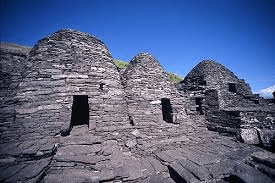
Sir, – It is now more than 10 years since Martin Cullen TD abolished Dúchas, the Heritage Service. Our national and built monuments are not adequately protected. When I questioned the OPW decision to allow filming on Skellig Michael, a general response was “it’s about jobs”. In the deep recession of the ’80s the OPW partnered with private agencies and owners to train young people in heritage protection and craft skills (stonework, wood-carving and preservation). These were jobs and skills geared toward protecting and conserving our heritage.
In the 10 years since the abolition of Dúchas, 39 sites in Tara were demolished to facilitate the M3 toll road. There are robberies of stunning stonework and the job of Dúchas has been divided between the Department of the Environment and the OPW.
Heritage is not adequately protected. We are not training the young in conservation techniques and we have no statutory agency for protecting our natural and built heritage. There are jobs in protecting our fragile heritage infrastructure in the long-term: people require skills training.
The Hollywood machine is a temporary thing. Where is the long view on jobs, on awareness and on stewardship in Ireland?
It is the job of the Minister to propose a far-sighted agenda for the work of the divided heritage agency, and yet I have seen no comment or response to the OPW decision on Skellig from her office. We are used to disgraceful decisions affecting our environment in Ireland. Why should we be surprised now? – Yours, etc,
CHRISTINE MURRAY,
-
Letters by Colm Toibín and Hugh McFadden on Arts Policy in Ireland.
The following letters published in the Irish Times re Arts Policy in Ireland.
Where is the arts plan?
“Sir, – At Listowel Writers Week on May 31st the Minister for Arts, Heritage and the Gaeltacht spoke about the importance of the policy of maintaining a system of one-remove between politicians and decisions about arts funding. It seems curious then that Culture Ireland, which was, as a result of a report commissioned and accepted by government, run as an independent body has now been brought into the Minister’s department from where it will be run directly. I think those of us who have worked with Culture Ireland have a right to ask on what basis this was done. Is there a document, for example, which shows how this move might save money or create efficiency? Is there a document which deals with possible problems in the future, should a minister, from whatever political persuasion, wish to decide what artists represent Ireland abroad and what artists should not?
Since there are 113 national archives in the world and only two of them are merged with a national library, it might also be helpful to see a document which would show how money could be saved by such a merger here – the Canadian merger actually cost 15 million Canadian dollars – or how services would be improved, or how nothing would be damaged. The ethos behind a National Library – the making of books and manuscripts available to scholars – and the function of a National Archives – the preservation of documents emanating from government departments – seem quite distant from each other.
As a novelist, I plan what I do. I would not dream of starting a novel without a blueprint, and I put a great deal of thought into that. Would it be too much to ask the Minister, or indeed his civil servants, to produce a document which would explain the reasons for merging some cultural institutions, abolishing boards, and bringing them and Culture Ireland directly under the Minister’s and the civil servants’ own control? – Yours, etc,”
COLM TÓIBÍN
Cancellation of the 2013 Éigse Michael Hartnett Poetry Prize
Hugh Mc Fadden’s letter (15/12/2012)
“Sir, – Not content with cutting funding for the health services, making life more difficult for the sick, the very young, the elderly, disabled, halt and lame, our benighted leaders are busily cutting funds for the arts.
Grants to some publishers and magazine proprietors have been cut for 2013, thereby jeopardising the future of literary writing and the livelihoods of Irish writers.
The latest news on the literary front is that Limerick County Council’s Arts Office has been forced by lack of funding to cancel the Michael Hartnett Poetry Award for next year, as they informed this correspondent this week. Who voted these governmental Philistines into office? – Yours, etc,”
HUGH McFADDEN
My response to weak arts policy in Ireland.
I find the general response to the unconsidered and undebated continuation of previous governmental policies interesting. Arts in Ireland have moved toward a simple bureaucratised functionality based in the 2003 Arts Act. The mere fact that such letters are scant, confined to comment or letters pages, and not really looked at in terms of reportage indicates a lack of consideration for protecting and nurturing the arts and their fragile infrastructure.
Response to inadequate arts policies reflect Irish intellectual response to such issues as blasphemy legislation, the destruction of Tara, and the run-down of critical institutions – a paucity. How utterly sad that short-termism and bureaucracy dominates Irish political (or supposed intellectual) thought.
-
While brushing my teeth
I stop to think of the Minister’s words
and I feel how lucky we are indeed
to have a Green Minister like him to tell us
not to be wasting water running it
while brushing our teeth.And I wonder if he’s noticed
that it’s been pissing the rain for weeks
and the eco-warriors are up to their eyes in muck
in their flooded dugouts on the Hill of Tara.But he says he is not in a position to go there
for he is afraid of getting his hands dirty
and he’ll have to go washing them all over again,
wasting everyone’s time and energy,
including his own.Seamus Heaney thinks it’s a disgrace,
but sure nobody listens to him.Thanks to John Walsh. This poem is from Chopping Wood with T.S Eliot, Publ. Salmon Poetry 2010.
-
FEIS TEAMHRA: A TURN AT TARA
“The fourth annual Feis Teamhra: A Turn at Tara, which features readings and performances by internationally recognized Irish writers and musicians, will be held between 3 and 5 o’clock on Sunday August 28 2011 on the Hill of Tara itself. Those taking part this year are Aidan Brennan, Peter Fallon, Laoise Kelly, Susan McKeown, Paul Murray and a surprise musical guest who just happens to be one of Ireland’s greatest singer-songwriters. The MC for the event is Paul Muldoon. Admission is free.
While the Hill of Tara has in recent years become a contested spot, symbolizing less the sacred site where ancient Ireland crowned its kings than the desecrated site where modern Ireland gave in to crass consumerism and, as it were, drowned in things, the note the organizers hope to strike is not one of confrontation but celebration. Feis Teamhra: A Turn at Tara is a celebration of the continuity of the linked traditions of Irish writing and music, traditions that have almost certainly flourished here since at least 2000 BC.
We’re delighted to welcome Paul Murray, the Dublin-based author of An Evening of Long Goodbyes (2003), which was shortlisted for the Whitbread First Novel Award, and Skippy Dies (2010), a book quite accurately described by the New York Times as “extravagantly entertaining.” The New Yorker, meanwhile, praised its “remarkable dialogue, which captures the free-associative, sex-obsessed energy of teenage conversation in all its coarse, riffing brilliance.” Skippy Dies, a book that’s reminiscent of A Portrait on Peyote, was shortlisted for the Costa Prize, the National Book Critics’ Circle Prize and the Irish Book Award.
We also extend a particular welcome to the Meath-based poet and publisher Peter Fallon, who is celebrated for the unfussy but nonetheless fusillading nature of his poems. They speak softly but carry a big stick, one cut from a local hedge. Some of Peter Fallon’s best work is to be found in News of the World: Selected and New Poems (1998) and his translations of The Georgics of Virgil (2004/2006). A member of Aosdana, Peter Fallon received the 1993 O’Shaughnessy Poetry Award from the Irish American Cultural Institute.
The musical component of Feis Teamhra: A Turn at Tara is curated by Susan McKeown, the Dublin-born, New York-based, Grammy-winning singer-songwriter. Susan McKeown released her seventh solo album, Singing in the Dark, in October 2010. In addition to her career as a solo artist, Susan McKeown’s heart-felt, heart-breaking singing has led her to work with, among others, Natalie Merchant, Linda Thompson, Pete Seeger, Mary Margaret O’Hara, Billy Bragg, Arlo Guthrie, and the Klezmatics.
Among the other musicians featured this year are Aidan Brennan and Laoise Kelly. Aidan Brennan is an inspired guitarist who has worked not only with Susan McKeown (Sweet Liberty, 2004), but Kevin Burke (Kevin Burke in Concert, 1999) and Loreena McKennitt (Book of Secrets, 1997, and Midwinter Night’s Dream, 2008). Born in Dublin, Aidan Brennan now lives in Laois.
Laoise Kelly, generally considered to be the foremost Irish harper, lives in her native Mayo. The Irish Times has described her as “a young harpist with the disposition of an iconoclast and the talent and technique of a virtuoso.” In addition to her own CD (Just Harp, 2000), Laoise Kelly has worked with Sharon Shannon, The Chieftains, Natalie MacMaster, Sinead O’Connor and Kate Bush.
The image is from the first ever Turn at Tara

