New Worlds The redwoods lime their twisted rust Above the shore’s funereal cobalt tides beyond Atlantic shores and old worlds dying. Tumbling against the air on primavernal wings, perceiving lights occulting on the waters’ slope where distant redwoods lime their twisted rust New Worlds is © David Pollard.
|
Tag: form
-
-
Earthly Terror
I stopped at the gate of a rich city.
I had everything the gods required;
I was ready; the burdens
of preparation had been long.
And the moment was the right moment,
the moment assigned to me.
Why were you afraid ?
The moment was the right moment;
response must be ready.
On my lips,
the words trembled that were
the right words. Trembled-
And I knew that if I failed to answer
quickly enough, I would be turned away.

Durham Cathedral engraving by William Miller after J M W Turner, published in Picturesque Views in England and Wales. From Drawings by J.M.W. Turner, engraved under the superintendence of Mr. Charles Heath with descriptive and historic illustrations by H.E. Lloyd. London: Longman, Orme, Brown, Green, and Longmans, 1838. Rawlinson 297 Earthly Terror, by Louise Glück , from The Making of a Sonnet, eds. Edward Hirsch and Eavan Boland
-
‘Sestina’ by Dante Alighieri
I have come, alas, to the great circle of shadow,
to the short day and to the whitening hills,
when the colour is all lost from the grass,
though my desire will not lose its green,
so rooted is it in this hardest stone,
that speaks and feels as though it were a woman.And likewise this heaven-born woman
stays frozen, like the snow in shadow,
and is unmoved, or moved like a stone,
by the sweet season that warms all the hills,
and makes them alter from pure white to green,
so as to clothe them with the flowers and grass.When her head wears a crown of grass
she draws the mind from any other woman,
because she blends her gold hair with the green
so well that Amor lingers in their shadow,
he who fastens me in these low hills,
more certainly than lime fastens stone.Her beauty has more virtue than rare stone.
The wound she gives cannot be healed with grass,
since I have travelled, through the plains and hills,
to find my release from such a woman,
yet from her light had never a shadow
thrown on me, by hill, wall, or leaves’ green.I have seen her walk all dressed in green,
so formed she would have sparked love in a stone,
that love I bear for her very shadow,
so that I wished her, in those fields of grass,
as much in love as ever yet was woman,
closed around by all the highest hills.The rivers will flow upwards to the hills
before this wood, that is so soft and green,
takes fire, as might ever lovely woman,
for me, who would choose to sleep on stone,
all my life, and go eating grass,
only to gaze at where her clothes cast shadow.Whenever the hills cast blackest shadow,
with her sweet green, the lovely woman
hides it, as a man hides stone in grass..
Sestina by Dante AlighieriThe image at the base of this post is from the Wikipedia Site discussion on the Sestina form . I am adding here a Poets.org discussion on the form used by both poets in the above post . I wanted to focus on content , which is after all what poetry is about (that and adaptions/metamorphosis/shape-shifting and code !).
‘Sestina’ by Elizabeth Bishop
September rain falls on the house.
In the failing light, the old grandmother
sits in the kitchen with the child
beside the Little Marvel Stove,
reading the jokes from the almanac,
laughing and talking to hide her tears.She thinks that her equinoctial tears
and the rain that beats on the roof of the house
were both foretold by the almanac,
but only known to a grandmother.
The iron kettle sings on the stove.
She cuts some bread and says to the child,It’s time for tea now; but the child
is watching the teakettle’s small hard tears
dance like mad on the hot black stove,
the way the rain must dance on the house.
Tidying up, the old grandmother
hangs up the clever almanacon its string. Birdlike, the almanac
hovers half open above the child,
hovers above the old grandmother
and her teacup full of dark brown tears.
She shivers and says she thinks the house
feels chilly, and puts more wood in the stove.It was to be, says the Marvel Stove.
I know what I know, says the almanac.
With crayons the child draws a rigid house
and a winding pathway. Then the child
puts in a man with buttons like tears
and shows it proudly to the grandmother.But secretly, while the grandmother
busies herself about the stove,
the little moons fall down like tears
from between the pages of the almanac
into the flower bed the child
has carefully placed in the front of the house.Time to plant tears, says the almanac.
The grandmother sings to the marvelous stove
and the child draws another inscrutable house.Sestina by Elizabeth Bishop
Listen to the poem here , Sestina . Sestina by Elizabeth Bishop is published in Questions of Travel, which is discussed here in Modern American Poetry
The following tables are from Poets.org and Wikipedia showing the Sestina form in its essence,
1. ABCDEF
2. FAEBDC
3. CFDABE
4. ECBFAD
5. DEACFB
6. BDFECA
7. (envoi) ECA or ACE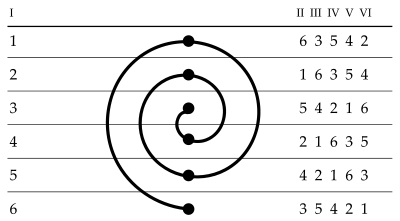
 David Pollard is a poet and critic. He was born under the bed in 1942 and has been furniture salesman, accountant, TEFL teacher and university lecturer. He got his three degrees from the University of Sussex and has since taught at the universities of Sussex, Essex and the Hebrew University of Jerusalem where he was a Lady Davis Scholar. His interests are in English literature and Modern European Philosophy. He has published The Poetry of Keats: Language and Experience which was his doctoral thesis, A KWIC Concordance to the Harvard Edition of Keats’ Letters, a novel, Nietzsche’s Footfalls, and four volumes of poetry, patricides, Risk of Skin and Self-Portraits (all from Waterloo Press) and bedbound (from Perdika Press). He has also been published in other volumes and in learned journals and poetry magazines.
 Chris Murray