Tag: poetry
-
A Work for Poets
To have carved on the days of our vanity
A sun
A star
A cornstalk
Also a few marks
From an ancient forgotten time
A child may read
That not far from the stone
A well
Might open for wayfarers
Here is a work for poets—
Carve the runes
Then be content with silence.
Lux Perpetua.
A star for a cradle
Sun for plough and net
A fire for old stories
A candle for the dead.Lux perpetua
By such glimmers we seek you.I have two reading recommendations this sunny cold morning in Dublin, Interrogation of Silence, The writings of George Mackay Brown, Rowena and Brian Murray. Publ. John Murray (2004). and The Absence of Myth by Georges Bataille Publ. Version (1994/2006).
I am sad to hear the John Hurst, proprietor of Rare and Interesting Books in Westport died this past weekend, he always got the exact book that I sought and I had put him alongside Charlie Byrne’s In Galway for his excellent collection of books. Indeed I had been re-reading a certain book this weekend that I had bought from him in the last years, RIP. For those readers interested in George Mackay Brown, I include here the GMB website, along with a link to a short Poethead post on John’s lovely bookshop in Mayo.
-
from Skywriting
by Dennis O Driscoll
Reiterating whatever claim it makes,
A sotto voce repetition, rain plays out
a reverie-inducing music on the glass
harmonica of the kitchen’s window pane.
But peeling open the back door
for a rain check, you hear the liquid
swishing grow insistent as a whip;
sibiliant drips insinuate their way
between tightly packed leaves which,
gorging on these waters , never
quite reach saturation point.
hard to imagine that sweetness
and light might yet triumph,
a freshly perfumed day resurface,
put on airs of mellowness,
a rose-tinted sun assume the contours
of a mountain range, your gable wall.by Dennis O Driscoll
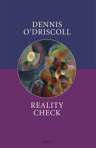
‘Reality Check’ , by Dennis O Driscoll Dennis O Driscoll , ‘Reality Check’. Publ Anvil Press 2007.
-
Whilst reading the Chris Agee edited Poetry (October – November 1995), I happened upon the truly beautiful Mother Ireland, penned by Eavan Boland. I am adding a Boston Globe interview (excerpted) and Eavan Boland link, entitled Exploring Poetry’s ‘Lesser Space‘ to the blog as this week’s Saturday Woman Poet , which is becoming a regular item on the blog. I have included the links to the Saturday Woman Poet archive and tag-set alongside other related links.
The interview is companion to a post that I re-blogged this week , entitled Female Complexities, Dorothy Molloy and fits neatly into the theme of intimacy in writing, as opposed to the monumental writ upon a large-scale canvas poetry beloved of politicians and other uncreative people. Sylvia Plath referred to this celebration of the small, the real and the domestic as a writing of the thinginess of things, the exploration of poetic voice grounded in objects. It is most visible in the final poem of her Ariel sequence, Wintering. I have linked both of these aforementioned posts on Plath and Molloy at the base of this post.
The Week In Irish Arts and Culture .
It has been an appalling and destructive week for Irish arts , this is grounded not alone in the economical situation but in what amounts to an ongoing policy or set of policies which have starved Irish arts at their root. A degradation of immense proportion has been occurring since at least 2004 , when the current Government initiated the National Monuments Act, which showed a scant attention to to the ideology of conservation, butrather favoured the ideology of destruction for profiteering. The swathe of heritage and cultural destruction reached its rational conclusion in three things , the bisection of the Gabhra Valley , the endowment of an Artist’s exemption to the ghost-written book of a former Taoiseach and the introduction of a Criminalisation for Blasphemy onto the Irish statute in January 2010, which has reduced our place in the press freedom league.
Exploring Poetry’s ‘Lesser Space’ , Boston Globe.
I do not believe that a Government should underestimate the alienation that occurs as a result of cultural self-vandalisation and ignorance of its role in stewardship and protection, but it apparently does , as it celebrates its own myopia and abject failure in the teeth of Ireland’s depression. From Exploring Poetry’s ‘Lesser Space’ (Boston Globe’s Interview with Eavan Boland).
“Explain how Irish women, as you write, went “from being the objects of the Irish poem to being its authors.“
A The archetypical poem I have in mind is Yeats’s “Cathleen ni Houlihan,” which was a very romanticized, static portrait. The woman was so iconic and so overlaid with images of Ireland that for women to become the authors of the poem they had to somehow leave that object behind or contest it.
Q How did this affect you?
A It made me very aware of how difficult it was in Irish poetry to have an ordinary, day-to-day subject. Nineteenth-century painting, by contrast, often depicted the details of everyday life — people sitting in rooms, at tables; nobody questioned the value of those images to an artist. But when I was a young poet it was easier to have a political murder in the Irish poem than a baby.”
The Black Lace Fan my Mother Gave Me.
by Eavan Boland
It was the first gift he ever gave her,
buying it for five five francs in the Galeries
in pre-war Paris. It was stifling.
A starless drought made the nights stormy…They stayed in the city for the summer.
The met in cafes. She was always early.
He was late. That evening he was later.
They wrapped the fan. He looked at his watch.She looked down the Boulevard des Capucines.
She ordered more coffee. She stood up.
The streets were emptying. The heat was killing.
She thought the distance smelled of rain and lightning.These are wild roses, appliqued on silk by hand,
darkly picked, stitched boldly, quickly.
The rest is tortoiseshell and has the reticent clear patience
of its element. It is
a worn-out, underwater bullion and it keeps,
even now, an inference of its violation.
The lace is overcast as if the weather
it opened for and offset had entered it.The past is an empty cafe terrace.
An airless dusk before thunder. A man running.
And no way to know what happened then—
none at all—unless ,of course, you improvise:The blackbird on this first sultry morning,
in summer, finding buds, worms, fruit,
feels the heat. Suddenly she puts out her wing—
the whole, full, flirtatious span of it.Related Link-Sets :
-
Wraiths
III. White Nights
Furrow-plodders in spats and bright-clasped brogues
Are cradling bags and hoisting beribboned drones
As their skilled neck-pullers’ fingers force the chanters
And the whole band starts rehearsing
Its stupendous, swaggering march
Inside the hall. Meanwhile
One twilight field and summer hedge away
We wait for the learner who will stay behind
Piping by stops and starts,
Making an injured music for us alone,
Early-to-beds , white-night absentees
Open-eared to this day.from, Human Chain , by Seamus Heaney , published by Faber and Faber 2010.
Note : I am attaching to this short post a link entitled : Feis Teamhar , a Turn at Tara because I was there to hear the poets and musicians on that day. I believe that the Newspapers under-reported the day and did not attend to Mr Heaney’s words. He was there to celebrate Tara as a cultural centre and to support the Campaign to Save Tara . He was also there to support his nephew who was and is a Tara Campaigner .
Since that time , there have been other feiseanna at Tara, this was the inaugural one organised by ” Paul Muldoon, Pulitzer prize-winner, will read his poetry to celebrate and honour Tara and will be joined by musicians: Grammy award-winner Susan McKeown, Laoise Kelly, Aidan Brennan and others “.
Save Tara Campaign release on Feis Teamhair
-
Amhrán na bPrátaí Dubha
Na prátaí dubha do dhein ár gcomharsana a scaipeadh orainn,
Do chuir sa phoorhouse iad is anonn thar farraige;
I Reilig an tSléibhe tá na céadta acu treascartha
Is uaisle na bFflaitheas go ngabhaid a bpáirt,A Dhia na Glóire fóir agus freagair sinn,
Scaoil ár nglasa agus réidh ár gcás,
Is an bheatha arís ó Do Chroí go gcasair orainn,
Is an poorhouse go leagair anuas ar lár.Más mar gheall ar ár bpeacaí claona tháinig an chéim seo eadrainn,
Oscail ár gcroí is díbir an ghangaid as;
Lig braon beag de Do fhíorspiorad arís chun ár gcneasaithe,
Is uaisle na bhFlaitheas go ré ár gcás.Níl aon chuimhne againne oíche nó maidin Ort
Ach ar ainnise an tsaoil ag déanamh marbhna,
Is, a Íosa Críost, go dtógair dínn an scamall so
Go mbeimis dod amharcadh gach am den lá.Tá na bochta so Éireann ag plé leis an ainnise,
Buairt is anacair is pianta báis,
Leanaí bochta ag béiceadh is ag screadadh gach maidin,
Ocras fada orthu is gan dada le fáil.Ní hé Dia a cheap riamh an obair seo,
Daoine bochta a chur le fuacht is le fán,
Iad a chur sa phoorhouse go dubhach is glas orthu,
Lánúineacha pósta is iad scartha go bás.Na leanaí óga thógfaidís suas le macnas
Sciobtaí uathu iad gan trua gan taise dhóibh:
Ar bheagán lóin ach súp na hainnise
Gan máthair le freagairt díbh dá bhfaighidís bás.A Rí na Trua is a Uain Ghil Bheannaithe,
Féach an ainnise atá dár gcrá
Is ná lig ar strae Uait Féin an t-anam bocht
Is a fheabhas a cheannaigh Tú é féin sa Pháis.Nach trua móruaisle go bhfuil mórán coda acu
Ag íoc as an obair seo le Rí na nGrás;
Fearaibh bochta an tsaoil seo ná fuair riamh aon saibhreas
Ach ag síorobair dóibh ó aois go bás.Bíonn siad ar siúl ar maidin, ar an dóigh sin dóibh,
Is as sin go tráthnóna ag cur cuiríní allais díobh,
Níl aon mhaith ina ndícheall mura mbíd cuíosach, seasmhach,
Ach téigi abhaile is beidh bhúr dtithe ar lár.© Le Máire Ní Dhroma
- Trans © le Michael Coady (PIR ,48. 1996 , Poetry and Survival, ed Moya Cannon )
The Black Potatoes,Trans. by Michael Coady
The black potatoes scattered our neighbours,
Sent them to the poorhouse and across the sea,
They are stretched in hundreds in mountain graveyards,
May the heavenly host take up their plea.O God of glory save us and answer us
Loose our bonds and fight our case,
Give us life from out your heart again
And level the poorhouse in every place.If it was sin brought this penance down on us,
Open our hearts and banish gall,
Anoint our wounds with your spirit’s healing
And heavenly host take up our cause.Too little we hold you in our memory
With the dark of life and its keen of woe,
O Jesus Christ lift this cloud from us
May we see your face as we come and go.The poor of Ireland truck with misery
With the pain of death and the weight of grief,
Little children scream each morning
From hunger pains, with no bite to eat.It can’t be God that brought this down on us,
The starving scattered under freezing skies,
Or the poorhouse door bolted cold and dark on them,
With wives and husbands set apart to die.Snatched from them without compassion
Were the children raised by them in pride,
Famished waifs tasting soup of misery
And no mother there to ease their cries.Alas there are those endowed with wealth enough,
Who do not serve the king of life,
They abuse the poor who never had anything
But constant labour for all their time.From early morning they toil unceasingly
Each sweated day until dark comes on,
Little gain their best can earn for them
But cold dismissal and tumbled homes.Oh King of pity and blessed lamb of God
Free us from this tormenting pall
Don’t let a single soul be lost to you,
You whose passion redeemed us all.The king of glory will surely answer them
And the Virgin Mary unbolt the door,
The twelve apostles will make good friends of them
To share in plenty for evermore.That day will show the true heart of charity
With the King of Heaven handing out relief,
The light of lights and the sight of Paradise,
Will repay the poor for this earthly grief. -
Exeat
by Stevie Smith.
I remember the Roman Emperor, one of the cruellest of them,
Who used to visit for pleasure his poor prisoners cramped in dungeons,
So then they would beg him for death, and then he would say:
Oh no, oh no, we are not yet friends enough.
He meant they were not yet friends enough for him to give them death.
So I fancy my Muse says, when I wish to die:
Oh no, Oh no, we are not yet friends enough,
And Virtue also says:
We are not yet friends enough.
How can a poet commit suicide
When he is still not listening properly to his Muse,
Or a lover of Virtue when
He is always putting her off until tomorrow?
Yet a time may come when a poet or any person
Having a long life behind him, pleasure and sorrow,
But feeble now and expensive to his country
And on the point of no longer being able to make a decision
May fancy Life comes to him with love and says:
We are friends enough now for me to give you death;
Then he may commit suicide, then
He may go. -
Todtnauberg
Arnica, eyebright, the
draught from the well with the
star dice above,in the
hut,in the book
(whose name is recorded
before mine?)
the written line
in the book
speaks of hope, today,
about a thinker
arriving
word
in the heart,forest grass, unlevelled,
orchid and orchid, separate,crude things, later, in passing,
clear,he who drives us, the man,
he who overhears,the half-
trodden beaten
paths in the high moor,moist,
much.Now that the prayer benches burn,
I eat the book
with all its
regalia.translation, Pierre Joris
In Heidegger’s Germany there’s no Place for Paul Celan
There is a lot to ponder upon in the essay Translation at the mountain of death, in terms of dramatis personae and created image, so I am linking it here as part of the PH Translation and Linguistics series. The link is from Nomadics Joris’ early online blog, which is also linked in Manifesto beneath the Todtnauberg essay.
Whilst searching out the Nomadics links (Pierre Joris is currently writing Homad) I found his link regarding the creation of the Nomadics Manifesto, which is also of interest in terms of Outsider Poetry. Those readers interested in the areas of Nomadics and Outsider Poetry should continue their reading at the P. Joris Homad site.
Excerpt from Joris’ essay here :
“Celan, like many other poets, is concerned with thought, with philosophy, and in his work we find, as Pöggeler puts it, Auseinander-setzungen with a variety of philosophers and thinkers: with Democritus in the poem “Engführung”; with Spinoza in the poems “Pau, nachts,” and “Pau, später” ; or with Adorno in his single prose work, Gespräch im Gebirg. It is therefore not surprising to find Celan concerned with the figure of Martin Heidegger. This concern is ambivalent, to say the least, involving both attraction and repulsion. Pöggeler reminds us that as far back as 1957, Celan had wanted to send his poem “Schliere” to Heidegger, but also, that, when somewhat later Heidegger had his famous meeting with Martin Buber in Münich, Celan felt very uneasy and was not ready to give Heidegger a “Persilschein”, a “Persil-passport” i.e. did not want to whitewash the politically compromised philosopher. Celan, at that time, was reading Heidegger’s Nietzsche as well as Nietzsche himself, and seems to have thought highly of Heidegger’s interpretations. Nietzsche’s thought is also, albeit liminally, present in Celan’s poetry, for example in “Engführung,” where the line “Ein Rad, langsam, rollt aus sich selbst”, is a formula used by Nietzsche in the chapter “Von den 3 Verwandlungen” in Zarathustra. Heidegger himself was intermittently interested in Celan’s work and came, whenever possible, to the rare public readings Celan gave in Germany.
-
Mention has been made before on the Poethead blog of The Poet’s Circuits, Collected Poems of Ireland
But I will mention them again anyway, for those readers who have an interest in Medieval Ireland, the Guild System, and in Colum’s editing of this beautiful book.
Here are the Poet’s Circuits :
- Circuit One: The House
- Circuit Two: Field and Road
- Circuit Three: Things More Ancient
- Circuit Four : The Glens
- Circuit Five: The Town
- Circuit Six : Women in the House
- Circuit Seven: People on the Road
- Circuit Eight: Monuments
I suppose it was incredibly disappointing to me and many others to realise, with all their high falutin’ that our government between 2001-2006, in their rush to manipulate the property bubble did not understand the cultural heritage of our natural and built environment. The Circuits indicate a closed Canton and Guild system that tied together a people with words and songs . Not the type of people who would drive a huge motorway through Tara for the fun of it.
This is Colum’s dedication to his wife and to the book. The other circuit (8) is searchable through the search engine at the top right of this blog page.
Mary Catherine Maguire Colum, by Padraic Colum
They come to it and take
Their cupfuls and palmfuls out of it ,
The well that’s marked for use and gossiping.
Who know
Whence come the waters? Through what passages
Beneath? From what high tors
Where forests are? Forests dripping rain,
Branches pouring to the ground, trunk, bark, roots
Letting their streamlets down? Through the earth’s dark
The water flows and finds a secret hollow.
Stones are around it and a thorn bush
And so the well is made familiar ,
Marked , used , resorted to day after day.No users, gossipers, the half-moon above !
Come to the well, my own, my bright-haired one,
And let me hear
The rapture of your voice with some great line
Of verse your memory holds, the while your look
Ecstatic is your spirit is your spirit in your face,
And maybe in a depth below the depth
Touched by a pail, something desired will stir .
by Padraig Colum
- The Poet’s Circuits , Collected Poems of Ireland. Centenary Edition
- Preface by Benedict Kiely. Pardaic Colum. Dolmen Press, 1981.

 Chris Murray