Lifesaving
They don’t do it anymore,
breathe into the mouth to save.
We had learnt it reluctantly,
lined up beside a recumbent dummy,
waiting to take our turn to kneel at that mouth.
The simplest things disturb –
at night when the fluoros shut off and the cover is pulled,
the tiles swabbed – there it lies open,
not even a ventriloquist’s dummy
is so exposed.
Ointment
You always thought crazy
was a defection of the will,
you’d been in that place holding on
for months, and you managed
(to stay on this side),
so you made up your mind
that people choose crazy,
but that was just one time
in your life
you thought was the worst,
didn’t know
the worst comes like waves
and you are
Mickey Mouse
and you are the brimming bucket
the mop
the stone floor
the castle with its interior
arches, and the wizard.
And your sore arms
get sore
then relax
(by your sides)
and sore
then relax
and sore
then relax.
And sore
you are rubbed with Wintergreen
with eyes
with understanding
until
you aren’t.
Halocline
And I wonder at those two distinct levels:
fresh water meeting salt water in the cave.
The dark of dreaming and the further deeper dark.
Your shape under the duvet; a book
falling at some point from your hand. Did you feel a click
like an elevator coming to its stop, and
there the floor, there the opening, there the greater
dark that some keep believing is light? I am stuck here
in this moment. The duvet and the dream. Sleep
then something else. I want to know if you
struggled? If I could look close would I detect a twitch
of muscle? I am stuck here feeling the clicks.
The elevator. Trying to translate in language
the last seconds of your heart.
They say we made it up
and I ask Why separate ourselves
from the herd? Why divide?
Paint ourselves outcast white and wait
to be picked off.
Why would we make ourselves the wolf
with one blue eye to unnerve
enough to snarl and lash? Hiss out
into the dark of the forest.
Tyrannosaur
I suppose I used to have the youthful dream of many
mourners. Of a packed house. Now this numb state feels
like the way I was when I slipped into teenage
depression and my mother said: You’d move, move…
move… You’d move fast if a great big tyrannosaur came
barging through.
And I often think of those children in Jurassic Park
when you and I are eating. The children with jelly in
their mouths and ice cream, smiling with full mouths
across the dinner table; chewing and smiling. The jelly
wobbling on the spoon as the velociraptor is spied at the
murky edge of the room. And the jelly wobbles and
wobbles and the children know.
“They say we made it up” and other poems © Wes Lee
|
|
 Wes Lee was born and raised in Lancashire and now lives in New Zealand. Her poetry has been published in magazines such as The Stinging Fly, New Writing Scotland, Poetry London, The London Magazine, The Stony Thursday Book, Banshee, among others. She has won a number of awards for her writing, including, The BNZ Katherine Mansfield Literary Award; The Short Fiction Prize (University of Plymouth Press); The Over the Edge New Writer of the Year, in Galway. Most recently she was selected by Eileen Myles as a finalist for the Sarah Broom Poetry Prize 2018, and awarded the Poetry New Zealand Prize 2019. Her latest collection By the Lapels was launched in 2019 by Steele Roberts Aotearoa, in Wellington. Her previous collections include a pamphlet Body, Remember launched in 2017 by Eyewear Publishing in London as part of The Lorgnette Series; Shooting Gallery (Steele Roberts Aotearoa, 2016). And a chapbook of short fiction Cowboy Genes (Grist Books, University of Huddersfield Press, 2014).
 Clare McCotter’s haiku, tanka and haibun have been published in many parts of the world. She won The British Haiku Award 2017, The British Tanka Award 2013 and The HIS Dóchas Ireland Haiku Award 2011 and 2010. Her work has been included in the prestigious Norton anthology – Haiku in English: The First Hundred Years. Her longer poems have appeared in over thirty journals including Abridged, The Blue Nib, Crannóg, Cyphers, Envoi, The Honest Ulsterman, Iota, The Interpreter’s House, The Moth Magazine, The Stinging Fly and The Stony Thursday Book. Awarded a Ph.D from the University of Ulster, she has also published numerous peer-reviewed articles on Belfast born Beatrice Grimshaw’s travel writing and fiction. Clare was one of three writers featured in Measuring New Writers 1 (Dedalus Press). Black Horse Running, her first collection of haiku, tanka and haibun, appeared in 2012 (Alba Publishing). Revenant, her first collection of longer poems, was published in 2019 by Salmon Poetry. She has worked as a lecturer, a teacher of English, a psychiatric nurse and a full-time carer. Home is Kilrea, County Derry.
 A.M. Cousins‘ poetry has been published in The Stinging Fly, The SHoP, The Honest Ulsterman, The Irish Literary Review and The Best New British and Irish Poets 2017 (Eyewear Publishing). Her work was Highly Commended in the Patrick Kavanagh Competition 2015 and 2016, and she featured in Poetry Ireland’s Introduction Series, 2016. She also writes memoir and local history essays and is a regular reader on “Sunday Miscellany.”
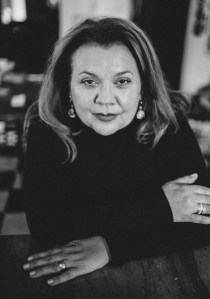 Tess Barry was shortlisted for the 2015 Manchester Poetry Prize (UK). Twice a finalist for North American Review’s James Hearst Poetry Prize and Aesthetica Magazine’s (UK) Poetry Award, she also was shortlisted for the 2014 Bridport Poetry Prize (UK). Most recently, her poems appeared in or are forthcoming in And Other Poems (UK), The Compass Magazine (UK), Cordite Poetry Review (Australia), Mslexia (UK), Mudfish, Pittsburgh Poetry Review, The Stinging Fly (Ireland), and The Woven Tale Press Literary and Fine Arts Magazine. Barry is a Fellow of the Western Pennsylvania Writing Project and teaches literature and creative writing at Robert Morris University in Pittsburgh. Website:

 Chris Murray