III. White Nights Furrow-plodders in spats and bright-clasped brogues Are cradling bags and hoisting beribboned drones As their skilled neck-pullers’ fingers force the chanters
And the whole band starts rehearsing Its stupendous, swaggering march Inside the hall. Meanwhile
One twilight field and summer hedge away We wait for the learner who will stay behind Piping by stops and starts,
Making an injured music for us alone, Early-to-beds , white-night absentees Open-eared to this day.
Note : I am attaching to this short post a link entitled : Feis Teamhar , a Turn at Tara because I was there to hear the poets and musicians on that day. I believe that the Newspapers under-reported the day and did not attend to Mr Heaney’s words. He was there to celebrate Tara as a cultural centre and to support the Campaign to Save Tara . He was also there to support his nephew who was and is a Tara Campaigner .
Since that time , there have been other feiseanna at Tara, this was the inaugural one organised by ” Paul Muldoon, Pulitzer prize-winner, will read his poetry to celebrate and honour Tara and will be joined by musicians: Grammy award-winner Susan McKeown, Laoise Kelly, Aidan Brennan and others “.
UBUWEB was founded in 1996 by Kenneth Goldsmith and has been linked on the Poethead blog since 2008. When I first heard some fabulous Celtic Mouth Music on UBUWEB I shared it around with friends who did not know the site. Today, whilst searching this morning for publications that take poetic cycles (rather than a limited amount of two to three poems so prevalent in the Irish little magazines) I visited UBUWEB site again to put some music on and thought it a good idea to draw attention to what Goldsmith has achieved in terms of avant-garde web use.
“According to UbuWeb founder and publisher Kenneth Goldsmith, statistics indicate that visitors to the site, “are as likely to download a Renaissance visual poem as they would listen to the MP3 of Louis Farrakhan singing ‘Is She Is, Or Is She Ain’t?’” Begun in 1996, UbuWeb hosts enough audio material, text, and graphic work to keep a reader occupied for months. While the site was created to highlight and archive visual and concrete poetry, increased bandwith and an influx of materials have broadened the site’s scope. As Goldsmith told Poets.org, “We’ve moved toward becoming a clearinghouse for the avant-garde.”
Goldsmith’s Comments on UBUWEB and the issue of costing, site use and how the Web benefits the transmission of ideas , information and poetry, is related to a permanent Poethead page which contains theUniversal Declaration of Linguistic Rights. Goldsmith , indeed , has achieved what many corporate entities set out to achieve (but often fail at ) in his ability to respect the translation and moral rights of UBUWEB linked authors, thinkers and performers ,
“Concrete poetry‘s utopian pan-internationalist bent was clearly articulated by Max Bense in 1965 when he stated, “…concrete poetry does not separate languages; it unites them; it combines them. It is this part of its linguistic intention that makes concrete poetry the first international poetical movement.” Its ideogrammatic self-contained, exportable, universally accessible content mirrors the utopian pan-linguistic dreams of cross-platform efforts on today’s Internet; Adobe’s PDF (portable document format) and Sun System’s Java programming language each strive for similarly universal comprehension. The pioneers of concrete poetry could only dream of the now-standard tools used to make language move and morph, stream and scream, distributed worldwide instantaneously at little cost.” (Link #2)
From : UBUWEB Wants to be Free, by Kenneth Goldsmith.
The third link at the end of this post is to the Wikipedia page detailing the history of UBUWEB, and the fourth link is to the UBUWEB site itself. This short post will go soon enough into archive, so I’d draw attention to the blogroll , which is in the second-half of the page : Ethnopoetics has three links, including one to the UBUWEB site.
The final link is to the Endangered PDF : A Declaration Of Poetic Rights and Values ,
” We hold these truths to be self-evident, that all languages are created equal, endowed by their creators with certain inalienable meanings. These meanings are embedded in sounds and texts; in words, imagination, and the poems that bind them. Poetry is the distillation of language; the uproarious babble of human thought, and the engaging patter of consciousness itself—in all languages—all 6,500 of them.”
I do hope listeners and readers enjoy the site and its ideals, mostly it is approached with curiosity and enjoyed by the many people who have gotten the link for one reason or another.
Banish Air from Air – Divide light if you dare – They’ll meet While Cubes in a drop Or Pellets of Shape Fit Films cannot annul Odors return whole Force Flame And with a blonde push Over your impotence Flits Stream. “ II. An awful Tempest mashed the air – The clouds were gaunt, and few- A Black — as of a Spectre’s Cloak Hid heaven and Earth from View. The creatures chuckled on the Roofs – And whistled in the air- And shook their fists- And gnashed their teeth- And swung their frenzied hair- The morning lit-the Birds arose- The Monster’s faded eyes Turned slowly to his native coast- And peace-was Paradise!
–
This Choice of Emily Dickinson’s verse is edited by Ted Hughes. The essay which forms Hughes’ introduction, is (if I am correct) also included in the Hughes’ essays Winter Pollen ( publ. Faber and Faber). On a slight digression, therefore, I would recommend the essays therein on Sylvia Plath’s poetic process and most especially Hughes’ discussion on the beautiful Sheep in Fog,The Evolution of Sheep in Fog :
“It is undoubtedly the best commentary on the nature and significance of poetical drafts. Here, as someone who has worked on and studied manuscripts for their own sake over a period of 35 years, I can perhaps speak with more authority than on the other aspects that I indicate in this note. No one else has written so eloquently or so perceptively on the importance of drafts and why rather than being discarded they command respect as more than the ‘incidental adjunct to the poem’ — indeed ‘they are a complementary revelation, and a log-book of its real meanings.’ In the case of ‘Sheep in Fog’ the drafts ‘have revealed the nature and scope of the psychological crisis that gives the poem its weird life, sonority, its power to affect us. In other words, they are, as the final poem is not, an open window into the poet’s motivation and struggle at a moment of decisive psychological change.” Roy Davids
This week’s Saturday Woman Poet is Sarojini Naidu. I have been reading quite recently Indian Poets from both the pre and post-independence period in India . The shatter of language that occurred and that is collated neatly in a variety of collections does not contain the simplicity of Naidu’s engagement with her poetics and with her cultural history. I do not believe that post-independence volumes of poetry can attain to canonical status without the inclusion of a poet such as Naidu, who though primarily working in the English language like many contemporary writers of her Indian heritage or indeed of intellectual diaspora encapsulated the language struggle. In my opinion she has the weight of a Tagore but the sure simplicity of pre-independence classicism.
I am including a brief link to the Wikipedia page of Sarojini Nadiu and two short poems by the writer at the base of this post. I will add in later a brief edit which will include the titles of current reading in Contemporary and Pre-independence poets.
Alabaster by Sarojini Naidu
“Like this alabaster box whose art Is frail as a cassia-flower, is my heart, Carven with delicate dreams and wrought With many a subtle and exquisite thought.
Therein I treasure the spice and scent Of rich and passionate memories blent Like odours of cinnamon, sandal and clove, Of song and sorrow and life and love.”
Harvest Hymn . By Sarojini Naidu
Mens Voices:
“Lord of the lotus, lord of the harvest, Bright and munificent lord of the morn! Thine is the bounty that prospered our sowing, Thine is the bounty that nurtured our corn. We bring thee our songs and our garlands for tribute, The gold of our fields and the gold of our fruit; O giver of mellowing radiance, we hail thee, We praise thee, O Surya, with cymbal and flute.
Lord of the rainbow, lord of the harvest, Great and beneficent lord of the main! Thine is the mercy that cherished our furrows,
Thine is the mercy that fostered our grain. We bring thee our thanks and our garlands for tribute, The wealth of our valleys, new-garnered and ripe; O sender of rain and the dewfall, we hail thee, We praise thee, Varuna, with cymbal and pipe.
Womens Voices:
Queen of the gourd-flower, queen of the har- vest, Sweet and omnipotent mother, O Earth! Thine is the plentiful bosom that feeds us, Thine is the womb where our riches have birth. We bring thee our love and our garlands for tribute, With gifts of thy opulent giving we come; O source of our manifold gladness, we hail thee, We praise thee, O Prithvi, with cymbal and drum.
All Voices:
Lord of the Universe, Lord of our being, Father eternal, ineffable Om! Thou art the Seed and the Scythe of our harvests, Thou art our Hands and our Heart and our Home. We bring thee our lives and our labours for tribute, Grant us thy succour, thy counsel, thy care. O Life of all life and all blessing, we hail thee, We praise thee, O Bramha, with cymbal and prayer.”
‘He is a harmful man’ , said Sori
‘he has hurt me a lot since I met him.
every thing looks dark and sinister inside his eyes ,
I hate that’.
I hate that moment when I see his eyes
I wish I had never met him
I wish I had never known him.
He is not nice with me.
He has never been nice with any one.
He is a harmful man.
I can’t see any light in the end of tunnel
So what should I do?
I can’t go back
I have no choice
I have to go on.
I have to keep fighting with
darkness.
There in the end of tunnel,
There is may be a light
There should be a light
There must be a light
There is a light.
I will go on
I will get to that light.
I don’t care if he stings me,
It doesn’t matter if he creates darkness on my way,
It is fine if he scatters thorns of spite on my path.
I won’t give up.
He will never be able to destroy the power of beyond,
The power of hope and the power of love.
He can’t seize my calmness and confidence
He is not able to possess my thoughts.
‘He is a harmful man ‘said Sori to the mirror ,
‘look at him , he is like the injured snake
ready to strike’..’
Sadaf Amhadi studied English at Ballsbridge College of Further Education. Then she began studying Art at Inchicore college of Further Education, it was a portfolio preparation course and during that time she applied for third level courses and is now studying visual Communication in IADT.
'Two Women and a Mirror' by Artemesia Gentileschi (1593-1656)
With thanks to Judith Buckrich (ex-Chair) of The International PEN Women Writers Committee,and Vice-President of The PEN Centre in Melbourne. I am attaching a linked Paragraph from :Women left on bottom bookshelf (Emma Young, full article at the base of this piece. (link#1)
“It’s hard to deny that this is a part of life in fiction. It’s a popularly condoned idea that novels written by men are neutral and on the shelves to be enjoyed by anyone but novels written by women can excite lower expectations and are looked at as exclusively feminine: a female voice for a female audience. In other words, books written for women are chick lit, while books written for men are just books. This idea also has legs in the world outside fiction.” (link#2)
Oh ! back to the vexatious Chick-lit question, where consumer-choice and empty lifestyle pretendsto an Austen-like inch of ivory, and where in Ireland (at least ) vacuity is rewarded with attempts bycertain media-types to include disposable novels on our children’s examination certificate syllabi!!Sure police-helicopters are sent in hunt for Jonathan Franzen‘s bifocals and this tittle dominatesmedia-time. It appears one must have a testicular style to become the luvvie, though I expect italso helps to be a writer of merit, which cannot be denied . This doesn’t explain why women writersand makers of literature are shoved into the shadows, critically, academically and historically , untilthey acquire the label specialisation.
Further to the discussion, VIDA have recently published a forum on Gender and Publishing, excerptedhere and linked beneath Dr Buckrich’s Website and Emma Young’s Piece here as third link. it is worth the read:
Tracy Bowling: “I do believe that bias is present in the publishing world such that women writers are underpublicized and undersold after their work is published, but it’s not a bias I feel very qualified to speak to. The more distressing evidence of a gender bias I see comes before publication, in that women writers often seem pressed to fit themselves very neatly into categories, to define a space for their work or to proclaim whose footsteps they’re following in. In the wake of Jonathan Franzen’s glowing reception, many writers have discussed the infrequency with which the word “genius” is applied to women writers; I’d be curious to see if the same is true of words like “breakthrough,” “innovative,” and “new.” I think that in order to attain success, especially in mainstream publishing, women often have to (often artificially) join a particular group or cohort of other women writers in order for their craft to be perceived as serious and studied. I’ve seen this a lot among women who write fantastic or fairy tale fiction, where, for example, no matter how little one’s work resembles or echoes that of Angela Carter, that work rarely gets discussed without heavy reference to Angela Carter. The really unfortunate side effect of having to strategize and situate oneself as one among many others, I think, is that women become less likely to write the Franzen-esque literary epics, simply because there is less precedent–less of a niche within which their work can be easily framed.” (link#3)
Personally, I expect that if you are a man, its easy to have a blind-spot on the under-representation ofwomen in Government, in the Literary Arts and in Media. The fact that many (many) people do notequate media-time (luvvieness) and column inches with that strange heeled penile-worship ofmodernism and that frisson of tokenist gender-equality doesn’t mean that the issue of discriminationdoes not occur. It occurs, it is celebrated and it is a part of our lives wherein meritocracy is just another by-word for male dominance.
EDIT : (VIDA discussion re-posted this morning on the Web)
“I soon discovered that a lot of women writers routinely perform their own version of “the count” when surveying anthologies, journals, book reviews, and awards. At the time I was unaware of Juliana Spahr and Stephanie Young’s essay “Numbers Trouble”; nearly all of the women I was in dialogue with directed me to it. I was astonished to discover that a sub-genre of poetry (which I’ll refer to by shorthand as “experimental”) I’d have assumed would most fairly represent the sexes may be as biased as the more “traditional” sub-genres in poetry, as well as the more commercial venues for prose. I would later be struck by the fact that women writing in all genres are affected by this disparity.
This experience was akin to peering over a very high wall to gaze upon a neighbor’s backyard—a neighbor I’d always assumed was living the good life—and discovering that this neighbor’s life was, in fact, quite similar to my own.”
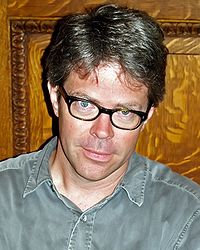
Jonathan Franzen, whose lost glasses sparked a cop-hunt and media-dominance.
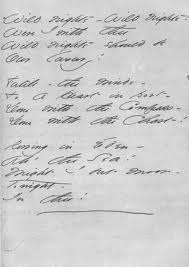
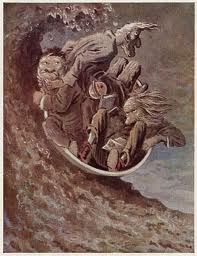
One of my favourite poems is The Seafarer, it is linked at the end of this short piece in translation by Ezra Pound. The edition that I own is the Exeter University Press Seafarer ( I will add notes, translation, editor and ISBN later as I am away from my Poetry library). In the meantime, whilst playing with a very elderly book of school-french this morning, I happened upon the phonetic transcription section of the edition which I enjoyed so much that I am adding here a little poem called , Mon Bateau. Though I would gladly add La Cerise and Nocturne also, because they are of such light.
Alone
‘The Oldest Joke’ from the Exeter Cathedral Folio
(Georges Rodenbach)
To live as in exile, to live seeing no one in the vast desert of a town that is dying, where one hears nothing but the vague murmur of an organ sobbing, or the belfry tolling.
To feel oneself remote from souls, from minds, from all that bears a diadem on its brow; and without shedding light consume oneself like a futile lamp in the depths of dark burial vaults.
To be like a vessel that dreamed of voyage, triumphal, cheerful, off the red equator which runs into ice flows of coldness and feels itself wrecked without leaving a wake.
oh to live this way ! All alone…. to witness the wilting of the divine soul’s white flowering, in contempt of all and without prediction, alone, alone, always alone, observing one’s own extinction .
Translated from the French by Will Stone.
Interestingly, I met a returned exile today who does not recognise Ireland anymore. He says there is a gentleness that has left the state, I tend to agree with him there.
“The heart’s thought that I on high streams The salt-wavy tumult traverse alone. Moaneth alway my mind’s lust That I fare forth, that I afar hence Seek out a foreign fastness. For this there’s no mood-lofty man over earth’s midst,”
excerpted : The Seafarer , translated by Ezra Pound
{Exeter University Press edition to be added}
Mon Bateau
Quand mon bateau S’en va sur l’eau Poussée gaiment par le bon vent, je voudrais tant Etre dedans!
mais quand la bise la voile brise, Que le navire Soudain chavire, j’aime bien mieux Lui dire adieu.
I just saw this interview link which has been released today by The Paris Review to celebrate Ann Sexton’s Birthday and I have added it to myFacebook page. I thought to add it through an excerpted paragraph andhyperlink onto the Poethead blog also.
There is an existent link to Ann Sexton’s Transformations also availableon the Poethead blog which will be carried at the end of this shortpiece, along with the Paris Review Interview on ‘The Art of Poetry No 15’ byBarbara Kevles.
” Until I was twenty-eight I had a kind of buried self who didn’t know she could do anything but make white sauce and diaper babies. I didn’t know I had any creative depths. I was a victim of the American Dream, the bourgeois, middle-class dream. All I wanted was a little piece of life, to be married, to have children. I thought the nightmares, the visions, the demons would go away if there was enough love to put them down. I was trying my damnedest to lead a conventional life, for that was how I was brought up, and it was what my husband wanted of me. But one can’t build little white picket fences to keep nightmares out. The surface cracked when I was about twenty-eight. I had a psychotic break and tried to kill myself. “
(excerpted Interview with Ann Sexton , The Paris Review )
A Scene from ‘The Company of Wolves’ from Angela Carter’s Tales (Directed by Neil Jordan)
Briar Rose
Consider a girl who keeps slipping off, arms limp as old carrots into the hypnotist’s trance, into a spirit world speaking with the gift of tongues. She is stuck in the time machine, suddenly two years old sucking her thumb, as inward as a snail, learning to talk again. She’s on a voyage. She is swimming further and further back up like a salmon, struggling into her mother’s pocketbook.
The two short stories named above in the title refer to Mary Lavin’s writing of girls, Katey, from A Glimpse of Katey, and Pidgie, the heroine of Scylla and Charybdis. Both stories were published in Lavin’s The Patriot Son, although there is a vast array of Lavin books to choose from.
Mary Lavin is today’s Saturday Woman Writer on Poethead. The Patriot Son edition that the excerpts are taken from is a 1956 Hardback, publ. Michael Joseph 1956. Other recommended reads by Lavin include In a Café and Tales from Bective Bridge. This treasured edition contains within it my favourite Lavin story The Chamois Gloves, which I referred to in the Island Women piece (which is linked to at the base of this post).
A Glimpse of Katey .
“In the elms the birds were making preparations for the night; circling around the tree-tops as if about to settle there, and then darting away again capriciously to take a last flight in the glowing clouds. But each time the flock circled down on the trees a number of birds settled down for the night, and every time they flighted away again there were less and less of them, until soon only one or two rose from the branches, and these only ventured a short distance, and came back with nervous fluttering and a great amount of nervous chirruping. When the last bird seemed to have settled down and the leaves were no longer fluttered by shaken wings , there was silence everywhere, except for occasional faint and single notes that broke the air at random and which seemed to come from the sleepy throat of some sleepy bird already hovering the air of dreams. Katey lay and listened, and then her own day suddenly slipped away from her , and left her body lying on the old four-poster bed, as the feathered bodies of the birds clung upon the damp tree-boughs, while her spirit with theirs was gliding away into the branchy lands of dreams.”
Katey, like Pidgie is a stubborn and spirited little girl , whose beautiful dreaming is abruptly shattered by her need for food at midnight. The preceding tale had outlined her refusal of sustenance before going off to bed and her awakening into the bright, boisterous land of the older women of the house as a result of the hunger pangs.
Scylla and Charybdis
Pidgie, much like Katey is a spirited and obstinate child whose trials and adventures bring her right down from her fantasy world to the station in her life that she had rejected. She is Cotter’s daughter , a servant-girl , whose natural ability and intelligence is not recognised by the golden birds of the house whose light-shattering tendencies as they seek her out of the basements draw her Prosperine-like into the sunlight of the world ‘above-stairs’, only to have her catapult back again when the rite which will equalise the servant and the lady is utterly shattered forever,
” out they went into the passage, Miss Gloria first, and Pidgie fluttering after her. And although the passage was dead level, as Pidgie’s little feet flew along after Miss Gloria it seemed to her that every minute she was being borne upward , out of darkness and cold into ever higher and higher reaches. The very air seemed to waft warmer around her until they flashed out into the main hall, where the doors stood open on all sides, showing the gilt and white rooms with their sparkles of mirror and splashes of flowery chintz”.
Gloria is described variously as a golden bird, Pidgie lives in the dark-dungeon and experiences her self as being snatched into the beak of the bird. Lavin’s women and girls are often described thusly, she adores and gently coaxes her characters into their freedoms , only to smack their little hands and put them right back into their places as they deal with their choices. Both girls , like the Heroine of The Chamois Gloves get their epiphanies and mostly the knowledge they bring isn’t welcome to them. Katey dreads the morning and Pidgie retreats to the dungeon but regains her cheeky character as a result of her brush with the reality of her life.
From Mary Lavin’s The Patriot Son Publ 1956, Michael Joseph
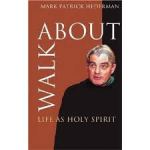
This short post comprises an introduction to a book by Michael Patrick Hederman entitled Walkabout.
Those who have read John Moriarty‘s Dreamtime or indeed visited Tara in the last years (wherein the bisection of the Gabhra Valley to accommodate the M3) will like this attached poem. Walkabout is a wonderful book with themes and concepts that are attractive to me. I like the way Hederman thinks and how he writes , which is more than can be said for a certain FF Minister who seems to espouse pseudo-creationist ideas and even launches books for the most-suspect types of people.
For readers of poems and poetry, I am adding the following poem as an introduction to a concept. An antidote to the ridiculous situation last night in Ireland regarding the launch of a book which for all the wrong reasons comprises an alliance between pseudo-thought and pseudo-religiousity.
The links at end are to three books which I think are related somewhat to the themes found within the poem and the thinkers who define for us an absence in myth. (and a lot of appalling garish noise). What occurs in the absence of mythos is a void and one suspects that the greatest tub-thumpers will willingly make use of it. I am for Hederman’s dignity and writing.
Cóiced.
The word for a ‘province’ in Irish is ‘fifth’. The fifth one : Meath or ‘middle’ place, is secret : a drawer, or priest-hole, Omphallos a sliding door oiled into space rock-faced , as in sheer of cliff.
‘We’ll find them’, callow children laughed on mid-term breaks in plastic macs. ‘Don’t drive. We’ll walk.’ They held a compass : North, North-West and tied a thread to leave a trail.
We found one body in a field metal-detected teeth through lime walking-shoes out on a ledge. One child survived. Now ninety-nine one plain, one purl, hand-knitted time of sorrow. For ‘Wherever you walk in Ireland you reach the edge.
Cóiced , by Mark Patrick Hederman , from The Book of the Icons ,Walkabout. Publ Columba Press 2005.
Reading is not always about being literal. The obit that I wrote for John Moriarty has been filed until I go back to the Dreamtime book and examine again the Conaire and Tara pieces. It is funny how close Moriarty’s ideas of trishagion, sanctus and kedushah came to the spirit of the Hederman book. Maybe we are all on various Walkabouts that reject the literal-minded reductio ad absurdum of learned illiteracy amongst those of us who refuse to read the books that are so readily available to us.







 Chris Murray