The Fairies’ Lullaby. The Adulteress SongLittle white bug Little black bug from : The adulteress song that is sung in Alba de Tormes |
 First Published in GB by Marion Boyars Publishers Limited 1980. translations by Christopher Maurer. |
The Fairies’ Lullaby. The Adulteress SongLittle white bug Little black bug from : The adulteress song that is sung in Alba de Tormes |
|
First Published in GB by Marion Boyars Publishers Limited 1980. translations by Christopher Maurer. |
I have come, alas, to the great circle of shadow,
to the short day and to the whitening hills,
when the colour is all lost from the grass,
though my desire will not lose its green,
so rooted is it in this hardest stone,
that speaks and feels as though it were a woman.
And likewise this heaven-born woman
stays frozen, like the snow in shadow,
and is unmoved, or moved like a stone,
by the sweet season that warms all the hills,
and makes them alter from pure white to green,
so as to clothe them with the flowers and grass.
When her head wears a crown of grass
she draws the mind from any other woman,
because she blends her gold hair with the green
so well that Amor lingers in their shadow,
he who fastens me in these low hills,
more certainly than lime fastens stone.
Her beauty has more virtue than rare stone.
The wound she gives cannot be healed with grass,
since I have travelled, through the plains and hills,
to find my release from such a woman,
yet from her light had never a shadow
thrown on me, by hill, wall, or leaves’ green.
I have seen her walk all dressed in green,
so formed she would have sparked love in a stone,
that love I bear for her very shadow,
so that I wished her, in those fields of grass,
as much in love as ever yet was woman,
closed around by all the highest hills.
The rivers will flow upwards to the hills
before this wood, that is so soft and green,
takes fire, as might ever lovely woman,
for me, who would choose to sleep on stone,
all my life, and go eating grass,
only to gaze at where her clothes cast shadow.
Whenever the hills cast blackest shadow,
with her sweet green, the lovely woman
hides it, as a man hides stone in grass.
.
Sestina by Dante Alighieri
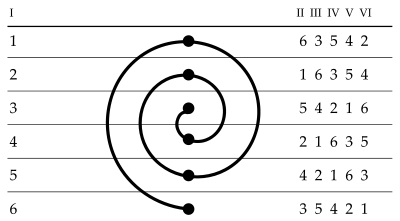
The image at the base of this post is from the Wikipedia Site discussion on the Sestina form . I am adding here a Poets.org discussion on the form used by both poets in the above post . I wanted to focus on content , which is after all what poetry is about (that and adaptions/metamorphosis/shape-shifting and code !).
September rain falls on the house.
In the failing light, the old grandmother
sits in the kitchen with the child
beside the Little Marvel Stove,
reading the jokes from the almanac,
laughing and talking to hide her tears.
She thinks that her equinoctial tears
and the rain that beats on the roof of the house
were both foretold by the almanac,
but only known to a grandmother.
The iron kettle sings on the stove.
She cuts some bread and says to the child,
It’s time for tea now; but the child
is watching the teakettle’s small hard tears
dance like mad on the hot black stove,
the way the rain must dance on the house.
Tidying up, the old grandmother
hangs up the clever almanac
on its string. Birdlike, the almanac
hovers half open above the child,
hovers above the old grandmother
and her teacup full of dark brown tears.
She shivers and says she thinks the house
feels chilly, and puts more wood in the stove.
It was to be, says the Marvel Stove.
I know what I know, says the almanac.
With crayons the child draws a rigid house
and a winding pathway. Then the child
puts in a man with buttons like tears
and shows it proudly to the grandmother.
But secretly, while the grandmother
busies herself about the stove,
the little moons fall down like tears
from between the pages of the almanac
into the flower bed the child
has carefully placed in the front of the house.
Time to plant tears, says the almanac.
The grandmother sings to the marvelous stove
and the child draws another inscrutable house.
Sestina by Elizabeth Bishop
Listen to the poem here , Sestina . Sestina by Elizabeth Bishop is published in Questions of Travel, which is discussed here in Modern American Poetry
The following tables are from Poets.org and Wikipedia showing the Sestina form in its essence,
Herein follows an incomplete list of book-links related to Dorothy L. Sayers’ translation of The Divine Comedy by Dante Alighieri.
Readers of the poethead blog will note that I dedicate Saturday mornings to the work of women writers, editors and translators. The translation of The Divine Comedy undertaken by Dorothy L. Sayers was completed in part by Barbara Reynolds.
Dorothy L. Sayers considered her translation of The Commedia to be her most important work, and yet only one copy of the book was available through the Dublin Library Service last week. The Guardian Newspaper devoted just a single line to the fact that this work of translation was undertaken by Sayers. In the same instance both The Guardian and the Dublin library service suffer a surfeit of Sayers’ genre or detective stories.
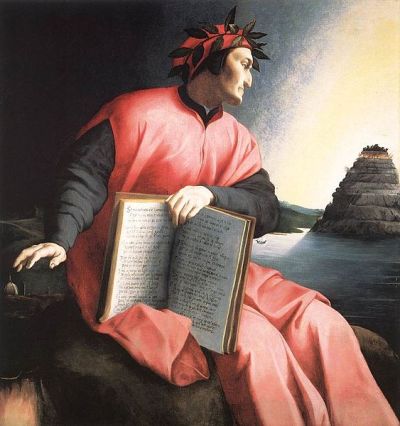
Dorothy L. Sayers produced a classic translation of Dante’s Hell and Purgatorio which is still read. The problem with media and literary journals not citing Sayers or Glasscoe, appears to be based in an institutionalised sexism which is a contributory factor in the invisibility of women editors. Evidently, The Guardian Newspaper and the Dublin library service give more attention to Sayers’ genre works than they do to her translation and other works.
It does not seem to pose great difficulty for male editors and writers to consistently cite what they feel are the definitive texts when the writer happens to be a dude. I believe that women editors and writers must begin to cite the works of women when quoting classical works of literature. If nothing else it may help those women journalists who seem incapable of taking women’s literature seriously.
Note : Recent attacks on Dante’s Commedia delineated in this article show a lack of critical discernment and appreciation by those who would chose what anyone may read.

Bonny Sandy breaks my heart
no coming to couch the night
& his blade red wine
& his thrapplejammer white wine
bonny Sandy brooks my hurt
this ae night
ilka night
& the horns of young green wine
bonny Sandy brakes his hart.
Love whinges & crines. The bonny knight
in ague sweat & his ain shite, unhurt.
© Kit Fryatt, all rights reserved.
Dance the lamb
ra-ra
lamb
ra-ra
mutton hunks
It’s a shame the way we carry on
The streets stink tonight; my skullpan’s pounding
for rain or riot, I’m not so young, scarred from mound
to sternum, childless pale citadel of bravado and competence;
though if it gets too tasty I’ll hitch my mobile home
and flit this meatpacking warehouse district
but for now I’m hanging in there, for a sniff at the grinding bliss
the brazen looter children have, this year’s corn kings─
with sordid cold, blanket, galvanise tray, comes the morning in.
Dress the lamb
rare-rare
rare-rare
mutton bird
It’s a shame the way we carry on
Come sisters, these Lammas shiftless we could use, straw
men to our hags, the blintering braggarts will fight our wars
and decorate our palaces, symbolize in their dying
everything that comforts people, and stupefies.
The estate we lost thirty grand years ago, tonight we take
ground, we rise, inhale, we’re scary cunts, tonight we tear
spoil through locked wards, mindless, knowing that
our chicken limbs may splinter, falter; like, a freedom act
like, do whatever you want
mate
do
the mutton flap
It’s a shame
© Kit Fryatt, all rights reserved.
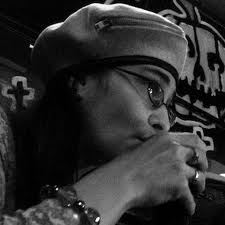 Kit Fryatt writes and performs poems at Spoke, Wurm in Apfel and Can Can. I met her at the Mater Dei launch of Post III Magazine and being well-impressed with a card-carrying poet, I begged some poems for my Saturday Woman Poet blog. I got three unpublished poems , which would be considered over-generous, so I am publishing two of them today and returning the third with the proviso that if they are published online, they are Published work. Thanks to Kit for her generous contribution to Poethead. Copyright of the above poems remains with the author.

Two Poems by Kit Fryatt is licensed under a Creative Commons Attribution-NonCommercial-NoDerivs 3.0 Unported License.
Based on a work at wurmimapfel.net.
She awoke
to find her fishtail
clean gone
but in the bed with her
were two long, cold thingammies.
You’d have thought they were tangles of kelp
or collops of ham.
‘They’re no doubt
taking the piss,
it being New Year’s Eve.
Half the staff legless
with drink
and the other half
playing pranks.
Still, this is taking it
a bit far.’
And with that she hurled
the two thingammies out of the room.
But here’s the thing
she still doesn’t get —
why she tumbled out after them
arse-over-tip . . .
How she was connected
to those two thingammies
and how they were connected
to her.
It was the sister who gave her the wink
and let her know what was what.
‘You have one leg attached to you there
and another one underneath that.
One leg, two legs . . .
A-one and a-two . . .
Now you have to learn
what they can do.’
In the long months
that followed
I wonder if her heart fell
the way her arches fell,
her instep arches.
© by Nuala Ní Dhomhnaill, all rights reserved. from The Fifty Minute Mermaid (Gallery Books, 2007) The Irish language original is here.
Thank you to Suella Holland from Gallery Press for allowing me to use this poem to celebrate Irish Women’s Poetry and translation on International Women’s Day 2012.

Trees Trees by Ágnes Nemes Nagy, from Between , Selected Poems of Ágnes Nemes Nagy, translated by Hugh Maxton, Corvina Press , Budapest and Dedalus Press , Dublin. 1988. |
|
Geasa le Nuala Ní Dhomhnaill, as Pharaoh’s Daughter. Gallery Press. 1990. This poem is from Pharaoh’s Daughter by Nuala Ní Dhomhnaill, 1990, Gallery Press (Editor Peter Fallon). With thanks to Gallery Press for permission to reproduce here. I have added poet Medbh McGuckian‘s translation at link The Bond, by Nuala Ní Dhomhnaill, translated by Medbh McGuckian. |
This is a translation of Geasa, by Nuala Ni Dhomhnaill. The poem is from Pharaoh’s Daughter by Nuala Ní Dhomhnaill, 1990, Gallery Press (Ed. Peter Fallon). With thanks to Gallery Press for permission to reproduce here.
|
| Black milk of daybreak we drink you at night/ we drink you at morning and midday we drink you at evening/ we drink and we drink/ A man lives in the house he plays with his vipers he writes/ he writes when it grows dark to Deutschland your golden hair Margareta/ Your ashen hair Shulamith we shovel a grave in the air where you won’t lie too cramped/ from Todesfuge/ ST 2 in Paul Celan, Poet, Survivor, Jew . Author John Felstiner (Yale University Press, 2005 ) |
|
During my transcriptions, I came across another rendering of the poem on YouTube, which I am adding here. The Youtube reading is by Gerald Duffy. I am unhappy with the recording, possibly because I think it is read too fast, and maybe in this case some of the music feels lost. John Felstiner devotes a considerable amount of his text discussing the reasons for his choice of words in his translation of the poem. For that reason I would recommend the book and his notes on the difficulty the poem presents to the translator. I do not know if the book is online but the relevant chapter of the book is A Fugue After Auschwitz (1944-45 ) /your ashen hair Shulamith. Felstiner discusses the state of the poet who had lost both parents to the camps, his MS work and Todesfuge as the Guernica of post-war European literature. Todesfuge is immense, challenging and multi-layered as a work. The story of the Death Tango is known to many people, there are images available to us. Celan composed the work in 1944, when information was beginning to emerge about the Final Solution. Well over a decade later Sylvia Plath would struggle with those images and convert them into her tropes and archetypes. Nelly Sachs and Ingeborg Bachmann struggled with words and images to convey the horror. Celan wrote “Todesfuge” in 1944 with immediacy and utter control. The poem was published in 1945. Felstiner admits that it took him years to render as faithfully as possible the movement and symbols within the poem. His discussion of the problems with the poem is worth the book alone. Here in this poem is encapsulated the fear and helplessness of the final solution. I have read and listened to the poem over and over but nothing quite brings it right home than its transcription (in Felstiner’s translation). “He shouts play death more sweetly this Death is a master from Deutschland/ (Todesfuge /ST 5) The entire poem is at the following link ,though I would recommend the Felstiner chapters for a discussion on the translator’s art and Paul Celan’s poetry: http://www.celan-projekt.de/todesfuge-englisch.html
. |


 Chris Murray