Blinded in a winter’s dread no prophet foresaw. Spring’s new life erupted into a chaos of fear. Desolation replaced the warmth of a hug. Children banished from our everyday lives!
Ahh, the blessings — a swift journey home to the unexpected happiness under one roof. Chatter, laughter — a family enduring dark days come what may….
Time, the pickpocket of memories stood still. Watching, new ways of keeping our spirits alive, to be remembered, cherished. Lost moments recaptured before Summer’s end….
An invisible killer started a war, so much pressure on our frontline. But it would be, ‘Love and Stay at Home’ that had their backs.
Death came at a fast pace. Isolation, the enemy of a treasured last goodbye — grief mourned in silent lockdown.
And now, the road to healing shattered hearts and souls begins!
 Family Love

Father. Mother.
            Daughters. Sons.
                            Grandchildren.

Love weaves its magical thread
         intricately throughout the ages.
Forging unbreakable bonds.

                Out from nowhere,
an unnatural enemy wreaked havoc
           on the close-knit unit.
They endured great sadness and turmoil.
          Separation with no hugs
to warm the blood, tested their strength…

Generations fought for survival
alongside the mightiest warrior of all — Love.

And the family stood firm.
A force to be reckoned with!
Omen
Common sense flees at the first sign of fear, hostage to an ever sense of madness.
Inception of a foreboding story’s journey! I see; the one eyed child dancing on her grave — the ruins of mankind. I hear; the dark one singing an ancient curse — a prayer not heard. I smell; the rotting of bodies — soul thieves wanton destruction. I touch; the soiling of a pure heart — unholy spirits grasp hold. I taste; the drowning miseries in the afterlife — ripen death.
Saving the dead or killing the living? On a night when the full moon is covered by cloud!
it is easy to obsess over small objects paperclips spoons and q-tips when self grooming generates silence — virginal
trumps untamable — the renunciations of dullness do not lead to desire with upturned hands, razors, at rest
it is easiest to use sadness as a utensil to push people away spiders construct traps from their abdomen then devour
daily to recoup, silk protein recycled gouaches in lowlight, design or debris we all think we might be terrible
but we only reveal this before asking someone to love us a kind of undressing — it is easy
to section and peel a tangelo even false origin stories expose shame — a cerebral echo chamber
when self sculpture empties mark the focal point as hinge hemmed, at the center, coral
since microwave romances have deceptive expiration dates
i brush my teeth at his place now, but that’s not the point scuba means self contained underwater breathing apparatus he kisses me urgently mid chew ginger garlic fish sauce
in public, no pressure, no hesitation, and this is mos def not the point chemistry is important since we cannot manufacture it out of raw necessity Drake’s first line in Finesse is I want my babies to have your eyes
despite incoming or ongoing variables what is the function of “x” why tell a stranger or a lover your problems when you can use it as a chance to punish those around you — make haste and hail to the queen of non-sequiturs
on my critical thinking roster i can’t pronounce the name “FNU” in countries where newborns are left post war now privileged strangers greet them as “first name unknown” a haunting aqualung
nerve damage after dead relationships may result in tooth decay when you are tasting: the first taste acclimates the palate, the second establishes a foundation, and the third taste is to make a decision
since you’re an expert of creating a crisis out of empty nostalgia can i get a metaphorical forklift for all my emotional baggage? the accumulation of plaque cannot be resolved by few weeks of flossing
what is lost can be found in the biological studies of an oyster or was it an orchid or was it of a clitoris — quick what’s a common fishing blunder? let me noodle around with this for a while before i get back to you
the anatomy of beaches: 3 on west coast, 14 on east coast your absence has reached comical heights Charlie Chaplin himself would rise from the dead to have a laugh at us
is this my grave or my mother’s womb?
it upsets me when my mother thinks my poetry is silly. the word “silly” comes from the old english word “selig” meaning happy, healthy, and prosperous.
in german, “selig” means to be blessed: but consecrated and made holy with what? when a title, silly, precedes the name of a person, their identity, vigor, and
passion are reduced to the relevancy of a car alarm. i failed to master french and vietnamese. my mother has a myriad of domesticated excuses to not speak
the english language. it complicates the process of checking and rechecking the meaning of words in results to the drowning of palettes in sand
dunes of iodine soaked palm fronds. a car alarm without a car is not just an alarm. as mother calls poetry silly, she shucks and drains the basket of mussels and oysters
in the sink, shucking and draining with such a lonely authority, the way a businesswoman shucks off her nightgown, the way a flaccid regime shucks off
its totalitarian characteristics. my mother is above logic, she cannot be subpoenaed, even under oath in court she will not admit to stating that my poetry is trivial. in the kitchen,
i read her a line from Marcel Proust, happiness is beneficial for the body, but it is grief that develops the powers of the mind but she isn’t listening.
lessons in taxidermy

my armpits have been secreting scaled sadness
for months grommeting new ways to chew
	linea alba fat tongue teeth grinder agenda
		sleep as prize for insomniacs somnambulists
consolation mantra safe alignments cold mala
	beads rotates between index and middle silence
	betrays never thought i’d feel this kind of hesitation
		my hands on another girl its more than taxing
the way you take control ocean jasper too often
	longing arcs expose vagueness seek excitement
		in the mundane fingers on pulse fingering
		when did withholding become attractive
knuckles hungry for pelvic bone quick terse
	confession sharper than indigenous peppermint
		are tactile feedbacks are satisfying imps
		important lines lost between the years skin folds
if emptiness is a pretense, a breached duality, an unearthing
	without dirt rebound is proof of grief interrupted here
		taxonomy of queen bees a dozen to please you
‘Secrets of a cartographer’s wife’ by Katrina Dybzynska
The cartographer’s wife never told him about her contributions to his maps. A few tiny islands hidden in the middle of an archipelago in the name of symmetry. Some borderline moved to resemble a face shape. The territory of England shortened slightly, in personal revenge.
One time, she renamed an insignificant river in Bangladesh after her lover. She felt pity for the cartographer that he was more furious about the affair than about her intervention in the world order. She knew that romances were ephemeral, while naming things was changing them forever.
Katrina Dybzynska poet, shortlisted for Red Line Poetry Prize 2019. Author of „Dzień, w którym decydujesz się wyjechać” (The Day When You Decide To Leave), Grand Prix of Rozewicz Open Contest 2017. Laureate of national competitions in Poland. She has been publishing short stories, concept book, science fiction, reportage, and poetry, but feels most attracted to genre hybrids. Polish Non-Fiction Institute graduate. Activist. Currently a member of Extinction Rebellion Ireland.
‘Correnti’ by Viviana Fiorentino
Ora è questo un manto di alghe e sale sotto il vento atlantico o è corrente marina del fondo della mia vita e della tua vita ora è sogno o perla luccicante.
‘Currents’ (English trans. by Maria McManus)
This is a shawl of salt and seaweed against the Atlantic wind the ocean currents on the sea bed of my life, your life a dream, a burnished pearl.
Viviana Fiorentino was born in Italy. After obtaining a PhD, she travelled across Europe, from Switzerland to Germany, England and finally to Belfast where she teaches Italian Literature. Since 2018 she has taken part to literature festivals in Italy and in Ireland. She was involved in the poetry project ‘LabeLLit’. She has been awarded or mentioned in various Italian poetry prizes (i.e. Arcipelago Itaca Edizioni & Bologna in Lettere Dislivelli). Her poems appear on Litblogs, international magazines (Brumaria, Works #9’, 2018) and in the Arcipelago Itaca Anthology of Italian contemporary poets. In 2019 she published her poetry collection In giardino (‘In the garden’) for Controluna Press and her first novel Tra mostri ci si ama (lit. trasl. ‘Monsters love each other’) for Transeuropa Press.
Maria McManus lives in Belfast. She is the author of Available Light (Arlen House, 2018), We are Bone (2013), The Cello Suites (2009) and Reading the Dog (2006) (Lagan Press), she has collaborated extensively with others to put literature into public spaces. She is the artistic director and curator of Poetry Jukebox and an active organiser and founder member of Fired! Irish Poets.
‘Genetics’ by Roberta Beary
Your eyes are big and round like your father’s
but while his are the color of the Irish Sea
yours are the color of the muddy fields
on my father’s land
fit only for the peasants who worked them.
abortion day
a shadow flutters
the fish tank
Publication credit: Rattle #47, Spring 2015 (ed. Timothy Green)
Roberta Beary identifies as gender-expansive and writes to connect with the disenfranchised, to let them know they are not alone. She is the author of Deflection (Accents, 2015), nothing left to say (King’s Road Press, 2009) and The Unworn Necklace (Snapshot Press, 2007, 5th ed. 2017) which was a finalist in the Poetry Society of America annual book awards. Beary is the editor of the haiku anthologies Wishbone Moon (Jacar Press, 2018), fresh paint (Red Moon Press, 2014), 7 (Jacar Press, 2013), dandelion clocks (HSA, 2008) and fish in love (HSA, 2006). Her work appears in Rattle, KYSO Flash, Cultural Weekly, 100 Word Story, and Haiku In English The First Hundred Years (Norton, 2013). Beary’s work has been nominated for Best of the Net and multiple Pushcart Prizes. She lives in County Mayo, Ireland where she edits haibun for the journal Modern Haiku.
‘Dying Lover’ by Anora Mansour
Trace my lips In low whispers As I once wept psalms over my dying lover.
Threaten that man You will murder for me – For my heart is a cadence of silence.
I can only love you if you creep through this life dangling dangerously as a ravenous red kite.
When we both become one lonesome night. And rub up to love up as a fight.
Oh, how I might love you, bitter citron basket on my lap Slumberly trusting me as a child. I would open my thighs to you – a snap trap.
Anora Mansour is a graduate of the University of Oxford. She lives between Oxford and Dublin. She has been published in a collection of Jazz Poems, various online sites, and has her own published collection of poetry and blog. She is African-American and Irish.
‘Clutch’ by JLM Morton
for h.l.
in the nest of my fist, a fledgling scooped up from the lane
her soft unfinished beak her shining eye a buoy ringing in the green cathedral of trees
a single yellow feather wisps across my knuckle there is a twitch of elephant digits
and I think about keeping her
raising her as my own feeding her worms
but I let her go
chirring for the ones I could not save.
JLM Morton lives in Gloucestershire, England, snatching as much time as she can to write between caring for a young family, renovating a house and staring up the barrel of a demanding day job. Her first set of poems was recently published by Yew Tree Press for the Stroud Poets Series and she is currently working on a collection.
Though the civility of civilisation frightens me, I visit somewhere populated. A graveyard made squirrel territory. One squirrel for every gravestone. They mount lichen-covered peaks and keep lookout. They claim the trees, the abandoned church. Nobody will make them leave.
That night, I dreamt the answer to the universe. It was blue, inside a conch shell. Spiraling in and out of crystal moments. Eggshell blue. In and out of images of the hospital bed, and these dreams.
Polly Roberts grew up in Devon. Three years studying Creative Writing at the University of East Anglia left her with an inextricable link to the landscape, compelling her to continue to write about the creatures and habitats encountered there.
Observations of both the non-human and human world continued whilst living on a houseboat on the River Avon near Bristol while completing her MA in Creative Writing at Bath Spa University.
Polly has run creative writing workshops for refugees, detainees, and young people and curated two exhibitions in response to her writing, both displayed at the Norwich Arts Centre.
In 2018, the British Council awarded Polly a Writers by Nature scholarship, during which she wrote this debut poetry collection, Grieving with the Animals. ( 2019, Dempsey and Windle)
‘Beochaoineadh Máthar Maoise’ by Ellen Nic Thomás
A dhílleachta linbh gan ainm, gan athair, Do chraiceann ar aondath le humha an nathair, A lúbann timpeall do thaobhán uiríseal, Mar bhata ceannródaí is sníomhanna sisil.
Is trua liom ciseán do dhóchas a fhíochán, Do dhán a chaitheamh i bpoll an duibheagáin, D’eiseadh a chruthú ar bhunús baill séire, ‘Nois tá tú chomh cotúil leis an gCailleach Bhéarra.
A iníon, a mhiceo, a ógfhlaith bocht, A leanbh truaillithe, maith dom mo locht, Imigh anois leat, ná bí do mo chrá, Le smaointe ciúinchiontacha ó mhaidin go lá.
Ellen Nic Thomás is a bilingual poet from Dublin. She graduated from Trinity College with a BA in English and Irish. Her work has been published by headstuff.org, Tales From the Forest and The Attic.
'On watching a lemon sail the sea' by Maggie Harris

1
and I’m singing ‘You are my sunshine’ thinking
of my childhood across the sea of incubation
go Honey go
you self-contained cargo ship you
with your sealed citrus juices and pitted panacea of seeds
braving the collision of tankers and illicit submarines

                 they called me scurvy.       the lemonade
                 my mother made was iced and sprinkled with
                                           Demerara
 (of course)

and I’m wondering, did they grow you there, o lemon     mine
you
for your juices
a lemon plantation, not to be confused with
a plantain plantation even a banana just don’t mention sugar
stack you in the gloom like hereto mentioned bananas
green and curtailed in their growing  or even
those force-ripe mangoes with girls’ names
nobody knows here and who leave their sweetness behind
bare-assed on the beaches
come
to the marketplace
comatose.

I do not remember lemons, but limes.


       M
    I         E
L                S.

Piled high in their abundance. Limes.
Acid green pyramids on market pavements
holding their secrets beneath their reptilian skins.

And there is my aunt, her arms thin as bamboo
gathering the fallen from the yard, sweeping
their dried leaves into the remembrance of herself
whilst the black maid slips slivers of lemon into a split
-bellied fish whose eyes glaze up at the sun.

‘Gauguin, you can come in now; remember Martinique ...?
hue the native in all her harnessed beauty
the slack –jawed fish, browning blood
the textured landscape in shades of  pawpaw and indigo.’

But, liming is what my lemon is doing now,
(in the West Indian sense), hey ho
over the waves at Aberporth, there he blows.


2
I set you free
to take to the sea again
on a high tide, with breakers rushing the beach
like warriors.
They pummel the sand, scythe
a four foot chasm into the mouth
of a lonely river
beat the rocks’ submerged heads
batter the cliffs again
                                        and again
                                                     and again.
The sea, beyond its charge, was waiting -
a winter morning sea, a Twelfth Night sea
tumultuous and moody

                                       waiting.

A strange gift, you
a large, perfect lemon
fresh and sharp as the sun-bright
wind-cut winter’s day. But I
unsure of your heritage
refused you.


3
Dear Voyager,
I cupped you
in my palm
desire urging my possession
how easy it would be – a lemon drizzle cake
a Martini iced, an accompaniment
to plaice or sole – and here I am playing with words
the resonance of belonging, of immortality –
but the devil played tricks with my mind
an injection of poison perhaps, a needle prick
into your  pristine, nobbled skin – but we are running ahead here
thinking of cargo – you may simply have fallen from a Tesco
carrier bag whose owner, fearing a lonesome home-coming
went walking on these very sands contemplating - life.

But there you were anyway, settled on the sand like a crab
then comfortable in the palm of my hand.


4
Finders are not necessarily keepers. Some
will do well to remember that. Vixens
circling misunderstood husbands in bars. Frag
ments from the fallen.
Oh but, how strong is the desire
to hold close, keep tight
smother your darling, your little nut-baby
in soft gloves, hard love, the kind that makes
you want to bite, bite! Rip flesh and bone. Swallow.
                     I could have accepted
your sacrifice
that gift of yourself, thank the universe
for its benevolence.
But the universe is not benevolent.
Stars are exploding missiles in a panther-black night.
Saturn doesn’t give two fucks. It’s chaos
out there.
But I guess you didn’t have time
for star-gazing in your ocean-going lumbering
over the hey-ho waves. And if I had sunk my vampiric teeth
into the you of you, you would be no more
than a bitter taste, a withering lump of citrus
on my kitchen table. Far better to remember you
the obsidian walnut weight of you
and these questions you have gifted me
and that last sight of you
rolling away on the tide.
Maggie Harris is a Guyanese writer living in the UK. She has twice won The Guyana Prize for Literature and was Regional Winner of the Commonwealth Short Story prize 2014, with ‘Sending for Chantal’. She has worked for Kent Arts and Libraries, Kent University and Southampton University as International Teaching Fellow.
Hiraeth

In the turpentine afternoon
I wanted to beat my wings— hollow

so       hollow.

And in the rectal evening
I wanted to be a hummingbird.
A hum
    m
     ing
        bird.

In the frost-swept night
I wished you a Lamb.

Soft like cotton balls and languid
                              with musk.

Turn me into a violent fresco,
     Lamb,
and touch me like hot bricks

in the wet dawn.

I wanted to be a leaf lodged in amber.
               — — An insulin needle.

And at the musk-soaked August’s end

I wanted to be hollow
                    t r a n s l u c e n        t
a hum
    mingbird

with — — insulin — — needle— —
                legs
lodged in amber.

My hollow wings snap
                   ping
In your lamb’s mouth,
                  turn me into a violet fresco,           Lamb,


                    touch me like
                       hot
                     bricks.
Confession
After Elsie Wright and Frances Griffiths, photographers of The Cottingley Fairies
When Frances followed the little thing into the shallow beck I stayed back, watching her stockings sag in the water, flapping at her ankles like bloated second skins.
Frances batted her eyelashes and the imp trusted her. Confession: I wished to catch it and place it in a box like a little pet in a spider-silk dress, pull it out at parties to flutter and tease and spit.
When Frances giggled as its wings tickled her rosebud cheek— I confess; I wanted to hold its gossamer body in my palm, knowing that I could practically crush it with my breath.
The waters of the beck leaked into my shoe the cold water like tiny, elfin teeth biting my toes. A gasp and— oh! the thing is dead. caught under Frances’ fat palm; she slipped on a patch of moss like an oil slick.
The photos may be fake, but the fairies— They were real.
Weren’t they, Frances?
Sister, Speak
I wonder where you are where our home is now that the skeletons of our earliness belong to the birds
I wonder if the ground where we placed you is infected with your dreaming
I sit in your closet empty now, but the ghosts of your dresses hang around me like rainbows dripping lifeless from the gallows
I used to lay in your bed wanted to feel everything you’d touched for our skin cells to feed the same microorganisms
I’d lay in the dirt and imagine I was you but when ants started up my neck I couldn’t help but twitch awake and run back inside
Mirrors
Mother, can I have the velvet box of milk teeth that you keep in your nightstand? Every night I dream my teeth are falling out. I think they miss me.
Mother, what is the combination to my middle school locker? I rescued a bird fourteen years ago and hid it with my gym clothes I think it’s getting hungry.
Mother, can you braid my hair one last time before I cut it off? Will you keep a lock of it for a day when I am not picking up my phone and you have bad news?
Mother, will you help me down? This tree is much taller than I expected and this branch is much thinner and I am much older than I’d planned.
Mother, will you remind me to wash between my toes and to take my glasses off before I fall asleep even when you don’t remember who I am?
Needlepoint
When we were young, Still slippery and mosslike, Our father embroidered sparrows Onto the backs of our necks He held the whiskey bottle in his free hand And like a mean waterfall the Blue threads cut through our skin.
For our tenth birthday Our father bought us stallions, And after an afternoon of riding, He added to the hieroglyphs on our necks; Pomegranates that made our throats Look like bloody gaps with yellow teeth.
We were fourteen when we stopped dreaming One morning we woke up together Our minds empty, our hands steady, And we clutched the bone-handles of our Hairbrushes, counting to one hundred In each others’ hair Careful not to pull a single stitch.
We worked like machinery and every five years Father took the needle and we took turns sitting At the oak table while he stitched His memories into our skins.
Hatching
For Stacey Walyuchow
When I was six years old, I played Odette in a Kindergarten production of swan lake.
My movements were decidedly more like that of a magpie and my understudy was called in
after I broke my ankle tripping over a gold watch. I cried and watched the birds outside my room.
They played and threw acorns danced and drew shapes in the dirt I opened the window and called to them
in my best outside voice. One by one they jumped onto the sill and teetered on the threshold
of my world and theirs, their heads cocked their eyes shifting their feet twitching until they jumped hopped skipped
Erin Emily Ann Vance holds an MA in English and Creative Writing from the University of Calgary and studies Irish Folklore and Ethnology at University College Dublin. She is the author of five poetry chapbooks, including The Sorceress Who Left too Soon: Poems After Remedios Varo (Coven Editions) and Unsuitable (APEP Publications). Her writing has appeared in Contemporary Verse 2, EVENT Magazine, Augur Magazine, Arc Poetry Magazine, Canthius, and more. Her first novel, Advice for Taxidermists and Amateur Beekeepers will be published in Fall 2019 by Stonehouse Gothic.
I rub, and RUB my eyes; Ferocious; Don’t, Don’t, sweetheart.
Then the plane tips toward the cool thick Irish sea So that I can face it Gaze into it From my seat. Home!
Clouds bubble over the razor wings The light jumps into my tired gaze. Home!
Steel
There must be steel in women Who say no. I am made of utter fudge Compelled, somehow, to reply and smile And be grateful for the fleeting interest.
This is exactly the kind of thing A better me Would never do.
August
I have never been so hollow I will never be so hollow I just felt so hollow When I refused to fix it When you left that city a day too early When you cried to your mother on the phone She doesn’t even know me I wish I could tell her I was sorry.
Stucco
I want to build I want to – I need to restructure Gut my foundations Cut into the old black brick below me Throw it out onto the road –
Let the neighbours have a look. Let the dust cough up until The air is easier to breathe.
All I can do Is cover with stucco.
Since She Did That
Since she did that We can’t walk through rivers the same way, You know? Hand in hand? Guessing for the soft shells and pebbles And hoping not to cross sharp rock.
Since she did that I don’t reach for her if I slip on the sloppy moss I don’t shriek her name, laughing, while I crash underwater I don’t grasp at her as we splash to the other side
We just cross it Together, and smiling, don’t worry – But we cross it Alone.
2am
Why do I turn inside out and back again And then! Back AGAIN! AT TWO AM! Reading messages you last checked In 2017.
E.D. Hickey is twenty-four and living and studying law in Dublin. She most recently spent half a year in Vienna, Austria working for the United Nations and graduated from UCD Law with Philosophy in 2017. While at university she recorded, edited and produced a feminist discussion-panel podcast called Pink Void (episodes available on Soundcloud) with two friends.
From ‘Into the Light Blown Dark: Working with Freda Laughton’s ‘Now I am a Tower of Darkness’
Freda Laughton produced one book of poetry A Transitory House (Jonathan Cape, 1945). At the time of the book’s publication, Freda Laughton would have been 38 years old. Laughton’s chosen sphere was the female intimate, and within this context she was an expressionist of some ability. Her work presaged that of Eavan Boland and of Nuala Ni Dhomhnaill. There is a certain fragility and darkness in Laughton’s expression which imbues it with shadow. Her art was masterful, not least in the poem In a Transitory Beauty, Maternal the shell Cradling the embryo bird, A transitory house, Fashioned for brief security, Of purposeful fragility, A beauty built to be broken. In a Transitory Beauty by Freda Laughton, from A Transitory House (Jonathan Cape, 1945)
There is a surviving photograph of Freda Laughton, it shows the poet in three-quarter profile, she has applied fresh lipstick for the camera’s gaze, she looks content and somewhat wry. We begin to see the confident poet who had found her muse, collated a collection and was an essayist and reviewer for The Bell Magazine. These are some of the facts of her professional life that we know. Poetry is a revelatory act of participation in the world, yet unfortunately for us, Freda Laughton’s work was let slip from view. I deeply regret that I was not exposed to her work in college, or as part of my later reading and studies.
I am the wind that sighs at night through your bedroom window making your lovely hairs take flight.
They rest against your cheek like affectionate little arms, and cling to your freckled flesh, its rosy flush their one dimpled source of life.
Those could be my arms, holding fast to that imperfect reservoir into which I slip further each moment, sliding towards that gentle dip at the centre of your smooth skin.
there is one on each side, To kidnap both mind and matter.
The day I tumble into that tiny pool of love I will drown. and then I will float in your falling tears that follow me down
whether those of sadness or joy, I will never know but either will hold me captive.
Colourful Language
your words are like flowers that come alive in a cold spring shooting from the ground with a gentleness that encumbers a hidden force
they unearth their surroundings and mask others with their wondrous scent but sometimes their beauty is only soil deep
the meaning tucked away between those pretty petals, which sometimes are secretly colourful little blades. they cause my heart to tremble and wither as though it were a snowdrop made of glass, and it will shatter.
A guide to feel-good doom
Drowning in the waves of your hair Would be a holy passing. To flail and clutch at your neck As breath deserts and eyes bulge Would be a reluctant grasp at life.
Smothering in the scent of your skin, Choking on that poisonous perfume, Would be the sweetest doom And the most caressing of killers.
Falling into the deep valley crested by your thighs Would be a lovely tumble to a dark future, Where the pearly gates or the flames of Hell Are the freckles on your nose.
Sleeping forever by your side Would be a peaceful slumber. So inflict yourself upon me Until the Reaper hugs us both.
J
Two spots of grass and a carpet of autumn leaves on top. A little haven of sunshine where beautiful thoughts grow like crops.
Smile basking in rays that brighten my mind. In a forest of towering trees, the only one I could climb.
Hands reflect heart a touch from both makes me whole, when your laugh lights up a room it never forgets my soul.
Crude strokes of my fingers on your face, where worlds tease their tips. They drag me further in each time, and soon, happily, I will slip.
Meeting Maker
I had the chance to meet Maker; I fought it, I tried to.
Their eyes grove wounds in my back, Shaped rivers in my cheeks, Reaching towards me with the menace of an obligatory offer.
Their ritual crowded them into masses, Into shadowy shapes That I was scared of. The beat of their drum to the beat of my shrinking heart, Their grotesque form devouring its feeble fight.
It stopped– It silenced–
Maker, satisfied and quenched, Went on Maker’s way.
Whole
If you try to fix it– Well, I’d rather you didn’t. It’s nice and impenetrable now, you see,
There is no key. Not even a door to house one. In fact, nothing will be housed by it ever again Shards and fragments cannot be used to build a house or a home, Its fractured shell should simply be left alone.
Oh, its fearsome, I swear! Blood red like the mouth of a tiger And twice as vicious when provoked
It is no longer vulnerable, But if you want to try and approach it, Best beware of its tendency to snap.
My heart is a lone soul And we don’t need you to make us whole.
Lisa Ardill is a twenty-something-year-old woman with a passion for feminism, human rights, neuroscience, literature and film (roughly in that order!). She writes poems and prose to entertain herself, cheer herself up on gloomy days, and keep the spark for creative writing in my brain alight.
Quinces seem to come from fairy tales. People even think of them as aliens, neither round nor oval neither glossy nor trivial not too dry and not too mellow but Lord, how they are handsome! They bring the Sun into a home dusty and drowsy, as if it had slept quietly among them!
Cats
What if, overnight, after a cup of cocoa with milk, we all wake up, mewling and whiskered? Crackling our jaws arching our backs becoming cats. Better than humans?
Sunrise
The cool sunrise, suddenly caused my heart to shudder. It seemed that cricket songs were slowly drilling into my soul. All day long, in summer, they surround me with their ardour, their birds’ wings spread into the air, flapping, moving since dawn, tempestuous!
If I were spring,
If I were spring -
I would disguise myself without much ado
as a beautiful swallow,

I would chirp
 among the cheerful kids,
     weaving from the sweetest sun rays
     brought by the light blessing of the Zephyr,
my cheery, noisy song.
Which I would like, as expected,
the cherry trees to ascertain.

       Or,
          better yet!
I would disguise myself
      as a flowery pencil box
      to sneak into your desk.
And there, I would whisper in a soft voice
hidden behind the arm of your compass
that spring dwells next to you,

                       one step away!
Mihaela Dragan was born in Bucharest. She has dreamt of becoming a writer since she was a child. She was a primary school teacher for 10 years between 1986-1996, during this time she attended the University of Bucharest and obtained her degree in history and philosophy. Afterwards, She studied Law, changed her profession and became a member lawyer of the Bucharest Bar Association (1996). She loves poetry and visual arts equally finds inspiration in images that impress her through bold choices of colours, textures or composition. She has two wonderful daughters who chose to study abroad. With her newly found free time, she took on a new challenge to improve her creative skills and to dedicate more time to writing.
If I were spring and other poems were written and translated by Mihaela Dragan
swilling cinders of eucalypt forests burning up and down the coast tinged with hints of fear singed possum hairs lifting into clear blue air an earthquake in Italy shakes me awake a mother crying somewhere volcanic embers cycling into smoke of broken promises women’s choices smouldering charred remains of exiles’ lives democracy doused with lies and set on fire headless horsemen prancing in the coals blackened souls stirring soot from scorched relics ashes to ashes
and my mother in a box too small to hold her all laid in a field with all the others when she could have flown with the four winds so I could taste again the sharp tang of her loss married to the rest
lately everything tastes of ash
(First published in apt literary journal on 3 July 2017, with sincere thanks to Editor-in-Chief, Clarissa Halston.)
where the lost things go
we sat upon a golden bow my little bird and i indivisibly apart we dived into the sky and to the purple-hearted dark an ocean we did cry for all the lost things gathered there in rooms beyond the eye the aie, the I, the eye
(First published in where the lost things go (Salmon Poetry 2017), with eternal gratitude to Jessie Lendennie, Publisher and tireless campaigner for women poets.)
Between ebb and flow
Mist rolls off moss-green hills Where wind-wild ponies thunder Manes flying as they chase Their seaward brothers Locked in eternal contest On this deserted grey mile
Past the little stone churchyard Long-forgotten graves spilling Stones onto the sodden bog A soft snore from behind My two angels sleeping Thirteen thousand miles
From all they have ever known Running our own race To make the best Of spaces like this A rainbow rises along the horizon And I recognise her
Come for my mother Locked in her own Immortal struggle The sister returned So I know it won’t Be long now
And I cry a little at The unbearable beauty Of these diastoles When we are all Suspended Here in a heartbeat
Between heaven and earth
(First published in where the lost things go (Salmon Poetry 2017), with eternal gratitude to Jessie Lendennie, Publisher and tireless campaigner for women poets.)
Metaphoric rise
A brief history of incidents surrounding the emergence of POTUS#45
i. rousting
hot wind howls through a hollow log tawny tumbleweed trundles over downtrodden plains
ii. ravening
on a sunlit lawn a plump slug streaks forward eyes on stalks
iii. a new religion
branches bowed with bloated fruit nod to the gilded idol dark clouds fall in behind
iv. aftermath
a squat lizard basks on a sickle-hacked trail black legs flail from his lips
v. in the bay
beacon dimmed and tablet fractured the lady endures her robes about her feet
vi. paradox lost
a fiery sunrise heralds stormy days to come ice shifts at the poles
(First published in The Irish Times newspaper on 20 January 2017, with sincere thanks to Martin Doyle, Books Editor. Subsequently published in where the lost things go (Salmon Poetry, 2017), with eternal gratitude to Jessie Lendennie, Publisher and tireless campaigner for women poets.)
In memoriam II: The draper
“The town is dead Nothing but the wind Howling down Main Street And a calf bawling Outside The Fiddlers”
My mother’s words, not mine In a letter, kept in a drawer These long years She had a way with words My mother
That’s why they came The faithful of her following Leaning in to her over the counter For an encouraging word Or the promise of a novena
Long before we had Local radio Our town had my mother Harbinger of the death notices And the funeral arrangements
Bestower of colloquial wisdom Bearer of news on all things Great and small Who was home And who hadn’t come
Who had got the Civil Service job And by what bit of pull The Councillor’s niece Smug in her new navy suit Oblivious to the circulating countersuit
“Would you ever think of coming home?” Her words would catch me Unawares Lips poised at the edge Of a steaming mug
Igniting a spitfire Of resentment each time Then draping me for days I’d wear it like a horsehair shirt All the way back
Until the sunshine and the hustle Had worn it threadbare This extra bit of baggage In every emigrant’s case Their mother’s broken heart
I never thought to ask her “Would you want me to…? So I could look out at the rain Circumnavigating the empty street And shiver at the wind Whipping in under the door…?”
I don’t miss that question now On my annual pilgrimage ‘home’ My father never asks it Like me, I know he feels it Hanging in the air Alongside her absence
I miss my mother And her way with words
(First published in The Irish Times newspaper on 31 January 2016, with heartfelt thanks to Ciara Kenny, Editor, Irish Abroad. Subsequently published in where the lost things go (Salmon Poetry 2017), with eternal gratitude to Jessie Lendennie, Publisher and tireless campaigner for women poets.)
Anne Casey’s poetry has appeared internationally in newspapers, magazines, journals, books, broadcasts, podcasts, recordings and a major art exhibition. Salmon Poetry published her debut collection, where the lost things go in 2017. She won the Glen Phillips Novice Writer Award in 2017 and has been shortlisted for prizes including Cuirt International Poetry Prize, Eyewear Books Poetry Prize and Bedford International Writing Competition, among others. Originally from west Clare, now living in Sydney, Anne is Co-Editor of Other Terrain and Backstory literary journals (Swinburne University, Melbourne).
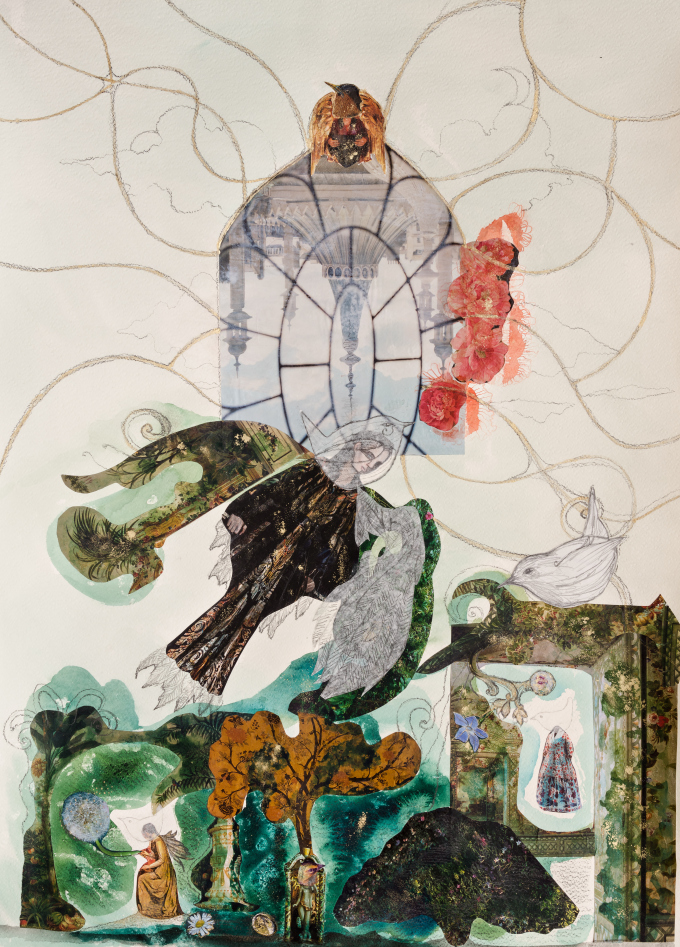
Notes on Salma Ahmad Caller’s process for the making of ‘Den of Sibyl Wren’.
The Den of Sibyl Wren is my response to Chris Murray’s A Hierarchy of Halls published by Smithereens Press It is my response to words Chris wrote about how she feels about this poem, and what she sees in her mind’s eye. Details of the image ‘Den of Sibyl Wren’ by Salma Ahmad Caller
Materials: Watercolour, Indian ink, collage, graphite and gold pigment on Fabriano acid-free paper 57cm x 76.3cm
My process involves an intense working back and forth with words and images in my imagination. I write a lot as part of my creative process as an artist, and these writings help me create and develop the visual image. The so-called ‘visual’ image is to me embodied, materialised, haptic and tactile. So the ‘image’ in poetry and metaphorical writing is almost the same as the visual image in art, to me. So there is not a huge gap between text and image. Not in my mind in any case. The flat 2 D image is neither flat nor 2 D – but rather it is a complex and multi-dimensional terrain of emotion, sensation and concept, just as is the written word, especially in poetry.
So it felt very natural to respond to Chris Murray’s very imagistic poetry, which I already love so much.
In preparing to make work in response to A Hierarchy of Halls, I spent time reading and re-reading the poems and reading and re-reading Chris’s little notes she had sent to me via Twitter. And so the The Den of Sibyl Wren emerged. My notes on my own thoughts and responses to reading A Hierarchy of Halls and to what Chris told me about her notion of a Sibyl that represented the wren and its qualities:
The smallness and greatness of Sibyl Wren, her green den of spaces that we cannot see and her flight paths carved out in the sky. Tiny but potent and majestic in her domain.
A shamanistic female bird being interpreting or bringing the mysteries of the other worldly to us.
A materialisation of the invisible.
A feminine nature of delicacy, strength and bravery. A guardian.
An oracle seeing into the unknown and leading the reader bravely forwards through pain and difficulty.
A garden world of tiny potent things.
A sky above that is carved into great structures and pathways by nature that we cannot see.
A fecundity and joyfulness. Spring, summer.
A soaring upwards towards mystery.
Invisibility of worlds around us and within us.
The dandelion clock telling of another time besides the time we know.
A bird shrine under a shadowy tree to the dead bird in Chris’s poem.
A tiny female presence sitting and moving in an underworld of unseen unspoken spaces.
Twitter Notes
What Chris Murray said in a series of little Twitter notes to me: “The chapbook is called ‘a hierarchy of halls’ and is about small things, flight, wrens, and huge dreamlike structures are implied. My sibyls and messengers are birdlike creatures/ the little chapbook is called ‘a hierarchy of halls’ and is about a wren’s flight through my garden, am obsessed with bird workings. I didn’t see a sibyl specifically in bodies, but the first image on the Poethead page has a little putti. This is how my head works: I see the wren as a type of sibyl, a small messenger, and female. The sibyl should represent the wren! A type of oracle who leads one into the book.
Salma Caller’s process and approach to the Smithereens Press published chapbook ‘A Hierarchy of Halls’
*
Salma Ahmad Caller is an artist and a hybrid of cultures and faiths. She is drawn to hybrid and ornamental forms, and to how the body expresses itself in the mind to create an embodied ‘image’. UK based, she was born in Iraq to an Egyptian father and a British mother and grew up in Nigeria and Saudi Arabia. With a background in art history and theory, medicine and pharmacology, and several years teaching cross-cultural ways of seeing via non-Western artefacts at Pitt Rivers Museum in Oxford, she now works as an independent artist and teacher.





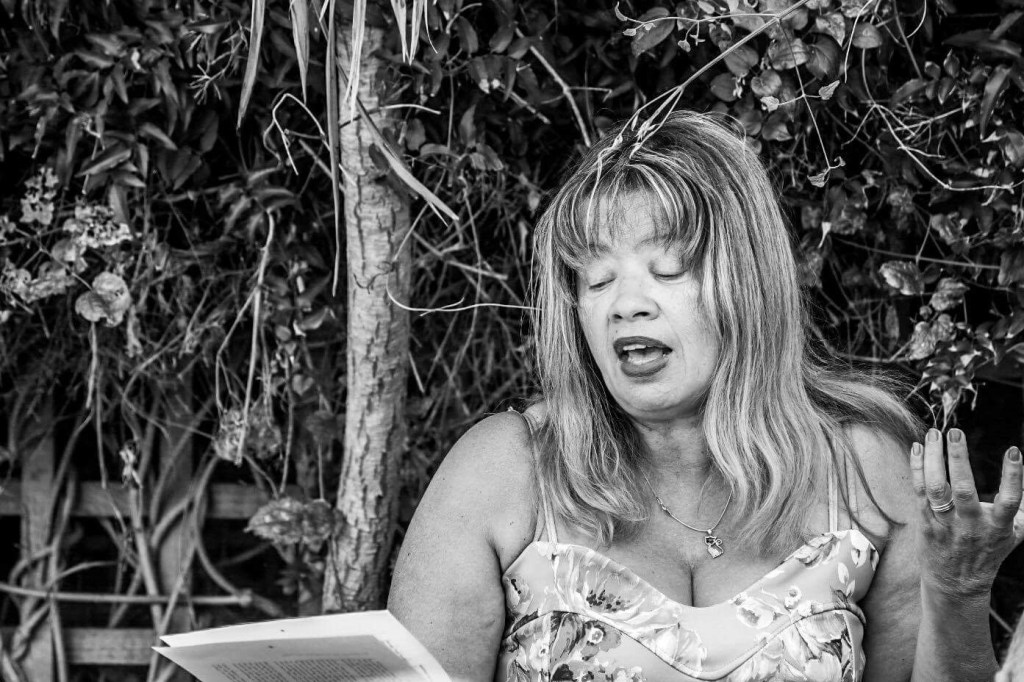
 Erin Emily Ann Vance holds an MA in English and Creative Writing from the University of Calgary and studies Irish Folklore and Ethnology at University College Dublin. She is the author of five poetry chapbooks, including The Sorceress Who Left too Soon: Poems After Remedios Varo (Coven Editions) and Unsuitable (APEP Publications). Her writing has appeared in Contemporary Verse 2, EVENT Magazine, Augur Magazine, Arc Poetry Magazine, Canthius, and more. Her first novel, Advice for Taxidermists and Amateur Beekeepers will be published in Fall 2019 by Stonehouse Gothic.
 E.D. Hickey is twenty-four and living and studying law in Dublin. She most recently spent half a year in Vienna, Austria working for the United Nations and graduated from UCD Law with Philosophy in 2017. While at university she recorded, edited and produced a feminist discussion-panel podcast called Pink Void (episodes available on Soundcloud) with two friends.
 Lisa Ardill is a twenty-something-year-old woman with a passion for feminism, human rights, neuroscience, literature and film (roughly in that order!). She writes poems and prose to entertain herself, cheer herself up on gloomy days, and keep the spark for creative writing in my brain alight.
 Anne Casey’s poetry has appeared internationally in newspapers, magazines, journals, books, broadcasts, podcasts, recordings and a major art exhibition. Salmon Poetry published her debut collection, where the lost things go in 2017. She won the Glen Phillips Novice Writer Award in 2017 and has been shortlisted for prizes including Cuirt International Poetry Prize, Eyewear Books Poetry Prize and Bedford International Writing Competition, among others. Originally from west Clare, now living in Sydney, Anne is Co-Editor of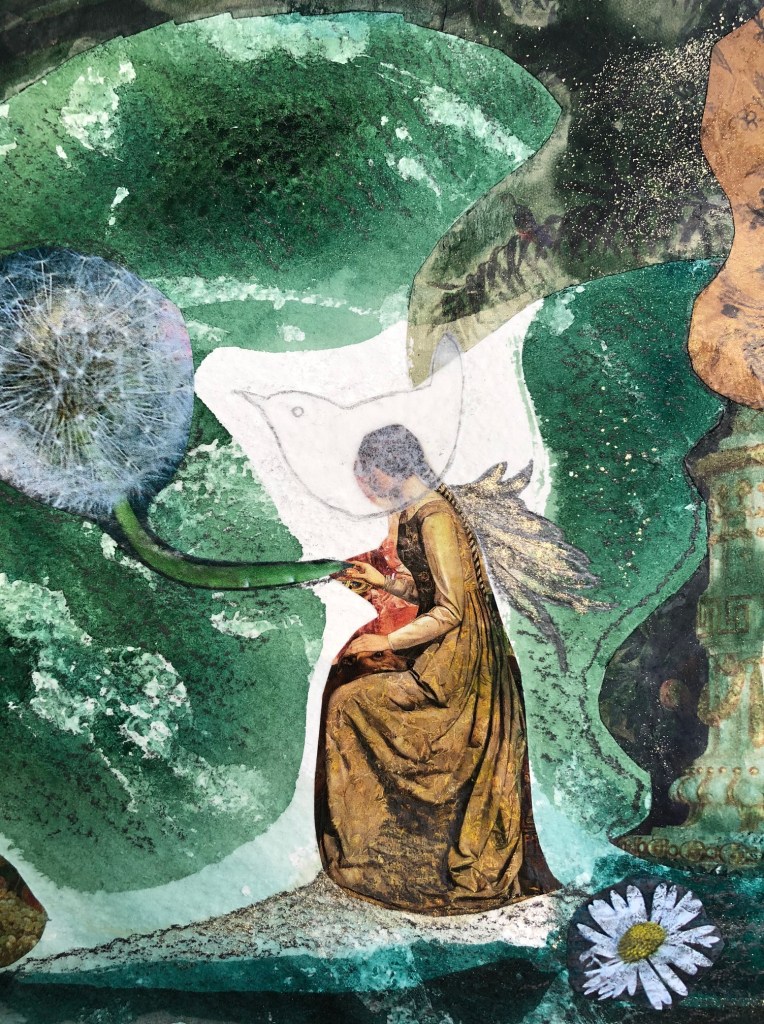



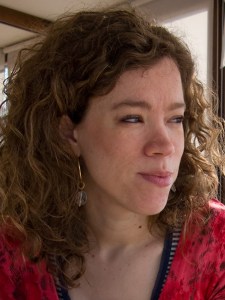

 Chris Murray