 A Wound’s Sound by Gillian Prew 62 pages Published by Oneiros Books in 2014 Cover Art by Matt Sesow |
This poem This poem has blood in its ears/ This Poem is by Gillian Prew Gillian Prew’s recent publication A Wound’s Sound (Oneiros Books, 2014) is described thus, The ambient howl-sound pervades everything. The gutted beasts are everywhere – billions raised and slaughtered for food globally each year. A Wound’s Sound is an attempt to distill and voice their pain and their silence. The above being true, the book in itself is an elegiac affirmation of the beauty and terror of nature from a perspective offering itself as the animal voice of worship and of pain. That the animal is slaughtered at the hand of man guides Prew’s expression and advises the thematic flow of A Wound’s Sound. Within and beyond her desire to expose inhumane cruelty Prew’s subtle expressiveness cannot but affirm her own life and presence as a poet,
Sun Trap World, damned hieroglyph, Sun Trap is © Gillian Prew Here, then is the tension at the heart of A Wound’s Sound: Man’s inhumanity to animals is expressed and projected through the poetic voice of a woman poet. The issue of projection and awareness of the pain of the other, in this case the pain of the animal raised for slaughter, is difficult to achieve as one can never be sure that the subjective is not impinging upon the creative process. The poet must then put herself into the centre of the book, as the voice of the wounded animal and as revelator of inhumane cruelty. Achieving this balance is probably a very difficult thing to do as it necessitates centering oneself at the heart of the action, both identifying with human cruelty at a personal level, while at once rejecting it within the self and elegiasing small loss. One needs to be a poet of skill, organisation and experience to approach the themes that I have set out above here to retain enough neutrality to allow the poem to develop its expression so that the reader is not swamped in the subjective viewpoint of the poet. Prew succeeds in achieving an elegiac tone to the whole book without subverting the reader’s interest by producing short imagistic pieces alongside slightly longer and more thematically developed poems, from Elegy Nothing sounds but sky/nothing Deep/ the trees a wet whisper/ a hole. From Elegy by Gillian Prew As here are wounded animals that have found themselves in the wrong place and time. Thus, an element of chance plays into Prew’s narrative, No God I was born into the wrong fields. They stuttered from No God by Gillian Prew
A Wound’s Sound is in the main a book of short and micro-poems, some of which are gathered into groupings like “restlessly, driven by leaves ” (after Rilke) and Fragments from Noticing. These micro-poems are intense natural distillations imbued with unique colour and pared to the bone of the image, The soaring cold barks at windows like a kept-out dog Jackdaws and magpies land on the treetops. from” restlessly, driven by leaves” Gillian Prew is a poetic craftswoman, her tight imagery and structuring allow her to encapsulate her symbols in perfect neat aphorisms that concentrate the reader’s mind wholly on the idea that she wishes to create. Prew’s colouring is limpidly gray, often suddenly dashed with colour like the rowanberry stain as blood symbolic. Prew’s colour use is evocative and symbolic throughout A Wound’s Sound. The gimlet eye of the soaring bird suddenly dashes and alters the reader’s perspective. This use of device and altered perspective make her landscape planes appear wavering and fragile in many places. She handles her craft with great acuity and professionalism, and whilst the major themes of A Wound’s Sound could be maudlin, an assuredness of personal style allows the poet enough canvas to turn the universal themes of slaughter and death into the sweetly elegiac – a song of affirmation, or witness. |
 Eleanor Hooker’s debut collection of poems The Shadow Owner’s Companion, published by the Dedalus Press in February 2012, has been shortlisted for the Mountains to Sea dlr Strong/Shine award for best first collection in 2012. Her poem A Rite won the Trocaire/Poetry Ireland competition in June 2013.
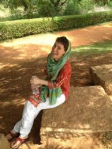 Fiona Bolger’s work has appeared in Headspace, Southword, The Brown Critique, Can Can, Boyne Berries, Poetry Bus, The Chattahoochee Review, Bare Hands Poetry Anthology and others. Her poems first appeared in print on placards tied to lamp posts (UpStart 2011 General Election Campaign). They’ve also been on coffee cups (The Ash Sessions). Her grimoire, The Geometry of Love between the Elements, was published by Poetry Bus Press. She is of Dublin and Chennai and is a member of Dublin Writers’ Forum and Airfield Writers.
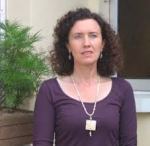 Mary Noonan lives in Cork. Her poems have been published in The Dark Horse, The North, Poetry Review, Poetry London, The Threepenny Review, Cyphers, The Stinging Fly, Wasafiri and Best of Irish Poetry 2010. She won the Listowel Poetry Collection Prize in 2010. Her first collection – The Fado House (Dedalus Press, 2012) – was shortlisted for the Seamus Heaney Centre Prize for a First Collection (2013) and the Strong/Shine Award (2013).
 Máire Mhac an tSaoi (born 4 April 1922) is one of the most acclaimed and respected Irish language scholars, poets, writers and academics of modern literature in Irish. Along with Seán Ó Ríordáin and Máirtín Ó Direáin she is, in the words of Louis de Paor, ‘one of a trinity of poets who revolutionised Irish language poetry in the 1940s and 50s. (Wiki)
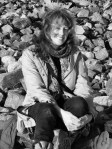 Deborah Watkins is a painter and a writer who also worked for many years making decorative ceramics. She grew up in Dublin and studied craft design at the National College of Art and Design. Deborah moved to Connemara in 1991 where she now lives with her three young daughters and her husband Gavin Lavelle, who is also an artist. They run the family business together in Clifden – The Lavelle Art Gallery which showcases painting and sculpture by local and nationally renowned artists.




 Chris Murray