I tell you/there was something about that woman/her face/undiluted/ lips open/as if she were waiting/for the sky to come/down on her. There was something about it that/I needed to know/something that/I wanted to remember/something/it was the light/that mattered/this woman/gathered/the light/ held it in-side of her/I should have/told her this/but I suspected/myself/what I know/and don’t know of the world/seemed/immense/I should have told her this/but she crossed the street/she was/gone/and I had/nothing to do with it.
Love Song #7
you are for me as you cannot be for yourself (a gathering) I return to without demand with-out diminishment your dark eyes amethyst hidden whose darkness is for a me a form of prayer a place of love’s rest
The Sea
I was going down in an elevator. I was in a building on the Upper West Side. I remembered a dream I had about Jacques Lacan. He was sitting with a woman in a hotel bar in Paris. She told him she had grown up near the sea. He felt for her hand. He moved her hand onto his thigh. She didn’t resist. Her hand moved deep between his legs. He spread his legs and thought about the way she had pronounced the word “sea.” Her voice sounded like a phono- graph. It sounded like water running down his spine.
I stepped out of the elevator and started towards the subway. I remembered the word “sea.” I tried to say the word in French. I mouthed the word. It tasted like sweet pear. I hid the word in the dark of my mouth. I pressed my mouth to the window. I pressed it to the glass until my body dis- appeared. The subway doors opened. And I floated out luminous in the dark.
Love Song #4
You told me to remember you/You told me Not to let go/Said it one day/And I Heard it/Felt it like a bird Lost in is own arithmetic/I need to Find a way to/Think about these things/Of what I am in your arms/When the night is Everything/The stars agree/In their ascent And I feel something rise in me/To love Is to live with the Unknown in front of you To recognize/That the sky is/A language Written in the light of/Earliest birds A text over water/Over time/Love me Love me/Before I come undone Before I say more, this song.
Anora Mansour is a graduate of the University of Oxford. She lives between Oxford and Dublin. She has been published in a collection of Jazz Poems, various online sites, and has her own published collection of poetry and blog. She is African-American and Irish.
Oh Night, oh calm and mythical night, Have you not seen the moon? How bright! ‘Tis not the sun but the twilight, To the earth holding tight.
How soothing! Cool and warm in winter’s night, Calling it the noon, ‘‘tis all right’’ See the stars twinkling at height, A moth gently flying around a streetlight.
The trees singing in a soft breeze, And their shadows dancing in sweet harmony, Tomorrow night all trees shall freeze, But tonight listen to the crickets humming their lullaby in melody.
Can a dropped ice cream be a joyful sight? A slight of thought, akin to road kill: a dead badger is still a badger that was once alive.
Can a spark of juvenile pride (the curl tightly looped to touch the forehead of the whipped pile) be saved from extinction
once it lies, semi-freddo on the pavement? Losing shape and form and purpose – a small death or not one at all.
(Published by Banshee)
Notions of Sex
I have conversations in my head with my ex about how I don’t even want sex anymore that I could have it if I wanted it/ that men still look at me/ I see them looking at me it’s not a competition/ I say/ but if it was I would be winning/ I feel my body born anew without touch/ I can’t even imagine being touched/ my skin is ashy with resistance/ my hair is falling out/ I’m hungry all the time but I have no appetite/ I think about the trees I’m planting/ even though I am leaving soon/ will anyone water them?/ I admire the dirt under my fingernails/the rose thorn scratches up my knees even my sweat smells different/ ferrous/ as if I am rusting/ I find old nails in the soil unbent/ I hammer them into the dry stone wall / and tie the pear tree to the wallit/ it needs support though it is too young for fruit/ I leave orange peels on the window sill and / feel embarrassed by my nipples as I drink my coffee/ I think at this point I should talk about masturbation/ but I don’t feel like it/ there is a rotten mattress abandoned on my street/ I look to see if anything is hidden in the springs/ there is nothing/ across the wall is the river/ a shag swims past/ later it will dry its wings on a rock/ the tide comes in and goes out faster than I can look out the window/ I miss the turn/ in the woods I feel the trees around me like bodies/ I have read that there is a chemical peace from trees/ I imagine we are sardines together/ me and the firs/ upright/ refusing to lie down on the needly soft ground/ there is a greenhouse on the path/ the glass is all broken/ the pleasure of smashing windows comes back to me/ on building sites as a child/ one after another/ the softness/ the trajectory followed through/ we hold up a hose to a pile of sand/ pretend it’s a penis and piss holes like in snow/ a man in shorts waves to me from his bike/ compliments my dog/ no one catcalls anymore/ I was followed once/ in a small town/ I was about twelve/ it got dark but I got away/ you don’t forget the feeling of someone watching you round a corner/ is it better not to be watched at all?/ there are new blinds on the windows/ now the locals know whether I’m in or not/ I’m told you’re not a local until you get a set of binoculars/my eyesight has returned/ I forgot my glasses one day and never used them again/ I rub myself with oils/ take tablets to reduce my heat/ my face burns with irritation/ people think I’m angry/ they’re only half wrong/ but I’ve learned to smile in a better way/ let it rise to my eyes/ bare my teeth/ I reel away from hugs/ I don’t want to hold hands/ I sit on the steps in the garden/ sunny stones warm me/ I lie down. (Published by Hotel)
Old Lives
Perhaps if things hadn’t turned out The way they did, and I hadn’t left Eight years before, jumping in beside Daddy in the car, placing the flower My boyfriend had given me on the dashboard Perhaps if the waves had been more violent on The Irish Sea that crossing, if perhaps I had taken that as a sign and turned back Commandeering the wheel Pushing the captain aside Get out Of my way and sailed back to Scotland Taken up a job in an allotment Worked things out with the Greek Then ditched him later for a tall Scottish Fella called something like Reuben or Robin who played in a folk band Perhaps I would have been happier
Perhaps I wouldn’t have gotten that stomach ulcer And Daddy wouldn’t have confused His cancer for a matching ulcer They’d just cut it out in time and We could have gone to the Venice Biennale That year, like we talked about Me laughing at his conservative tastes How he figured craft was of utmost importance Not this conceptual drivel Cast a cold eye On life, On Death Horsemen pass by! He’d chant as we walked along canals Missing the dog at home That would not jump in a river And stove its head in the next summer Perhaps we would all finally learn How to get along at Christmas To sit down and eat in peace without Someone breaking a glass or shouting About the unfairness of it all And I’d go back to Glasgow to my empty flat Get my cat back from the catsitter Open the window and Drink a glass of cheap French brandy To bring in the New Year. (Published by Hotel)
Incredible Things Do Happen
A tiny person at Edith Piaf’s grave turned to my parents and told them I am her sister. Her bones were birdy, twisted and brittle, like those left on the number 171, stripped of flesh, in a small cardboard box. Her body doubled in on itself forehead reaching closer to the concrete of the tomb, her stick the only thing contriving to separate the two. Perhaps it was a lie. Whoever this woman was, she’s in the Repertoire now, joining the Kennedys playing baseball in their garden in Cape Cod, an immigration inspector who flipped my mother’s passport photo off with her long acrylic nails and the young man who presented my aunt with a huge bunch of flowers in Neary’s, apropos of nothing. (Published by Butcher’s Dog)
They have come to ask of me, Many answers they sought.
They did not look at my breasts, Or between my legs.
It was my eyes, And inside my head they probed.
They put out their hands And broke open my skull; They looked in to see What thoughts I hid Between the folds of my brain, The slime, the blood, the people.
They wanted to know what it was from them I was going to take, Which were the hands I held, What were the forests that I walked, The words I nursed, Like hot iron branded in my soul; They look to see What crowds were being formed, That thought of the little raped girl, The boy who wrote poems And was jailed, Of the pregnant woman With the stillborn child in her lap.
And when they put back the pieces together They looked to see If I was one of them. That was what they wanted After all; To know if I was one of them.
Or if I was the one That stood outside their door, With my fingers raised In questions.
YELL
Gujarath. You sting me still.
When they come out in the night Their torn wombs hanging with dead children Their shaven head branded with “OM” Their vaginas split open Their breasts bitten broken. When he* walks around me His calls unanswered, thrice, When they torment him more As he refuses to laud their country, His fingers chopped, Then his hands and feet Dragged by the fork Thrown into fire.
He lifts his hands to me. They lift their hands to me.
I can see it coming The saffron gods in their chariots. I have to tell you then, Before it is too late, To think. To think.
Histories of lies that you live with, Mounds of forgetfulness you sleep on, The world you think secure, Lying under your booted foot;
I have to tell you. It is your blood. It is your blood.
Hang your heads in shame. Carry the skulls from the farmers. Walk with them they killed, Walk with the landless, Walk with them with bewildered eyes, Who hide in dark corners.
Your children look at you For answers. (*Ehsan Jaffri)
NO COUNTRY TO OWN
What will people do, Who have no city to call their own? Whose houses are four corners they turned, When life took them.
What will such people do, Who long to grow roots, But who stumble when they see faces, Trying to recollect Each face from a dead memory Memory that was not born, naturally.
What would such people do, Who want to know what it is To dwell under the same sky, The same sunrises and sunsets, A meal on the wooden table At times in the sun, And the evenings A circle around the tea cup.
What would they not do to swing their hands, In the alleys ways Knowing for sure The next corner they must turn?
STRANGER LOVES
You are another country I ventured into. Blank windows That did not latch, But opened into Strange skies, unknown stars. Yet when you smiled The ocean was another day; And I stepped blind Dumb, dusted, worn. The water crept into me Lifting into you, waved And I drowned.
Drowned.
When I rise, The sky in my eye Is the blue You left behind.
Lady Jesus
The doors are closed. Even the windows. No eyes blink. I walk around the house once. Twice. Then again. I touch the walls to see If they have broken. A little hole, tiny, Hiding from my eye Through which I can look Into the darkness inside. But nothing. The home has become a house. She has died, rotting on the cot, She who smiled at me like a wild gypsy, And told me to hide love letters under the green leaves. Without her the jackfruit tree is bald. The fisherman does not look in. Here again, I wait for the wind Under a sky To carry some smell That I missed Which would pour Water down my spine Closing the hole they drilled, On my hand My feet My breast.
SISTER WOMEN
Sister, That mountain country you speak of, Those women The ones whose breasts Were free, Unrounded, Hanging , lean, fleshy. The ones whose feet were kept apart carelessly, Who flung their hands In wild abandon. I see them sitting before you, Cold tea between us. There was no revolution, you said No bloodshed No foreign flags. None. I saw them Dangling their feet, Sitting on the rocky hill, Looking into the blue sky. And I saw their ankles, Chainless, soft, pink And soles, the soles of their feet Where rough roads Met Violently fusing desires. I saw them, Sister, I saw them laughing aloud I saw the toothless gums And the toothed ones The wide-open mouths The ringing echoing far away. I saw them hold hands; And your eyes, sister, Your eyes, That spoke of this dream To be born at home.
Muslim, Rohingya, Three years
Sometimes there is a little bit of me sticking out like red meat. The flies swarm around it. I know there is rot spreading a little from the edges. It started the moment I saw the little girl floating in the water. A Rohingya, she floats from Myanmar to my doorstep, When we are getting ready with the flower carpets. Her face is bloated. Her eyes closed.
On her red dress, the butterflies are still alive, flitting on the half-opened flowers.
She does not seem surprised. Where are the others who walked with her? The mother whose hand she left the moment the water took her in? The sister she laughed with a moment ago? The father she looked from afar? The brother who carried her around? The friends under the tree with whom she played before they came to kill? I cannot see them. The water is cold where she floated bit by bit into my eyes. Was she a Muslim? Was she Budha’s enemy? I do not know. The moment I saw her face I felt the rot spreading, And now I am almost dead. It is not the water. I know. It is not the Buddha. I know. I saw him close his eyes in prayers, like she had closed hers in death.
Arathy Asok’s debut collection Lady Jesus and Other Poems is described by the Journal of Commonwealth Literature as “Resistance poetry with a sharp edge” (2019, Vol. 54(4) ). She is a bilingual writer and was featured poet at The Blue Nib Magazine (Issue 37, Ireland). Her poems have appeared in national and international journals, in print and online (in Samyukta, Poetry Chain, anti-heroin chic, Poets in Nigeria, Blue Nib magazine, Door is Ajar, Womaword Press and Culture Cult). They are included in an Anthology called Native Petals, Nocturne and Iliyali (USA). Her short stories in Malayalam have appeared in Madhyamam Weekly and English short stories in Rupture (Pakistan), Credo Espire (USA) and have been translated to her mother tongue and published in Indian Express Malayalam Online.
‘Secrets of a cartographer’s wife’ by Katrina Dybzynska
The cartographer’s wife never told him about her contributions to his maps. A few tiny islands hidden in the middle of an archipelago in the name of symmetry. Some borderline moved to resemble a face shape. The territory of England shortened slightly, in personal revenge.
One time, she renamed an insignificant river in Bangladesh after her lover. She felt pity for the cartographer that he was more furious about the affair than about her intervention in the world order. She knew that romances were ephemeral, while naming things was changing them forever.
Katrina Dybzynska poet, shortlisted for Red Line Poetry Prize 2019. Author of „Dzień, w którym decydujesz się wyjechać” (The Day When You Decide To Leave), Grand Prix of Rozewicz Open Contest 2017. Laureate of national competitions in Poland. She has been publishing short stories, concept book, science fiction, reportage, and poetry, but feels most attracted to genre hybrids. Polish Non-Fiction Institute graduate. Activist. Currently a member of Extinction Rebellion Ireland.
‘Correnti’ by Viviana Fiorentino
Ora è questo un manto di alghe e sale sotto il vento atlantico o è corrente marina del fondo della mia vita e della tua vita ora è sogno o perla luccicante.
‘Currents’ (English trans. by Maria McManus)
This is a shawl of salt and seaweed against the Atlantic wind the ocean currents on the sea bed of my life, your life a dream, a burnished pearl.
Viviana Fiorentino was born in Italy. After obtaining a PhD, she travelled across Europe, from Switzerland to Germany, England and finally to Belfast where she teaches Italian Literature. Since 2018 she has taken part to literature festivals in Italy and in Ireland. She was involved in the poetry project ‘LabeLLit’. She has been awarded or mentioned in various Italian poetry prizes (i.e. Arcipelago Itaca Edizioni & Bologna in Lettere Dislivelli). Her poems appear on Litblogs, international magazines (Brumaria, Works #9’, 2018) and in the Arcipelago Itaca Anthology of Italian contemporary poets. In 2019 she published her poetry collection In giardino (‘In the garden’) for Controluna Press and her first novel Tra mostri ci si ama (lit. trasl. ‘Monsters love each other’) for Transeuropa Press.
Maria McManus lives in Belfast. She is the author of Available Light (Arlen House, 2018), We are Bone (2013), The Cello Suites (2009) and Reading the Dog (2006) (Lagan Press), she has collaborated extensively with others to put literature into public spaces. She is the artistic director and curator of Poetry Jukebox and an active organiser and founder member of Fired! Irish Poets.
‘Genetics’ by Roberta Beary
Your eyes are big and round like your father’s
but while his are the color of the Irish Sea
yours are the color of the muddy fields
on my father’s land
fit only for the peasants who worked them.
abortion day
a shadow flutters
the fish tank
Publication credit: Rattle #47, Spring 2015 (ed. Timothy Green)
Roberta Beary identifies as gender-expansive and writes to connect with the disenfranchised, to let them know they are not alone. She is the author of Deflection (Accents, 2015), nothing left to say (King’s Road Press, 2009) and The Unworn Necklace (Snapshot Press, 2007, 5th ed. 2017) which was a finalist in the Poetry Society of America annual book awards. Beary is the editor of the haiku anthologies Wishbone Moon (Jacar Press, 2018), fresh paint (Red Moon Press, 2014), 7 (Jacar Press, 2013), dandelion clocks (HSA, 2008) and fish in love (HSA, 2006). Her work appears in Rattle, KYSO Flash, Cultural Weekly, 100 Word Story, and Haiku In English The First Hundred Years (Norton, 2013). Beary’s work has been nominated for Best of the Net and multiple Pushcart Prizes. She lives in County Mayo, Ireland where she edits haibun for the journal Modern Haiku.
‘Dying Lover’ by Anora Mansour
Trace my lips In low whispers As I once wept psalms over my dying lover.
Threaten that man You will murder for me – For my heart is a cadence of silence.
I can only love you if you creep through this life dangling dangerously as a ravenous red kite.
When we both become one lonesome night. And rub up to love up as a fight.
Oh, how I might love you, bitter citron basket on my lap Slumberly trusting me as a child. I would open my thighs to you – a snap trap.
Anora Mansour is a graduate of the University of Oxford. She lives between Oxford and Dublin. She has been published in a collection of Jazz Poems, various online sites, and has her own published collection of poetry and blog. She is African-American and Irish.
‘Clutch’ by JLM Morton
for h.l.
in the nest of my fist, a fledgling scooped up from the lane
her soft unfinished beak her shining eye a buoy ringing in the green cathedral of trees
a single yellow feather wisps across my knuckle there is a twitch of elephant digits
and I think about keeping her
raising her as my own feeding her worms
but I let her go
chirring for the ones I could not save.
JLM Morton lives in Gloucestershire, England, snatching as much time as she can to write between caring for a young family, renovating a house and staring up the barrel of a demanding day job. Her first set of poems was recently published by Yew Tree Press for the Stroud Poets Series and she is currently working on a collection.
Though the civility of civilisation frightens me, I visit somewhere populated. A graveyard made squirrel territory. One squirrel for every gravestone. They mount lichen-covered peaks and keep lookout. They claim the trees, the abandoned church. Nobody will make them leave.
That night, I dreamt the answer to the universe. It was blue, inside a conch shell. Spiraling in and out of crystal moments. Eggshell blue. In and out of images of the hospital bed, and these dreams.
Polly Roberts grew up in Devon. Three years studying Creative Writing at the University of East Anglia left her with an inextricable link to the landscape, compelling her to continue to write about the creatures and habitats encountered there.
Observations of both the non-human and human world continued whilst living on a houseboat on the River Avon near Bristol while completing her MA in Creative Writing at Bath Spa University.
Polly has run creative writing workshops for refugees, detainees, and young people and curated two exhibitions in response to her writing, both displayed at the Norwich Arts Centre.
In 2018, the British Council awarded Polly a Writers by Nature scholarship, during which she wrote this debut poetry collection, Grieving with the Animals. ( 2019, Dempsey and Windle)
‘Beochaoineadh Máthar Maoise’ by Ellen Nic Thomás
A dhílleachta linbh gan ainm, gan athair, Do chraiceann ar aondath le humha an nathair, A lúbann timpeall do thaobhán uiríseal, Mar bhata ceannródaí is sníomhanna sisil.
Is trua liom ciseán do dhóchas a fhíochán, Do dhán a chaitheamh i bpoll an duibheagáin, D’eiseadh a chruthú ar bhunús baill séire, ‘Nois tá tú chomh cotúil leis an gCailleach Bhéarra.
A iníon, a mhiceo, a ógfhlaith bocht, A leanbh truaillithe, maith dom mo locht, Imigh anois leat, ná bí do mo chrá, Le smaointe ciúinchiontacha ó mhaidin go lá.
Ellen Nic Thomás is a bilingual poet from Dublin. She graduated from Trinity College with a BA in English and Irish. Her work has been published by headstuff.org, Tales From the Forest and The Attic.
'On watching a lemon sail the sea' by Maggie Harris

1
and I’m singing ‘You are my sunshine’ thinking
of my childhood across the sea of incubation
go Honey go
you self-contained cargo ship you
with your sealed citrus juices and pitted panacea of seeds
braving the collision of tankers and illicit submarines

                 they called me scurvy.       the lemonade
                 my mother made was iced and sprinkled with
                                           Demerara
 (of course)

and I’m wondering, did they grow you there, o lemon     mine
you
for your juices
a lemon plantation, not to be confused with
a plantain plantation even a banana just don’t mention sugar
stack you in the gloom like hereto mentioned bananas
green and curtailed in their growing  or even
those force-ripe mangoes with girls’ names
nobody knows here and who leave their sweetness behind
bare-assed on the beaches
come
to the marketplace
comatose.

I do not remember lemons, but limes.


       M
    I         E
L                S.

Piled high in their abundance. Limes.
Acid green pyramids on market pavements
holding their secrets beneath their reptilian skins.

And there is my aunt, her arms thin as bamboo
gathering the fallen from the yard, sweeping
their dried leaves into the remembrance of herself
whilst the black maid slips slivers of lemon into a split
-bellied fish whose eyes glaze up at the sun.

‘Gauguin, you can come in now; remember Martinique ...?
hue the native in all her harnessed beauty
the slack –jawed fish, browning blood
the textured landscape in shades of  pawpaw and indigo.’

But, liming is what my lemon is doing now,
(in the West Indian sense), hey ho
over the waves at Aberporth, there he blows.


2
I set you free
to take to the sea again
on a high tide, with breakers rushing the beach
like warriors.
They pummel the sand, scythe
a four foot chasm into the mouth
of a lonely river
beat the rocks’ submerged heads
batter the cliffs again
                                        and again
                                                     and again.
The sea, beyond its charge, was waiting -
a winter morning sea, a Twelfth Night sea
tumultuous and moody

                                       waiting.

A strange gift, you
a large, perfect lemon
fresh and sharp as the sun-bright
wind-cut winter’s day. But I
unsure of your heritage
refused you.


3
Dear Voyager,
I cupped you
in my palm
desire urging my possession
how easy it would be – a lemon drizzle cake
a Martini iced, an accompaniment
to plaice or sole – and here I am playing with words
the resonance of belonging, of immortality –
but the devil played tricks with my mind
an injection of poison perhaps, a needle prick
into your  pristine, nobbled skin – but we are running ahead here
thinking of cargo – you may simply have fallen from a Tesco
carrier bag whose owner, fearing a lonesome home-coming
went walking on these very sands contemplating - life.

But there you were anyway, settled on the sand like a crab
then comfortable in the palm of my hand.


4
Finders are not necessarily keepers. Some
will do well to remember that. Vixens
circling misunderstood husbands in bars. Frag
ments from the fallen.
Oh but, how strong is the desire
to hold close, keep tight
smother your darling, your little nut-baby
in soft gloves, hard love, the kind that makes
you want to bite, bite! Rip flesh and bone. Swallow.
                     I could have accepted
your sacrifice
that gift of yourself, thank the universe
for its benevolence.
But the universe is not benevolent.
Stars are exploding missiles in a panther-black night.
Saturn doesn’t give two fucks. It’s chaos
out there.
But I guess you didn’t have time
for star-gazing in your ocean-going lumbering
over the hey-ho waves. And if I had sunk my vampiric teeth
into the you of you, you would be no more
than a bitter taste, a withering lump of citrus
on my kitchen table. Far better to remember you
the obsidian walnut weight of you
and these questions you have gifted me
and that last sight of you
rolling away on the tide.
Maggie Harris is a Guyanese writer living in the UK. She has twice won The Guyana Prize for Literature and was Regional Winner of the Commonwealth Short Story prize 2014, with ‘Sending for Chantal’. She has worked for Kent Arts and Libraries, Kent University and Southampton University as International Teaching Fellow.
Jane Clarke’s first collection, The River, was published by BloodaxeBooks in 2015 to public and critical acclaim. Her second book-length collection, When the Tree Fallswas published by Bloodaxe in September 2019 and her illustrated book of poems, All the Way Home, was published by Smith/Doorstop in April 2019.
The River was shortlisted for the Royal Society of Literature’s Ondaatje Prize, given for a distinguished work of fiction, non-fiction or poetry evoking the spirit of a place. In 2016 Jane won the Hennessy Literary Award for Emerging Poetry and the inaugural Listowel Writers’ Week Poem of the Year Award. She was awarded an Arts Council of Ireland Literary Bursary in 2017.
Jane holds a BA in English & Philosophy from Trinity College, Dublin, an MPhil in Writing from the University of South Wales, and has a background in psychoanalytic psychotherapy. She grew up on a farm in Roscommon and now lives with her partner in Glenmalure, Co. Wicklow, where she combines writing with her work as a creative writing tutor and group facilitator www.janeclarkepoetry.ie
Her passion was historical biscuit tins or so he’d tell visitors who marvelled at the growing stacks of embossed lids that glinting with landscapes, landmarks locations she hadn’t seen, he thought it best if the world came to her. He liked her to display these gifts he brought back from places he visited with work, that was what he called her.
He’d produce a new one the morning after his return assuming her quietness over breakfast had been due to the non-presentation of a tin, she accepted them but never the treats that she bagged in black where they grew crumbly and green and sweated in the confines of their own wrappings.
No tins came for some months work no longer needed him so he dozed his days away in front of the box until he breathed his last, the remote control limp in his hand. She scattered the tins around the living room and took a hammer to the shiny lids that remembered everywhere she had never been until they didn’t shine anymore.
The Bittersweet – Poetry Ireland Review, editor Eavan Boland
Skinny Jeans
His quiff came undone in the night to fall about an acned face that contorts in an afternoon yawn. He shifts his body about the bed to untwist the studded belt that pockmarked him as he slept, the impressions red against his gothic skin. The seams of his skinny jeans draw lines up and down his tall boy legs, revealed as he inches them off with pink-heeled persistence before they’re dumped on the floor in a dark, denimous pile. The day looks in on him through not-quite-drawn curtains, the gap, the width of an ice-lolly stick, the day, bright as July.
Skinny Jeans – The Stony Thursday Book, editor Paddy Bushe
A Life Unanswered
Dust smothered hat boxes stacked, empty, blue and white Switzers stripes dulled by years. Flapper dressers and bridge club receipts idle in drawers lined with the Letters page from a 1920’s Irish Times, fragments of lily of the valley talcum powder tangible.
I have your eyes but I don’t see what you saw history witnessed, decades endured, did they roar, were they hungry, did they swing, did scarcity wage a local war to leave you wanting, did world events impact, always make contact?
Did you mind leaving Achill to settle in Westport, urbanity on your new doorstep, did faith and prayers of two Roman-collared sons ease untimely widowhood? Clacking rosary beads, murmuring novenas your mantra.
Was my mother an appreciated ally righting the balance, nurturing anima or did she steal your mantle as lady of the house, did you mind or was your arched-eyebrow sternness an act of survival in a male domain?
November evening your pen ran dry and expired batteries silenced your radio yet you needed no replacements, you knew that night that you would also go.
A Life Unanswered – Abridged, editor Maria Campbell
Lapsing
He files his thumb nail on a match box softened by pockets, the swatch almost worn by forty strikes. A neighbour walks by, he nods to the al fresco attendees who religiously avoid a pew, preferring to stand the hour. A speaker nailed to the buttressed porch bugles across the hedges crackling its master’s voice. It spouts prayers for the faithful who respond en mass in a monotone breathless recitation, pausing on cue by rote. He drops the smoothed box and squashes it into the green joins his hands and breathes deep the flinted air. He rests his head on the pebbledash his weekly penance meted out in pointy pastels. A couple arrive too late to creak open the door, they angle for wall space budging him from his idling spot, the flock thickens in the noonday sun.
Lasping – The Weary Blues, editor Emily Cullen
Room 41
Bath-freshness beckons but she chooses to accept the week-old grime and the specks of kamikaze talc that land on her lashes as she powders her oily hair, the ash-brown lank.
She doesn’t care, there’ll be no neighbours calling like the news-hungry vultures they pretend not to be, no postman delivering a daily chat, nobody knows how committed she is to being alone.
A large orange pill wrestles its way down, eased by tepid water from a polystyrene cup and condescending words from a woman in white who locks the door as she leaves.
Susan Kelly is from Westport, Co Mayo. Her work has appeared in Cyphers, Poetry Ireland Review, The Stony Thursday Book, Crannóg, Revival, Abridged, The London Magazine, Boyne Berries, The Weary Blues, Burning Bush 2, wordlegs.com and was short-listed for the Writing Spirit Award 2010. She was a featured reader at Over the Edge in Galway 2011, shortlisted for the New Writer of the Year 2013 and longlisted for the 2014 WOW award.
I throw my nightmare into your arms with all my shaking and sweat, but you stick your hand into my heart to pluck my boobs.
I throw my fear of losing words into a book, but you throw your shirt on the clouded pages to let me know “It is missing a button”.
You have thrown in my face every day all the small particles of dust on the shelves and in every corner, more sharply than a magnifying glass, but you ignore the sandstorms devouring your mate.
Ah! how simply you turn our shining marriage ring into a stinging snake slithering so fast towards my so-romantic dreams of a happy ending.
“with many thanks for Becca Menon’s help recreating this poem in English”
A song of despair
People go to the park together People go to the cinema together People become friends now and then and write letters to each other they even marry each other sometimes and live at a home for long years always together but always apart like the books in the shelves or like the stones on the graves.
Farideh Hassanzadeh is an Iranian poet, translator and freelance journalist. Her first book of poetry was published when she was twenty-two. Her poems appear in the anthologies Letters to the World, Contemporary Women Poets of Iran by Faramarz Soleimani, After Shocks: The Poetry of Recovery for Life-Shattering Events, edited by Tom Lombardo, The Poetry Of Iranian Women by Sheema Kalbasi, Tonight, An Anthology of World Love Poetry by Amitabh Mitra.
She is the author of Eternal Voices: Interviews with Poets East and West and The Last Night with Sylvia Plath: Essays on Poetry. In addition she has translated Selected Poems of T.S. Eliot, Federico Garcia Lorca: A Life by Ian Gibson, Anthology of Contemporary African Poetry, Selected Poems of Marina Tsvetaeva,Women Poets of the World,Twentieth Century Latin American Poetry, Selected Poems of Iaroslav Seifert,Pablo Neruda: A Passion for Life, Blood of Adonis by Samuel Hazo, The Beauty of Friendship: Selected Poems by Khalil Gibran,Love Poetry of the World, Classic and Contemporary, and Selected Poems by Blaga Dimitrova. the Anthology of Contemporary American Poetry.
Her new book is Footprints of Cats in Poetry, Stories, Paintings, Politics, Religion, Medicine, Cinema and Science.
Past the news of war, you sleep in a litter of cacophony knowing the dead will forever bind their miasma to your hair
knot their shrouds to every hook in the house, hem the sound of sirens to your head
Between tonight’s brocade sky, inked textile of tomorrow, and tomorrow, there will be an hour of war, creeping like a reptile
across the fields where two countries grow rice with their backs to each other and fly kites this time of the year to welcome spring
The sort of night an emperor could create from the shudder of mortality a marble mausoleum to house his love after death— moonbeams
sewing the lips of loss, light swirling through filigrees, carved tulips and fruit buds, turning time to flesh — it is early spring, you too feel a tingle in your fingertips,
tremble a moment like a Shalimar cypress, but the masonry of your body is recalled when warplanes approach, when all around you are loved ones
asleep, and what the newscasters will later call aerial engagement has been the chase all along— the flute song in your dream chased
by steam engines, swooped up by MiG-21s, chased by surface-to-air missiles The air as sharp, the trees as majestic this side of the border, the pilot
of the downed plane asks hysterically which country he is in. Which way should he run? As a prisoner of war, he is recorded saying, between sips
of tea, the officers of the Pakistani Army are thorough gentlemen. He is nervous. The cup he holds is Raj-white, with a pale green bough,
vaguely Mughal in its vegetal flourish. The temperature in Islamabad is 11 degrees Celsius, in Delhi it is 16. Yellow trumpet daffodils are blooming. It is early spring.
Shadab Zeest Hashmi is the author of poetry collections Kohl, Chalk and Baker of Tarifa. Her latest work, Ghazal Cosmopolitan has been praised by poet Marilyn Hacker as “a marvelous interweaving of poetry, scholarship, literary criticism and memoir.” Winner of the San Diego Book Award for poetry, the Nazim Hikmet Prize and multiple Pushcart nominations. Zeest Hashmi’s poetry has been translated into Spanish and Urdu, and has appeared in anthologies and journals worldwide, most recently in Prairie Schooner, World Literature Today,Mudlark, Vallum, POEM, The Adirondack Review, Spillway, Wasafiri, Asymptote and McSweeney’s latest anthology In the Shape of a Human Body I am Visiting the Earth. She has taught in the MFA program at San Diego State University as a writer-in-residence and her work has been included in the Language Arts curriculum for grades 7-12 (Asian American and Pacific Islander women poets) as well as college courses in Creative Writing and the Humanities.
Thin Places

The wild meadow weave, the strand,
         places of late summer, autumn,

a stone skimming water, suspended
        in air, its slow motion glide punctuated

by the drop, touch, rise of a ghostly presence,
          this wary hesitation between water

and stone, mysterious as the rift between
     music notes in air, unsettling the familiar light

which shudders again with tiny rainbow bubbles
   holding air-drops in. And then the final slide over

gravity’s edge, into polished bottomless depths,
        beyond the belly-aching threshold⎯

dropping, ever dropping, into the quiet
     whispering, the unspeakable tenderness.
Binn Éadair
I have waited through the long winter grey for the slow clean curve of spring,
the sun a warm breath on my neck, its lips glossed with a damp breeze.
Far below, the murmurings of wind and water weave a familiar braid of intimacy,
the whole of the blue sky is stretched wide, light falls on us, a lovers’ blanket spread on sand.
This moment is already time’s fugitive; sweet rain pooled in a dockweed’s leafy
pocket, the soft unwrapping of downy buds, moss gathered in a hollowed bowl of earth—
like a container that holds and pours, we are filled and emptied.
To be lifted then into the loose hem of the breeze, cast out
over the spooling cliff, to drop like a bird, free-fall into the wind.
Earth Music
I will lead you by the hand to the hushed hum of the gentle oak, an evening breeze sounding
shivers into leaves, quiet turbulence in the air and the gravity of sound settling on mossed stone.
I hear its tongue-lick in ivy the way a bat hears the silhouette of trees, or a whale the shape of its home,
touching the skin like sound braille, tiny neck hairs startled to its presence; earth music in the trees
and in the stony wind, atoms of light trembling in tiny dust particles where body-bones separate, flesh disappears.
Between heart-pulse and light’s shadow-touch, I will lead you to the quiet abundance of silence,
the wide emptying of voiceless things; earth’s pulse, seamless and somewhere beyond absence.
Translation
Early evening, the sea all silk and copper-clad, russet seams threading air, holding nothing but lingering light. Poised on the glazed edge of the estuary, a heron; stem-like and spectral, folded into the soft grey petals of his shadow. Overhead, dark-bellied geese fly in low wavering lines, flock to the beginning of memories they don’t recall from a place they reclaim without guidance— here, clouds are porous with light, lisping vowels and tongue-flickers lapping twilight—while westward, through the woods, a wash of starlings erupts from the trees, sweeping murmurations, the chorus of bodies dips and dissolves, rises into dust formations. Now the heron loosens unwieldy wings, lifts like vapour, like stillness taking flight. It’s hard not to believe in this; birdsound and birdshape, two seagulls wing-surfing the ragged cliff-spine, entirely consistent, faithfully articulate— what we don’t have words for may still exist. In the cool breath of evening, tidal swamp-sands swell over stones, shadows slide out of things. Motionless again, the heron is zen master, a hanging bell holding through the dusk of the estuary, the slow unravelling of this moment every other moment fits inside.
Moon

Take the river’s curl, the ocean’s wave,
      the never-ending trees, the sway of a meadow,
        the roll of the sun, the scattered stepping stars.

And take last month’s silver bud of moon
    now come full to the sky, her mouth is wide and open,
      white lips brimming with a soft wet light,

month by month, she gives her widening
    emptiness to the earth, holds the planet in her orbit,
       washes ocean after ocean over sand:

I stretch out my arms and reach for her,
    hold hands with her rhythm, climb into her open
      wound, my blood is lapping at her perpetual pull,

I sleep in the mantle of her tidal pulse, slip
   the ring of her light onto my finger. At the last hour
     of fullness, I wade inside her alluvial silt,

feel desire awash in my gut. Lost inside
    her wholeness, carved into her darkening spine,
      I am swallowed into goddess light.
Eithne Lannon is a native of Dublin. Her poems have been included in various publications such as The North, Skylight 47, The Ogham Stone, The Lea-Green Down Anthology and Boyne Berries. On-line in Ireland, the UK, US and Canada, she has work published on Headstuff, Artis Natura, Sheila-na-Gig, Barehands and Punch Drunk Press among others.
Her work has been listed in various competitions such as the Bray Literary Festival, the Dermot Healy competition and Galway University Hospital Poems for Patience. She was winner in 2018 of the Ballyroan Poetry Day Competition and Runner-up in Against the Grain this year. Her work was also Highly Commended in the Blue Nib Winter/Spring Chapbook 2018 and commended in the Jonathan Swift Awards.
Eithne’s first poetry collection Earth Music was published by Turas Press in April 2019.

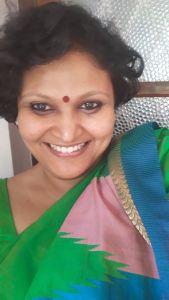 Arathy Asok’s debut collection Lady Jesus and Other Poems is described by the Journal of Commonwealth Literature as “Resistance poetry with a sharp edge” (2019, Vol. 54(4) ). She is a bilingual writer and was featured poet at The Blue Nib Magazine (Issue 37, Ireland). Her poems have appeared in national and international journals, in print and online (in Samyukta, Poetry Chain, anti-heroin chic, Poets in Nigeria, Blue Nib magazine, Door is Ajar, Womaword Press and Culture Cult). They are included in an Anthology called Native Petals, Nocturne and Iliyali (USA). Her short stories in Malayalam have appeared in Madhyamam Weekly and English short stories in Rupture (Pakistan), Credo Espire (USA) and have been translated to her mother tongue and published in Indian Express Malayalam Online.


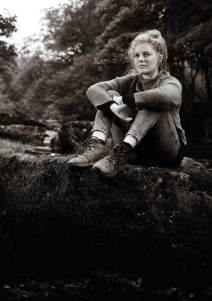
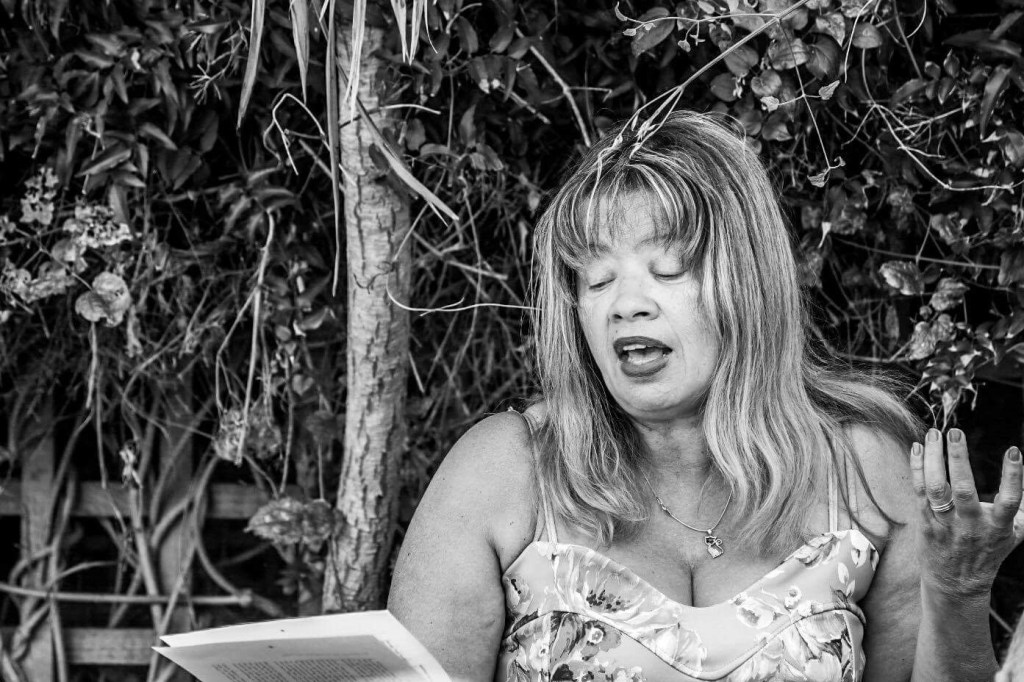
 Jane Clarke’s first collection,
 Susan Kelly is from Westport, Co Mayo. Her work has appeared in Cyphers, Poetry Ireland Review, The Stony Thursday Book, Crannóg, Revival, Abridged, The London Magazine, Boyne Berries, The Weary Blues, Burning Bush 2, wordlegs.com and was short-listed for the Writing Spirit Award 2010. She was a featured reader at Over the Edge in Galway 2011, shortlisted for the New Writer of the Year 2013 and longlisted for the 2014 WOW award.
 Farideh Hassanzadeh is an Iranian poet, translator and freelance journalist. Her first book of poetry was published when she was twenty-two. Her poems appear in the anthologies Letters to the World, Contemporary Women Poets of Iran by Faramarz Soleimani, After Shocks: The Poetry of Recovery for Life-Shattering Events, edited by Tom Lombardo, The Poetry Of Iranian Women by Sheema Kalbasi, Tonight, An Anthology of World Love Poetry by Amitabh Mitra.
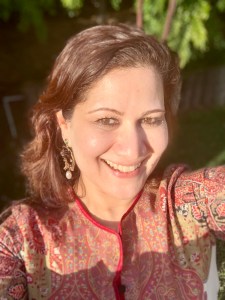 Shadab Zeest Hashmi is the author of poetry collections Kohl, Chalk and Baker of Tarifa. Her latest work, Ghazal Cosmopolitan has been praised by poet Marilyn Hacker as “a marvelous interweaving of poetry, scholarship, literary criticism and memoir.” Winner of the San Diego Book Award for poetry, the Nazim Hikmet Prize and multiple Pushcart nominations. Zeest Hashmi’s poetry has been translated into Spanish and Urdu, and has appeared in anthologies and journals worldwide, most recently in Prairie Schooner, World Literature Today, Mudlark, Vallum, POEM, The Adirondack Review, Spillway, Wasafiri, Asymptote and McSweeney’s latest anthology In the Shape of a Human Body I am Visiting the Earth. She has taught in the MFA program at San Diego State University as a writer-in-residence and her work has been included in the Language Arts curriculum for grades 7-12 (Asian American and Pacific Islander women poets) as well as college courses in Creative Writing and the Humanities.
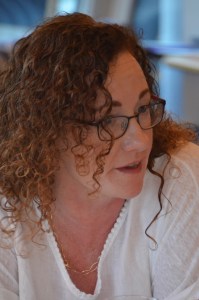 Eithne Lannon is a native of Dublin. Her poems have been included in various publications such as The North, Skylight 47, The Ogham Stone, The Lea-Green Down Anthology and Boyne Berries. On-line in Ireland, the UK, US and Canada, she has work published on Headstuff, Artis Natura, Sheila-na-Gig, Barehands and Punch Drunk Press among others.
 Chris Murray