• chris murray
  • journals – bibliography – publication notes
  • downloadable items – essays – media
  • copyright
  • Home

Chris Murray

  • “Something for Sunday Morning” by Maria McManus

    July 19th, 2014

    Something for Sunday morning

    If you took a chance
    And let those plates stop spinning,
    Stuck your hands in your pockets
    Or your fingers in your ears
    And stepped back –
    What would happen then?

    After all that clatter
    And when the shreds –
    All the broken pieces
    Were shovelled up
    Wrapped away carefully
    And left somewhere for landfill
    What then?

    All that falling, can only happen once,
    And then it’s over. Done with.

    As an alternative.
    You could gather in those plates
    Stack them neatly, one on top of the other
    File under ‘something for someone else
    Another time’, and let them sit there.

    Or you could just watch the wobbly poles
    Come to their inevitable standstill and decide
    Whether to break them, so that puts
    A stop to this, forever.

    One way or another – you could choose
    Silence, choose stillness, stop playing.

    You choose.


    II

    When Nuria tells me
    The Robin died
    Because it flew into the glass
    I know it is true.

    It thought
    That what it saw
    Was endless sky –
    That this reflection of sky
    And the Bay of Biscay was reality.

    Its neck has broken
    And it lies supine on the steps.
    I dare say
    Death was instant –
    I hope so, and that it didn’t suffer.


    III

    I know this one
    And will share with you
    Two stories of my own –
    Near-misses, if you like.


    IV

    The first was a dream
    Of the Hummingbird
    In all its shimmering brilliance, battering
    On the window of my smallest most under-used room.
    Outside, I’d made a garden, full of colours,
    Into it, I planted tame versions of my dreams
    Underneath the wild flowers
    That greeted everyone who beat their path
    To my front door,

    But it was the illusion of the garden
    Brought the Hummingbird
    To beat itself to death upon the glass.


    V

    The second is the story of an interview.
    I faced a four-strong panel. They were back-lit
    With the afternoon sun
    And the scene outside was rich and wonderful –
    A river tumbled down a small green glen – all ferns and damp
    And luscious. I could hear the sounds of water
    Breakthrough the stultifying must inside.
    The vigour of the river had, at one time,
    Channelled a mill – the force of it ground millstones.

    I remember I wore funereal black –
    Considered smart and fitting
    For such occasions; an indication
    I was serious, reverential,
    Intentional about the task –
    It was a tailored form of knee-
    Bending, a genuflection to authority, to formality –
    A message that I would
    Concede, submit, serve,
    Toe-the-line, fit in.

    Then, just as I gathered
    My first breath, to lift
    The register of my voice,
    A summer Swallow flew
    Full tilt into the image
    Of that garden paradise
    And was lost,
    After it slammed hard against the glass
    And fell into Montbretia.


    VI

    At The Gower when we walked
    We looked skywards. You could
    Tell the difference between Swifts
    And Swallows, House-martins and Sand-martins.

    They’re all beautiful to me.
    I find that I am mesmerized and gaze
    Always into the blue of where they are –
    And it’s enough.


    VII

    This past year or so,
    I’ve tracked the Swallows too,
    From Ireland, to Wales,
    To Spain and Portugal, to Hungary,
    And all the way to Cape Town
    And back again.


    VIII

    Was it you I told the stories of the Hummingbirds to?
    I’ve talked about it recently again, I know.

    I heard Attenborough
    Talk about them on the radio – of how,
    Amidst the chaos of this world, and the catastrophic,
    Devastation of our earth,
    There is one small hopeful story, and it is this –

    How people have laid a corridor of sweetness
    All the way from Costa Rica to the North of North America
    And how in this symbiosis
    The Hummingbirds flourish against all odds–
    How they reward the wilderness
    Of our grey lives,
    Gem-like and shimmering
    Captivating the available light
    And give it back to us
    As they migrate
    North – South – North –South –
    North………….

    They are delicate and tiny in the dying of this light.


    IX

    And then, there is another story–
    In the poem of Sah-Sin. Tess Gallagher tells us,
    It is the Native American name for Hummingbird
    And she tells how, when she found one,
    In torpor, in the cold – she lifted it
    And slipped it in under her breast
    Next to her heart, to warm it,
    In the hope it would revive again.


    X

    Finally, here’s my last message
    to you, for now.

    I found a montage
    Of Hummingbirds with the ‘mirror in the mirror’,
    And I’ll play that for you sometime, but –

    Between here and there
    Between now and then
    Don’t fear anything.


    XI

    And, if you decide
    To stop catching those spinning falling plates

    And, if you need something for your hands to hold –
    Here’s mine.

    You might.

    .And if you take that chance,
    .Just think –

    Then maybe, just maybe,
    We could dance instead.

    Something for Sunday Morning is © Maria McManus


    Maria McManus
    Maria McManus

    Maria McManus is a poet and playwright. Maria’s most recent work is We are Bone (Lagan Press 2013). A screenplay adaptation of the sequence Aill na Searrach; The Leap of the Foals, was developed in 2013 with NI Screen as part of the Short Steps development process.
     
    Previous poetry includes The Cello Suites (Lagan Press 2009), which has been recorded with an original score composed and played by the cellist Tom Hughes. She is a contributing artist to Corners of Europe.
     
    Reading the Dog (Lagan Press 2006) her first collection of poetry, was runner up in the 2007 Strong Awards at the Poetry Now International Festival and was also short-listed for the 2007 Glen Dimplex New Writers Award. In 2008 & 2012 she was awarded an Arts Council individual artist award. In 2005 she was awarded the inaugural Bedell Scholarship for Literature and World Citizenship, by the Aspen Writers’ Foundation, Colorado USA. She was awarded an MA with Distinction in English (Creative Writing) from Queen’s University Belfast in addition to a professional qualification in Occupational Therapy and an MBA from the University of Ulster.
     
    In 2008 she co-wrote Bruised for Tinderbox Theatre Company. In 2006/07 she was playwright on attachment to Tinderbox. Previous theatre credits include His n Her’s and Nowhere Harder (2006) for Replay Theatre Company, and The Black-Out Show (2006) for Red Lead Arts.
     
    Samples of readings by Maria can be viewed on Youtube at

    • https://www.youtube.com/watch?v=j_40hmZyGxw
    • https://www.youtube.com/watch?v=0jwgPwHxafM

    Of ‘We Are Bone’ the poet Joan Newmann said ‘A joyful read as if you are coming towards each reader with your arms held out.’

  • Three Poems by Müesser Yeniay

    July 12th, 2014

    Flower Village

    I learnt how to stand put
    from a flower
     
    Saw no other sun
    drank no other water
     
    I recognized my roots as a village
    my earth, the sky
     
    Seasons passed above me
    a nest of ants, bosom friends
     
    I learnt how to be a flower
    solely… solely, standing put


    Between My Body and the World

    In my hair, despair is growing longer
    its root is in me, however
     
    like earth I am smooth
    in the center of it
     
    if I put my memories in a tent
    -and myself in another tent –
     
    my eyes are disappearing…
     
    I am as if I have gone out a seed
    I will go back into that seed
     
    I am a footprint of a horseshoe
    on the face of daytime
     
    between my body and the world
    I should put a distance


    Now Do not Tell Me of Men!

    My soul hurts so much that
    I awaken the stones under the earth
     
    My womanhood,
    a moneybox filled with stones
    a home to worms, woodpeckers
    a cave to the wolves climbing down my body
    on my arms, new seeds are sprinkled
    the man of your life is searched
    that is quite a serious matter
     
    My womanhood, my cold snack
    and my pubic, a home for nothingness,
    the world stands here
    and you! live with the rubbish thrown into you
     
    When he is gone, tell him that flesh leaves nails
    that you live with the science of the break
    tell him of that serious illness
     
    like a lamb skin, I am cold in your gaze
    I am not in debt to you your mothers womb, sir!
    my womanhood, my invaded continent
     
    neither am I a land cultivated…
    scratch off the organ that is not mine
    like a snake skin, I wish I could drop it
    it is not reasonable to be a mother to a murder
     
    it is not homeland that is divided
    but the body of woman
    now, do not tell me of men!

    Flower Village, Do Not Tell Me Of men! and Between My Body and the World are © Müesser Yeniay

    muesser (1)Müesser Yeniay was born in İzmir, Turkey in 1984. She graduated from Ege University, with a degree in English Language and Literature. She has won several prizes in Turkey including Yunus Emre (2006), Homeros Attila İlhan (2007), Ali Riza Ertan (2009), Enver Gökçe (2013) poetry prizes.
     
    Her first book Dibine Düşüyor Karanlık da was published in 2009 and her second book Evimi Dağlara Kurdum is a collection of translation from world poetry. Yeniden Çizdim Göğü was published in 2011. She has translated the poems of Persian poet Behruz Kia under the name of Lalelere Requiem. She has translated Selected Poems of Gerard Augustin together with Eray Canberk, Başak Aydınalp, Metin Cengiz (2011). She has also translated the Personal Anthology of Michel Cassir together with Eray Canberk and Metin Cengiz (2011). Lately, she has published a Contemporary Spanish Anthology with Metin Cengiz and Jaime B. Rosa. She has also published a book on modern Turkish Avant-garde poetry The Other Consciousness: Surrealism and The Second New (2013). Her latest poetry book Before Me There Were Deserts was published in 2014 in İstanbul.
     
    Her poems have appeared in the following magazines abroad: The Voices Project, The Bakery, Sentinel Poetry, Yellow Medicine Review, Shot Glass Journal, Poesy, Shampoo, Los Angeles Review of Books, Mediterranean Poetry (USA&England); Kritya (India); Casa Della Poesia, Libere Luci (Italy); Poeticanet, Poiein (Greece); Revue Ayna, Souffle, L’oiseau de feu du Garlaban (France); Al Doha (Qatar); Tema (Croatia).
     
    Her poems have been translated into English, French, Serbian, Arabic, Hebrew, Italian, Greek, Hindi, Spanish and Romanian. She participated in the poetry festivals like Sarajevo International Poetry Festival, September 2010 (Bosnia-Herzegovina); Nisan International Poetry Festival, May 2011 (Israel); Belgrad International Poetry Festival, September 2012 (Serbia); Voix Vives International Poetry Festival (Sete), July 2013 (France); Kritya International Poetry Festival, September 2013 (India), Galati/Antares International Poetry Festival, June 2014 (Romania).
     
    Müesser is the editor of the literature magazine Şiirden (of Poetry). She is currently pursuing a PhD in Turkish literature at Bilkent University, Ankara, and is also a member of PEN and the Writers Syndicate of Turkey.
  • ‘The Goose Tree’ by Moyra Donaldson

    July 4th, 2014


    The Goose Tree

     
    ‘There are likewise here many birds called barnacles,
    which nature produces in a wonderful manner, out of
    her ordinary course.’
    -Topographia Hibernia,
    Gerald of Wales

     
    There are certain trees
    whereon shells grow,
    white-coloured,
    tending to russet.
     
    Each shell contains
    a little living creature;
    like the first line
    of a poem, a thing
     
    like a lace of silk
    delicately woven,
    one end of which
    is fastened to the shell,
     
    and which at the other
    feeds into the belly
    of a rude mass,
    that in time comes
     
    to the shape and form
    of a bird. When the bird
    is perfectly grown,
    the shell begins to gape.
     
    First lace, then legs,
    then all comes forth
    until the goose hangs
    only by the beak.
     
    A short space after,
    at full maturity,
    it falls into the sea,
    where it gathers feathers.
     
    Those that fall
    onto the land perish
    and become nothing.
    A blank page.

    The Goose Tree is © Moyra Donaldson, from The Goose Tree (Liberties Press, 2014)


    download (2)
    Moyra Donaldson
    The Goose Tree
    Liberties Press 2014
     
    54 pages.Cover design by Karen Vaughan

    download (3)Moyra Donaldson was born and brought up in Co Down and has been described as one of the country’s most distinctive and accomplished writers. She has published four previous collections, Snakeskin Stilettos (1998), Beneath The Ice (2001),The Horse’s Nest (2006) and Miracle Fruit (2010). Her poetry has won a number of awards, including the Allingham Award, the National Women’s Poetry Competition and the Cuirt New Writing Award. She has received four awards from the Arts Council NI, most recently, the Artist Career Enhancement Award.
    .
    (from Liberties Press)

    • An Index Of Women Poets
  • Review: A Wound’s Sound by Gillian Prew

    June 22nd, 2014
    front-200x300
    A Wound’s Sound
    by Gillian Prew
    62 pages
    Published by Oneiros Books in 2014

    Cover Art by Matt Sesow


    This poem

    This poem has blood in its ears/
    it is being hauled up by a hook/
    it is losing consciousness
       

    This Poem is by Gillian Prew

    Gillian Prew’s recent publication A Wound’s Sound (Oneiros Books, 2014) is described thus, 

    The ambient howl-sound pervades everything. The gutted beasts are everywhere – billions raised and slaughtered for food globally each year. A Wound’s Sound is an attempt to distill and voice their pain and their silence.

    The above being true, the book in itself is an elegiac affirmation of the beauty and terror of nature from a perspective offering itself as the animal voice of worship and of pain. That the animal is slaughtered at the hand of man guides Prew’s expression and advises the thematic flow of A Wound’s Sound. Within and beyond her desire to expose inhumane cruelty Prew’s subtle expressiveness cannot but affirm her own life and presence as a poet,


    Sun Trap

    World, damned hieroglyph,
    your skin is not mine nor
    do your fuchsias bend like bells for me.
    it is hot today. I meet the sun alone-
    more intimate than being born.
    Too hot for human reason, yet
    ants bear colossi round my feet.

    Sun Trap is © Gillian Prew

    Here, then is the tension at the heart of A Wound’s Sound: Man’s inhumanity to animals is expressed and projected through the poetic voice of a woman poet. The issue of projection and awareness of the pain of the other, in this case the pain of the animal raised for slaughter, is difficult to achieve as one can never be sure that the subjective is not impinging upon the creative process. The poet must then put herself into the centre of the book, as the voice of the wounded animal and as revelator of inhumane cruelty. Achieving this balance is probably a very difficult thing to do as it necessitates centering oneself at the heart of the action, both identifying with human cruelty at a personal level, while at once rejecting it within the self and elegiasing small loss.

    One needs to be a poet of skill, organisation and experience to approach the themes that I have set out above here to retain enough neutrality to allow the poem to develop its expression so that the reader is not swamped in the subjective viewpoint of the poet. Prew succeeds in achieving an elegiac tone to the whole book without subverting the reader’s interest by producing short imagistic pieces alongside slightly longer and more thematically developed poems,

    from Elegy

    Nothing sounds but sky/nothing
    to touch but folds of wind
    and the rain doubled from sadness
    tumbling itself down.

        Deep/
      deep
    the loss it bends/
    it sees

      the trees
    sucking up and spitting out
    stripping the water to a drop/

    a wet whisper/ a hole.

    From Elegy by Gillian Prew

    As here are wounded animals that have found themselves in the wrong place and time. Thus, an element of chance plays into Prew’s narrative,

    No God

    I was born into the wrong fields. They stuttered
    with ever-goldening, the black pulse of growth,
    and I played right into their forest skirts
    full of bluebells and night time. my house was
     smoke and separation.

    from No God by Gillian Prew


    A Wound’s Sound is in the main a book of short and micro-poems, some of which are gathered into groupings like “restlessly, driven by leaves ” (after Rilke) and Fragments from Noticing. These micro-poems are intense natural distillations imbued with unique colour and pared to the bone of the image,

    The soaring cold barks at windows like a kept-out dog
    whines through the small spaces/slows the old.

    Jackdaws and magpies land on the treetops.
    The branches flap/they wave.
    An old man looks up in his flat cap/
    his mouth a shut wound.

    from” restlessly, driven by leaves”

    Gillian Prew is a poetic craftswoman, her tight imagery and structuring allow her to encapsulate her symbols in perfect neat aphorisms that concentrate the reader’s mind wholly on the idea that she wishes to create. Prew’s colouring is limpidly gray, often suddenly dashed with colour like the rowanberry stain as blood symbolic.

    Prew’s colour use is evocative and symbolic throughout A Wound’s Sound. The gimlet eye of the soaring bird suddenly dashes and alters the reader’s perspective. This use of device and altered perspective make her landscape planes appear wavering and fragile in many places. She handles her craft with great acuity and professionalism, and whilst the major themes of A Wound’s Sound could be maudlin, an assuredness of personal style allows the poet enough canvas to turn the universal themes of slaughter and death into the sweetly elegiac – a song of affirmation, or witness.

    • A Wound’s Sound by Gillian Prew

    • Oneiros Books Poetry Catalogue

    • A Wound’s Sound at Bone Orchard Poetry

    • “restlessly,driven by leaves” at Poethead

  • Poetry : Cut Neck by Zarina Zabrisky

    June 14th, 2014

    Cut Neck by Zarina Zabrisky
    Cut Neck by Zarina Zabrisky

    CUT NECK

     
    HE (standing with a razor in one hand, a photograph in the other)
     
    This neck connects
    Her head to her body.
    Her true self
    To the garden of her delight
    I should have married
    A real woman
    A woman
    Who acts like a wife
    Whose head belongs to me
    Just like her body
    A woman
    Made of my rib
    A woman
    Out of whose rib
    I was made
    A mother
    My mother
     
    Not a phantom of a woman
    With curves as lovely
    As love itself
    But with the eyes
    Of a statue
    Looking inside
    Not outside
    Not at me.
     
    Fragmented reality.
    Snatches of dreams.
    Swimming in light
    Silvery outlines shimmer
    Close yet elusive
    To catch them
    I slash on her neck
    With my razor
    Dividing her head from her body
    Photographic blood
    Bursts
    Burns my fingers.
    I kill her
    To make her mine
     

    SHE (enters, he doesn’t see her)
     
    You slashed at my neck
    With your razor
    You wanted my body dead, obedient,
    Only yours,
    Still desired by everyone,
    Yet your toy
    Your property.
     
    My dear,
    My neck is a living bean-stalk
    It shoots for the sky
    A rail-track for the train of my song
    A beam of light
    A telescopic snake
    One thousand burning giraffes
    Up and up only,
    Away from you,
    Away from any man.
    So high
    That all you can see
    Are parts of me only:
    Lips. Eyes. Tears.
    Neck. Breasts. Hips.
     
    Fragmented reality
    Floating in violet sky
    Oblivious to your lust.
    No knife will help you.
    I am not to be butchered.
    I am not to be owned.
     
    HE (looks out the window)
     
    It is not the sun in the skies
    It is lust.
    Spread over the horizon
    Like a snake,
    Like a trap
    Waiting to open,
    These lips will devour you.
    You think it is love
    But it is death.
    You think it is lovely
    But it is evil.
    I observe it
    My photographic lens
    Opens and shuts
    The only way to survive
    Is art.
     
    SHE
     
    In your fantasy
    These lips are for kisses
    For flaming touches
    Flesh to flesh
    Feeling flushed
    Fiery
    Full
     
    Dear, my lips will devour you
    Drink you
    Drain you
    Dry you
    To the last drop
    To your death
     
    But not with love.
     
    My lips are not for loving
    Not for feasts
    Nor for flesh
    Nor for you
    Nor for any other man
    To own
     
    My lips are for singing
    For sounds so sinful
    So strong so scary
    They singe you
    With music
    Seal you
    Steal you
    Slice you
    Scar you
    Kill you
     

    HE
     
    Some women
    Are songs
    Not bodies
    Screams
    Not lovers
    Sirens
     
    SHE (laughing)
     
    Tie yourself
    To the mast
    Blind yourself
    Flee for your life,
    Brave hero
     
    My body is me
    But I am not my body
    Do not deconstruct me
    Do not serve me on your plate
    Do not attempt to consume me
    Do not enter me as a mirror
    Look into me first
    Do not look at me
    Listen to me, hear me, know me
    For when you know me
    You know you
     
    HE (looks into the mirror)
     
    When I try to go though your mirror
    All I do
    Is cut my hands
    Your beauty was created to ruin the world
    but the world will ruin your beauty
    One thousand ships launched by you
    Into the space of eternity
    Never return
    You send them to death
     
    SHE
     
    yet without me
    you are never alive


    THE VOICE OF SPACE

     
    Like empty hangers
    These lovers’ story never unfolds
    It doesn’t exist anymore
    yet it is here
    Suspended in the air
    Swinging in the draft
    In the indeterminate place
    The fur on the imaginary fur coats
    ripples like waves
    Heaves like breasts of sleeping beasts
    This transparent narrative
    Is magic carpet rich.
    Invisible threads of him and her
    Create the pattern
    of eternity
     

    RED RAIN AND RAZORS

     
    this window is so dim
    the garden outside looks wet
    as if it is raining
    it is not
     
    i can see streams of water
    pouring down the empty yard
    and down the alley,
    yet the asphalt is dry
    light grey
    pigeon grey
    the asphalt is cracking
    like a desert
     
    yet what are those torrents in the yard
    I’m calm
    nothing hurts inside or outside
    the yard is empty
    the gate is swinging
    and the water is flowing
    yet it’s dry, so dry
    but the trees are crying
    I see roses and some flowers i don’t know
    swaying and crying
     
    the invisible rain keeps pounding on my head now
    how loud is this rain
    I look at the dry coffee table outside
    at two empty cups
    filling with the invisible rain
     
    here comes the fire engine
    the siren is deafening
    I can’t hear it
    but I see it
    it is red
    it is fire
    the fire engine is here
    to put out the rain
    this red rain
    here comes the police car
    to arrest the red rain
    here is the ambulance
    they say it’s for me
    I’m not in pain
    yes this is a razor
    but there is no blood
    you must be blind
    doctor
    there is no rain
    there is no fire
    there is no blood
    there is no love
    and I’m not dying
    I’m dead
    I feel nothing
     

    red rain and razors, cut neck and the voice of space are © Zarina Zabrisky


    Author’s note :

    I am attaching my poems from the series “Cut Neck” inspired by Man Ray and Lee Miller and first performed at the SF Legion of Honour Museum at the exhibition Man Ray/Lee Miller-Partners in Surrealism.  

    I was lucky enough to read next to Man Ray’s “Lips” but that performance was not taped, unfortunately. It was my favorite reading setting. I attach the images that have inspired the “Cut Neck” and “The Voice of Space” by Man Ray and the photographs of performing next to them.  It was a very special moment in my artistic life.

    There is a video of these poems performed in the Upper Gallery of the Museum. Here is the video: https://www.youtube.com/watch?v=6gC4kjPh5Mc

    If this video is too long, there is also a performance of “Cut Neck” only, by Simon Rogghe and myself to the music from a surrealist film “L’Etoile De Mer.” (also performed at the exhibit):  https://www.youtube.com/watch?v=y2PEAKmE_Vc 
    Zabrina Zabrisky
  • Sequence: ‘Now’s Dark’ at Bone Orchard Poetry

    June 13th, 2014
    #1
     
    now’s dark is a clever
    adjustment of the iris
    to the notlight,
     
    now’s dark is an anguish
    of silhouette hidden in
    tree’s whispering reed
     
    now’s dark is a white
    chair beneath a tree
    moon-illumined and
    somehow wrongly set
     
    there..

     #2
     
    now’s dark is a heap of mottled
    silver black
     
    ashen in its not-ight, it could be a
    pile of ash,
     
    it’s the silver of silica dotted with
    miniscule impurities, sunless.  

    #3
     
    now’s dark the pearl,
    mother-of-pearl interior
      
    imagined in its streaks
    of opalescent, it doesn’t
     
    reflect anything on its surfaces
    beneath the black skin of its
     
    bone button, or chain, its
    dullness is an indictment
    of light’s absence, its cycles.
     Poems from ‘Now’s Dark’ by C. Murray be read at Bone Orchard Poetry and are © C. Murray

    bop
  • A Celebration of Irish Women Poets on Bloomsday 2014

    June 8th, 2014

    Eleanor Hooker

    The Fall

     
    Oh she bared her soul alright; it fell from a star cloud
    Reigned by Canis Major. They knew it was authentic,
    It whimpered like an unknown set loose inside a crowd
    Of urban predators: fierce curs and savage sceptics
    That roamed in packs. A few select gave shelter in
    The telling, clad the naked soul in their protection,
    Made suspect bargains to house her in a harlequin
    that masked and silenced looked like her, even wore her skin.
    But being undressed is like an honest thought, it cannot
    Lie with dogs; it is the thing in itself, nothing more.
    The truth is beastly but does not wag the tale. No, that
    Is the subplot tellers invent when they call her whore.
    And though her flesh is marked by canines, they strain to blame
    Her first fall; judging original sin her true shame.

     
    The Fall is © Eleanor Hooker

    .
    First published in The Shadow Owner’s Companion, February 2012

    eleEleanor Hooker’s debut collection of poems The Shadow Owner’s Companion, published by the Dedalus Press in February 2012, has been shortlisted for the Mountains to Sea dlr Strong/Shine award for best first collection in 2012. Her poem A Rite won the Trocaire/Poetry Ireland competition in June 2013.
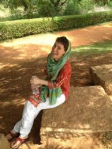
     
    Her poetry has been published in The Irish Times, Poetry Ireland Review, The Stinging Fly, The SHOp, Agenda, POEM: International English Language Quarterly, Southword (forthcoming), CanCan, Wordlegs, And Other Poems, ink sweat and tears (forthcoming).
     
    She is a founder member and Programme Curator for the Dromineer Literary Festival. She is a helm and Press Officer for Lough Derg RNLI Lifeboat.

    Fiona Bolger

    cure poem for the lovelorn

     
    a woman sits alone
    her eyes are on the swan feathers
    dropped by the moon upon the sea
     
    she sees no-one on the horizon
    but who can walk on water
    dance on down
     
    by day she weaves her stinging sadness
    into nettle shirts, by night she waits
    for her lover – the one who needs
     
    to wear those painful clothes
    to be fully human again
    no longer trapped
     
    on a cold moon
    dropping feathers
    on the sea
     
    Cure Poems are © Fióna Bolger

    fb5Fiona Bolger’s work has appeared in Headspace, Southword, The Brown Critique, Can Can, Boyne Berries, Poetry Bus, The Chattahoochee Review, Bare Hands Poetry Anthology and others. Her poems first appeared in print on placards tied to lamp posts (UpStart 2011 General Election Campaign). They’ve also been on coffee cups (The Ash Sessions). Her grimoire, The Geometry of Love between the Elements, was published by Poetry Bus Press. She is of Dublin and Chennai and is a member of Dublin Writers’ Forum and Airfield Writers.
    Mary Noonan

    The Card

     
    What goes by the name of love is banishment,
    with now and then a postcard from the homeland.
    – Samuel Beckett, First Love
     
    I’m looking for a card,
    one that holds the oriole
    on the black pear tree –
    will it be brazen or sweet,
    junebug or whippoorwill,
    Tupelo or Baton Rouge?
    I drape myself in maps,
    drift in colours and signs,
    sleep on my seven books
    of owls, frogs, alligators.
     
    I want a card that quickens
    codes, spills the secrets
    of words, sends letters flying.
    We used to name things,
    now we travel the lines
    past ghost-shack and scrub,
    sun-bothered lizards skittering
    under creosote and cocotillo.
     
    This card must distil the frenzy
    of the firefly as it waltzes
    with its own blazing corpse.
     
    The Card is © Mary Noonan

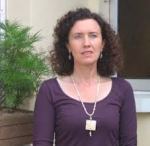
    mnMary Noonan lives in Cork. Her poems have been published in The Dark Horse, The North, Poetry Review, Poetry London, The Threepenny Review, Cyphers, The Stinging Fly, Wasafiri and Best of Irish Poetry 2010. She won the Listowel Poetry Collection Prize in 2010. Her first collection – The Fado House (Dedalus Press, 2012) – was shortlisted for the Seamus Heaney Centre Prize for a First Collection (2013) and the Strong/Shine Award (2013).

    Máire Mhac an tSaoi

    Ceathrúintí Mháire Ní Ógáin

     
    I
     
    Ach a mbead gafa as an líon so –
    Is nár lige Dia gur fada san –
    B’fhéidir go bhfónfaidh cuimhneamh
    Ar a bhfuaireas de shuaimhneas id bhaclainn
     
    Nuair a bheidh arm o chumas guíochtaint,
    Comaoine is éiteacht Aifrinn,
    Cé déarfaidh ansan nach cuí dhom
    Ar ‘shonsa is arm o shon féin achaine?
     
    Ach comhairle idir dhá linn duit,
    Ná téir ródhílis in achrann,
    Mar go bhfuilimse meáite ar scaoileadh
    Pé cuibhreann a snaidhmfear eadrainn.
     
    II
     
    Beagbheann ar amhras daoine,
    Beagbheann ar chros na sagart,
    Ar gach ní ach bheith sínte
    Idir tú agus falla –
     
    Neamhshuim liom fuacht na hoíche,
    Neamhshuim liom scríb is fearthainn,
    Sa domhan cúng rúin teolaí seo
    Ná téann thar fhaobhar na leapan –
     
    Ar a bhfuil romhainn ní smaoinfeam,
    Ar a bhfuil déanta cheana,
    Linne an uain, a chroí istigh,
    Is mairfidh sí go maidin.
     
    III
     
    Achar bliana atáim
    Ag luí farat id chlúid,
    Deacair anois a rá
    Cad leis a raibh mo shúil!
     
    Ghabhais de chosaibh i gcion
    A tugadh go fial ar dtúis,
    Gan aithint féin féd throigh
    Fulaing na feola a bhrúigh!
     
    Is fós tá an creat umhal
    Ar mhaithe le seanagheallúint,
    Ach ó thost cantain an chroí
    Tránn áthas an phléisiúir.
     
    IV
     
    Tá naí an éada ag deol mo chíchse
    Is mé ag tál air de ló is d’oíche;
    An garlach gránna ag cur na bhfiacal,
    Is de nimh a ghreama mo chuisle líonta.
     
    A ghrá, ná maireadh an trú beag eadrainn,
    Is a fholláine, shláine a bhí ár n-aithne;
    Barántas cnis a chloígh lem chneas airsin,
    Is séala láimhe a raibh gach cead aici.
     
    Féach nach meáite mé ar chion a shéanadh,
    Cé gur sháigh an t-amhras go doimhin a phréa’chas;
    Ar lair dheá-tharraic ná déan éigean,
    Is díolfaidh sí an comhar leat ina séasúr féinig.
     
    V
     
    Is éachtach an rud í an phian,
    Mar chaitheann an cliabh,
    Is ná tugann faoiseamh ná spás
    Ná sánas de ló ná d’oíche’ –
     
    An té atá i bpéin mar táim
    Ní raibh uaigneach ná ina aonar riamh,
    Ach ag iompar cuileachtan de shíor
    Mar bhean gin féna coim.
     
    VI
     
    ‘Ní chodlaím istoíche’ –
    Beag an rá, ach an bhfionnfar choíche
    Ar shúile oscailte
    Ualach na hoíche?
     
    VII
     
    Fada liom anocht!
    Do bhí ann oíche
    Nárbh fhada faratsa –
    Dá leomhfainn cuimhneamh.
     
    Go deimhin níor dheacair san.
    An ród a d’fhillfinn –
    Dá mba cheadaithe
    Tréis aithrí ann.
     
    Luí chun suilt
    Is éirí chun aoibhnis
    Siúd ba cheachtadh dhúinn –
    Dá bhfaigheann dul siar air.
     
    Cathrúintí Mháire Ní Ógáin from, Margadh na Saoire. Dublin: Sairseal agus Dill, 1956, 1971.
     
    Mary Hogan’s quatrains
     
    I
     
    O to be disentangled from this net –
    And may God not let that be long –
    Perhaps the memory will help
    Of all the ease I had in your arms.
     
    When I shall have the ability to pray,
    Take communion and hear Mass,
    Who will say then that it is not seemly
    To intercede on yours and on my behalf?
     
    But meanwhile my advice to you,
    Don’t get too firmly enmeshed,
    For I am determined to let loose
    Whatever bond between us is tied.
     
    II
     
    I care little for people’s suspicions,
    I care little for priests’ prohibitions,
    For anything save to lie stretched
    Between you and the wall –
     
    I am indifferent to the night’s cold,
    I am indifferent to the squall or rain,
    When in this warm narrow secret world
    Which does not go beyond the edge of the bed –
     
    We shall not contemplate what lies before us,
    What has already been done,
    Time is on our side, my dearest,
    And it will last til morning.
     
    III
     
    For the space of a year I have been
    Lying with you in your embrace,
    Hard to say now
    What I was hoping for!
     
    You trampled on love,
    That was freely given at first,
    Unaware of the suffering
    Of the flesh you crushed under foot.
     
    And yet the flesh is willing
    For the sake of an old familiar pledge,
    But since the heart’s singing has ceased
    The joy of pleasure ebbs.
     
    IV
     
    The child of jealousy is sucking my breast,
    While I nurse it day and night;
    The ugly brat is cutting teeth,
    My veins throb with the venom of its bite.
     
    My love, may the little wretch not remain between us,
    Seeing how healthy and full was our knowledge of each other;
    It was a skin warranty that kept us together,
    And a seal of hand that knew no bounds.
     
    See how I am not determined to deny love,
    Though doubt has plunged its roots deep;
    Do not force a willing mare,
    And she will recompense you in her own season.
     
    V
     
    Pain is a powerful thing,
    How it consumes the breast,
    It gives no respite day or night,
    It gives no peace or rest –
     
    Anyone who feels pain like me,
    Has never been lonely or alone,
    But is ever bearing company
    Like a pregnant woman, in her womb.
     
    VI
     
    ‘I do not sleep at night’ –
    Of no account, but will we ever know
    With open eyes
    The burden of the night?
     
    VII
     
    Tonight seems never-ending!
    There was once such a night
    Which with you was not long –
    Dare I call to mind.
     
    That would not be hard, for sure,
    The road on which I would return –
    If it were permitted
    After repentance.
     
    Lying down for joy
    And rising to pleasure
    That is what we practised –
    If only I could return to it.
     
    Translation by James Gleasure.
     
    Cathrúintí Mháire Ní Ógáin from, Margadh na Saoire. Dublin: Sairseal agus Dill, 1956, 1971.

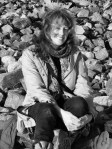
    maireMáire Mhac an tSaoi (born 4 April 1922) is one of the most acclaimed and respected Irish language scholars, poets, writers and academics of modern literature in Irish. Along with Seán Ó Ríordáin and Máirtín Ó Direáin she is, in the words of Louis de Paor, ‘one of a trinity of poets who revolutionised Irish language poetry in the 1940s and 50s. (Wiki)
    Deborah Watkins

    Missing

     
    Hour by hour you lie hidden under forest light
    as it rises and falls dimly through the trees.
    Year by year you slip a few more degrees
    into the earth while you wait and yet
    your ending clings, like the lingering sound of an old tune.
     
    Each season breeds cool abeyance –
    wood sorrel drifts ivory white
    while chard green ivy creeps.
    Dog roses run wild. They root in your place,
    parade their disdain but your bones
     
    remain constant and strong – poised
    silent cymbals in the theatre’s gloam –
    they wait for the musician to stand,
    take them in his arms and ring
    out a crash of sound that cries
     
    I’m here, I’m here!
     
    Missing is © Deborah Watkins

    Profile picDeborah Watkins is a painter and a writer who also worked for many years making decorative ceramics. She grew up in Dublin and studied craft design at the National College of Art and Design. Deborah moved to Connemara in 1991 where she now lives with her three young daughters and her husband Gavin Lavelle, who is also an artist. They run the family business together in Clifden – The Lavelle Art Gallery which showcases painting and sculpture by local and nationally renowned artists.
    Deborah began to paint more or less full time in 2008. She writes a blog about her painting processes and the natural landscape in Connemara, which reached the final of the 2012 Irish Blog Awards. Deborah began writing poetry in 2013 and she attends a poetry workshop run by Galway poet and essayist Kevin Higgins. Two of her poems have been published in Skylight 47, the Galway poetry newspaper, one in the forthcoming Summer issue. Deborah is also a feature writer in her local newspaper the Connemara Journal

    Doireann Ní Ghríofa

    Recovery Room, Maternity Ward

     
    (for Savita Halappanavar)
     
    The procedure complete,
    I awaken
    alone, weak beneath starched sheets.
    As the hospital sleeps, my fingers fumble
    over the sutured scar, a jagged map
    of mourning stitched into my skin —
    empty without and empty within.
    Beyond these white curtains,
    stars shine bright as Diwali
    in a cold night sky.
    Someday, within these walls,
    I will hear my baby cry.
    Cradling my hollowed womb,
    I trace this new wound and weep.
    The only sound I hear now is the fading retreat
    of a doctor’s footsteps, echoing my heartbeat.
     
    Recovery Room, Maternity Ward is © Doireann Ní Ghríofa

    doireann
    Doireann Ní Ghríofa’s poems have appeared in literary journals in Ireland and internationally. Her Irish language collections Résheoid and Dúlasair are both published by Coiscéim. The Arts Council of Ireland has twice awarded her literature bursaries (2011 and 2013). In 2012, she was a winner of Wigtown Gaelic poetry contest— the Scottish National Poetry Prize. Her short collection of poems in English Ouroboros was recently longlisted for The Venture Award (UK).
    • An Index of Women Poets
    • Contemporary Irish Women Poets
    • Bloomsdays
  • Poetry: “restlessly, driven by leaves” by Gillian Prew

    June 7th, 2014
    “restlessly, driven by leaves.”
     
    after a line by Rilke
     
    Leaf-sound/sea-sound/bird-sound/
    shoved places of air –
    pockets of autumn/natural languages.
     
    *
    The scuffed water/the swinging fruits/the ruffled gulls
     
                            - wind with its throat open.
     
    *
     
    The soaring cold barks at windows like a kept-out dog
    whines through the small spaces/slows the old.
     
    *
    And in cold’s quiet undertow blood is not quite wide enough/blood
    clotted on pavements rowanberry red.
     
    *
    My ear to the stone     hard/hard
    a murmur is coming/
    a tremble of locked-up hooves.
     
    *
    Jackdaws and magpies land on the treetops.
    The branches flap/they wave.
    An old man looks up in his flat cap/
    his mouth a shut wound.
     
    *
    Kolya, ghost-white
    traipsing the ochre-cluttered gardens
                and Milo, a shadow/
    his guts thrust up to his chest.
     
    *
    Autumn/
    the days loop-gusts tight to the bone
    loose to the sky/the lifted holes.
    
    “restlessly, driven by leaves” from A Wound’s Sound by Gillian Prew. Published Oneiros Books, 2014front-200x300

    A WOUND’S SOUND
     
    Gillian Prew
     
    The ambient howl-sound pervades everything. The gutted beasts are everywhere – billions raised and slaughtered for food globally each year. ‘A Wound’s Sound’ is an attempt to distill and voice their pain and their silence.

    Oneiros Books Poetry Catalogue

    .


  • “Sewage Babies” and “Missing” by Deborah Watkins

    June 4th, 2014
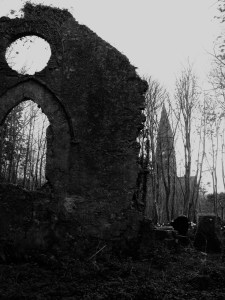
    Old church yard, Clifden

    Sewage babies

     
    Put on our Sunday best for Mass.
    Let on we haven’t heard
    about dead babies in Tuam.
    Eight hundred infants,
    bunkered in human filth.
    Bones tossed like old coins,
    dump of dead currency.
     
    To those who defend
    servants of God and state:
    ‘They did the best
    with what they had.’
    What have we?
     
    Garrison church.
    Proud, complicit government.
    Blessed well of
    indifference.

    • Bodies of 800 babies, long-dead, found in septic tank at former Irish home for unwed mothers


    Missing

     
    Hour by hour you lie hidden under forest light
    as it rises and falls dimly through the trees.
    Year by year you slip a few more degrees
    into the earth while you wait and yet
    your ending clings, like the lingering sound of an old tune.
     
    Each season breeds cool abeyance –
    wood sorrel drifts ivory white
    while chard green ivy creeps.
    Dog roses run wild. They root in your place,
    parade their disdain but your bones
     
    remain constant and strong – poised
    silent cymbals in the theatre’s gloam –
    they wait for the musician to stand,
    take them in his arms and ring
    out a crash of sound that cries
     
    I’m here, I’m here!
     
    Sewage Babies and Missing are © Deborah Watkins


    Profile picDeborah Watkins is a painter and a writer who also worked for many years making decorative ceramics. She grew up in Dublin and studied craft design at the National College of Art and Design. Deborah moved to Connemara in 1991 where she now lives with her three young daughters and her husband Gavin Lavelle, who is also an artist. They run the family business together in Clifden – The Lavelle Art Gallery which showcases painting and sculpture by local and nationally renowned artists.

    Deborah began to paint more or less full time in 2008. She writes a blog about her painting processes and the natural landscape in Connemara, which reached the final of the 2012 Irish Blog Awards. Deborah began writing poetry in 2013 and she attends a poetry workshop run by Galway poet and essayist Kevin Higgins. Two of her poems have been published in Skylight 47, the Galway poetry newspaper, one in the forthcoming Summer issue. Deborah is also a feature writer in her local newspaper the Connemara Journal. 

  • Some micro poems at The Bijou Poetry Review

    May 20th, 2014

    Signature

     
    two bird notes
    stave-clung in
    the feathered cold
     
    not amber dawn can obliterate—
    they sway their separate branches.
     

    Tree

     
    tree dilapidates in the face of dawn,
    in liquid dawn tree dissolves back.
     

    Umbrellas

     
    The type of wind
    he could not find
     
    breath-in
     
    frail silks black-circle him
    sheltering-in
     

    safe_imageTree, Signature, and Umbrellas are from Signature, by C. Murray
    Micro-poems from ‘Signature’ published at Bijou Poetry

←Previous Page
1 … 45 46 47 48 49 … 106
Next Page→
 

Loading Comments...
 

    • Subscribe Subscribed
      • Chris Murray
      • Already have a WordPress.com account? Log in now.
      • Chris Murray
      • Subscribe Subscribed
      • Sign up
      • Log in
      • Report this content
      • View site in Reader
      • Manage subscriptions
      • Collapse this bar