Even though it’s not in the news,
I’ve got the Fukushima Blues.
Strontium 90 on the grass,
Iodine 131, cesium, plutonium –
Cow’s milk is poisoned in your glass,
But don’t tell- there’d be pandemonium!
Three reactors in meltdown,
Tepco now confess
But where the radioactive water’s gone,
Is anybody’s guess.
Even though they say I have nothing to lose,
I’ve got the Fukushima Blues.
Radiation spikes sky high,
People told to stay indoors,
Animals abandoned to sicken and die,
Workers sleeping on radioactive floors.
Radiation in your taps should not alarm,
They lie; for radiation will accumulate
Over days and years; but this sure harm
They do not want you to contemplate.
Even though it is not in the news,
I’ve got the Fukushima Blues.
Have to evacuate another town
Radioactive dust on the school playground
Will people take this lying down?
Maybe the living were better off drowned.
The heat and power of the nuclear sun
Burning down through layers of our earth
Do they know what they have done?
Officials argue and resign, for what it’s worth
Even though they say I have nothing to lose,
I’ve got the Fukushima Blues.
Anonymous workers facing certain death
Trying so hard the leaks to stem
Tepco cannot pay for their last breath-
Nothing but crackers and rice for them.
‘We’re sorry’, they bow, ‘we made a mistake’
-Truth is, that Tepco was often warned-
But ‘who would expect a 9.0 earthquake?’
They took no action, the advice was scorned.
Even though it is not in the news,
I’ve got the Fukushima Blues.
Who needs to fear a terrorist
When respected companies act like this?
Covering it up and playing it down,
It isn’t their children on that playground.
There’s nothing to worry about,
Forget it, you haven’t a care-
Just don’t drink the water, eat the food,
Or breathe the air.
Even though they say I have nothing to lose,
I’ve got the Fukushima Blues.
Deadly radiation released into the Pacific
Poisoning the fish humanity will need
The amount? Can’t be specific-
Measure it in units of human greed.
Nuclear energy so safe, so cheap –
But what is the cost not in their calculations
As a poisoned world we all will reap,
With more cancer, leukemia and genetic mutation.
Even though it is not in the news,
I’ve got the Fukushima Blues.
Empty towns with deadened lights –
No one could take the time to pack
No need now for energy on dark nights –
Get out while you can, and never look back.
O babes of Chernobyl- what have we done?
Generations damaged beyond repair.
Is this also the fate of the land of the rising sun?
O nuclear fools, learn how to see and care!
Even though they say I have nothing to lose,
I’ve got the Fukushima Blues.
Four hundred and forty nuclear plants
And some still want to build some more
I’ve been accused of anti-nuclear rants –
But is energy really worth dying for?
We all live on only one planet
Travelling around our sun –
We’d better learn to take good care of it;
Surely even nuclear execs can count to one.
They say all will be well in this nuclear hell,
and I’ve nothing to lose-but- I’m telling you-
they’re giving our world the Fukushima Blues.
© Glenda Cimino ,all rights reserved. First published in News Four.
I am adding here a link to Glenda Cimino’s Poem Mr. Sarasota, published in A.B Edwards archives , with thanks to Glenda for the poems. You can read Glenda Cimino’s ‘Cicada’ poem here.



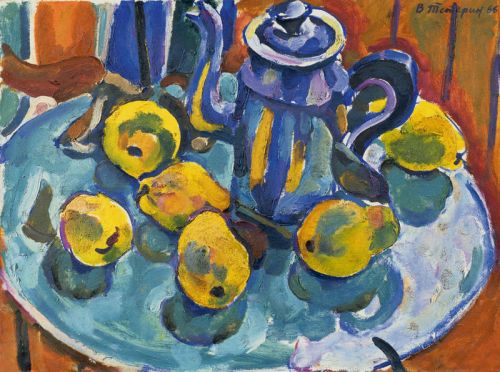

 Chris Murray
Arts Practice is in it’s essence is based in creativity, hence the need for the artist to be aware of how copyright works
The ability to set creative commons licences is crucial to artistic activity, I discussed here : http://poethead.wordpress.com/2011/03/23/poetry-and-digitisation-how-derivatives-occur/
Derivatives in poetry include translation, adaptation (including film/theatre/music/ artistic image) Artists have been using gnu/cc *for a generation* based in their awareness that the arts seed ideas, and that the artist /originator retains the moral and intellectual rights to ownership of their work through the setting of permissions.
I appealed to DETI in my first submission (June 2011) for recognition of the arts based in conventions (including Berne) and ongoing manifesto discussions on the issue. The current base of CRC discussion is narrow and not cognisant of how artistic practice would be impinged by a top-down regime of copyright law. The parameters of discussion need be widened to look at the originators of works in how they expect and understand how their work is used by other artists.
In example, I only use cc (by-NC-ND) for original works and I only publish previously published works on my blog, because I cannot afford remedy in law if ripped off- thus a tiny % of my material is online because of self-restriction : balance this against a corporate entity and their resources. there is a disparity inherent in legal remedy based wholly in resource at the moment. Add to that the issue of loss : if DDoS or any other denial of service occurs (incl isp-blocking) I lose three _ to four years of writing _ again my original work, and it is not subject to remedies that are affordable.
Artists need assurances and laws that protect their works and rights, these laws must be cognisant of their right to set permissions and to have confidence in methods of transmission. The base for copyright discussion needs to include and involve those advocates with expertise in the area and this is not confined or should be weighted to business and corporates.
If the base of copyright discussion is not broadened to include arts’ practice it is a creative disservice to Irish arts, and a refusal to recognise creative practice including those mentioned above : translation, adaptation , visual art and film.’ (my quote)
I will add links to how the issue of fair-use and rights-holders are being discussed in the comments section. I hope that people who publish online recognise themselves as stakeholders and desire to contribute their expertise to the CRC2012, because as stated in bold above here, ‘ The base for copyright discussion needs to include and involve those advocacies with expertise in the area and this is not confined or should be weighted to business and corporate entities.’