-
And her yellow music caught in the throat of birds
I waited a minute on the wind,
on your roof, outside.
She had been awaiting me in the middle of the day
having come warm over those seas to find me,
high over the little streams and the lakes
she came
and she playing—
and she jumping—
crying and talking in my ear.
She had carried her warm music over those streams,
over the frail blue flowers that grow on the lakeside.
And you were sleeping soundly.
I left you, I left the city for a little time.
I left the noise of the city, to wait on
the little breeze to bring me news.
And her yellow music caught in the throat of birds,
agus a ceol buí a thógail i scornach na h’éanaithe.
© C Murray
“and her yellow music caught in the throat of birds” by C Murray is licensed under a Creative Commons Attribution-NonCommercial-NoDerivs 3.0 Unported License. -
- The Willow’s Whisper: A Transatlantic Compilation of Poetry from Ireland and Native America Cambridge Scholars Publications 2011.
Thank you to Julianne Ní Chonchobhair, who has facilitated this short post with information and articles on the poets.
A note about the editors of ‘The Willow’s Whisper’
Jill M.O’Mahony is a Lecturer in The Waterford Institute of Technology, Ireland. She has previously studied English Literature and Sociology in The National University of Ireland, Maynooth and The University of Manchester. She is working on a doctoral research project which focuses on performance, liminality and event in Native American Poetry. She lectures in the Sociology of Consumption, Modern Ireland, Narrative Identities and Communications. Her research interests include Political Anthropology and Transcultural Literature.
Dr. Mícheál Ó hAodha currently works at the University of Limerick where he lectures in the Department of History, School of Languages, Literature, Culture and Communication, UL, Ireland. He has published widely on many aspects of Irish migration, diaspora, social geography and oral history – including American“Outsider”: Stories from the Irish Traveller Diaspora. (2007) (with T.J. Vernon); The Stranger in Ourselves: Ireland’s “Others” (eds. M.Ó hAodha, University of Limerick; D. O’Donnell, University of Limerick and C. Power (Centre for Ethnicity and Health, University of Central Lancashire, UK) (2007). Screening Difference: Visual Culture and the Nomadic “Other” (with A. Huether and D. Waldron) (2009), Migrancy, Memory and Repossession: Women on the Historical Margins (2010); His most recent book is “The Turn of the Hand”: A Memoir from the Irish Margins (with Mary Ward) (2010). Between 2006 and 2008 he was an AHRC scholar in the School of Arts, Histories and Cultures, University of Manchester. He has also written fiction and poetry in collaboration with other Irish writers including Colum McCann and Gabriel Rosenstock. His next book is due out shortly as part of the Re-imagining Ireland series – Peter Lang, Oxford.
I am adding here some release notes for the anthology will be released on the 16th of February 2012.
There is a Nomadics category in this blog, which looks at dispossession, migrancy, rootlessness, outsider poetry and diaspora. I asked Julianne Ní Chonchobhair if I could feature a poem or two from the compilation on this blog, and she very kindly agreed. In keeping with the theme of the Saturday Woman Poet idea, I have decided to feature poet Allison Adelle Hedgecoke , with thanks to Julianne Ní Chonchobhair. Info about Allison Adelle Hedgecoke is available via the Poetry Foundation website.
The following is an excerpt from The Willow’s Whisper , a poem by Allison Adelle Hedgecoke.
Crossing Sky Vault Worlds
for Vaughan
Corn, Sunflower raise their faces toward Sun as she slides into
place among blue heavens.
Squash send floral swirls orange-red up into ground fog mist.–
An ant angles his way watching constantly for morsels along the path.
Violet morning glories stream upward reaching with their petals
wide open for bursting light.–
Rays split seams of blue casting hopeful yellow-white strokes
beaming brightly. Seasons later,
Red Sioux Quartzite speckled white by snow and fully ice-crusted,
holds firm hallowed Sioux Falls grounds nearby.–
Glass flows, creating prisms in century-aged windows across this
room. Rainbows flourish here. Long ago,
Black Dog spoke to his master, foretold the coming world flood in
time for a raft to be built sparing Real People.–
Children in Quebec, before encroachment, pleaded for maple
sweets each fall. Were pumpkin lanterns lighted?
In my Huron grandmother’s midwifing beaded bag, the entire
universe gleams at me through pointed stars in dreams.–
© Allison Adelle Hedgecoke
A full list of the poets featured in the forthcoming The Willow’s Whisper are included here, N. Scott Momaday, Allison Adelle HedgeCoke, Luke Warm Water, Sherwin Butsui, Esther Belin, Joy Harjo, Nila Northsun, Joseph Bruchac, Donna Beyer (nee McCorrister), Travis Hedge Coke, Adrian C. Louis , Venaya Yazzie, Richard Van Camp, Odi Gonzales, Lee Maracle , Karenne Wood, Jules Arita Koostachin, Joan Kane, Fred Bigjim.
-
Hippy Get a Job
You might not realise your predictability
but when you caught my eye on Shop Street, at the demo,
I could see the thoughtless words forming in your brain
so before you shout them at me pass-remarkably
let me just stop you there for once, and in the gap between
now and when those words make it from your mouth
into the air between us, let me tell you something;
because I have wrestled with a pitchfork the same size as I was
and shovelled unknown tons of horse manure from sheds
before your mother brought you breakfast toast and tea
on school mornings before your leaving cert.And when you daydreamed out the window of maths class
from an overheated room into the driving rain
I was lifting bales of sodden hay through the mud and bitter wind
to the bottom field where the old cow died in spring
and because I had small hands I woke a hundred early mornings
to turn unborn lambs around inside their mothers. While you were
filling college application forms and when you were accepted,
bringing weekend washing home on student discount busses
I was pitting my eight stone against half a ton of pulling racehorse
and couldn’t feel my fingers or open my eyes with the rushing windYou then, qualified and interviewing in your shirt and tie and nerves,
while I was taking sweating tourists on foot through humid rainforests
carrying longhouse chief’s heavy gifts of pineapples nine hours back to base
in a country you don’t have the breath of mind to even imagine,
and nearer home when you guffawed into your pint glass and refused to leave
Taylor’s bar on Sunday early closings I washed your glass, swept the floor
and woke before the county to spend frozen hours putting
rubber bands on live lobster claws in a concrete tank in BearnaAnd then I bet you were promoted for your clever corporate antics,
while I did three years mortgage-paying on the night shift
with bleary day time TV addicts and stoners manufacturing,
things you might one day have inserted after too many business lunches
then later on when I decided I needed education and you sat,
with popcorn consuming the latest Hollywood blockbuster
you couldn’t see me upstairs splicing your next bit of entertainment.
You have no idea how long a day is invigilating young accountants
in tedium and silence in dusty exam halls with the smell of fast food fat
still clinging to my clothes from my night time cash in hand gig.You won’t realise that I have the streets of Galway imprinted on my brain
from delivering pesto and goats cheese pizza to your Knocknacarra sofa
or that I’m an expert on late night radio, and all night petrol stations;
secondary benefits of an un-free education, and now and here,
when I‘ve finally got myself some work I think has merit, and
I chose to use this day off, working to defend the rights of others
don’t be surprised at all at how quickly I abandon my principles of non-violence
and use this placard on you, as a weapon, if you say what you are thinking.© Sarah Clancy
Thanks to Sarah Clancy for the poem, Hippy Get a Job, which is taken from Thanks for Nothing Hippies , which will be launched in April 2012, by Salmon Poetry. I have featured Phrase Books Never Equip You For The Answers , here.
-
Phrase Books Never Equip you for the Answers
On the morning of the fifteenth time we went through
our sleep-with-your-ex routine, I had the usual optimism
thing about mistakes is to not keep repeating the same ones
I said disregarding the government health warning
on the cigarettes I was sucking, crossing the road without
stopping speaking or looking, ignoring the red man pulsing
on the lights at the junction, I was wired direct and I said;
I know, I’ll write you the definitive user manual for me.
You said I was arrogant that we should make it up as we go,
and I said; well could I do a mind map then? With
here be dragons marked clearly in red, so we won’t flounder
like last time end up washed up dehydrated and drained
well I was, fairly wired, I said ‘in each shipwreck we’re lessened
embittered, come on, let me at least try to fix it, I can write us
a blueprint for the new improved version, and you laughed
and said well damn you for a head-wreck, go on then and do it.So I wrote, but it came out all stilted, like a work in translation
see when I say, let me fix that or give it here and I’ll do it
it means I need you, and if I tell you for example how
I’ll re-arrange the universe to your liking it doesn’t mean
I’m superior in fact, translated it’s about the same as the last one-
‘can you not see, how I need you? And when I come out with all those
‘you-shoulds’ that drive you demented, there’s no disrespect in ‘em
verbatim they’re whispering I’d be desolated without you
and when you call me control freak, the tendencies you’re describing
are inherently rooted in my fear of you leaving and how I’ll react.Less-wired more hopeful I brought you my phrase book
on our very next meeting but you kissed my cheek and said
let me stop you a minute and then those awful words that never
signify good outcomes, listen I’ve been thinking… I know
we’ve got this weird cyclical attraction thing going and I’m sorry
for my part in it but really I can’t see it working, the problem
for me is how you just don’t need anything and my phrase book
had nothing listed under that heading.© Sarah Clancy
Thanks to Sarah Clancy for the poem, Phrase Books Never Equip you for the Answers , which is taken from Thanks for Nothing Hippies , which will be launched in April 2012, by Salmon Poetry. Hippy Get a Job , by Sarah Clancy, is here.
-
I am adding here both excerpt and full link to the WordPress appeal to Help Stop SOPA/PIPA. Many people use the WordPress brand from design-level through to hosting. I have used it since 2006 in numerous ways including being part of a group blog, personal blogs and with PEN. The question has to be about who benefits from internet-repression? What vested interests are secured by taking down the innovators , and of course why Congress would attempt laws as repressive as those they have criticised globally ?
It really should not be a case of codifying domestic laws that one appears opposed to on the international stage, nor are the media discussing the possible ramifications of censorships on innovators. As is usual there appears to be an inability to examine the issues.
The Wordpress excerpt follows :
- In the U.S. our legal system maintains that the burden of proof is on the accuser, and that people are innocent until proven guilty. This tenet seems to be on the chopping block when it comes to the web if these bills pass, as companies could shut down sites based on accusation alone.
- Laws are not like lines of PHP ; they are not easily reverted if someone wakes up and realizes there is a better way to do things. We should not be so quick to codify something this far-reaching.
- The people writing these laws are not the people writing the independent web, and they are not out to protect it. We have to stand up for it ourselves.
Blogging is a form of activism. You can be an agent of change. Some people will tell you that taking action is useless, that online petitions, phone calls to representatives, and other actions won’t change a single mind, especially one that’s been convinced of something by lobbyist dollars. To those people, I repeat the words of Margaret Mead:
Never doubt that a small group of thoughtful, committed citizens can change the world. Indeed, it is the only thing that ever has.
We are not a small group. More than 60 million people use WordPress — it’s said to power about 15% of the web. We can make an impact, and you can be an agent of change. Go to Stop American Censorship for more information and a bunch of ways you can take action quickly, easily, and painlessly. The Senate votes in two weeks, and we need to help at least 41 more senators see reason before then. Please. Make your voice heard.
-
The Irish Writer’s Centre, last evening 06/01/2012, hosted along with Dublin City Council a celebration of women’s poetry, music and literature to mark Oíche Nollaig Na mBan (Women’s Christmas). The event was presented by June Considine.
And what a night it was.
The event was bi-partite in structure, with readings by three poets and story-tellers to begin, a brief interval filled with music was quickly followed by three more readings by three more women writers. The first half was decidedly poetic, with readings in English and Irish by Celia de Fréine, Nuala Ní Dhomhnaill and Eilis Ní Dhuibhne.
Celia De Fréine read In Relation to Each Other, Dearbhail , Celia Óg , and Ophelia. Dearbhail was indeed heart-breaking, the tale of the murder of Dearhbail by jealous women.
Eilis Ní Dhuibhne read two tales , The Man Who Had No Story and The Blind.
Nuala Ní Dhomhnaill read from a few collections, Including from my favourite Pharaoh’s Daughter, with translations by Paul Muldoon, Michael Hartnett, and Dr. Eiléan Ní Chuilleanáin. Poems read included , The Language, Dán do Melissa, and Closure.
Music flowed along with wine as Jane Hughes on cello & Ellen Cranitch on flute played a selection from Carolan and Tchaikovsky, including the much giggled upon Fanny Power.
Interval over, the business of literature reared it’s head in the shape of Mary O Donnell ,who read from a WIP about Northern Ireland , alongside two poems which were tremendous and indicate a wonderful talent in two quite distinct areas of writerly discipline.
Sarah Clancy charmed the crowd with her Argument Poems , which included Ringing in Sick To Go Mermaid-Hunting, Cinderella Backwards , and Riot Act.
Mia Gallagher topped the evening off with some reading from her upcoming book.
This should not have been a unique evening in the calendar. There are hints of more such evenings being planned, the audience was mixed between the sexes and they were always interested. It was utterly charming, eclectic and beautifully balanced. I expect that people who wish more detail on the music and books can contact the Irish Writer’s Centre directly. Kudos to the board, volunteers and organisers for a great evening.

Pic by Stephanie Joy -
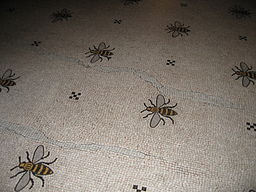
Said the Bee to the Lion
‘ My life is a gold prayer-‘
Said the laughing Sun
‘My life is the gold air’
Said the Lion to the Bee
‘My life is that of the sun ; in hot gold, I rage through
the gold air’
But I who have known the weight of the August air
And the gold heat in the heart
Am like a bright small star in a starry sky
Bright to myself only.’
by Edith Sitwell.This poem is from the 1962 edition of The Outcasts, Macmillan and Company Limited. I am adding here the Poetry Foundation link to Edith Sitwell’s archive and bibliography. There is a short note linked on this blog about Transcribing Edith Sitwell, from the Women Writers, Women Books site.
-
This post is a short form critique based on recent media coverage of those women poets who had not alone dared to hoist their poetic-petards, but to have achieved a popularity which is altogether more meaty than winsome domestic. Last week, I alluded in my Tweets and indeed in this blog to the issue of poetic critique. I am taking the idea of critique a step further now, and examining the acreage of press devoted to a negative representation of women poets that somehow manages to generate column inches but ignores the actual material : the poems that the women write.
Unlike Rita Dove, Helen Vendler, and Alice Oswald, Carol Ann Duffy has (this time) escaped the pariah-like status conferred on women poets by a media more interested in looking for gossip than adequately reviewing their books. The recent rows between Dove and Vendler, have, I believe, been generated by a bored media that needs to play fire with the writers rather than examine the middle ground in what has become a race row. Very few editors looked at the Dove/Vendler row in its proper context; anthologies nearly always involve controversial choices. Nope! Far better to have a bit of mud-wrestling between two women editors of great merit, than to question the limits on their editorship, or why indeed so few women attain the level of literary acceptance to achieve an editorship in the first place. It is all about the row between the women, and not the relative merit of the two women’s work and what they both have contributed to literary America.
Alice Oswald had the temerity to withdraw from the T.S Eliot prize, and for this acres of column were devoted to examining the finances of poets and the perceived silliness of her principles. The issue of her withdrawal even made it into a paragraph in the Loose Leaves column of the Irish Times. The book itself, Memorial, has not achieved a critique within some of the very papers that reported her withdrawal from the T.S Eliot prize. Memorial apparently has no merit for the poet critic, but the row is highly important to the people who collate the gossip inches. Of course I thought to add in here the link to the poet’s protest about the ACE 2011 funding cuts.
Is this is what it is about ?
Women’s poetry becomes a reductio ad absurdum in terms of what editors consider to be marketable variety, whilst also ignoring the books, the work and their devotion to their medium? Where is the discussion on the Iliad, the discussion on the merit of editors like both Vendler and Dove ? I am only glad that commissioning editors in these cases actually mentioned the books, I’ll do my own reviews and reading rather than be led by low gossip mongers and silly headlines.
The question of the visibility of women writers raised by Boland in God’s Make their Own Importance can indeed be qualified with ‘maybe sometime they will actually review the books of those authors that they so casually traduce in their (er) newspapers‘.
Edit January 20/01/2012: More incisive critique in the London independent today by Boyd-Tonkin, using a stock-image of Alice Oswald, and of course reminding the reader that T.S Eliot was a banker (as the Telegraph did in December 2011)
EDIT January 31st 2012 : Some incisive Sir Geoffrey Hill nonsense, courtesy of the Telegraph http://www.telegraph.co.uk/culture/books/booknews/9050038/Poet-Laureate-compared-to-writers-of-Mills-and-Boon.html
Women Poets from the Blog (page)

Cutting the cloth to fit the wearer, recent press about women-poets. by C Murray is licensed under a Creative Commons Attribution-NonCommercial-NoDerivs 3.0 Unported License.
-
Subscribe
Subscribed
Already have a WordPress.com account? Log in now.
 Chris Murray