• chris murray
  • journals – bibliography – publication notes
  • downloadable items – essays – media
  • copyright
  • Home

Chris Murray

  • A very public room of one’s own, online writing

    August 6th, 2011

    “These performative dimensions of public speech always carry tones, gestures, forms of acting out, contradictions, and self-corrections that contribute to new actions and capacities in others. The quote you have singled out to me suggests that poetry can show engaged citizens how to listen to, or respond to, public issues or actions.”

    The above statement is about poetic engagement derived from a piece at J2, entitled Recasting poetry, the long biography of a poem.  (at Link) . It is interesting indeed  how writers use the internet and multi-media resources  for poetics , but this piece is not about practice or  gesture, it is about creating poetic spaces in the most public of places, the web. I saw this republished Atlantic article last week and wish to set this short post into that context.

    Lots of readers will note the allusion to Virgina Woolf’s statement about writing spaces in the title of this post, indeed we know all about the oubliettes, the locked-doors, the time stolen or negotiated that forms the woman writer’s battle for self-expression. There are also varieties of instances of perceived adulteries caused by women musing upon their muses, written most poignantly by Mirjam Tuominen which could have net-applications… I may link that one soon.

    I am concerned now with the issue of public writing, with space, and with the diary form translated and updated to the web blog form, and in how that impacts upon the practice of writing, specifically  mine. I recently wrote a piece about writing  practice ( for another blog) on the subject of transcription, which set me to thinking about how my writing practice has changed. There is an awkwardness about my left-handedness which does not lend itself to copying and pasting much, and most of the poems on this blog are transcribed directly from books, except the original works which are just written down and eventually typed out. However, I do a lot more in the way of communicating than I necessarily would just sitting in a room reading and writing (or doodling). 

    It has been excellent in many ways to be able to access other writers and discuss subjects such as poetry, gender, women’s presence online and imbalances in publication of women writers , most particularly literary women writers.

    What hasn’t been excellent is that the scrawled jotting, associative thinking, and lateral imaging things are a bit neglected. No matter how much one refuses to admit it, blogging is a very public method of getting to the essentials of writing, it has its own space, time and decorative element. Blogging has rather severe limitations in terms of tailoring what one thinks people wish to read, and it is not a spontaneous or creative way of writing.

    This very public space which is defined by what I want to go on the page lacks a creativity that is often exasperating, I don’t doodle here, or cross out things.  Poems that  I like or think others may like  are what this space is about, it does not have the busyness of sets of inter-related note-books, folders, pencil-cases or writing smells like inky leaks. It is too neat. I am looking for ways to make it more natural at the moment.

    One thing which annoys me beyond anything else about women who write is their constant referral to themselves as scribblers and not as writers. The two acts, that of writing and that of scribbling are not really related, scribbling is more a mode of generation than of production. Very few male authors tend toward that type of florid self description.
    •  http://www.theatlantic.com/magazine/archive/2003/03/caring-for-your-introvert/269
  • Bird poems from Poethead

    August 1st, 2011

    Preamble to  The Valley by  Kerry Hardie

    ‘The first valley is the Valley of the Quest,
    the second the Valley of Love
    the third is the Valley of Understanding
    the fourth is the Valley of Independence and Detachment
    the fifth of Pure Unity
    the sixth is the Valley of Astonishment
    and the seventh is the Valley of Poverty and Nothingness
    beyond which one can go no further. ‘

    from , The Conference of the Birds by Farid ud-Din Attar, written in the second half of the twelfth century AD. This rendering in english is by C.S Nott.

    I published a short poem of condolence this week for the victims of atrocity in Norway, and got to thinking about the bird poems that are linked on the blog. There are quite a few bird  poems,  as there are images scattered on the blog. I thought to link them here today.

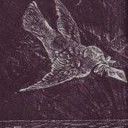
    The avatar that I chose for Poethead is  a bird,  Max Ernst’s image  is one of a set  of  lithographs used in his illustration of René Crevel‘s  Babylon . My avatar image is just below this short post on the bottom right-hand column of  the Poethead home page (and all of the pages on this blog) .

    The Bird Poems from Poethead.

    • from, An Duanaire: http://poethead.wordpress.com/2008/08/09/nach-aoibhinn-do-na-heinini/
    • from , An Duanaire : http://poethead.wordpress.com/2010/06/05/failte-don-ean-an-duanaire/
    • Kerry Hardie : http://poethead.wordpress.com/2011/01/08/a-saturday-woman-poet-kerry-hardie/
    • ‘Aviary by Tom Mc Intyre’ :  http://poethead.wordpress.com/2010/10/07/aviary-by-tom-macintyre/
    • ‘The Swallows Fly’ :  http://poethead.wordpress.com/2010/08/22/two-poems-by-mirjam-touminen/
    • ‘The Philosopher and the Birds’ :http://poethead.wordpress.com/2010/07/15/the-philosopher-and-the-birds-by-richard-murphy-via-poethead/
    • ‘Hide’  by Catríona O’ Reilly :  http://poethead.wordpress.com/2009/12/01/hide-by-catriona-o-reilly/
    • ‘Willy-Wag and Sparrow’ : http://poethead.wordpress.com/2011/07/28/willy-wag-and-sparrow-by-nancy-cato/
  • ‘The Eye Itself is a Lily’ by Ileana Mãlãncioiu.

    July 30th, 2011
    Behold the lily repeating itself eternally
    Three lilies in one the divine bouquet,
    So many more bouquets a wedding and a deathbed
    All the weddings and funerals the same lily.
     
    Out of the lily my love the bridal dance,
    Out of the lily the funeral procession,
    Like a dragon with a thousand heads the lily
    Leaps out eternally to meet us.
     
    The wind carries the lily seeds
    Lilies sprout from the stones of the great boulevards
    Lilies burst from the smooth plastered walls
    And out of the sun that burns us.
     
    Like some eternal stalks the rays,
    The eye itself is a  lily and its core is empty,
    Sight looks out through the white petals
    Where acid has eaten its way. 
     
    by Ileana Mãlãncioiu.


    This poem , by Ileana Mãlãncioiu, is taken from the Southword edition of After the Raising of Lazarus,  translated by Dr. Eiléan Ní Chuilleanáin.

  • ‘Willy-Wag and Sparrow’ by Nancy Cato.

    July 28th, 2011
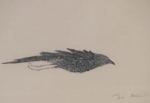
    ‘Bird in the Sun’, by Leonard Baskin.

    Willy-wag and Sparrow
    sat on a stone.
    Said Willy, it’s cold
    when the sun is gone.

    But my heart beats hot
    in my white silk breast;
    time enough later
    for me to rest.

    Said Sparrow, It’s dark
    in the green willow,
    and the cat may lurk
    in the shade below.

    He fluffed his feathers
    and shook his head;
    by now the others
    are safe in bed.

    Said Willy, the sky
    is full of light,
    and a juicy fly
    is quickly caught.

    I’ll flirt my fan
    awhile the cold,
    and I won’t go in
    till the moon is gold.

    Said sparrow, the tree
    is full by now,
    and I’m off to my perch
    on the topmost bough.

    But Willy said, whether
    it’s dark or light,
    if I feel like singing
    I’ll sing all night. 

     By Nancy Cato

     In remembrance of the children of Utoeya, whose play was so grievously wounded and destroyed. RIP

    From The Dancing Bough, 1957.

    Linked here :  http://www.poetrylibrary.edu.au/poems-book/the-dancing-bough-0063000

  • Colette and women

    July 23rd, 2011

    ” I give my indulgence  – and-  I am not the only one – and approval to those who wear the colours of their survival, the signs of their activity into the arena. Too much courage has shone among the female kind, and for too many years, for women, under the pretext of loyalty, to  break the contract they signed with beauty. ”  ( trans, Matthew Ward)

    Alix had done the unforgivable and looked her age, which to the women in Colette‘s milieu was  just  plain wrong, Alix was not however invisible, nor was her experience –

    I  wonder at the literary year 2010- 2011,  and those lists which include  the Forward Prize, the New Yorker Magazine , the TLS and others whose  editors seem to imagine that we will be distracted by  Franzen’s  glasses, or depth literature and angst from male writers, that do not and cannot ever write from the perspective of  the woman’s relation to her body, to cosmetics, to  pressing issues such as covering, torture, unfair imprisonment. The historical lessons learned about  female voice and experience must be re-learnt for another generation of women, and indeed men.

    There is just one other excerpt from Colette’s oeuvre on this blog, and it is about her own childhood, her unique relation to words and her development as a woman writer. I am inserting it here and as I do, I wonder at those people who would deny the veracity of female education and literary writing because :  it is not male.  What a  bunch of codswallop  to expect a great writer like Houellebecq ( whose description  of  a forty year old vagina in Atomised  is clearly   exterior to his understanding) to actually get  into the head of that woman whom he writes so beautifully.  He cannot, he can only describe outsides.

    Colette , from Alix’s Refusal.
    ” But it’s my real face!” No. Your real face is in the drawer  of your dressing table, and sadly enough, you have left your good spirits with it. Your real face is a warm, matte pink tending toward fawn , set off high on the cheeks by a glimmer of deep carmine, well blended and nearly translucent  – which stops just under the lower eyelid, where it disappears  deep into a bluish gray, barely visible, spread up to the brow; the thick eyebrow, carefully drawn out at the end, is brown like your thick curling lashes between which your gray eyes look blue.”

     (trans, Matthew Ward)

    .
    And yet our lists have been dominated by male writers, more so these  two years than in  any others. I wonder do the publishing industry remark upon the absence of women literary writers and poets   from lists,  or maybe they  expect that we are all gender-neutral ?  What matter to them  if the  voice of  the female rape or torture victim is written by a man who has not the experience of  (for one)  sexual discrimination as part of his experiential approach to his work !  See here and here .
    .
    I am going back to reading Colette, to Carter, to West , to Weil, because these women writers resonate with me. Weil’s essays on affliction could be proofs for Colette’s Alix, though, without the emotional or philosophical depth. But we do not ask for depth amongst Colette’s  heroines;  the pearl-stringers, the corset-makers, the concubines,  the show-girls or the bored, endangered and eternally restive wives of small-business owners. What a carnival of grotesques would occur if literature and poetry, being male-dominated, tried to write these women.  Publishers assume that this is where the market is and by  default those   books  furnish the halls of academia,  making tokenism and or specialisation the   provenance of the endangered female writer.
    .
    Alix’s crisis is of discouragement , a  ‘déflouquement,’ (Rabelais), I wonder what kind of crisis has to be provoked in publication to avoid this type of statement from Peter Stothard :
    .

    “The TLS is only interested in getting the best reviews of the most important books,” and “while women are heavy readers, we know they are heavy readers of the kind of fiction that is not likely to be reviewed in the pages of the TLS.”

    Quite.  Clearly Peter Stothard does not recognise women’s contribution to the literary canon, no more than VS Naipaul !  But it’s always been about the market and for some reason publishers do not get that women are highly educated and whilst enjoy fluffy novels sometimes, we expect a bit more choice in our reading than to bombarded with depth interviews with literary giants and more dedication to bringing forward the female voice.  Thanks, I am adding my refusal, my discouragement to my heroine’s.

    My Mother’s House and Sido, by Colette. Originally : La Maison de Claudine , 1992 . Sido , 1929

    http://poethead.wordpress.com/2008/10/15/aphbicecladiggalhymaroidphorebstevanzy-my-mother-and-the-books-colette/

    http://poethead.wordpress.com/a-list-of-poets-from-poethead/

    excerpts from The Collected Stories of Colette, Vintage Classics 2003.

  • ‘My Fuchsia’ by Ruth Fainlight.

    July 16th, 2011

    My fuchsia is a middle-aged woman
    who’s had fourteen children, and though
    she could do it again, she’s rather tired.
     
    All through the summer, new blooms.
    I’m amazed. But the purple and crimson
    have paled. Some leaves are yellowed or withering.
     
    These buds look weaker and smaller,
    like menopause babies. Yet still
    she’s a gallant fine creature performing her function.
     
    -Thats how they talk about women,
    and I heard myself using the same sort of language.
    Then I understand my love for August :
    it’s exhausted fertility
    after glut and harvest.
     
    Out in the garden, playing
    at being a peasant forced
    to slave until dark with a child on my back
     
    another at the breast and probably
    pregnant, I remember
    wondering if I’d ever manage
     
    the rites of passage from girl
    to woman : fear
    and fascination hard to choose between.
     
    Thirty years later, I pick the crumpled flowers
    off the fuchsia plant and water it
    as if before the shrine
    of two unknown grandmothers –
    and my mother who was a fourteenth child.
     

    by Ruth Fainlight

    • From The Knot , by Ruth Fainlight. Hutchinson 1990.
  • Elizabeth Kate Switaj

    July 10th, 2011

    The site of Elizabeth Kate Switaj, poet, writer, and photographer.

    via Elizabeth Kate Switaj.

    The following poem is Elizabeth Kate Switaj’s response to Peter Stothard regarding the token presence of women in literature, read more at her site.

     Not our kind my dear.
    
     "when polished nails touch Ulysses
    Marion Bloom appears on the cover
    corseted and heaving
                                       over the leather's top
    
    between that and her windblown hair,
    No it's not literary No it's not No important enough
    
     for these pages, my dear
    
                                be certain to scrape
    off all that cherry bomb red
    before your fingers hit the keys
    
    if you want your book to be
    important enough for us Yes
    a quarter are written by the fair sex Yes
    
                         twenty-five percent is fair
    
    as long as you continue to taste
    salt in the wind in your heroine's hair
    
    when our taste is for coffee grounds & tea leaves
    the rest is fetish, is popular, is waste
    
    wipe that lipstick off your face
    what do you mean that's just your smile?
    I know what shallow tastes like "

    This is a short-web grab link, but regular readers will know Elizabeth’s
    poem addressed to Peter Stothard of the Times Literary Supplement entitled,
    Not our kind my dear.

  • ‘Simply’ and ‘Not All The Time’ by Maria Laina

    July 9th, 2011

    SIMPLY
    A mauve bird
    with yellow teeth
    red feathers
    green feet
    and a rose belly
    is not
    a mauve bird.
     

    by Maria Laina.

    Published in Pacific Quarterly Moana (Hamilton, New Zealand). Vol. 5, No. 3, 1980, and in Ten Women Poets of Greece. Wire Press – San Francisco, 1982
     

    NOT ALL THE TIME
    I ignore poetry
    – not all the time –
    when the blood throbs on walls
    when pottery falls to pieces
    and life uncoils
    like thread in a bobbin
    I spit at my sorrow and completely
    ignore poetry
    when colours plague my soul
    yellow blue and orange
    I withhold my hate and calmly
    ignore poetry
    when your eyes tie my stomach
    into knots

    What’s more
    – not all the time –
    I ignore poetry
    when it becomes a quaint ambition

    a rare find
    on a love-bench in a future hall.
     

    by Maria Laina
     
    Published in Contemporary Literature in Translation (Canada) No. 27, Summer 1977, and in KUDOS (UK),  Issue Six, 1980 , http://www.poiein.gr/archives/2192/index.html

    Notes on the Poems

    • The above poems come from Maria Laina, Change of Landscape, translated from the greek by Yannis Goumas : http://www.poiein.gr/archives/2192/index.html 

    Rather than imagining that the problem is with how a woman poet uses her voice, I expect that the issue is more with how literature (serious poetic literature) is often still considered to be a male preserve. As I have said before now, male poets mature with age and women poets disappear. 

    Here is Laina’s Wikipedia page and list of her books

    Ενηλικίωση (Coming of Age), 1968
    Επέκεινα (Hereafter), 1970
    Αλλαγή τοπίου (A Change of Landscape), 1972
    Σημεία στίξεως (Punctuation Marks), 1979
    Δικό της (Of her own), 1985
    Ρόδινος φόβος (Rose fear), 1992
    Εδώ (Here), 2003

  • ‘All Things Can Tempt Me From This Craft’ a poem by Éilís Ní Dhuibhne.

    July 9th, 2011

    All Things Can Tempt Me From This Craft

    by Eilis Ní Dhuibhne

    Rain twists like a tornado in my distracted head.
    Ideas drip slow as saline into my dreaming bed.

    from  Mark my Words, Meditations by Eilis Ní Dhuibhne,The Night Garden Alice Maher. 2007 RHA, Ely Place.

    The Night Garden
  • On transcriptions, from Women Writers, Women Books.

    July 6th, 2011

    “This short post is related to what I do on the Poethead blog and I suppose to the area of women’s writing that has been a concern for a few years now.

    Many of the poems that are a part of Poethead have found their way into my possession as gifts, or from the libraries and collections of people who bought (or ordered) the books when they were originally published. Quite a few of the books  that I have been privileged to read are not obtainable from our local friendly bookshops, though they can often be had through Amazon or other such internet outlets.

    picture of a poetry notebook

    The poems on the site were in the main transcribed from books by me, though not all of  them are.

    I started transcribing poetry as an exercise a few years ago because of something I had read in A.S. Byatt’s Possession. Roland Mitchell’s thoughts on the teaching methodologies of his superior regarding transcriptions stuck with me. I wanted to test how  I would do if I were to know a poem through  the copying  of it. I soon learned that  no  matter how carefully one attempts a transcription, it is incredibly easy to mess up the  simplest things and change the  sense of the work completely. “

    • http://booksbywomen.org/on-transcribing-womens-poetry-by-c-murray/

    The whole article is available at the  Women Writers, Women Books Blog  , it is related to two pieces on Poethead, which I  am linking here, Hannah Weiner‘s  Book of Revelations and Nagy’s Hemisphere. I thought to add in Nuala Ní Chonchúir‘s piece about the Saturday Woman Poet also,  here  at Nuala’s Blog.

←Previous Page
1 … 65 66 67 68 69 … 106
Next Page→
 

Loading Comments...
 

    • Subscribe Subscribed
      • Chris Murray
      • Already have a WordPress.com account? Log in now.
      • Chris Murray
      • Subscribe Subscribed
      • Sign up
      • Log in
      • Report this content
      • View site in Reader
      • Manage subscriptions
      • Collapse this bar