III. White Nights Furrow-plodders in spats and bright-clasped brogues Are cradling bags and hoisting beribboned drones As their skilled neck-pullers’ fingers force the chanters
And the whole band starts rehearsing Its stupendous, swaggering march Inside the hall. Meanwhile
One twilight field and summer hedge away We wait for the learner who will stay behind Piping by stops and starts,
Making an injured music for us alone, Early-to-beds , white-night absentees Open-eared to this day.
Note : I am attaching to this short post a link entitled : Feis Teamhar , a Turn at Tara because I was there to hear the poets and musicians on that day. I believe that the Newspapers under-reported the day and did not attend to Mr Heaney’s words. He was there to celebrate Tara as a cultural centre and to support the Campaign to Save Tara . He was also there to support his nephew who was and is a Tara Campaigner .
Since that time , there have been other feiseanna at Tara, this was the inaugural one organised by ” Paul Muldoon, Pulitzer prize-winner, will read his poetry to celebrate and honour Tara and will be joined by musicians: Grammy award-winner Susan McKeown, Laoise Kelly, Aidan Brennan and others “.
I did my first post on the Take Back the Tech Campaign in 2006 , this year’s campaign is being promoted now.
“Take Back The Tech! is a collaborative campaign that takes place during the16 Days of Activism Against Gender-based Violence (25 Nov – 10 Dec). It is a call to everyone – especially women and girls – to take control of technology to end violence against women. “
This is a short note calling attention to the Campaign and a link to the Take Back the Tech 2010,
Apologies for linking to this statement rather late and I know that it is all over the web, I think that it should also be linked here, so I am adding the Fatima Bhutto Twitlonger link that some Irish writers posted and shared on Sunday evening (31/10/2010). The entire statement is added just beneath this following excerpt :
SOMETHING FOR THE MEDIA TO THINK ABOUT : (Tweeted by Fatima Bhutto 31/10/2010) :
“A mob of about a hundred people arrived at my house at 11 this morning (Sunday, October 31, 2010.) They broke through the gate and vandalized property. They shouted slogans against me for my views on Kashmir, and threatened to teach me a lesson. The OB Vans of NDTV, Times Now and News 24 were already in place ostensibly to cover the event live. TV reports say that the mob consisted largely of members of the BJP’s Mahila Morcha (Women’s wing). After they left, the police advised us to let them know if in future we saw any OB vans hanging around the neighborhood because they said that was an indication that a mob was on its way. In June this year, after a false report in the papers by Press Trust of India (PTI) two men on motorcycles tried to stone the windows of my home. They too were accompanied by TV cameramen.
What is the nature of the agreement between these sections of the media and mobs and criminals in search of spectacle? Does the media which positions itself at the “scene” in advance have a guarantee that the attacks and demonstrations will be non-violent? What happens if there is criminal trespass (as there was today) or even something worse? Does the media then become accessory to the crime? This question is important, given that some TV channels and newspapers are in the process of brazenly inciting mob anger against me. In the race for sensationalism the line between reporting news and manufacturing news is becoming blurred. So what if a few people have to be sacrificed at the altar of TRP ratings? The Government has indicated that it does not intend to go ahead with the charges of sedition against me and the other speakers at a recent seminar on Azadi for Kashmir. So the task of punishing me for my views seems to have been taken on by right wing storm troopers.”
UBUWEB was founded in 1996 by Kenneth Goldsmith and has been linked on the Poethead blog since 2008. When I first heard some fabulous Celtic Mouth Music on UBUWEB I shared it around with friends who did not know the site. Today, whilst searching this morning for publications that take poetic cycles (rather than a limited amount of two to three poems so prevalent in the Irish little magazines) I visited UBUWEB site again to put some music on and thought it a good idea to draw attention to what Goldsmith has achieved in terms of avant-garde web use.
“According to UbuWeb founder and publisher Kenneth Goldsmith, statistics indicate that visitors to the site, “are as likely to download a Renaissance visual poem as they would listen to the MP3 of Louis Farrakhan singing ‘Is She Is, Or Is She Ain’t?’” Begun in 1996, UbuWeb hosts enough audio material, text, and graphic work to keep a reader occupied for months. While the site was created to highlight and archive visual and concrete poetry, increased bandwith and an influx of materials have broadened the site’s scope. As Goldsmith told Poets.org, “We’ve moved toward becoming a clearinghouse for the avant-garde.”
Goldsmith’s Comments on UBUWEB and the issue of costing, site use and how the Web benefits the transmission of ideas , information and poetry, is related to a permanent Poethead page which contains theUniversal Declaration of Linguistic Rights. Goldsmith , indeed , has achieved what many corporate entities set out to achieve (but often fail at ) in his ability to respect the translation and moral rights of UBUWEB linked authors, thinkers and performers ,
“Concrete poetry‘s utopian pan-internationalist bent was clearly articulated by Max Bense in 1965 when he stated, “…concrete poetry does not separate languages; it unites them; it combines them. It is this part of its linguistic intention that makes concrete poetry the first international poetical movement.” Its ideogrammatic self-contained, exportable, universally accessible content mirrors the utopian pan-linguistic dreams of cross-platform efforts on today’s Internet; Adobe’s PDF (portable document format) and Sun System’s Java programming language each strive for similarly universal comprehension. The pioneers of concrete poetry could only dream of the now-standard tools used to make language move and morph, stream and scream, distributed worldwide instantaneously at little cost.” (Link #2)
From : UBUWEB Wants to be Free, by Kenneth Goldsmith.
The third link at the end of this post is to the Wikipedia page detailing the history of UBUWEB, and the fourth link is to the UBUWEB site itself. This short post will go soon enough into archive, so I’d draw attention to the blogroll , which is in the second-half of the page : Ethnopoetics has three links, including one to the UBUWEB site.
The final link is to the Endangered PDF : A Declaration Of Poetic Rights and Values ,
” We hold these truths to be self-evident, that all languages are created equal, endowed by their creators with certain inalienable meanings. These meanings are embedded in sounds and texts; in words, imagination, and the poems that bind them. Poetry is the distillation of language; the uproarious babble of human thought, and the engaging patter of consciousness itself—in all languages—all 6,500 of them.”
I do hope listeners and readers enjoy the site and its ideals, mostly it is approached with curiosity and enjoyed by the many people who have gotten the link for one reason or another.
Sometimes, love does die, but sometimes, a stream on porous rock, it slips down into the inner dark of a hill, joins with other hidden streams to travel blind as the white fish that live in it. It forsakes one underground streambed for the cave that runs under it. Unseen, it informs the hill and, like the hidden streams of the viola d’amore, makes the hill reverberate, so that people who wander there wonder why the hill sings, wonder why they find wells.
( by Moya Cannon )
From : Poetry (October- November 1995) ; Contemporary Irish Poetry, Ed Chris Agee.
Marshy banks of the Danube , reeds and bushes and muddy crescents of horses’ hooves. Their clothes are earth-coloured, his dark blue. He feels the Autumn starting – that sky, those clouds, the way the wind is moving them. The mountains roll back , uncharted as far as China. Ovid is writing another letter to Rome – a gentle puzzlement to his watchers, which weapons and dogs don’t quite shield them from. He wonders whether a linen toga, his scrolls and pens , and their unknowing admiration, can be protection against such sadness, if he can metamorphose Chaos to Order, exile to Fate, the amorous summer weasel into the noble winter ermine.
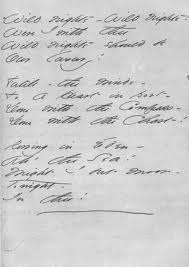
Banish Air from Air – Divide light if you dare – They’ll meet While Cubes in a drop Or Pellets of Shape Fit Films cannot annul Odors return whole Force Flame And with a blonde push Over your impotence Flits Stream. “ II. An awful Tempest mashed the air – The clouds were gaunt, and few- A Black — as of a Spectre’s Cloak Hid heaven and Earth from View. The creatures chuckled on the Roofs – And whistled in the air- And shook their fists- And gnashed their teeth- And swung their frenzied hair- The morning lit-the Birds arose- The Monster’s faded eyes Turned slowly to his native coast- And peace-was Paradise!
–
This Choice of Emily Dickinson’s verse is edited by Ted Hughes. The essay which forms Hughes’ introduction, is (if I am correct) also included in the Hughes’ essays Winter Pollen ( publ. Faber and Faber). On a slight digression, therefore, I would recommend the essays therein on Sylvia Plath’s poetic process and most especially Hughes’ discussion on the beautiful Sheep in Fog,The Evolution of Sheep in Fog :
“It is undoubtedly the best commentary on the nature and significance of poetical drafts. Here, as someone who has worked on and studied manuscripts for their own sake over a period of 35 years, I can perhaps speak with more authority than on the other aspects that I indicate in this note. No one else has written so eloquently or so perceptively on the importance of drafts and why rather than being discarded they command respect as more than the ‘incidental adjunct to the poem’ — indeed ‘they are a complementary revelation, and a log-book of its real meanings.’ In the case of ‘Sheep in Fog’ the drafts ‘have revealed the nature and scope of the psychological crisis that gives the poem its weird life, sonority, its power to affect us. In other words, they are, as the final poem is not, an open window into the poet’s motivation and struggle at a moment of decisive psychological change.” Roy Davids
First, make a letter like a monument – An upright like the fast-held hewn stone Immovable , and half-rimming it The strength of Behemoth his neck-bone, And underneath that yoke, a staff, a rood of no less hardness than the cedar wood. Then, on a page made golden as the crown Of sainted man. a scripture you enscroll Blackly, firmly with the quickened skill Lessoned by famous masters in our school, And with an ink whose lustre will keep fresh For fifty generations of our flesh. And limn below it the Evangelist In raddled coat, on bench abidingly, Simple and bland: Matthew his name or Mark, Or Luke or John; the book is by his knees, And thereby his similitudes : Lion, Or Calf , or Eagle, or Exalted Man. The winds that blow around the World- the four Winds in their colours on your pages join – The Northern Wind – its blackness interpose; The Southern Wind -its blueness gather in; In redness and in greenness manifest The splendours of the Winds of East and West. And with these colours on a ground of gold Compose a circuit will be seen by men As endless patience; but is nether web Of endless effort- a strict pattern: illumination lighting interlace Of cirque and scroll, of panel and lattice. A single line describes them and enfolds, One line, one course whose term there is none, Which in its termlessness is envoying The going forth and the return one. With man and beast and bird and fish therein Transformed to species that have never been. -With mouth a-gape or beak a-gape each stands initial to a verse of miracle, Of mystery and of marvel (Depth of God) That Alpha and Omega may not spell, Then,finished with these wonders and these signs, Turn to the figure of your first outlines. Axal, our angel, has sustained you so In hand, in brain; now to seal that thing With figures many as the days of man, And colours, like the fire’s enamelling That baulk, that letter you have greatly reared To stay the violence of the entering Word ! Adjutorium nostrum , in nomine Domini Qui fecit caelum et terram.
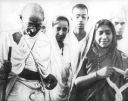
This week’s Saturday Woman Poet is Sarojini Naidu. I have been reading quite recently Indian Poets from both the pre and post-independence period in India . The shatter of language that occurred and that is collated neatly in a variety of collections does not contain the simplicity of Naidu’s engagement with her poetics and with her cultural history. I do not believe that post-independence volumes of poetry can attain to canonical status without the inclusion of a poet such as Naidu, who though primarily working in the English language like many contemporary writers of her Indian heritage or indeed of intellectual diaspora encapsulated the language struggle. In my opinion she has the weight of a Tagore but the sure simplicity of pre-independence classicism.
I am including a brief link to the Wikipedia page of Sarojini Nadiu and two short poems by the writer at the base of this post. I will add in later a brief edit which will include the titles of current reading in Contemporary and Pre-independence poets.
Alabaster by Sarojini Naidu
“Like this alabaster box whose art Is frail as a cassia-flower, is my heart, Carven with delicate dreams and wrought With many a subtle and exquisite thought.
Therein I treasure the spice and scent Of rich and passionate memories blent Like odours of cinnamon, sandal and clove, Of song and sorrow and life and love.”
Harvest Hymn . By Sarojini Naidu
Mens Voices:
“Lord of the lotus, lord of the harvest, Bright and munificent lord of the morn! Thine is the bounty that prospered our sowing, Thine is the bounty that nurtured our corn. We bring thee our songs and our garlands for tribute, The gold of our fields and the gold of our fruit; O giver of mellowing radiance, we hail thee, We praise thee, O Surya, with cymbal and flute.
Lord of the rainbow, lord of the harvest, Great and beneficent lord of the main! Thine is the mercy that cherished our furrows,
Thine is the mercy that fostered our grain. We bring thee our thanks and our garlands for tribute, The wealth of our valleys, new-garnered and ripe; O sender of rain and the dewfall, we hail thee, We praise thee, Varuna, with cymbal and pipe.
Womens Voices:
Queen of the gourd-flower, queen of the har- vest, Sweet and omnipotent mother, O Earth! Thine is the plentiful bosom that feeds us, Thine is the womb where our riches have birth. We bring thee our love and our garlands for tribute, With gifts of thy opulent giving we come; O source of our manifold gladness, we hail thee, We praise thee, O Prithvi, with cymbal and drum.
All Voices:
Lord of the Universe, Lord of our being, Father eternal, ineffable Om! Thou art the Seed and the Scythe of our harvests, Thou art our Hands and our Heart and our Home. We bring thee our lives and our labours for tribute, Grant us thy succour, thy counsel, thy care. O Life of all life and all blessing, we hail thee, We praise thee, O Bramha, with cymbal and prayer.”
‘He is a harmful man’ , said Sori
‘he has hurt me a lot since I met him.
every thing looks dark and sinister inside his eyes ,
I hate that’.
I hate that moment when I see his eyes
I wish I had never met him
I wish I had never known him.
He is not nice with me.
He has never been nice with any one.
He is a harmful man.
I can’t see any light in the end of tunnel
So what should I do?
I can’t go back
I have no choice
I have to go on.
I have to keep fighting with
darkness.
There in the end of tunnel,
There is may be a light
There should be a light
There must be a light
There is a light.
I will go on
I will get to that light.
I don’t care if he stings me,
It doesn’t matter if he creates darkness on my way,
It is fine if he scatters thorns of spite on my path.
I won’t give up.
He will never be able to destroy the power of beyond,
The power of hope and the power of love.
He can’t seize my calmness and confidence
He is not able to possess my thoughts.
‘He is a harmful man ‘said Sori to the mirror ,
‘look at him , he is like the injured snake
ready to strike’..’
Sadaf Amhadi studied English at Ballsbridge College of Further Education. Then she began studying Art at Inchicore college of Further Education, it was a portfolio preparation course and during that time she applied for third level courses and is now studying visual Communication in IADT.
'Two Women and a Mirror' by Artemesia Gentileschi (1593-1656)



 Chris Murray