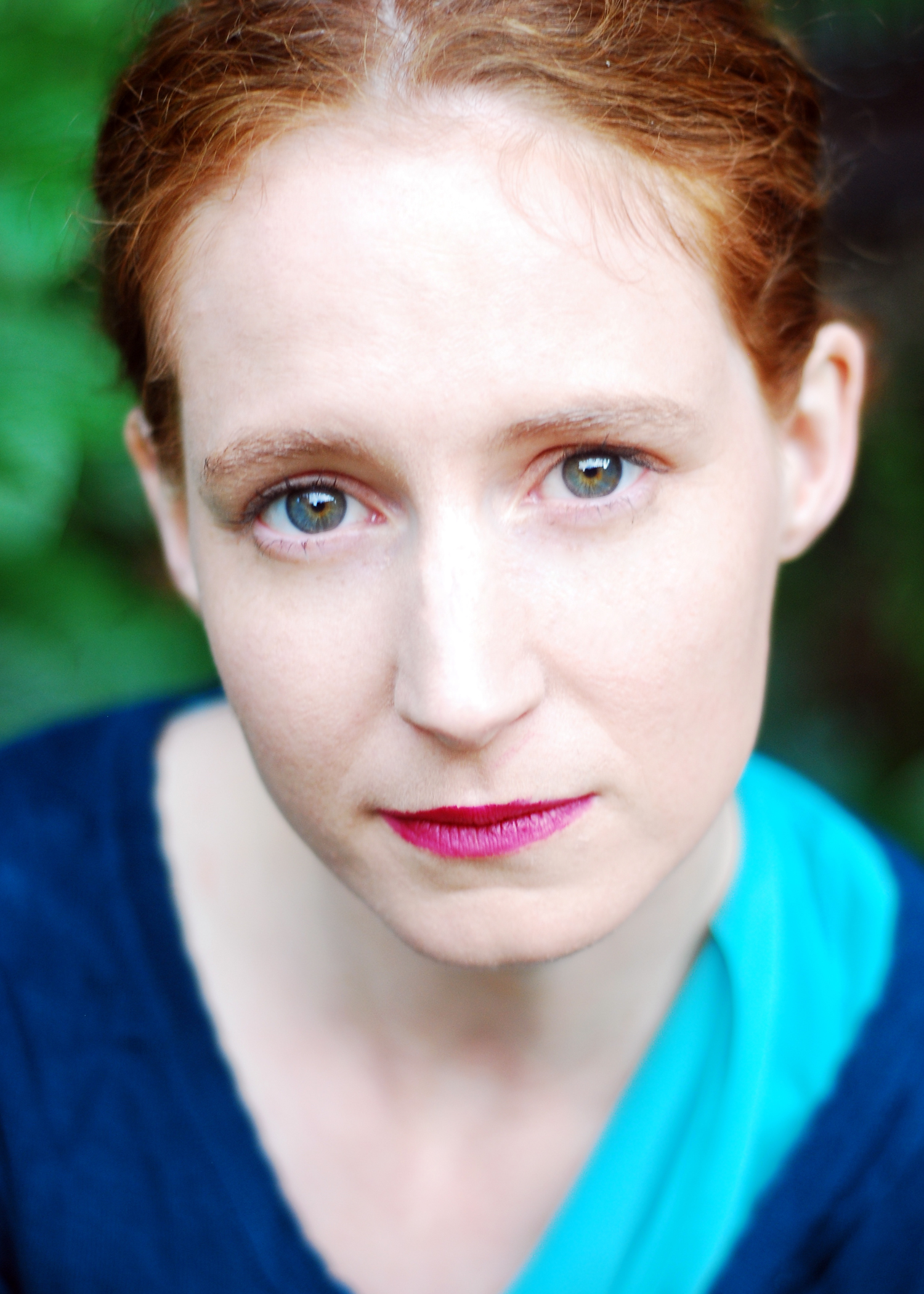
Anora Mansour is a graduate of the University of Oxford. She lives between Oxford and Dublin. She has been published in a collection of Jazz Poems, various online sites, and has her own published collection of poetry and blog. She is African-American and Irish.
Oh Night, oh calm and mythical night, Have you not seen the moon? How bright! ‘Tis not the sun but the twilight, To the earth holding tight.
How soothing! Cool and warm in winter’s night, Calling it the noon, ‘‘tis all right’’ See the stars twinkling at height, A moth gently flying around a streetlight.
The trees singing in a soft breeze, And their shadows dancing in sweet harmony, Tomorrow night all trees shall freeze, But tonight listen to the crickets humming their lullaby in melody.
Originally from the village of Eglinton in Derry, Gillian Hamill has lived in Dublin for the past 12 years (intermingled with stints in Galway, Waterford and Nice). She has a BA in English Studies from Trinity College, Dublin and a MA in Journalism from NUI Galway. She is currently the editor of trade publication, ShelfLife magazine and has acted in a number of theatre productions. Gillian started writing poetry in late 2014. ⊗ Gillian’s Website
“The Welcome” by Freda Laughton
Awaits no solar quadriga, But a musty cab, Whose wheels revolving spiders scare Pigeons from plump pavanes among the cobbles. Past the green and yellow grins Of bold advertisements On the walls of the Temple of Arrivals and Departures, (Due homage to the puffing goddesses Stout, butting with iron bosoms), We drive, and watch The geometry of the Dublin houses Circle and square themselves; march orderly; Past the waterfalls of lace dripping Elegantly in tall windows; Under a sun oblique above the streets’ Ravines; and past the river, Like the slippery eel of Time, Eluding us; eight miles clopping Behind the horses rump to where The mouth of Dublin gulps at the sea. And there beside the harbour And the Castle, And the yellow rocks and the black-beaked gulls, The piebald oyster-catchers, limpets, lobster-pots, There is a house with a child in it, Two cats like ebony (Or liquorice); and a kitten with a face Like a black pansy, a bunch of fronded paws; And a dog brighter than a chestnut, – A house with a bed Like an emperor’s in it, – It is late. Let us pay the cabman and go in.
Freda Laughton was born in Bristol in 1907 and moved to Co. Down after her marriage. She published one collection of poetry, A Transitory House (1945) but little else is known about her life and work. She may have lived in Dublin for sometime, as her poem The Welcome details the textures of Dublin City and its suburbs, and suggests she knows the city by heart. Her date of death is unknown. Freda Laughton’s poems were submitted by Emma Penney, a graduate of the Oscar Wilde Centre, Trinity College Dublin. Her thesis, Now I am a Tower of Darkness: A Critical History of Poetry by Women in Ireland, challenges the critical reception of Eavan Boland and the restrictive criteria, developed in the 1970’s, under which poetry by women in Ireland has been assessed. She considers the subversive nature of women’s poetry written between 1921 and 1950, and calls into question the critical assumption that Eavan Boland represents “the first serious attempt in Ireland to make a body of poems that arise out of the contemporary female consciousness”. In Object Lessons, Boland concluded that there were no women poets before her who communicated “an expressed poetic life” in their work. Emma’s thesis reveals how this view has permeated the critical landscape of women’s poetry, facilitating an absurd privation of the history of poetry by women in Ireland and simplifying it in the process.
In the nine months I didn’t nourish you, I made notes, I studied the seasons for ingredients to encourage your growth. Scraps of paper, post-its hidden in case anyone would view my thoughts, pity my trivia of leaves and berries. A mom yet not a mother, a woman yet not a woman. My preparation took place in private, not in maternity wards or hospital corridors, but in the hallways of my mind where I could put up pictures, time lines, fill cork boards with plans. As the folic acid built your brain stem I collated ideas to stimulate it further, mapped journeys for us, paths we could walk together, a staggered relay to start when your other mother passed your tiny form to me. And I could see myself holding your hand, using my limbs to scaffold the structure your mother put so beautifully in place. I am your mom without the biology of mothering. All I have for you is my heart, my brain, my lists of things, all but those nine months when I was waiting. (first published in New Irish Writing in The Irish Times)
Originally from Tralee, Co. Kerry, Liz Quirke lives in Spiddal, Co Galway with her wife and daughters. Her poetry has appeared in various publications, including New Irish Writing in the The Irish Times, Southword, Crannóg, The Stony Thursday Book and Eyewear Publishing’s The Best New British and Irish Poets 2016. She was the winner of the 2015 Poems for Patience competition and in the last few years has been shortlisted for the Cúirt New Writing Prize and a Hennessy Literary Award. Her debut collection Biology of Mothering will be published by Salmon Poetry in Spring 2018. https://bogmanscannon.com/2016/04/02/fall-at-33-weeks-by-liz-quirke/
“Detail” by Rachel Coventry
The world is full stretched, and sick with possibility. You find yourself in a gallery ill with heat and standing. Waiting for some man to play his ridiculous hand. So bored of art, but then forced into wakefulness by the feet of Diego Velazquez’ Cristo Crucificado. All suffering now upon you and you bear it because you have to. First published in the Stony Thursday Book
Rachel Coventry’s poetry has appeared in many journals including Poetry Ireland Review, The SHop, Cyphers, The Honest Ulsterman and The Stony Thursday Book. She was selected for the Poetry Ireland Introductions Series in 2014. In 2016 she won the Galway University Hospitals Arts Trust Annual Poetry Competition and was short-listed for the Patrick Kavanagh Poetry Award. She is currently writing a PhD on Heidegger’s poetics at NUIG. Her debut collection is forthcoming from Salmon Poetry.
“Going Dutch” by Seanín Hughes
I cut my teeth on you; let enamel tear through the warm pink tissue of adolescence. I bared my legs, but bent them inward, dressed them in angles in case you found them too soft, too fleshy. You didn’t (they weren’t). I kept my hair down so subtle shadows fell where cheekbones might be, stolen symmetry, in case you realised I wasn’t pretty enough. You didn’t (I was). We’d play pool – I never won (I never cared) – and eat chips on the way home; you paid your way and I paid mine, and I never needed to wear my coat (I did), until that one night when you didn’t walk me home, the night I fell asleep and you cut your teeth on me, the ones you lied through (you did), and I paid in full.
Seanín Hughes is an emerging poet and writer from Cookstown, Northern Ireland, where she lives with her partner and four children. Despite writing for most of her life, Seanín only began to share her work in late 2016 after penning a number of poems for her children. Prior to this, she hadn’t written in a number of years following the diagnosis of her daughter Aoife with a rare disease. Drawing from her varied life experiences, Seanín is attracted to challenging themes and seeks to explore issues including mental health, trauma, death and the sense of feeling at odds with oneself and the world.
“Hypothesis” by Clodagh Beresford Dunne
So the editor wants to know why people are killing themselves. I’ll tell you why – because they are part of a revolution they know nothing about. Not a revolution with guns and knives but one in its strictest physical sense, the revolution of the geoid, the planet earth. We might share it with billions but these days we are each on our own as it sits, upturned on its axis slowly revolving, shaking off the detritus until one by one we cling to the surface or free-fall into oblivion. And so we concoct bizarre ways to dodge our turn – we are drawn to the oceans to hide but drown in their deep waters, we strive to weigh ourselves to the ground, injecting ourselves like batteries with liquid lithium. To defy gravity we anchor our ankles to balls and chains or feel the ephemeral ecstasy of letting blood from our veins. While some tie ropes around their necks as they take their turn, ready to hang from the world, like a tarot card I once saw. First published in The Stinging Fly
Clodagh Beresford Dunne was born in Dublin and raised in the harbour town of Dungarvan Co. Waterford, in a local newspaper family. She holds degrees in English and in Law and qualified as a solicitor, in 2001. During her university and training years she was an international debater and public speaker, representing Ireland on three occasions, at the World Universities Debating Championships. Her poems have appeared in publications including The Stinging Fly, The Irish Times, Southword, The Moth, Spontaneity and Pittsburgh Poetry Review. She was the recipient of the Arts Council of Ireland Emerging Writer Award Bursary (2016) and a number of Literature awards and residencies from Waterford City and County Arts Office. In April, 2016 she delivered a series of readings, interviews and lectures, in Carlow University and Robert Morris University, Pittsburgh, Pennsylvania, as part of Culture Ireland’s International Programme. In February, 2017, as part of the AWP Conference and Book Fair in Washington, DC, she participated in a reading and discussion panel: “A World of Their Own” (five female poets in cross-cultural conversation) with US poets, Jan Beatty and Tess Barry, Irish poet, Eleanor Hooker, and Lebanese poet, Zeina Hashem Beck. She is a founding member, coordinator and curator of the Dungarvan and West Waterford Writers’ Group. She lives in Dungarvan with her husband and four young children.
“Alice and her Stilettoes” by Lorraine Carey
We always walked faster past her little house on the brae. Every so often she’d scuttle out and snare us, clutching a plastic bag with the highest heels, scuffed and peeling, ready for the cobbler’s vice. Her elfin face powdered, her fuchsia mouth pursed, the stain snaked onto her snaggled teeth, crept over her lips. She lay in wait, behind net curtains that twitched. Her ears hitched to the sound of the school bus, stalling, as we stepped off at Charlie Brown’s, stinking of fags. Once John got three pairs of spine benders, for repair, so she had a choice, for Mass on Sunday.
Lorraine Carey from Donegal, now lives in Co.Kerry. Her work has been published / is forthcoming in the following journals; The Honest Ulsterman, A New Ulster, Proletarian, Stanzas Limerick, Quail Bell, The Galway Review, Vine Leaves, Poetry Breakfast, Olentangy Review and Live Encounters. Her first collection of poetry will be published this summer.
and I couldn’t find a summer flower poem, so it will have to be a spring flower poem. The earliest blossom in our neighbourhood tends to scatter as soon as a wind rises up, leaving minute wee flowers , scattered all over the ground. They have the virtue of shining milk-white and incandescently in the blue mornings of February before sunrise , looking neatly stitched unto the silhouettes of the trees…..
If you are reading Joyce today, I always recommend the Ithaca Section (17) , as it is beautiful :
“At sea, septentrional, by night the polestar, located at the point of intersection of the right line from beta to alpha in Ursa Major produced and divided externally at omega and the hypotenuse of the rightangled triangle formed by the line alpha omega so produced and the line alpha delta of Ursa Major. On land, meridional, a bispherical moon, revealed in imperfect varying phases of lunation through the posterior interstice of the imperfectly occluded skirt of a carnose negligent perambulating female, a pillar of the cloud by day. “
The next post is the promised blooming blossom pome,
Lilies of the Field Plump nipple blossoms more like, Neatly sewn onto a blue bodice. Virgin surprise! one wink and They’re blown confetti on wet ground






 Chris Murray