| teserrae of names dull mustard fiery gold flames organics of mushroom tea gaudy/ Gaudi/ lace/ paste St Audrey/ rust/ blood/ lace yes, tawdry lace -I can use that round and round the mulberry bush oranges/ bees/ fish/ old chain letter/ old poems stuck together/ spermed-together/ cum-came/ come on! books published unaltering of anything/ but the subtle flavouring of fish – maybe dom/dominatrix/domestic goddess/ GOD ! this girl’s great in the kitsch-en cook-stuff/ cock-stuff //really // cock-stuff/ who knows what goes on where the rosey-poesie poetry muses lie ? butterfly-netted the bee-priestess/poetess black veiled butterfly-swoop unguarded ungirded/ girdled //corsetted//cosseted our bee-keepers are impotent poetess/priestess jiggle your tits /make soup/ and I thought / I need more meat than this to feed my brain, words of madness /of bloodletting/ vein of salts/salts in the blood-wounds/ of those who … (know) lady take my hand/ let us go to the bare birthing room/ the death-room/ the room of whispers/screams/ some agony of death is here/ clean kitchens /jeyes fluid/ orange savlon/salted wounds/ //cif //blood// eggs// ANYTHING … but spare me the details for the subtle flavouring of fish – please 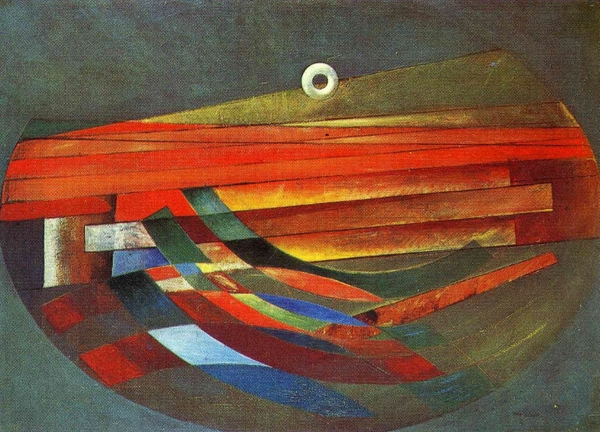 © Christine Murray & first published in Colony Journal.Image by Max Ernst © Christine Murray & first published in Colony Journal.Image by Max Ernst |
Tag: Christine Murray
-
-
Role reversal by Nessa O’Mahony
after Eavan Boland
There will come a time, mother,
when the transformed spring opens up
and the charioteer holds out a hand;
he might have my father’s face, might not;
his gestures might be gentle or rough
as he eases you into a space made ready
and shows you the pomegranate.
And you will take the seed and eat,
willingly perhaps, not caring
that every bargain has its cost,
or will your hand be stayed
by the sun’s ray on your face?
I will not have time to catch up,
to forestall the nine long days,
the nine long nights of wandering.
And I’ll have no deal to strike;
no backward glance, no waiting
for the seasons to turn back to me.
© Nessa O’Mahony from Her Father’s Daughter (Salmon Poetry)
 Nessa O’Mahony was born in Dublin and lives in Rathfarnham where she works as a freelance teacher and writer. She won the National Women’s Poetry Competition in 1997 and was shortlisted for the Patrick Kavanagh Prize and Hennessy Literature Awards. She was awarded an Arts Council of Ireland literature bursary in 2004 and 2011. She has published four books of poetry – Bar Talk, appeared (1999), Trapping a Ghost (2005) and In Sight of Home (2009). Her Father’s Daughter was published by Salmon in September 2014. She completed a PhD in Creative Writing in 2006 and teaches creative writing for the Open University. She is a regular course facilitator at the Irish Writers Centre in Dublin.
Grianstad by Aoife Reilly
.
Swirls of starlings
absail between sun and moon
hurl themselves into a dance
through ghosts of trees
they go where they need to go.
winter shrouds
Long nights slide in
embers empty the land
dying woods wait for the earth to turn
In the betwixt and between
I am a still frame in the granite glow
and leaves are twisted silver songs
Stars gasp, turf smoke curls
Crisscrossing the place where love was exhausted
and blankets way down in the moment before light
Ready now, I follow the starlings and birth another year.
© Aoife Reilly
 Aoife Reilly is living in County Galway and is originally from County Laois. She is a teacher and psychotherapist. She has been attending poetry workshops with Kevin Higgins at the Galway Art Centre since September 2013 and has read at open mike of the Over The Edge Series at Galway City Library.
The Golden Hare by Mary Cecil
Where wild flowers cling
And heather sweetly grows
The magic hare reclines
With fur of glowing gold
His spirit of quiet magnificence
In lands of legends born
Where unicorns are dreamt of
And fairies sport in human form
To catch a fleeting glimpse
Against the burning sky
A moment in a lifetime
A flash of mystery goes by
Where came his golden sheen
That gift from other realms
To add a glowing wonder
Hidden in the ferns
So swift he flees
With graceful lops he leaps
Transporting us to mystical lands
To dream of when we sleep
© Mary Cecil
Rathlin Island Mary Cecil is the mother of large family and Grandmother to eleven. The widow of Rathlin Island’s famous campaigner, diver, author (Harsh winds of Rathlin) Thomas Cecil. Lover of Rathlin Island, Northern Ireland’s only inhabited island. Mary enjoys community development and current events. She has been writing poetry for several years. Enjoys writing a variety of poems, spiritual, war, romantic, protest and nature. Keen to compose more poems based on Rathlin Island’s myths & legends. She worked in owning andmanaging tourist facilities both on and off Rathlin Island. Public Appointment as Lay Member, The Appropriate Authority, Criminal Legal Aid Board.
. The Brightest Jewel by Christine Murray
The perfume of rosemary for remembrance.
Little botanic flower baptised in Glas Naíon,
the stream of the infants.
I see the pink flower of your hand
reaching up to your blind mouth.
I breathe your name so you will live.
The stream of the infants.
Cymbidium Minuets, the flowers that you loved
grow in a house of orchids near a dark still pool
quiet by the stream of the infants.
The Brightest Jewel is © Chris Murray and was first published in V4, Issue #4 of The WomenArts Quarterly Journal. (2014)

Christine Murray Christine Murray is a City and Guilds qualified restoration stonecutter living in Dublin, Ireland. Her Chapbook Three Red Things was published by Smithereens Press in June 2013. A collection of poems Cycles was published by Lapwing Press in 2013. A dark taleThe Blind (Poetry) was published by Oneiros Books in 2013. Her second book-length poem. She was published in Spring 2014 (Oneiros Books). Her second chapbook Signature was published in March 2014 by Bone Orchard Press.
Mastectomy by Shirley McClure
You get given
certain things in twos –love-birds, book-ends,
matching china tea mugs –and even though
on any given morningit is all you even think of
to hook one fine chinatop designer
duck-blue tea-mugfrom your dry beech
draining rackto boil and pour and stir
and watch Darjeeling towers spiral;there are still the days
when there is company for breakfast,and on these fine mornings
let me tell youit is good to know
that there are twoextra special, same but different
unchipped breakfast blue mugs……..made to grace
your table.© Shirley McClure From Who’s Counting?
 Living in Bray, Co. Wicklow, Shirley McClure won Cork Literary Review’s Manuscript Competition 2009 and Listowel Writers’ Week Originals Poetry Competition 2014. Her collection, Who’s Counting? is available from Bradshaw Books or via http://www.thepoetryvein.com/ She facilitates creative writing courses and workshops.
Geyser by Alice Lyons
You e-mailed your whole desktop, which is typical
.the blue of it Scrovegni chapel blue
a smile I’ve never seen before it is aware of smiling
reveals itself to the camera in the computer.
Squared-off angels, no they are JPEGs, hover
over a faux Polaroid you switched to sepia mode
so I wouldn’t look like a geyser
a river of years to reach such tender self-regard
for a moment you are unencumbered
by the monster critical eye (you meant geezer)
scissored hair blunt and sister-like and merciful
your entire kitchen liquid in the glossy Frigidaire.
It puts me in mind of Fra Angelico, those tricky frescoes
(I seem to translate everything to quattrocento time)
Christ in a blindfold, eyes like poached eggs gazing
down and inward, the gathered regal robes
the marble throne all white and pouring up, yes
like a geyser pouring up while Roman soldiers
unencumbered by their bodies beat and spit and mock.
I have always loved those arrested gestures
the mute green rectangle beautiful as your computer
in Philadelphia where Safari’s compass points
permanently Northeast and the Finder icon smiles
twice and benevolently straight on and in profile.
from Poetry Ireland Review 100 (ed. Paul Muldoon)
Note: Versions of ‘The Boom & After the Boom’, ‘Developers’ and ‘Reverse Emigration’ first appeared in Poetry(Chicago), December 2011.- A Poetry Foundation Podcast The Woman Who Quit featuring work by Alice Lyons.
 Alice Lyons was born in Paterson, New Jersey and has lived in the West of Ireland for fifteen years. Her poems have appeared in publications such as Tygodnik Powszcheny (Kraków) and POETRY (Chicago), as public installations in Staircase Poems at The Dock in Carrick-on-Shannon and as poetry films in cinema and gallery screenings worldwide.
She is the recipient of the Patrick Kavanagh Award for Poetry, the Ireland Chair of Poetry Bursary, an Academy of American Poets Award and multiple bursaries in literature and film from An Chomhairle Ealoine/The Arts Council. Her poetry film, The Polish Language, co-directed with Orla Mc Hardy, has screened in competition in over 30 film festivals worldwide and garnered numerous awards including an IFTA nomination. Her new poetry film, Developers, premiered at Oslopoesie, Norway in 2013. She has lectured in English and Fine Art at Boston University, Maine College of Art, the Galway-Mayo Institute of Technology and Queen’s University, Belfast. She holds a Ph.D. from the Seamus Heaney Centre for Poetry, Queen’s University, Belfast. She is currently curator of Poetry Now, Dun Laoghaire.
-
Eamon Ceannt Park; a cycle
I.
Ingress.
Her boot leathers are wet, grass-greened.
Things have gone aground at the grove,
only the fairy-ring stands in her circle
of spectral gowns—her parasols all caught up in a breeze of light.
Wood clattery heels sound
against the stones at the gate,
against a cluster of coppered leaves;their outsoundings, a filigree.
II.
Inscription.
The park is scattered as after a storm.
The destruction is knave-wrought
A crescent moon is inscribed into the soil
by the small grove,
a willow weeps by its exit,and the sky is close as goose down.
Geese screel and beat overhead,
someone has sprayed yellow paint on his memorial stone.III.
There is a man in the stone.
The dew is playing fire at her feet,
wetting her legs.A legion of rooks guard his stone.
IV.
Stasis.
The route through the groves is frozen today;
even the treetops are caught in ash.There is no mistaking this scene for a balletic stasis,
it is stick-strewn.A cold sun rises above the minarets
at park’s edge,
the sound of bells emanates from behind somewhere .She is glad to leave,
glad to kick the ice from her feet against the stones.V.
The Queen’s Rook.
And what if she entered that garden wearing her last veil?
The others being ripped by fierce wind and claw.The willows lash her face
driving her into ecstatic groves.The only thing seeming alive in this desolate place
is the Queen’s Rook.He stalks above her veiled head,
his call drowning in his throat.She heard a name.
VI.
Egress.
She looks back to the stone
From thence to the furrowed hill,
It is of ordinary green.
A rook is atop the gate.She no longer sees the far away
lit by careening crows.The path is different by day.
Coda
It is dark beneath the tree.
And,
The rising sun has not yet caught
the edge of the stone.And,
A clutter of dry debris, a black feather
is housed there.And,
She would sing him if only he let her.
And,
“Intreat me not to leave thee
Nor to return from following after thee
For whither thou goes I will go ..”she leaves.
Eamon Ceannt Park; a cycle by Christine Murray was first published at Bone Orchard Poetry Ezine and collected then in Cycles (Lapwing Press, 2013)




 Chris Murray