Great pink blossoms in bunches like bouquets hang head-heavy against willow's stasis. Peonies emerge, pink and blood.
Wren piccolo, and the heavy perfume of a dying rose. She brings flowers that are dying. These are mauve. Zephyr-caressed, their petals, fawn-edged.
Shades of pungence, of mauve pungence. They will bow-down by morning.
I do not understand. The green leaf falls on my black end table. Why bring the dying to me? Haven't I had enough dying? Your mauve roses, zephyr-curled, are browning. Frilled.
The white cherry blossom is blown. Tulip mouths hang open in despair. I almost step on a white eggshell, broken, out-of-nest. There is a dead tree and no nest above me.
The small birds have flown. The rooks in the ancient tower do not want to be disturbed by me.
There are trays of proliferating pansies by the church steps. Several snails seek succor in her door frames. A cross across a mossy path once an egress, stops you in your tracks.
Note. "The Trees, Dawn" forms a part of my recently published work "Found Poem, Spring". The three parts of the poem are "The Trees, Night", "There Are More Blue Flowers in Spring", and "The Trees, Dawn". Thanks to the editors of Skylight47, Bernie Crawford, Ruth Quinlan and D’or Seifer for publishing this excerpt. The poem in its entire can be read here.
'The Trees, Night' is an excerpt from a tripartite poem titled 'Found Poem, Spring'. The titled parts of the poem are 'The Trees, Dawn', 'There Are More Blue Flowers in Spring', and 'The Trees, Night'. The poem in its entire can be read at The Honest Ulsterman , with thanks to Editor Gregory McCartney.
i loved a somnambulist we’re like a No(thing), a No(body) two no-bodies equal Somebody, right? (re)-read my words bottle of tequila, all the limes all the girls you have loved, shaken up in this cup i lovingly stirred
you stumble on red oak floors ceiling, a map of london lon-don-ing you illicit, (i)llicit you, i’d like to “I need some tea…eaRl gRey” i never could roll my “r’s” like you Afraid to WAKE you an alarm could ring; a poptart-realization could occur you might realize what’s happening when you hear the 11 o’clock news (world news tonight, it’s good to have you with us!) Present, presently? a gunshot to knee on 4th street
limerence in honeycombs honey-orange sandwiches dissemble my skin i let the honey in just like you so (fool)ish, like a clown face with a red button as a nose Dying out, the bees are dying out, not you; you might be (a)round for (some)(time) brown-amber eyes, did you know that insects are stuck in amber? they cannot escape the stick-i-ness of the sweet sap, i might become one of them, my wings are too fragile to be touched by a nothing like you your fingers, prints, imprints, do you love me?
One Night You Grew Silent
You said you wanted me when you turned to face the lamppost. The snowflakes caught your eyelashes on the last languid Christmas.
Your fingertips braided my hair. Your chilled lips smoothed my legs. Your breath in hot clouds warmed my skin. Maybe I love you a little.
I stand in line at the Drug Store. There are fake Christmas trees. I stand in line with closed eyes.
In the warm bathwater I inhale the exhaust of a cigarette smushed into my mother’s glass bowl. A reflection of my stomach, of what could be below it…
And then I hear the phone line go numb. Lifted the window to devour the snowed and bitten air on a wet, soon to be whaled body.
Ladybug
Upon a mint leaf appeared a beet-red ladybug. Her left wing dilapidated, her black eyes tearing, She whispered into my ear, “My heart feels a-tug; …my love has left me, and thus, I am fearing.”
I inquired as to what had occurred. She turned her gaze towards the dampened ground. “Infidelity,” was the only word. She fluttered a wing, without a sound.
“What is heartbreak?” we asked one another. The male species is so damn unsatisfied. Heartbreak is when a heart no longer flutters; It is faced with a stomping reality: he lied.
Body #19
They called me body #19 when I laid under the half-door of this half-block, depleted of what existed above.
Nineteen, an odd, uneven, unsure number. I observe a deleted city, uneven in its skyline, like a mouth without its biggest teeth to help swallow its food. It coughs and begs for someone to help it, with a flailing tongue. It is one of many mouths.
A number identified me… not my hair, or my skin colour. I would be counted amongst 20. This I did not know until weeks later, when wild newscasters counted the remaining bodies like stars on their fingers.
To count 20 stars in a Manhattan sky would be rare. But bodies? What was rarer?
A waking moment: atop smoky glass and blood burned atop wooden desks, with loose elevator buttons, I counted the people surrounding the rubble. They amassed to more stars than I would ever count, even on a clear night.
Palmer Smith is an emerging writer who began her MFA in September 2020 at Columbia University. She is a graduate of Sarah Lawrence College and wrote for the SLC Phoenix newspaper while in college. Her article, 23 Life Lessons was published in Thought Catalog, becoming an Editor’s Pick of the Week in June 2018. She writes about American Southern culture, relationships, childhood, and dreams. She hopes to teach writing and literature at the college level.
The blackest of holes, the hottest of suns, the craziest captain alive. Surrender to none, be gentle to some, stay tough as the skies collide. The milkiest way is over my head. They’re chasing me mile after mile. This starship is mine, try and catch me, I said. This marvellous starship is mine.
Self-portrait
I’m almost young and comparably civil for someone who nurtures her inner cynic, I have a soft spot for Charles Simic, Nintendo and soda bread.
I’m somewhat Russian and kind of solid for someone who never knows when to call it, I once loved a redhead, I wrote her sonnets, but now the romance is dead.
She wished I had stayed in the capital city, took care of her kitty, who’s bald and unpretty, She said I was deadly at cooking and twitting. my words and my soup turned sour.
I wished she had moved with me to the Ocean, but she couldn’t swim, and I hadn’t a notion. We blew our life jackets out of proportion and labelled each other as cowards.
It’s crazy how even the Arctic winter seems warmer than feelings which soon will wither. I could live without her, but hardly with her. It’s not the winning that counts.
I’m lucky the sun in my garden is blazing, I’m planting my saplings and I will raise them with leaves full of poison and sharp as razors, with crowns that shall pierce the clouds.
Dog I Can’t Keep
First language is a dog I can’t keep anymore barking in the back of my mind. Stay, I command. But it goes wherever it pleases, reminding me who is the real owner here. Its growling is so powerful that all other sounds get lost in it. Your bites leave no scars anymore, I say. I’ll find you a new home, I say. It grins. First find yourself one. Its jaws are closing around my neck.
Tattoo
Homeland is tattooed on my skin, and the picture is changing in real time. Here is my school friend’s fresh grave, here is yesterday’s theatre student in a prison transport vehicle, here are the ashes of Siberian forests, here are the history books being rewritten. And here is the apple tree in my parents’ garden blossoming, just like any other year, and it’s my favorite part of the tattoo. One day I’ll have the rest of it removed.
‘The Virgin…’ He smirked, then ‘Virginity is a complex concept, pet’ I said. ‘I’ve been sent by God; He has a job–’ ‘So I’ve heard, you’ve got the wrong girl.’ Then, he grabs my wrist, ‘I must insist.’ Kisses my knuckle, twisted fuck. I imagine it going through his skull. ‘I’m not your Virgin, okay hun?’ (I have sharper teeth that tend to bite off more than I can chew.) I tip my halo to a jaunty angle and, standing now, tell him to ‘Beat it, Gabe. Babe, you’re too late, my body cannot belong to God, for my heart belongs to another. I am my own lover, impregnated daily with my own possibility. There is no room at this inn, there is only room in this womb for one birth, my monthly rebirth. The moon fills her spoons from my newness. Life does not come without sacrifice, and I have too much of it to live and not enough of it to give. Yes, my body is a vessel for self-love above all else. forever and ever, the end.’
He didn’t like my cheek, he aimed to rip it from me with the back of both hands. I spat a hot, crimson clot into the centre of my palm and saw my future in a little pool of red, staining my head, heart, and life-line. I wiped it on his face, and, splayed now, I prayed for a miracle, to save me as the struggle was thrust from me. Am I to believe this is what the Father would want for his child? He gazed at me as if he had just arranged roses in a vase: ‘Immaculate.’ With a bat of my lash, I snapped the wings from his back. With a grin that dimmed this wimp’s halo, I cooed: ‘So I’ve been told’ and slowly I watched the triumph drain from his veins. No more Angel. Just Gabe. ‘Poor babe.’ I winked as I limped away.
Pit
He said cherries were his favourite food. Wild or sweet or sour, he craved these fleshy drupes with that single groove to run his finger through.
Gone in one and when he was done, he’d spit out the stone and tie up the stalk with his tongue, wonder where the next cherry is coming from?
I’d never had a cherry– he’d had many. He could see the ruby in me: in my lips, in my cheeks, down his chin, in his teeth.
Ever been a cherry? Plucked, sucked, bit, and turned to pit.
Tattoo of you
Needles in my ribs help me breathe. Blood spots, drips, and flows. A secret, for now. Ebony and currant and crimson. Not hues of remembrance, a symbol of strength. The shades of war, our war. A battle that began the night those boots were left on the carpet. My face in your palm, wrapped in your scar tissue so I wouldn’t have to form my own. You absorb shock after shock, bare blow after blow. For me, for us. And then, an alliance. We did not lay down arms when left waiting on doorsteps, we summoned an esprit de corps. The sound of sobs into the sound of drums. Once weeping, now war cries. Tears cannot sting when you are made of salt.
So this is not pinned to a lapel, This is on my ribs, under my skin, in my blood. I flow ebony and currant and crimson. Two: For me, for us, For you.
Once upon a winter
Our eyes picked each other through the falling flakes that laced our lashes. Denying the chill in the air carelessly they went roving carefully devouring tempting mittens to misbehave and mouths to do the same. We blamed the black ice, that brought our bodies slipping and sliding, and gracelessly colliding. I’ll never forget the pain of pins and needles that came as you held my hand. My blood tidal waved, hot to my numb fingertips. It, like me, wanted to be As close to you as possible. I’ll never be cold again, I thought.
And so then, our clothes, lost like the last autumn leaves, billowed to the ground as we welcomed the changing of the seasons with our bare young bodies. We were born in the decay, the early darkness, the starkness and cold. It made us hold each other closer and warm ourselves on the heat of the other’s blood beneath. The steam of our souls, rose like ghosts from our open throats wafting out into winter in the springtime of our years as we lay, bathed by the greedy moon. Ruling, coming sooner, lingering longer. she would not let us sleep for she loved us too much. It’ll never be dark again, I thought.
Danielle Galligan is an aspiring poet born and bred in Dublin. She is an actor, theatre-maker and a graduate of The Lir, Trinity College Dublin. She is very excited about her work being on the Poethead site. She has previously been published in the Qutub Minar Review.
Mother is in bits but only literally she doesn’t find it funny at all this new slug covered in shreds of skin his or her own, she doesn’t know. She doesn’t want to think about which of those are hers about the things she ripped out that took on a life of their own but from what she hears, you have a lifetime to get used to it.
Father is aglow with a job well done, he knows they say the women do all the work, but privately he thinks he had a little something to do with it and that his wife’s tits never looked better, but maybe that’s the drink. The lads at the pub kept shouting the rounds
“Let’s call him Derek” father says, a Derek would know how to play the guitar how to have fun how to fix cars how to play ball but still save for a mortgage on the sly.
“Let’s call him Christoph” mother says, and she sees handsome Christoph bring her lilies to the retirement home father long since six feet under.
There is a minute of silence, and two hundred and fifty babies are born
Father says: “He will do great things, let’s give him the name of a leader Barack or Franklin or maybe Winston” “and why not Boris or Donald while you’re at it, here, you know what goes really well with Miller? Nigel!” Father says nothing, the lads at the pub warned him about pregnancy hormones.
There is a minute of silence, And another two hundred and fifty babies are born
Mother thinks of those Sunday afternoons they were one, It was love she was sure, she had seen it on TV. Offscreen, white deflated penises litter the floor each with its own harvest of thousands of slugs, whole cities in a Durex.
There are minutes and minutes of silence Thousands of babies are born. As Mother and Father stare At the child, they thought they’d made together but really had made each on their own.
Next week a hundred people will get a card in the mail “Welcome to the world” The card will read, “to baby Jack”
Poem for a dead dog
Days came and days went outside my window, summer days made of blue skies and green trees. Smells of freshly cut grass and sounds of voices tender evening chills and powerful sun streaks, but, I did not go to meet them for I knew they were all lies.
And in the tender evening the stones who used to be my friends into treacherous traps turned, and in the blinding sun, I got lost. Wandering up or wandering down, I do not know, and tumbling until old voices passed me, and I was grabbed. Naked hands on bony pain, ascending, Master of my path no more
I sit looking at the meaning of life, wobbly, one eye white as milk sixteen years, the old voices said sixteen, seventeen years that’s the age for a dog. And they had a meaningful ring To them.
Fishponds
There will be Still waters again Soon enough. Where do you see yourself In five years? They asked, And she said: “I have a right now plan” And it worked A treat She turned them down.
There will be No more rough waves Rubbing you Harshly Lovingly On reefs of days Grey Cold Full of time And yet Empty.
There will be Full days again Don’t fret, friend. It’s easy enough Just don’t Make waves We will be employed In harshly lit offices Again, Blinds down.
There will be Still waters Again Soon enough. And, into untroubled souls We will look Like we used to look To the very bottom Of our grandmothers’ Fishponds.
Lungwater love
I lie awake at night, eyes open to the imperfect darkness of the room. Hold watch as the same old shadows take their seats, the plaster flowers around the lamp dance inexplicable messages. Next to me a sleeping body; a body that loved me so during the day. But now there is no love, there is no hate either, no nothing. He is like a stone, a warm breathing stone. He turned his back on me in his sleep. His mind has gone all into himself, and unless I wake him there will be no reassurance of his love. He is walking the fields of dreams alone; I who would follow him anywhere cannot follow him there. Where is he walking, and how far from me? When he wakes up, will he be the same; or will his nightly walks little by little change him and take him away from me? If only we could never sleep and only share manageable walks of reality. Then we would never drift apart. But night after night he sleeps, and I lie awake feeling cold and alone like a snake. I want to climb into his dream and touch his heaving ribcage; but the sleeping body shivers and rejects me. It is the master of the ship now, no brain or heart here. It knows only needs and pains, and now it needs to rest and not to be disturbed; and it knows nothing of romanticism. Take rest. Take rest. Take rest. In the morning, flatmates wear clogs and tap-dancing shoes. Dead-fish eyes open inwards. Lungwater on the window, the only place on earth where souls mingle perfectly. Soon, the day’s first coffee will bring life into limbs again, we are at that stage of addiction where it could be cut with fentanyl for all we care. When I come home later he has made my bed, folded my pyjamas. The waking body abides.
A woman gets the news, drops to the chair, floor – further, the quick in her bleeds out. She is liquid now, leaching away, this hour, this day, day-on-day. At the back of her eyes a face ebbs and flows: his lop-sided smile makes room for her touch, the tilt of his head calling drinks at the bar, wide arms swinging his kit, their young child, onto working-man shoulders.
Can God breathe underwater?
Each year a sacrifice: the man in blue overalls, flower-blue eyes, who loved his wife at first sight; the ready-laugh man collecting glasses in the pub in off times; the dancer bending into sound like a squall; the dare-devil larking about first night back, caught up in the dizziness of breathing; the ones who tread water, the ones who don’t know what hit them, the ones dragged down in sight of shore. All lost.
They slipped from sight like water through our hands; our hands are empty of them, our mouths are empty of them, our chests are hollow, our eyes are expanses to search.
Fishermen search. Mates, fathers, brothers, in-laws, cousins, make late night calculations where the body might wash up, rake inlets and coves along this torn coastline, fishboxes are body blows, spars are pins in their eyes. On stormy days they are too big for their own kitchens, too restless for the hearth, gaze ever on horizon, for a break in the weather to renew the search.
What else is there?
Bringing in the Washing
Rain whips window like flex, we break mid-sentence, head out. At the side the washing line takes off in wild geese formation, the prop tethers and leads the V.
Hands snatch at shirt flaps grown strong against grey sea, shape shifters we pin by one cuff: blue cliff, chough’s wing, white strand, creased headland, tattered island.
We fold them fast into us, tuck away, the bundle swells under elbow, rain-spotted. And in before they’re soaked, pile all on the chair while we finish our tea. I take my leave of you -as usual, arms full.
Harbour’s Mouth
There are people here so much part of the place that they are named after headlands. They have the look of the raw-boned earth about them, hair the colour of dillisk, eyes taking on the changing shades of the sea.
The rich morning sun draws us out. We check the storm’s leavings: pebbles salt the boreen, bladder wrack drapes the harbour wall, gobs of sea-spume float in the air. The Lough is still choppy, made into peaks by the wind’s flat blade.
Neighbours untie shed doors, clamber into tractors, hammer fence posts. The fisherman has been up for hours, meets me at the pier, a coiled rope in hand. We talk of the weather, face away from each other, watching the harbour’s mouth.
Between sheer sides of rock, a glass dam is piled with boiling layers of saltwater. Lines of blue and white snap and curl, lash some high invisible wall, threatening to shatter whatever power holds them back. He tells how once
a great wave came thundering, crested over this broken ring of hills. Came in the night − 1966 it was − they all heard the roar of it. He points to a spot up the hill, a field away, the place where a boat was hurled that time, hefted by the force of the Atlantic.
Current
The gulf stream makes a micro-climate here, nurtures palm trees and New Zealand ferns.
The current is born in the isthmus of Mexico, awash with the energy of two great Oceans
almost meeting. It leaves us with a deep-rooted thrill, like the quick intake at the glimpse of a lover,
flip in the gut as hands nearly touch, breath exchanged between mouths.
Meeting William Blake in the Library 1980
Unfinished. I hold the weight of paper, the lightest sketch, a man in a crown, clown’s hat, hair streaming.
Wonder came first. The tip of the brush found its place, dropped wild yellow to leap from the head over pencil strokes,
onto page after page on this serviceable desk, to skim along roads, cover the sleeping child, charge the muscles of man, stars and moon.
A grain of colour rubs off on my hand, passes over time into bloodstream, works its way up slowly to my soul.
Annette Skade is from Manchester and has lived on the Beara peninsula, West Cork, Ireland for many years. She is currently in her final year of a PhD on the work of Canadian poet Anne Carson at Dublin City University. Her poetry collection Thimblerig was published following her receipt of the Cork Review Literary Manuscript prize in 2012. She has been published in various magazines in Ireland, the U.K., the U.S. and Australia and has won and been placed in several international poetry competitions.
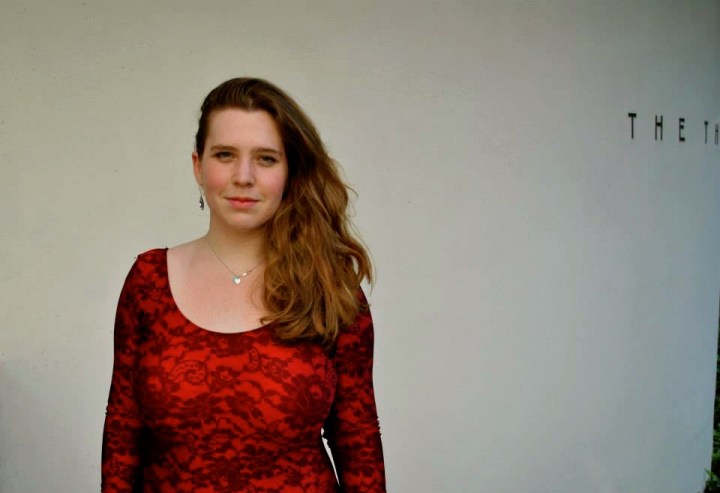
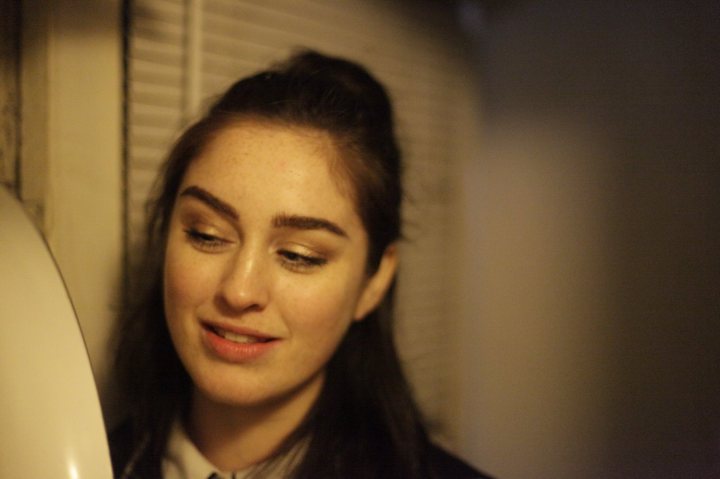 Danielle Galligan is an aspiring poet born and bred in Dublin. She is an actor, theatre-maker and a graduate of The Lir, Trinity College Dublin. She is very excited about her work being on the Poethead site. She has previously been published in the Qutub Minar Review.
 Annette Skade is from Manchester and has lived on the Beara peninsula, West Cork, Ireland for many years. She is currently in her final year of a PhD on the work of Canadian poet Anne Carson at Dublin City University. Her poetry collection Thimblerig was published following her receipt of the Cork Review Literary Manuscript prize in 2012. She has been published in various magazines in Ireland, the U.K., the U.S. and Australia and has won and been placed in several international poetry competitions.
 Chris Murray