Mrs. Piperafter Pied Piper of Hamelin The Fottie Wending White-necked (Pacific) Heron,Ardea pacifica Wince |
Category: How Words Play
-
-
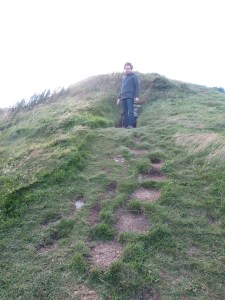
Cuween Chambered Cairn
I should go on my hands and knees to you,
you farmers from five thousand years ago.
Even though your skulls are no longer here
or the small skulls of your two dozen dogs,
in retrospect I realize how wise
I was, dipping in and out of your dark
—the familiar main chamber and three rooms—
to never pause in all my picture-taking
to never stop and extinguish the light
to have found you at the end of the day,
so that we were tired and a bit rushed.
Something like the terror at what went on here
would have overwhelmed me in the moment,
the seriousness of generations
which I only became aware of later:
like an ancient fireplace still smudged with smoke,
our shoulders were soiled from the gloom on your hands.
Horses on Orkney
Horses curled in the flaming spiral of sleep,
the huge immensity of their bodies
belied by the blankets they wear, or the
tight scroll they twist themselves into on the ground,
an enormity suddenly made small
or at least passive, compact, the coiled braid
of body closer to tree or landscape,
the tilted, chiseled head nearer to stone
or steel or something pulled from the fire,
some monument to just how this place works
that you do not escape the wind, but dream in it.
Dedalus & Icarus
The old craftsman came to Cumae after
a long life of art and flight, love and theft,
came alone to the Sibyl’s Italian shore
wasted with age and reputation
to the one who knew every alphabet,
the seeress who saw the future in driven leaves.
And warped with the same old age as him,
she asked that he carve her sanctuary.
His bent wrinkled body covered in dust,
he hammers and carves and polishes away
all of the horrors let loose from his hands:
his dead nephew; the bull-impregnated
woman and its awful issue; the youths
brought from Mycenae for its food; the slave
girl’s love that bore him a son, and the love
he took pity on that imprisoned them both—
he strikes them away and leaves them on the wall,
all of them and so much more envy and
revenge and awe at his talents, hammered
forgotten. But not his son. Twice he’s tried
to let him go, as the sky did before
the sea took him; twice he’s tried to fashion
his face or his descent or his youthful limbs
or just his eyes, and twice he’s stopped in tears.
Skara Brae
Follow the alley of flagstones
to a slab door of wood or rock,
locked with a shaped bar of whalebone.
Inside, opposite the door, a
dresser stacked with pottery, wool,
beads of bone and shell, or pendants
of whale’s teeth or the ivory tusks
of walrus or boar. The hearth is
central, the hearth is heat and light
and the cooking of all that’s caught:
mutton and venison, gannet
and golden plover and lobster,
eel and salmon and mussel, cod
and crab and pork, gull and scallop.
Wild berries fill the belly too,
wild cherries, hazelnut, honey,
some form of fermented plant for beer,
or the richness of cows and goats.
Near the hearth, a tank for fish bait,
while beds and shelves curl around,
around the fire fueled by seaweed,
and beneath the rafters of whale ribs.
There’s one building with no bedding,
but still a hearth, always a hearth,
no metal yet and only stone,
only wood and bone: blades, mattocks,
whistles, fine points or polishers,
all undertaken so near the sea
(but not so near as the sea is now),
generations of food-waste, ash,
dung, bones, broken pottery, shells,
or rope of crowberries—centuries
of families, layers of houses
stacked like rock atop each other,
farmers farming, hunters hunting,
a nameless North Sea and a still
nameless wind giving sound and flavor
to the landscape and the prized lives
that prompted those circles of stone,
that made an occasion of a
hill or loch, coast or height or isthmus.
Through the unknown, unremembered gate
we found the village and the bay
another excuse for green and blue,
five thousand years to our first world,
having flown far to propitiate
those who may have sailed from the south
to this true north, treeless and edged like a blade.
Robert Oppenheimer
Now I come to write in light and fire,
in a language of power we all know,
beyond every letter and poetry
and all the dithering of philosophy,
all the prevarication of politics.
The physicists have known sin, it’s true,
but also the brilliance of a burden
overcome in the brittle mountains,
a foul display that was beyond awesome,
beyond my conscience but still atop it:
in less than a second tens of thousands
turned to piles of boiled organs and black char,
the burnt but still living running for the
cisterns or the boiled, dead-crowded rivers.
News of a flood or an earthquake makes me
think of myself, since the questions usually
given to heaven are now tendered to me,
and its silence is something like my own:
any remorse is just ridiculous
and any warning is usefully late,
since I’ve already handled God’s fuel.
I cannot keep from swagger, or from mourning:
this knowledge a weight you will never know,
and with it a satisfaction, a pride:
numbers and elements resolved into
a thing that worked, but never should again.
⊕ Bone Antler Stone (Museum Pieces) by Tim Miller
“Cuween Chambered Cairn” and other poems are © Tim Miller
Tim Miller’s most recent book is the long narrative poem, To the House of the Sun (S4N Books). His novel Bearing the Names of Many is forthcoming from Pelekinesis, and he also write about poetry, history and religion at www.wordandsilence.com. -
Beneath the elders
Where bumble bees
Lose themselves
In flowering thyme;I lie down in dew-soaked ease.
And dog-rose is the scent
That makes my spirits rise
In the kingdom of the low –
Flying bird.I take comfort on the mossy soil;
Last years leaves sweet;
Damp In the wing-tipped breeze,
To ease my mind and soothe
My brow;In dappled light my speckled thoughts take flight…
And the worm-seeking thrushes
Make a rustling sound
Where life goes on
Underground –Beneath the earthy mound.
Killruddery is © Helen Harrison
Helen Harrison was raised on the Wirral, seven miles from Liverpool, by Irish parents, and has lived most of her adult life in Co Monaghan, Ireland, where she is married with a grown-up daughter. She has had poems published in A New Ulster, North West Words, Mad Swirl, The Galway Review, The Bray Journal, and the Poethead blog. Her first collection of poetry The Last Fire was published during 2015 by Lapwing. Helen has been guest reader read at venues in Ireland including O’Bheal Poetry Readings in Cork, and The White House Readings in Limerick.
Links if required:
- http://poetry4on.blogspot.ie/
- http://madswirl.com/author/hharrison/
- https://thegalwayreview.com/2016/05/13/helen-harrison-two-poems/
- https://sites.google.com/a/lapwingpublications.com/lapwing-store/helen-harrison
-
The Middle of April
After Robert Hass
i
whan that Aprille with his shoures soote
the droghte of March hath perced to the rootemy grandfather quotes
Chaucer from the vinyl
ii
he knows more now
we will too soon
iii
in the spring
pelmet of green
in the summer
scarf of orange
in the autumn
shawl of white
iv
bamboos knock out a tune
until disturbed by elephants
grazing, discarding as they go
v
The dangers lie in the jugular. No one really likes the smell of elephant poo but it makes paper of a high quality. Words written on digested bamboo. Nothing is lost between page and palm. That is mystery: pen, ink, paper, thread, card, dream, word. A memory clings like the smell of dung. And there are always fibres
vi
let there be peace between us
let us learn together
om santhi santhi santhi
vi
there’s no shit like
your own shit
vii
And instead of entering the reserve forest we wandered through the village. The tea shop sold weak milky tea. We heard them, small black cows with bells around their necks. People warned us an elephant herd was nearby. We found their still steaming dung. This was all free and unreserved.
viii
the green mango is sour
best eaten karam with vellum
Nagpur loose jackets are rare now
orange trees cut to grow apartments
the iron red soil of Niyamgiri
woven into the shawl
ix
Here are some things to eat from a banana leaf: idli, dhosa, uttapam, appam, idiappam, sambhar, rasam, chutney, chutney podi, kozhikattai, thair saddam, thokku, chappatti, parratta, puri, anna saru, chakra pongal, ven pongal. Ungaishtam sapdingo… Eat your desire.
x
still searching
for the man in the cafe
xi
silk saree
xii
she said: ask them
and he said: no
she said: why is it
like this?
he said: nothing
she said: no
he said:
xiii
theyn kuricha nari
the fox who has drunk honey
xiv
and from vinyl I learned
He loves you, yeah, yeah…
Did you happen to see….
myself in those songs?
xv
agni nakshetram –
water tastes sweet
as mango juice trickles
from finger tip to hand
to elbow and bathed every veyne
in swich licour, of which vertu
engendered is the flour
The Middle of April is © Fióna Bolger
Fióna Bolger’s work has appeared in Southword, The Brown Critique, Can Can, Boyne Berries, Poetry Bus, The Chattahoochee Review, Bare Hands Poetry Anthology, The Indian Muse and others. Her poems first appeared in print tied to lamp posts (UpStart 2011 General Election Campaign). They’ve also been on coffee cups (The Ash Sessions).

Her grimoire, The Geometry of Love between the Elements, was published by Poetry Bus Press in 2013. Her work has been translated into Irish, Tamil and Polish reflecting the journey her life has taken.
She is a facilitator at Dublin Writers’ Forum and a member of Airfield Writers. She works as a creative mentor with Uversity MA in Creative Process. She lives between Dublin and Chennai.
from The Geometry of Love Between the Elements (Poethead) -
Uptown
1.
Yellow and crimson leaves, the sidewalks and streets,
leaves of vines clinging to tree trunks
and brick buildings, concrete staircases overgrown
with weeds and roots—
vines cling on tree trunks, brick buildings are
concrete things, dwellings of a dead mind,
dwelling-places of a vanished mind
that stained such things as this—
dwellings of a vanished mind, saw someone,
saw things, broken windows, crimson leaves,
mansards, toilets whose porcelain is stained
and rough, whose water ran—
broken windows saw the concrete staircase below,
its iron handrail rust like leaves,
its steps buckled and cracked with roots and weeds,
hacking coughs—
window broken to the cold, saw someone hacking
over the porcelain stained rough like leaves,
a mind vanishes, someone vanishes
in a cold apartment where the toilet runs—
a dwelling-place is empty but of concrete things,
broken panes, a toilet’s porcelain dry and rough,
a mind has vanished down a concrete staircase,
across the highway, to the cold river
Uptown
3.
Snow on one of the two
blue steel arches
of the Birmingham Bridge
blue-green, white, and splattered
with rust, the snow sour curdled milk
sheets of broken ice
floating in the Monongahela,
pieces accrued together
in frozen geometries
of white-grey on grey-green
empty trees de-veiled,
the South Side hills in snow, and
from beyond that distance,
from beyond the hills,
from beyond other ridges,
announcement, an announcement:
I bring news,
a stag lows,
winter snows,
summer has died
high wind cold,
sun is low,
short its track,
river a riptide
the ferns all red,
a shape concealed,
a goose rises,
ancient its voice
cold takes hold
of birds’ wings:
a time of ice
is my news
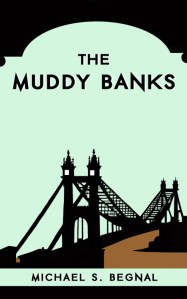
These excerpts from The Muddy Banks (Ghost City Press, 2016) are © Michael S. Begnal,Note: “Uptown” section 3, lines 17-32 (beginning with the line “I bring news” and continuing through “is my news”), is my translation of an anonymous 9th-century Irish poem beginning “Scél lemm duib. . .” (which also appears on a t-shirt made by An Spailpín Fánach).
Michael S. Begnal has published the collections Future Blues (Salmon Poetry, 2012) and Ancestor Worship (Salmon Poetry, 2007), as well as the chapbook Mercury, the Dime (Six Gallery Press, 2005). Formerly editor of The Burning Bush literary magazine and formerly longtime Galway resident, Begnal’s work has appeared in numerous journals and anthologies and has been nominated for a Pushcart Prize.
Contacts for Michael S. Begnal:
-
Kitchen
With hot chilli in my eyes
I read between the lines,
a coded message of noises:
A child’s scream sheathed in wind blasts,
gashes through the cracks.
The mandalay porcelain clock, riveting,
ticks between my shoulder blades.
I carry my life like a snail.
The fridge sighs,
a boiler roars into motion,
it broils the oil of the seas and heats
– my place, the kitchen at dawn.
Clouds scrub the stratosphere with desert sand;
a mad dog, stuck in fear, just shrills.
The river at the bottom of our glen,
shushing its song, cushions our senses.
In my body’s kitchen
the heart spins unrelenting.
Organs send impulses talking to each other.
“Thanks for the parcel, we enjoyed the food.”
The universe of enzymes awakens,
matter is transformed, vibrations vocalise.
My body is gauze, from Gaza, letting through the particles
of light – staunch at covering the wounds, so absorbent.
Beyond its wonders I remember
last night’s cosmic dance at this table,
our conversation about intelligence and order
and that we are bacteria in God’s body.
First appeared in Red Roots-Orange Sky, Lapwing Publications, Belfast edited by Dennis Greig
Danube – Duel
Is that a boat or a coffin
bobbing up and down on the river
framed by the intricate lace of the parliament?
The country taught me hate
the tightness of place, sometimes echoed
when the gales gather and attack this island.
No escape, lie low, let the winds blow overhead,
wait, even if you are sitting on a hot spring
even if you fume vitriol.
Remembering the river’s bank
ragged lines of men and women, shot
after they were told to slip off their shoes.
Boney bare trees reach up into the sky
grab the pain – hanging on
pulling it down, draw it deep into the soil.
The Danube splits the land. From the crack
incredible amounts of fresh water, hot and clear
bubble up with the smell of rotten eggs.
Healing waters – they say –
good for the bones and joints,
the ailments that plague the core of the nation.
The Jews that never got buried
float away into the sky – in the spas soaking
people play chess in sulphuric silence.
First appeared on Poetry24 edited by Martin Hodges
I wanted to tell you, but there was no time
In my dream I had to take the key to your flat and leave it there
It was very hard to do
I had to balance on steep rocks and loosened iron hoops
In my thoughts I tousled your hair and something lifted me up
A force – and my stomach jumped into my throat.
I was laughing, for this was what I wanted.
Then it was over – (some new dream, new convolutions began about
a girl who dived into the awesome blue of the sea –
Cassandra – I was glad that she left me alone
Like a sunset, her blonde locks sunk into the sea)
I was thinking about symbols on my way to you near the southern railways
And my stomach was in my throat.
Arriving, I felt the usual little pain, you said I was beautiful
and I believed you. There was no doubt about it – I could love
You as it was good for me. We were standing at the glass panels
In front of us the space
I did not tousle your hair, there was no embrace, although desired
I left, I was in a street again and a force lifted me up –
the one that was leaving dragged me with itself.
I was a weak woman then, tiny and the struggle with my own power
Seemed ridiculous. I let it fall into the void.
First appeared in A New Ulster edited by Amos GreigBroken – Winged
The first time I heard your voice on the line
defensively bored, I thought my pleading
rendered me powerless. But surprising:
It was the key to your poor, broken heart.
I admired the splinters: Twisted sky,
land, barbed wire manifold reflected,
Medusa eyes flash, piercing the sadness,
but whirls of winds carry us to new heights.
I believed in me being your healer –
making you whole a possibility.
Wanted to be the cohesive matter,
Superwoman with the magical torch,
blind to your pain’s artful prosperity –
to the cage of guilt and cunning reproach.
First appeared in Red Roots-Orange Sky, Lapwing Publications, Belfast edited by Dennis Greig

Photo by Alistair Livingstone Csilla Toldy was born in Budapest. After a long odyssey in Europe she entered the UK with a writer’s visa to work on films and ended up living in Northern Ireland in 1998. Her prose appeared in Southword, Black Mountain Review and anthology, Fortnight, The Incubator Journal, Strictly Writing and Cutalongstory. Her poetry was published online and in print literary magazines, such as Snakeskin and Poetry24, Savitri, Lagan Online, Headstuff, Visible Verse, A New Ulster and in two chapbooks published by Lapwing Belfast: Red Roots – Orange Sky and The Emigrant Woman’s Tale. Csilla makes videopoems, available on her website: www.csillatoldy.co.uk & https://soundcloud.com/ctoldy
-
metamorphosis
gulls bathe & fish in temporary rock pools
near the recycling spot in ongpo village. i wonder
if the dead mermaids of old jeju are reincarnate as gulls?
whether they thank the wind for bringing morsels of food to them?
have they returned to the place they liked to forage abalone,
where they taught their children how to recite the poems of the sea
& laced a 1000 soups with shell fish & sea weed?
in the translucent pools objects that don’t belong to the sea
but the sea has made ornate on its potter’s wheel
lie like artifacts waiting to be raised from the dead.
you can hardly recognize shards of green bottles,
broken, budget china plates, the flutes & spouts of blue vases
& their bases with the artists name erased by the currents.
but a saucepan lid, the nipple of its handle.
a rusty tobacco tin with mushed up cigarettes inside.
a bottle of washing up liquid. a cement bag collecting shells & kelp
go unchanged. no matter
the hours the mad sea potter clocks in.
the pacific
we walk 1 km or so,
pass through gangjeong village,
away from where ajummas
who look like permed mussolinis,
gut & flense red porgy & barter
at the pitch of cash registers, on the street corner.
beyond the outskirts
where the abandoned banners of protest
against the construction of a naval base is stationed,
to where the pacific ocean is being itself.
the land emptied. the roads emptied. people emptied.
the ocean here moves the mood to its own way.
& we are moved with it too.
because we are people.
jeju church
the telegraph cables wobble like plucked harp strings.
i follow them to a church: the modem of god.
the fastest router to his love & law.
i doubt they get a decent signal there;
therefore anxiety’s doppleganger cowers behind the plastic pews,
in a church, without nave or apse; persistent
their’s is a church suitable for gaggling wants to god.
the neon crucifix where the lightning rod should be picking petals of dark
to save the air conditioned congregation from the godless element.
the don’t see that the weather is god, their livelihood.
they don’t see out there is all god can be
& the only place he might find comfort from the grind of his silence.
눈 = snow & eye
this blizzard two days deep is an anomaly
: it hasn’t snowed like this for 35 years.
the island’s comatose yet comfortably delivered from
the common arrangements of any old day
: farmers off the hook with needy furrows;
disheartened tourists hop scotch 4 dimensions a-z;
the restaurants full of happy people getting drunk;
biyang island’s buggered off all afternoon,
a graphite smudge in the corner of a child’s sketch.
i feel a perfect ease in this seraglio of snow,
furnished with moving tapestries of conifer & crow.
litters of onion & cabbage, the brown flame
of decay like the edges of old manuscripts
spreading to the whorls & cores.
the harem wenches shaped like soil who swaddled them,
who with familiar cuddles warmed
their spindly legs until the autumn harvest,
look bored without their motherly duties.
there isn’t a soul & if there was
a barrier of snow rushes between us.
flocks of sparrows navigate the drift,
the traffic of currents & pockets of gale
quiff the snow on the ridge ahead.
i hope i never find time to return to the world.
sonnet from a derelict house
the village houses dumb with old age. blind & windowless of their worth.
their pipe-orifices blow off excess steam. asbestos hunkered in their heads.
a few roof tiles absent : old storms popped them off like champagne corks.
cut short like children who are seen but never heard. downcast & diffident.
they mime their rantings at a generation that admires but does not fix.
they had an idiolect arrested by indifference & so they do not croak
objections to invasive mainlanders with café aspirations.
they’ve busied themselves like a mouth chock full of ginseng sweets
so long, they forgot the peal of beauty poking from their grout,
the saturating mold that sticks them together. you’ve not decided you have value yet.
when the aesthetic nuances of apartments lie in tatters: when the weathered marks,
the petroleum foot prints & ichor rust begin to tell on iron bones & fiber glass skin
they’ll hurry back to you with a lick of paint, stucco & warm sibilant love,
their guests will write on post-it notes they are too guilty to compose themselves.fish lady
the jeju grandma who squats outside the chiropractor
sells gold bream, kelp & mackerel piled in little blue baskets.
the lamppost is her backrest, the pavement is her chair.
her back’s bent like an oreum. she must be in a lot of pain.
most of the day she naps with the fishes. i never saw her sell a thing
& i can’t cook fish in the café : it makes a dreadful stink.the air in hallim town is thick with salt & brine.
it comes from the sea hidden in netted hauls of jeju cuttlefish
-red freckled tentacles like broken fingers & heads like bone china vases.
her bones are rusty as a trawlers’ nuts & bolts.
her knuckles have been bleached with salt & cold.
she’s wrapped up in a microfiber blanket, she has no gore-tex clothes.her veins bulge out of tissue flesh, like highways on a map,
the luggage of her grueling years drags under her eyes.
after working seven days a week, outdoors in the fields,
or on the wet street, since she was a teenager,
the elements have buffeted her geography’s shape inside & out.
we can travel her hardships without a compass needle.there is no son or daughter to help her lug the stock.
she has mothered. be sure of that. suckled & smacked them into citizens.
they’ve been consumed with seoul’s nightly attractions: pork & soju.
disfigured by charts & indexes, the etiquette of the salary man
: the boss says drink! we say how much? the boss says jump! we say from where!
if only she’d not shamed their island roots they’d be less corpulent.on sunday all the shops & vendors on the street stop trade.
she goes to church & tends the spirit then goes home to tend the soil.
she has a little garden behind her little house beside the sea.
she grows a row of cabbages, spring onions & garlic
: in autumn for the umpteenth time she’ll make kimchi for the year ahead
: the fuel for her to endure one more ring of seasons in the harbour town.one day, i’ll go to the chiropractor & she won’t be outside
& her fish will not have been caught & birth prodigious shoals.
Daniel Marshall is a poet from England who now lives in Jeju Island, Korea, where he runs a café & guesthouse, which he built with his wife from the soil up. He is an emerging writer who, when he manages his time well, writes & blogs. You can read several of his ongoing projects here & a number of articles he wrote on dream psychology & analysis whilst he lived in the mountains of mainland Korea. Feel free to contact him anytime through his blog:
https://danielpaulmarshall.wordpress.com/
or at danielpaulmarshall85@gmail.com
Sonnet From A Derelict House and other poems are © Daniel Marshall -
For Sylvia-Down in Adoration
You were Fulbright a seismic enigma
the fleet foot hare rising in pastel dusk.
It stalked like crows in the breast of a man
who sold your head for hapless wanderlust.
Your damage was like splintering of glass.
Could he not understand what it is to be
a milk jug, wasted lipstick, the outcast
shadow hung from a star-struck hemlock tree.
But a quiet voice is so more loquacious
than a risen phoenix roaring through air.
Maybe now is the time for tempered hush
time to weave your bridal crown through red hair.
He brought Devon sea shells to your headstone
you were his lotus his night passage glow.
For Jane Kenyon
Ten years on, while storm buffets glass and juniper,
snowflake tiers inside my porch
finger an army of miniature baubles.
The plastic robins perch lopsided. Even
that new star, a rushed afterthought, curtseys
on its axis where a black one legged doll should be.
Dear Jane I never met you. But I guess your mother
was at the station with pasteboard suitcases—ready
to sew broken limbs together again.
Now as I make end to season,
with more than a single strand of tinsel,
I nest plywood angels and churches
for a woman who breathed cypress and pondered why
only nightjars or silver fish
knew how to take shadowless flight.
The Pathologist’s Wife Taken as a whole she is like any other woman one heart four chambers one brain eight lobes If I place them in your gloved hands her weight is less than a pre-term infant this woman mute monkey on one shoulder zealous cat on the other At the edge of night she wears a cowl of thorns the spines draw blood if I forget to soften my touch Whatever moves between bright thought & Tahitian body Gauguin’s veneer is noted full mouth broad nose hair above her lip the nest of a bird humming at her wishbone & if you crystallise sadness look close under a microscope you find deep sea brittle stars in that one rare tear
Natalia Spencer B.A lived in North Africa at the start of her life & now inhabits a quiet niche of South West England. Like most writers she knows, she has family, cats, many books. Her flash fiction has appeared in Kissing Frankenstein and other Stories, & Flash Frontier. In 2015 she won The MSF Silver Award for Best Poem from Visual Stimulus. More recently she has poems published in The Poetry Shed & various magazines. She is working towards her first collection. -
Unrecorded
Stone music
When your music rises
from your grave in flower
and some stones quiver
and sing notes musical
I hear your voiceWhen music pricks the air
from a needle in friction
and touches the first traction
molecule of air-kissing your ear
I have memoriesWhen your words attach a molecule
of air to another and in you we
breathe, sing and live in hope
when we cannot forget we rise
I sing my soul your languageOur hair is proud and sings on air
When loving is truly spoken
It is in your ear in seconds
in your heart and mind and soulAdd warmth and fire to it
Your own interpretation original
Your body moves in dance
Still you rise, still you rise, dance
and fall and rise from the grave in flower.
Weave your joy
With the tips of your fingers
And all of you like the
Orchestra conductor knows that music
Know your body:
Its heart drum
Piano toes…The epic of weavers undaunted
the road to the market is mine
my head is a carrier of universes
I know my step is in space
and those arrows you see on my cloth
have known many lights…
nights and colorsRecognition that ignites
when that face you see again out of nowhere comes
Suddenly feelings surge
blow and rage a real storm
inside
Heart shaken like a vessel love-filled bubbles
Feel every nerve awake
Blood rush blush…
Something lost now
rare since a screen touch keeps
telling where and how you are
Soon surprise will be ancient human feeling…ouch!
trembling dreams
You wake me up each time
but I dream on with hope
You tell me children cannot
eat dreams in a poem
But when I look I see them
only clad in dreams
the only pants they wear
that you cannot tearI have sat and mended endlessly
and washed with tears
things mention would tear this paper
things surfing in my soulCome again, enlarge my spirit
into dreams and let me sleepwalk
and stalk in my talk so many ghosts
Until I ring my bell of peace
and you fall out of your fantasy
and see saints sainting without fainting.
We did not choose the sea
philo 6.1.2014
When we found them washed ashore
they were barely alive but still breathing
We spoke for the voiceless they
said, many times, and now speak to us
and for us and with us share this breathWe shuddered at life’s turns and twists
when the madding crowd kicked them hard
They slave them again, they do, their voices
deadly drilling the stones so alone intone.
Longing
Solitary times teach
so loudly that silence
grows so deep and speaks
a new language: And now
Let me see my love, let me
hear my hope, touch my faith
Let me taste our belonging in fragrance
It has been so long and I have
a new alphabet to share with life.
Come
You come closest
to my chest and tell
me in my own tongue
that you are my latest thought
the fount sings unending
the ocean rises as the rivers dry
and we see the stones still
washing and washedHumans never understood
color then, never not in
all those matches in design
Not in all those pastels in
cake and bathroom tilesNot in all that whiteness
and darkness in the broods of life
We so challenged by the sun
without which we wither
think
color must be bright
and I know
that we have not understood color
Cold
We have not got it in color
We attach to it not the warm sound
that leave our mouths to cut the air
frightened of it we are when it rains
purple
and now we know that sign
like we have worshipped the rainbow
for years.
Round the rock
Roots then finding
their way blindly down
trying you
to pass they go this way
and that
through soil finding you
and hugging youYou sing to them the
song of beginnings you
play for them the sound
of the music of their birth
the sign of life
Do not be sad you are
not in a foreign land you tell
them as they moveRain
falling finds those still
thrusting rootsYours of stone
you have them
and the roots of a tree
carrying generations into
this other freedom so hidden from
our eyes
that the place of gray we think
but we never understoodHere to go, everyone has a visa
given by the first cry, your life and
friction before in your forbearers
Here to go, everyone, is in songHug us rock and break us
as we broke you, break our wood
and if we are ashes, kiss us rock
and let your hardness be the crook
of Our Mother’s arm, so softWe Did Not Choose The Sea and other poems © Philo Ikonya
Philo Ikonya is a writer, lecturer and human rights activist. She is the President of PEN Kenya. She taught semiotics at Tangaza College and Spanish at the United States International University in Nairobi. She graduated in Literature and Linguistics (The University of Nairobi) before reading philosophy in Spain and Italy. She worked as an editor for Oxford University Press (Eastern Africa). Born in Kenya, Philo speaks Kiswahili, Gikuyu, English, Spanish and some Norsk. She has a grasp of Italian and French. Philo is a mother of one. She is currently living in exile in Norway.
.
Her fiction includes two novels, Leading the Night and Kenya, will you marry me? She has published three poetry anthologies: This Bread of Peace, (Lapwing) Belfast, Ireland, and Out of Prison- Love Songs translated into German (Aus dem Gefangnis Liebesgesange). Philo is a Pan-Africanist. -
Tattooed Girl
She had wings,
big and black,
tattooed on her back.
They reached up
above her flimsy top,
as if she might take off any second.
They looked strong, powerful;
I envied her conviction,
her dedication.
Did it hurt much?
Did she feel the blood bead on her young skin,
with every touch, every prick of the needle?
A modern Cleopatra clad in black
with dark, dark eyes, she intertwines
her silver-laden fingers with another, I presume her lover.
I never saw her leave but could have sworn
I felt cold on the back of my neck,
a shiver and then nothing.
(Tattooed Girl appeared in The Stony Thursday Book in 2015)
Imitation
I trudge through the winter sales
trying on one coat after another
but none look right on me.
In the mirror
I see myself,
younger,
flat-chested,
ugly,
in Mammy’s
good, wool coat,
too big for me,
the weight of it
and the smell
of her Tweed perfume,
familiar, reassuring.
I remember her
putting her coat on
over normal clothes,
on her way out the door
to a funeral,
brushing her short,
greying hair roughly
in the antique mirror
over the fire.
I imagine her
at the grave,
respectable,
her gold peacock brooch
pinned to the front,
shaking hands,
sorry for your troubles.
I soldier on,
determined
to look like
a proper woman
should.
(Imitation was published in The Stinging Fly in 2012)
Pic: John Walsh Maggie Breen’s debut collection of poetry, Other Things I Didn’t Tell, was published in 2013. She was long-listed for the Fish Poetry Prize in 2015. Her poems have been published in The Stony Thursday Book, The Stinging Fly, Crannóg and Southword, among other publications. She was guest editor for The Scaldy Detail 2013. She has performed readings at the White House, Cáca Milis Cabaret, Kildare Readers’ Festival and Ó Bhéal, among others. Her short radio documentary Murt’s Eggs was broadcast on RTE Radio One in September 2014. She is currently working on a second collection of poetry, as well as other projects. Born in Wexford, Maggie lives in Dingle, Co. Kerry.
.