Last evening, 09/11/2012 , a poem called A Lament, writtenby me, was staged at the 2012 Béal Festival of New Music and Poetry.I am adding the Béal Festival website here.There will be shots and a recording available soon.
My thanks to Elizabeth Hilliard and David Bremner for their support in staging the poem and for a wonderful evening of music and poetry. I particularly enjoyed listening to Tom Johnson, and to The Sea-Farer.
Thanks to the wonderful women who spoke the poem with such powerful dignity, Dove Curpen,Réiltín Ní Chartaigh Dúill, and Emilie Champenois. Special thanks to Rita Barror who staged A Lament, and who helped with moving the poem from text to performance. Waltons Music school gave us a flexible rehearsal space which I am absurdly grateful for, and until this week I did not even know existed.
A Lament has always been companion to Two Songs of War and a Lyric, published by SouthWord Literary Journal in 2012, and deals with the subject of violence and conflict, especially on women and children. I wish to thank Mariela Baeva who is anthologising part of the series along with the PEN International Women’s Writers Committee, for her interest and support.
I hope to have pics and an audio at some near point, until then thanks everyone for making it possible.
This year I wrote a cycle of poems relating to war and to women. I titled part of it Two Songs of War and a Lyric for the SouthWord Journal, although it is intimately related to an earlier sequence of art poems, and to the 75th anniversary of Guernica which was marked in 2012.
The second poem in the art series , Gernika, was written for Euskal PEN and was read during the 75th anniversary commemoration of Guernica this summer of 2012. The first and last poem of the sequence, A Lament, was written some time ago and had been put in a folder. A Lament is too awkward a piece to submit to most journals as it is written for three voices and does not slip easily into the submission guidelines of many reviews. A Lament was written firstly as a poem and then as a chorus. It was conceived to weave in and out of the sequence which was published initially in SouthWord Magazine. Lament is an inherent part of the sequence because it involves the voices of the women who inhabit the poems in Two Songs of War and a Lyric.
As if,Sabine, Gernika , A Lament, and Through the Blossom-Gate are meant to work together, and are about loss and recovery. Here is what has happened to the original cycle, the Lament, and the unpublished cycle of seven poems since I sent them out.
The 7 cycle is provisionally entitled Eamon Ceannt Park Cycle , after the park that the dream-sequence was written in. I had planned to send it out, as it is ready. However, in all the entire sequence including the lament amounts to thirteen inter-related poems written over the period of a year or two. They inherently form one piece. There is also an emergent coda for the entire. (Completed)
I am glad the poems have found homes and that they resonate with people. I hope to publish the thirteen poems together at some point, but I see that I will have to make my own arrangement for them, as they hardly fall into a traditional submission-shape. The most important thing for me is that they maintain their integral unity and coherence. I am editing them into a folder and deciding how I will eventually publish them in their integrity as a whole piece.
I included the list where the poems appear separately beneath this post.
Béal Festival will be programming an experimental Lament for Three Women’s Voices, by myself. The lament is related to a cycle that SouthWord (Munster Literature Centre) published in the Summer of 2012. The original piece was called Two Songs of War and a Lyric
‘Béal Festival 2012is a festival of new music and poetry. The whole festival takes place over three days (Nov 7th – 9th) in the Banquet Hall at Smock Alley. The format is open-plan, trying wherever possible to allow different aesthetics and approaches to rub against each other.
Featured composers include: Robert Ashley and Tom Johnson with a European première of Ashley’s recent opera World War III as well as a newly-commissioned work by Johnson for vocal ensemble.’
Day 1: Wednesday 7th November from 6.30 pm
TheOpenRehearsals – short performance by improvised music theatre collective Gráinne Mulvey – The Seafarer (soprano and electronics) World Premiere Claire Fitch phone Aodán McCardle – ‘nil’ ‘abair’ (a set of poetry readings / improvisations using projection) Leuclade – Segundo Hechizo
8.00 pm – a method: the road climbs
Haydn: String Quartet Op 64 No 6 Georges Aperghis: Recitations (exc.) Tom Johnson: Formulas for String Quartet Tom Johnson: Counting Music readings by Billy Mills
Performers: Elizabeth Hilliard (soprano), ConTempo String Quartet, Aodán McCardle, Billy Mills
Day 2: Thursday 8th Nov
from 6.30 pm
TheOpenRehearsals a forty minute set from TheOpenRehearsals of their unique style of improvised opera
7.30 pm World War III: Just the Highlights
Robert Ashley: World War III: Just the Highlights (European Premiere), The Producer Speaks and When Famous Last Words Fail You
Performers: Tom Buckner (baritone) Vincent Lynch (voice and piano) Aodán McCardle
9.30 pm Christopher Fox: MERZsonata Aodán McCardle: Purgatory (a new work in response to Robert Ashley) Bernadette Comac: The Virtual Performer
Day 3: Friday 9th Nov , from 4 pm
Derek Ball: Autour de la chambre de Sarah (for cello, piano, speaker) Dennis Wyers: Beyond Strings: In Search of M-Theory (for soprano / spoken female voice, live processing and triggered sounds) Sinead Finegan: Both beautiful, one a gazelle (for violin, speaker) Christine Murray: Lament (for three female voices) Michael Holohan: Plurabelle (tape piece) Nicola Monopoli: Vocal Etude (tape piece) Maurice Scully reading his own poetry
TheOpenRehearsals
7.30 pm The air moves us : we move the air Ailís ní Ríain: Eyeless Scott McLaughlin: Phon 2 Sean Doherty: Saccade David Bremner: Round Tom Johnson: Tick Tock Rhythms Christopher Fox: A Glimpse of Sion’s Glory Billy Mills: Loop Walks
Performers: ensembÉal, Orla Flanagan, Iarla Ó Lionáird, Maurice Scully, David Bremner, Elizabeth Hilliard, Sinead Finegan
Info about Béal : http://bealfestival.wordpress.com/
Months-dead grandfather I couldn’t have written this when you were alive, & you kept living, unknown to me,
like someone not obscure but obsolescing whose death surprises mainly by his having been alive till now (I googled Lawrence Ferlinghetti today – he’s still alive:–)
. & unknown to my mother . she has a half-sister . three weeks younger, alike unknown
Fatherhood is a bit of a mystery when you put it about like that.
From you I have serial faithlessness from you she has a name . & a maiden name . that I am asked to say when asked by one of the ‘team’ . on the Credit Card . Hotline, it being typically something unknown . to other people, even those we’re close to, . (I made one up) & her hoary orphan paranoia.
1. He who’s never known tempting distance, the momentum of moving, the wonder of danger, the tipsiness of space and the weariness of wandering – He’ll never know the meaning of either life, or death, nor will he ever grasp good, or evil. Nor will he ever try the communion of the trial, the joyous lull of arriving. He’ll never taste the true ambrosia of warmth in the nest that’s home, of bread on the father’s table, or rest near a mother’s knee! 2. Cosmic, heavenly whiteness, of veiled distance, from early childhood you attracted my eyes, you infected my blood, which restlessly spurts drawing me to eternal quests and wonder. Whenever soft breezes flailed green cornfields, whenever a bird’s wing sliced the blue heaven, a caravan of clouds , grainey and forlorn, or a sail on the sea’s horizon – The hands were stretched like stems – until, transparent and thin they dispersed, the eyes like birds took off to free skies, and so they stayed yearning for space.
by Elisaveta Bagryana, from Selected Poems of Elisaveta Bagryana; Penelope of the Twentieth Century. Publ. Forest Books 1993, Trans. from the Bulgarian by Brenda Walker, with Valentine Borrisov and Belin Tonchev.
I have come, alas, to the great circle of shadow, to the short day and to the whitening hills, when the colour is all lost from the grass, though my desire will not lose its green, so rooted is it in this hardest stone, that speaks and feels as though it were a woman.
And likewise this heaven-bornwoman stays frozen, like the snow in shadow, and is unmoved, or moved like a stone, by the sweet season that warms all the hills, and makes them alter from pure white to green, so as to clothe them with the flowers andgrass.
When her head wears a crown of grass she draws the mind from any other woman, because she blends her gold hair with the green so well that Amor lingers in their shadow, he who fastens me in these low hills, more certainly than lime fastens stone.
Her beauty has more virtue than rare stone. The wound she gives cannot be healed with grass, since I have travelled, through the plains and hills, to find my release from such a woman, yet from her light had never a shadow thrown on me, by hill, wall, or leaves’ green.
I have seen her walk all dressed in green, so formed she would have sparked love in a stone, that love I bear for her very shadow, so that I wished her, in those fields of grass, as much in love as ever yet was woman, closed around by all the highest hills.
The rivers will flow upwards to the hills before this wood, that is so soft and green, takes fire, as might ever lovely woman, for me, who would choose to sleep on stone, all my life, and go eating grass, only to gaze at where her clothes cast shadow.
Whenever the hills cast blackest shadow, with her sweet green, the lovely woman hides it, as a man hides stone in grass.
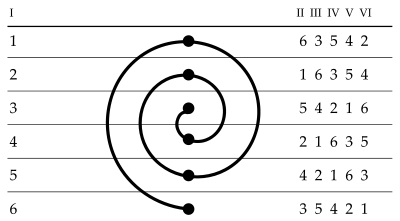
The image at the base of this post is from the WikipediaSitediscussion on the Sestina form . I am adding here a Poets.orgdiscussion on the form used by both poets in the above post . I wanted to focus on content , which is after all what poetry is about (that and adaptions/metamorphosis/shape-shifting and code !).
‘Sestina’ by Elizabeth Bishop
September rain falls on the house. In the failing light, the old grandmother sits in the kitchen with the child beside the Little Marvel Stove, reading the jokes from the almanac, laughing and talking to hide her tears.
She thinks that her equinoctial tears and the rain that beats on the roof of the house were both foretold by the almanac, but only known to a grandmother. The iron kettle sings on the stove. She cuts some bread and says to the child,
It’s time for tea now; but the child is watching the teakettle’s small hard tears dance like mad on the hot black stove, the way the rain must dance on the house. Tidying up, the old grandmother hangs up the clever almanac
on its string. Birdlike, the almanac hovers half open above the child, hovers above the old grandmother and her teacup full of dark brown tears. She shivers and says she thinks the house feels chilly, and puts more wood in the stove.
It was to be, says the Marvel Stove. I know what I know, says the almanac. With crayons the child draws a rigid house and a winding pathway. Then the child puts in a man with buttons like tears and shows it proudly to the grandmother.
But secretly, while the grandmother busies herself about the stove, the little moons fall down like tears from between the pages of the almanac into the flower bed the child has carefully placed in the front of the house.
Time to plant tears, says the almanac. The grandmother sings to the marvelous stove and the child draws another inscrutable house.
Dance the lamb ra-ra lamb ra-ra mutton hunks It’s a shame the way we carry on
The streets stink tonight; my skullpan’s pounding for rain or riot, I’m not so young, scarred from mound to sternum, childless pale citadel of bravado and competence; though if it gets too tasty I’ll hitch my mobile home and flit this meatpacking warehouse district but for now I’m hanging in there, for a sniff at the grinding bliss the brazen looter children have, this year’s corn kings─ with sordid cold, blanket, galvanise tray, comes the morning in.
Dress the lamb rare-rare rare-rare mutton bird It’s a shame the way we carry on
Come sisters, these Lammas shiftless we could use, straw men to our hags, the blintering braggarts will fight our wars and decorate our palaces, symbolize in their dying everything that comforts people, and stupefies. The estate we lost thirty grand years ago, tonight we take ground, we rise, inhale, we’re scary cunts, tonight we tear spoil through locked wards, mindless, knowing that our chicken limbs may splinter, falter; like, a freedom act like, do whatever you want mate do the mutton flap It’s a shame
Kit Fryatt writes and performs poems at Spoke,Wurm in Apfeland Can Can. I met her at the Mater Dei launch ofPost IIIMagazine and being well-impressed with a card-carrying poet, I begged some poems for my Saturday Woman Poetblog. I got three unpublished poems , which would be considered over-generous, so I am publishing two of them today and returning the third with the proviso that if they are published online, they are Published work. Thanks to Kit for her generous contribution to Poethead. Copyright of the above poems remains with the author.
Black milk of daybreak we drink you at night/ we drink you at morning and midday we drink you at evening/ we drink and we drink/ A man lives in the house he plays with his vipers he writes/ he writes when it grows dark to Deutschland your golden hair Margareta/ Your ashen hair Shulamith we shovel a grave in the air where you won’t lie too cramped/
The above poem is excerpted from John Felstiner’s biography of Paul Celan, Paul Celan, Poet, Survivor,Jew (published 2005, Yale University Press). I lived with the poem for a week in Mayo recently, where I transcribed it a number of times in order to get to its music.
During my transcriptions, I came across another rendering of the poem on YouTube, which I am adding here. The Youtube reading is by Gerald Duffy. I am unhappy with the recording, possibly because I think it is read too fast, and maybe in this case some of the music feels lost.
John Felstiner devotes a considerable amount of his text discussing the reasons for his choice of words in his translation of the poem. For that reason I would recommend the book and his notes on the difficulty the poem presents to the translator. I do not know if the book is online but the relevant chapter of the book is A Fugue After Auschwitz (1944-45 ) /your ashen hair Shulamith.
Felstiner discusses the state of the poet who had lost both parents to the camps, his MS work and Todesfuge as the Guernica of post-war European literature.
Todesfuge is immense, challenging and multi-layered as a work. The story of theDeath Tangois known to many people, there are images available to us. Celan composed the work in 1944, when information was beginning to emerge about the Final Solution. Well over a decade later Sylvia Plathwould struggle with those images and convert them into her tropes and archetypes. Nelly Sachs and Ingeborg Bachmann struggled with words and images to convey the horror.
Celan wrote “Todesfuge” in 1944 with immediacy and utter control. The poem was published in 1945. Felstiner admits that it took him years to render as faithfully as possible the movement and symbols within the poem. His discussion of the problems with the poem is worth the book alone. Here in this poem is encapsulated the fear and helplessness of the final solution. I have read and listened to the poem over and over but nothing quite brings it right home than its transcription (in Felstiner’s translation).
“He shouts play death more sweetly this Death is a master from Deutschland/ he shouts scrape your strings darker you’ll rise up as smoke to the sky/ you’ll then have a grave in the clouds where you won’t lie too cramped/ ”
(Todesfuge /ST 5)
The entire poem is at the following link ,though I would recommend the Felstiner chapters for a discussion on the translator’s art and Paul Celan’s poetry:http://www.celan-projekt.de/todesfuge-englisch.html
Adrienne Cecile Rich has been nominated for the 2011 National Book Award , so no better time to link to her opus. Adrienne is 82 years old and a poet of force. I thought to add a poem and biography here to celebrate.
Adrienne Cecile Rich, pic from Google images/JWA
Diving Into the Wreck by Adrienne Cecile Rich.
First having read the book of myths, and loaded the camera, and checked the edge of the knife-blade, I put on the body-armor of black rubber the absurd flippers the grave and awkward mask. I am having to do this not like Cousteau with his assiduous team aboard the sun-flooded schooner but here alone.
There is a ladder. The ladder is always there hanging innocently close to the side of the schooner. We know what it is for, we who have used it. Otherwise it is a piece of maritime floss some sundry equipment.
I go down. Rung after rung and still the oxygen immerses me the blue light the clear atoms of our human air. I go down. My flippers cripple me, I crawl like an insect down the ladder and there is no one to tell me when the ocean will begin.
First the air is blue and then it is bluer and then green and then black I am blacking out and yet my mask is powerful it pumps my blood with power the sea is another story the sea is not a question of power I have to learn alone to turn my body without force in the deep element.
And now: it is easy to forget what I came for among so many who have always lived here swaying their crenellated fans between the reefs and besides you breathe differently down here.
I came to explore the wreck. The words are purposes. The words are maps. I came to see the damage that was done and the treasures that prevail. I stroke the beam of my lamp slowly along the flank of something more permanent than fish or weed
the thing I came for: the wreck and not the story of the wreck the thing itself and not the myth the drowned face always staring toward the sun the evidence of damage worn by salt and away into this threadbare beauty the ribs of the disaster curving their assertion among the tentative haunters.
This is the place. And I am here, the mermaid whose dark hair streams black, the merman in his armored body. We circle silently about the wreck we dive into the hold. I am she: I am he
whose drowned face sleeps with open eyes whose breasts still bear the stress whose silver, copper, vermeil cargo lies obscurely inside barrels half-wedged and left to rot we are the half-destroyed instruments that once held to a course the water-eaten log the fouled compass
We are, I am, you are by cowardice or courage the one who find our way back to this scene carrying a knife, a camera a book of myths in which our names do not appear.
This poem is for lovers of poetry, for those who read women poets and wonder at the gender-imbalancein literary publication. I have decided to keep it simple and to add my favourite Rich , alongside a reading list. This site has always been about encouraging poetry writers and readers to research books that they enjoy and bringing the amazing words of women writers into view. We have a visibility issue which is deeply questionable in my view. There are now 62 Saturday Woman Poets published here since 2008.
When I lit the sparkler long ago on the hearth, I ran the house with it screaming with delight. They scolded me, but grandfather said, ‘Let her be, let her be, there is no use talking. She will always light any flame she wishes.’
by Colette Ní Ghallchóir, trans, Nuala Ní Dhomhnaill
Dealán an Aoibhnis
Nuair a lás mé an dealán Fadó ar an teallach, Rith mé leis ar fud an tí Go háthasach. Bagraíodh orm, Ach dúirt no sheanathair leo – ‘Lig di lig di, Níl gar a bheith léi, Lasfaidh sisi i gconaí Na dealáin is mian léi .’
le Colette Ní Ghallchóir.
Divorce 19th-century Style.
‘That is not the way things are done in this townland,’ she said.
‘Well , if it isn’t,’ said he, ‘then go and do it yourselves.’ And he had crossed Gleann Tornáin before nightfall.
‘How come you never told me,’ said I to my father, ‘that they had been separated for a while?’ ‘You don’t broadcast all news,’ he said … ‘Anyway the end of the matter is that he died here at home.’
le Colette Ní Ghallchóir, trans. by Nuala Ní Dhomhnaill.
Colscaradh na Naoú hAoise Déag.
‘Chan sin an dóigh A bhfuil rudaí déanta Ar an bhaile seo,’ A duirt sí.
‘Munab é,’ arsa seisean ‘Déanaigí féin é.’ Agus thrasnaigh sé Gleann Tornáin Roimh thitim na hóiche.
‘Char inis tú dom,’ arsa mise Le m’athair, ‘go raibh siad scarta tamall.’ ‘Ní churieann tú an nuacht Uilig sna páipéir,’ ar seisean… ‘Cibe scéal de, Fuair sé bás sa bhaile.’
from The New Irish Poets, ed, Selina Guinness. 2004, Bloodaxe Books.
Colette Ní Ghallchóir was born in the Ghleann Mór Gaelteacht in central Donegal. Her poems are published in The Field Day Anthology of Irish Writing, Volume 5, her book Idir Dha Ghleann was published by Coiscéim 2005.



 Kit Fryatt writes and performs poems at


 Chris Murray