• chris murray
  • journals – bibliography – publication notes
  • downloadable items – essays – media
  • copyright
  • Home

Chris Murray

  • “The Bellmouth” and other poems by Gráinne Tobin

    June 20th, 2017

    Internal Exile

     
    It was all too much. He took to his bed,
    and stayed there for ten years,
    begetting, however, several more children.
    She carried trays up and down the stairs
    and he lay hidden, staring out to sea.
    At night he watched the lighthouse
    winking through his shuttered window.
    All the money was gone. It didn’t matter.
    They picked a living from their children’s labour
    at this salty edge of earth, where
    there was always fishing, chickens,
    a smallholding of sorts, some barter.
     
    What got him up and dressed at last was this.
    One afternoon from under his eiderdown
    he gazed beyond the glass panes, as the waves
    framed by floral curtains, silently rose,
    and gulped his two sons in their boat –
    corpses never found, skiff washed ashore in pieces,
    the coastal searches just as futile
    as that warm sanctuary where the need
    to witness woke him in the end.
     
    From The Nervous Flyer’s Companion
     

    Happy Days in Sunny Newcastle

     
    The air’s washed now,
    last night’s sad leavings
    swept up and away.
    Van drivers park outside the bakery
    with fried eggs held in breakfast soda farls.
     
    Arcades of slot machines
    lie berthed between streams
    that slip downhill to a tideline flagged with pebbles,
    faded wood, wrecked loot, rubber gloves, broken glass
    abraded to droplets by the tumbling waves.
     
    The daily walker on his coatless course
    between youth and age,
    observing wading birds and children’s games.
     
    Up for a trip, out for a drive,
    dandering down the promenade.
     
    Loudhailer hymns, crusaders’ tracts
    warn of strange temptations
    offered to ice-cream lickers, candy-floss lovers.
     
    In the chip-shops’ wake the street
    opens to the sea
    which is the reason for everything,
    shingle bank,
    shops and houses,
    foundations sunk in marsh,
    confined by a shadowed arm
    where mountains lift out of the water,
    growing darkness like moss
    over the forest where the young
    roost with beer and campfires.
     
    Heron pacing the harbour at twilight
    stiff-collared in clerical grey,
    squinting at coloured lights
    edging the bay.
     
    Far out, the lighthouse signalling,
    Good – night
    chil – dren.
     
    From The Nervous Flyer’s Companion
     

    What Did You Say?

     
    Asda, Downpatrick
     
    While the till extrudes my coiled receipt
    I’m making small talk for the checkout man
    penned in his hatch by the conveyor belt.
     
    Getting busy now? is all I’m asking,
    but he responds The building is sinking
    into the marshes
    as if the two of us

     
    are conspirators with codes and passwords,
    exchanging news of dangers met or planned.
    He smiles, he nods, he shrugs, he sweeps
     
    a hand towards the dipping car-park
    in a gesture from an opera’s revelation,
    to the orange barriers and repair signs
     
    shoring up the ground of all our commerce
    against stirrings of the earth in peaty reed-beds.
    Under the paving, the beach. Under the tarmac, the bog.
     

    Counting Children

     
    The little boy is counting in clear-voiced German
    eucalyptus cones that drop, pock pock,
    on the café tables by the coach trip basilica,
    as up and down the half-mile staircase
    to the hilltop chapel with its cold-drink stall and cats,
    every child that passed was counting,
    in the languages of Europe,
    how many steps.
     
    An idle afternoon is stored, recessive,
    a hundred aromatic seed-bells saved in a bag.
    Picking the crayfish off his plate for a puppet,
    speaking its words, snapping its claws for his dad,
    he lays down love in his bones like calcium.
     
    From Banjaxed
     

    The Bellmouth

     
    Silent Valley Reservoir, Kilkeel
     
    Come on, we’ll take a spin up to the valley,
    cross the sentry’s palm with silver
    at red gates in Water Commission walls,
    admire mown lawns and plaques on benches,
    tread new tarmac to the bellmouth –
    time a spillaway that swallows all.
     
    Here, around the whirlpool of partition,
    when engineering was godliness,
    and the doctrine of the city was the purity of its water,
    they walled the heather slopes with granite blocks,
    trimmed the plughole of the reservoir
    in Protestant-looking burnt-blue brick,
    smoothed to the curve of a brass-band horn,
    a vortex fed by reeling mountain streams.
     
    Granite, laid on puddled clay
    by giants whose folk-tale graves lie deep
    in stony fields, who drank their tea
    from sooty cans, ate their cold hard porridge sliced,
    worked the hills for a boss with a voice like rifle fire.
    I smell blood, one said, stopped halfway
    in the overflow tunnel when the hooter
    sounded a fatal fall. Stone men
    who wore starched shirts to dances
    in the recreation hall, watched Chaplin
    at the valley picture house, grown men
    who’d give a push-up to schoolgirls
    climbing the Mourne Wall in polished shoes,
    dropping down to leave the mountain roughness
    to walk the road to Mass in Attical –
     
    girls of twelve who fastened wood-shavings
    as ringlets in their hair,
    whose uncle, one quiet Sunday,
    lowered them from the derrick
    down the hole half-dug for the dam,
    standing in a metal bucket, up to their necks,
    to look out on a hundred feet of dark,
    at grit and water leaking between cast-iron plates
    that lined the trench and held the walls apart –
     
    living with Bignian in front of them and Pov-rty behind,
    spelt out in scree on the slope of Pig Mountain.


    A Deconsecrated Furniture Showroom

     
    Fultons Fine Furnishings

    The glass hall’s empty except for a sellotaped notice
    to show the pilgrim to the upstairs cafe,
    where a waitress tells me
    the place was shut down months ago,
    and we say the words to each other –
    receivership, jobs, recession,
    antiphon, call and response.

    The restaurant will continue to trade
    in spite of the recklessness of their banking partners
    and their agents.

    The Private Dining Room’s a locked royal chapel,
    and the nave a funnel of celestial light
    within the shadowy void
    as the escalator carries you upwards,
    a ladder of souls,
    to vacant room-sets, side-chapels,
    frescoes, marble and parquet altars
    sealed off with swags of tape.
    Shaded lanterns burn on their chains
    as in Toledo of the captives

    and the faithful still meet for conversation,
    broccoli bake and apple tart,
    in their breaks from the industrial estate,
    retail park, car dealership, warehouses,
    hospital wards across the roundabout.

    The Bell Mouth & other poems are © Grainne Tobin
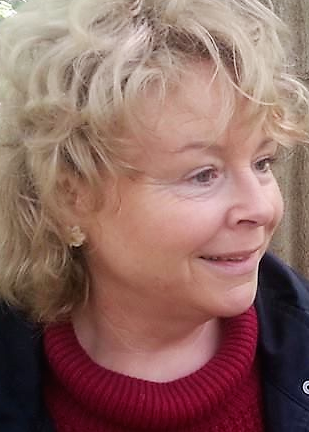
     

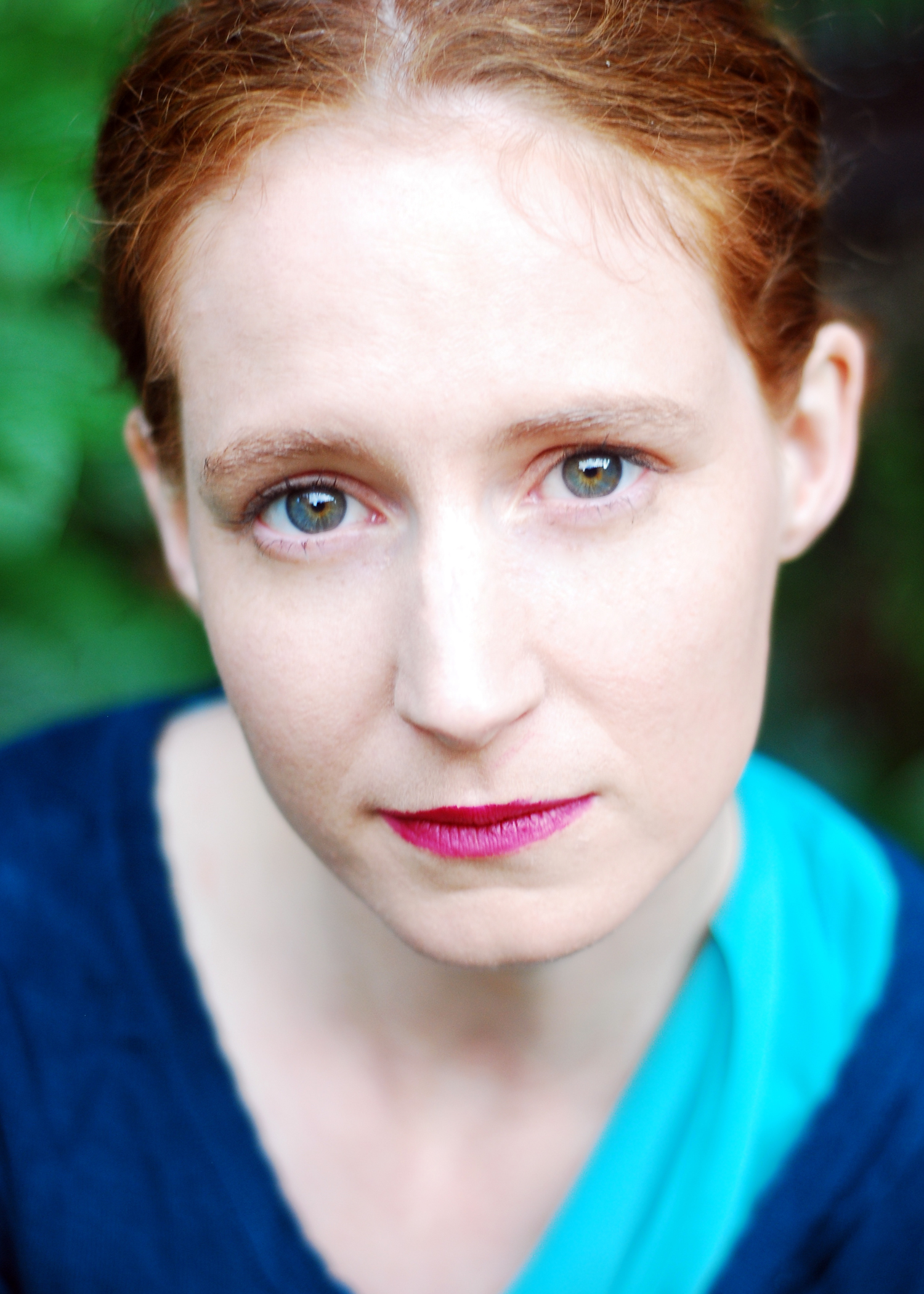
    Gráinne Tobin grew up in Armagh and lives in Newcastle, Co Down with her husband. She taught for many years, in further and adult education and in Shimna Integrated College. She is interested in keeping poetry open to its audience, including people without long years of schooling.
    Her books are Banjaxed and The Nervous Flyer’s Companion (Summer Palace Press) and a third collection is due soon from Arlen House. She was a founder-member of the Word of Mouth Poetry Collective, which met monthly for 25 years in the Linen Hall Library in Belfast, and she contributed to Word of Mouth (Blackstaff Press) which was translated into Russian, and to the Russian-English parallel text anthology of members’ translations from five St Petersburg women poets, When the Neva Rushes Backwards (Lagan Press).
    Some of her poems are available in online archives, the Arts Council of Northern Ireland’s Troubles Archive and the Poetry Ireland archive. Some have been exhibited in the Pitt Rivers Museum, Oxford, the Old Museum Arts Centre, Belfast and Derry’s Central Library. One was made into a sculpture and is on permanent display in Down Arts Centre, Downpatrick.
    She has had poems in anthologies – The Stony Thursday Book, Aesthetica Creative Writing, Washing Windows, On the Grass When I Arrive, Something About Home – in magazines such as Abridged, Poetry Ireland, The Dickens, Mslexia, Irish Feminist Review, Boyne Berries, Skylight 47, Crannog, Banshee, Acumen, North West Words, Ulla’s Nib, Fortnight, the South Bank Magazine, and also online, in Four X Four and on a website for psychotherapists. She has won the Down Arts, Mourne Observer and Segora poetry prizes and has been listed in competitions.
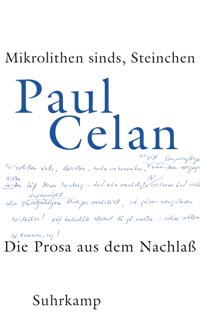
  • Excerpts from ‘microliths’ by Paul Celan

    June 15th, 2017

    from ‘Microliths’


    161

    Re­membering
    also pre­membering, pre­thinking and storing of what could be

    Yeats: I certainly owe more to that poet than to Fr. surreal.

    Strange. In front of a candle
    Now I tried to render visible the grain of sand (Buber, Chass. — //Nibelungens[on]g) that had to have been sunk into me too at some time.
    Mother, candles, sabbath
    But the poem lead me out of this idea, across to a new level with this idea

    162

    162.1 ­

    It is part of poetry’s essential features that it releases the poet, its crown witness and confidant, from their shared knowledge once it has taken on form.  (If it were different, there would barely be a poet who could take on the responsibility of having written more than one poem.)

    162.2

    —Poetry as event
    Event = truth (“unhiddenness,” worked, fought for unhiddeness)
    Poetry as risk
    Creation = /power­activity /Gewalt­tätigkeit (Heidegger)
    Truth ≠ accuracy (­i­: consistency)

    –in each first word of a poem the whole of  language gathers itself —
    –handiwork: hand / think through connections
    such as “hand and heart”
    handiwork — heartwork

    Beginning: “Poetry as handiwork”? The handmade crafting of  poetry?

    About ‘Microliths’at Jacket2 Magazine
    About ‘Microliths’ at Poetry Foundation.

    I would like to thank Pierre Joris for his translation of Microliths. These translations are © Pierre Joris 


    Once

    Once
    I heard him
    he was washing the world,
    unseen, nightlong, real.

    One and infinite,
    annihilated,
    ied.

    Light was. Salvation.

    From  Fathomsuns and Benighted  by Paul Celan (translated by Ian Fairley for Carcanet Books) (1991) 


    Paul Celan related texts by Pierre Joris

    Threadsuns by Paul Celan translated by Pierre Joris


    The Meridian

    Final Version—Drafts—Materials  (2011) PAUL CELAN EDITED BY BERNHARD BÖSCHENSTEIN AND HEINO SCHMULL TRANSLATED BY PIERRE JORIS SERIES: MERIDIAN: CROSSING AESTHETICS

    .


    Breathturn into Timestead: The Collected Later Poetry

    (German Edition) (German) Hardcover – December 2, 2014

    .


    Further Reading on Paul Celan

    Celan/ Heidegger: Translation at the mountain of death; on translating “Todtnauberg” by Pierre Joris
    On the Translation of Later Poems by Paul Celan by Pierre Joris (Harriet/ Poetry Foundation & blog)
    Paul Celan and the Meaning of Language; An Interview with Pierre Joris (Interview; Doug Valentine, Flahpoint Mag)
    Celan the aphorist (Nomadics Blog, Pierre Joris) Original article at Jacket2 Magazine
    On Poethead: Once, Irish & (Todesfuge translated by John Felstiner).

    .

  • A Celebration of Irish Women Poets on Bloomsday 2017

    June 9th, 2017

    “Canal Walk Home” by Gillian Hamill

     
    What is it
    About the power
    of the water
    To heal hurts
     
    Three lads sit on the boardwalk
    They hardly look like delicate sorts.
    And yet they gaze out
    Contemplate
    The rushing rippling mottles of the
    Undulating lake
    Can soothe souls.
     
    Car lights are reflected in
    Striking streaks, always dappling
    Buzzy thrill of
    Modern pyrotechnics
    In the most basic of
    Science laws.
     
    Edged by banking sycamore leaves
    I took one and put it in my pocket
    To describe it better.
    The smell of its earthy salt and bark
    Present.
    And the bare elegance
    Of stripped black branches
    Spearing themselves into the night air
    Soldered into the genesis
    Of life
    And yes they are
    Wild quiet.
     
    A little further on
    There’s a piece of street art says
    Only the river runs free
    And maybe that’s the attraction
    Of this portal into liberty.
     
    And then to gaze down the row
    Through Camden Street from Portobello
    The multi-potted chimney tops
    Sophisticated lego bricks
    Pricked by the Edwardian arc
    Of ornate street lights.
     
    The red car lights more dense
    The further in you go
    Speeding up into
    A crescendo
    Of urban adrenalin
    As if in a movie
    And the cameras were moving in
    Drawing you in
    Crackle.
     
    Crackle
    Quick, quick slow
    Travelling
    Boom
    in.
     
    For all your talk
    Of dalliances with the dark
    Don’t you know that they are
    One and the same.
     
    The splendour of the curvature of the
    veins in a leaf’s skin
    Echoed with variations
    Of trickled threads of gold.
    Are as a naked woman’s
    Crystallised spine
    Waiting for your touch
    Nymph and nature
    They are one and the same.
     
    But purity
    Glorying in freedom
    In liberated breeze
    There is no need for
    Shame.
     
    “Canal Walk Home” is © Gillian Hamill

    Originally from the village of Eglinton in Derry, Gillian Hamill has lived in Dublin for the past 12 years (intermingled with stints in Galway, Waterford and Nice). She has a BA in English Studies from Trinity College, Dublin and a MA in Journalism from NUI Galway. She is currently the editor of trade publication, ShelfLife magazine and has acted in a number of theatre productions. Gillian started writing poetry in late 2014.
     
    ⊗ Gillian’s Website


    “The Welcome” by Freda Laughton

     
    Awaits no solar quadriga,
    But a musty cab,
    Whose wheels revolving spiders scare
    Pigeons from plump pavanes among the cobbles.
     
    Past the green and yellow grins
    Of bold advertisements
    On the walls of the Temple of Arrivals and Departures,
    (Due homage to the puffing goddesses
     
    Stout, butting with iron bosoms),
    We drive, and watch
    The geometry of the Dublin houses
    Circle and square themselves; march orderly;
     
    Past the waterfalls of lace dripping
    Elegantly in tall windows;
    Under a sun oblique above the streets’
    Ravines; and past the river,
     
    Like the slippery eel of Time,
    Eluding us; eight miles clopping
    Behind the horses rump to where
    The mouth of Dublin gulps at the sea.
     
    And there beside the harbour
    And the Castle,
    And the yellow rocks and the black-beaked gulls,
    The piebald oyster-catchers, limpets, lobster-pots,
     
    There is a house with a child in it,
    Two cats like ebony
    (Or liquorice); and a kitten with a face
    Like a black pansy, a bunch of fronded paws;
     
    And a dog brighter than a chestnut, –
    A house with a bed
    Like an emperor’s in it, –
    It is late. Let us pay the cabman and go in.
     

    “The Welcome” is © Freda Laughton

    Freda Laughton was born in Bristol in 1907 and moved to Co. Down after her marriage. She published one collection of poetry, A Transitory House (1945) but little else is known about her life and work. She may have lived in Dublin for sometime, as her poem The Welcome details the textures of Dublin City and its suburbs, and suggests she knows the city by heart. Her date of death is unknown. Freda Laughton’s poems were submitted by Emma Penney, a graduate of the Oscar Wilde Centre, Trinity College Dublin. Her thesis, Now I am a Tower of Darkness: A Critical History of Poetry by Women in Ireland, challenges the critical reception of Eavan Boland and the restrictive criteria, developed in the 1970’s, under which poetry by women in Ireland has been assessed. She considers the subversive nature of women’s poetry written between 1921 and 1950, and calls into question the critical assumption that Eavan Boland represents “the first serious attempt in Ireland to make a body of poems that arise out of the contemporary female consciousness”. In Object Lessons, Boland concluded that there were no women poets before her who communicated “an expressed poetic life” in their work. Emma’s thesis reveals how this view has permeated the critical landscape of women’s poetry, facilitating an absurd privation of the history of poetry by women in Ireland and simplifying it in the process.

    Interview with Emma Penney
    Dear Freda, Your Poems are being discussed on Jacket2 Magazine


    “Nurture” by Liz Quirke

     
    In the nine months I didn’t nourish you,
    I made notes, I studied the seasons
    for ingredients to encourage your growth.
    Scraps of paper, post-its hidden
    in case anyone would view my thoughts,
    pity my trivia of leaves and berries.
     
    A mom yet not a mother,
    a woman yet not a woman.
    My preparation took place in private,
    not in maternity wards or hospital corridors,
    but in the hallways of my mind
    where I could put up pictures, time lines,
    fill cork boards with plans.
     
    As the folic acid built your brain stem
    I collated ideas to stimulate it further,
    mapped journeys for us,
    paths we could walk together,
    a staggered relay to start
    when your other mother
    passed your tiny form to me.
     
    And I could see myself holding your hand,
    using my limbs to scaffold the structure
    your mother put so beautifully in place.
    I am your mom without the biology of mothering.
    All I have for you is my heart, my brain, my lists of things,
    all but those nine months when I was waiting.
     
    (first published in New Irish Writing in The Irish Times)

    “Nurture” is © Liz Quirke

    Originally from Tralee, Co. Kerry, Liz Quirke lives in Spiddal, Co Galway with her wife and daughters. Her poetry has appeared in various publications, including New Irish Writing in the The Irish Times, Southword, Crannóg, The Stony Thursday Book and Eyewear Publishing’s The Best New British and Irish Poets 2016. She was the winner of the 2015 Poems for Patience competition and in the last few years has been shortlisted for the Cúirt New Writing Prize and a Hennessy Literary Award. Her debut collection Biology of Mothering will be published by Salmon Poetry in Spring 2018.
     
    https://bogmanscannon.com/2016/04/02/fall-at-33-weeks-by-liz-quirke/


    “Detail” by Rachel Coventry

     
    The world is full stretched,
    and sick with possibility.
    You find yourself in a gallery
    ill with heat and standing.
    Waiting for some man
    to play his ridiculous hand.
    So bored of art, but then
    forced into wakefulness
    by the feet of Diego Velazquez’
    Cristo Crucificado. All suffering
    now upon you and you
    bear it because you have to.
     
    First published in the Stony Thursday Book

    “Detail” is © Rachel Coventry

    Rachel Coventry’s poetry has appeared in many journals including Poetry Ireland Review, The SHop, Cyphers, The Honest Ulsterman and The Stony Thursday Book. She was selected for the Poetry Ireland Introductions Series in 2014. In 2016 she won the Galway University Hospitals Arts Trust Annual Poetry Competition and was short-listed for the Patrick Kavanagh Poetry Award. She is currently writing a PhD on Heidegger’s poetics at NUIG. Her debut collection is forthcoming from Salmon Poetry.

    “Going Dutch” by Seanín Hughes

     
    I cut my teeth on you;
    let enamel tear
    through the warm pink tissue
    of adolescence.
     
    I bared my legs, but
    bent them inward,
    dressed them in angles
    in case you found them
    too soft, too fleshy.
    You didn’t (they weren’t).
     
    I kept my hair down
    so subtle shadows fell
    where cheekbones might be,
    stolen symmetry, in case
    you realised I wasn’t
    pretty enough. You didn’t (I was).
     
    We’d play pool –
    I never won (I never cared) –
    and eat chips on the way home;
    you paid your way and
    I paid mine, and I never needed
    to wear my coat (I did), until
     
    that one night when
    you didn’t walk me home,
    the night I fell asleep and
    you cut your teeth on me,
    the ones you lied through (you did),
    and I paid in full.
     

    “Going Dutch” is © Seanín Hughes

    Seanín Hughes is an emerging poet and writer from Cookstown, Northern Ireland, where she lives with her partner and four children. Despite writing for most of her life, Seanín only began to share her work in late 2016 after penning a number of poems for her children. Prior to this, she hadn’t written in a number of years following the diagnosis of her daughter Aoife with a rare disease. Drawing from her varied life experiences, Seanín is attracted to challenging themes and seeks to explore issues including mental health, trauma, death and the sense of feeling at odds with oneself and the world.

    “Hypothesis” by Clodagh Beresford Dunne

     
    So the editor wants to know why
    people are killing
    themselves. I’ll tell you why –
    because they are part of a revolution
    they know nothing
    about. Not a revolution with guns
    and knives but one in its strictest
    physical sense, the revolution
    of the geoid, the planet earth.
    We might share it with billions
    but these days
    we are each on our own
    as it sits, upturned on its axis
    slowly revolving, shaking off the detritus
    until one by one
    we cling to the surface
    or free-fall into oblivion.
    And so we concoct bizarre ways
    to dodge our turn –
    we are drawn to the oceans to hide
    but drown in their deep waters,
    we strive to weigh ourselves to the ground,
    injecting ourselves like batteries
    with liquid lithium.
    To defy gravity
    we anchor our ankles to balls and chains
    or feel the ephemeral
    ecstasy of letting
    blood from our veins.
    While some tie ropes around their necks
    as they take their turn,
    ready to hang
    from the world, like a tarot card I once saw.
     
    First published in The Stinging Fly

    “Hypothesis” is © Clodagh Beresford Dunne

    Clodagh Beresford Dunne was born in Dublin and raised in the harbour town of Dungarvan Co. Waterford, in a local newspaper family. She holds degrees in English and in Law and qualified as a solicitor, in 2001. During her university and training years she was an international debater and public speaker, representing Ireland on three occasions, at the World Universities Debating Championships. Her poems have appeared in publications including The Stinging Fly, The Irish Times, Southword, The Moth, Spontaneity and Pittsburgh Poetry Review. She was the recipient of the Arts Council of Ireland Emerging Writer Award Bursary (2016) and a number of Literature awards and residencies from Waterford City and County Arts Office. In April, 2016 she delivered a series of readings, interviews and lectures, in Carlow University and Robert Morris University, Pittsburgh, Pennsylvania, as part of Culture Ireland’s International Programme. In February, 2017, as part of the AWP Conference and Book Fair in Washington, DC, she participated in a reading and discussion panel: “A World of Their Own” (five female poets in cross-cultural conversation) with US poets, Jan Beatty and Tess Barry, Irish poet, Eleanor Hooker, and Lebanese poet, Zeina Hashem Beck. She is a founding member, coordinator and curator of the Dungarvan and West Waterford Writers’ Group. She lives in Dungarvan with her husband and four young children.


    “Alice and her Stilettoes” by Lorraine Carey

     
    We always walked faster
    past her little house on the brae.
    Every so often she’d scuttle out and
    snare us, clutching a plastic bag with
    the highest heels, scuffed
    and peeling, ready for the cobbler’s vice.
     
    Her elfin face powdered,
    her fuchsia mouth pursed,
    the stain snaked onto her snaggled teeth,
    crept over her lips.
    She lay in wait,
    behind net curtains that twitched.
    Her ears hitched to the sound
    of the school bus, stalling,
    as we stepped off at Charlie Brown’s,
    stinking of fags.
     
    Once John got three pairs
    of spine benders, for repair,
    so she had a choice,
    for Mass on Sunday.
     

    “Alice and her stilettoes” is © Lorraine Carey

    Lorraine Carey from Donegal, now lives in Co.Kerry. Her work has been published / is forthcoming in the following journals; The Honest Ulsterman, A New Ulster, Proletarian, Stanzas Limerick, Quail Bell, The Galway Review, Vine Leaves, Poetry Breakfast, Olentangy Review and Live Encounters. Her first collection of poetry will be published this summer.
     
  • “I’m not a city” and other poems by Kinga Fabó

    June 7th, 2017

    The Transfiguration of the Word

    Open, the sea appeared asleep.
    Carrying its waves.
    A pulse under the muted winter scene.
    Throwing a smile on the beach.

    A nun-spot on the hot little body.
    A color on the broken glass.
    A gesture that was once closed.
    Lovely as the sea stood up.
    Throwing a smile on the beach.

    I wanted to remain an object.
    But, no, immortality is not mine.
    I am too strong to defend myself.
    Waiting for punishment.

    This and the same happened together.
    Silently, I sat in the glass.
    Only the spot wandered on the naked scene.
    Sounds did not continue.

    Only an omitted gesture.
    Happiness like an unmoving dancer.
    Beatings on naked, bony back.

    And the sea will no longer be immortal.

    Translated by Zsuzsanna Ozsváth and Martha Satz
    ‘The Transfiguration of the word ‘ was first published in Osiris, 1992, Fall issue

    Lovers

    You are free, said the stranger.
    Before I arrived there.
    Costume. I had a costume on though.
    I was curious: what his reaction might be?

    He closed his other eyes.
    I’ll send an ego instead of you.
    Getting softer, I feel it, he feels it too. Hardly moves.
    he chokes himself inside me.
    Now I must live with another dead man.

    It’s not even hopeless.
    Not vicious.
    Serves the absence.
    Delivers the unnecessary.

    Translated by Gabor G. Gyukics

    Androgen

    The bees are tough, hard to break virgins.
    Virgins, but different from us humans.
    They have no ego. Hermaphrodites. Like the moon.

    Butterflies. Phallic souls.
    Soul phalluses in female bodies.
    The daughter, daughters of the moon

    allured me but only until
    I figured them out.
    As lovers.

    I got tired of my ego.
    And theirs too.
    I’m bored of their services.

    It wedges an obstacle between us. Neither
    in nor out. In vain
    I keep trying. I can break through

    mine somehow.
    But his? How?
    Selfish, inspiring; but for what?

    Is he like this by nature,
    subservient, dependent?
    On me? That’s dispiriting.

    He doesn’t even suspect, that I depend on him.
    I am the stronger, the unprotected.
    Tough as a woman, austere.

    Delicate as a man, fragile, gentle.
    What would I like? I want him to
    wrestle me gently to the floor,

    penetrate me violently, savagely.
    So I can become empty and neutral.
    Impersonal, primarily a woman.

    Translated by Gabor G. Gyukics; Androgen was first published in Deep Water Literary Journal 2017 February

    Isadora Duncan Dancing

    Like sculpture at first. Then, as if the sun rose in her, long
    gesture.
    A small smile; then very much so.

    The beauty
    of the rite shone; whirling.

    She whirled and whirled,
    flaming.
    Only the body spoke. The body carried her

    language.

    Her dance a spell
    swirling the air, a spiral she was

    and

    her shawl, the half circle around her,
    the curve of the sea-shore and
    girl,

    the dancer and the dance apart…

    Transcreated by Cathy Strisik and Veronica Golos based on Katalin N. Ullrich’s translation.
    Isadora Duncan Dancing was first published in Taos Journal of Poetry and Art, 10 Sept 2014

    Poison

    I don’t know what it is but very ill-
    intended. Surely a woman must belong to it.
    And something like a laughter.

    I am rotating the city on me,
    rotating my beauty. That’s that!
    Many keys, small keyholes whirling.

    Gazes cannot be all in vain. And the answer?
    Merely a jeer.
    The vase hugs and kills me, can’t breathe.

    Now my features – even with the best intentions –
    cannot be called beautiful.
    And her? The girl? Her trendy perfume

    is Poison. For me a real poison indeed.
    And the vase?
    It hugs and kills me.

    But what am I to do without?

    Translated by Kinga Fabó
    Poison is included in her bilingual Indonesian-English poetry book, Racun/Poison (2015) Jakarta, Indonesia 

    I’m not a city

    I’m not a city: I have neither light, nor
    window display. I look good.
    I feel good. You didn’t
    invite me though. How
    did I get here?

    You’d do anything for me; right?
    Let’s do it! An attack.
    A simple toy-
    wife? I dress, dress, dress
    myself.

    The dressing remains.
    I operate, because I’m operated.
    All I can do is operate.
    (I don’t mean anything to anyone.)
    What is missing then?

    Yet both are men separately.
    Ongoing magic. Broad topsyturviness.
    Slow, merciless.
    A new one is coming: almost perfect.
    I swallow it.

    I swallow him too.
    He is too precious to
    waste himself such ways.
    I’d choose him: if he knew,
    that I’d choose him.

    But he doesn’t. My dearest is lunatic.
    In vain he is full: He is useless
    without the Moon, he can’t change,
    he won’t change,
    the way the steel bullets spin: drifting,

    the blue is drifting.
    He tolerates violence on himself, I was afraid
    he’d pull himself together and
    asks for violence.
    I watched myself

    born anew with indifference:
    (if I melt him!)
    stubborn, dense, yowls. They worked on him well.
    Right now he is in transition.
    He is a lake: looking for its shore.

    Translated by Gabor G. Gyukics
    ‘I’m not a city’ &‘Lovers’ were published in Numéro Cinq July 2016

    I’m not a city& other poems are © Kinga Fabó

    Kinga Fabó is a Hungarian poet. Her latest book, a bilingual Indonesian-English poetry collection Racun/Poison was published in 2015 in Jakarta, Indonesia. Fabó’s poetry has been published in various international literary journals and poetry magazines including Osiris, Ink Sweat & Tears, The Screech Owl, The Original Van Gogh’s Ear, Numéro Cinq, Deep Water Literary Journal, Fixpoetry, lyrikline.org and elsewhere as well as in anthologies like The Significant Anthology, Women in War, The Colours of Refuge, Poetry Against Racism, World Poetry Yearbook 2015, and others.

    Two of her poems have been translated into English by George Szirtes and are forthcoming in Modern Poetry in Translation Spring Issue with an introduction by Szirtes. Some of her individual poems have been translated into 17 languages altogether: Albanian, Arabic, Bulgarian, English, Esperanto, French, Galego, German, Greek, Indonesian, Italian, Persian, Romanian, Serbian, Slovenian, Spanish, Tamil.One of her poems (The Ears) has among others six different Indonesian translations by six different authors.

    Earlier in her career Fabó was also a linguist dealing with theoretical issues, and an essayist, too, interested in topics from the periphery, from the verge. She has also written an essay on Sylvia Plath. Fabó has just become Poetry Editor at Diaphanous, an American e-journal for literary and visual art that will be launched soon. In everything she’s done, Fabó has always been between the verges, on the verge, in the extreme. She lives in Budapest, Hungary.


  • “Brother” and other poems by Clodagh Beresford Dunne

    May 27th, 2017

    Brother

    Don’t look at the rosemary on the fridge
    shelf – it will remind you of the lamb
    you cooked yesterday and how you
    laughed at the notion of posting
    next Sunday’s roast Down Under.
     
    Don’t think that staring at a television
    screen will fill the void. The Sydney
    cricket match on the afternoon sports
    bulletin will emulate the scorch
    of your dancing coal fire.
     
    Don’t step outside to breathe the frosty air,
    you might foolishly look up to the sky
    and see the ethereal trail of a jumbo jet
    oblivious that it and every emigrant ship
    has carried fragments of others.
     
    Don’t look at your young son stretched
    out, colouring his pages with crayons
    – it will only remind you of your brother,
    six years your junior, of how you walked
    the school route with him, his small hand in yours.

     
                Brother was published in the Southword Literary Journal


    Plenary Indulgence

    Abrakedabra! and a plume of white smoke
    Habemus Papam We have a Pope!
     
    Through crimson curtains he emerges.
    Immaculate.
    Cassock and cape like fresh snow.
    The conclave gushes behind
    all blood red and sanguine.
    They are umbilical
     
    Connecting me to my grandmother
    who polished her front step
    with a tin of Cardinal Red
    reciting her thirty-day-prayer
    in rhythm with the bristles of her brush –
    her incantation
    a crucifix of indentation –
    up and down, side to side, going nowhere.
    The end result gleamed but was slippery
    like dripping.
     
    Do you know the Pope wears red shoes?
    I do – for the blood of the martyrs
    or maybe for their Ferragamo tag.
    Do you know he wears a fisherman’s ring?
    I do – for St. Peter who cast
    his net into the sea
    or maybe to dress his hand
    with gold and diamonds.
    Do you know he gives out a Plenary
    Indulgences on special occasions?
    I do.
     
    And then the pope raised his hand
    and drew the world to his palm
    and to my surprise, for a moment, I remained there.

    First published in Poetry 24.


    Seven Sugar Cubes

    On 10th April, 1901, in Massachusetts, Dr. Duncan MacDougall set out to prove
    that the human soul had mass and was measurable. His findings concluded that
    the soul weighed 21 grams.

    When your mother phones to tell you that your father has died
    ten thousand miles away, visiting your emigrant brother,
    in a different hemisphere, in a different season,
    do you wonder if your father’s soul will be forever left in summer?

    Do you grapple
    with the journey home of the body of a man you have known
    since you were a body in your mother’s body?

    Does the news melt into you and cool to the image
    of his remains in a Tasmanian Blackwood coffin, in the body of a crate
    in the body of a plane? Or do you place the telephone receiver back on its cradle,
    take your car keys, drive the winter miles to your father’s field, where you know
    his horses will run to the rattle, like dice, of seven sugar cubes.

    first published in The Irish Times


    You Have Become the Hand Rub of an Olympian

    When your ashes return
    in a small wooden box,
    a brass plaque on top,
    there is no cord

    or record of attachment
    to anything or anyone.
    Somewhere a uterus
    is evacuating itself –

    a mass of patient vessels,
    surrendering and collapsing
    bereft of implantation,
    their futile existence spent.

    If we were to walk
    every inch of the earth
    or soar to a distant planet
    we’d be utterly sure

    of one thing now –
    we’d find nothing
    of you except these ashes –
    not your cadaver

    or the bony frame
    of your being,
    not the protrusion
    of your dental arcs.

    You’ve been reduced
    to chalky powder
    like the hand rub
    of some Olympian

    preparing to bar-cling.
    If this box should open,
    one accidental sneeze
    might spell the resurgence

    of your skin cells, hair
    follicles, a glutinous eye
               or a femur bone. Rewinding,
    back-tracking,

                    you’ve been redacted
                   to the nothingness of an atmosphere.

    (The Pickled Body)


    Hypothesis

    So the editor wants to know why
    people are killing
    themselves. I’ll tell you why –
    because they are part of a revolution
    they know nothing
    about. Not a revolution with guns
    and knives but one in its strictest
    physical sense, the revolution
    of the geoid, the planet earth.
    We might share it with billions
    but these days
    we are each on our own
    as it sits, upturned on its axis
    slowly revolving, shaking off the detritus
    until one by one
    we cling to the surface
    or free-fall into oblivion.
    And so we concoct bizarre ways
    to dodge our turn –
    we are drawn to the oceans to hide
    but drown in their deep waters,
    we strive to weigh ourselves to the ground,
    injecting ourselves like batteries
    with liquid lithium.
    To defy gravity
    we anchor our ankles to balls and chains
    or feel the ephemeral
    ecstasy of letting
    blood from our veins.
    While some tie ropes around their necks
    as they take their turn,
    ready to hang
    from the world, like a tarot card I once saw.

     
    Brother and other poems are © Clodagh Beresford Dunne


    Clodagh Beresford Dunne was born in Dublin and raised in the harbour town of Dungarvan Co. Waterford, in a local newspaper family. She holds degrees in English and in Law and qualified as a solicitor, in 2001. During her university and training years she was an international debater and public speaker, representing Ireland on three occasions, at the World Universities Debating Championships. Her poems have appeared in publications including The Stinging Fly, The Irish Times, Southword, The Moth, Spontaneity and Pittsburgh Poetry Review. She was the recipient of the Arts Council of Ireland Emerging Writer Award Bursary (2016) and a number of Literature awards and residencies from Waterford City and County Arts Office. In April 2016 she delivered a series of readings, interviews, and lectures, at Carlow University and Robert Morris University, Pittsburgh, Pennsylvania, as part of Culture Ireland’s International Programme. In February 2017, as part of the AWP Conference and Book Fair in Washington, DC, she participated in a reading and discussion panel: “A World of Their Own” (five female poets in cross-cultural conversation) with US poets, Jan Beatty and Tess Barry, Irish poet, Eleanor Hooker, and Lebanese poet, Zeina Hashem Beck. She is a founding member, coordinator, and curator of the Dungarvan and West Waterford Writers’ Group. She lives in Dungarvan with her husband and four young children.

  • “Detail” and other poems by Rachel Coventry

    May 18th, 2017

    Detail

    The world is full stretched,
    and sick with possibility.
    You find yourself in a gallery
    ill with heat and standing.
    Waiting for some man
    to play his ridiculous hand.
    So bored of art, but then
    forced into wakefulness
    by the feet of Diego Velazquez’
    Cristo Crucificado. All suffering
    now upon you and you
    bear it because you have to.

    First published in The Stony Thursday Book


    Dispute

    Latterly, my mother’s silent complaint,
    the mute argument of her life

    articulated itself inside her body
    each unspoken tirade

    eventually rendered in flesh
    scratched into synapse

    a foot plants itself on the stair, refuses
    to move till she swears, come on

    you fucker, drags it sulking
    up one but then the other

    stops and on it goes
    the claim and counter claim

    of an insidious dispute
    that leads nowhere

    First Published in the Honest Ulsterman


    Beat

    Systole

    I am still haunting at the old addresses
    oblivious to cosmetic improvements,
    wandering pre-gentrified Stoke Newington
    lost in a maze of grey council estates
    still transfixed by reverberations
    of tower blocks that have not yet
    shivered to the ground
    but still sweep acid house,
    a lonely beam over
    Hackney’s waste ground.

    Diastole

    Burning like the earth
    at the Burmese border
    the fans all noise no effect
    Thai women, still as Buddhas,
    me, western, huffing and bloated
    wrestling with Christ on the floor,
    really grasping at straws,
    weaving pale meanings from gecko calls.
    Maybe take succor in a different boy?
    Some savage memory blazes momentarily
    burns me clean. Give in finally. Breathe

    First published The Poet’s Quest for God Anthology


    What did I do to deserve you?

    We exist so the universe
    can experience loneliness

    you may think if everything
    is one, it will be content,
    there will be no suffering

    but you are wrong
    if there is just one thing
    there can be only be longing
    with nothing to long for

    so here we are, splinters
    in the dark, no other purpose
    but to break each other’s hearts.

    First published in Poetry Ireland Review


    As you sleep

    I watch the flickering rhythm of skin
    the pulse of the carotid artery
    wonder and fear at its delicacy
    and in reversal only lovers achieve
    you are flesh and I am dream.

    First published in Banshee


    Rachel Coventry’s poetry has appeared in many journals including Poetry Ireland Review, The SHop, Cyphers, The Honest Ulsterman and The Stony Thursday Book. She was selected for the Poetry Ireland Introductions Series in 2014. In 2016 she won the Galway University Hospitals Arts Trust Annual Poetry Competition and was short-listed for the Patrick Kavanagh Poetry Award. She is currently writing a PhD on Heidegger’s poetics at NUIG. Her debut collection was published by Salmon Poetry.

  • “narcissus” by C. Murray

    May 10th, 2017
    narcissus
    
    
    not step twice into, not
      step back from stream.
         its nets are storm blackened,
    
    narcissus’ flower is a cut out. 
      it has shut in the cold,
     skeining back into the bud.
    
     echo and,
             outbreath
    
    he skeins back his thread
       the blind buds are always.
    
    
     step
          
           (not-step)
    
      back then.
    
    
     step
          
          (not-step)
    
      back then,
    
          back from the black river nets.


    narcissus was first published in the Spring 2017 issue of Compose Journal

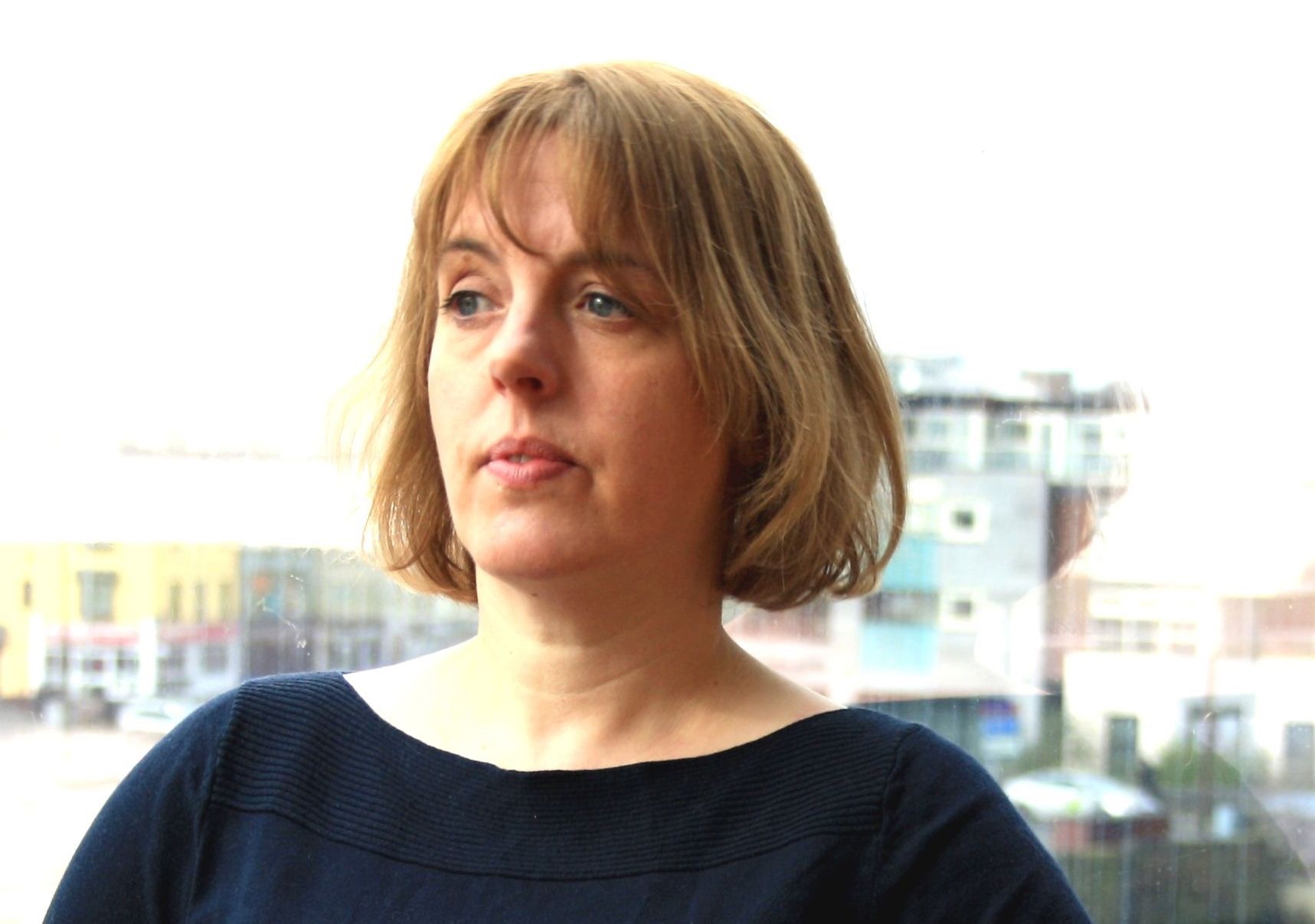
    Chris Murray is an Irish poet. Her chapbook Three Red Things was published by Smithereens Press  (2013). A small collection of interrelated poems in series and sequence, Cycles, was published by Lapwing Press (2013).  A book-length poem The Blind was published by Oneiros Books (2013). Her second book-length poem She was published by Oneiros Books  ( 2014). A chapbook, Signature, was published by Bone Orchard Press  (2014). “A Modern Encounter with ‘Foebus abierat’: On Eavan Boland’s ‘Phoebus Was Gone, all Gone, His Journey Over’ ” was published in Eavan Boland: Inside History (Editors, Nessa O’Mahony and Siobhán Campbell) by Arlen House  (2016). A Hierarchy of Halls was published in February 2018 (Smithereens Press) and Bind was published by Turas Press in October 2018.

    ⊗ See more at http://composejournal.com/articles/chris-murray-two-poems/#sthash.hM3Mv9RZ.dpuf

  • The Spring 2017 issue of Compose Journal is live

    May 8th, 2017
    Our Spring 2017 issue features an interview with Margo Orlando Littell and an excerpt from her debut novel, Each Vagabond by Name;  poetry by Laura Donnelly, Brian Simoneau, Chris Murray, Tanya Fadem, Sergio A. Ortiz, John Grey, Lita Kurth, and Gail DiMaggio; creative nonfiction by Noriko Nakada, Marion Agnew, Kevin Bray, Telaina Eriksen, Jim Krosschell, and Wendy Fontaine; fiction by Andrew Boden, Darci Schummer, Liesl Nunns, Laura Citino, and Beth Sherman; and artwork by Ana Prundaru, Fabrice Poussin, and Brian Michael Barbeito.

    See more at: http://composejournal.com/issues/spring-2017/#sthash.hmFQpFvl.dpuf
     
    Thanks to Suzannah Windsor and Andres Rojas for including two poems from my book (work in progress)  at this link

  • “Prostrate” and other poems by Mary O’Connell

    May 6th, 2017

    The First Cut is…

    for Ifrah Ahmed
     
    A fat red sun comes up above the trees.
    Ngozi claps her hands, today’s the day
    her gran will bring her to Shangazi,
    her mother’s aunt.”You must be brave”, they tell
    the eight-year-old, who loves to hop and skip
    along the dirt-tracks where the lizards play.
     
    They walk for miles, but she discovers tunda;
    mangoes and papayas in gran’s cotton bag—
    a special treat for this her special day.
    gran’s hand tightens as she walks into the house.
    The windows are all darkened and a fan
    on the ceiling makes a whirring sound.
     
    Then she sees a bed with shiny instruments
    and pushes into gran to hide her face.
    The old one sits into a wing-backed chair,
    cradles Ngozi in her arms and speaks:
    “It won’t take long, my love, just look away.”
    A touch of steel, and then a scalding pain.
     
    “Now you’ll be ready for your wedding day.”
    she hears them shout, as they raise and place her
    on the bed, lying on one side, both legs tied.
    Tears burn her cheeks, her throat feels sore and dry.
    She shivers in the heat and feels betrayed,
    invaded by a mutilating blade.
     

    Amaryllis Belladonna

     
    Something rising from the earth invades my life,
    flaunts shamelessly in my place of refuge.
    For weeks it lay folded in its verdant sheath,
    then slowly pushed out its raw obscenity.
    Interlocking petals mimicked loudspeakers
    that blazed out without warning,
    a ‘triffid’ broadcasting calamity.
     
    It stares me down, daring me to look
    into its crimson gullet, falling into black.
    Yellow stamen at its lip protrude
    to mock me with a snide gap-toothed leer.
    Why should a gifted pot-plant snarl my peace?
    Could the seeds go back to adolescence
    coming upon the secret bloom of blood?
     

    Prostrate

     
    The Muezzin’s cry
    calls you out of sleep,
     
    you wear a cloth
    that cancels all your curves,
     
    walk to the Mosque to find
    your place behind the latticed screen,
     
    supplicate heaven
    to send no more distress,
     
    the belts of gelignite
    that rock the square,
     
    the Prophet’s message twisted in the sand.
    fragmented symbols rising in the sand.
     
    Prostrate and other poems is © Mary O’Connell

    Mary O’Connell has had poems published in Southword , Best of Irish Poetry 2008, and the Café Review, (Portland ME). She taught languages and English and now lives in Cork city. She also had some success reciting her work in Strokestown and Derry. She has been fortunate to have been mentored by Paddy Galvin and Greg O’Donoghue in a workshop at the Munster Literature Centre, and often writes about nature and classical mythology, as well as taking an ironic look at public figures and events. A regular at O Bhéal, she has twice been asked to read for visiting American students.
  • “Consumed” and other poems by Gillian Hamill

    April 29th, 2017

    Clarity

     
    So still
    It had to
    Come to the fore

    I could feel
    The tears drop
    And drip down
    On to my leg
    Fully-formed droplets
    I could count rain

    In the still
    Stilled mind forge chatter
    The sadness had nowhere to go
    But out.


    Canal Walk Home

    What is it
    About the power
    of the water
    To heal hurts

    Three lads sit on the boardwalk
    They hardly look like delicate sorts.
    And yet they gaze out
    Contemplate
    The rushing rippling mottles of the
    Undulating lake
    Can soothe souls.

    Car lights are reflected in
    Striking streaks, always dappling
    Buzzy thrill of
    Modern pyrotechnics
    In the most basic of
    Science laws.

    Edged by banking sycamore leaves
    I took one and put it in my pocket
    To describe it better.
    The smell of its earthy salt and bark
    Present.
    And the bare elegance
    Of stripped black branches
    Spearing themselves into the night air
    Soldered into the genesis
    Of life
    And yes they are
    Wild quiet.

    A little further on
    There’s a piece of street art says
    Only the river runs free
    And maybe that’s the attraction
    Of this portal into liberty.

    And then to gaze down the row
    Through Camden Street from Portobello
    The multi-potted chimney tops
    Sophisticated lego bricks
    Pricked by the Edwardian arc
    Of ornate street lights.

    The red car lights more dense
    The further in you go
    Speeding up into
    A crescendo
    Of urban adrenalin
    As if in a movie
    And the cameras were moving in
    Drawing you in
    Crackle.

    Crackle
    Quick, quick slow
    Travelling
    Boom
    in.

    For all your talk
    Of dalliances with the dark
    Don’t you know that they are
    One and the same.

    The splendour of the curvature of the
    veins in a leaf’s skin
    Echoed with variations
    Of trickled threads of gold.
    Are as a naked woman’s
    Crystallised spine
    Waiting for your touch
    Nymph and nature
    They are one and the same.

    But purity
    Glorying in freedom
    In liberated breeze
    There is no need for
    Shame.


    Consumed

    My soul is saddening.
    Keening.
    And crying out to the wolves.

    Take me away. No answer.
    Take me away. Louder
    Take me away. Hysterical.

    But while geographically there were many places she could have gone to.
    In reality there was no place left to go.

    His flinty eyes of malice recognised this.
    And licking his lips. Charged.
    Devoured.
    Through sinew and synapse chomped.
    No morsel left to be spat out.

    Only her emptiness lingered
    He could not wrap his jaws around
    What did not exist.

    That seething chasm of nothingness
    Expanding
    Every second, every minute, every hour, every day.
    Swallowing all hope in its midst
    And mainlining the remaining smulch into veins of her ill-begotten offspring.

    Why, the wolves of course.
    Ravenous little critters.

    Engorged breasts of black milk
    Mewling malevolence howled.
    But madre macerated could not answer with a kiss.
    Consumed by her own despair.
    Literally.


    The Last Day

     
    Trails
    Of entrails.
    Gluttonous fat deals
    Dripping hot sumptuous on molten train rails.
    Mangy dog heels
    To whine on his recline on a bed of nails
    Hammered by slippery electric eels
    And now pedal fast boy on your wheels
    See glorious concrete hardened by steels
    Wash, wash, wash, but grit you shit under your fingernails
    Why, this is what you wanted as the bell peals.
    Zap-ting, zap-ting, ting-ting-ting-ting go your microwave meals.
    Greasing up your desperate bid to burn on among writers of great tales
    But selfie, self loathing, self loving mastery, your progress is as slow as a snail’s
    And soon, the filmy transcribe of time, your dignity steals
    They say that love heals
    But I don’t give a damn, I just want all the feelz.
    Sewed into a corner by the bloodied strands – trails of entrails
    The mighty man kneels

    Before God
    And Prays.

    Consumed and other poems are © Gilliam Hamill.


    Originally from the village of Eglinton in Derry, Gillian Hamill has lived in Dublin for the past 12 years (intermingled with stints in Galway, Waterford and Nice). She has a BA in English Studies from Trinity College, Dublin and a MA in Journalism from NUI Galway. She is currently the editor of trade publication, ShelfLife magazine and has acted in a number of theatre productions. Gillian started writing poetry in late 2014.
     ⊗ Gillian’s Website
←Previous Page
1 … 26 27 28 29 30 … 106
Next Page→
 

Loading Comments...
 

    • Subscribe Subscribed
      • Chris Murray
      • Already have a WordPress.com account? Log in now.
      • Chris Murray
      • Subscribe Subscribed
      • Sign up
      • Log in
      • Report this content
      • View site in Reader
      • Manage subscriptions
      • Collapse this bar