• chris murray
  • journals – bibliography – publication notes
  • downloadable items – essays – media
  • copyright
  • Home

Chris Murray

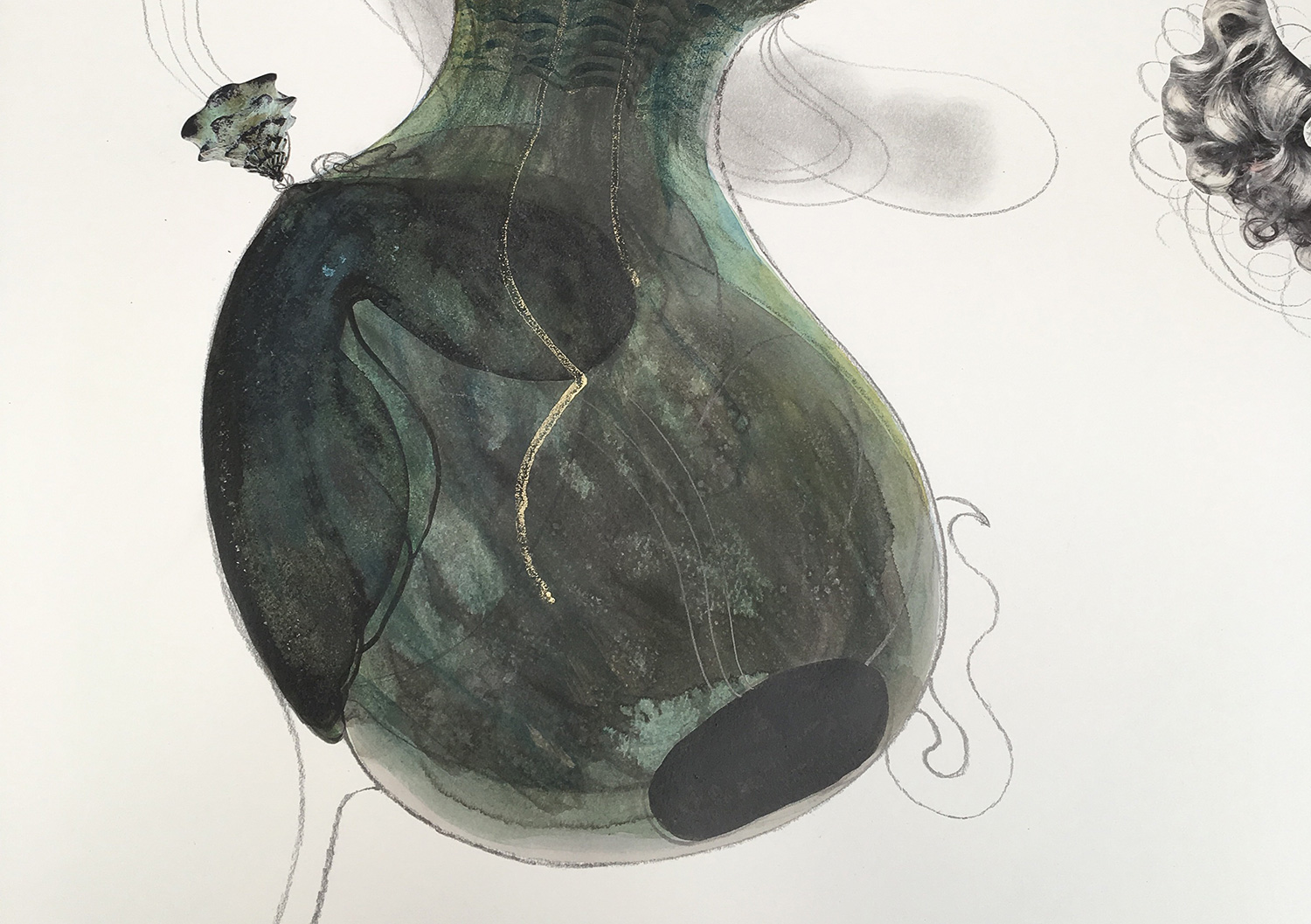
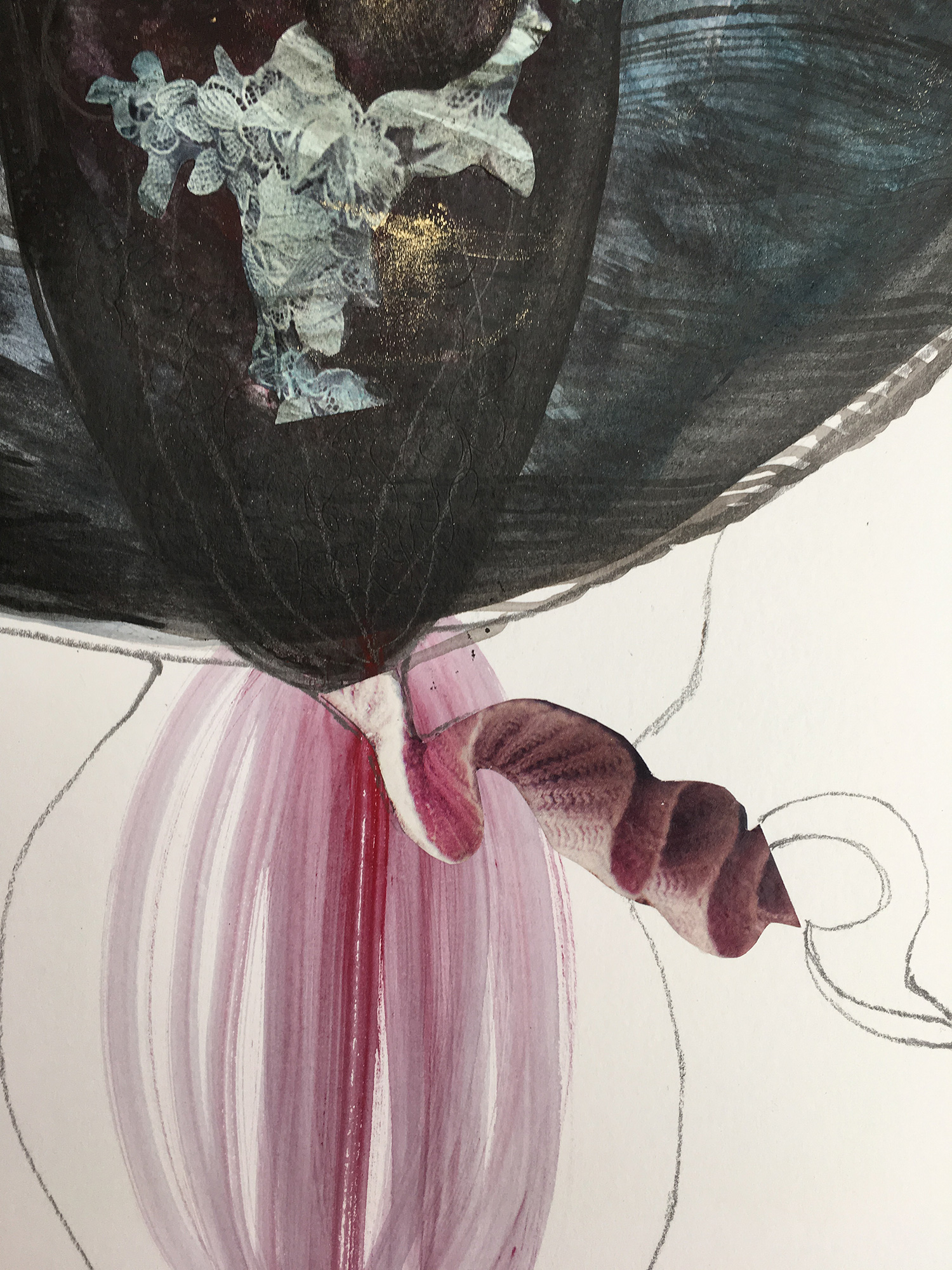
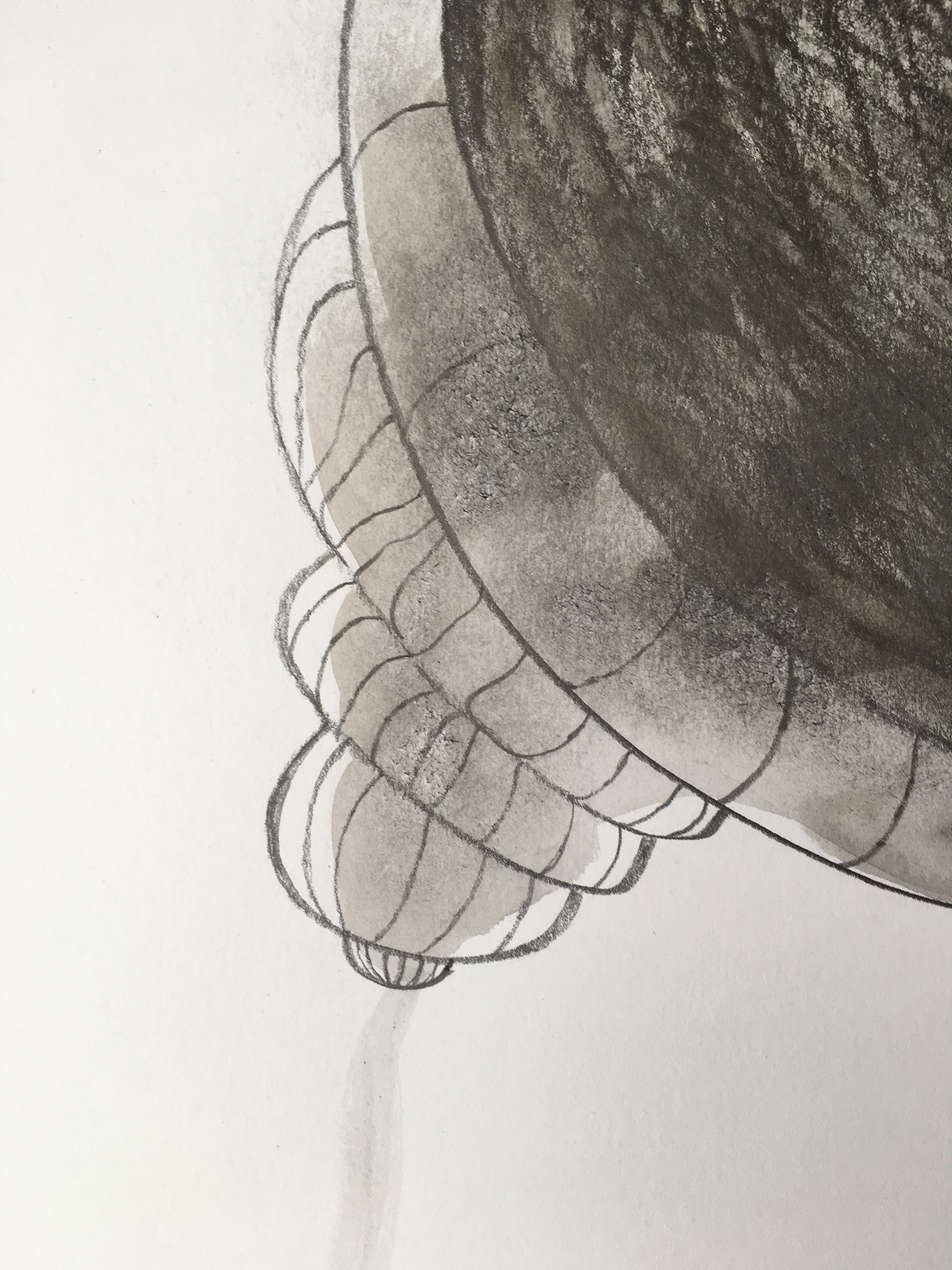
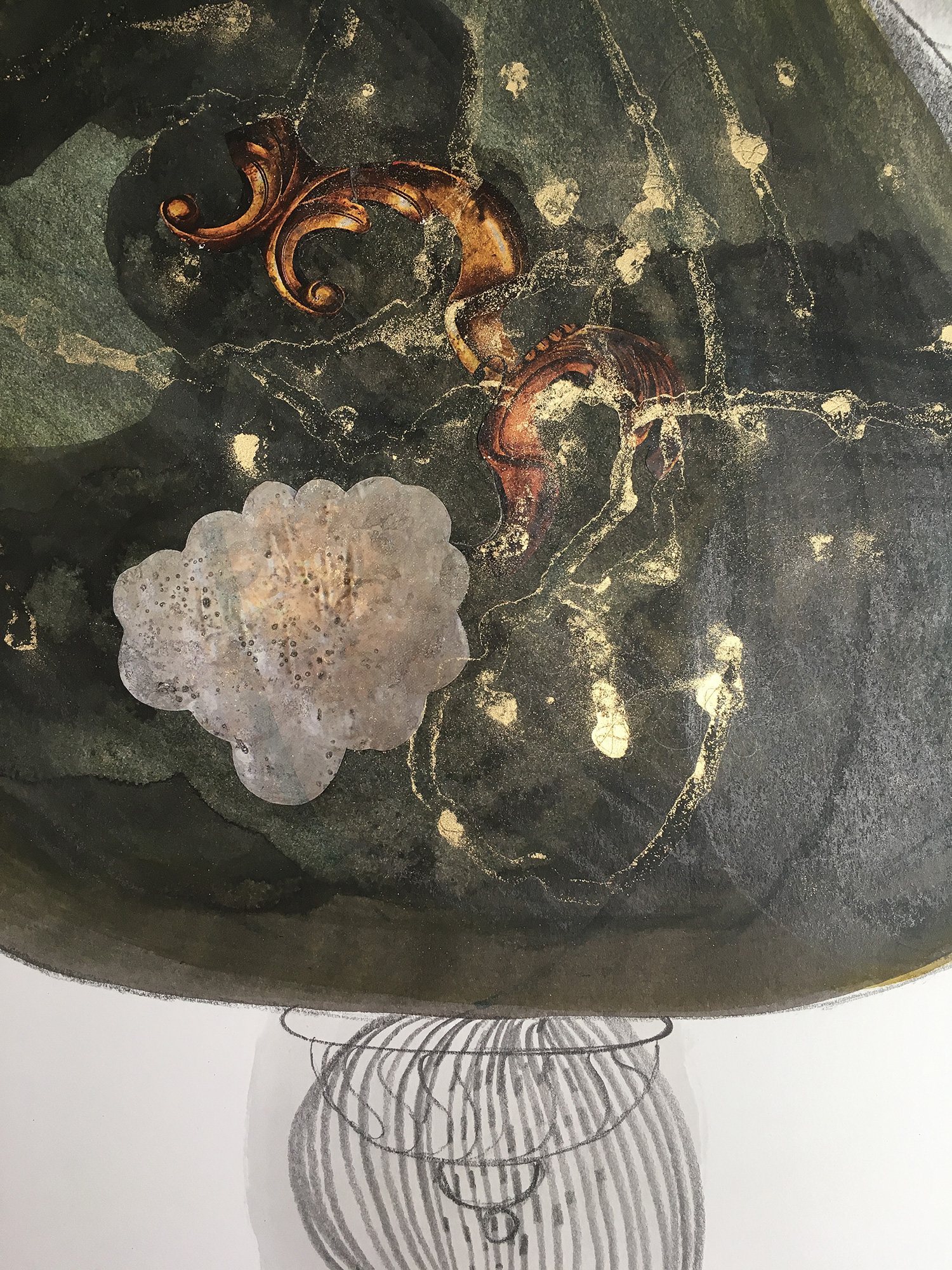
  • “The Infinite Body of Sensation”: Visual poetry by Salma Caller

    November 30th, 2016

    Sound is a shell

    Sound is a shell
    An ear
    Curves of sound
    Vibrating and condensing air
    Echoes in a curved space
    An ocean in the shell of sound

    infinitebody-02

    Pearls

    Things that stand in for other things

    The Witches Pouches

    Bags of velvet black
    Nets entangling objects
    Bones of birds
    The insides of shells
    Spells
    Pearls
    Things that stand in for other things

    infinitebody-01-1

    Nets entangling objects

    Bones of birds
    The insides of shells

    infinitebody-05
    infinitebody-04-1infinitebody-03

    Black Lace

    Turn this talk into a tale
    A small dark textured cloth
    Shadows with shades of velvet
    Borders and edges tactile
    Spaces glittering and ornate
    An elaborate intertwining language
    Of touching
    A complex dance of bodies
    Claustrophobic close
    Obscure ornate organs
    Lying in a dark net of black stuffs
    Needles like obsidian beaks
    Braiding sound into
    A florid calligraphy of sensations
    Rose Point
    Point de Neige
    Gros Point
    Punto in aria

    infinitebody-06

    Lying in a dark net of black stuffs

    Needles like obsidian beaks
    Braiding sound into
    A florid calligraphy of sensations

    infinitebody-07

    Rose

    Rose coloured lips swirling around a dark spot
    Tasting a baroque sound
    Inspired by graffiti in Barcelona
    On a corrugated shutter
    Inside a temple
    Incense in the darkness leads you
    To the glint of the gold cloth
    The curl of the baroque frame and deep blue gaze

    A florid calligraphy of sensations
    salmacallerSalma Ahmad Caller is an artist and a hybrid of cultures and faiths. She is drawn to hybrid and ornamental forms, and to how the body expresses itself in the mind to create an embodied ‘image’. UK based, she was born in Iraq to an Egyptian father and a British mother and grew up in Nigeria and Saudi Arabia. With a background in art history and theory, medicine and pharmacology, and several years teaching cross-cultural ways of seeing via non-Western artefacts at Pitt Rivers Museum in Oxford, she now works as an independent artist and teacher.

    • salma caller artists statement [PDF]
    • word flows by Salma Caller [PDF]
    • Salma Caller’s website
  • “The Surrealist ” by Csilla Toldy

    November 27th, 2016

    The Surrealist

    – honouring Leonora Carrington –
     
    A young lady,
    treated as merchandise.
     
    Society made no sense
    for Leonora, and her best friend
    the hyena.
     
    She fell in love
    with a surrealist painting
    and sought out its creator
    to take him, too, on a free fall.
     
    Life was real in France,
    married to their work of art,
    (and his wife)
    till the Gestapo took over the city
    and Max was arrested –
     
    Leonora broke down, now fully.
    She fled to Spain,
    But not from family and pain.
    (After being sanctioned to electroshock
    therapy for three years),
    She ran
     
    from the care of an Irish nun
    to the Mexican embassy in Lisbon,
    where united with Max and their entourage:
    his wife, his new lover and saviour,
    her own saviour ambassador, stand-in-husband –
    they held wake – over the corpse of Love.
     
    Travelling together on the same boat,
    towards New York,
    in two distinctly different directions,
    she found herself in a weird future,
    alive and sane, in the company
    of livid creatures.
     
    The Surrealist
    – honouring Leonora Carrington – is © Csilla Toldy


    download

    Photo by Alistair Livingstone
    Photo by Alistair Livingstone

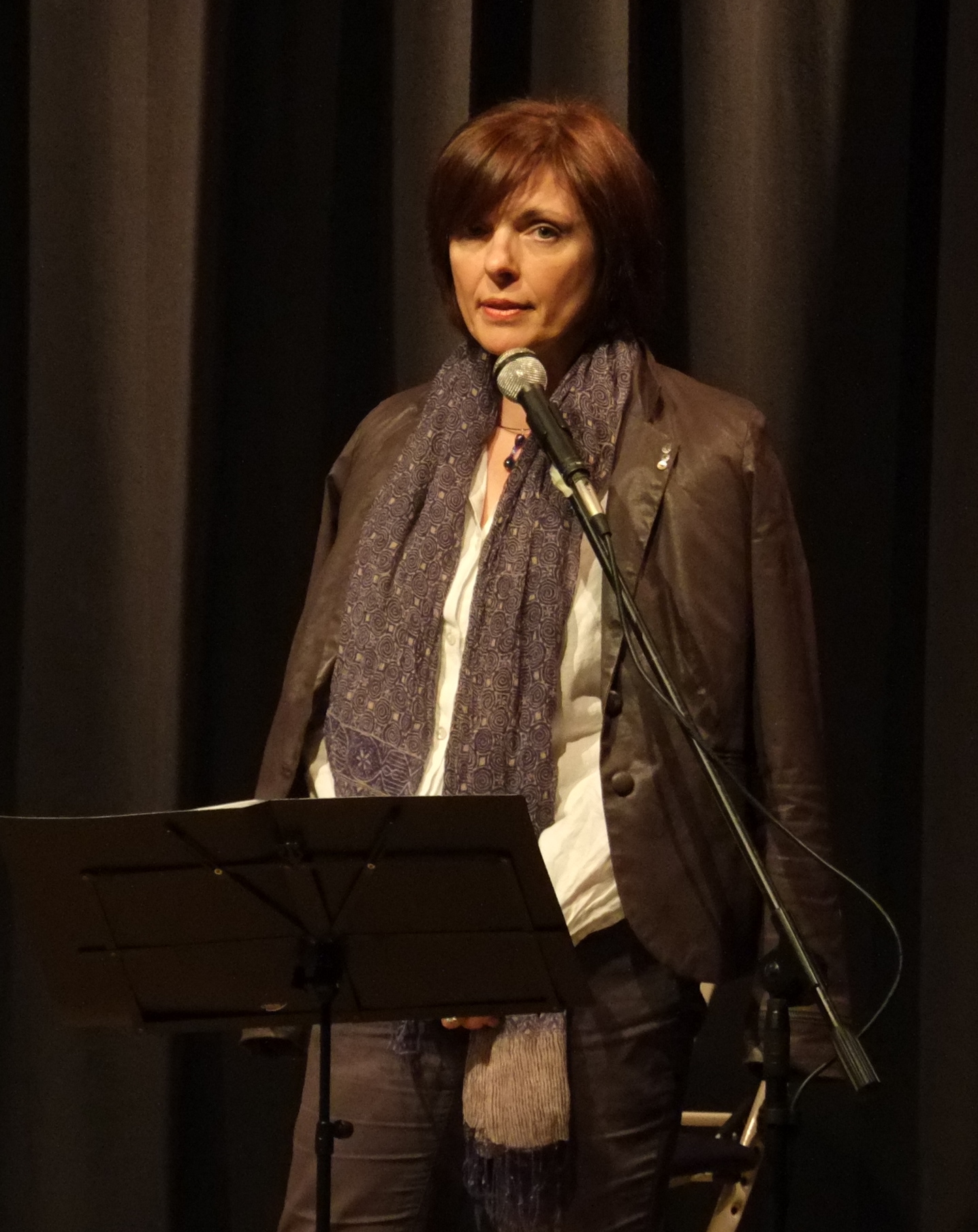
    Csilla Toldy was born in Budapest. After a long odyssey in Europe she entered the UK with a writer’s visa to work on films and ended up living in Northern Ireland in 1998. Her prose appeared in Southword, Black Mountain Review and anthology, Fortnight, The Incubator Journal, Strictly Writing and Cutalongstory. Her poetry was published online and in print literary magazines, such as Snakeskin and Poetry24, Savitri, Lagan Online, Headstuff, Visible Verse, A New Ulster and in two chapbooks published by Lapwing Belfast: Red Roots – Orange Sky and The Emigrant Woman’s Tale.

    Csilla makes videopoems, available on her website: www.csillatoldy.co.uk & https://soundcloud.com/ctoldy

  • “Eavan Boland: Inside History” Edited by Nessa O’Mahony and Siobhan Campbell

    November 23rd, 2016

    The death of Eavan Boland (1944-2020) occurred on 27/04/2020 in Dublin, Ireland. Condolences to her family, friends, and colleagues. You can read a collation of tributes and obituaries to Eavan at this link.


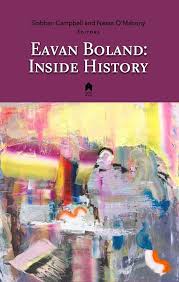
    EAVAN BOLAND
    INSIDE HISTORY

    (Arlen House, 2016)
    download-1

    Eavan Boland: Inside History, a new volume of essays and poems in response to the work of the internationally-renowned Irish poet, will be published by Arlen House on 1 December 2016. Edited by poets Siobhan Campbell and Nessa O’Mahony, Eavan Boland: Inside History is a reappraisal of Boland’s influence as a poet and critic in the 21st century and is the first major commissioned collection of essays to be published on Boland.

    The volume includes critical essays on, and creative responses to, her work by leading writers, thinkers and scholars in Ireland, the UK, Europe and the US and reappraises Boland’s influence as a poet and critic for the 21st century. The fresh and diverse approaches provide a new frame for a critical engagement that crosses continental and aesthetic boundaries. The book, therefore, repositions Boland scholarship with a focus on the most important aspect: the poems themselves.

    Contributions include a foreword by Mary Robinson, former President of Ireland, as well as essays by Jody Allen Randolph, Patricia Boyle Haberstroh, Siobhan Campbell, Lucy Collins, Gerald Dawe, Péter Dolmányos, Thomas McCarthy, Nigel McLoughlin, Christine Murray, Nessa O’Mahony, Gerard Smyth, Colm Tóibín and Eamonn Wall. There are also poems from Dermot Bolger, Moya Cannon, Katie Donovan, Thomas Kinsella, Michael Longley, Paula Meehan, John Montague, Sinead Morrissey, Paul Muldoon, Eileán Ní Chuilleanáin, Nuala Ní Dhomhnaill, Jean O’Brien and Nessa O’Mahony. The volume concludes with A Poet’s Dublin, a reissuing of the conversation that took place between Eavan Boland and Paula Meehan on the occasion of her 70th birthday in 2014.

    “Eavan Boland worked as an editor with Arlen House in the 1970s and 1980s and did extraordinary work in developing new Irish writing and broadening the boundaries of Irish literature. We are pleased to publish this collection on her work,” said publisher Alan Hayes.

    “As editors, we’ve been delighted to be part of the conversation that this volume has begun,” said Siobhan Campbell. “It’s been a privilege and an honour to work on this collection particularly as both Nessa and I feel poetically in Eavan Boland’s debt, as do so many of our contemporaries.”

    978–1–85132–140–7, 368 pages, paperback, €25
    978–1–85132–150–6, limited edition numbered and signed hardback, €55

    ARLEN HOUSE LTD, 42 Grange Abbey Road, Baldoyle, Dublin 13.
    Phone: 086 8360236: Email: arlenhouse@gmail.com

    • US & International Distribution: Syracuse University Press www.syracuseuniversitypress.syr.edu
    • The Book Depository: http://www.bookdepository.com/Eavan-Boland-Inside-History-Siobhan-Campbell/9781851321407?ref=grid-view
  • “Just as the blackbird strikes up his clear note” by C. Murray

    November 8th, 2016
    From, A Transitory House: A suite of poems performed at Ó Bheal based in Freda Laughton’s Now I am a Tower of Darkness (2016) & first published in 1916 – 2016: An Anthology of Reactions, Editors, John Liddy & Dominic Taylor (Limerick Writers Centre, 2016)


    dead hearts, dead dreams, dead days of ecstasy,
    Can you not live again ?

    Nay, for me never dead.
     
    (Constance Markievicz, Easter Week 1917)
    At each day’s dawn,
    they came to tell me
    they came to tell me
    that they would be shot.
     
    I heard the cracking and
    I knew my birds had flown.
    Willie Pearse, a carver in stone,
    shot, his body melted into lime quickly.
     
    I do not know if it was the birds,
    that chaos of gulls and crows that
    told me they killed James, but then
    the screeching stopped.
     
    And that silence, that silence
    before the cracking violence
    and they came to tell me,
    and they came to tell me.
     
    As a child I knew how,
    Beyond the lamp’s circuit,
    Lay the shadow of the
    Shadow of this darkness,

     
    They did not come to see me off.
    I stood, and I waited for the order
    to be carried out.
    They came to whisper their deaths,
     
    no one came for me. I waited,
    listening for their songs,
    some symbol of their escape
    but none came –
     
    I saw Paddy leave through a side gate,
    his face clear blown away.
    His poor head bowed and I knew
    that he too was gone,
     
    Just as the blackbird strikes up his clear note
     
    I saw them injured, tied into chairs.
    The soldiers’ guns cocked, ready
    no person need tell me, for the birds told me.
     
    Waiting with an arctic kiss
    In the well of the staircase,
    Ready to drape the bed with visions
    No eyelids can vanquish.

     
    The guards whisper their morning blasphemies.
    They came to tell me in their proud uniforms,
    with their hearts all bloodied, a bloody page.
    They melted into the sun, melted through the bars.
     
    Days and days of ravening silences,
    and their coming with their songs and their laments.
    They came to tell me they were dead
    and I was not, and I was.
     
    I waited for it to stop.
    I waited for them to come to me
    with a bit of paper, the order,
    the priest, maybe.
    No-one came.
     
    And I saw looking up at my
    patch of sky and wondered
    why I was not killed,
    why I was not let die ?
     
    They came to sing to me with their warm feathers,
    their sheaves of nesting,
     
    Now I am a tower of darkness,
    whose windows, opening inward,
    stare down upon tidal thoughts.
    And in this responsive bell,

     
    they came to sing to me,
    soft bosomed, purring and burring.
    Their young cracking out of eggs
    stunned and begging for sun.
     
    They came to tell me,
    but before I could make out their words,
    I saw them evaporate through the metal grilles,
    the shrieking of the carrion crows rises up and above the Liffey
     
    carrying with it their red blood to tell to the river.
    I would know without a word the shrieking of their carrion fear,
     
    I did not have to see their iron riddled,
    metal punctured hearts to know that their
    own sweet ghosts had found the gate.
    I sat, I knelt for days of violence and woe,
     
    Hollowed by the silence of the eyes,
    The mind swings its clapper.
    And life resolves into relationships
    Of cadence and dissonance.

     
    And round, with each pace I make,
    I feel the terror of their eyes upon me
    and my heart speaks that I live, yet I live.
     
    I grieve that they were carried off under warm
    sun-warmed wings. Red robed, those flitting birds
    out of metal and blood emergent.
     
    They came to sing,
    they came to mock,
    and to lament.
     
    They came to tell me that they are dead,
    and they came to tell me that they are dead.
     
    They came to tell me as they left this realm,
    comrades, brothers, I know that you have left
    and not one of you tucked me beneath
    your endless sunlit wing.
     
    I know the meaning of fear, it is solitude.
     
    As a child I knew how, beyond the lamp’s circuit, lay the shadow
    of the shadow of this darkness,
    my tower of darkness, my griefs whirl round it
    as the sea gyrates round the grey rocks, the green.
     
    Miles away the sea calls me lashing its tumults,
    carrying those soaring birds in its streams and eddies,
    they call those that are found again,
    that none may flounder at the eyries.
     

    And,
    dead hearts, dead dreams, dead days of ecstasy,
    Can you not live again ?
    Nay, for me never dead.

    Now I am a tower of Darkness

    by Freda Laughton

    As a child I knew how,
    Beyond the lamp’s circuit,
    Lay the shadow of the shadow
    Of this darkness,

    Waiting with an arctic kiss
    In the well of the staircase,
    Ready to drape the bed with visions
    No eyelids can vanquish.

    Now I am a tower of darkness,
    whose windows, opening inward,
    stare down upon tidal thoughts.
    And in this responsive bell,

    Hollowed by the silence of the eyes,
    The mind swings its clapper.
    And life resolves into relationships
    Of cadence and dissonance.

  • “Woman’s Song” and other poems by Gülten Akın

    October 29th, 2016
    Poems from What Have You Carried Over?: Poems of 42 Days and Other Works by Gülten Akın, translated by Saliha Paker and Mel Kenne


    Spring

    Oh, no one’s got the time
    to stop’n think about fine things

    With broad brush-strokes they move along
    Sketching homes kids graves onto the world
    Some are obviously lost when a rhyme starts up
    With one look they shut it all out
    And the rhyme enters the night, as fine things do

    Some pus in your breasts, some fish, some tears
    Sea sea sea you turn into a giant
    Evenings your fog creeps up the river-mouths
    Raids our hazel-nuts
    What to do with their blackening buds
    We beg our children: go hungry for a while
    We beg the tycoons
    Please, one less “Hotel,” one secret marriage less to sketch
    Please one less bank, a plea
    From us to you and from you to those abroad

    We send our wives out to get a manicure, to say
    —sir, if you please—
    We send our children out to beg
    We’re off on our way, our beds entrusted to God
    Motorized gypsies of the summer

    Oh, no one’s got the time
    to stop’n think about fine things

    To return to the stream where we first bathed, our fathers’ homes
    Passion for the earth, for what it’s being here
    We plug our ears: money money money
    We pull out the plugs: fight fight squabble
    Someone may inquire: quarrel but why
    An ever-grinding axe for our neighbor, a fist for our wife
    Why the quarrel—we have no idea.

    Then in our small town, that prison
    We place our eraser before our eyes
    With a shove we widen our days
    We make room to give thought to our wives
    To think about the bloom of the violet passing without us

    Even if no one’s got the time
    To stop’n think about fine things
    Even if the little schoolteachers
    Multiply their holidays
    And in the name of whatever we hold sacred
    Weave blindfolds for our eyes
    What’s stored up and sketched will in time
    Break into blossom as spring flowers

    From across the stream over yonder
    Some will whistle, we’ll sound it back.

    Translated by Saliha Paker and Mel Kenne


    Summer

    It’s back the summer I love
    With ants and flies we’ve crept along the earth
    With red mullets, bluefish, leafy lettuce and olives
    Way past fog-ridden April, depressing rains
    Blue on the Black Sea, for kids to rejoice
    For poets to rejoice, it’s back the summer I love

    We’re in nineteen sixty-eight. We’ve seen the Forties and Fifties
    We lived through the Sixties, with political statements
    Committed crimes. May fifth at five p.m. in Kızılay
    And all of us come from work elsewhere
    To Ankara, the revolution’s base

    In the Forties we were seven. A draftee’s hitch three years
    They bragged about keeping us out of the War, they still do
    When you’re seven the rule is to go to school hungry
    Beside wheat that rots, beside furs and diamonds
    To go to school hungry. Maybe only a simit, an orange for lunch

    To be skinny, ugly, ashamed of footwear
    —having their long-lasting effects—
    Tooth disease, disease of the hair
    Trembling hands, sudden heart tremors
    Scared of being shamed, ashamed
    No candy, no ball, no dolls
    For days weeping, notebook, pencil, book,
    —the lasting effects when loneliness strikes—
    They bragged the War’s far away from us
    —The War’s far from us, thanks to our cleverness
    Then let’s have just one more villa, one more fur coat, one more trip to
                                                                                                                   Europe
    Well-nourished, white as white peals of laughter in black automobiles
    Sometimes a bunch of parsley, a basket of eggs
    In return for a salary of fifty lira and ninety kuruş a soldier’s ration
    Black black black
    Ankara

    War outside, as a New Rome is built
    An Old Rome demolished
    A world where wolves lounge about with songs on their lips
    Dogs in a long spring heat
    Blood, fire, endless starving, rotting Europe
    With its trusts, banks and stock exchanges
    At their keenest in virtue and bravery and treachery

    Year nineteen fifty. It was back the summer I love
    I believe we weren’t even seventeen yet, in our old age
    Not even seventeen, I believe, still back in our childhood
    Who stirred up everything, with what right, for what
    How had we multiplied so quickly
    In love, in shame, in indifference, in grudge
    In forgiveness, in forgiveness that ruins that clouds

    The months of May are beautiful, with their brave
    Stoneworkers who pierce holes to let the stream flow
    With folk singers, swearing fishermen
    Gravediggers, girls gathering snails,
    Chatty, smiling women, wool spinners
    Those struck by epidemics, sharp market sellers
    But above all with their revolutionaries, oh those revolutionaries
    Who, mistake after mistake become ever more unmistaken
    The May months are beautiful.

    For the sake of cancer ladies and gentleman dance all night long
    In return for receipts, pity is bestowed on the blind and the poor
    In black headlines, “An incomparable, invaluable person”
    For businessmen with no work to be done.

    Summer I love is here for clothes in mothballs
    For moldy pickles, rotting jams
    For stinking awareness-raisers glued to their chairs
    —Oh the remedy you claim to be that’s not true remedy.
    .
    Summer I love is here with its minstrels and bards
    Troubled ones, pencil-browed ones, lousy-haired ones
    Nylon-stockinged women, scabby-horsed men
    Summer is back to Anatolia
    To Anatolia
    Oh the remedy you claim to be that’s not true remedy.
    You sit where you are, don’t move
    Like a socialist Jesus once in a while drop by
    Stand aside, so you can take the center when the time’s ripe
    May comes down to Anatolia from its own springs
    May comes down to Anatolia from its own mountains
    The summer I love it’s back

    Translated by Saliha Paker and Mel Kenne


    Woman’s Song

    It’s time to leave, the day of banishment’s upon us,
    Exile is here again,
    I’ve packed the books and dressed the kids,
    Let’s make for the snows of Dranaz.

    Wherever we go, the people are poor as mice.
    Every spring and summer far from home
    We return to our native place but know
    Neither our place of exile nor our roots.
    We picked a crocus in the Ardahan uplands,
    A narcissus at Sinop,
    The yellow rose at Van,
    The orange fragrance came from Kumluca.
    We confused home and exile,
    Exiles like us were never known before.

    It’s time to leave, the day of banishment’s upon us,
    In your absence the shoots you set will grow,
    Shake in the wind and shelter from the sun.
    It’s nature’s law the crops will ripen,
    The infant find its tongue and fragile form,
    The mist will vanish from Isfendiyar’s top.

    Greetings from us to those who’ve gone before,
    Greetings to friends and kin, to those who suffer,
    Greetings to those who endure,
    My pity is for the helpless, don’t look at my tears.

    It’s time to leave, the day of banishment is here.
    Don’t ask where is our country and our native land.

    Translated by Ruth Christie


    Song of a Dweller in a High-Rise Block

    They piled the houses high,
    in front long balconies.
    Far below was water
    far below were trees

    They piled the houses high,
    a thousand stairs to climb.
    The outlook a far cry
    and friendships further still.

    They piled the houses high
    in glass and concrete drowned.
    In our wisdom we forgot
    the earth that was remote
    and those who stayed earthbound.

    Translated by Ruth Christie


    Elegy for the Right Arm of Musa Akbaba
    from Lower Cinbolat*

    How can I say it, can’t get my words right
    I struck off my own arm, let go of it
    They’ve pulled my land from under my feet
    This cruelty against us, this is death

    This one field fed us and clothed us
    What is this law, who writes it, who makes it up?
    It’s a cruelty unknown to the vulture and wolf
    My words run short, run out, this is death

    Syria’s mountains are smoke-veiled, oh my oh me,
    What’s known as Ceylanpınar is closed to us
    Our kids can’t race gazelles down to the stream
    Let the cranes be the warning to our songs
    The lords of Urfa are furious

    How shall I say it, who’s the cause, who’s to blame
    Never in my life has my fury been
    So edgy, as sharp as the blade of a knife
    One thing I know, my hand committed the crime
    No power is left to me but my own life
    What I let fall was mine, my own arm

    *100 acres of land belonging to Musa Akbaba from the village of Cinbolat in the borough of Nusretbey, Urfa, was divided, confiscated and given back to its former owner under the Land and Agriculture Reform Law. Musa Akbaba flew into a fury in the middle of his field and, using a machine for sowing, chopped off his right arm, which he blamed for voting for (…).” From the newspaper Cumhuriyet, 16th December, 1987.

    Translated by Saliha Paker and Mel Kenne


    Gardens and Vines

    It was still the green almond time, we hadn’t yet faded
    you two little girls would come up
    one with big blue-eyed comical looks
    the other, quiet, passive

    blue pretended to be the world
    a breeze of Ulvi Uraz from places of no return
    a joy that couldn’t fit
    into my big-sisterly shell
    in the music room fugitive moments
    at the window knee-high grass
    the back yard

    from those days to these
    what have you carried over
    what have I?

    of course in those days too
    a few things happened
    but Afghan towns
    weren’t yet a legend
    Iraqi children, their mothers…
    Iraq in ashes, Iraq in ruins
    the Middle East a world wound

    As if day no longer exists now
    the sky skips over it
    nights fall fall into dreams
    on the globe some place
    a black stain that grows perpetually.
    The stain harsh, hurting the onlooker
    The one who sees the lesions
    Which is why the media
    created blindness first of all

    from those days to these
    what have you carried over
    what have I?

    Up against the Ziverbey mansion
    a house, Istanbul
    between roses and screams
    I must’ve been blind, blinded I was then
    Outside the sun shone past us

    Once the hot frame cools down
    it turns really cold
    the mouth is shut fast
    the eye is no longer an eye

    from those days to these
    what have you carried over
    what have I?

    At last the desert dust
    Also rained on us
    The seas withdrew, the rivers turned yellow
    The earth lay to rot

    what have you carried over
    what have I?

    An elderly poet points out root sources
    church music, the little boy with the siren voice
    wild violets, the Aleppo vines
    poplars, olive trees, the wind
    the gypsy girl picking wild chicory
    The eagle owl
    The water having to pass between heavy stones
    While all these still exist here…

    gülten is all I’m left with, a rose
    if ever planted, stranger to any garden

    Translated by Saliha Paker and Mel Kenne


    from Poems of 42 Days

    1.

    The tyrant’s night is one with the night of the wronged one
    And a longer night awaits the one whose verdict is tyranny
    Agony’s cry, screams, imprecations
    Can pass through the needle’s eye
    Feel their way through the killer, the executioner
    To arrive finally at the doorway, the reason, the why.

    2.

    The Aftermath

    Tall, purple flowers bloomed in the little park at the center of the square. A bed full of purple flowers. Could this be a coincidence? That doesn’t seem possible. If you asked the gardener who had kept them in seed, he’d say, “They were meant to be red, yellow, and white. I don’t know how they all turned out to be purple.”
    He should know—if he’s seen us there, watched us on winter days. As he’s been put in charge of that impressive district, he should be a good gardener. If he’s a good gardener, then he should know why his flowers had taken on that alien color.
    Purple. Seeps in from sorrow. From human agony. Drains into earth with our bodies’ electricity. What else to expect but purple flowers?
    We were mothers. We returned from visits, from the prison where our sons and daughters were kept. Before, we used to scatter away, but during these days of hunger it never crossed our minds to do that. We stayed together. Walked all the length of the streets. Crammed into buses. On our way to reach the authorities in stately buildings. We sought relief in petitions, in more petitions and countless stamps.
    It was cold. Most of us wore flimsy clothes, old, thin-soled shoes which soaked up the wet. We were here every day, sitting in that little round park.
    They chased us from the doors. Scolded and pushed us away. Sometimes we fought them back. Shouted in anger. But we couldn’t put up with that for long, we couldn’t hold on. We went back to the little round park. Parks are for the public. Who could be angry with us, sitting there quietly? Did we sit there quietly? Yes. The most we could do was whisper to one other. What can we do, what should we do? But storms raged in our bodies. Our silence filled the world with siren-shrieks and screams. What does it matter if it’s five or ten people shouting? The ones that really matter are the quiet ones. Ask the silent one what after-shocks rock her body, what cataclysms it releases into air and earth. We used to watch how people behaved towards us. There’d be respectful silence on the streets and on the bus. Those on duty would suddenly appear confused and listless, ready to get up and quit work any moment.
    The earth—the earth we trod on, the earth that blessed us with the mud, the puddles, the wet and the cold—received our pain, our anger.
    We sat in that park for days. We stood and waited. On the earth where the purple flowers bloomed. If the gardener happened to see us, he could explain why the blossoms were purple instead of yellow, red and white, and why they stood so upright and tall.

    3.

    The Yard

    A scream completed the yard
    Without it a part would’ve been missing
    Congealing into long icicles
    The scream froze solid

    The scream froze solid
    Drawing deep blue pictures over us
    Where d’ you get that scream from mother
    Thought the guard, from the sirens,
    Perhaps from the seagulls
    But where’s the sea? There has to be one
    Since above there’s the cold, blue-curdled sky
    And below,
    Underneath, beside, all through us
    The yard.

    The yard within which one day in seven
    We were drawn together and scattered apart
    And that became a living part of us.

    The yard
    With its huts and wiry barbs
    And a guard’s pink scowl
    On those other six days how could
    The slate-colored roof have ever held
    The silence preceding
    An earthquake

    It could never be whole without that scream
    With its rifles pointed at us
    Its noisy mechanical sounds
    The scream came to make it so
    It was a black-bodied wreath drifting about the yard
    Its woven flowers of curse
    Growing
    So big
    As it paused before each mother
    It could only be deemed a mountain
    So now
    How do we mothers
    Still fit in that yard?

    4.

    The Yard

    The scream stretched out longer and longer. Circled the yard. Wrapped up the rooftops and chimneys. Made its sure way through stone or iron. Reached into the sky. Chased off the cranes. Faded the blue. Touched the scrawny force-fed trees and uninviting flowers, dove into the distant pool and bounced out again. Hit the sentinels’ huts. Rattled the stacked rifles. His strings jerked suddenly, the sergeant sprang into action, called his men to attention, gave them orders. Rifles in hand they marched forward. In the inner yard stood the woman. The scream continued.
    Holding her by the arms, they half walked, half dragged her away. The scream turned to imprecations. Sustained its pitch.” You …gots, you’ve killed my son, You a.. ….kers, now kill me too.”
    The scream had gathered momentum. It carried on even as the woman became quiet. They took her into an annex with a low roof, where she collapsed on the ground. They eyed each other while holding her arms. Should they pick her up or let her lie there? Should they stand her on her feet or allow her to sit? This was an unknown situation, something befalling the officials for the first time. This silent crowd, they who could only weep and let their tears trickle into their hearts, had been commanded officially for years. Official advice, official shouts, and the official reprimands flung at them was all they got. Occasional rough play was only one order of business among others.
    The incredible had happened. From that quiet, helpless, skinny woman’s scream had leapt and left her utterly empty. She marveled at how she’d freed the scream that had been keeping her alive and on her feet. Should she remain lying as she was, get up, or sit down?
    “What are you screaming about, woman?” the man in charge would have asked had he been there on time and been standing beside her. By the time he came running in, the woman was already curled up in a ball on the floor.
    His anger faded. For a moment he considered helping her up and giving her a seat. Just as his voice was about to escape from his throat and say “She’s just a mother,” the official in him crushed it.
    “Hurry up and write a report, this woman has insulted us!”
    “Yes, sir.”
    Who knows what place the woman—crossing mountains, ridges, and waterways—had set out from to see her son. For five minutes. Only that long. “How’re you, all right?” “I’m all right, and you?” “I’m all right.” “How’re father and sister?” “All well.” “D’you want me to get you anything?”
    Only a foolish writer would add more words here. It’s clear to everyone her time would be up by now. Up without casting a last glance, up without catching a smile or final gesture.
    No matter. The mother comes anyway. A three-day journey. Across mountains and rivers. Piling with others out of puffing trains or buses at stations. Piling into crammed vehicles like just another bundle. Appearing at the doorway that leads to her son.
    Although visitations had been banned, for some reason a few were still allowed. Rumor had it that many a building in the towns and villages had been burnt to ashes by those being held. They were chained, beaten, attacked by dogs. Kicked. Their testicles stomped on, crushed. The mother had heard bits of this while she waited for her name to be called out. She waited but her son’s name wasn’t among those banned from visitation. She felt a secret joy, then shame. She looked around at the women with faces blurred by agony. She again felt ashamed, her joy evaporated. She felt uneasy being one of the privileged who were admitted. She felt upset with her son. “Why had he been set apart? How will these mothers look at me now?”
    “Just let me see him,” she said to herself, “just let me go in and see him.”
    She entered and saw that her son could hardly stand. His head was bandaged, he could barely be understood.
    “See, mother, this is how I am, now go away, I can’t stand up any longer.”
    She got it at once. The onus of being set apart was not on the shoulders of her son. It was they, they, they, who had set some apart to display them. Maybe to intimidate, maybe for some other reason.
    For awhile she looked about in confusion and then walked out and down the stairs. Once outside, she saw the other mothers. The stacked rifles. The dogs. It was then that the scream forced its way out of her heart, her lungs, her throat. Exploded from her mouth. Not stopping, ever. It wasn’t she who was screaming but the scream itself.
    The mothers in the prison yard weren’t prepared yet to gather up the scream and find a place for it. Moving about them, the scream went berserk, slipped into bags of clean laundry, brushed headscarves and hair, both hennaed and gray, and chafed against poorly shod feet.
    “Oh, who knows how her son is?” thought the mothers. “And what about the girls, are they also…?
    Those banned from visitation looked all done in. A knife couldn’t pry any words out of them. How were their children doing? Two mothers fainted right off. They were picked up and stretched out on the benches. Most of the others were quietly weeping.
    The scream invaded their tears and dried them up. Awakened those who had fainted. Snagged collars and shook people up. Broke in on the officials. Howled out the barking dogs.
    Silence.
    For its own sake the report was written. And, for the sake of it, signed.
    “Can you sign?” they asked the mother.
    “Yes,” she said.
    “Then sign here.”
    She did. She was once more herself. “My son’s had it, he’s all burnt out. Go ahead, kill me too, what do I care anymore.”
    “Take her upstairs, boy.”
    She was escorted upstairs. As she mounted the steps, herself again, she thought of what she would say. She expected some cannonball to be fired at her thunderously. Reprimands and humiliation.
    As she opened the door, went in, and stood surrounded by men with rifles, someone shouted out her name while waving the report.
    “Why did you scream like that? Why did you swear, why did you have to speak such words?”
    “I saw my son in there, in that state,… you’ve crushed my baby to bits, what else could I do? What more do I have to fear? What’s left but my life, take that too, for my salvation.
    Looking thoughtful and upset, not likely now to submit to the official in him, the official laid the report on his desk.
    “Bring her son, let them sit down face to face. Let her see her son’s not dead, let her see these people have seven lives. Nothing ever really happens to them.”
    “May the wind drive those words away from your mouth.”
    They brought in her son and offered them chairs. Holding the hands of her son, she kissed and caressed his face.
    “So,” thought the mother, “it was best to let that scream go, and not hold it down.” She smiled.
    The scream had done its job. For now. Quietly it flew off and claimed a corner near the far end of the eave. Where it hung on.

    It can be seen by anyone who looks there.


    akin-whatGülten Akın (1933 – 2015)

    Gülten Akın was born in Yozgat in 1933. She studied law at Ankara University and worked as a lawyer and teacher for many years in various parts of Anatolia where she traveled with her husband and children. One of the pioneers of 20th century Turkish literature, her early poems were more informed by personal ideas and experiences, while her more mature work focused on social issues. In her poetry, she strived for simplicity and a desire to be understood by the ordinary reader. She won many awards for her work, and her final book of poems, Beni Sorarsan, was published in 2013.

  • Dowsing/ RABDOMANTICA – by Daniela Raimondi

    October 17th, 2016
    Dowsing/ RABDOMANTICA & other poems is © Daniela Raimondi, the english translations are © Anamaría Crowe Serrano

    DOWSING

     
    Mother pregnant with rain.
    Mother of virgin sounds,
    with music in your marrow
    and the chirping of a bird in your mouth.
    Mother sewing and unsewing the waters and the tides
    holding between your teeth the source of all rivers,
    the alphabet that gushes on the tongues of poets
    and leaves damp traces,
    the imprint of a lamb wet from birth.
    Mother of the dark-dark
    Mother of the black-black night.
    Moved by a primitive thirst,
    the same need to flee from light
    that pushes the hare deep into the scrub.
    Touch me with your clear fingers
    oil my lips with your blind love.
    Like a heavenly valley where only light falls.
    Your blue within another blue,
    the intense azure breath of your sky.
     

    RABDOMANTICA

     
    Madre pregna di pioggia.
    Madre di suoni vergini,
    con un midollo di musica
    e sulla bocca il gorgheggio di un uccello.
    Madre che cuci e scuci le acque e le maree
    che tieni stretta ai denti l’origine dei fiumi,
    l’alfabeto che sgorga sulla lingua dei poeti
    e lascia tracce umide,
    l’impronta di un agnello bagnato dal suo parto.
    Madre del buio-buio
    Madre del nero-nero della notte.
    Ti muove una sete primitiva,
    la stessa fuga dalla luce
    che spinge la lepre nel fitto della macchia.
    Toccami con le tue dita chiare
    ungimi le labbra di un amore cieco.
    Come una conca celeste e senza ombra.
    Blu dentro un altro blu,
    azzurrissimo respiro del tuo cielo.
     

    LOT’S WIFE

     
    “But Lot’s wife
    looked back and was turned into a pillar of salt.”
    Genesis 19, 26
     
    Tonight I’ve set my horses free.
    I fed the blind dogs
    then came through the mountains to find you.
    I walked barefoot,
    with flaming sunflowers in my arms.
     
    I can no longer be what you wanted.
    I’m just a body closed tight,
    the sum of a thousand daily failures.
    But how am I to survive the winter
    or keep ignoring the brightness of your face.
    Now I’m left with the absurd pride of losers:
    stopping time with a hand gesture,
    proudly challenging his fury at never bending me
    to his will or ever reading my heart.
     
    Death doesn’t bother me.
    It’s just a subtle change in the air,
    a breath that trembles over the earth
    and disappears without the faintest sound.
    Being deserted is what frightens me.
    Your abandonment is what hurts the most
    while your gaze burns
    and turns me to salt.
     
    Tell me:
    did you hear me scream while my blood turned to stone?
    Did you find enough rage in me to feed your heart?
    How could my eyes meet yours and not tremble
    how could I stare at the sky and not be destroyed.
    And despite everything
    I was still clinging to your hands
    those horrible hands of yours, so big and empty.
     
    There’ll be time now to forget.
    A time without limits, like childhood.
    And then I’ll remain still among the sheaves of wheat,
    with this useless pride shining in my eyes,
    with the ivy tightening round my wrists, and my hips.
     

    LA MOGLIE DI LOT

     
    “Ora la moglie di Lot
    Guardò indietro e divenne una statua di sale.”
    [Genesi 19, 26]
     
    Stanotte ho liberato i miei cavalli.
    Ho dato cibo ai cani ciechi
    poi sono venuta fra i monti per cercarti.
    Ho camminato scalza,
    stringevo fra le braccia girasoli accesi.
     
    Non so più essere come tu volevi.
    Sono soltanto un corpo chiuso,
    la somma di mille fallimenti quotidiani.
    Ma come sopravvivere l’inverno
    o ignorare ancora la luce del tuo volto.
    Ora mi resta la fierezza assurda dei perdenti:
    fermare il tempo con il gesto di una mano,
    sfidare a testa alta la furia di chi non sa piegarmi
    né ha mai saputo leggermi nel cuore.
     
    La morte, sai, non mi spaventa.
    Non è che un mutamento impercettibile nell’aria,
    un respiro che trema sulla terra
    ma poi si acquieta, senza il minimo rumore.
    È l’abbandono che mi fa paura.
    È il tuo abbandono quello che fa più male
    mentre il tuo sguardo brucia
    e mi trasforma in sale.
     
    Dimmi:
    sentisti le mie grida mentre il sangue si faceva pietra?
    Trovasti in me la rabbia per nutrire il cuore?
    Come incontrare i tuoi occhi e non tremare
    come fissare il cielo e non esserne distrutta.
    E nonostante tutto
    ancora mi tendevo alle tue mani
    quelle tue mani grandi, orrendamente vuote.
     
    Ci sarà tempo adesso per dimenticare.
    Un tempo senza limiti, come nell’infanzia.
    E poi restare immobile fra le spighe di grano,
    con questo orgoglio inutile a brillarmi dentro agli occhi,
    con l’edera a stringere i miei polsi, ed i miei fianchi.
     

    TRADESCANTIA VIRIDIS

     
    The kitchen is a sanctuary in disarray.
    There are relics of enamel in the sink,
    copper lids hanging on the walls.
     
    (Can you make poetry
    talking about kitchen roll toppled on the table,
    or wine stains that tarnish the edge?)
     
    Take a piece of chalk
    draw the perfect outline of a circle.
    Belong to winter
    and be its gift,
    surrender to its white fringes.
     
    She’s the type who forgets money and her keys,
    who leaves things unresolved.
    She believes in the watery sound of childhood.
    Something inside her never learned to relax.
    A piece of white chalk and she redraws the circle.
    Removes the empty space she’s hiding
    in her cage of bones.
     
    She’s gone down to the street.
    Buried six shadows in the field.
    A voice called from the top of a crane,
    from a vanilla sky without the flavour.
     
    There was some greenery in the pots.
    The voice called somewhere far away,
    from a red box hanging in mid air.
    Sometimes a voice is the simple formula
    for a breath that tunes your lips,
    warms your fingers.
    Sometimes a voice draws perfect curves,
    even on the slimmest of hips.
     

    TRADESCANDIA VIRIDIS

     
    La cucina è un santuario in disordine.
    Ci sono reliquie di smalto nel lavello,
    coperchi di rame appesi alle pareti.
     
    (Si può fare poesia
    parlando del rotolo di carta rovesciato sul tavolo,
    o delle macchie di vino che macchiano il bordo?)
     
    Prendere un gesso
    tracciare il profilo perfetto di un cerchio.
    Appartenere all’inverno
    e dell’inverno essere dono,
    concessi al suo margine bianco.
     
    Lei è di quelle chi si scordano i soldi e le chiavi,
    che lascia i quesiti irrisolti.
    Crede nel suono infantile dell’acqua.
    Dentro ha qualcosa che non sa riposare.
    Un gesso bianco e ridisegna il cerchio.
    Sconfigge lo spazio vuoto
    che tiene nascosto in una gabbia d’ossa.
     
    È scesa per strada.
    Ha sepolto sei ombre nel campo.
    Una voce chiamava da in cima a una gru,
    da un cielo color di vaniglia ma senza il sapore.
     
    C’era un poco di verde nei vasi.
    La voce chiamava da un punto lontano,
    da una scatola rossa appesa nel niente.
     
    A volte una voce è la formula semplice
    di un respiro che affina le labbra,
    che ti scalda le dita.
    A volte una voce disegna curve perfette,
    persino sui fianchi più magri.
     

    DECEMBER

     
    Put the coloured baubles in the box.
    And the little bells, the Christmas lights
    in sheets of tissue paper.
    Now look at the light on the lake:
    swans cutting the silence,
    leaving the imprint of evening on water.
     
    There’s a hidden place in the darkness of flesh.
    A space with no nerves that presses on the bones.
    But it’s time to burn the old clothes,
    to call the night standing still at your door
    and then say – there it is, look.
    (Your eyes like coins in the dark.)
     
    I’ll choose an auspicious sky:
    the curve of stars between Ursa Major
    and the hill where the hares live.
    It’ll be a simple gesture like
    combing knots out of hair,
    the slight act of untying a shoelace.
     
    Remember that a woman’s patience
    has the fragrance of whiteness.
    It gathers pain and stores it in the dark,
    in large water jars.
     

    DICEMBRE

     
    Metti le sfere colorate nella scatola.
    E i campanelli, le luci di Natale
    in fogli di carta velina.
    Ora guarda la luce sul lago:
    i cigni tagliare il silenzio,
    lasciare sull’acqua il segno della sera.
     
    C’è un posto nascosto nel buio della carne.
    Uno spazio senza nervi che preme sulle ossa.
    Ma è tempo di bruciare i vestiti vecchi,
    chiamare la notte ferme sulla tua porta
    e poi dirti – è là, guarda.
    (I tuoi occhi come monete nel buio).
     
    Sceglierò un cielo fortunato:
    la curva di stelle tra l’Orsa Maggiore
    e la collina delle lepri.
    Sarà un gesto semplice come
    lo snodare i capelli,
    l’atto leggero di slacciarsi una scarpa.
     
    Ricorda che la pazienza della donne
    ha il profumo del bianco.
    Raccoglie il dolore e lo conserva nel buio,
    in grandi vasi d’acqua.
     
    Dowsing/ RABDOMANTICA & other poems is © Daniela Raimondi, english translations are © Anamaría Crowe Serrano

    daniela-che-legge-inannaDaniela Raimondi was born in Italy and since 1980 has lived in England where she obtained a Masters in Spanish and Latin American Studies from King’s College, University of London. She is the recipient of numerous prizes for poetry and prose. Her work has been published in literary journals both in Italy and abroad and she has also adjudicated in poetry competitions. In 2012, she was the Italian representative at the Poetry Tournament in Maribor, Slovenia, where she was awarded the Public Prize. Publications include seven poetry collections in Italian, one of which won the Mario Luzi prize. An anthology of her poems in English was published by Gradiva Publications (Stony Brook University, New York, 2013) with translations by Anamaría Crowe Serrano. Her first novel, L’ultimo canto d’amore, was one of the ten recipients of the Lo Scrittore prize. It came first at the San Domenichino national prize and has since been published by Gruppo Editoriale Mauri Spagnoli (2015).


    momiAnamaría Crowe Serrano is an Irish poet and translator of Spanish and Italian to English. As well as having been anthologised and published widely in journals in Ireland and abroad, publications include onwords and upwords (Shearsman, 2016), one columbus leap (corrupt press, 2011), Femispheres (Shearsman, 2008), and Paso Doble (Empirìa, 2006), written with Italian poet Annamaria Ferramosca. She also wrote poems for the art catalogue Mirabile Dictu (blurb, 2011), with work by artist Jordi Forniés.

     A new collection, KALEIDOgraph, written with Greek poet Nina Karacosta, is forthcoming from corrupt press. In recent years, she has been involved in several collaborations with other poets, including the Upstart project in Dublin,  and Steven Fowler’s “Yes, But Are We Enemies?” project.


    Further Reading

    •  Robert Sheppard’s EUOIA (European Union of Imaginary Authors) Project (http://robertsheppard.blogspot.ie/2016/european-union-of-imaginary-authors.html).
    • modern art and other poems by Anamaría Crowe Serrano
    • Mindskin by Antonella Zagaroli
    • Selection of poems by Daniela Raimondi From Inanna, Available on Kindle from Amazon: https://www.amazon.com/Inanna-Daniela-Raimondi-ebook/dp/B01MCSS7L8/ref=sr_1_1?ie=UTF8&qid=1476647206&sr=8-1&keywords=daniela+raimondi


  • SCA/OPES – by Nicole Peyrafitte

    October 12th, 2016

    SCA/OPES


    Tidepools
    Westwing
    Lake Palourde


    image14

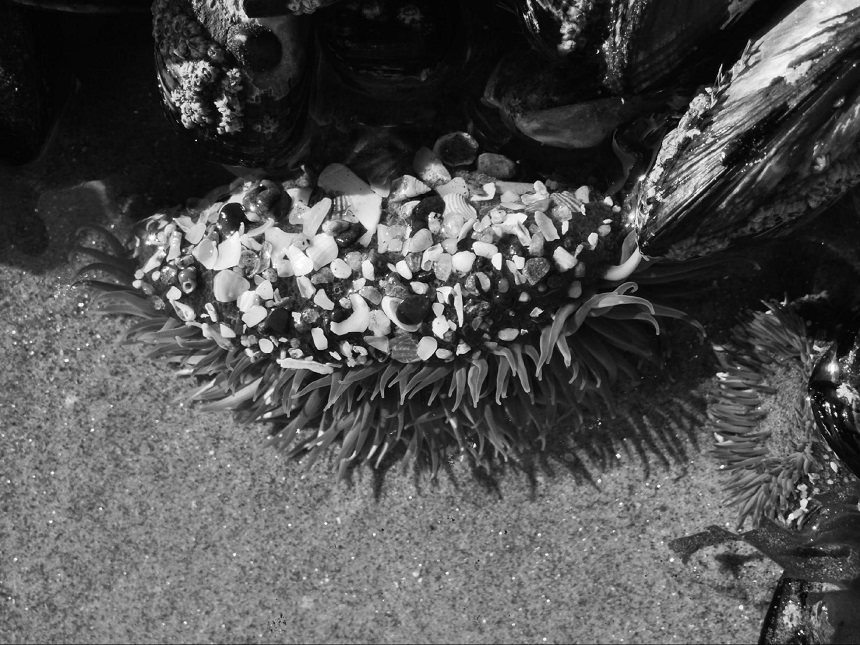
    Tide Pools

    Encinitas, California, October 2013


    Re-visiting Encinitas California &
    measuring the past: 

    “how to measure such distances
    how to count such measures” sz PJ


    in step with Pacific ocean
    memories’ ebb & flow
    tide-pools of hardy organisms
    cast reflection
    but what measure measures the past?
    remains? newbies?
    Anthopleura elegantissima?
    I too stretch
    & clone myself
    wear a shrapnel
    shell camouflage
    practice both sexual
    & asexual reproduction
    temporarily attached to
    immersed objects

    Pollicipes polymerus?
    our peduncle is plump
    short edible
    attached to a rock
    beaten by the waves
    coping with flux & reflux
    anemones, goose barnacles
    pelagic witnesses
    symbiotic walk
    on provisory bottom
    where
    onlookers mirror
    life of constant changes
    shared illusion with
    sardines & mackerel
    the alternate rhythmic condition
    back & fro movement
    decline & renewal 

    a mighty fear
    a sounded fear
    a good fear
    in a rare intertidal zone
    mussels prey on barnacle larvae

    Revoir Encinitas, Californie 
    & mesurer le passé:

    “comment mesurer de telles distances
     comment compter de telles mesures” dit PJ


    dans la foulée du Pacifique
    ebbe et jusant des mémoires

    flaques résiduelles d’organismes hardis
    jètent une réflexion
    quelle mesure mesure le passé?
    les restes? le neuf?
    Anthopleura elegantissima?
    moi aussi je m’étire
    & me clone
    porte un camouflage
    d’éclats de coquillages
    je pratique les reproductions
    sexuées & non-sexuées
    attachée temporairement
    aux objets immergés

    Pollicipes polymerus?
    notre pédoncule est charnu 

    court comestible
    fixé à un rocher
    battu par les vagues
    surmonte flux et reflux
    anémones pouces-pied
    témoins pélagiques
    marche symbiotique
    sur fond provisoire
    où les
    spectateurs reflètent
    les changements constants
    une illusion partagée avec

    sardines & maquereaux
    une condition rythmique alternée
    avec mouvement avant arrière
    déclin & renouveauune

    peur puissante
    une peur raisonnée
    une bonne peur
    dans l’estran rare
    les moules se gorgent de leur larves

    West Wing

    In Flight To Seattle, Washington, March 2014
    no-borders

    image09


    image04
    image01 image07

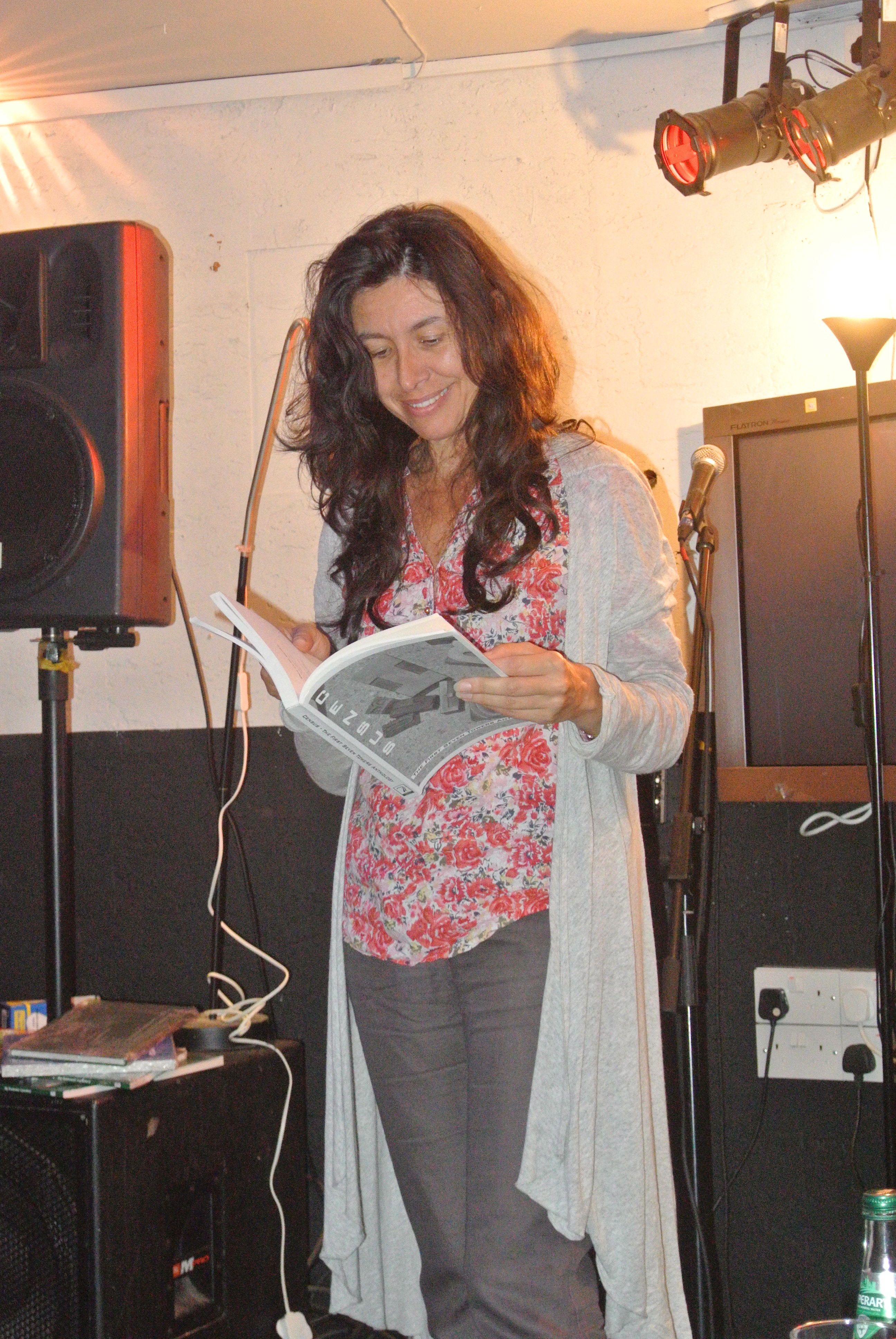
    nicole_peyrafitteNicole Peyrafitte is a pluridisciplinary artist born and raised in the Gascony part of the Pyrenees & residing in Brooklyn, N.Y with her husband poet, essayist, translator Pierre Joris. Her texts, voice-work, paintings, videos, films, translations & cooking are displayed in a range of multi lingual & multi-faceted performances. Peyrafitte’s work is informed & characterized by a daily practice — a quest for life in art and art in life between two continents & four languages. 

    Latest publication: Bi-Valve: Vulvic Space/Vulvic Knowledge, 17 paintings, 17 multilingual texts, 1 recipe & 1 CD (Stockport Flats, 2013). Forthcoming: Land0Scape (bi-langual texts), éditions Plaine Page, France. Her translations work includes, Nicole Brossard, Yoko Otomo, Gary Hill, Marcela Delpastre, Bernat Manciet.

                                            Images and words are © Nicole Peyrafitte


    More info on publications & more: www.nicolepeyrafitte.com

  • “Doris Lessing said I was a child of violence” and other poems by Linda Chown

    October 8th, 2016

    Too many moons


    for Jack Gilbert who went further

    Too many moons in his poems, he said they said.
    Too much sky. But what if he had lived on islands
    under the sun with fishermen. What if he had heard
    silence sounding in the water. What if there were no words.
    What if to him a southern moon stared
    At infinity in that night light
    And held the chaos of lovers.

    how to say what


    Words are the clothes thoughts wear.
    Samuel Beckett

    To say nothing the same.
    In the space. To repeat nothing, And everything.
    Put it there over the moon with the heart outside.
    When you. And it’s all read/red. Granny Smith is gone.
    Took a kind of a powder. If I only were in a dark
    of my own making. Making out fireflies touch things sticky.
    Do tell how to say what: do Prague lights shine spatial
    hollows in Slavic moonlight when nothing says
    anything any more. More than more. Two is not one.again.
    Grasshoppers have thin legs and I want to go home. For Christmas
    in a dark of my own making without silent night. To say nothing
    the same. When you. If I were only in a dark of my own. Making.


    To Say Thinking

     
    It was at first as though no one.
    It was as though there was no hearing
    at the table where no one listened.
    It was as though her sound
    was too quiet.
    All her speaking tactile in that bed
    shining like that white lamb on the wall.
    All the talking behind the sky moments.
    To have a say beyond the clutter of talk.
    Far behind the anonymous stars in their spin she reached.
    She had to learn all without teaching
    something of her own,
    a language to say it in. A wild mind
    where everything mattered: stars and lambs and silhouettes.
    She was by herself in that thin bed wheezing
    and taking it all in.”Deep,” Wyman said you were.
    Deep. Maybe one of those grown-in-the-wild miracles in a jungle
    fluent in her own making.

    Ever since Rinny found the words to speak public,
    they rolled out of her faster than she could ever say them to know.
    Her voice seemed to sound a ways,
    low like crickets in a run of drifting.
    Ever since, she forgot how to speak
    word by word. Out-speech became an eruption, a geyser
    to burst surfaces. Not to think to say,
    But to say thinking. To light the lamb.
    To shine herself. Out-speech was a close seam
    Without basting. A fitting tight in a crystal fog

    Writing in Place

    It’s about weighing things,
    It’s about equals,
    like to like, peach to peach,
    swimming out loud in the ocean
    and floating even in the tides

    It’s about writing in place
    like fitting right into your skin,
    heart speech in morning sleep,
    writing word for word on the air.

    It’s like exactly.
    Blue cats in the clouds.
    It’s like nothing extra
    the orange white under the rind there,
    that long-clean sweet and fresh,
    or Samuel Beckett unwording
    the world playing his flute magical.

    It’s about holding some rhythm
    in a groove, sharps folding into flat
    at last Etta James and life is all in the song
    like Leslie Howard dancing his elegant face
    and Humphrey Bogart gliding through his silhouettes.

    It’s about writing in place,
    here where here is,
    this balance, ripe sweet corn cobbing,
    wild geese gandering
    This sheer sun light
    when somehow
    you can be as never before
    standing out still with yourself
    writing in your place
    beyond all the words and kissing the sky.
     

    Shore-Lines in the Sand

     
    Why would I want to write about flat fields
    And bright color, to suggest limits and consequence
    Why would I want to make pictures
    As though I were an artist copying the wind
    As though things could be anything
    As though there could be shore lines in the sand

    As though Camus could ever live without light
    As though Cezanne would not paint his canvas thicker and thicker
    As though birds lead photographable lives on their perches
    Bobbing up on demand to entertain white-faced children
    When, backstage, birds beak their worlds bloody
    Batter and rush the air in hypnotic trance.

    Life is no transparent stillness
    with the hollow grace of imaginary holiday.
    The forces of flat tussle with the agitations of circumstance.

    I want my poems to touch that surge,
    that place where blood first moves into sleep,
    where heart spears memory as it gropes into time.
    I want the crash of titans, life in the round,
    to be in the brunt of it,
    inside the thunder before the storms,
    I want to sustain the bang in the beginning.
    Hot headed and sure fired,
    poems spin far from flat fields,
    to hover inside time and knowing
    with the blinding precision of dreams.

    In Spain

     
    when
     
    in Spain, then, police crowd
    us and we grow smaller as
    night smoke packs us in pieces of old innocence-
    an unfamiliar fear greases
    our childhood with fascist sparks and guns,
    power’s black hats that shine darkly.

    Doris Lessing said I was a child of violence

    Doris Lessing said I was a child
    of violence but I wear peace under
    my arms are gentle and Burl Ives is
    singing foggy dew too. Does violence begin
    when you hear of tied ropes & peeling skin
    & do our blood cells clamber for violence
    are they doomed for ever after?
    somehow soft skin sings a melody with itself
    and Hiroshima Dachau Dresden
    Buchenwald Flossenberg Belzac
    I play the marimba with sweet memories are made of this.

    “my heart speaks before my words
    stand out in the crowd
    of windows and open mouths
    my heart is my communist
    my lone wolf my bride.”

    Linda Chown, Ph.D The University of Washington, Comparative Literature. Dissertation based in part on interviews conducted with Spanish writer Carmen Martín Gaite, (“Narrative Authority and Homeostasis in the Fiction of Carmen Martín Gaite and Doris Lessing.”) MA/MFA  from San Francisco State University. Linda is a poet, professor, and critic. She lived for eighteen years in Andalucía. She has published three poetry collections, Buildings and Ways, All the Way Up the Sky, and Inside In. Poems in Foothill Quarterly, Quixote, Intro 3, Dark Horse, Magdalene Syndrome Gazette, Women Spirit, Grand Valley Review.

    She worked five years with San Francisco Poetry Center, extensive workshopping and friendships with Stan Rice, Robert Creeley, Galway Kinnell, Mark Linenthal, Frances Jaffer, Kathleen Fraser, Shirley Kaufman, Francis Hosman, and others. Lunches with poets such as Allen Ginsburg, James Wright, Gary Snyder, Amiri Baraka, Robert Duncan, Kenneth Rexroth, Lawrence Ferlinghetti, Mark Strand, Madeleine Gleason, Robert Bly, Diane Wakowski, Denise Levertov and Michael McClure.


    Linda Chown at hardPressed Dual Poets


  • “Love: After Neruda’s Sonnet XXXIII” by Ingrid Casey

    September 26th, 2016

    Love: After Neruda’s Sonnet XXXIII

     
    Florica walks behind Inspector, to home where she’s not
    at-home. Children’s eyes and begonias meet
    her here, on this threshold, waiting
    for her to give them chocolate, water.
     
    Her crushed velvet skirts have followed
    his silver through tracts, across karst; Carpathia, Kiev,
    Berlin. Now here, to eternal damp and clouded
    summers and loved masonry.
     
    He sees the amber of the sun
    in her kitchen eyes at day’s end; she’s
    a building that flies without buttress.
     
    He lets her make coffee and listens
    to her laugh peal in time to the
    boiling water, bells in unison.
     

    Erasmus

     
    Anwar and Pierre flew to the
    university town on this damp
    island at the edge of Europe two
    months ago. Zarabe and gros blanc,
    they are a marbled unit, lines blurred.
    She is too cold, he rubs life back into
    her but she’s not singing any more
    Creole love songs because the fruit
    here is so shit, she says. She watches
    droplets of condensation on the window
    with an intent that is also a portent. He
    goes out to the chilly garden to play with
    that damn cat and it’s too-beautiful owner.
     

    Single Mother

     
    Is a poem I read, once, about a
    girl hitting her head, in the dark. But
    more than the discomfort of sharing
    rooms, is the discomfiture that’s got a
    rind of dis-ease. Empty rooms; silence,
    and you left the back door open on an
    August night. Further into the forest now,
    than a teen mom with one cute accessory,
    there is a gaggle to protect. And, of course,
    yourself. Alone with no tribe, in the dark.
     

    Mandible

     
    Draw this beak, this jaw. It can
    susurrate, masticate, oscillate, fellate, well
    assist with at least. It forms a well-rounded
    chin, which you stick out when petulant or
    guarded or inquisitive. Never slack, except
    for on one side, the left, which betrays your
    emotion. Gristle inside, temporomandibular
    tantrum. Too much talking, moil in sleep,
    lopsided feelings. You need to speak, write,
    execute what is inside, balance the blue
    throat chakra. When you walk past trees it
    relaxes; tightens in the car, under the duress
    of traffic and all the spineclimbing aggravations
    the stress, the grubwork of teeth, of gears. Lying
    on sand can wrap this Hermes-in-the-bones
    around on itself. Also hot stones, aromas and
    the hands of others sliding along the lines of
    para-sympathetic systems, slackening, the
    opposite of nervous. Once, a criminal caressed
    it, gently and unexpectedly. Out shot colours
    from your crown, six or seven weeks. Limning
    your outlines, a shaman from the wrong side but
    all was yellow then, a clear river. Cock your head
    now, cup it in your own hand, remember to choose
    to rest. Bird, be free. Sing, speak, sleep.
     

    A Belgian town

     
    Skirts the diamond capital, but almost all here go without
    work. A man is released. Approaches the media, lace windows
    will bleed long after the media scrum. My brothers were acting
    normally, he says. Mother is devastated, we are peaceful people.
     
    He burns, shame flaming, pin-pricking down to the
    moons at his fingertips. Another time, it’s the emerald
    place, wartime. Teenage son and two comrades, caught.
    A bomb on a bike, propped at the wall of a garda station.
     
    A detective on his way to work flings the
    danger into the river. Hard labour, refusing
    to recognize the State. Imaginable tragedy.
     
    Avoided at the eleventh hour. An Irish city
    during the Emergency. An almost-man, imprisoned
    with Thomas Aquinas, repentant, alive.
     
    “Love: After Neruda’s Sonnet XXXIII” and other poems are © Ingrid Casey

    Ingrid Casey is a poet, parent, artist and activist. She has been writing poetry since 2015, and some prose, with publications in literary journals from Brooklyn to Kentucky, Dublin to Cardiff. She is a John Hewitt bursary recipient, amongst other accolades. Her debut collection, Mandible (the Onslaught Press, 2018) has been described by poet Jessica Traynor as a ‘vital addition to Irish poetry.’ This year she also produced a groundbreaking short documentary on families living in homeless accommodation: Through The Cracks.


    • Ingrid Casey’s blog
    • Looking at the stars (Dublin Simon Community Fundraiser)
  • “Morning in the Garden” in Şiirden 37

    September 17th, 2016
    14292420_504550946406652_4485566492265146690_n14370243_10154373947416675_842701372820245835_n

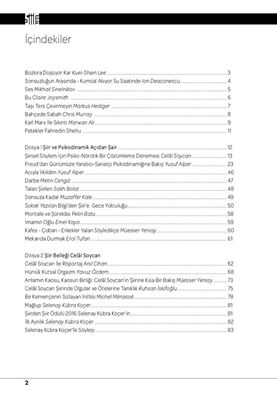
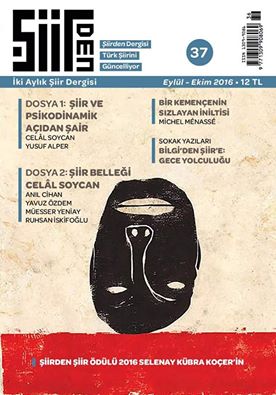
    My thanks to Müesser Yeniay who is editor of Şiirden Magazine (of Poetry) and who translated “Morning in the Garden” for issue 37 of the magazine. The poem first appeared in ANU 48 (Editor, Amos Grieg).

    You can read some of Müesser Yeniay’s work at the following links, Three Poems, Phoenix and other poems, and Kafes (The Cage) and other poems. For me, poetry  can be about cross-cultural pollination (translation) and it can occur at very simple levels, without the trumpets and big budgets. Ekphrasis need not be limited to the image, nor need it be static. The issue is always quite simply about the poet’s response to the poetry of another. I am very grateful to Müesser for her translation of my work.

←Previous Page
1 … 29 30 31 32 33 … 106
Next Page→
 

Loading Comments...
 

    • Subscribe Subscribed
      • Chris Murray
      • Already have a WordPress.com account? Log in now.
      • Chris Murray
      • Subscribe Subscribed
      • Sign up
      • Log in
      • Report this content
      • View site in Reader
      • Manage subscriptions
      • Collapse this bar