• chris murray
  • journals – bibliography – publication notes
  • downloadable items – essays – media
  • copyright
  • Home

Chris Murray

  • Renewable Energy: Cora Sherlock’s Excellent Suggestion by Kevin Higgins

    August 28th, 2014
    “Over 15,500 human remains incinerated to heat UK hospitals over 2-year-period.  #800babies #outrage @amnesty” Tweet by Cora Sherlock of the Pro-Life Campaign

    Renewable Energy: Cora Sherlock’s Excellent Suggestion

       
    We must stop giving it away for nothing
    –our greatest natural resource –
    the Department of Finance estimates
    Tallaght Hospital could heat itself
    entirely on foetuses properly burnt
    in one of those state of the art
    energy efficient furnaces that are
    all the rage in Sweden.
     
    Within the lifetime of this government
    every hospital in the country could be fuelled
    by the unwanted contents of visiting wombs.
    The minority of cranks aside,
    the average foetus would be delighted
    to make this small contribution towards
    society’s continued warmth.
     
    And when the ban on contraceptive devices
    is re-introduced; every last diaphragm,
    IUD, cock-ring, and bit of rubber
    ribbed for your pleasure incinerated
    in a field outside Ballinspittle,
    after a blessing by Mother Teresa,
    (specially flown in from
    the black beyond)
    and the conception rate soars
    back towards
    the traditional twelve
    pregnancies per lifetime, two thirds,
    we estimate, resulting in terminations,
    we can start talking
    about the export market.
     
    Economists say the uteruses
    of the greater Dublin area alone
    could light the living rooms
    of a medium sized British city,
    such as Bradford.
     
    Education is key.
    To get the lady parts of the country
    conceiving as they’ll have to,
    every pubescent girl,
    on her fifteenth birthday,
    will be shown her way around
    the first twenty pages of the Kama Sutra
    by a fully qualified curate
    under the age of seventy.
     
    This policy’s success
    will abolish talk of deficits
    and oil prices. Instead,
    we’ll debate furiously
    whether to blow our vast surplus
    on a few thousand more
    unemployed tin whistle players
    with the hint of an English accent,
    or free nose jobs and tummy tucks
    for the wives of the wealthy—the biggest
    plastic surgery project in world history
    since NASA’s unsuccessful attempt
    to build another Joan Rivers.
      
     © KEVIN HIGGINS, 2014
      

    Kevin author photo December 2013 (1)Kevin Higgins is co-organiser of Over The Edge literary events in Galway City. He has published four collections of poems: Kevin’s most recent collection of poetry, The Ghost In The Lobby, was launched at this year’s Cúirt Festival by Mick Wallace TD. His poems also features in the anthologies Identity Parade – New British and Irish Poets (Bloodaxe, 2010) and in The Hundred Years’ War: modern war poems (Ed Neil Astley, Bloodaxe May 2014). His poetry was recently the subject of a paper titled ‘The Case of Kevin Higgins: Or The Present State of Irish Poetic Satire’ given by David Wheatley at a symposium on satire at the University of Aberdeen; David Wheatley’s paper can be read in full here . Mentioning The War, a collection of his essays and reviews, was published by Salmon in April, 2012. Kevin’s blogs at Mentioning The War.

    .

  • Poetry: Bilbao by Frances Holloway

    August 24th, 2014

    Bilbao

     
    Here we go merrily
    playing coffin games again
    the dead will out
    Have you seen the glass furnaces of Bilbao?
    How pretty in the sky at night
    those hypnotising spumes of purple green and blue
    but oh how putrid her river
     
    How many times have we buried her now?
    and each times she acquiesces
    the guest of honour at a pleasant gathering
    The sisters always present and apparently in league
    inventing new party games
    making speeches
    and all the cleaning up to be done after
     
    With those sunken Spanish eyes still-lidded
    she watches over her own funeral
    and all the grief that should accompany
    these occasions
    these goings on
    has been dispatched to some other place
    and all the love I feel for her takes a different face
     
    Bilbao, queen of the industrial age
    subsided into decadence and crime
    El Ayuntamiento is trying
    but do the dead
    ever really walk again?
     
    She should have been queen of a much nicer family
    our lives might have resolved splendidly then
    around the solid centre of her private world
    her inner churnings and grumblings
    might have taught us how to live with ourselves
    how to overthrow tyrants
    and make a good Christmas cake
     
    But we sided with the tyrants
    and mass produced our toxic thought forms
    Now I have to keep burying her night after night.
     
    Bilbao is © Frances Holloway

    frances holloway

    •  
    • Dispersal by Frances Holloway
    • Pomonal Publishing
    • Review : Dispersal on Poethead
  • Review: Dispersal by Frances Holloway

    August 24th, 2014
    frances holloway
     
    Dispersal By Frances Holloway
     
    The clouds roll up in dairy scoops
    the anvil and the tower
    blowflies die their tiny deaths
    and thirsty gums shed flowers
    the silence falls, no magpie calls
    and then it moves-
        the whisper wind
    to rattling applause
     
    Dispersal is © Frances Holloway


    Pomonal Publishing, 2014

    Frances Holloway is a poet storyteller whose work is wry and full to bursting with ideas. Pomonal Publishing have done well in snaring the woman and bringing her work out. Holloway’s books capture a universe, they are almost nourishing. I say this as a reader who seeks visualism and colour in her poems. I look for intensity and light in a poem, I do not care if the light is dark or jewel-like,


    Bilbao

     
    Here we go merrily
    playing coffin games again
    the dead will out
    Have you seen the glass furnaces of Bilbao?
    How pretty in the sky at night
    those hypnotising spumes of purple green and blue
    but oh how putrid her river
     
    How many times have we buried her now?
    and each times she acquiesces
    the guest of honour at a pleasant gathering
    The sisters always present and apparently in league
    inventing new party games
    making speeches
    and all the cleaning up to be done after
     
    With those sunken Spanish eyes still-lidded
    she watches over her own funeral
    and all the grief that should accompany
    these occasions
    these goings on
    has been dispatched to some other place
    and all the love I feel for her takes a different face
     
    Bilbao, queen of the industrial age
    subsided into decadence and crime
    El Ayuntamiento is trying
    but do the dead
    ever really walk again?
     
    She should have been queen of a much nicer family
    our lives might have resolved splendidly then
    around the solid centre of her private world
    her inner churnings and grumblings
    might have taught us how to live with ourselves
    how to overthrow tyrants
    and make a good Christmas cake
     
    But we sided with the tyrants
    and mass produced our toxic thought forms
    Now I have to keep burying her night after night.
     
    Bilbao is from Dispersal by Frances Holloway
     

    Women poets often have to fight to remain visible. The reader may be concerned at lack of citation, credible review, and honour for the woman poet. Frances Holloway’s work reminds the reader however that there are infinitely more important things in this world than poetry and it’s dissemination. A reclusive or even withdrawn approach to creativity is become a valid life choice in a world where psychosis is paraded via mass-media purveying execution and torture as a type of snuff-reality, yes really.

    Dispersal, the eponymous poem of this brief and lit collection is set as the last poem in the book. This is in itself unusual, as editors often build the backbone of their book on the title poem, as spine, structure and support system to the text.  Instead of the eponymous poem, the reader discovers a group of poems each as good as the rest. These poems are Death Comes and Goes in the Garden, Never Explain, Never  Apologise, The Undead , Fox , and Night Horses. I think that in this case Jane’s editorial choice is vindicated. Dispersal, though a small book of some 56 pages really exhibits an embarrassment of riches for the reader’s pleasure. I was lost regarding which poem’s I would excerpt for this blog.

    Frances Holloway plays to her strengths. Her dispersal of idea and image is wry and occurs in it’s millions, a huge seeded flower that requires a broader canvas. One of the spores reached me and for that I am glad. I want to know what it is like to live in solitude, to listen to the muse, to often reject her, and to have the time (writing time) to create and maybe someday, someone will pick up one of my small chapbooks in the reeling crazy of her life and still momentarily. I could question why Holloway has hidden her poetic voice for such a time, but it really is not my business.

     
    If I run barefoot from my door
    to the tank-stand on the hill
    I collect one hundred wounds
    but none that time won’t heal
     
    From One moment in paradise is a whole lifetime

    Well done to Pomonal Poetry, keep doing what you are doing . Keep producing those books of poetic story and intimate clarity. Despite varied assertions as to the demise of poetry, or indeed the market-driven idea of what is a book – there is room for the serious poetry reader to explore, and if they must reject the endless novels, the lack of thought, and the emptying poetry shelves to make it clear to the big publishers that there are poetry-readers, then go online and discover the indies who are filling the void left by the market-driven publishing house. There are always options.

    Eventually the pull for neutral, emotional and plain silly drivel will bottom out, and those publishers who have craved a market-share by dropping their poetry lists and pushing half-cocked writers like James Franco, will realise that market is driven by respect for art, and not necessarily by coke-fuelled soirées that want to push the next big thing on us- fuck the next big thing. I want a window on the world, and songs of the heart.


    Not withstanding suicide bombers and falling
    towers, the surgeon’s knife, my mother’s coffin,
    departure of friends, marks of disease, threats of
    disgrace and pain’s bombardment – the most
    frightening thing I have seen is my father in his
    pyjamas reaching to embrace me.

     
    from Night Horses by Frances Holloway

    The poetry reader will be rewarded by Holloway, and he or she will have to go looking for poets of integrity in the grit and slime of what is being pushed by the big cheeses.

  • Protected: Three Women (After Sylvia Plath) by C. Murray

    This content is password-protected. To view it, please enter the password below.

  • “This Is The Point Where Colour Comes in” by Christine Murray

    August 11th, 2014
    Tabernacle

    gold-bodied a beetle dives
    into muck and dirt, a silica
     
    of glitter on his porch,
    his wing.
     
    there is no evidence of his home now
    it is vanished,
     
    small soil tabernacle
    he carried in the sun.


    2

     
    this is the point where colour comes in,
     
    a slap of blue/ the wooden baker’s palette
    hits glittering concrete
     
    city of silica, its bedrock trembles a bit
     
    glossy/ the blackbird’s sunbath/his beak
    goldened almost/ yellow.
     
    From The Silences is © C. Murray

    This Is The Point Where Colour Comes In was initially published at Bone Orchard Poetry, from a MSS series called The Silences
  • Sequences — (After Francis Bacon) by Michael McAloran

    August 9th, 2014

    Sequences — (After Francis Bacon)

     
    2…meat unto collapse/ stead lapse/ the lung’s abort in headless barrage the head is/ traces the/ meat’s sarcophagus is the light surrounding/ the forms that bind the subject-object/being in this from onset’s claim/ the stripping down of/ in gradual of irreversible/ meat does not climb it cannot/ it/ blind limit of/ in/ in conflict there its sense fed to the/ nausea all in the face of/ the sunken eye divulged of meat/ the meat that is the figure’s construct/ gallowing from bone/ opulent the sickness-pity for/from unsung/ carved out of/movement through nothing the flesh/ clamouring/ cascading yet inward and then yet none/ the laughter of the meat is silent/ the its’ cajole/ meat’s blood spills out of vacuum presence/ meat is not void the head is void in conflict there the meat devoid of/ un-sound…

     
    3…the piss/ cum/ shit of celebratory nothing/ the ruptured meat weeps from the skin’s bind/ bound upon as if it/ or/ in that/ celebratory excavations before the foot of none/ meat’s saving graces in ejaculative/ voidal/ or the introspect of needle/ cunt penetrate/ rectal/ the mutilation of/ meat is the worst possible beginning-ending/ it/ other than/ the head lopped off sings to the solar anus of the eye’s mind percept/ though of or or/ not from the give or the taking from of flesh/ is it/ the head is bone the body boned yet/ unto the sky there is no end it perceives the flesh null and void/ yet in the meat of the percept/ even the fault of which applies/ the whole is not correct merely because it is of the exist/ it does not burn unless it is set to/ light…
     

    4…object of/ scar tissue silences/ yet/ meat stings of the echo-wound/ the bound devour of in/ meat has forgotten/ the head as object desires the other it/ all stripped/ sung from the broken amulets of memory’s shades of silent wasteland/ yet the meat/ still scarred/ collapses under the weight of/ consumption/ because it be/ it can yet be other/ it cannot be other than without choice/ the meat sings blood and sense yet it does not sing of final/ meat is arbitrary/ it sings in pleasure yet it does not sing aloft/ but in the expulsion of desire/ in which none is known/ terms wishes granted it/ dragging out the carcass of it into the light flaying the spectral knowledge/ the meat suffers/ it is a rabid dog in the midst of silence/ seeking to be annihilate/ yet…


    5…fleshed on in-step/ bled from/ what is it/ this/ in this is felt yet no/ not of/ in animus of collective taste/ the bleed of asking yet/ bound to/ the face’s demolition/ the smearing of/ hence it lacking identic/ special all as if reverberating sound in cylindrical/ yet meat’s taste is of the flesh it/ sombre ash in the guts/ in the defecate of that already final/ as for the mock bind of sex the interchange and shift of parameter/ meat still yet entwined in the tint of desire’s persistent edge/ all spun together between the animal and the/ obscenely bound to the nothing that is/ if/ where from yet in grip of marrow beneath the flesh’s desertion in/ else never truly penetrating/ the cock lacking the hyenic bone will/ legs splayed/ a cunt exposed/ a rectum/ skinned the purpose of in the thrust of meat and the beckoning void/ of it…


    6…the escape from flesh/ momentarily through flesh the loss of being in/ subtle cataract of none/ escapade of/ the blood coming to the eyes the cum coming to the fore/ blind-sighted/ then/ yes or no/ base flesh and the blood-red passage through night/ in machinate of/over again as if to/ yet never the escape from/ not conscious deliverance nor conscious bite/ having bitten the wick between anguish and desire/ chased by the none of exigency and lack/ of final edge and of/ red raw yet no/ of the blood no unless asked of/ the flayed will reduced to ashen/ scar a long the indent of emblem bitten dredge/ the frenzy of/…/all the while the meat slowly erased/ in definite stead/ the sense of final and over and again/ until/ bled out from circus tint of blood/ bone lack…
     
    Sequences — (After Francis Bacon) is © Michael McAloran

    mick1Image is © Michael McAloran
    Michael Mc Aloran was Belfast born, (1976). His work has appeared in various zines and magazines, including ditch, Gobbet Magazine, Ygdrasil, Establishment, Unlikely Stories, Stride Magazine, Underground Books, InterPoetry, etc. He has authored a number of chapbooks, including The Gathered Bones, (Calliope Nerve Media), Final Fragments, (Calliope Nerve Media) & Unto Naught, (Erbacce-Press). A full length collection of poems, Attributes, was published by Desperanto in 2011. Lapwing Publications, (Ireland), released a collection of his poems, The Non Herein in 2012. The Knives, Forks & Spoons Press, (U.K), also released an ekphrastic book of text/ art, Machinations & Oneiros Books released In Damage Seasons and All Stepped/ Undone in 2013. A further collection Of Dead Silences, was published by Lapwing Publications. His most recent publications are The Zero Eye and Of the Nothing Of (Oneiros Books). He is  the editor/ creator of Bone Orchard Zine and he edits for Oneiros Books.

    • Michael McAloran at Lapwing Publications
    • Oneiros Books , Poetry
    • Abattoir Whispers
    • Recours Au Poème


  • ‘The House of Altogether Nothing’ & Other poems by Jan Sand

    August 5th, 2014

    The House of Altogether Nothing

    The countryside in which it stands
    Is broken with large jagged rocks.
    Its trees are dark, from northern lands,
    Whose branches scratch the sky; boney bough knocks
    One against the other. Cold winds finger through
    Odd strands of captured human hair,
    Torn newspaper strips look as if they grew
    Amongst the leaves to bleakly declare
    Of violence and despair. Black groves smell
    Of damp decay. They display white fungoid growth
    Through which black insects grope, explore a shell
    Deserted by a snail that caps its glowing trail. One is loathe
    To venture near this place of threats
    But winding through dead leaves, broken rubble
    Is the path where stumble those, full of regrets,
    Replete with fears, burdened with trouble,
    Pass to reach the house. Its peaks and walls
    Assault the sky like a cataclysmic scream,
    Intertwined grotesqueries that captures and enthralls
    Those destined to drop into its dream.
    The weary travelers approach in single file, one by one,
    Trudge to the door which swings open wide.
    They know their journey’s almost done.
    They tremulously step inside.
    Halfway down the long bare hall
    Their head is seen to wobble, shake.
    Comes now a groan, a gasp. Then the fall.
    It thumps and rolls. The arms quake
    And drop as well. The torso tumbles,
    Then the legs topple like loose lumber.
    The parts now chute in sliding jumbles
    Through a hole in the floor. Nothing left to encumber
    The next traveler. The house re-opens its front door.
    The upper stories flicker, luminesce.
    Moonlight glistens. Something rises to soar
    From out a square chimney – glaucus, incandesce
    To dissipate like spectral steam.
    Something wakens from a dream.

    The House of Altogether Nothing is © Jan Sand

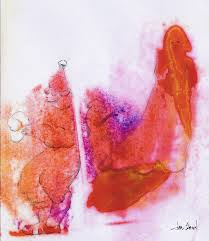
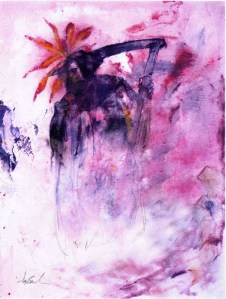
    These images are © Jan Sand jan1Death

    Rains

    There are rains that drag fog skirts
    Across the country-side in stealthy hiss,
    That, gently, in determination
    Dampens down the grass with sodden kiss
    Of sky to earth as caring as a mother
    Calms her resting child.
    There are rains of panicked horses’ hooves
    That illuminate their stampede
    With angry lightning flashing on black roofs
    While trees sway and shudder in dismay
    And water demons pound on window panes.
    But some rains come and merely sit
    And drum in steady patient siege,
    Work soft hammers on the dents and wrinkles of the day
    Smoothing anger and distress to flat peace,
    Tempt shy dreams to peek from hidden thoughts
    And welcome in safe surrender to sleep’s release

    Rains is © Jan Sand

    2 Am

    The early black
    Is still unstirred
    By yawning morning.
    The ceiling fills
    With predatory thoughts,
    Like quiet children
    Come to play
    Their silent games,
    Poking sticks into
    Dark passages
    Of forgotten memories;
    Memories like frightened mice
    That scurry off in panic.
    The sadly moaning bell
    Sixty years ago on a lonely buoy
    Shrugging its shoulders
    In a choppy sea.
    A special purple
    Strangely found on both
    An apron and a stub of clay
    In kindergarten.
    The round eyed stare
    Frozen to my mother’s face
    As cancer pain
    Prodded her to certain death.
    A pet white rat curled in snooze

    On my pillow by my cheek.
    The falling crescent moon
    Smiles in my window
    Like my long gone mother
    Soothing me
    Back to the peace of sleep.

    2 am is © Jan Sand

    jan2Jan Sand is originally a New Yorker. Currently a resident of Helsinki, Finland. Having read and enjoyed his poetry at Open Salon, I requested some work for Poethead.

    Bio: I am a former industrial designer formerly a New Yorker, now retired and living in Helsinki, Finland. I have been writing poetry for several decades but am more or less unpublished except at a couple of web sites run by acquaintances met on the web. I know no other poets but take up my time with graphics and poetry and innovative cooking and baking and learning Finnish and relating to the wild animals in my area.


    • Jan Sand Graphics Gallery
    • Jan Sand On Poemhunter


  • ‘The Irish in Britain’ by Sarah Clancy

    August 2nd, 2014

    The Irish in Britain

     
    Had I lived I would be fifteen now
    scrawling your name on my copy-book
    as some listless teacher droned,
    we made our own spells our own rules
    you and I painted circle ‘A’s
    on canvas bags with Tippex,
    and later in my bedroom I would make
    you sniff it so we could channel
    some imagined high and discuss
    all the things that anarchism isn’t
    those were the only times
    you ever came close to barefaced
    to some great reveal.
     
    We sang Billy Bragg songs
    and grasped at something bigger,
    something we hoped we could fit in
    I held your hand while we marched
    against apartheid as if it hadn’t
    anything to do with us, but the sixth years
    called you faggot and gave you
    a lack-lustre kicking even their own hearts
    weren’t in it still and all something
    in you sickened and we were lost
    to ignorance and ecstasy
    and the worst you had to offer to yourself
    we were lost to poppers,
    to the summers in London
    you spent sucking off bricklayers:
    desultorily fucking.
     
    You came home at the dark end
    of your glue and aerosol dream
    with a starry plough tattoo, as if some
    or other republic waited here for you
    had I lived I’d be forty now
    but comrade you were never
    coming with me –
    more’s the pity.
     
    The Irish in Britain is © Sarah Clancy

    downloadSarah Clancy has been shortlisted for several poetry prizes including the Listowel Collection of Poetry Competition and the Patrick Kavanagh Award. Her first book of poetry,Stacey and the Mechanical Bull, was published by Lapwing Press Belfast in December 2010 and a further selection of her work was published in June 2011 by Doire Press. Her poems have been published in Revival Poetry Journal, The Stony Thursday Book, The Poetry Bus, Irish Left Review and in translation in Cuadrivio Magazine (Mexico). She was the runner up in the North Beach Nights Grand Slam Series 2010 and was the winner of the Cúirt International Festival of Literature Grand Slam 2011. She has read her work widely at events such as Cúirt and as a featured reader at the Over the Edge reading series in Galway, the Temple House Festival, Testify, Electric Picnic, Ó Bheal and at the Irish Writers’ Centre, she was an invited guest at the 2011 Vilenica Festival of Literature in Slovenia and in Spring 2012 her poem “I Crept Out” received second prize in the Ballymaloe International Poetry Competition.Sarah Clancy’s Collection Thanks For Nothing, Hippies was published April 2012 by Salmon Poetry.

    • Thanks For Nothing, Hippies at Salmon Poetry
  • Poetry: A Poetry Series at Deep Water Literary Journal

    July 31st, 2014

    what is beneath ?

     
    a scrap of satin – some wood
     
    and what is beneath the wood ?
     
    dirt, the earth,
    it is cold
     
    is it alive ?
     
    it contains the stir of flowers
    it contains the whispering grass
     
    and above it all ?

    .
    some turf
    the blue sky
     
    what are you listening to ?
     
    my dark blood
    the heart plays a tattoo
    beneath this pale linen
    this wool-stuff
     
    and ?
     
    it listens for the stir of flowers
    it hears the grass whisper.
     
    What Is Beneath ?’  is © C. Murray

    • Published Deep Water Literary Journal. Issue 2, August 2014
    • Daddy Long Legs
    • Shard
    • What is Beneath ?
    • What is Above?
    • From The Blind at Oneiros Books
  • Letter: Filming On Skellig Michael

    July 30th, 2014

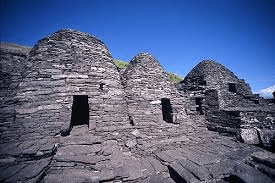
    My letter to the Editor regarding how we treat heritage in Ireland, published July 30 2014.

    Sir, – It is now more than 10 years since Martin Cullen TD abolished Dúchas, the Heritage Service. Our national and built monuments are not adequately protected. When I questioned the OPW decision to allow filming on Skellig Michael, a general response was “it’s about jobs”. In the deep recession of the ’80s the OPW partnered with private agencies and owners to train young people in heritage protection and craft skills (stonework, wood-carving and preservation). These were jobs and skills geared toward protecting and conserving our heritage.
     
    In the 10 years since the abolition of Dúchas, 39 sites in Tara were demolished to facilitate the M3 toll road. There are robberies of stunning stonework and the job of Dúchas has been divided between the Department of the Environment and the OPW.
     
    Heritage is not adequately protected. We are not training the young in conservation techniques and we have no statutory agency for protecting our natural and built heritage. There are jobs in protecting our fragile heritage infrastructure in the long-term: people require skills training.
     
    The Hollywood machine is a temporary thing. Where is the long view on jobs, on awareness and on stewardship in Ireland?
     
    It is the job of the Minister to propose a far-sighted agenda for the work of the divided heritage agency, and yet I have seen no comment or response to the OPW decision on Skellig from her office. We are used to disgraceful decisions affecting our environment in Ireland. Why should we be surprised now? – Yours, etc,
     
    CHRISTINE MURRAY,
    untitled
    1. A letter by C. Murray
    2. Filming of Scenes For Star Wars Movie begins on Skellig Michael
←Previous Page
1 … 44 45 46 47 48 … 106
Next Page→
 

Loading Comments...
 

    • Subscribe Subscribed
      • Chris Murray
      • Already have a WordPress.com account? Log in now.
      • Chris Murray
      • Subscribe Subscribed
      • Sign up
      • Log in
      • Report this content
      • View site in Reader
      • Manage subscriptions
      • Collapse this bar